
Chapter 11 The Late Middle Ages Crisis and

- Slides: 21
Chapter 11 The Late Middle Ages: Crisis and Disintegration in the Fourteenth Century
Discussion Questions § What impact did the Black Death have on medieval European society & economy?
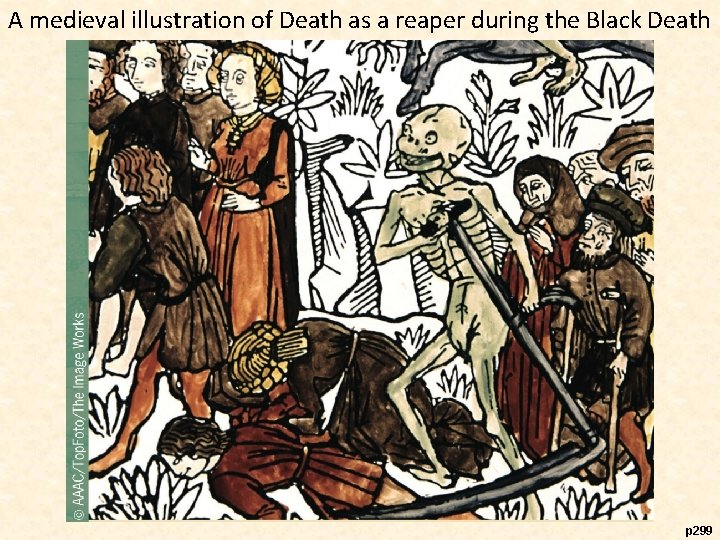
A medieval illustration of Death as a reaper during the Black Death p 299
A Time of Troubles: Black Death and Social Crisis § Famine and Population § § “Little Ice Age” The Great Famine (1315 – 1317) § § Population outstripping resources by 1300 The Black Death: From Asia to Europe § Role of the Mongols § § Eurasian landmass under single rule Spread of plague along trade routes
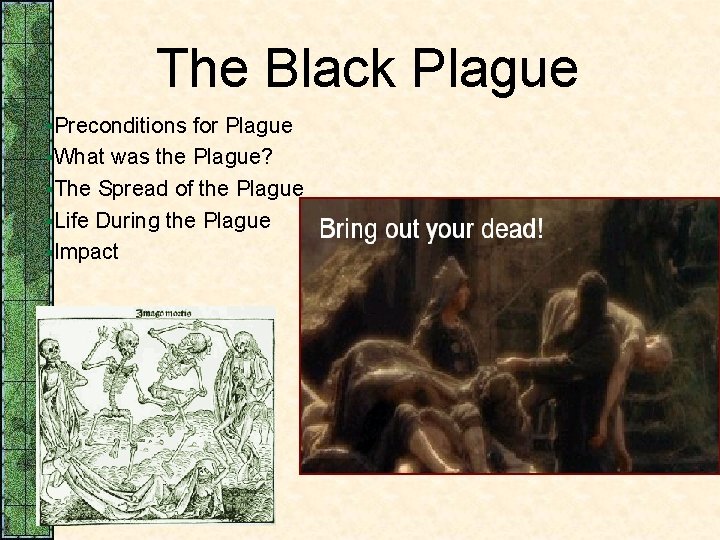
The Black Plague §Preconditions for Plague §What was the Plague? §The Spread of the Plague §Life During the Plague §Impact
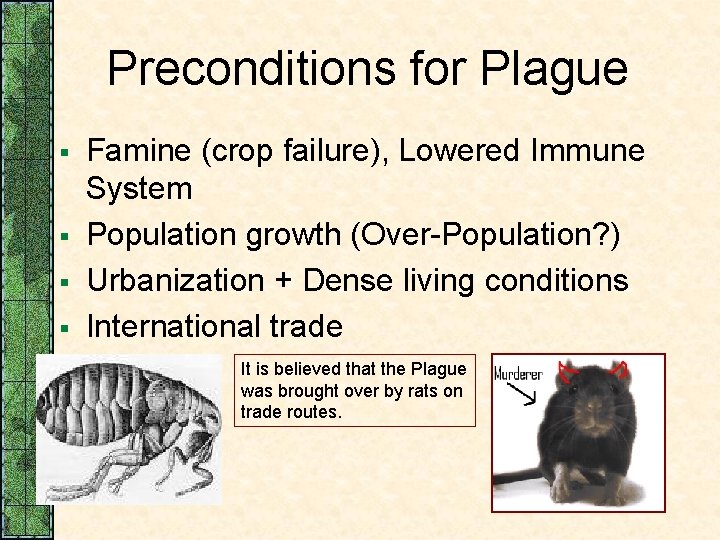
Preconditions for Plague § § Famine (crop failure), Lowered Immune System Population growth (Over-Population? ) Urbanization + Dense living conditions International trade It is believed that the Plague was brought over by rats on trade routes.
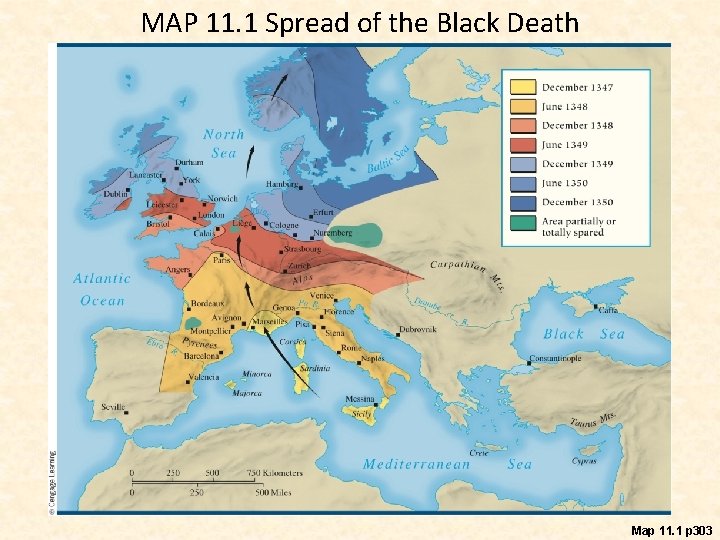
The Black Death in Europe § Impact, Symptoms, and Spread of Plague § Most devastating natural disaster in European history § Bubonic § § Pneumonic Arrived in Europe in 1347 § § Rats and fleas Mortality reached 50 – 60 percent in some areas Wiped out between 25 – 50 percent of European population (19 – 38 million dead in four years) Plague returns in 1361 – 1362 and 1369
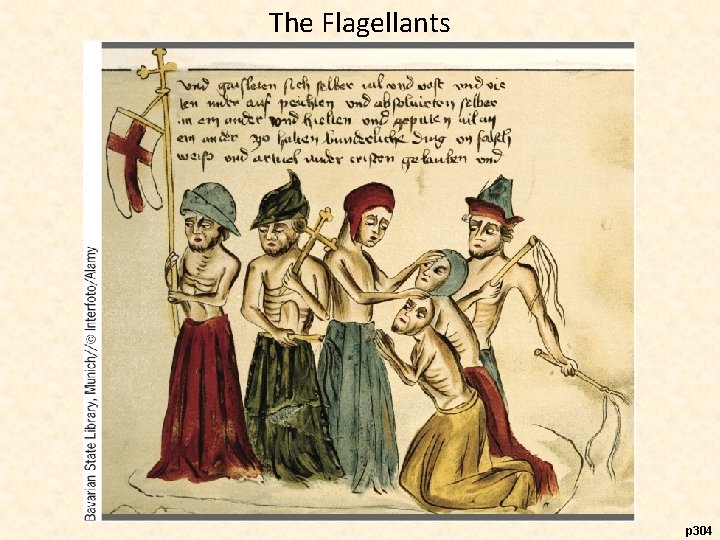
Life and Death: Reactions to the Plague § Attempts at Explanation § § § Plague as a punishment from God The flagellants Attacks against Jews Violence and Preoccupation with Death Art and the Black Death § Ars moriendi, the art of dying
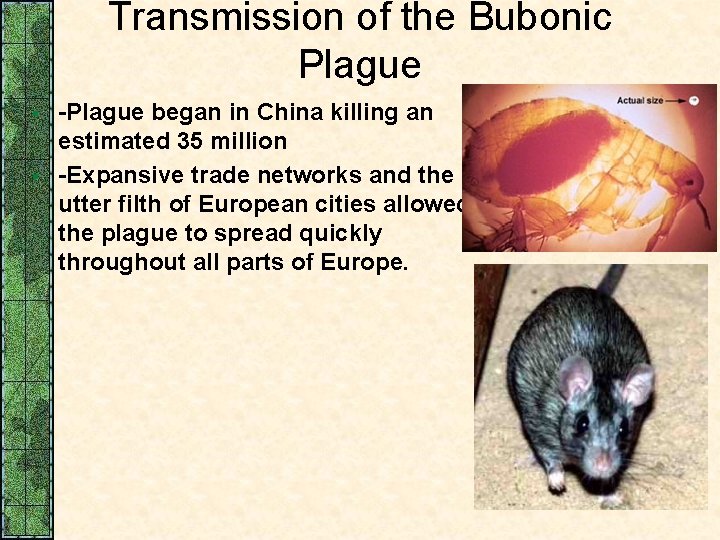
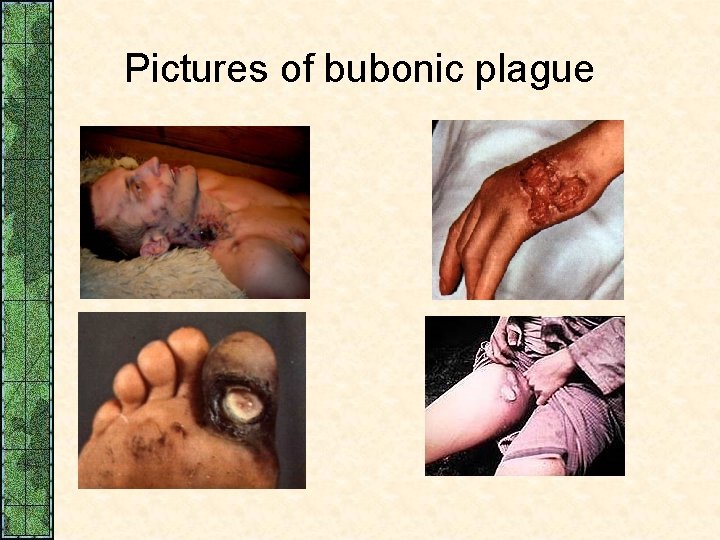
Bubonic plague § § A highly contagious bacteria that attacks the immune system causing severe infection. Some symptoms can include: § chills, fever, diarrhea, headaches, convulsive coughing, spitting blood, swelling of the infected lymph nodes, and black patches on the skin.
Transmission of the Bubonic Plague § § -Plague began in China killing an estimated 35 million -Expansive trade networks and the utter filth of European cities allowed the plague to spread quickly throughout all parts of Europe.
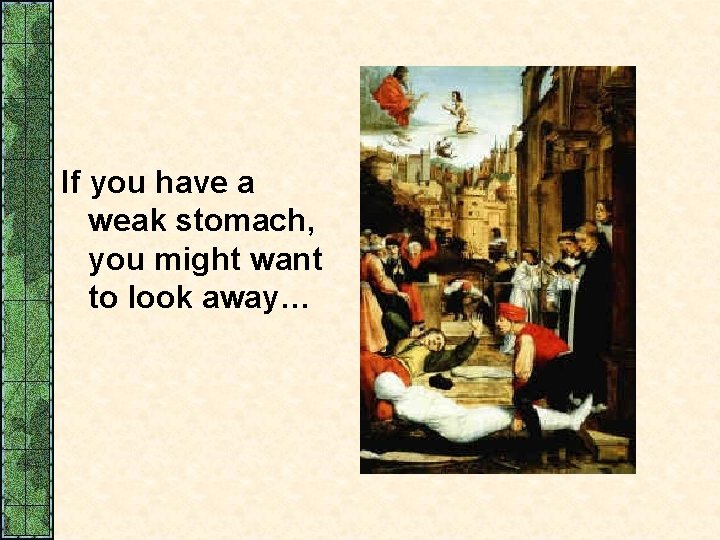
If you have a weak stomach, you might want to look away…
Pictures of bubonic plague
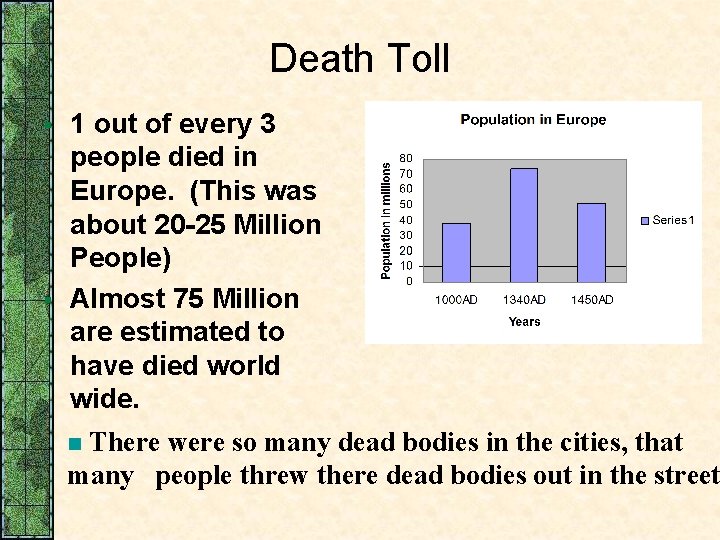
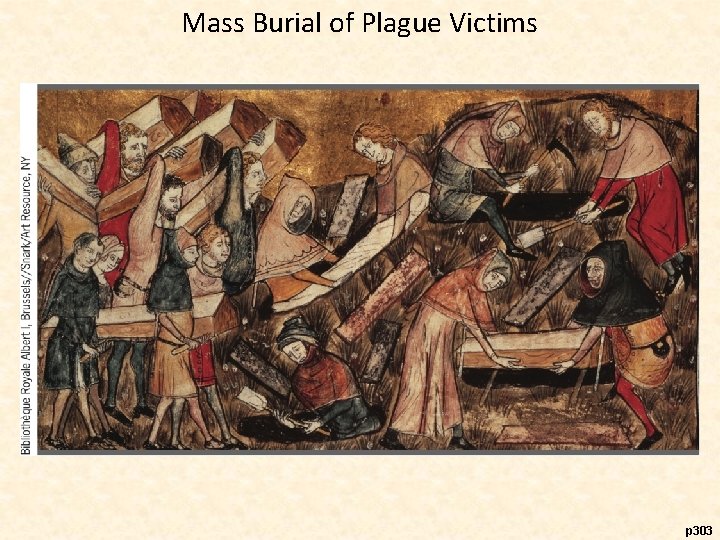
Death Toll § § 1 out of every 3 people died in Europe. (This was about 20 -25 Million People) Almost 75 Million are estimated to have died world wide. There were so many dead bodies in the cities, that many people threw there dead bodies out in the street n
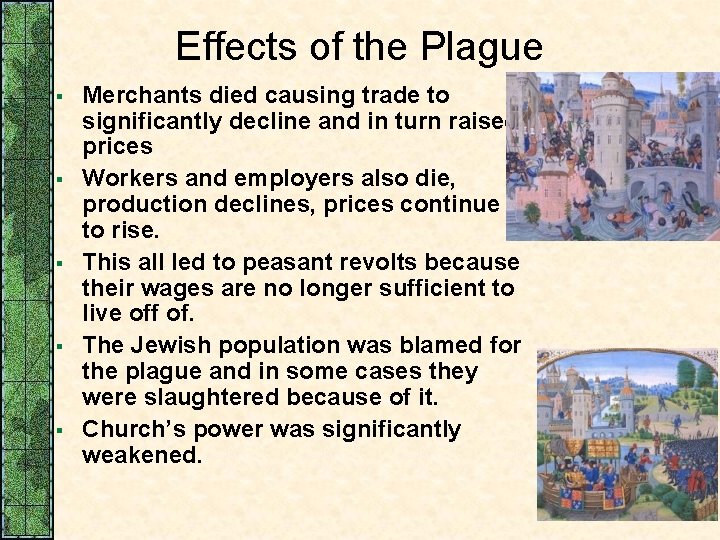
Effects of the Plague § § § Merchants died causing trade to significantly decline and in turn raised prices Workers and employers also die, production declines, prices continue to rise. This all led to peasant revolts because their wages are no longer sufficient to live off of. The Jewish population was blamed for the plague and in some cases they were slaughtered because of it. Church’s power was significantly weakened.
MAP 11. 1 Spread of the Black Death Map 11. 1 p 303
Mass Burial of Plague Victims p 303
The Flagellants p 304
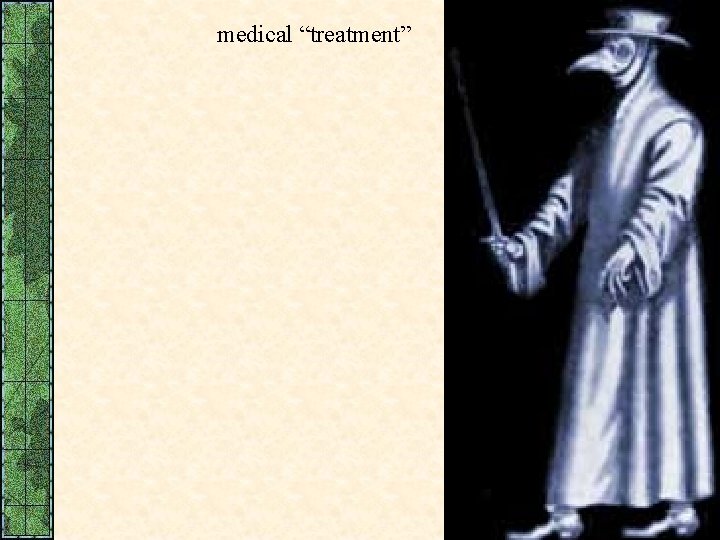
medical “treatment”
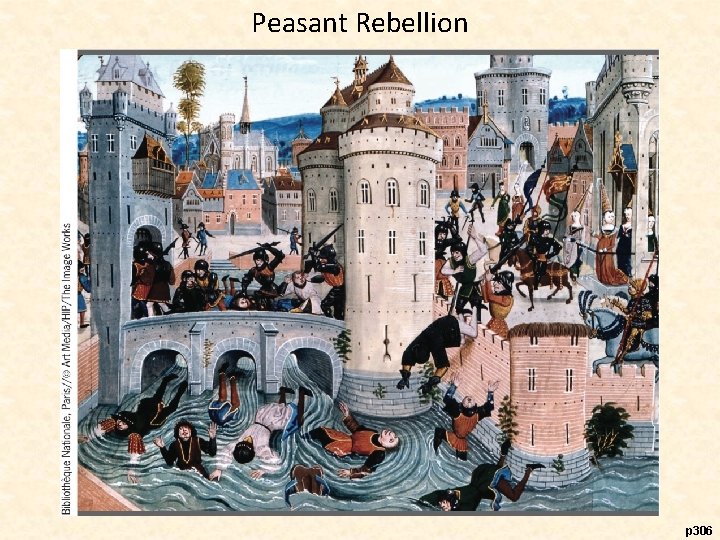
Economic Dislocation and Social Upheaval § Noble Landlords and Peasants § § Labor shortage + falling prices for agricultural products = drop in aristocratic incomes Statute of Laborers (1351) : limit wages Social mobility Peasant Revolt in France § Jacquerie (1358) § An English Peasant Revolt (1381) § Revolts in the Cities § Ciompi revolt in Florence (1378)
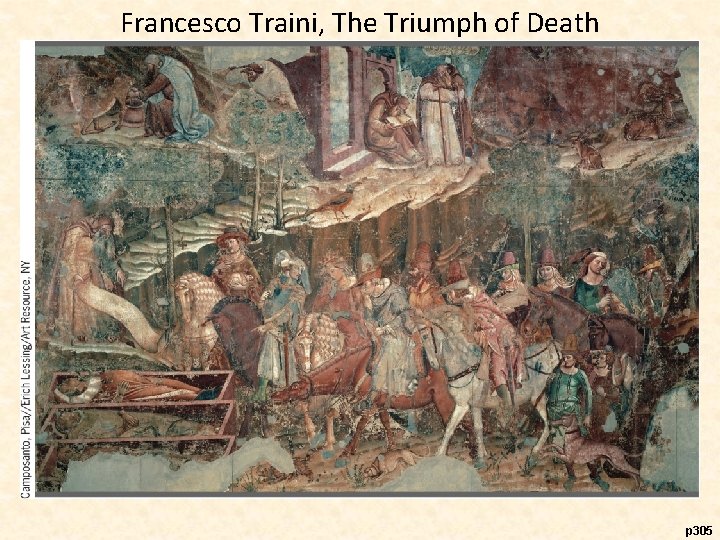
Francesco Traini, The Triumph of Death p 305
Peasant Rebellion p 306