
Chapter 11 The Geography of Language is an
- Slides: 41
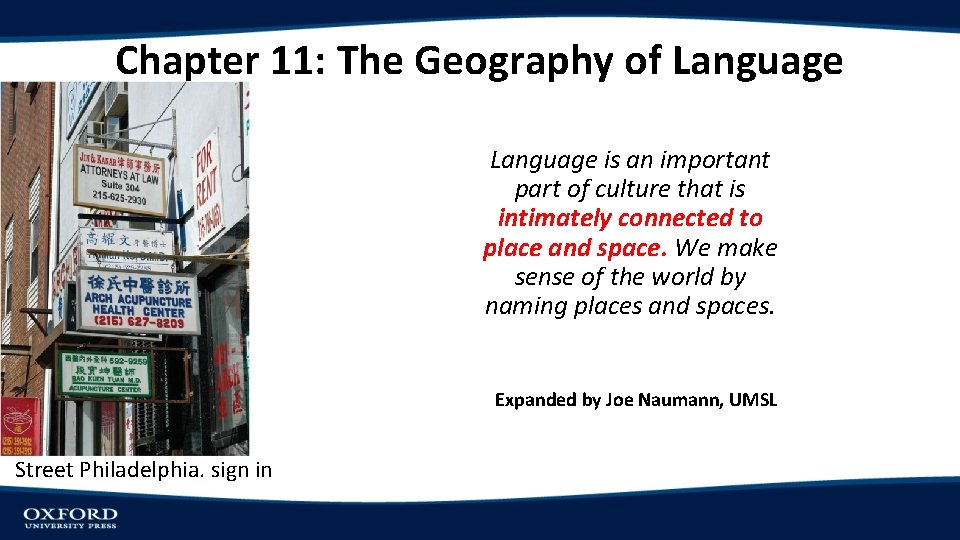
Chapter 11: The Geography of Language is an important part of culture that is intimately connected to place and space. We make sense of the world by naming places and spaces. Expanded by Joe Naumann, UMSL Street Philadelphia. sign in
Chapter Learning Objectives • Summarize the various influences of culture and locality on the development of language. • Consider how languages get distributed through global political and economic interactions. • Describe the differences that emerge in spoken languages and the variation in usages across assorted spaces. • Discuss the important role of language in national identity and politics, with consideration of the spoken and written word. • Reflect on the reasons for contemporary losses in linguistic diversity and the ways that populations are responding.
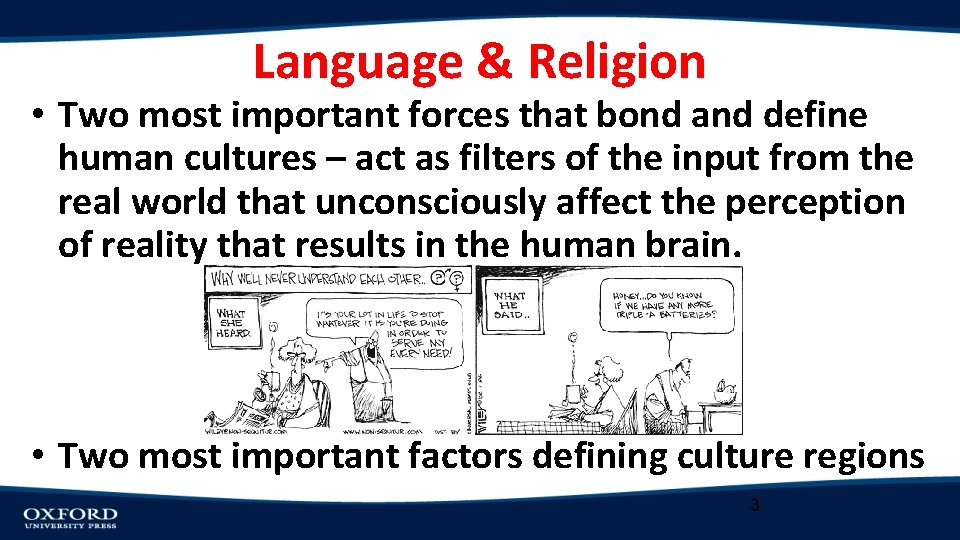
Language & Religion • Two most important forces that bond and define human cultures – act as filters of the input from the real world that unconsciously affect the perception of reality that results in the human brain. • Two most important factors defining culture regions 3
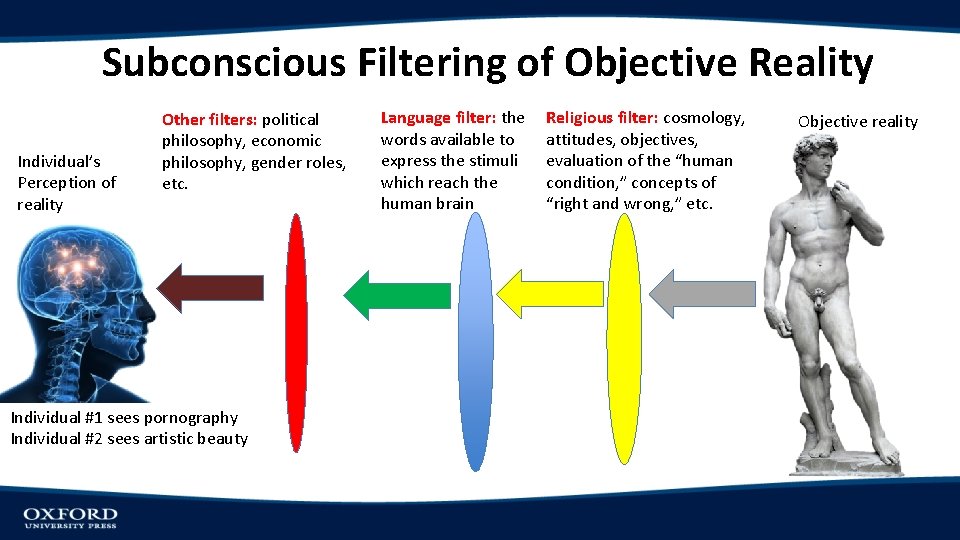
Subconscious Filtering of Objective Reality Individual’s Perception of reality Other filters: political philosophy, economic philosophy, gender roles, etc. Individual #1 sees pornography Individual #2 sees artistic beauty Language filter: the words available to express the stimuli which reach the human brain Religious filter: cosmology, attitudes, objectives, evaluation of the “human condition, ” concepts of “right and wrong, ” etc. Objective reality
Languages’ Limitations • Difficulty expressing abstract concepts such as “LOVE” - If I say, “I love my wife, ” you can’t really know what is in my head and the specific emotions that I connect with that word, and visa versa. • Translating from one language to another may lack precision. – Inuit may have a dozen words for “snow” (in Alaska, knowledge of the specifics of snow may be a life or death issue) whereas English has one (because it’s not a life or death issue). • One language may not have a word with the identical meaning as another language. Spanish doesn’t have an identical word for “like” the Spanish literally say, “It is pleasing to me. ”
A legitimate Question • Can any human being ever know objective reality? • Even if some one could do that. . • Does any human language have an adequate vocabulary with which to express that reality”
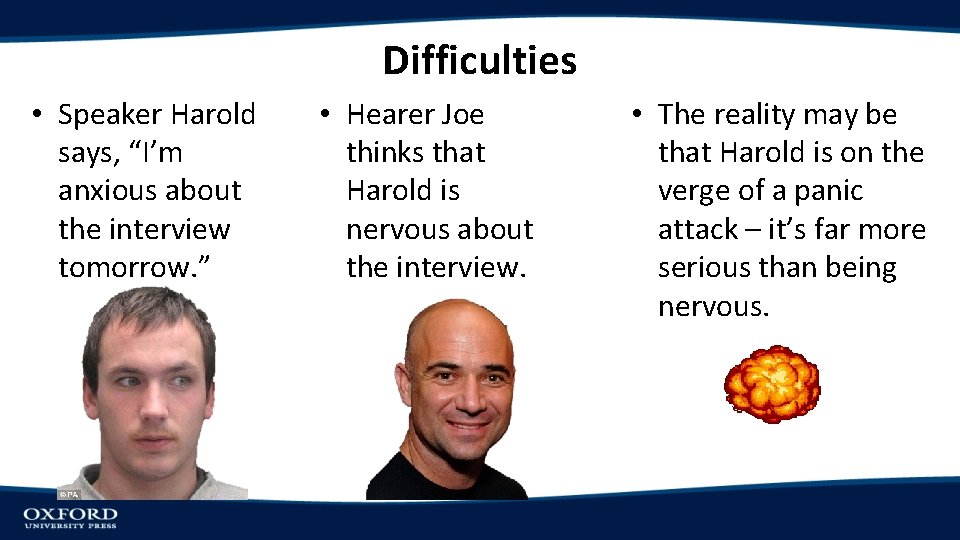
Difficulties • Speaker Harold says, “I’m anxious about the interview tomorrow. ” • Hearer Joe thinks that Harold is nervous about the interview. • The reality may be that Harold is on the verge of a panic attack – it’s far more serious than being nervous.
Defining Language • Pronunciation and combination of words (sounds) used to communicate within a group of people • Important cultural index • Structures individual perception of world • Language is a flawed means of communication; however, it is the best means we have at our disposal. 8
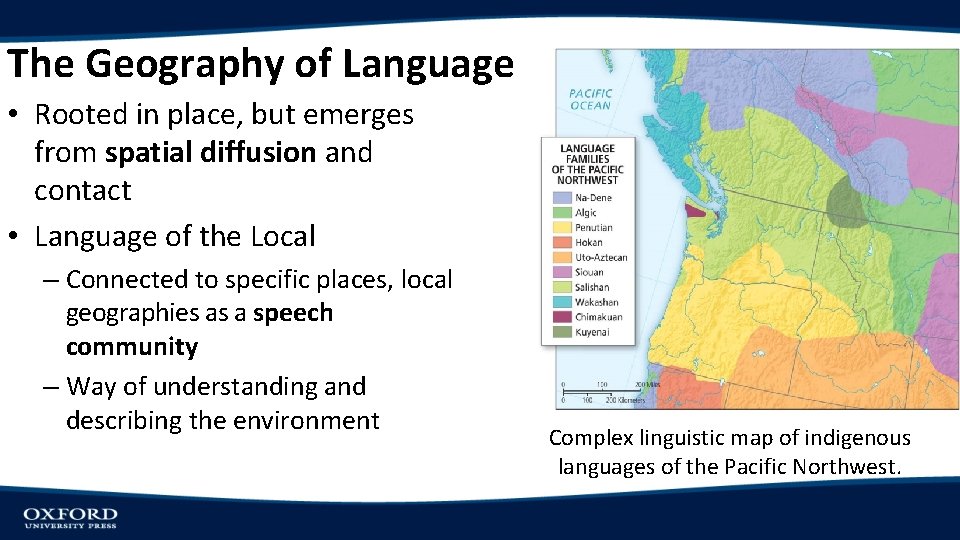
The Geography of Language • Rooted in place, but emerges from spatial diffusion and contact • Language of the Local – Connected to specific places, local geographies as a speech community – Way of understanding and describing the environment Complex linguistic map of indigenous languages of the Pacific Northwest.
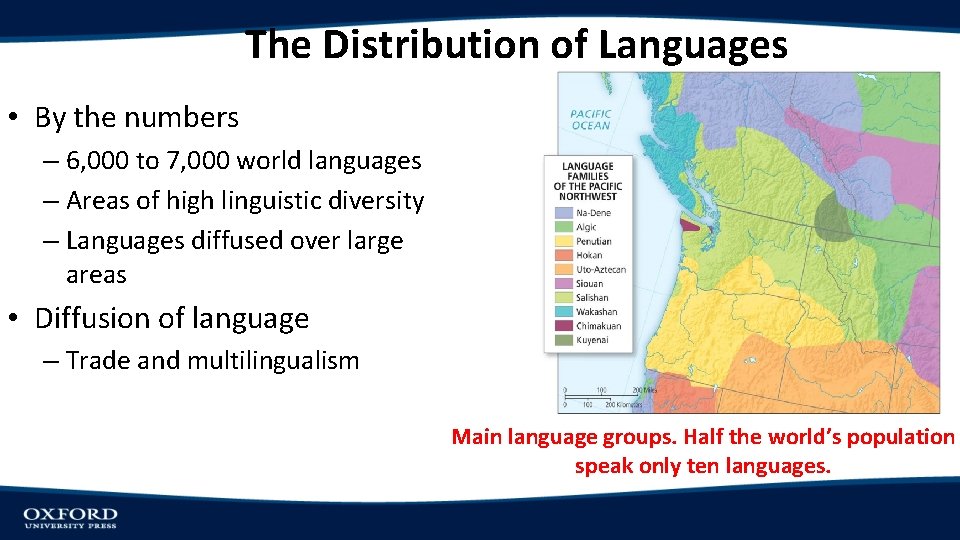
The Distribution of Languages • By the numbers – 6, 000 to 7, 000 world languages – Areas of high linguistic diversity – Languages diffused over large areas • Diffusion of language – Trade and multilingualism Main language groups. Half the world’s population speak only ten languages.
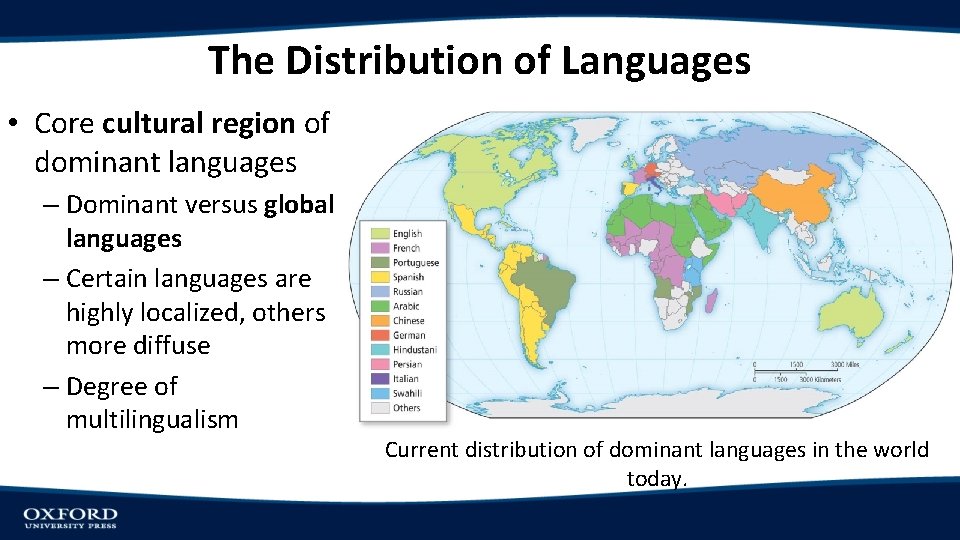
The Distribution of Languages • Core cultural region of dominant languages – Dominant versus global languages – Certain languages are highly localized, others more diffuse – Degree of multilingualism Current distribution of dominant languages in the world today.
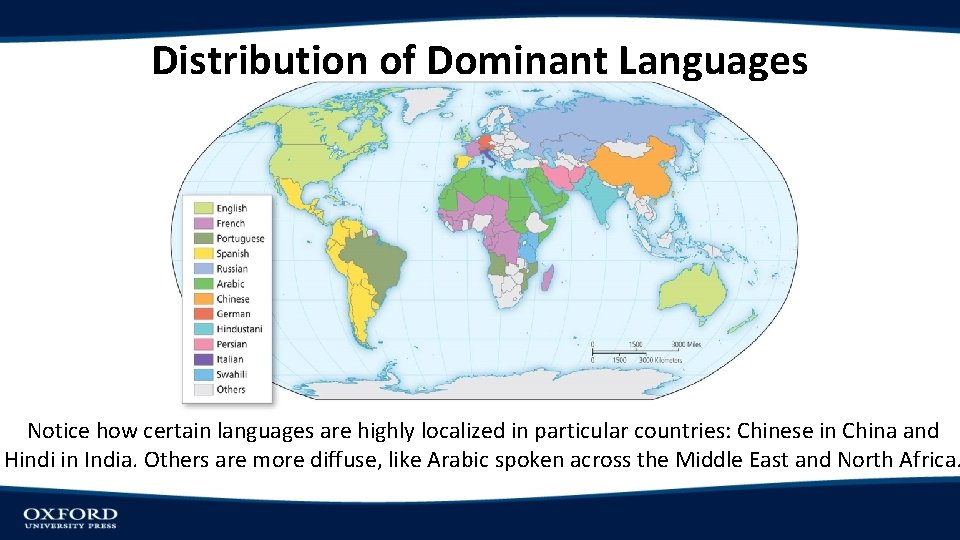
Distribution of Dominant Languages Notice how certain languages are highly localized in particular countries: Chinese in China and Hindi in India. Others are more diffuse, like Arabic spoken across the Middle East and North Africa.
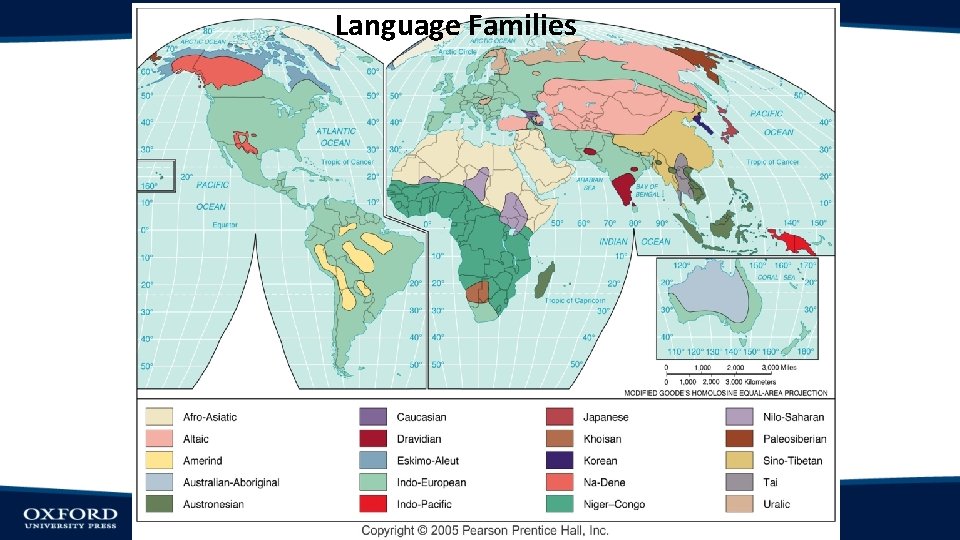
Language Families
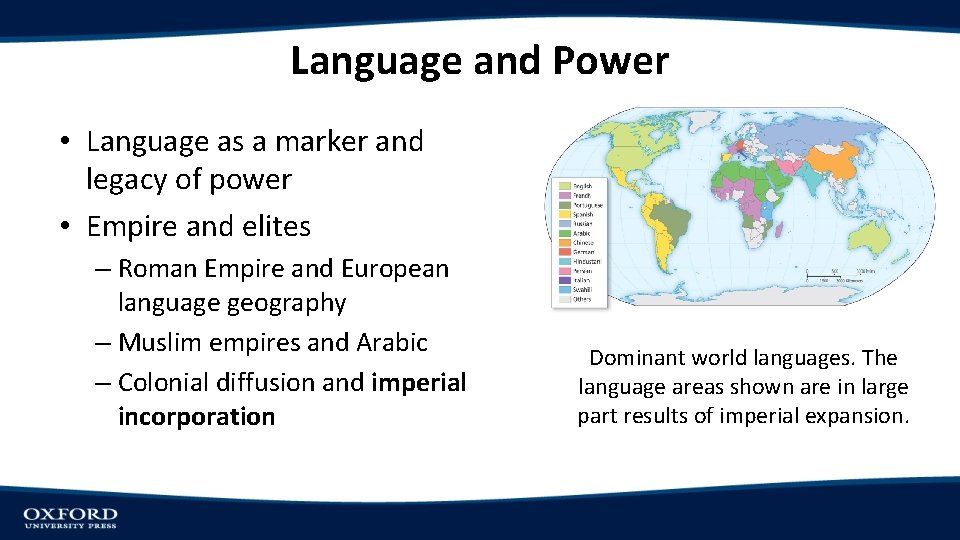
Language and Power • Language as a marker and legacy of power • Empire and elites – Roman Empire and European language geography – Muslim empires and Arabic – Colonial diffusion and imperial incorporation Dominant world languages. The language areas shown are in large part results of imperial expansion.
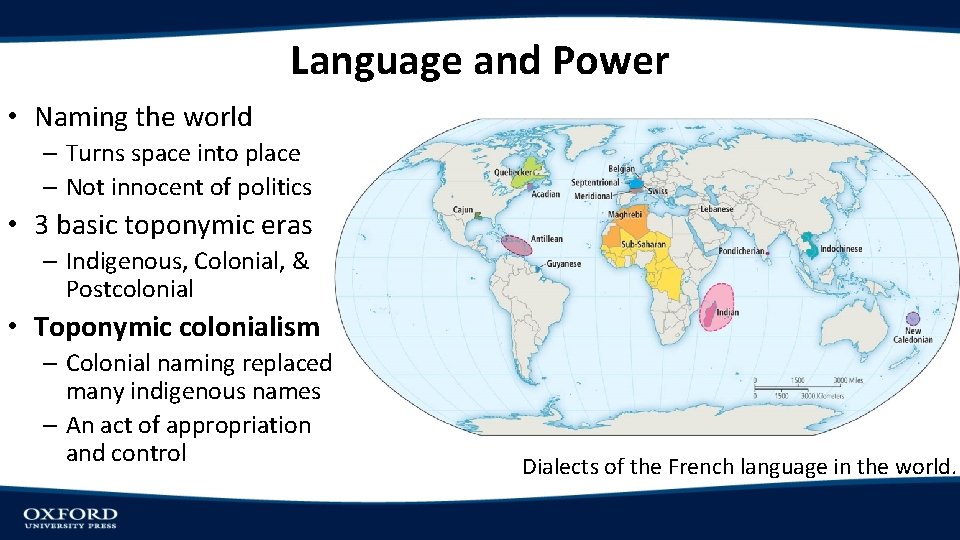
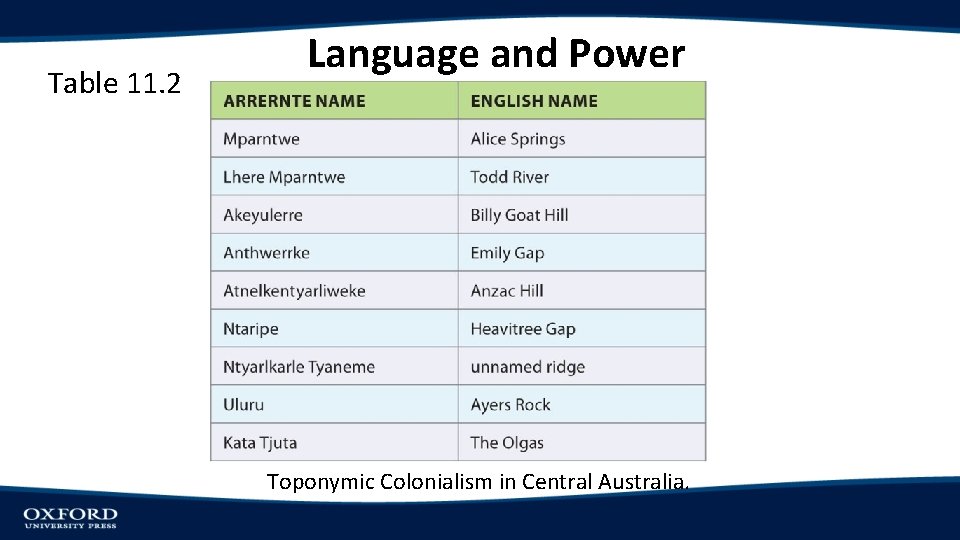
Language and Power • Naming the world – Turns space into place – Not innocent of politics • 3 basic toponymic eras – Indigenous, Colonial, & Postcolonial • Toponymic colonialism – Colonial naming replaced many indigenous names – An act of appropriation and control Dialects of the French language in the world.
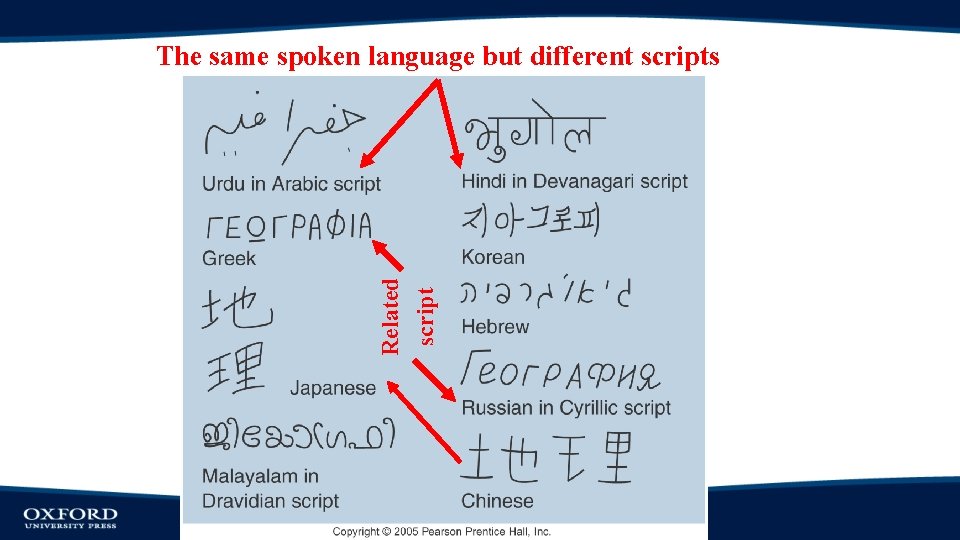
Related script The same spoken language but different scripts
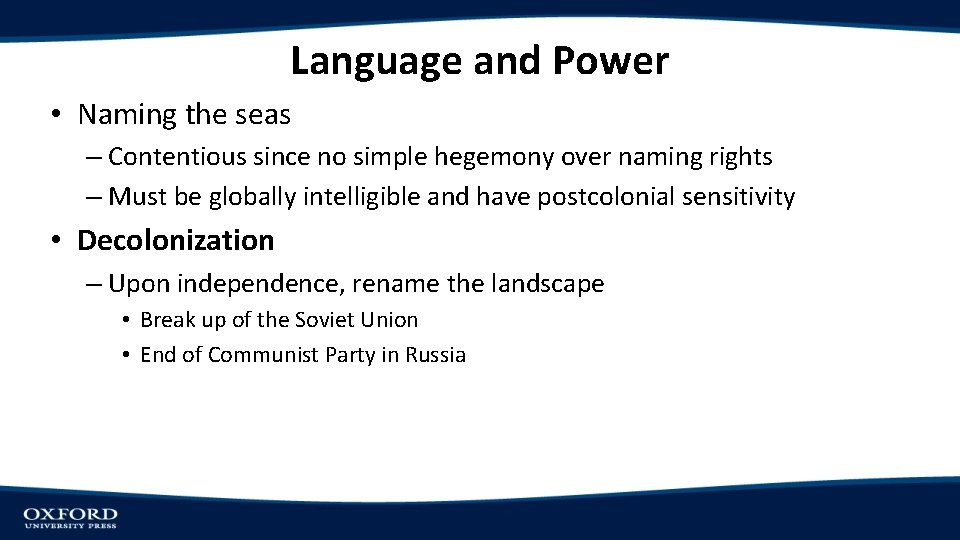
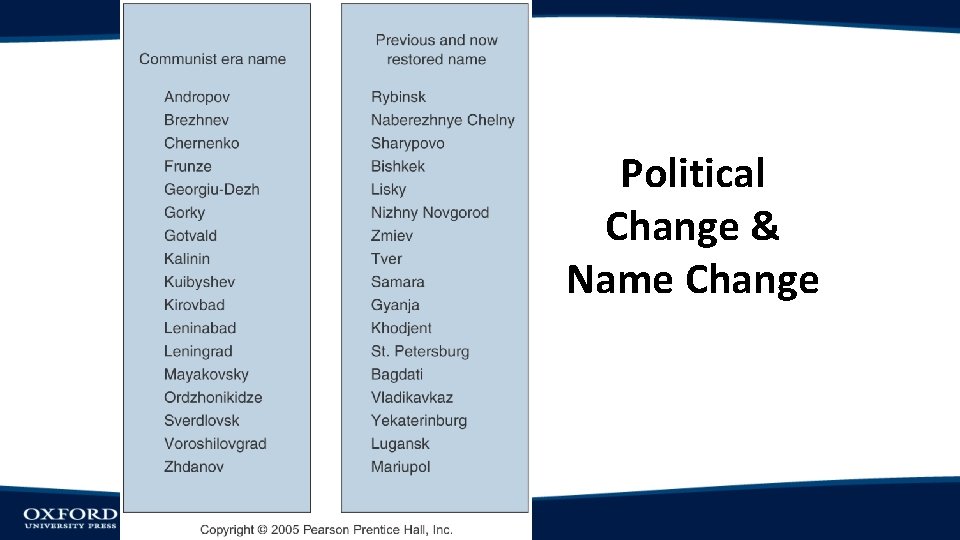
Language and Power • Naming the seas – Contentious since no simple hegemony over naming rights – Must be globally intelligible and have postcolonial sensitivity • Decolonization – Upon independence, rename the landscape • Break up of the Soviet Union • End of Communist Party in Russia
Political Change & Name Change
Language Regions • Dialects – Minor variations within a language • Standard language – Following formal rule of diction and grammar • Official language – Primary language for any given country – Defacto or Dejure? USA English – Defacto, not Dejure • Lingua franca – Current language of international discourse 19
Table 11. 2 Language and Power Toponymic Colonialism in Central Australia.
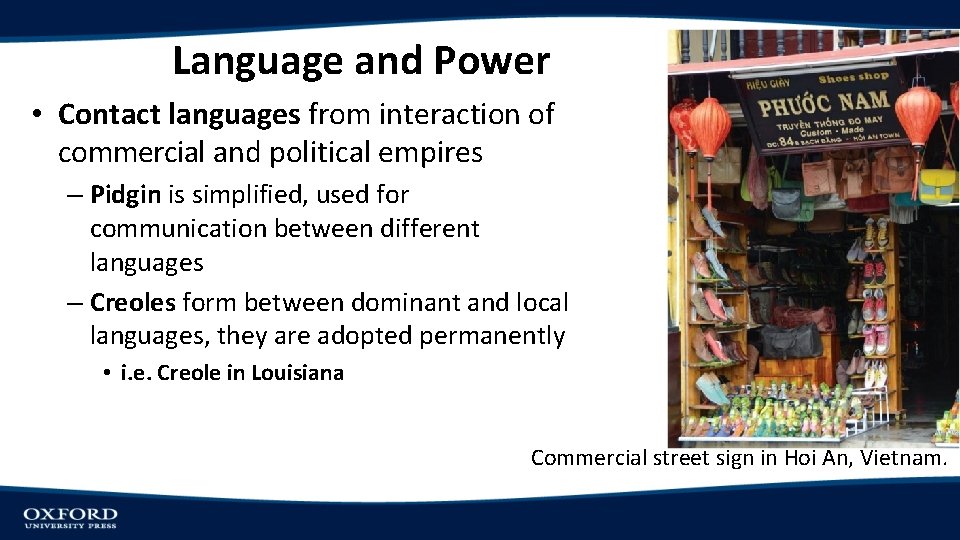
Language and Power • Contact languages from interaction of commercial and political empires – Pidgin is simplified, used for communication between different languages – Creoles form between dominant and local languages, they are adopted permanently • i. e. Creole in Louisiana Commercial street sign in Hoi An, Vietnam.
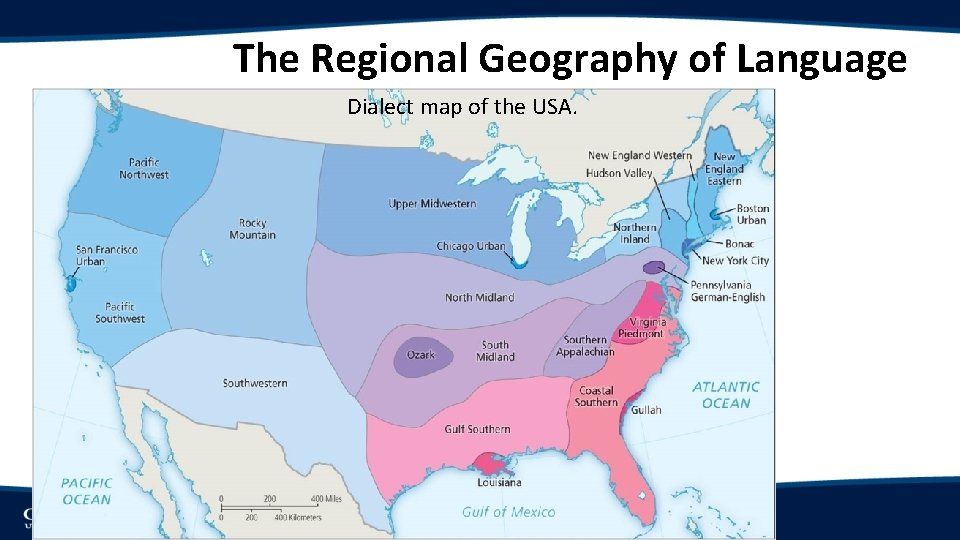
The Regional Geography of Language • Dialects are localization of language – Dialect maps come from mapping varying enunciation or terms – Regional variation and function of time – Social connotations and political power – Variations within regions • American English would be considered a dialect
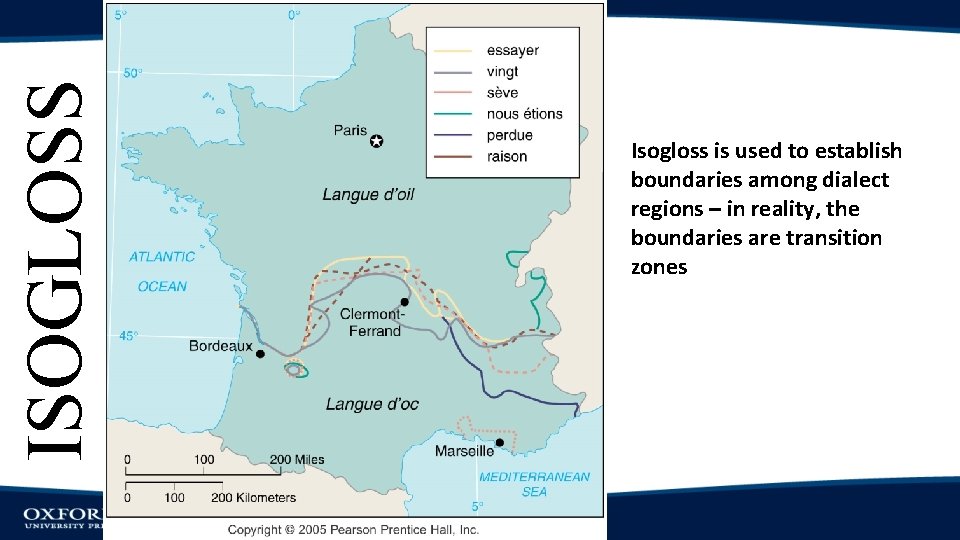
ISOGLOSS Isogloss is used to establish boundaries among dialect regions – in reality, the boundaries are transition zones
The Regional Geography of Language Dialect map of the USA.
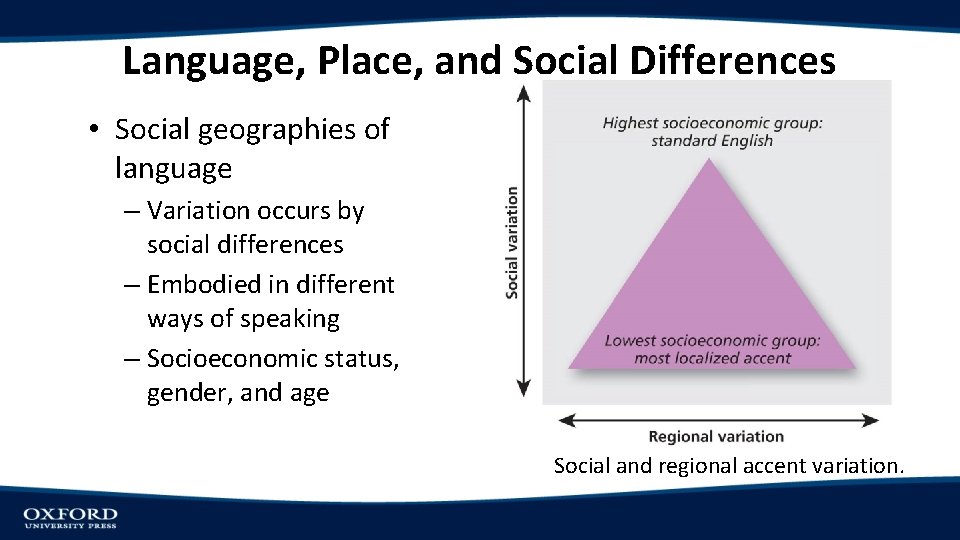
Language, Place, and Social Differences • Social geographies of language – Variation occurs by social differences – Embodied in different ways of speaking – Socioeconomic status, gender, and age Social and regional accent variation.
The Place of Language • Importance of place in language use – Language use change by context • Language domain – Context by place, role, and topic – Performance depends on role being played – Informal and formal domains • Disglossia – Two or more varieties of language in a speech community • Code switching – Different languages used in different domain
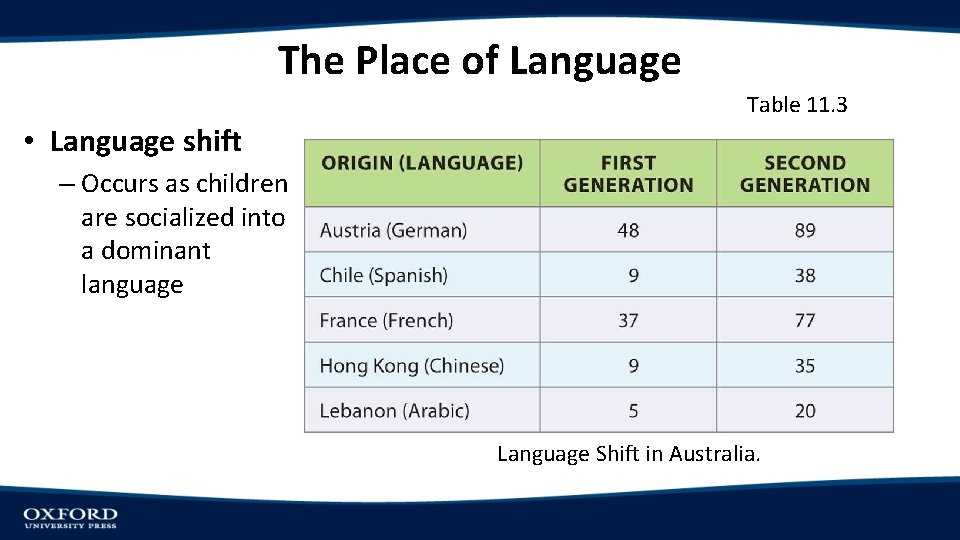
The Place of Language Table 11. 3 • Language shift – Occurs as children are socialized into a dominant language Language Shift in Australia.
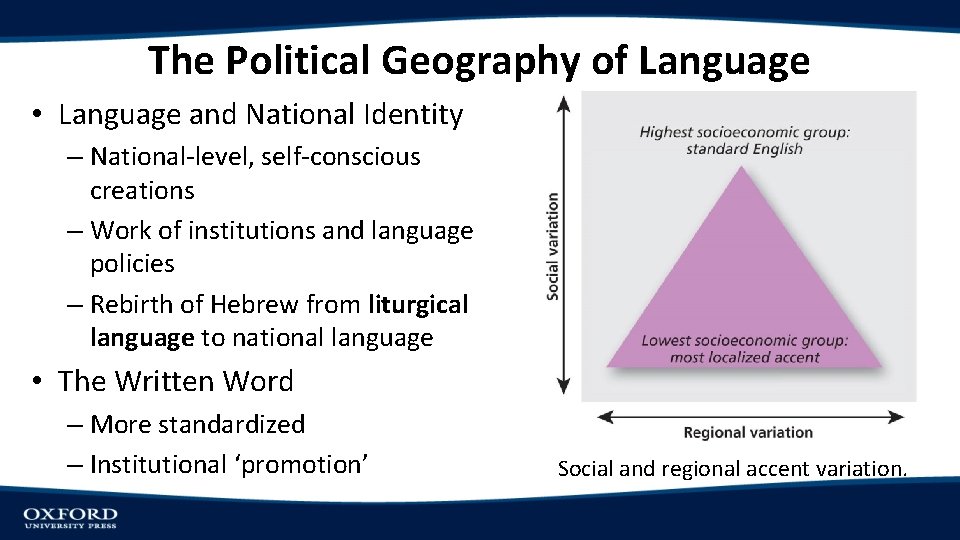
The Political Geography of Language • Language and National Identity – National-level, self-conscious creations – Work of institutions and language policies – Rebirth of Hebrew from liturgical language to national language • The Written Word – More standardized – Institutional ‘promotion’ Social and regional accent variation.
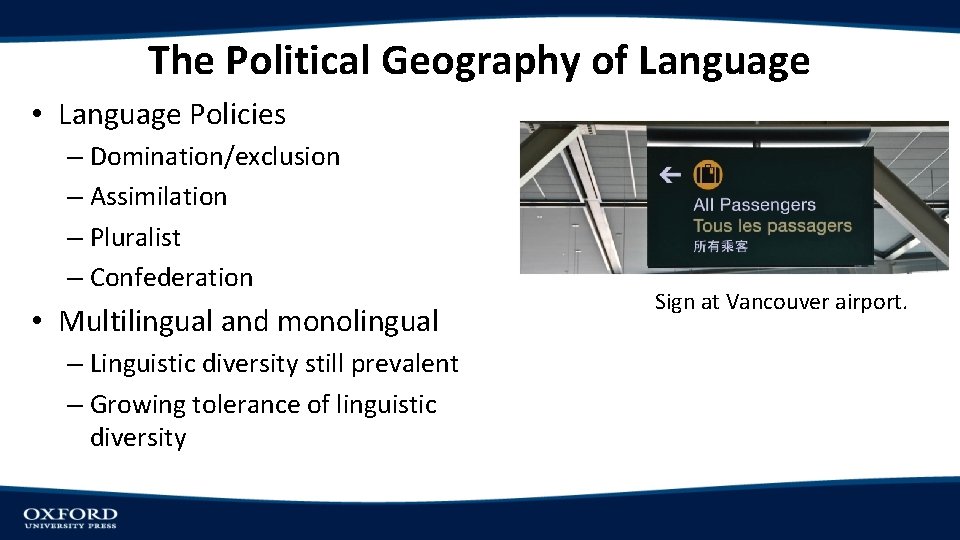
The Political Geography of Language • Language Policies – Domination/exclusion – Assimilation – Pluralist – Confederation • Multilingual and monolingual – Linguistic diversity still prevalent – Growing tolerance of linguistic diversity Sign at Vancouver airport.
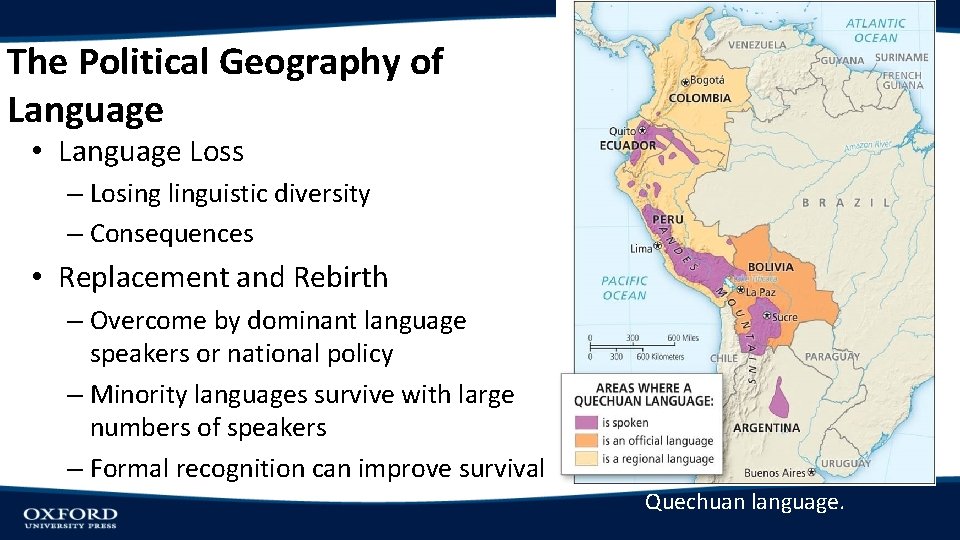
The Political Geography of Language • Language Loss – Losing linguistic diversity – Consequences • Replacement and Rebirth – Overcome by dominant language speakers or national policy – Minority languages survive with large numbers of speakers – Formal recognition can improve survival Quechuan language.
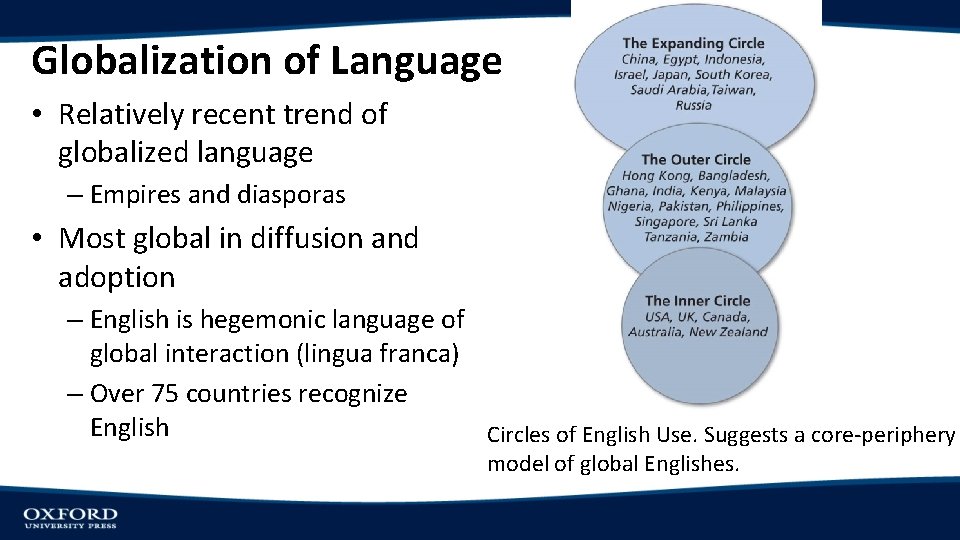
Globalization of Language • Relatively recent trend of globalized language – Empires and diasporas • Most global in diffusion and adoption – English is hegemonic language of global interaction (lingua franca) – Over 75 countries recognize English Circles of English Use. Suggests a core-periphery model of global Englishes.
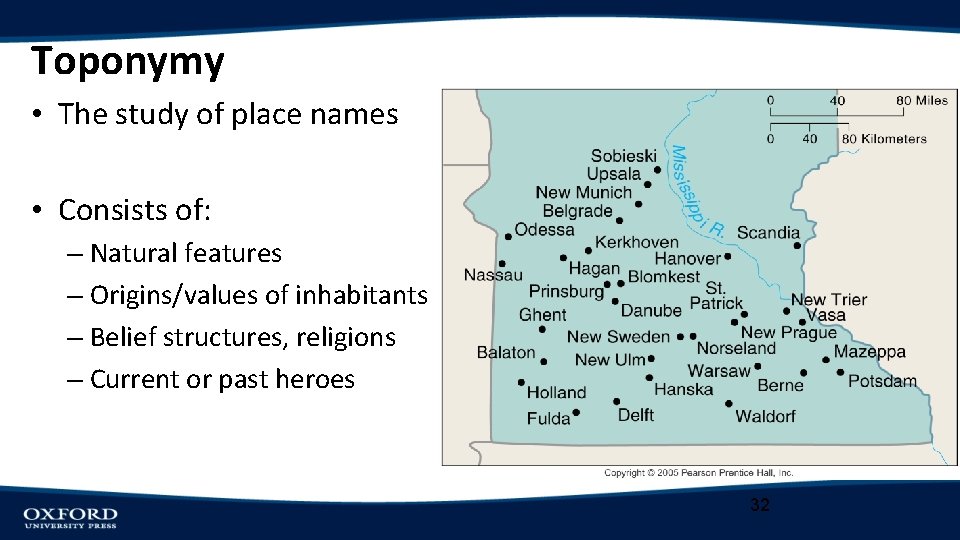
Toponymy • The study of place names • Consists of: – Natural features – Origins/values of inhabitants – Belief structures, religions – Current or past heroes 32
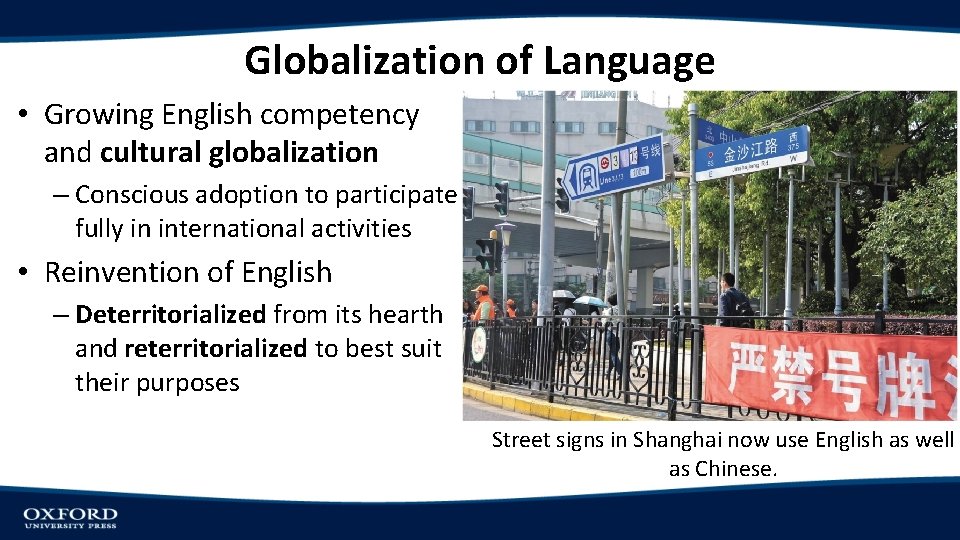
Globalization of Language • Growing English competency and cultural globalization – Conscious adoption to participate fully in international activities • Reinvention of English – Deterritorialized from its hearth and reterritorialized to best suit their purposes Street signs in Shanghai now use English as well as Chinese.
English is the world Lingua Franca • Lingua Franca: language that is adopted as a common language between speakers whose native languages are different. • British Empire spanned the globe – English was the language of government, business, and education – 19 th century England was the dominant economic power – English has the status of national language in 50 countries (approximately 200 countries in the world) • 20 th century, the USA became the dominant economic power in the world and was at the early art of the 21 st Century
Globalization of Language • The Written Language – Written English more rule-bound and slow to change – Reterritorialization of written English less apparent – Dominant written language of the global epistemic community – Using English, these communities construct a global intellectual discourse involved in production, reproduction, and circulation of knowledge – Of these communities are academic disciplines like Geography, with research journals primarily in English – Major language of the internet
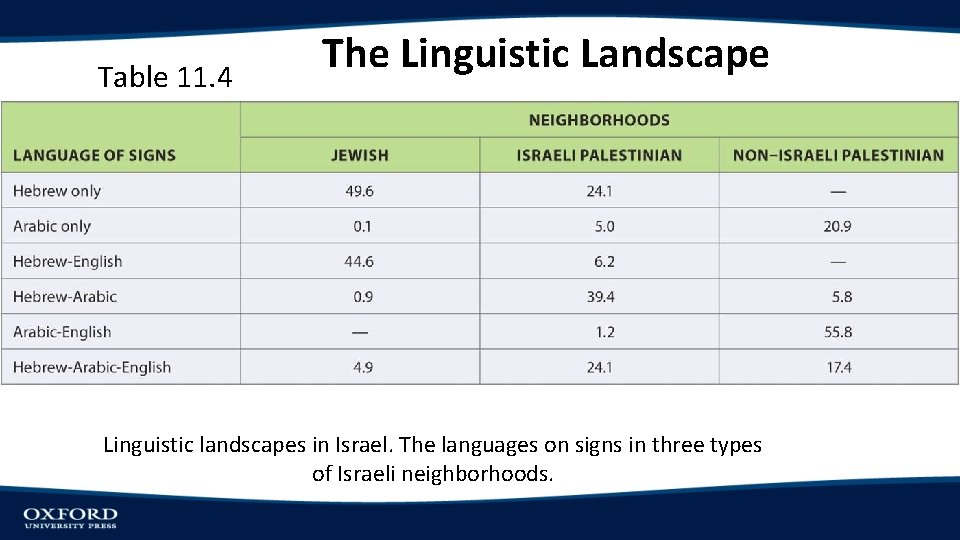
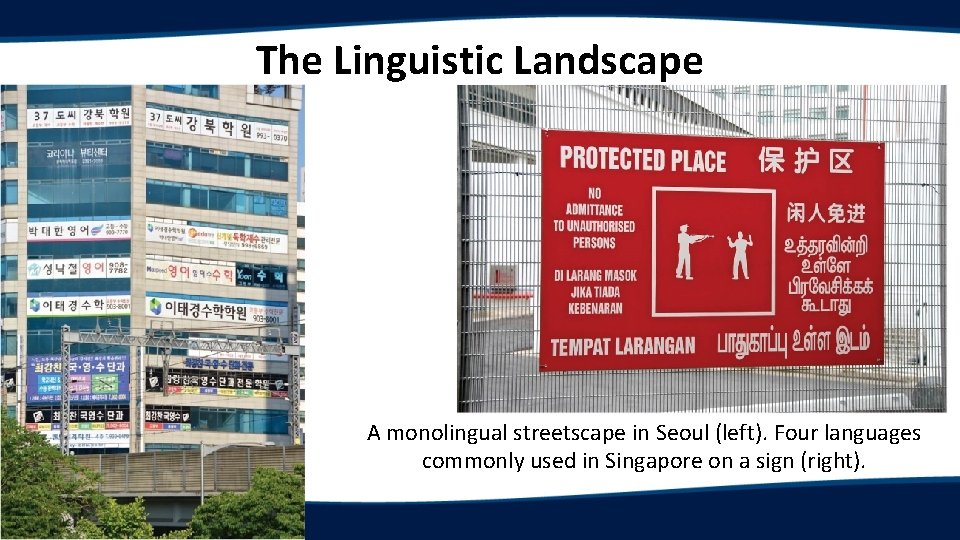
The Linguistic Landscape • Linguistic landscapes – Monopolistic landscape – Bilingual and Trilingual • Where countries are multinational political stability may be threatened if the nations tend to live in separate parts of the country. • Local language usage can vary from official policies – Other languages that dominate the neighborhood level reflected in landscape
Table 11. 4 The Linguistic Landscape Linguistic landscapes in Israel. The languages on signs in three types of Israeli neighborhoods.
The Linguistic Landscape A monolingual streetscape in Seoul (left). Four languages commonly used in Singapore on a sign (right).
Chapter Summary • Language is an important part of culture. Local indigenous languages have sophisticated description of their local environment. Historically connected to specific places, language has diffused with empires and an ever-flattening world. • Three trends in geography of language: (1) the emergence of distinct linguistic geographies; (2) the interaction and sometimes replacement of local variants with outside languages because of population movement, social change, and the operation of political power; and (3) the globalization of certain languages. • Although over 6, 000 languages are spoken around the world, half of the world’s population speaks only 10 languages. Dominant languages are Chinese, Hindi, English, Spanish, and Arabic.
Chapter Summary • We give meaning to our world by describing it with language. Colonial powers expressed power by naming the landscape, and postcolonial societies embody their independence by renaming it. • The contact between languages can produce pidgins and creoles. • Language varies by regional dialects. Socioeconomic differences map onto the difference between standard and regional dialects. Language use varies by where people are and who they are. Language varies by context, referred to as language domains. • Language use is flexible. In code switching, people use different language depending on context. Language shifts occur as people move to different language regions. • Language use is bound up with national identity as national languages are crated and maintained. Language policies of minority languages vary from exclusion to encouragement.
Chapter Summary • While the spoken word varies, the written word is more standardized. National written languages emerge with education systems and shared print cultures of national readership. • We are losing many of the smaller languages, although there attempts at language revival. Creation of monolingual geographies has increased global communication, but has decreased linguistic diversity, which is strongly correlated to biodiversity and can lead to an increasingly impoverished world. • Growing global English competency has accelerated cultural globalization by the movement of ideas and information. Also led to modification or creolization and ensuing reterritorialization of the language as local communities adapt it to local needs. • English is most globally pervasive language, and its use fosters cultural and economic globalization. Language of a global epistemic community.