
Chapter 11 The Cell Basic Unit of Life
Chapter 11 The Cell: Basic Unit of Life
Why do we study cells? 2005 -2006

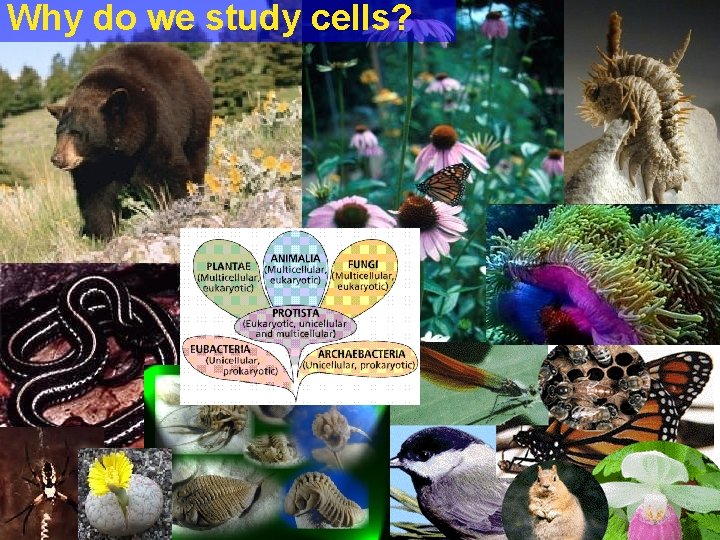
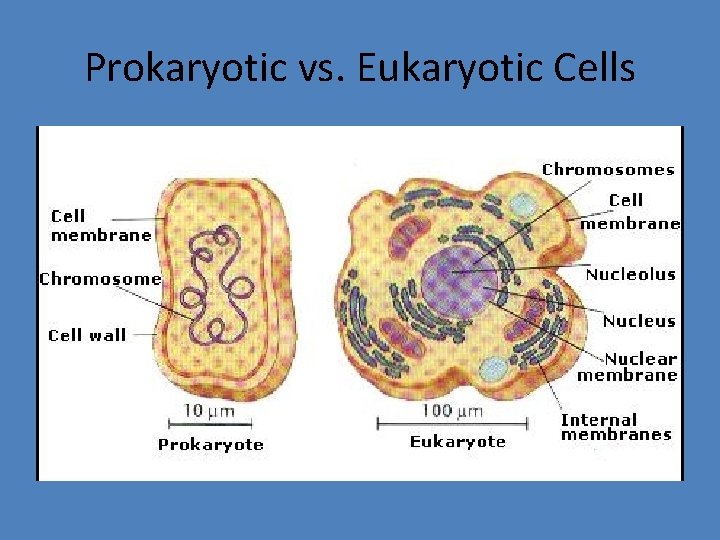
Cells • Eukaryotes: cells which have a “true nucleus”; as well as membrane covering the cell and its organelles – Has linear DNA • Plants • Animals • fungi • Prokaryotes: cells that do not have membrane bound/enclosed organelles and no clear nucleus – Has circular DNA • bacteria
Prokaryotic vs. Eukaryotic Cells
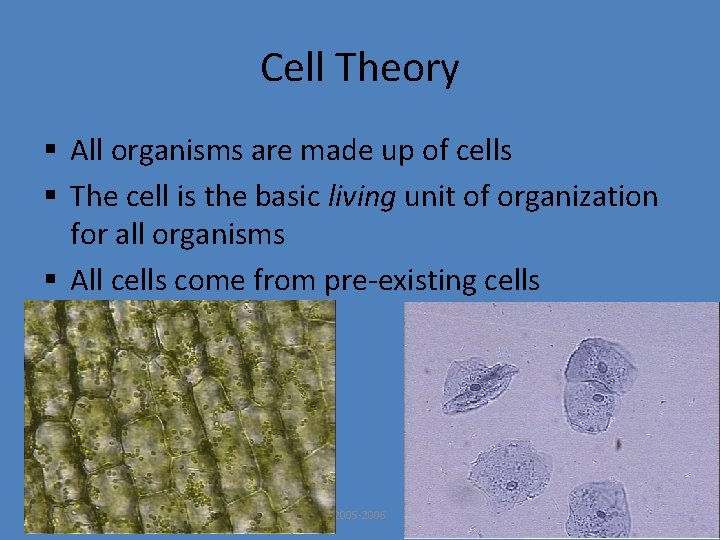
Cell Theory § All organisms are made up of cells § The cell is the basic living unit of organization for all organisms § All cells come from pre-existing cells 2005 -2006
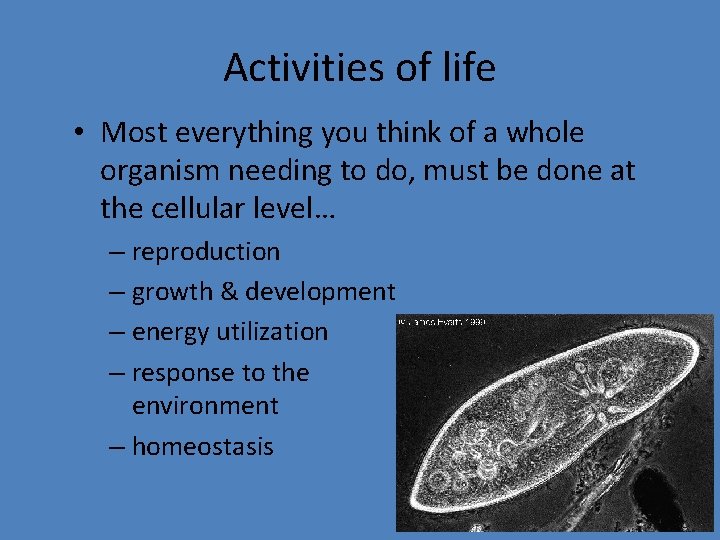
Activities of life • Most everything you think of a whole organism needing to do, must be done at the cellular level… – reproduction – growth & development – energy utilization – response to the environment – homeostasis
Cell Maintenance • Every cell wants to maintain homeostasis – Homeostasis- “same state”- it is the condition in which a cell’s (or organism’s) environment remains stable/constant for that particular organism • p. H, temperature, water concentration, light, etc
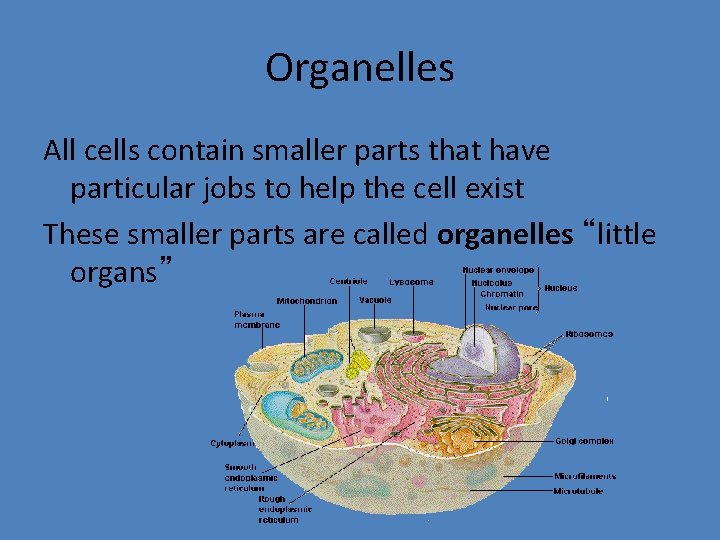
Organelles All cells contain smaller parts that have particular jobs to help the cell exist These smaller parts are called organelles “little organs”
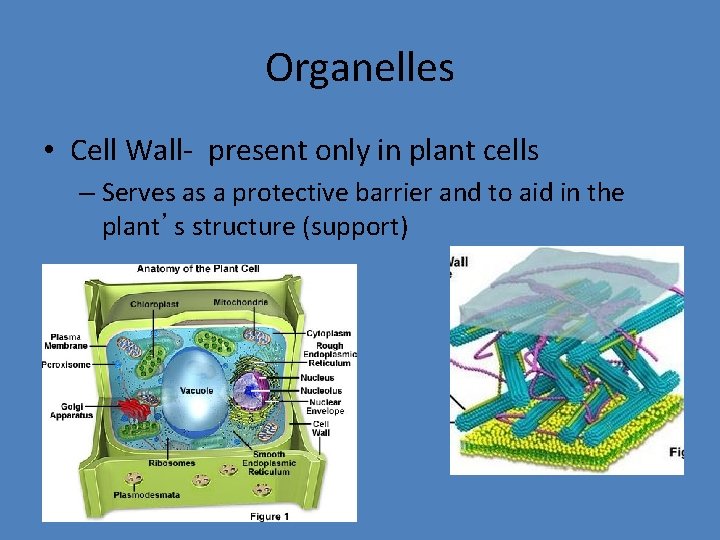
Organelles • Cell Wall- present only in plant cells – Serves as a protective barrier and to aid in the plant’s structure (support)
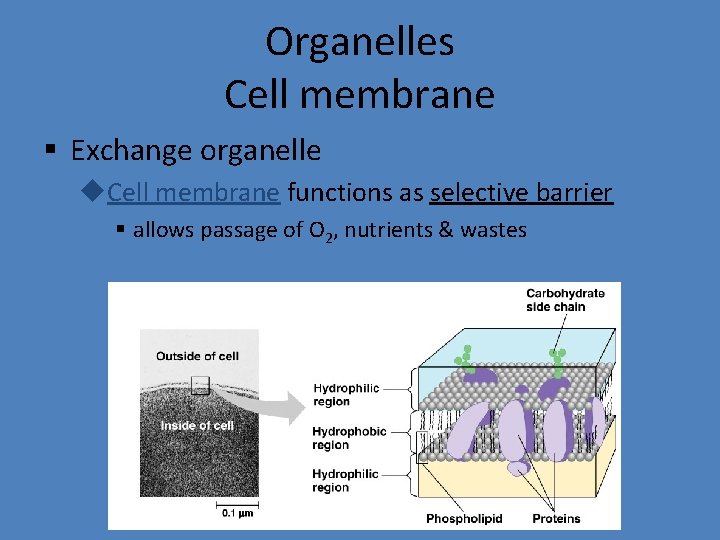
Organelles Cell membrane § Exchange organelle u. Cell membrane functions as selective barrier § allows passage of O 2, nutrients & wastes 2005 -2006
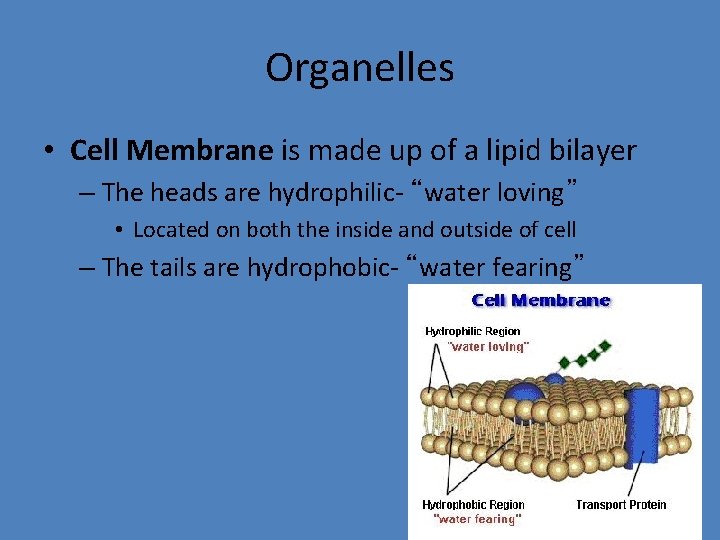
Organelles • Cell Membrane is made up of a lipid bilayer – The heads are hydrophilic- “water loving” • Located on both the inside and outside of cell – The tails are hydrophobic- “water fearing”

Cell Membrane • The selectively permeable cell membrane allows the transport of some materials into and out of the cell – 2 types of transport • Active Transport- this requires the cell to use its own energy to move materials into and out of the cell. This usually occurs with larger particles.
Cell Membrane • Passive Transport- this type of cellular transportation does not require the cell to use its own energy to move materials into or out of the cell. – Diffusion- the movement of particles from an area of higher concentration to an area of lower concentration – *OSMOSIS- diffusion through a semi-permeable membrane- the semi-permeable membrane is the cell membrane

Osmosis
Cell Organelles: Membranes • Capsule: present usually in bacteria and algae, prokaryotic cells – Serves to protect the cell (usually in the absence of a cell wall/membrane) – Made of polysaccharides; this is the slimy appearance/texture of algae and bacterial colonies 1. makes the bacterium slimy and allows it to evade phagocytosis 2. allows the bacterium to adhere to host 3. accounts for the virulence of bacteria (see above 1, 2)
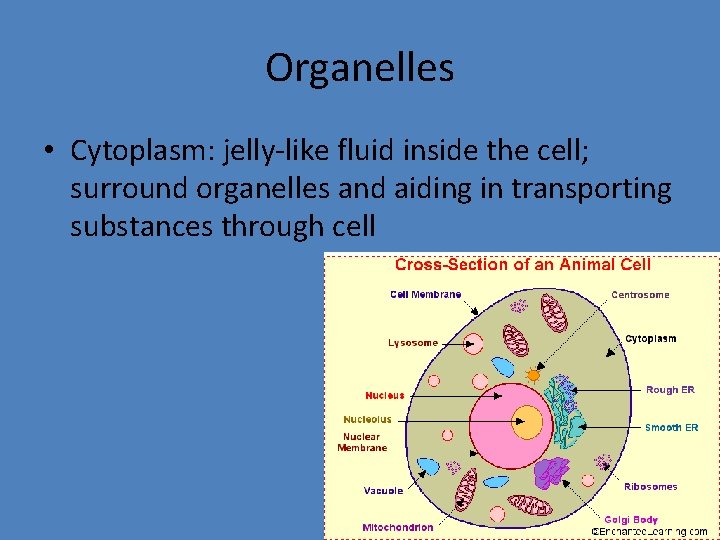
Organelles • Cytoplasm: jelly-like fluid inside the cell; surround organelles and aiding in transporting substances through cell
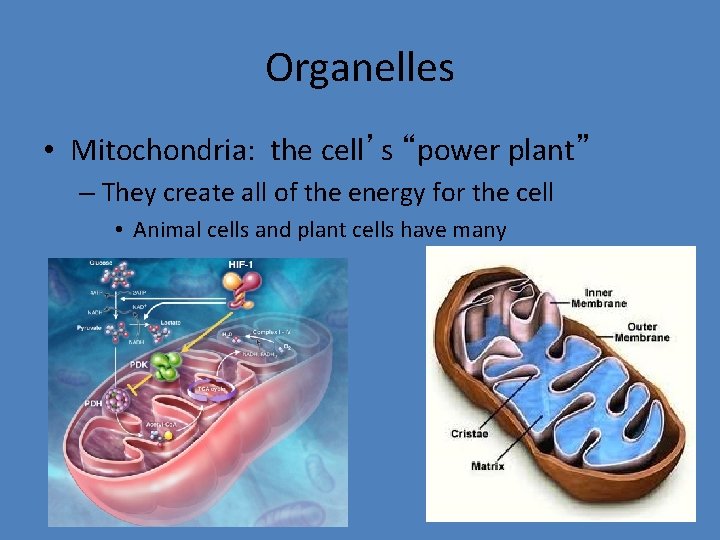
Organelles • Mitochondria: the cell’s “power plant” – They create all of the energy for the cell • Animal cells and plant cells have many
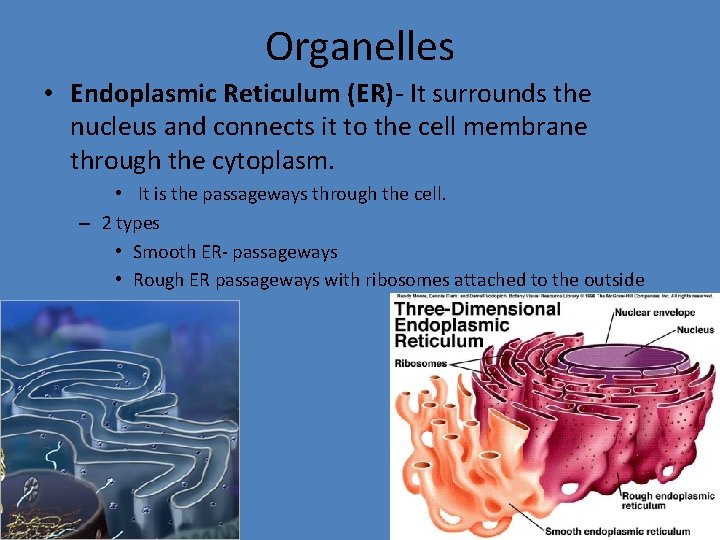
Organelles • Endoplasmic Reticulum (ER)- It surrounds the nucleus and connects it to the cell membrane through the cytoplasm. • It is the passageways through the cell. – 2 types • Smooth ER- passageways • Rough ER passageways with ribosomes attached to the outside
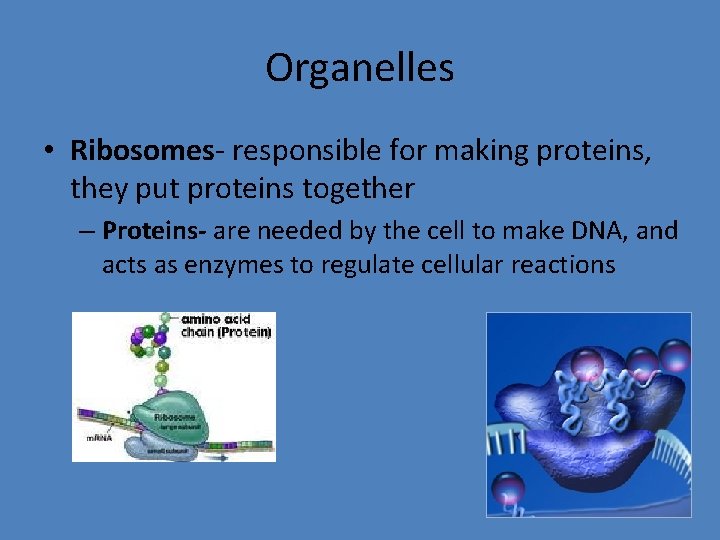
Organelles • Ribosomes- responsible for making proteins, they put proteins together – Proteins- are needed by the cell to make DNA, and acts as enzymes to regulate cellular reactions
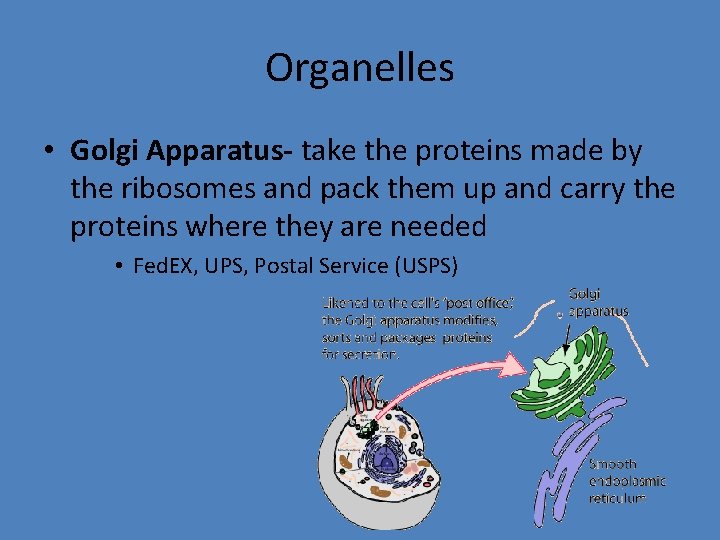
Organelles • Golgi Apparatus- take the proteins made by the ribosomes and pack them up and carry the proteins where they are needed • Fed. EX, UPS, Postal Service (USPS)
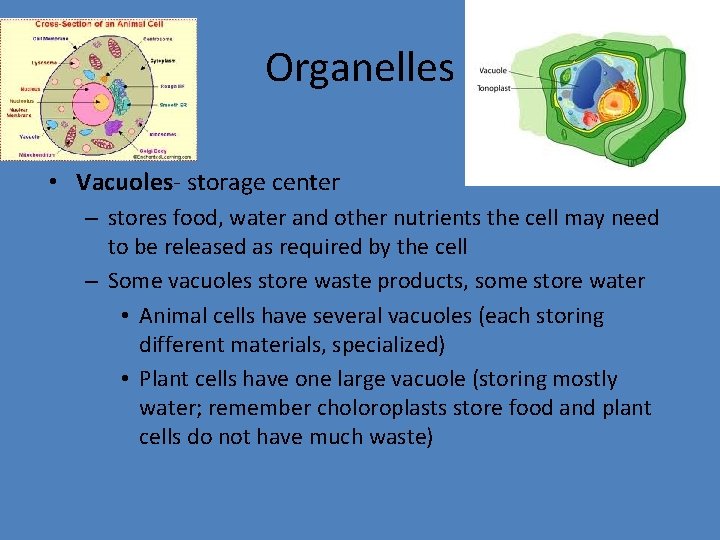
Organelles • Vacuoles- storage center – stores food, water and other nutrients the cell may need to be released as required by the cell – Some vacuoles store waste products, some store water • Animal cells have several vacuoles (each storing different materials, specialized) • Plant cells have one large vacuole (storing mostly water; remember choloroplasts store food and plant cells do not have much waste)
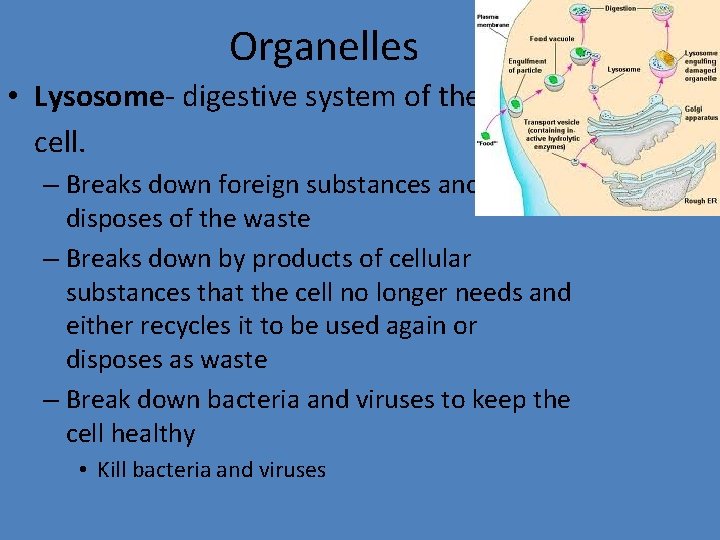
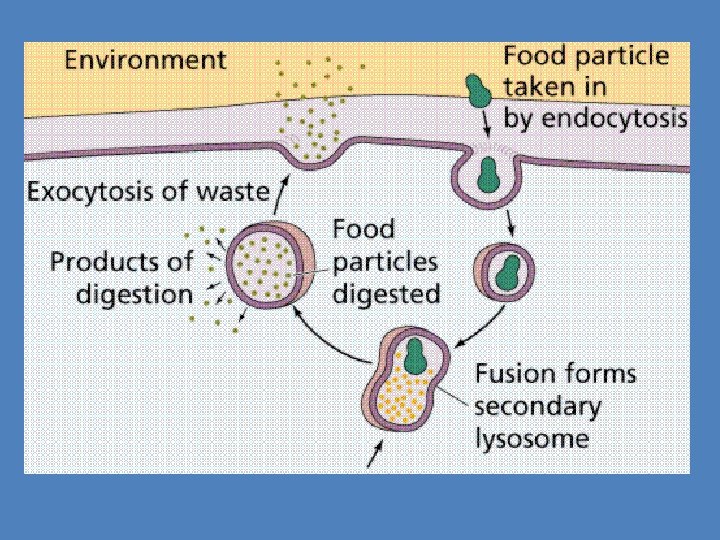
Organelles • Lysosome- digestive system of the cell. – Breaks down foreign substances and disposes of the waste – Breaks down by products of cellular substances that the cell no longer needs and either recycles it to be used again or disposes as waste – Break down bacteria and viruses to keep the cell healthy • Kill bacteria and viruses
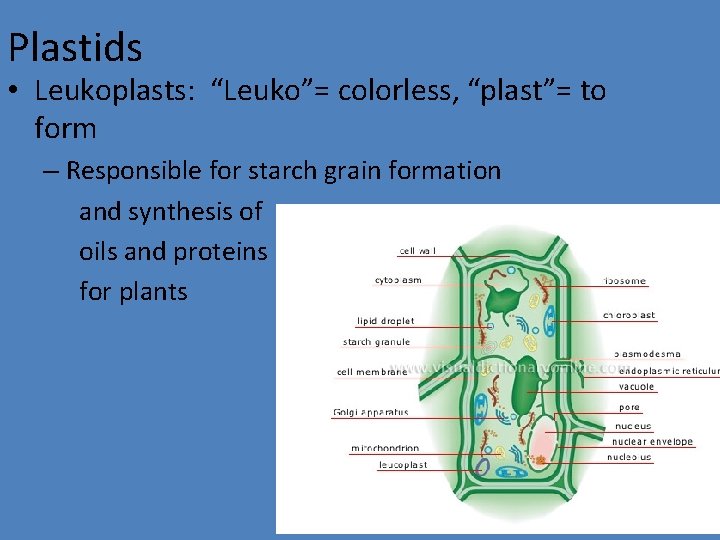
Plastids • Leukoplasts: “Leuko”= colorless, “plast”= to form – Responsible for starch grain formation and synthesis of oils and proteins for plants
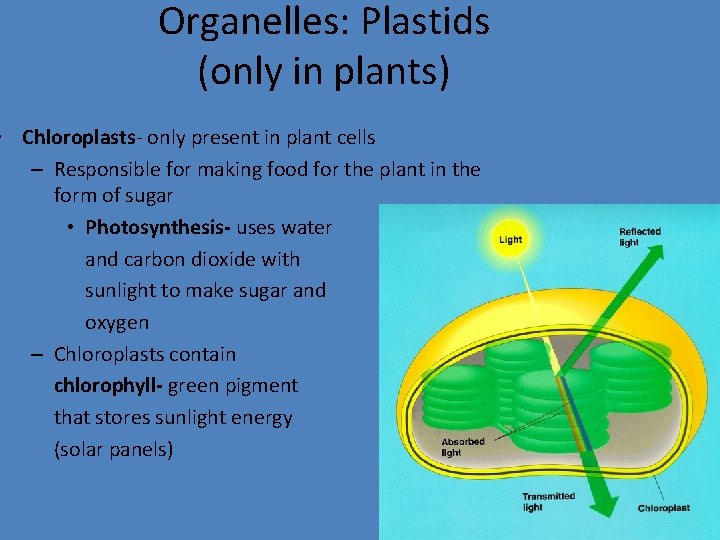
Organelles: Plastids (only in plants) • Chloroplasts- only present in plant cells – Responsible for making food for the plant in the form of sugar • Photosynthesis- uses water and carbon dioxide with sunlight to make sugar and oxygen – Chloroplasts contain chlorophyll- green pigment that stores sunlight energy (solar panels)
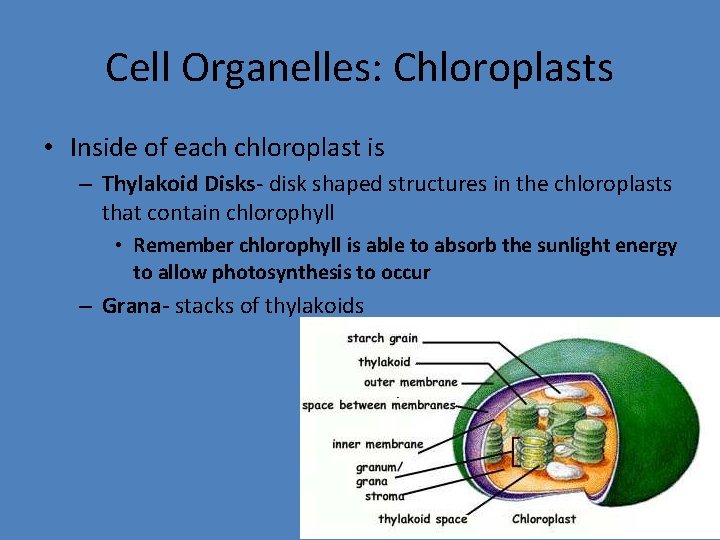
Cell Organelles: Chloroplasts • Inside of each chloroplast is – Thylakoid Disks- disk shaped structures in the chloroplasts that contain chlorophyll • Remember chlorophyll is able to absorb the sunlight energy to allow photosynthesis to occur – Grana- stacks of thylakoids
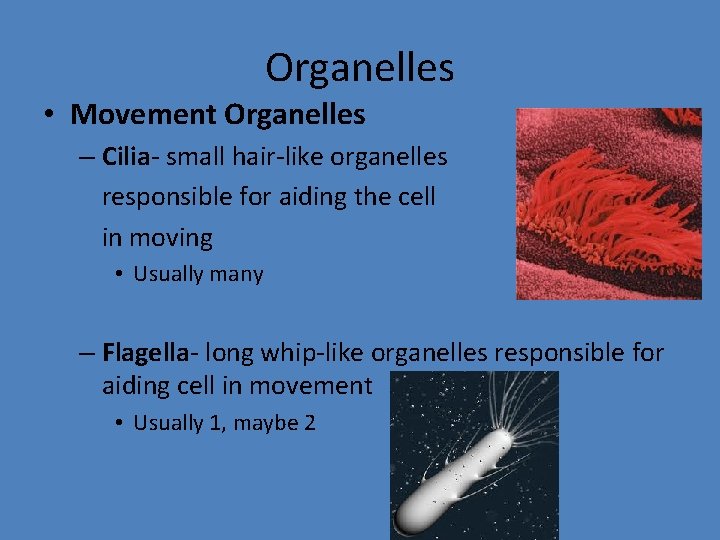
Organelles • Movement Organelles – Cilia- small hair-like organelles responsible for aiding the cell in moving • Usually many – Flagella- long whip-like organelles responsible for aiding cell in movement • Usually 1, maybe 2
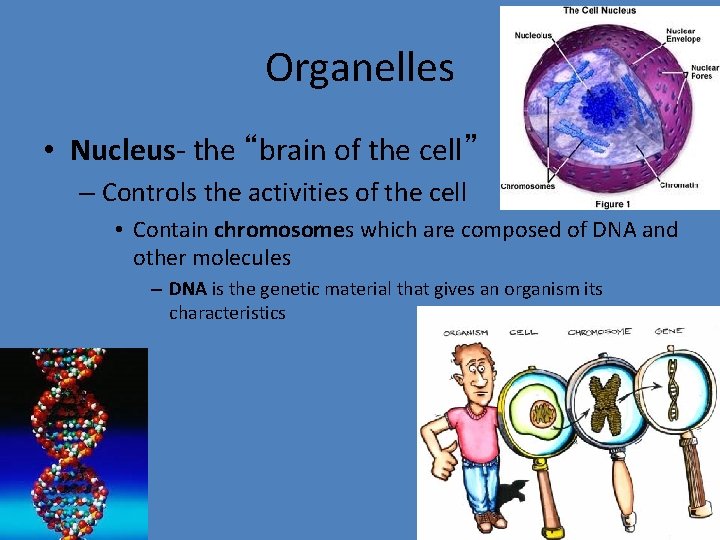
Organelles • Nucleus- the “brain of the cell” – Controls the activities of the cell • Contain chromosomes which are composed of DNA and other molecules – DNA is the genetic material that gives an organism its characteristics
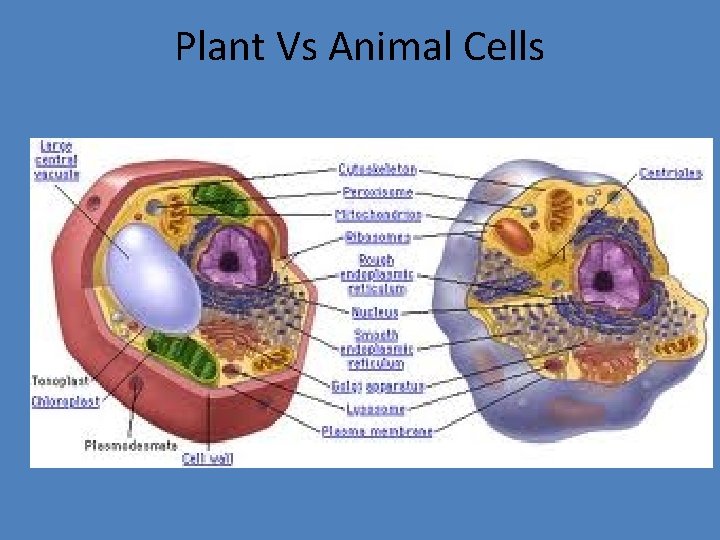
Plant Vs Animal Cells
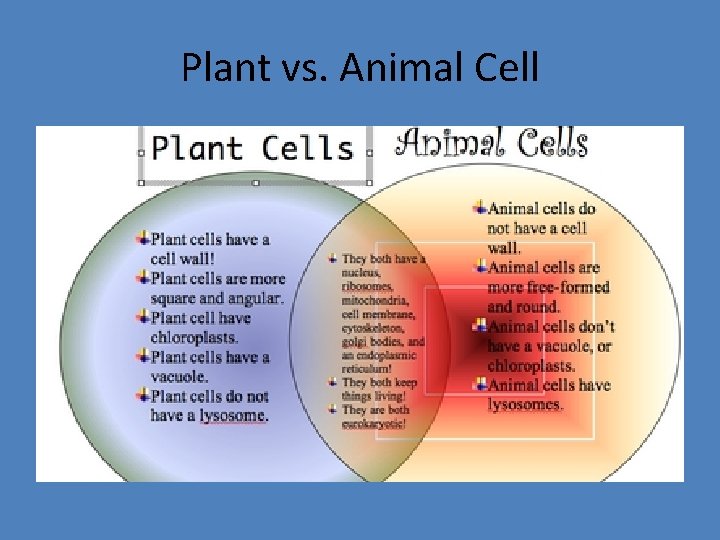
Plant vs. Animal Cell
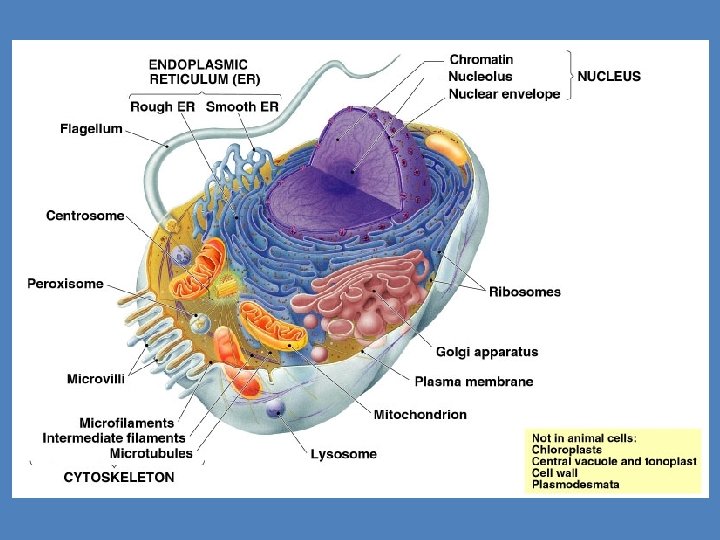
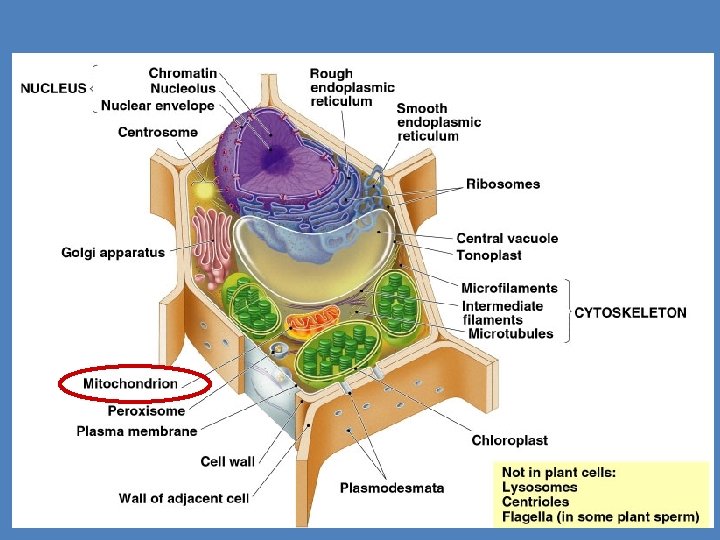
2005 -2006
Cells and their Environment • All living things like stability in all areas…. And yes that includes CELLS! • This state of maintaining a stable environment is called HOMEOSTASIS – This holds true for • • • Temperature p. H Water concentration Oxygen saturation Light requirement Much more!!
Homeostasis • Homeostasis is not one set value an organism must maintain rather it is a range that an organism must remain within – An organism may venture outside this range momentarily and still survive, but it may cause severe cell damage • For example human cells like to maintain an internal temperature of 98. 6 degrees F, but can withstand lower/higher temperature for a while
Homeostasis in Solution • A cell wants to keep a set concentration of solution inside and outside of the cell – When this changes the cell does not like it! – This is where OSMOSIS and DIFFUSION- PASSIVE TRANSPORT- comes in to play
Osmosis and Solution Concentration • Osmosis occurs because there is a different concentration of solution inside the cell than outside the cell – Hypotonic – Isotonic – Hypertonic
Hypotonic • Hypo- “under”, “beneath”, lower, less than • Tonic- “tension”, refers to the concentration – When the water concentration inside of the cell is lower than the water concentration outside of the cell (the amount of water outside of the cell is greater- more water outside of cell!) – How will movement occur? – Water will flow (through osmosis) into the cell!!
Hypotonic • Please note that if a cell takes in too much water from the osmosis process trying to equilibrate the concentrations the cell will burst! – Cytolysis- cells will burst (cell death) • Cyto- cell • Lysis- loosen (cell membrane), results in bursting
Isotonic • ISO- “equal”, same on both sides – When the water concentration outside of the cell is the same as that inside the cell (equal, balanced) • How will water flow? – No flow!
Hypertonic • Hyper- “over and beyond”, above, more than – When the concentration of water outside the cell is less than that of the water concentration inside the cell (the cell has more water!) • How will water flow/diffuse? – From inside the cell to the outside! • The cell can shrink/shrivel like a raisin (causing cell death)
Passive Transport • Cell does not expend energy to move particles into or out of cell • Movement across the cell membrane with the concentration gradient without using cell’s energy store. – Usually only occurs with small particles • Osmosis • Diffusion • Facilitated diffusion
Facilitated Diffusion • This is diffusion with a helper! – Sometimes diffusion need some help and the cell membrane has imbedded (set in) proteins to do this job • Transport proteins- are proteins in the cell membrane that help particles move into/out of the cell when the particles cannot do so on their own. (Particles may be a tiny bit to big, shape may be odd, etc) » Channel protein- forms tiny pores to allow substance to move through membrane » Carrier protein- has a receptor site that will bind to a specific molecule to move it through the cell.
Active Transport • This where the cell must use its own energy to move things into or out of the cell against the concentration gradient (against the flow) – Some forms use pumps – Some forms use proteins
Active Transport: Bulk Transport • This is used to move large particles through the cell membrane – Endocytosis – Exocytosis
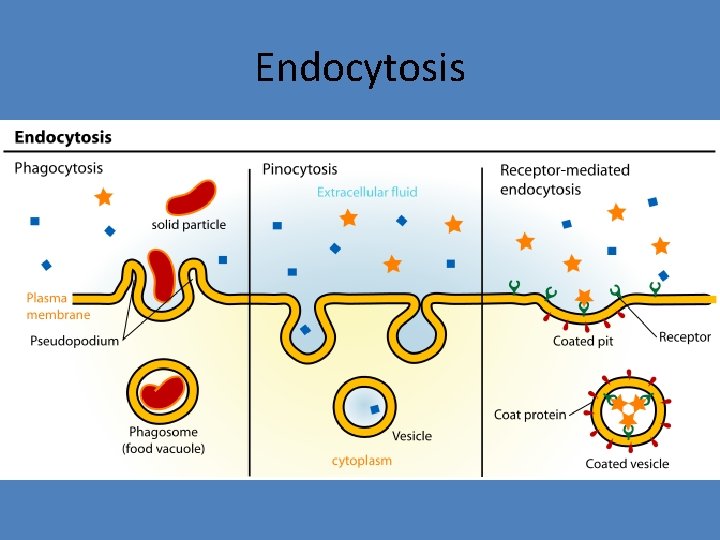
Endocytosis • Endo- “in” • Cyto- “cell” • Sis- a process – A process of moving into the cell – Endocytosis is where the cell uses its own energy to transport materials (in bulk) into the cell (through the cell membrane)
Endocytosis • What is happening is that the cell membrane opens up a pit-like structure (membrane) and then the “pit” closes in around the particles and carries them into the cell membrane (into the cell)
Endocytosis • Two types – Pinocytosis – Phagocytosis
Pinocytosis • Pino- “to drink” – “Cell Drinking” – The movement of bulk fluids into the cell through endocytosis
Phagocytosis • Phago- “ To Eat” – “Cell Eating” – The movement of bulk [solid] particles (not fluids) into the cell by endocytosis
Endocytosis
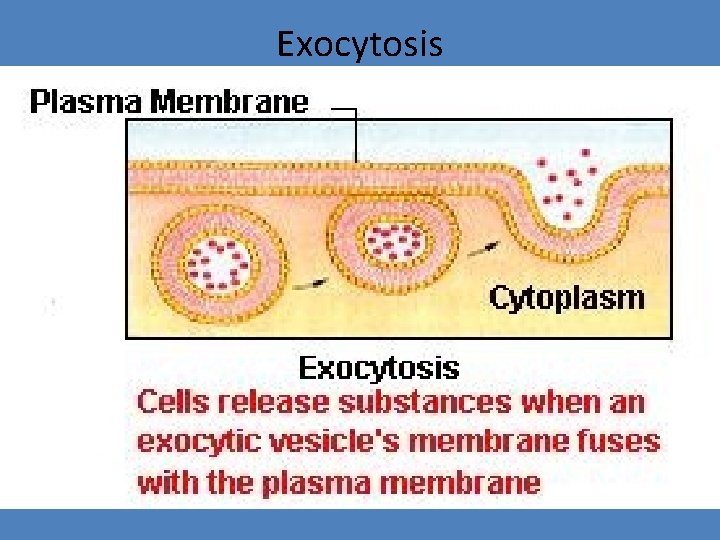
Exocytosis • Exo- “outside” • Cyto- “cell” • Sis- a process – Exocytosis is the active transport process of moving bulk materials out of the cell!
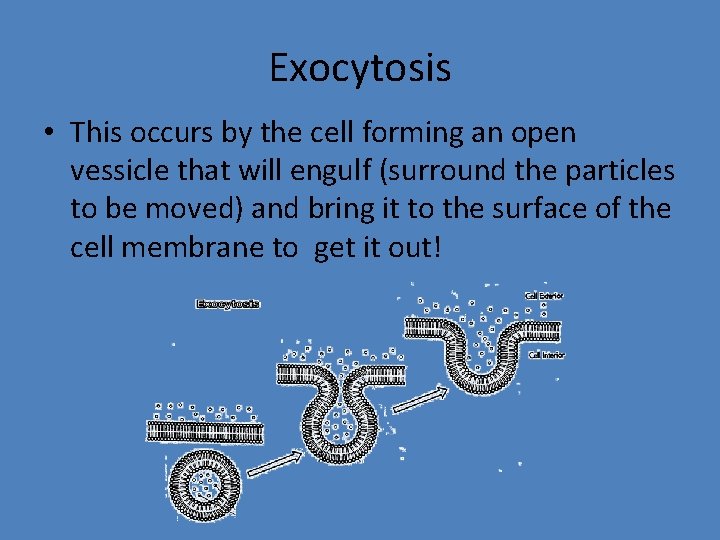
Exocytosis • This occurs by the cell forming an open vessicle that will engulf (surround the particles to be moved) and bring it to the surface of the cell membrane to get it out!
Exocytosis

- Slides: 54