
Chapter 11 Surveying the Stars How luminous are

- Slides: 17
Chapter 11 Surveying the Stars
How luminous are stars? (That is, how much light do they give off? )
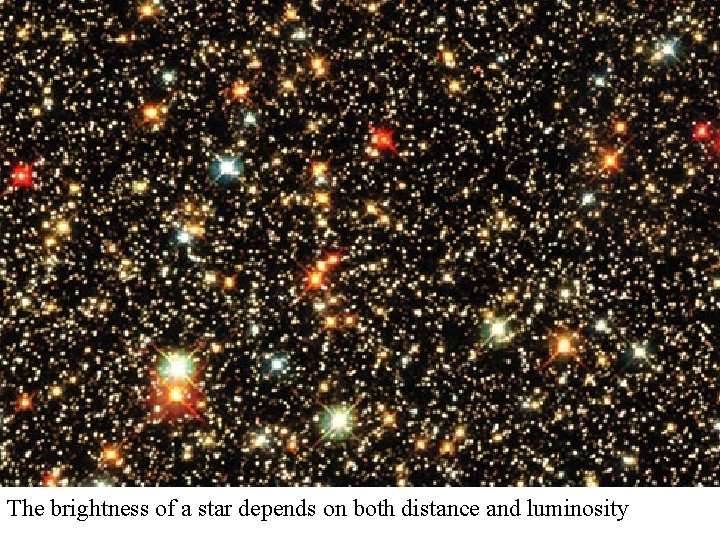
The brightness of a star depends on both distance and luminosity
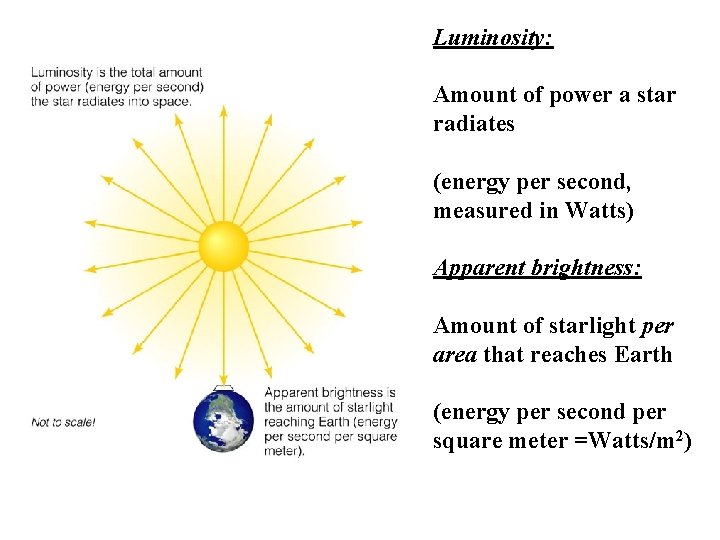
Luminosity: Amount of power a star radiates (energy per second, measured in Watts) Apparent brightness: Amount of starlight per area that reaches Earth (energy per second per square meter =Watts/m 2)
Timed Clicker Question Next…
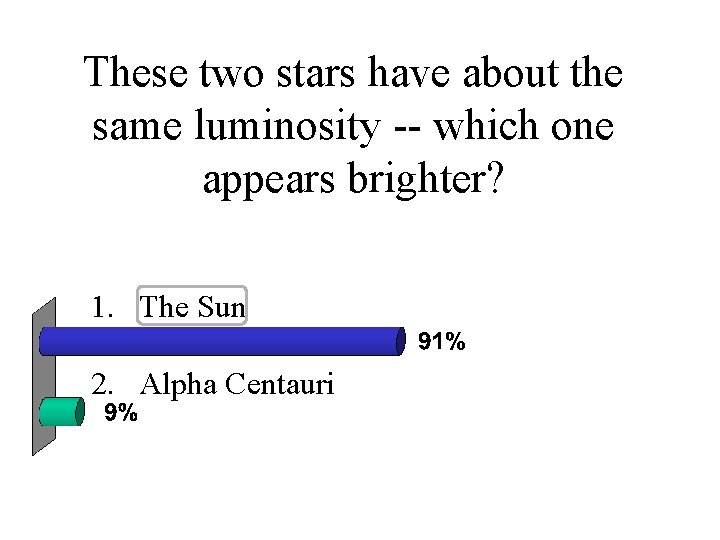
These two stars have about the same luminosity -- which one appears brighter? 1. The Sun 2. Alpha Centauri
The Sun and Alpha Centauri give off about the same amounts of light, but to us the Sun looks much brighter because it’s much closer. A simple equation relates the apparent brightness of any star to its luminosity and its distance from us. The light from any star is spread out over a sphere surrounding the star.
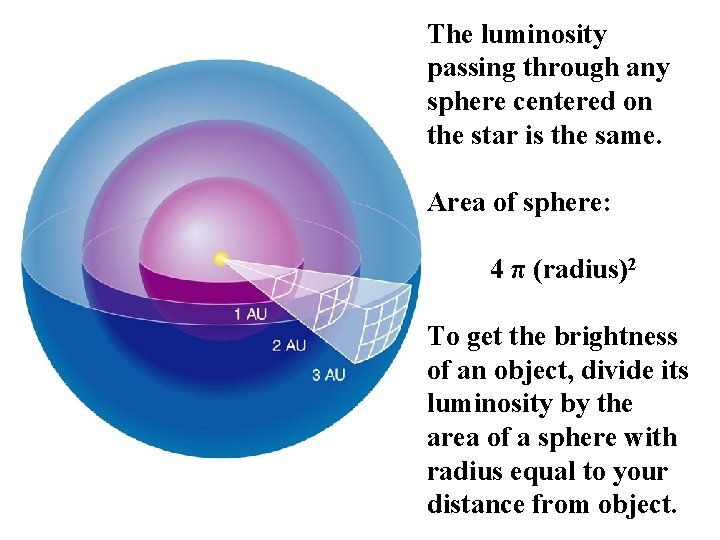
The luminosity passing through any sphere centered on the star is the same. Area of sphere: 4 π (radius)2 To get the brightness of an object, divide its luminosity by the area of a sphere with radius equal to your distance from object.
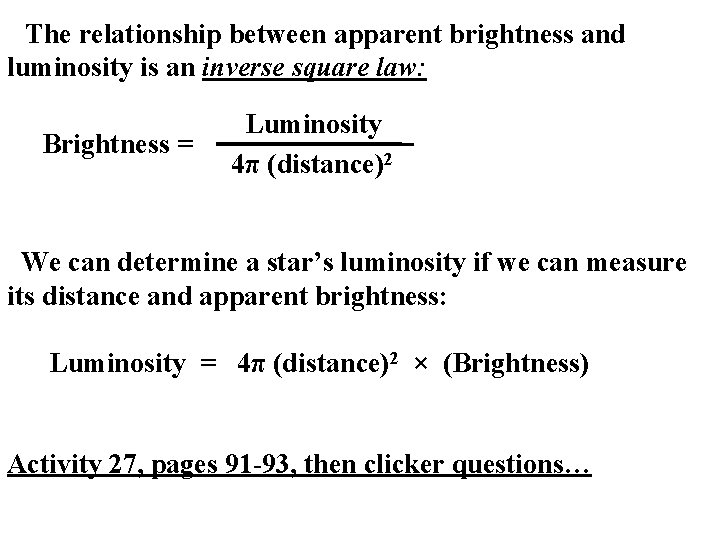
The relationship between apparent brightness and luminosity is an inverse square law: Brightness = Luminosity 4π (distance)2 We can determine a star’s luminosity if we can measure its distance and apparent brightness: Luminosity = 4π (distance)2 × (Brightness) Activity 27, pages 91 -93, then clicker questions…
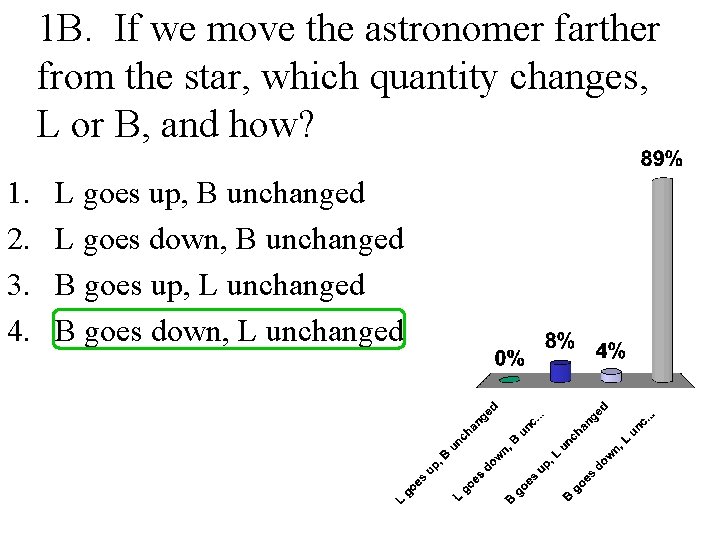
1 B. If we move the astronomer farther from the star, which quantity changes, L or B, and how? 1. 2. 3. 4. L goes up, B unchanged L goes down, B unchanged B goes up, L unchanged B goes down, L unchanged
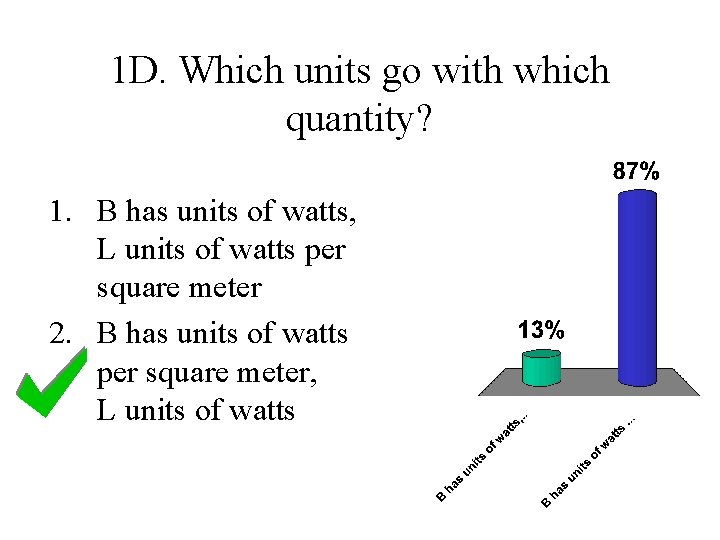
1 D. Which units go with which quantity? 1. B has units of watts, L units of watts per square meter 2. B has units of watts per square meter, L units of watts
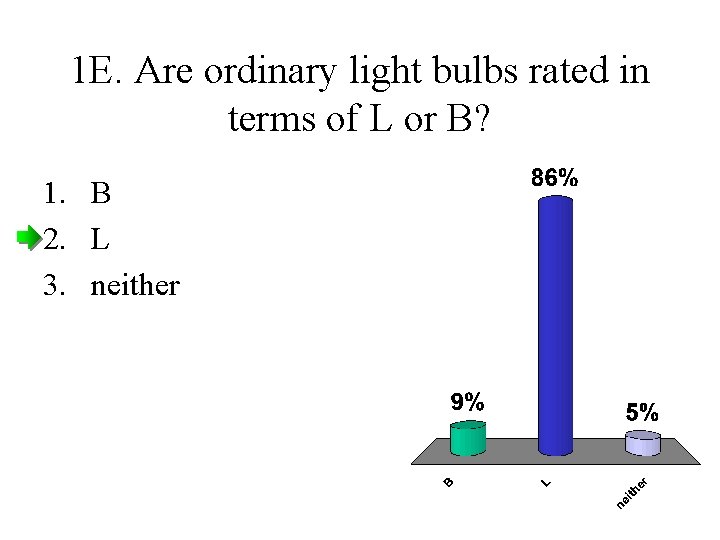
1 E. Are ordinary light bulbs rated in terms of L or B? 1. B 2. L 3. neither
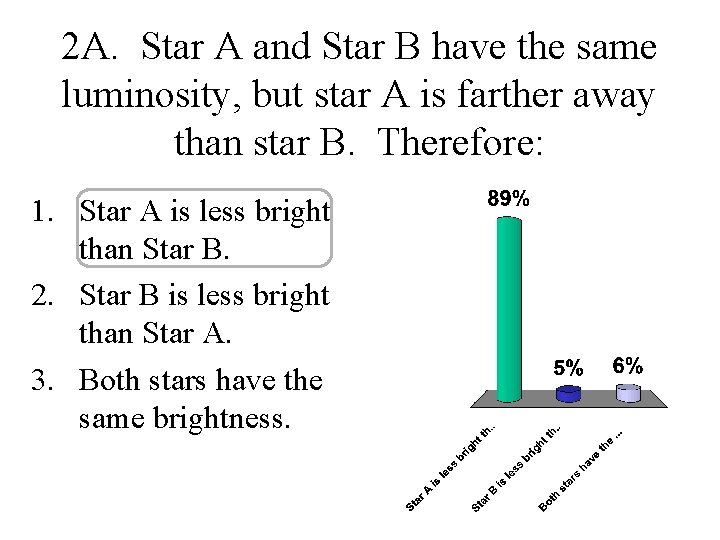
2 A. Star A and Star B have the same luminosity, but star A is farther away than star B. Therefore: 1. Star A is less bright than Star B. 2. Star B is less bright than Star A. 3. Both stars have the same brightness.
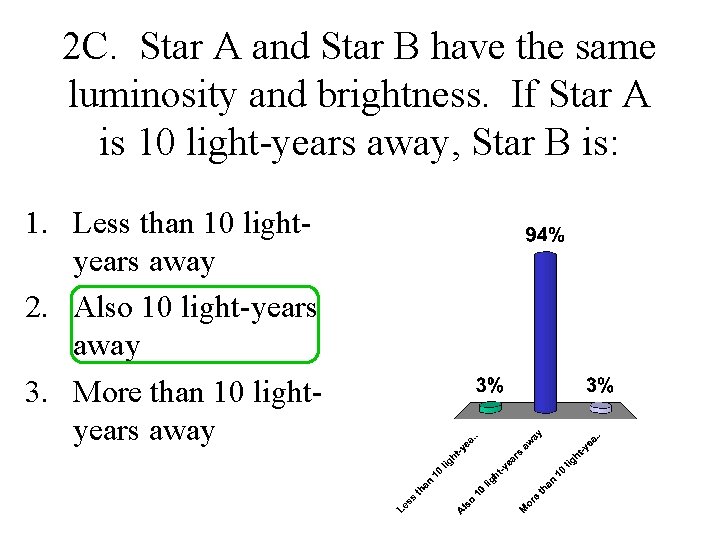
2 C. Star A and Star B have the same luminosity and brightness. If Star A is 10 light-years away, Star B is: 1. Less than 10 lightyears away 2. Also 10 light-years away 3. More than 10 lightyears away
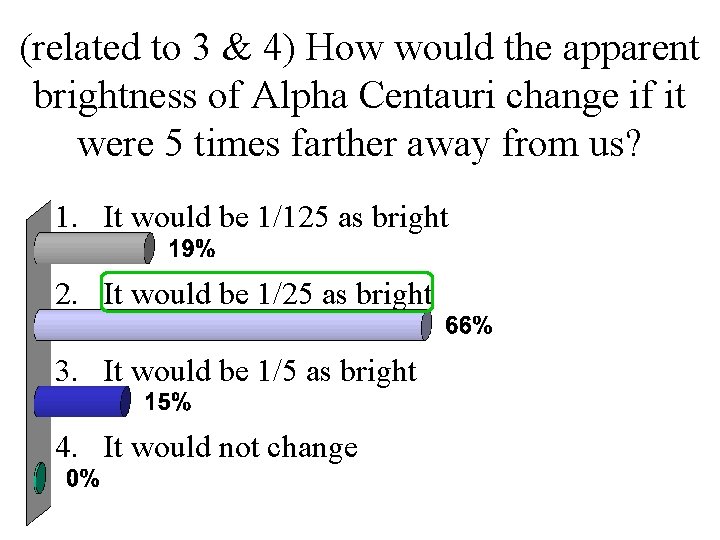
(related to 3 & 4) How would the apparent brightness of Alpha Centauri change if it were 5 times farther away from us? 1. It would be 1/125 as bright 2. It would be 1/25 as bright 3. It would be 1/5 as bright 4. It would not change
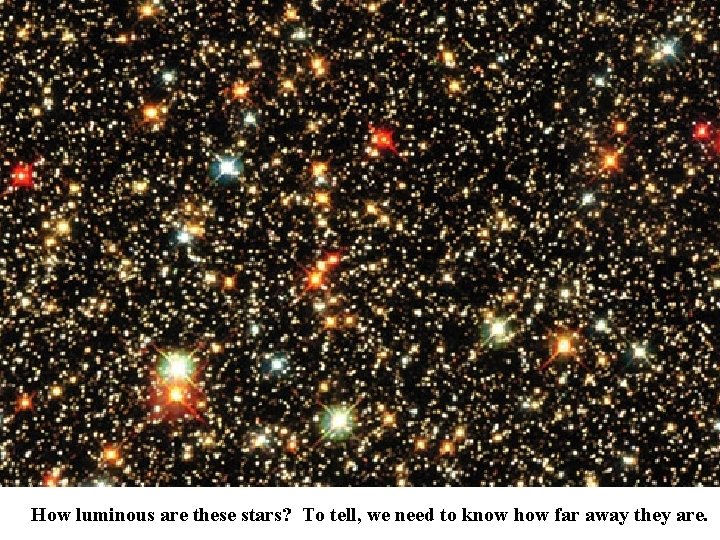
How luminous are these stars? To tell, we need to know how far away they are.
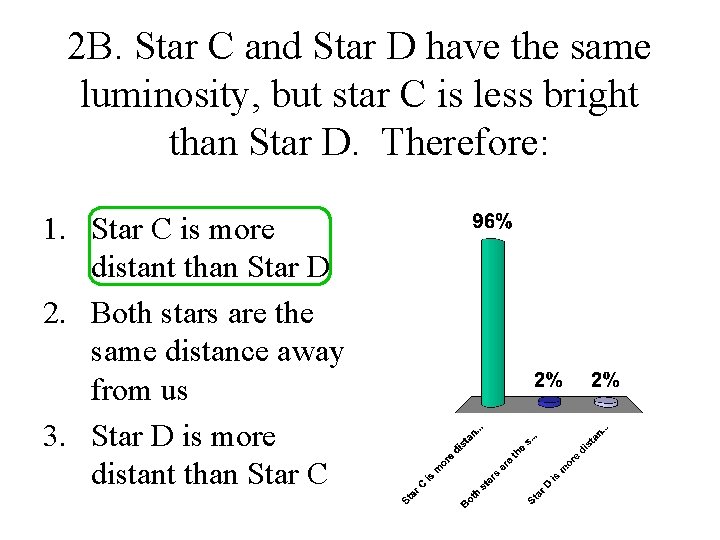
2 B. Star C and Star D have the same luminosity, but star C is less bright than Star D. Therefore: 1. Star C is more distant than Star D 2. Both stars are the same distance away from us 3. Star D is more distant than Star C