
Chapter 11 Section 2 The Caribbean Islands Standard
Chapter 11 Section 2 The Caribbean Islands Standard: 7. 2. 8. A Explain the characteristics of places and regions. Anchor: CC 8. 5. 6 -8. D: Determine the meaning of words as they are used in text. OBJECTIVE: Students will be able to describe the physical characteristics of the three (3) Caribbean islands. 3. 11. 15 1. PDN 2. Review/Finish Section 1 3. Begin Section 2 4. Ticket out the Door
The Caribbean Islands • Beautiful region of forest covered mountains, warm temperatures, and clear, blue waters. • However, many Caribbean nations are struggling to develop their economies. • Therefore, people leave the islands to find opportunities their homeland cannot offer.
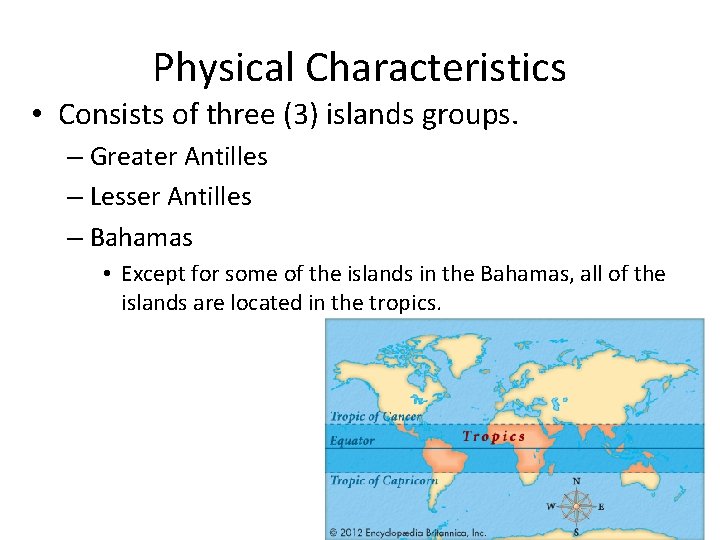
Physical Characteristics • Consists of three (3) islands groups. – Greater Antilles – Lesser Antilles – Bahamas • Except for some of the islands in the Bahamas, all of the islands are located in the tropics.
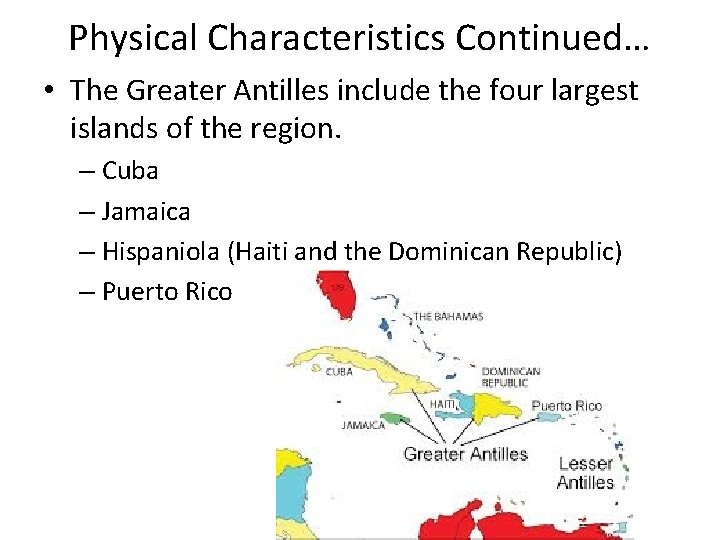
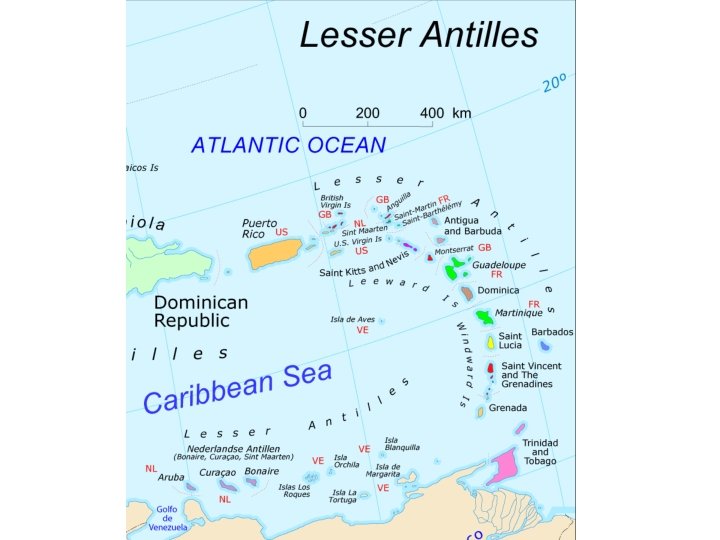
Physical Characteristics Continued… • The Greater Antilles include the four largest islands of the region. – Cuba – Jamaica – Hispaniola (Haiti and the Dominican Republic) – Puerto Rico
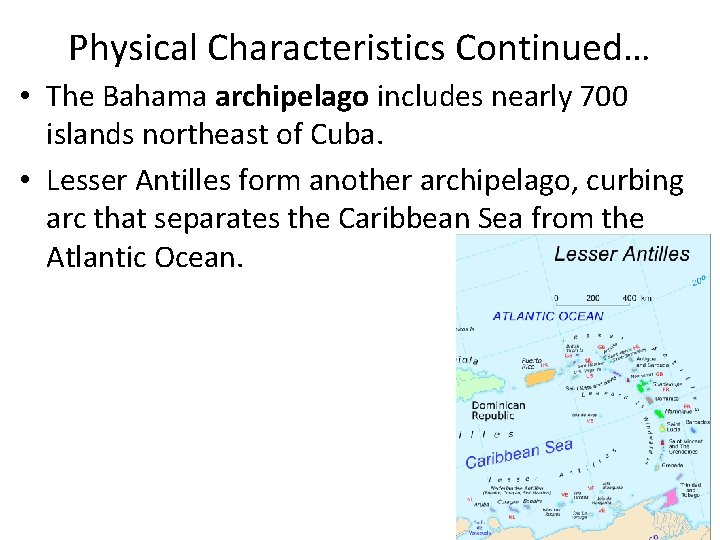
Physical Characteristics Continued… • The Bahama archipelago includes nearly 700 islands northeast of Cuba. • Lesser Antilles form another archipelago, curbing arc that separates the Caribbean Sea from the Atlantic Ocean.
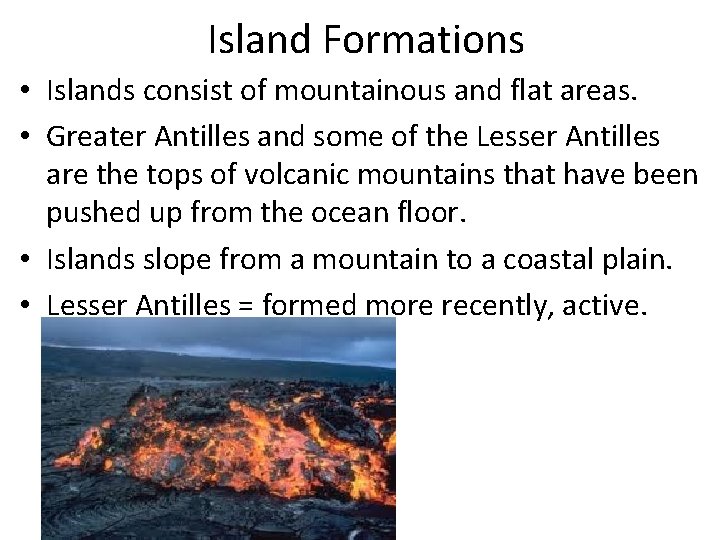
Island Formations • Islands consist of mountainous and flat areas. • Greater Antilles and some of the Lesser Antilles are the tops of volcanic mountains that have been pushed up from the ocean floor. • Islands slope from a mountain to a coastal plain. • Lesser Antilles = formed more recently, active.

Island Formation Continued… • The islands with flatter terrain are coral islands. – Created by the remains of colonies of tiny, softbodied sea animals called coral polyps. – All of the Bahamas are coral islands.
Marine Climate • The climate of the Caribbean islands is affected more by sea and wind than by elevation. • You may remember, nearness to water affects the climate of coastal areas. • Prevailing winds also affect the rainfall amount. • On the windward northern and eastern sides of the islands, facing the wind, rain can fall in torrents, reaching as much as 200 inches a year. • On the leeward sides, facing away from the wind, rainfall may be only 30 inches per year.
OBJECTIVE • Identify the ethnic roots of Caribbean culture.
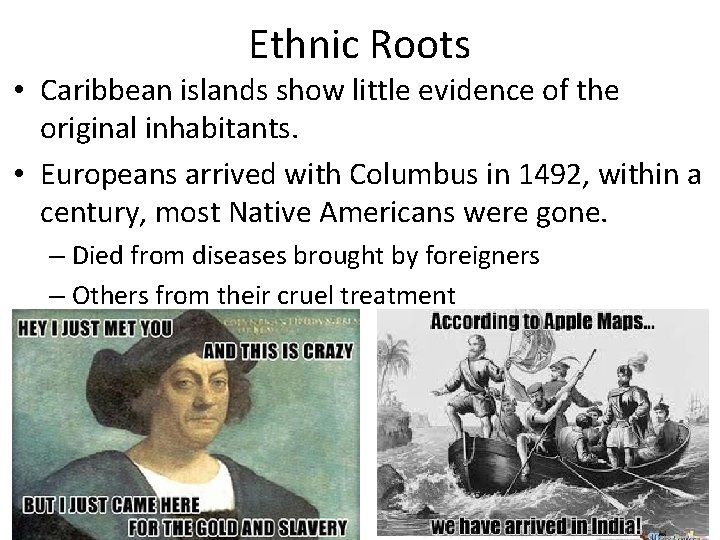
Ethnic Roots • Caribbean islands show little evidence of the original inhabitants. • Europeans arrived with Columbus in 1492, within a century, most Native Americans were gone. – Died from diseases brought by foreigners – Others from their cruel treatment
African Descent • European colonists needed laborers to do the hard work on their plantations, growing and harvesting sugar cane. – Brought millions of enslaved Africans to do the work. – Most of the regions current population are descendants of enslaved Africans, Europeans and Native Americans.
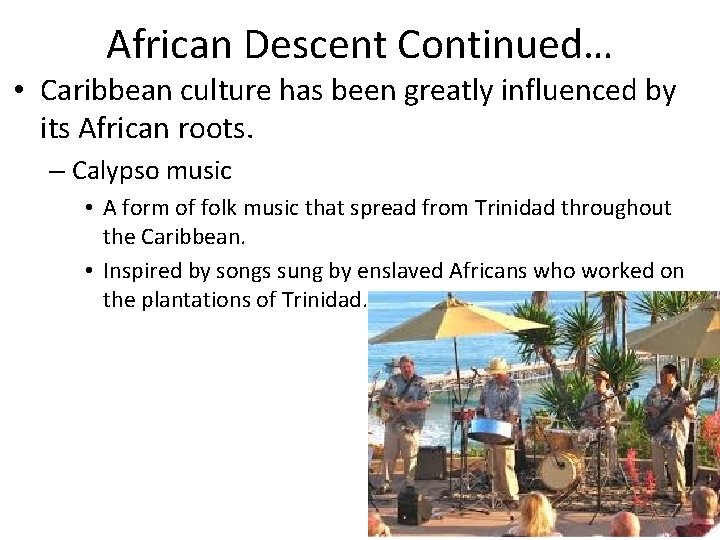
African Descent Continued… • Caribbean culture has been greatly influenced by its African roots. – Calypso music • A form of folk music that spread from Trinidad throughout the Caribbean. • Inspired by songs sung by enslaved Africans who worked on the plantations of Trinidad.
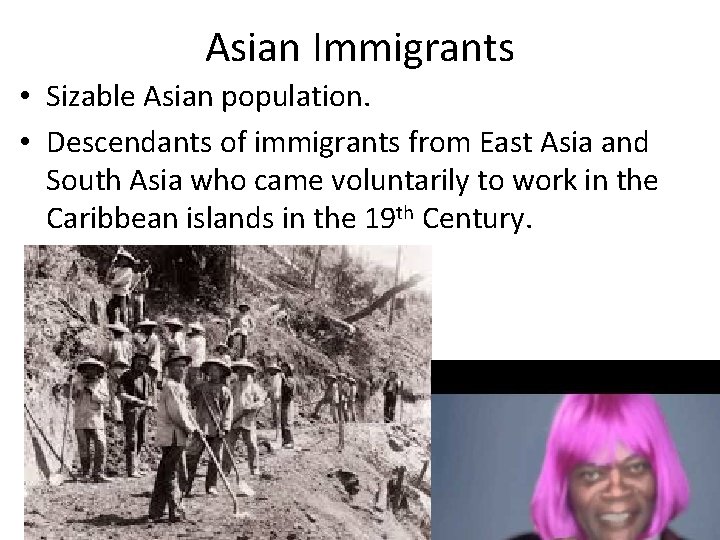
Asian Immigrants • Sizable Asian population. • Descendants of immigrants from East Asia and South Asia who came voluntarily to work in the Caribbean islands in the 19 th Century.
OBJECTIVE • Describe political and economic status of current Caribbean Islands.
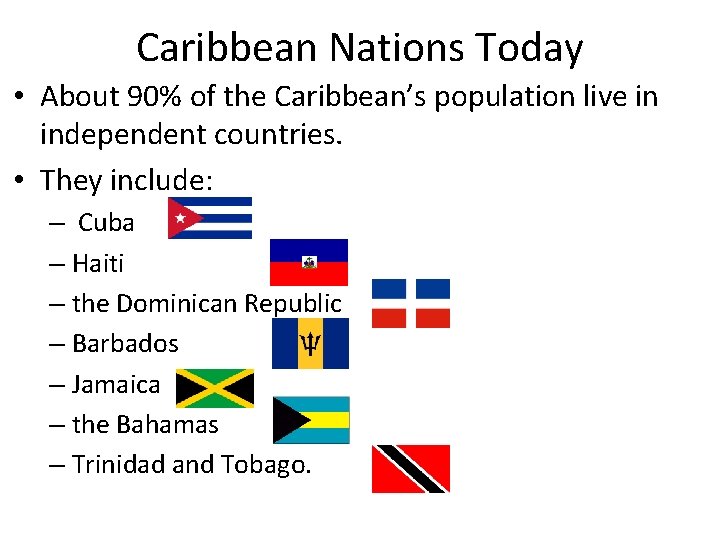
Caribbean Nations Today • About 90% of the Caribbean’s population live in independent countries. • They include: – Cuba – Haiti – the Dominican Republic – Barbados – Jamaica – the Bahamas – Trinidad and Tobago.
Caribbean Nations Today • British Virgin Islands, Cayman Islands remain colonies of the United Kingdom. • Jamaica and Bahamas are independent members of the British Commonwealth. • U. S. Virgin Islands is United States territory. • Puerto Rico is a U. S. Commonwealth. – Citizens of the U. S. Virgin Islands and Puerto Rico are United States Citizens.
Economic Activities • Caribbean Islands depend on Agriculture. – Extremely fertile soil = much of the world’s sugar, bananas, coconuts, cocoa, rice, and cotton being produced in the region. – Others work in industries related to agriculture = refining sugar, packaging coconut products, making textiles. • Docks, shipping goods to North America. • Tourism

OLD OBJECTIVE ANSWERED • Political status of the Caribbean? • Economical status of the Caribbean?
NEW OBJECTIVE: • Students will explain why migration is so common among Caribbean islanders.
Migration • Move in search of jobs. – Plantations have been major employers. • But they only last 1 season (3 months). • Other nine (9) months are called the tiempo muerto, or dead season. • Workers move to other islands, Central America or the US to find work.
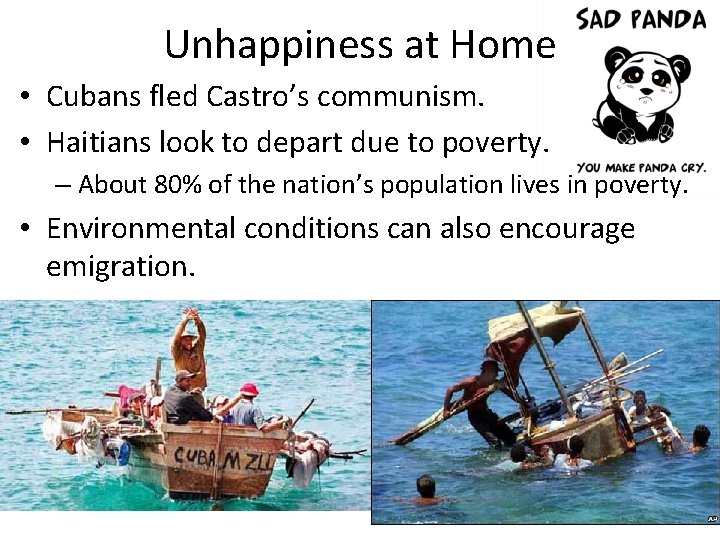
Unhappiness at Home • Cubans fled Castro’s communism. • Haitians look to depart due to poverty. – About 80% of the nation’s population lives in poverty. • Environmental conditions can also encourage emigration.
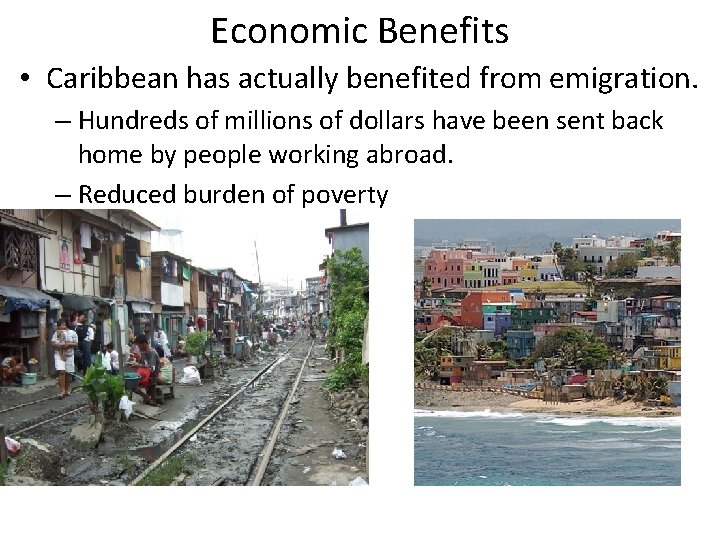
Economic Benefits • Caribbean has actually benefited from emigration. – Hundreds of millions of dollars have been sent back home by people working abroad. – Reduced burden of poverty
- Slides: 24