
Chapter 11 Review Phase Differences Solid definite volume






- Slides: 29
Chapter 11 Review
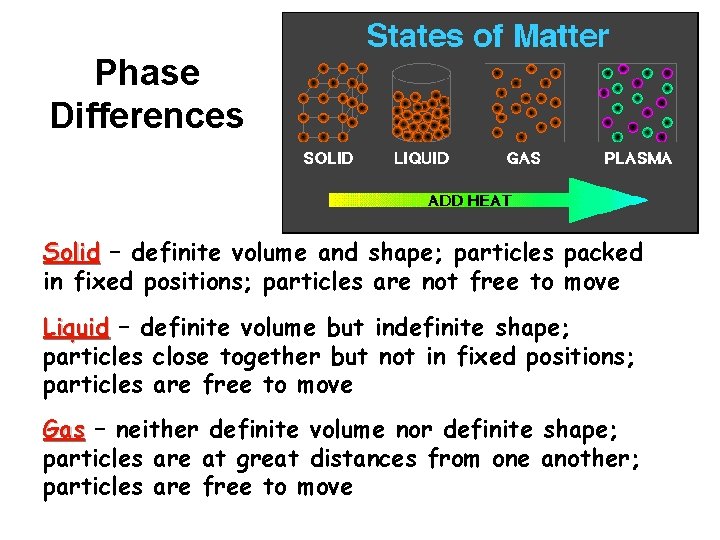
Phase Differences Solid – definite volume and shape; particles packed in fixed positions; particles are not free to move Liquid – definite volume but indefinite shape; particles close together but not in fixed positions; particles are free to move Gas – neither definite volume nor definite shape; particles are at great distances from one another; particles are free to move
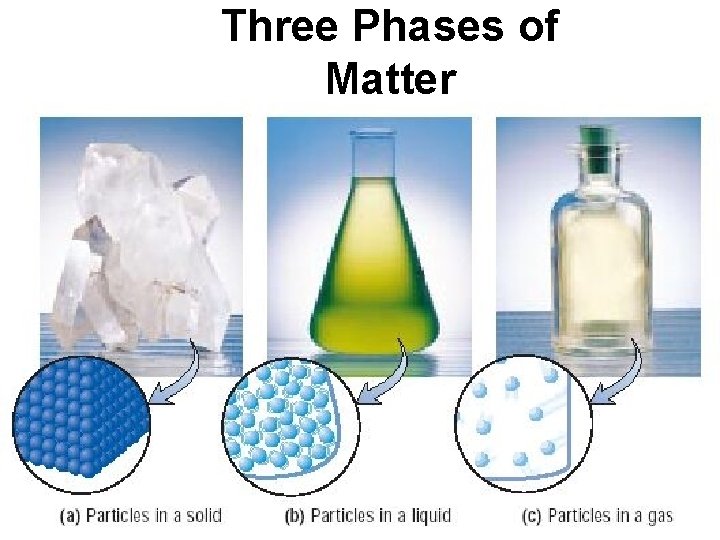
Three Phases of Matter
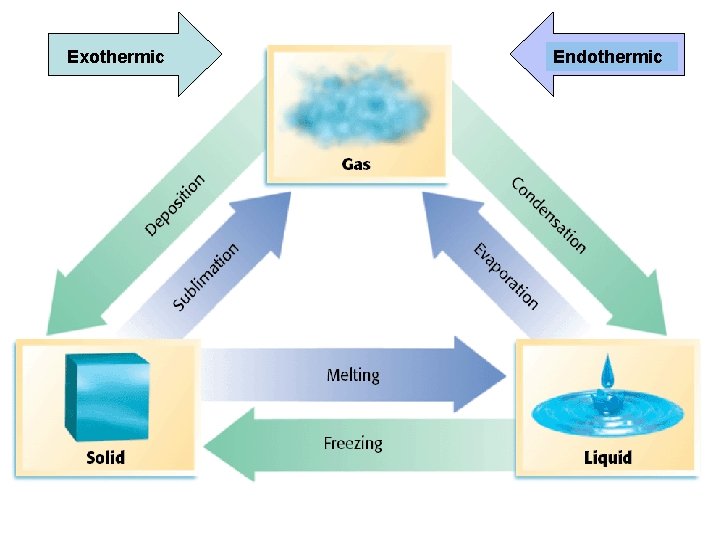
Exothermic Endothermic
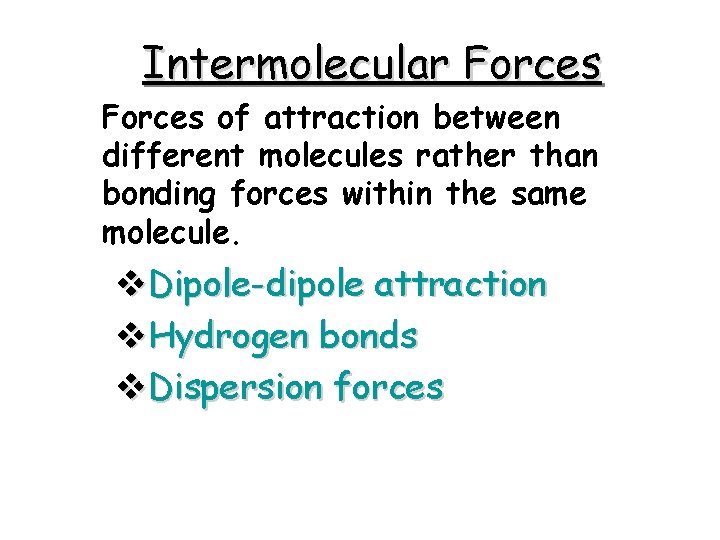
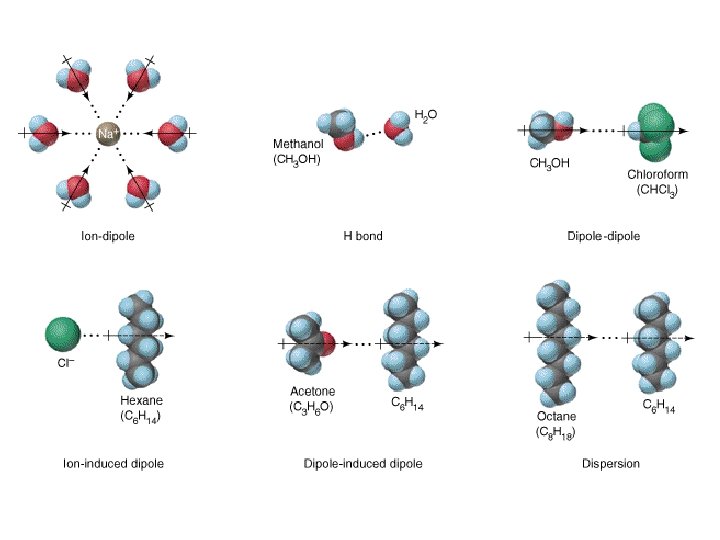
Intermolecular Forces of attraction between different molecules rather than bonding forces within the same molecule. v. Dipole-dipole attraction v. Hydrogen bonds v. Dispersion forces
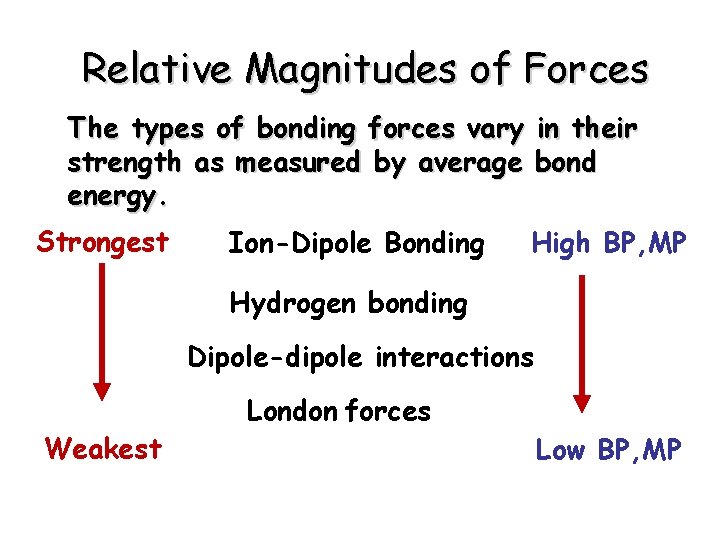
Relative Magnitudes of Forces The types of bonding forces vary in their strength as measured by average bond energy. Strongest Ion-Dipole Bonding High BP, MP Hydrogen bonding Dipole-dipole interactions Weakest London forces Low BP, MP
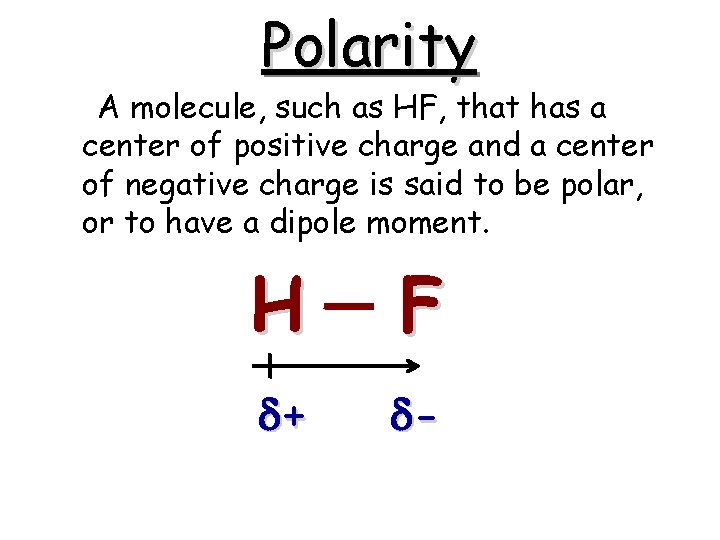
Polarity A molecule, such as HF, that has a center of positive charge and a center of negative charge is said to be polar, or to have a dipole moment. H F + -
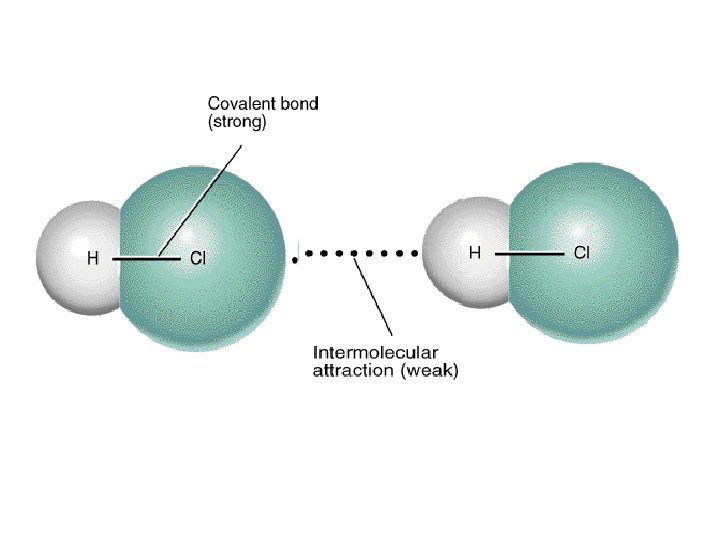
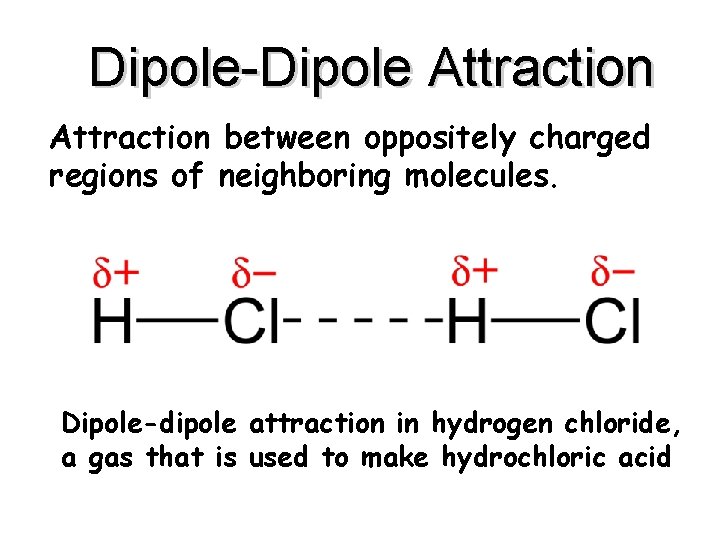
Dipole-Dipole Attraction between oppositely charged regions of neighboring molecules. Dipole-dipole attraction in hydrogen chloride, a gas that is used to make hydrochloric acid
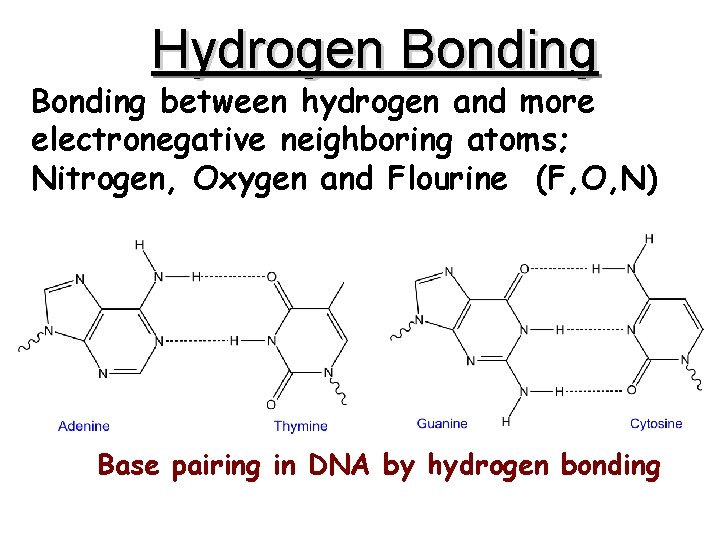
Hydrogen Bonding between hydrogen and more electronegative neighboring atoms; Nitrogen, Oxygen and Flourine (F, O, N) Base pairing in DNA by hydrogen bonding
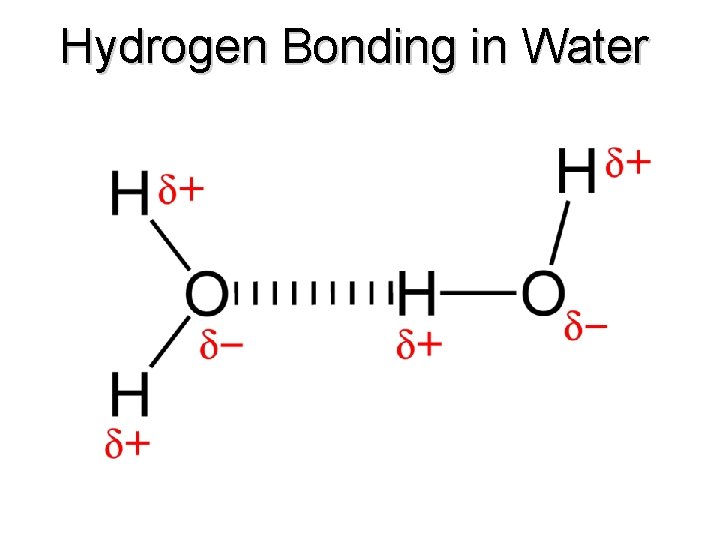
Hydrogen Bonding in Water
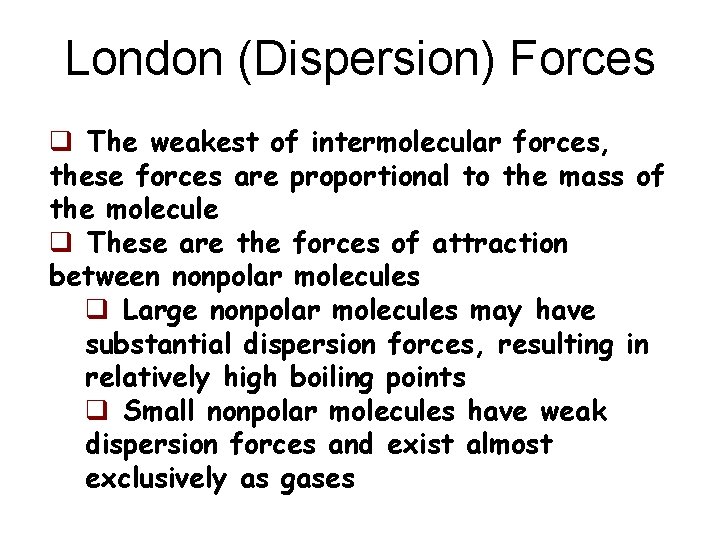
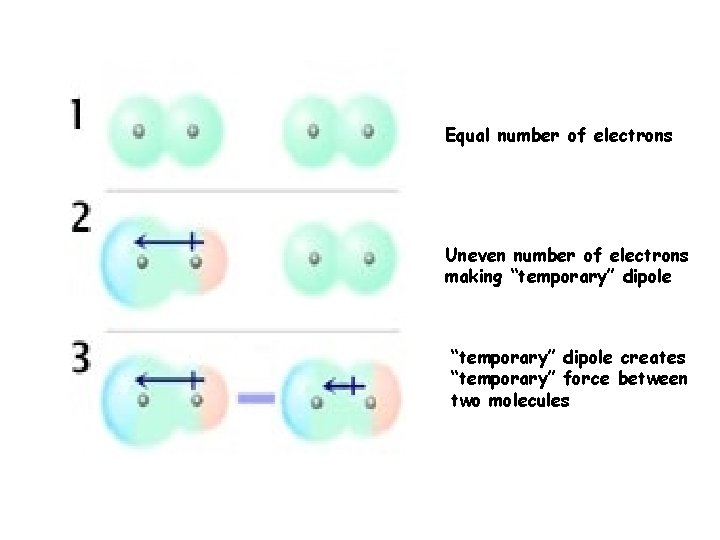
London (Dispersion) Forces q The weakest of intermolecular forces, these forces are proportional to the mass of the molecule q These are the forces of attraction between nonpolar molecules q Large nonpolar molecules may have substantial dispersion forces, resulting in relatively high boiling points q Small nonpolar molecules have weak dispersion forces and exist almost exclusively as gases
Equal number of electrons Uneven number of electrons making “temporary” dipole creates “temporary” force between two molecules
Enthalpy, Entropy, and Changes of State • Enthalpy is the total energy of a system. • Entropy measures a system’s disorder. • The energy added during melting or removed during freezing is called the enthalpy of fusion. • Particle motion is more random in the liquid state, so as a solid melts, the entropy of its particles increases. This increase is the entropy of fusion.
Enthalpy, Entropy, and Changes of State, continued • As a liquid evaporates, a lot of energy is needed to separate the particles. This energy is the enthalpy of vaporization. • Particle motion is much more random in a gas than in a liquid. A substance’s entropy of vaporization is much larger than its entropy of fusion.
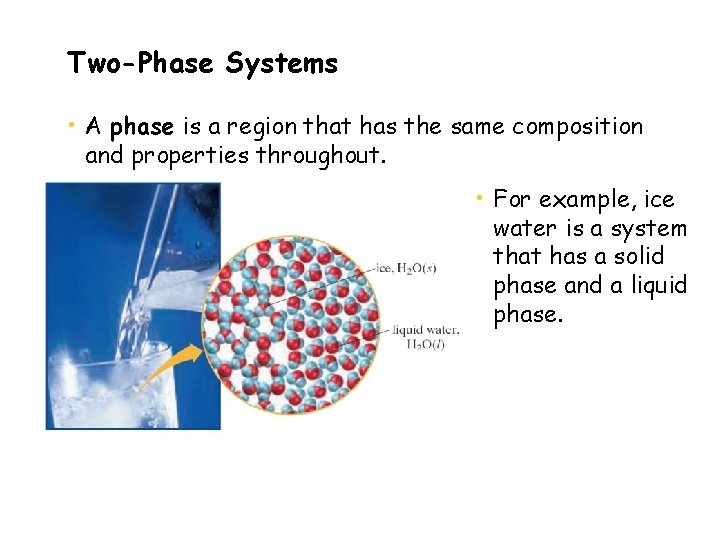
Two-Phase Systems • A phase is a region that has the same composition and properties throughout. • For example, ice water is a system that has a solid phase and a liquid phase.
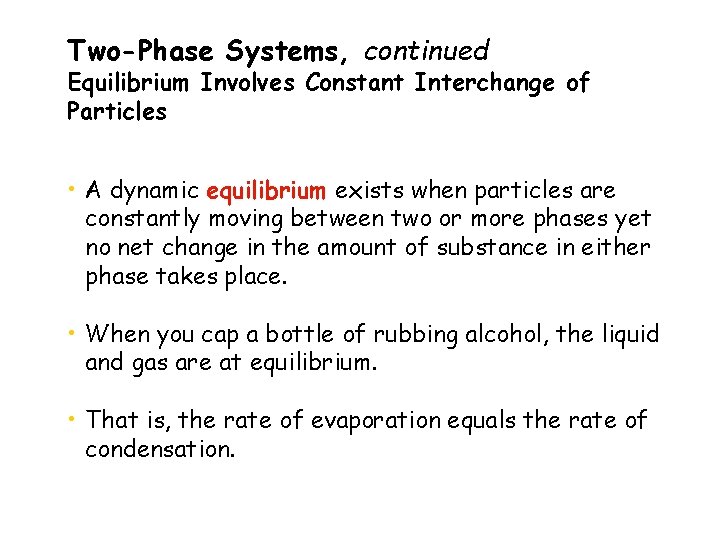
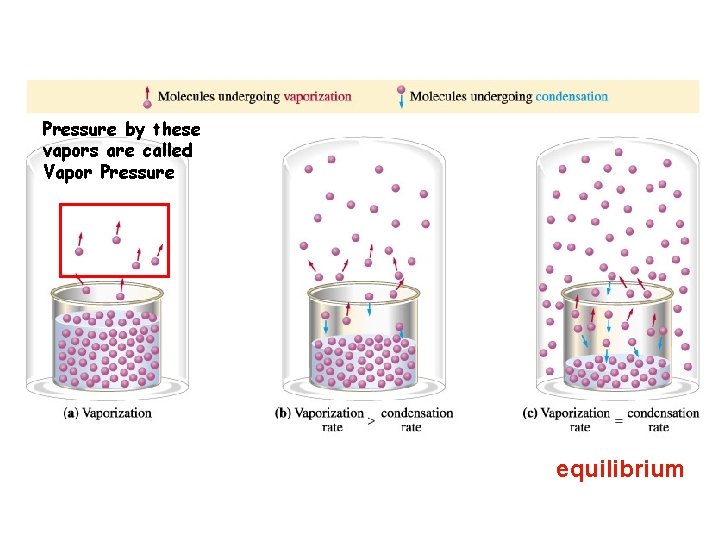
Two-Phase Systems, continued Equilibrium Involves Constant Interchange of Particles • A dynamic equilibrium exists when particles are constantly moving between two or more phases yet no net change in the amount of substance in either phase takes place. • When you cap a bottle of rubbing alcohol, the liquid and gas are at equilibrium. • That is, the rate of evaporation equals the rate of condensation.
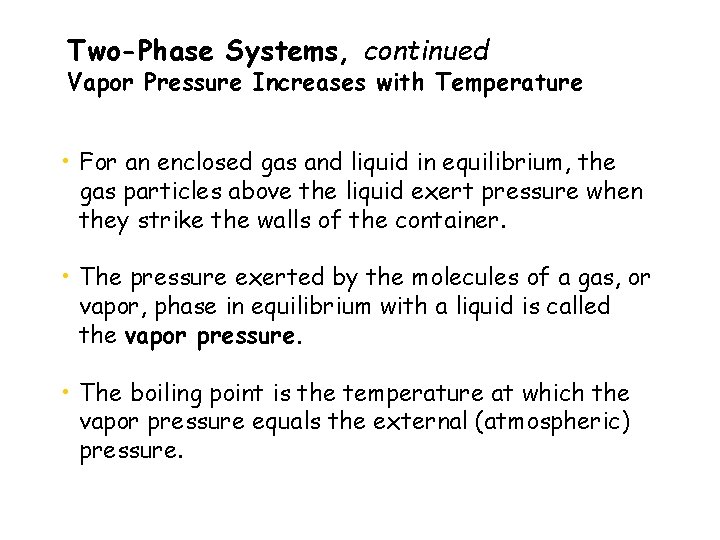
Two-Phase Systems, continued Vapor Pressure Increases with Temperature • For an enclosed gas and liquid in equilibrium, the gas particles above the liquid exert pressure when they strike the walls of the container. • The pressure exerted by the molecules of a gas, or vapor, phase in equilibrium with a liquid is called the vapor pressure. • The boiling point is the temperature at which the vapor pressure equals the external (atmospheric) pressure.
Pressure by these vapors are called Vapor Pressure equilibrium
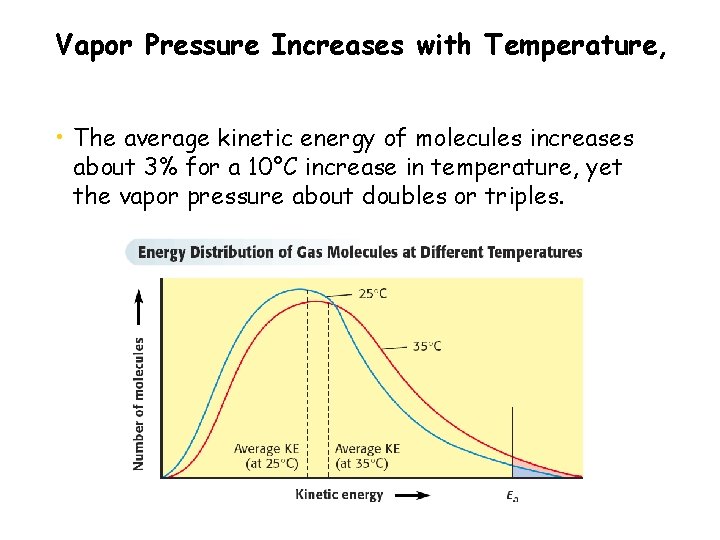
Vapor Pressure Increases with Temperature, • The average kinetic energy of molecules increases about 3% for a 10°C increase in temperature, yet the vapor pressure about doubles or triples.
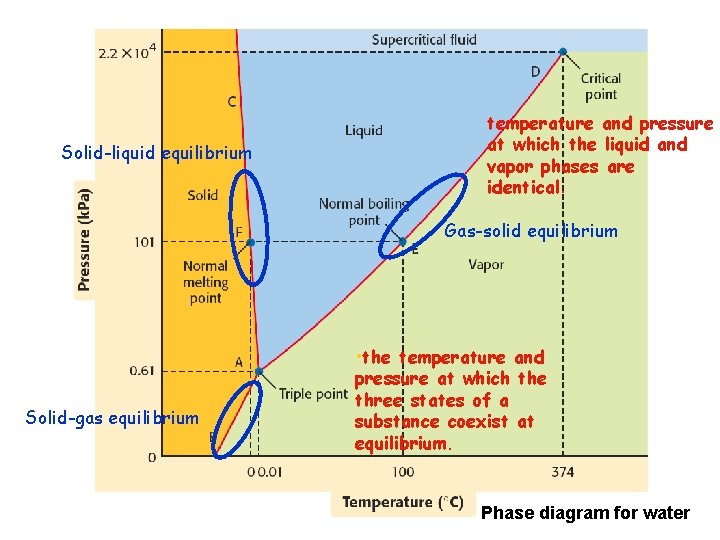
Solid-liquid equilibrium temperature and pressure at which the liquid and vapor phases are identical. Gas-solid equilibrium Solid-gas equilibrium • the temperature and pressure at which the three states of a substance coexist at equilibrium. Phase diagram for water
Chapter 11 Understanding Concepts 1. Which of the following has the greatest force between particles? A. Cl 2 B. HCl C. HOCl D. Na. Cl D
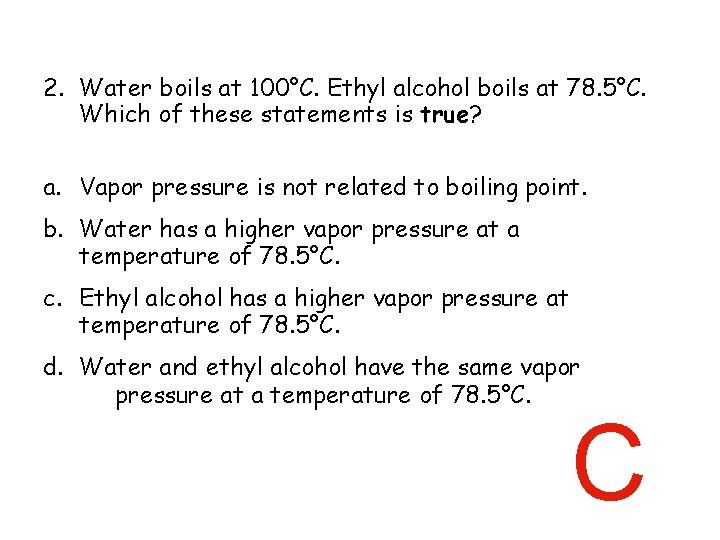
2. Water boils at 100°C. Ethyl alcohol boils at 78. 5°C. Which of these statements is true? a. Vapor pressure is not related to boiling point. b. Water has a higher vapor pressure at a temperature of 78. 5°C. c. Ethyl alcohol has a higher vapor pressure at temperature of 78. 5°C. d. Water and ethyl alcohol have the same vapor pressure at a temperature of 78. 5°C. C
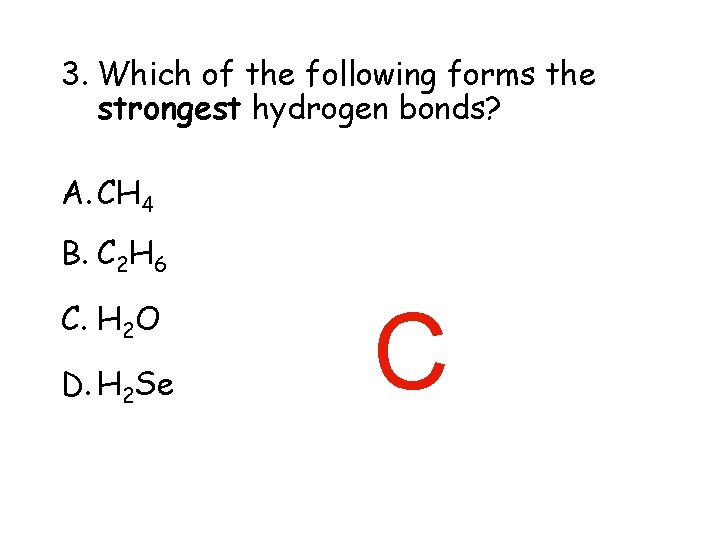
Chapter 11 3. Which of the following forms the strongest hydrogen bonds? A. CH 4 B. C 2 H 6 C. H 2 O D. H 2 Se C
Chapter 11 4. As a covalent compound melts, heat energy is added and enthalpy increases, but the temperature does not change. What is the effect on the molecules of the added energy? Answer: The energy causes the molecules to move farther apart as intermolecular attractions are broken.
Chapter 11 5. How does the process of sublimation demonstrate that solids as well as liquids have a vapor pressure? Answer: Sublimation is a phase change between solid and gas phases. Like evaporation, it is an equilibrium process that is affected by the partial pressure of the vapor above the solid