
chapter 11 Reproduction Physiology Plant reproductive physiology Objectives
chapter 11 Reproduction Physiology
Plant reproductive physiology
Objectives; to understand § How flowering is induced § How flowering is controlled (ABC model) § The structure of flowers and their reproductive components § Pollination
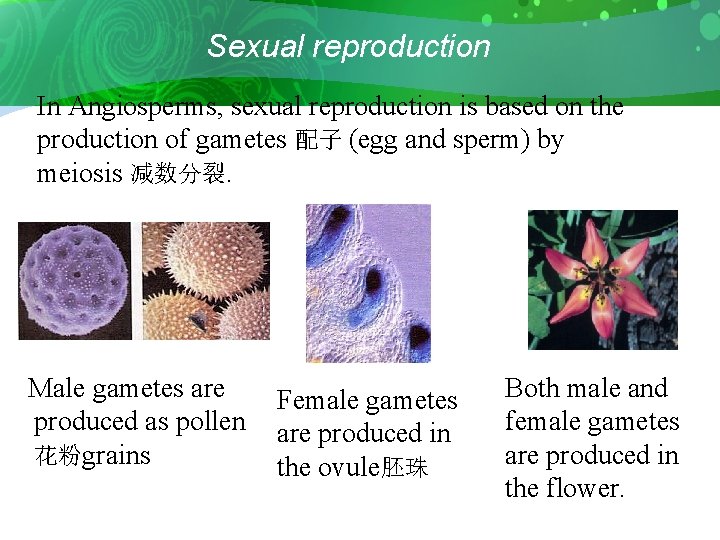
Sexual reproduction In Angiosperms, sexual reproduction is based on the production of gametes 配子 (egg and sperm) by meiosis 减数分裂. Male gametes are produced as pollen 花粉grains Female gametes are produced in the ovule胚珠 Both male and female gametes are produced in the flower.
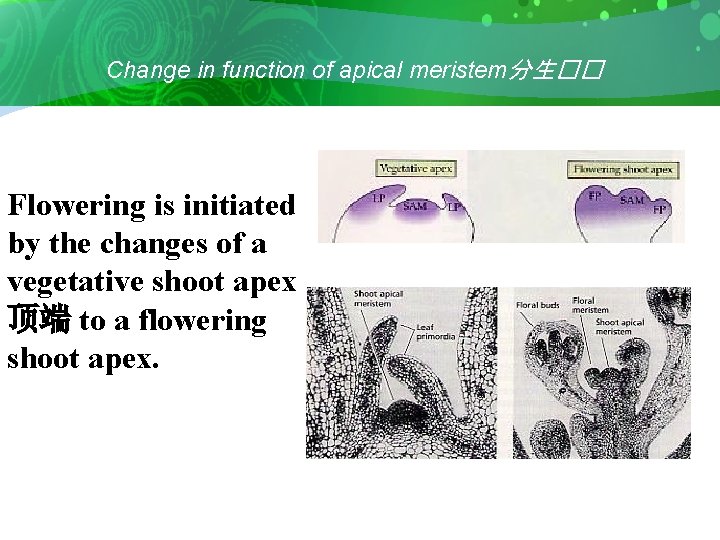
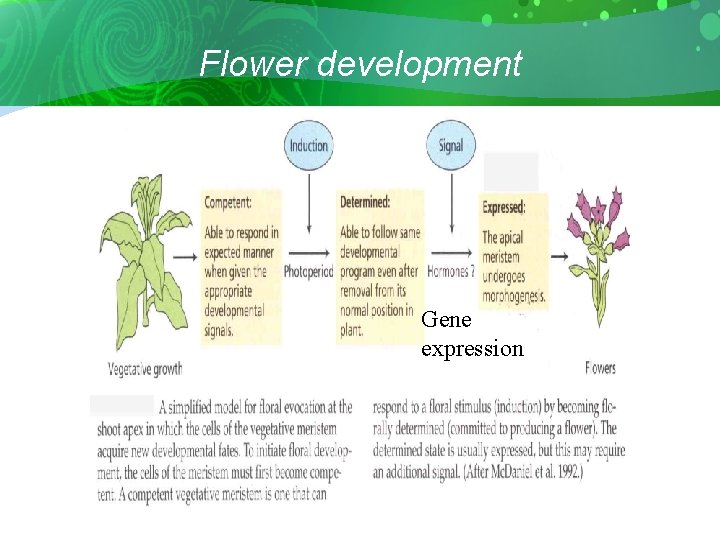
Change in function of apical meristem分生�� Flowering is initiated by the changes of a vegetative shoot apex 顶端 to a flowering shoot apex.
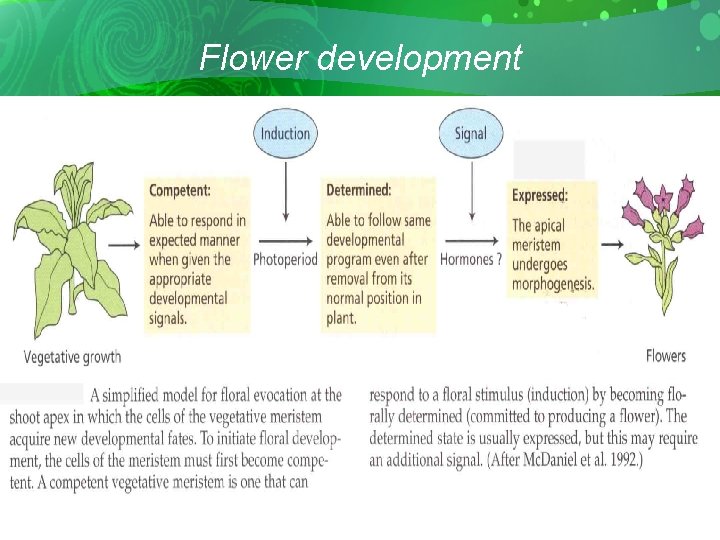
Flower development
What induces the apex to change from a vegetative to a flowering state? Two factors that can induce flowering: 1. Cold temperature (vernalization). 2. Daylength (photoperiodism).
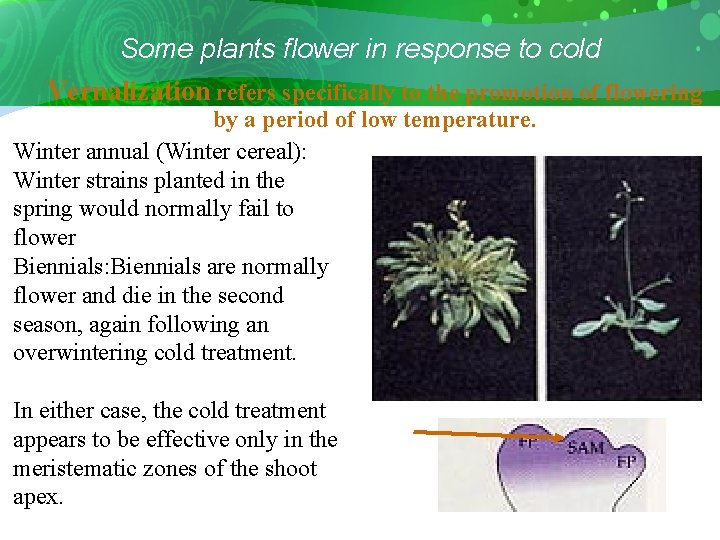
Some plants flower in response to cold Vernalization refers specifically to the promotion of flowering by a period of low temperature. Winter annual (Winter cereal): Winter strains planted in the spring would normally fail to flower Biennials: Biennials are normally flower and die in the second season, again following an overwintering cold treatment. In either case, the cold treatment appears to be effective only in the meristematic zones of the shoot apex.
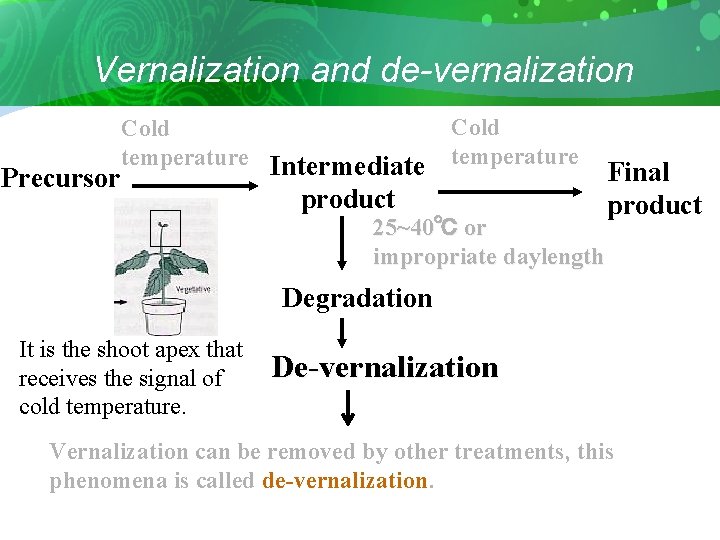
Vernalization and de-vernalization Cold temperature Intermediate Precursor Cold temperature product 25~40℃ or impropriate daylength Final product Degradation It is the shoot apex that receives the signal of cold temperature. De-vernalization Vernalization can be removed by other treatments, this phenomena is called de-vernalization.
Mechanism of vernalization During vernalizaiton Vernalin ? New proteins (anti-sense inhibition). Change gene expression by demethylation.
What induces the apex to change from a vegetative to a flowering state? § Daylength (photoperiodism) is another factor § Three classes of plants: § Longday plant (LDP), Oats § Shortday plant (SDP), Strawberry § Day neutral plant (NDP), Rice
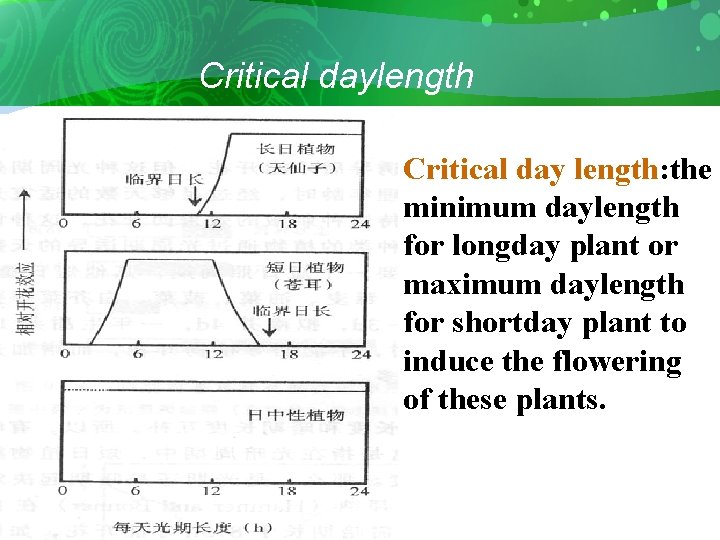
Critical daylength Critical day length: the minimum daylength for longday plant or maximum daylength for shortday plant to induce the flowering of these plants.
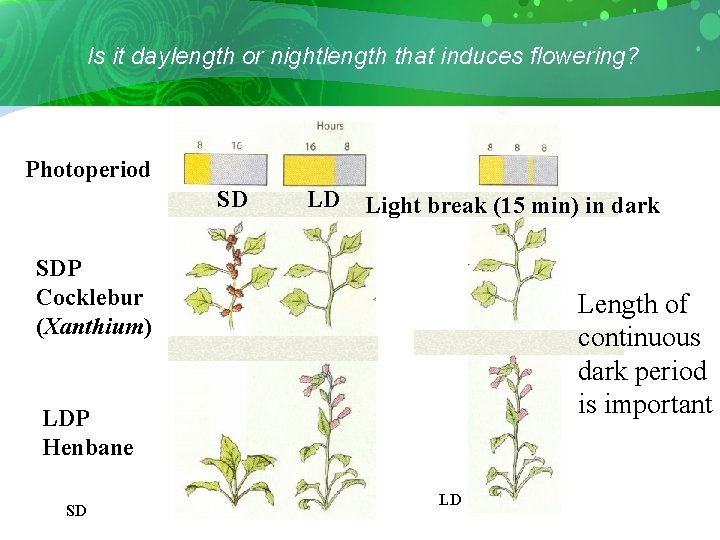
Is it daylength or nightlength that induces flowering? Photoperiod SD LD Light break (15 min) in dark SDP Cocklebur (Xanthium) Length of continuous dark period is important LDP Henbane SD LD
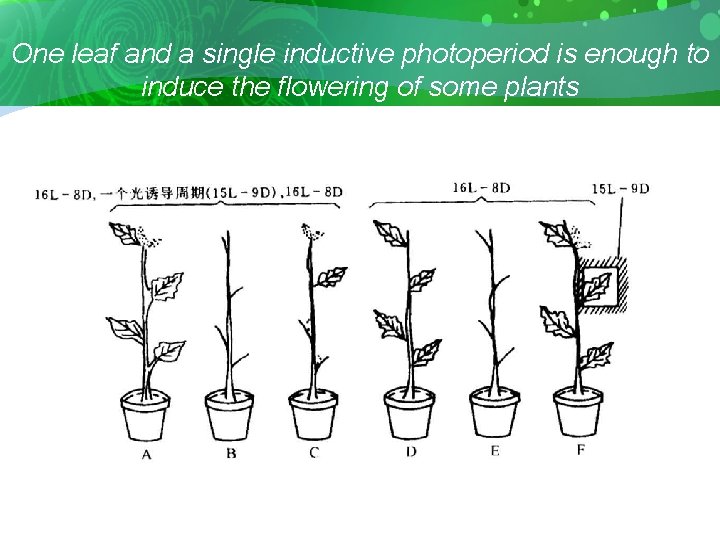
One leaf and a single inductive photoperiod is enough to induce the flowering of some plants
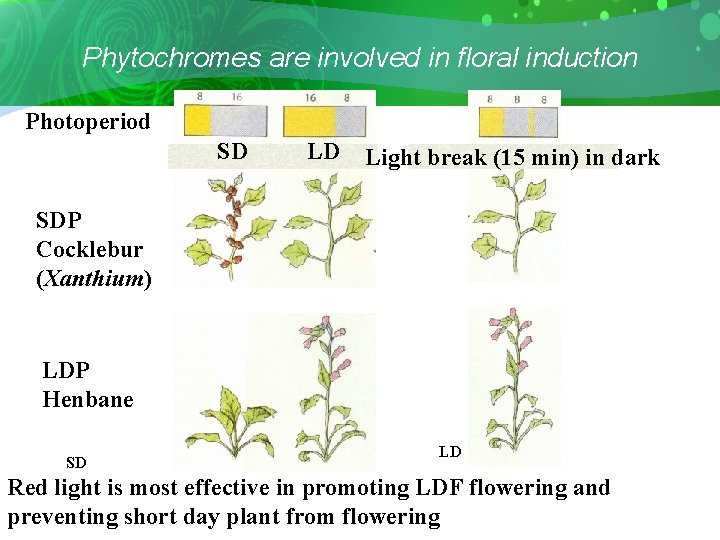
Phytochromes are involved in floral induction Photoperiod SD LD Light break (15 min) in dark SDP Cocklebur (Xanthium) LDP Henbane SD LD Red light is most effective in promoting LDF flowering and preventing short day plant from flowering
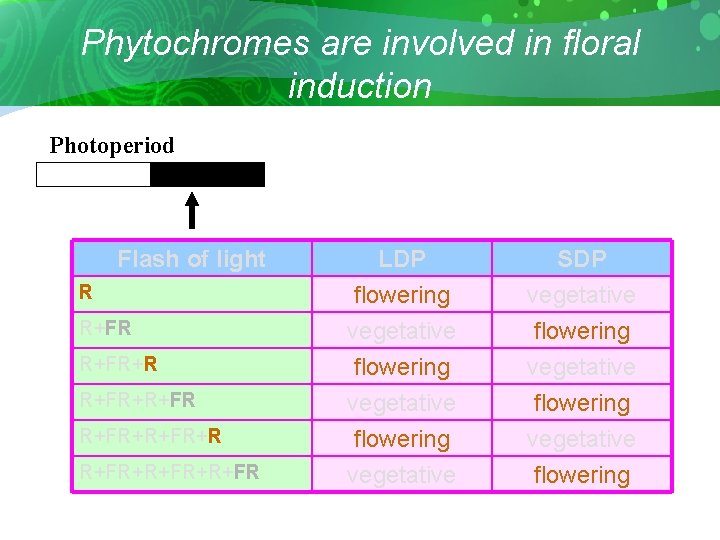
Phytochromes are involved in floral induction Photoperiod Flash of light R R+FR+R+FR+R R+FR+R+FR LDP flowering vegetative flowering SDP vegetative flowering vegetative flowering
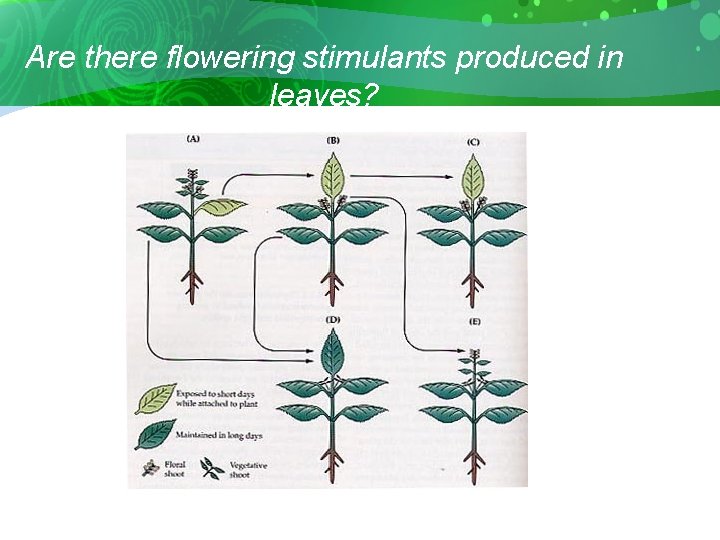
Are there flowering stimulants produced in leaves?
Flowering induction hypotheses 1. Florigen hypothesis (成花素假说) 2. Phytochrome hypothesis (光敏色素假说) 3. Carbon and nitrogen ratio hypothesis (碳氮比 假说)
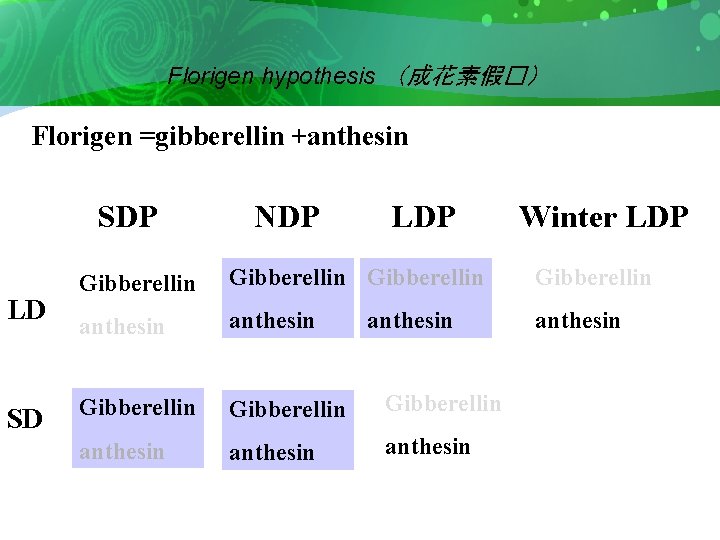
Florigen hypothesis (成花素假�) Florigen =gibberellin +anthesin SDP LD SD NDP LDP Winter LDP Gibberellin Gibberellin anthesin anthesin
Florigen hypothesis 2. Phytochrome hypothesis (光敏色素假说) Phytochrome activates specific gene expression 3. Carbon and nitrogen ratio hypothesis (碳氮 比假说) C/N high: flowering C/N low: non-flowering or delayed flowering
Flower development Gene expression
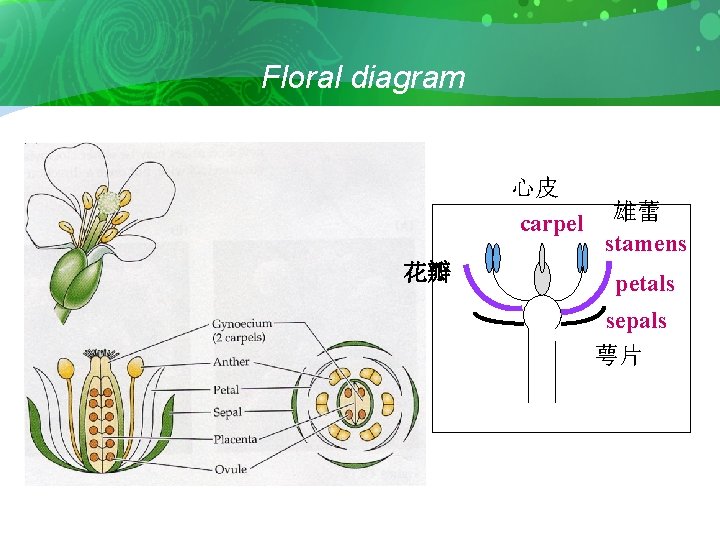
Floral diagram 心皮 carpel 花瓣 雄蕾 stamens petals sepals 萼片
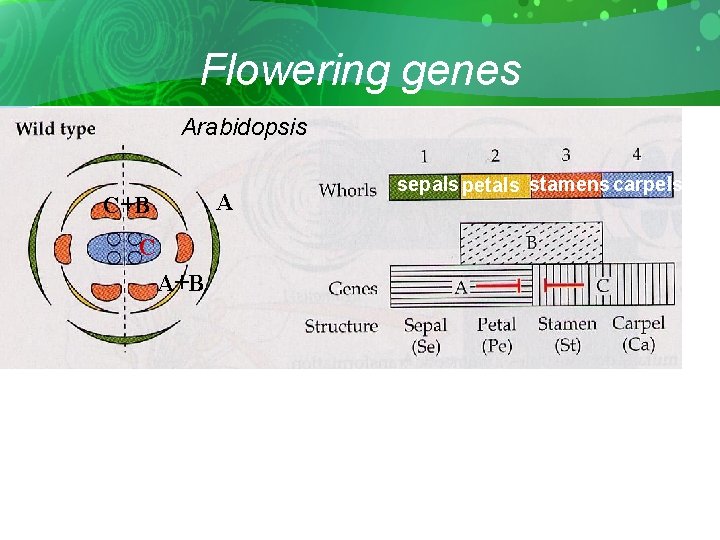
Flowering genes Arabidopsis A C+B C A+B sepals petals stamens carpels
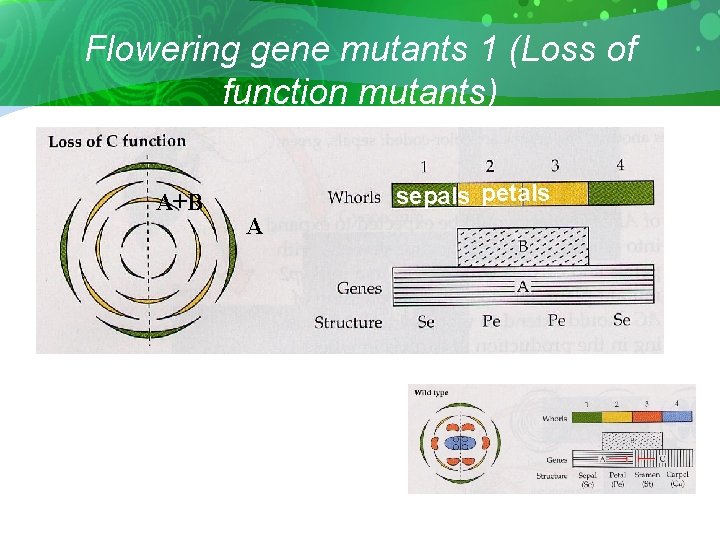
Flowering gene mutants 1 (Loss of function mutants) A+B sepals petals A
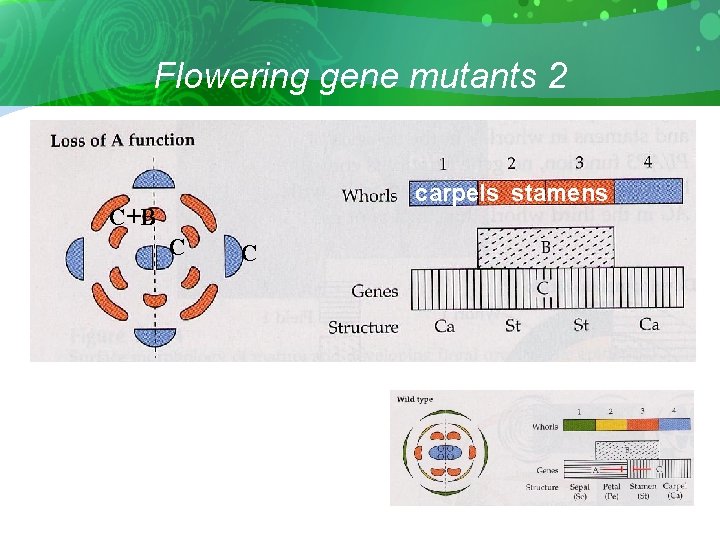
Flowering gene mutants 2 carpels stamens C+B C C
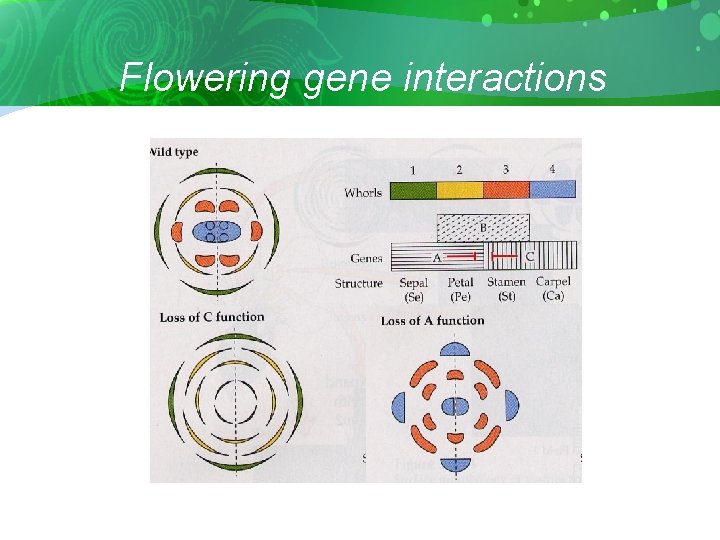
Flowering gene interactions
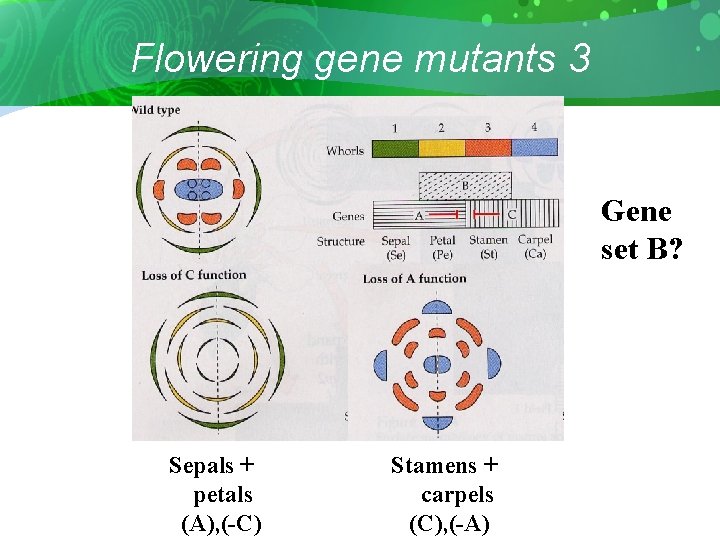
Flowering gene mutants 3 Gene set B? Sepals + petals (A), (-C) Stamens + carpels (C), (-A)
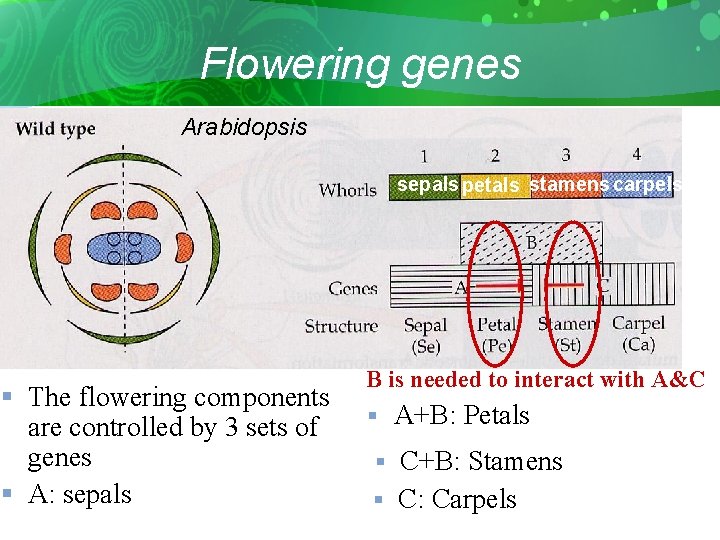
Flowering genes Arabidopsis sepals petals stamens carpels § The flowering components are controlled by 3 sets of genes § A: sepals B is needed to interact with A&C § A+B: Petals § C+B: Stamens § C: Carpels
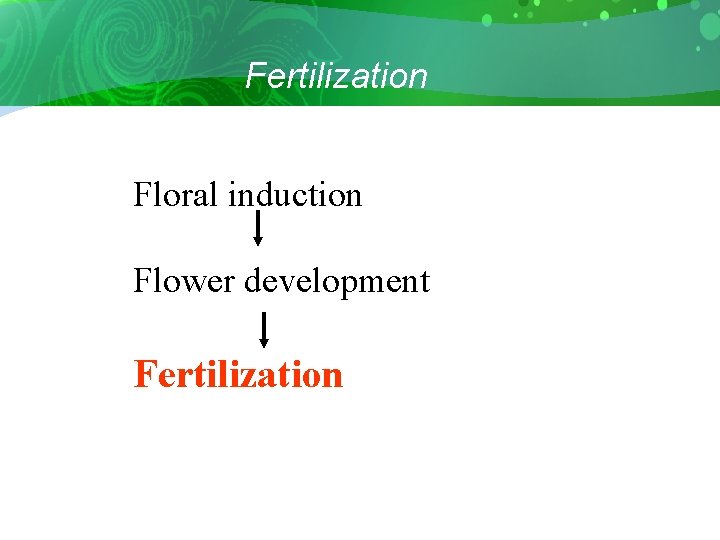
Fertilization Floral induction Flower development Fertilization
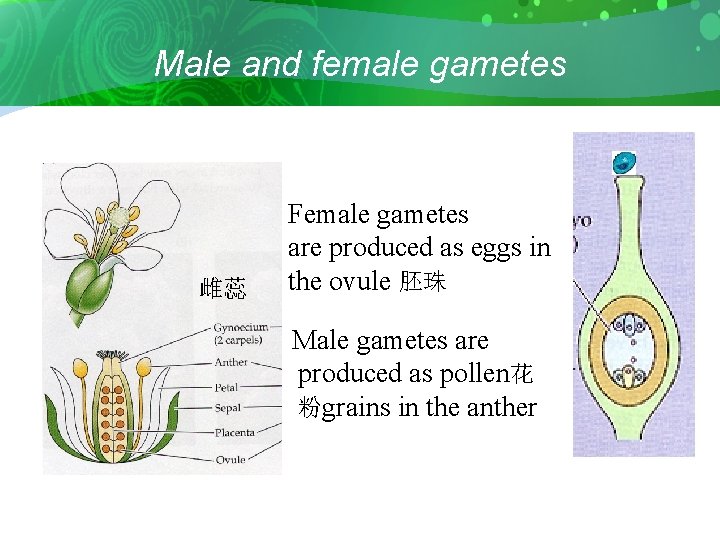
Male and female gametes 雌蕊 Female gametes are produced as eggs in the ovule 胚珠 Male gametes are produced as pollen花 粉grains in the anther
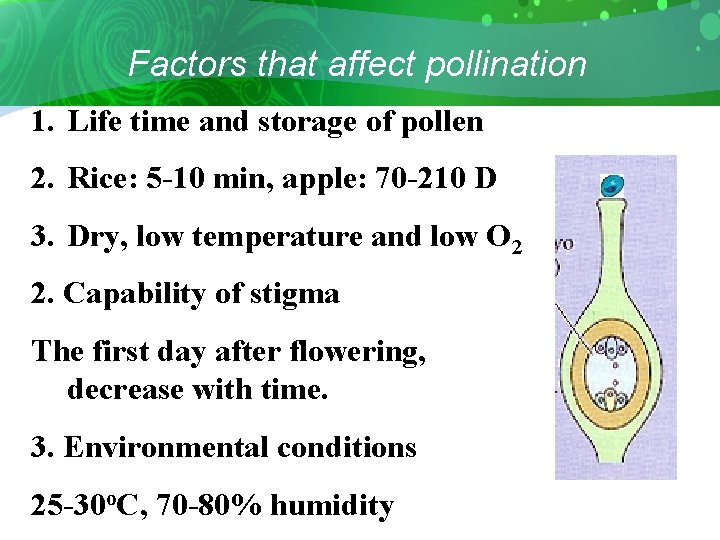
Factors that affect pollination 1. Life time and storage of pollen 2. Rice: 5 -10 min, apple: 70 -210 D 3. Dry, low temperature and low O 2 2. Capability of stigma The first day after flowering, decrease with time. 3. Environmental conditions 25 -30 o. C, 70 -80% humidity
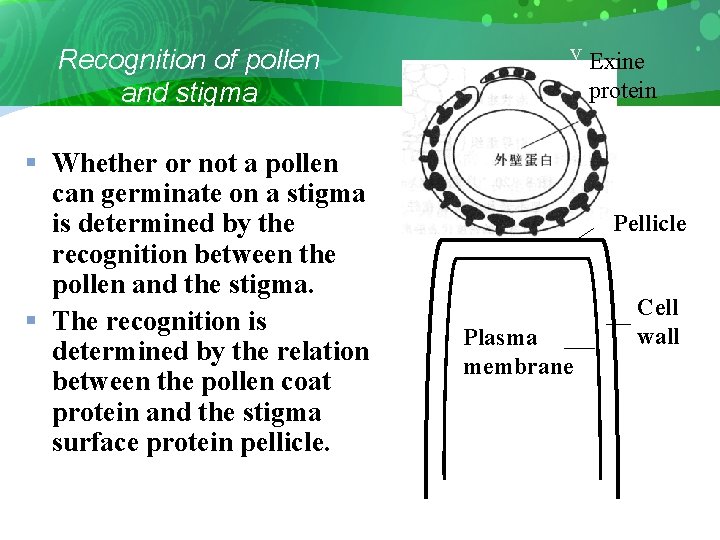
Recognition of pollen and stigma § Whether or not a pollen can germinate on a stigma is determined by the recognition between the pollen and the stigma. § The recognition is determined by the relation between the pollen coat protein and the stigma surface protein pellicle. v Exine g protein Pellicle Plasma membrane Cell wall
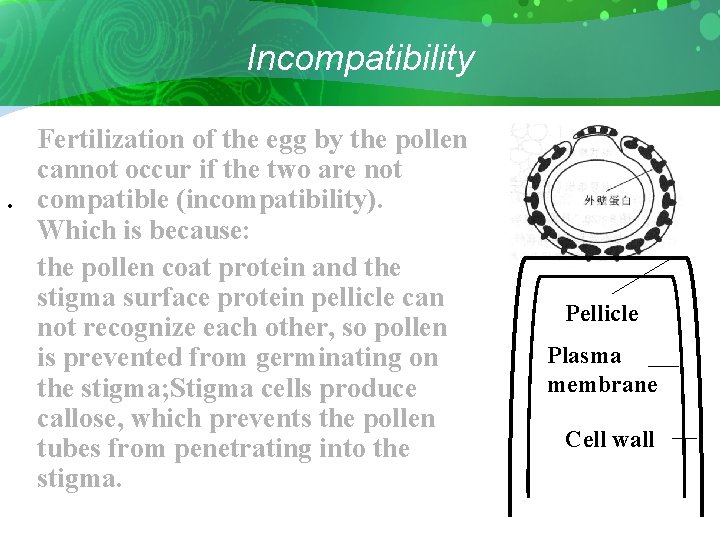
Incompatibility Fertilization of the egg by the pollen cannot occur if the two are not. compatible (incompatibility). Which is because: the pollen coat protein and the stigma surface protein pellicle can not recognize each other, so pollen is prevented from germinating on the stigma; Stigma cells produce callose, which prevents the pollen tubes from penetrating into the stigma. Pellicle Plasma membrane Cell wall
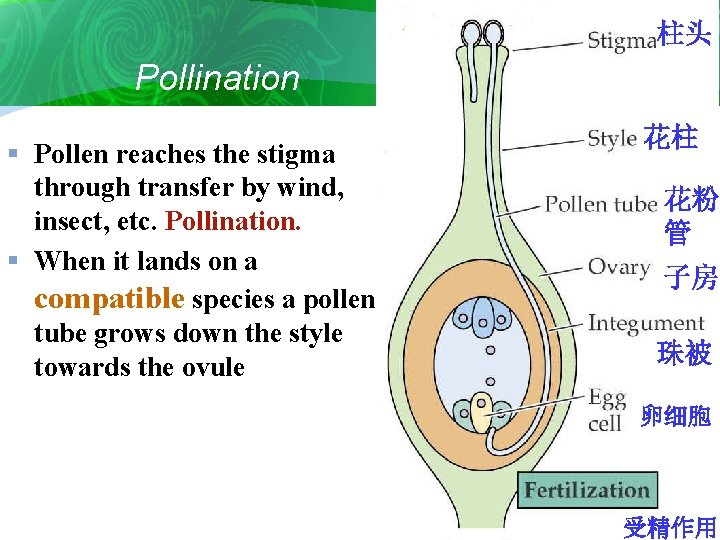
柱头 Pollination 花柱 § Pollen reaches the stigma through transfer by wind, insect, etc. Pollination. § When it lands on a compatible species a pollen tube grows down the style towards the ovule 花粉 管 子房 珠被 Micropylar region 卵细胞 受精作用
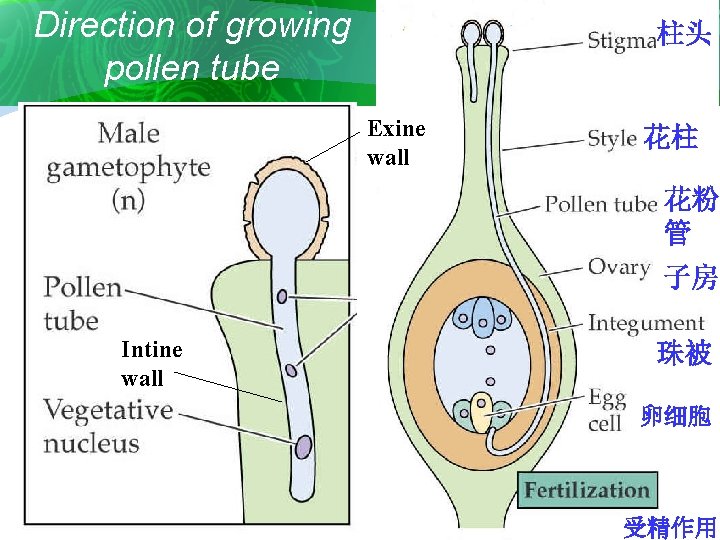
Direction of growing pollen tube 柱头 Exine wall 花柱 花粉 管 子房 Intine wall 珠被 卵细胞 受精作用
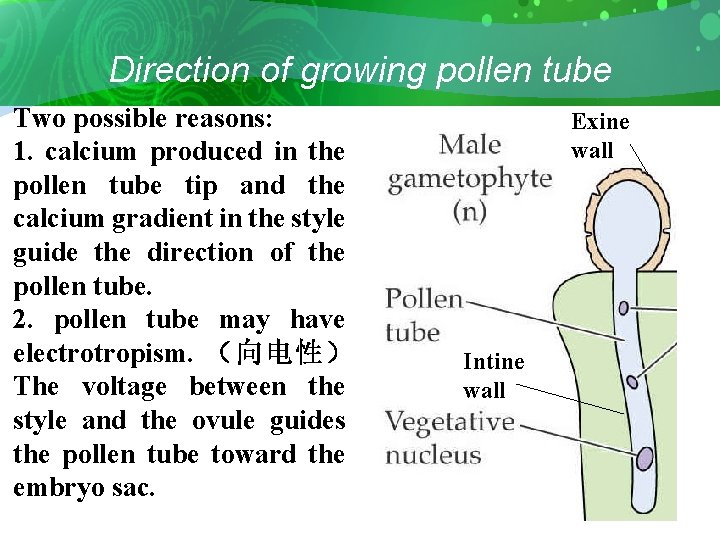
Direction of growing pollen tube Two possible reasons: 1. calcium produced in the pollen tube tip and the calcium gradient in the style guide the direction of the pollen tube. 2. pollen tube may have electrotropism. (向电性) The voltage between the style and the ovule guides the pollen tube toward the embryo sac. Exine wall Intine wall
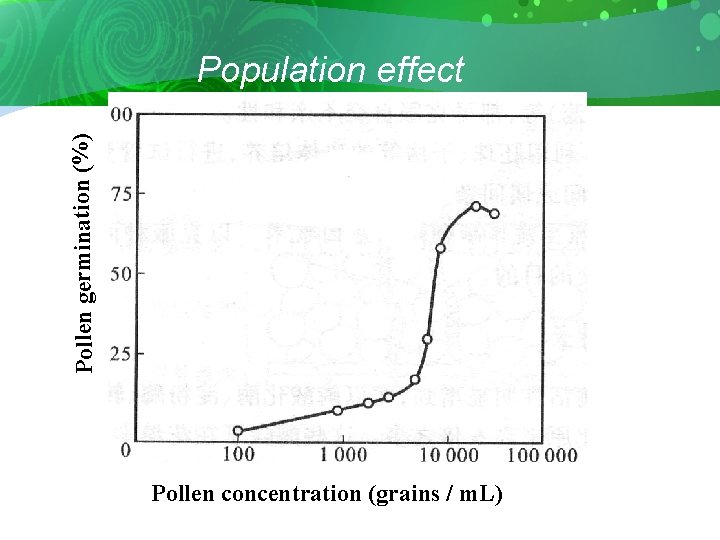
Pollen germination (%) Population effect Pollen concentration (grains / m. L)
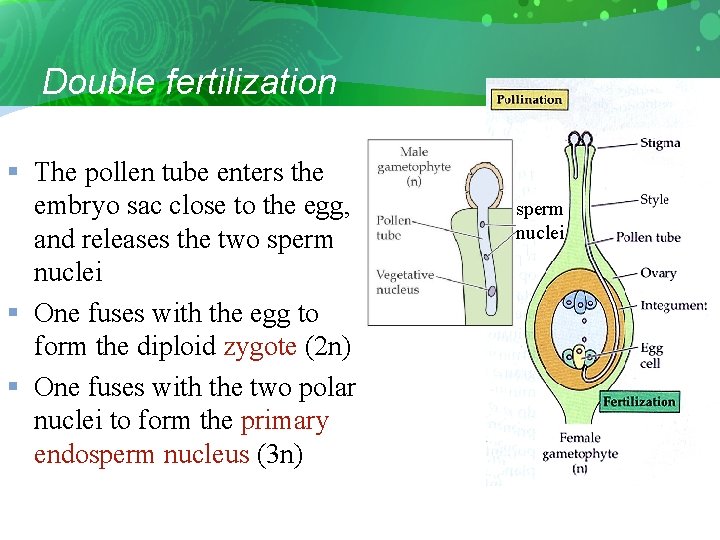
Double fertilization § The pollen tube enters the embryo sac close to the egg, and releases the two sperm nuclei § One fuses with the egg to form the diploid zygote (2 n) § One fuses with the two polar nuclei to form the primary endosperm nucleus (3 n) sperm nuclei
Physiological changes after fertilization ØIncrease in auxin content. ØIncrease in respiration rate. ØIncrease in protein and carbohydrate metabolism To support the development of seed and fruit…….
- Slides: 39