
Chapter 11 Producing Enough Food for the World
- Slides: 20
Chapter 11 Producing Enough Food for the World
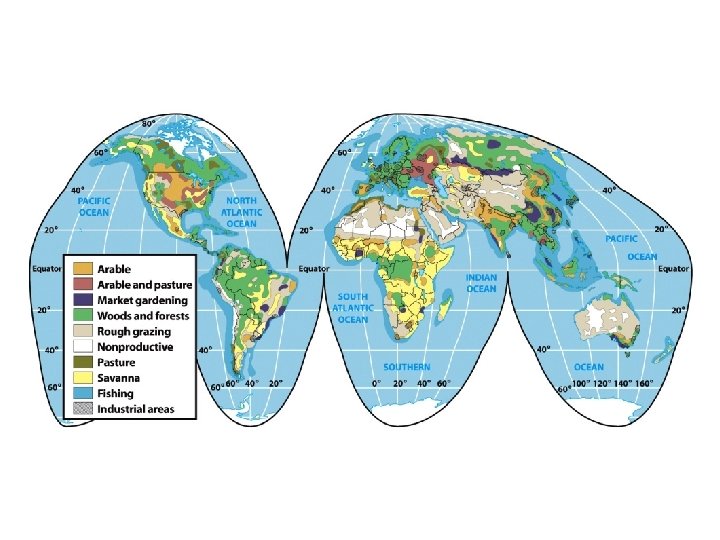
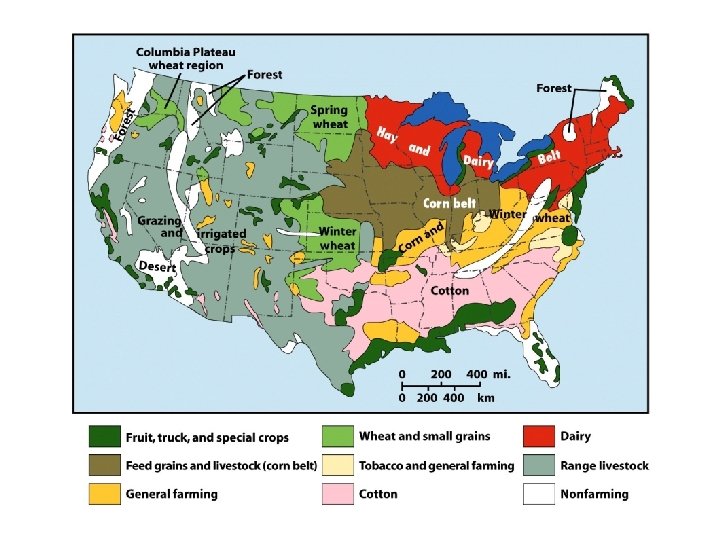
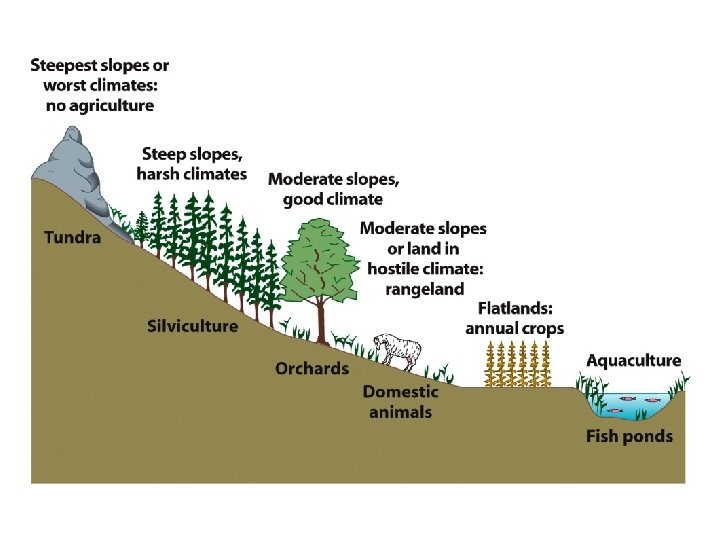
Crops Rangeland: Provides food for grazing and browsing animals without plowing and planting Pasture: Plowed, planted and harvested to provide forage for animals
Aquaculture • Aquaculture – The farming of food in aquatic habitats • Mariculture – The farming of ocean fish
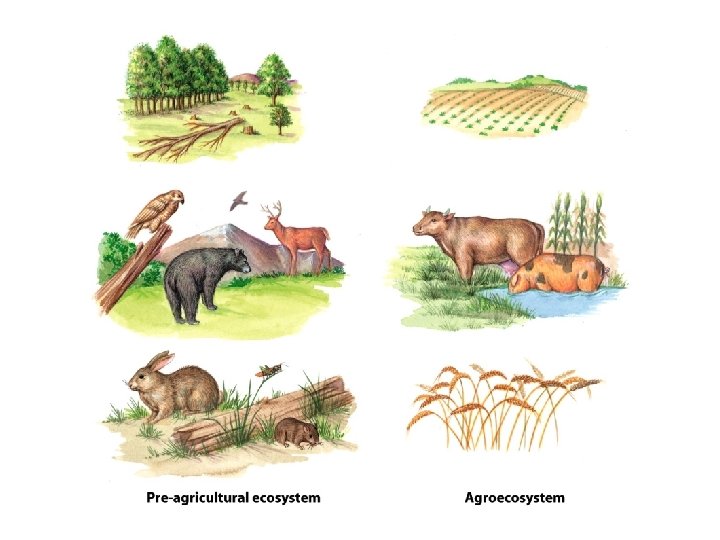
Six Ways Agroecosystems Differ from Natural Ecosystems 1. Try to stop ecological succession and keep the agroecosystem in an early successional state 2. Monoculture: Large areas planted with a single species 3. Crops are planted in neat rows 4. Farming greatly simplifies biological diversity 5. Plowing is unlike any natural soil disturbance 6. Genetic modification of crops.
Limiting Factors • Limiting Factor: The single requirement for growth available in the least supply in comparison to the need of an organism 2 Types of Life-Important Chemicals 1. Macronutirents 2. Micronutirents Synergistic Effects: a change in availability of one resource affects the response of an organism to some other resource
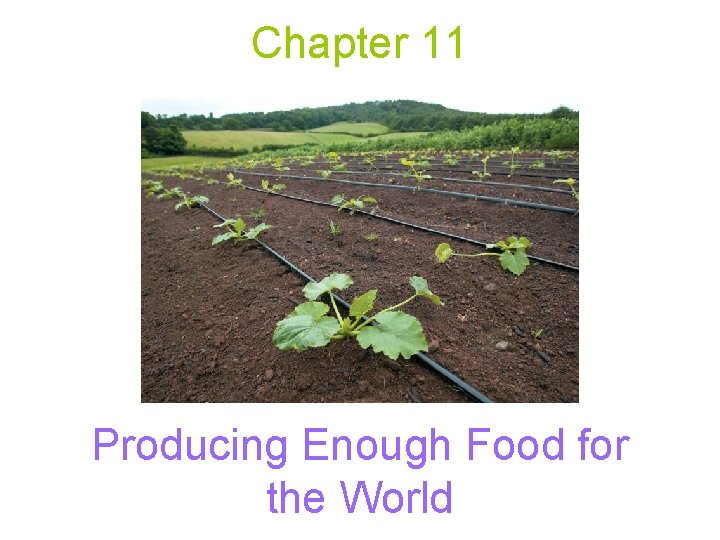
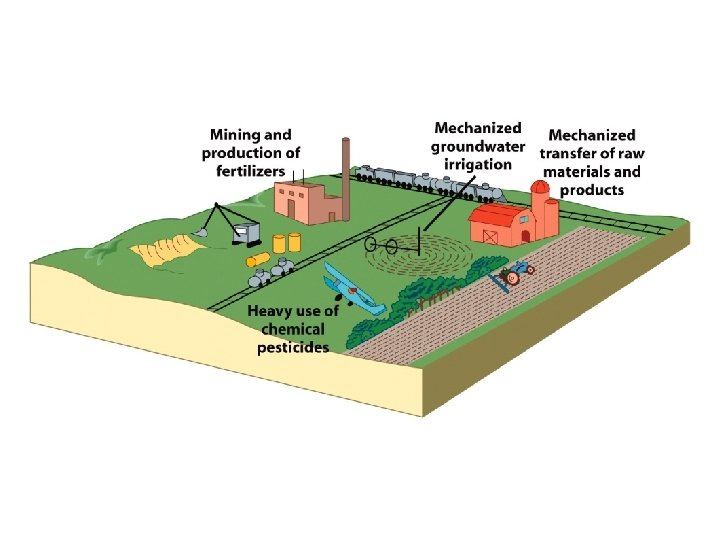
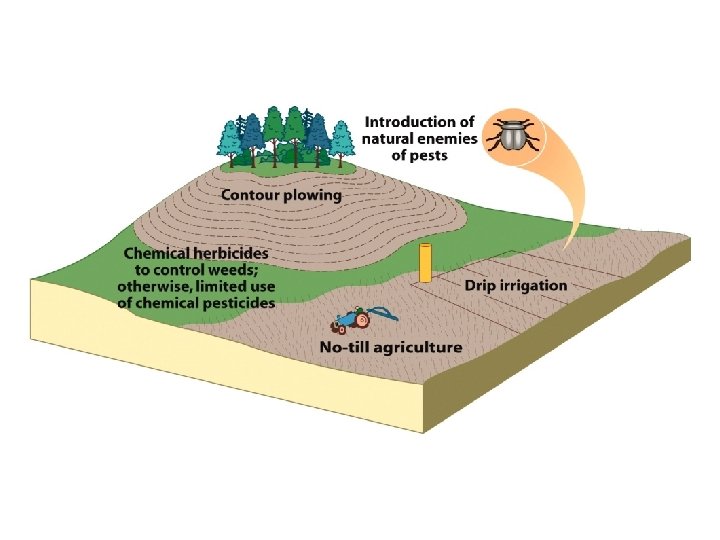
Increasing the Yield per Acre 1. The Green Revolution - Programs that have led to the development of new strains of crops with higher yields, better resistance to disease or better ability to grow under poor conditions 2. Improved Irrigation
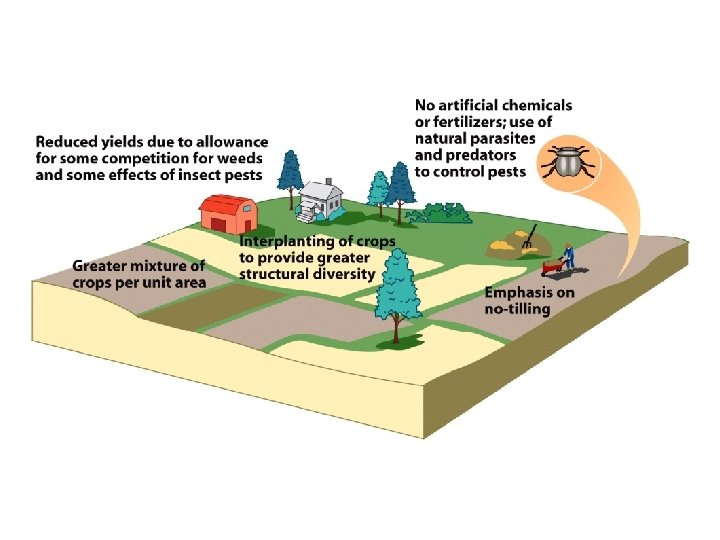
Organic Farming 3 Qualities 1. It is more like natural ecosystems than monocultures 2. It minimizes negative environmental impacts 3. The food that results from it does not contain artificial compounds
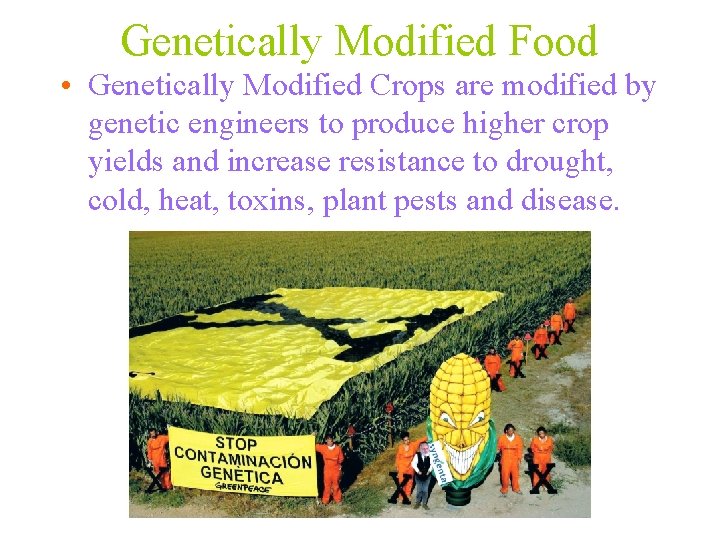
Genetically Modified Food • Genetically Modified Crops are modified by genetic engineers to produce higher crop yields and increase resistance to drought, cold, heat, toxins, plant pests and disease.