
Chapter 11 Prisons and Jails 2015 Cengage Learning

- Slides: 30
Chapter 11 Prisons and Jails © 2015 Cengage Learning
Learning Outcomes LO 1: Contrast the Pennsylvania and the New York penitentiary theories of the 1800’s. LO 2: List and briefly explain the four types of prisons. LO 3: List the factors that have caused the prison population to grow dramatically in the last several decades. © 2015 Cengage Learning
Learning Outcomes LO 4: Summarize the distinction between jails and prisons, and indicate the importance of jails in the American correctional system. LO 5: Indicate some of the consequences of our high rates of incarceration. © 2015 Cengage Learning
LO 1 Contrast the Pennsylvania and the New York penitentiary theories of the 1800’s. © 2015 Cengage Learning
Pennsylvania • Wall Street Prison- 1 st penitentiary was opened in a wing of this prison • Located in Philadelphia, Pennsylvania • Overcrowding • Excessive costs © 2015 Cengage Learning
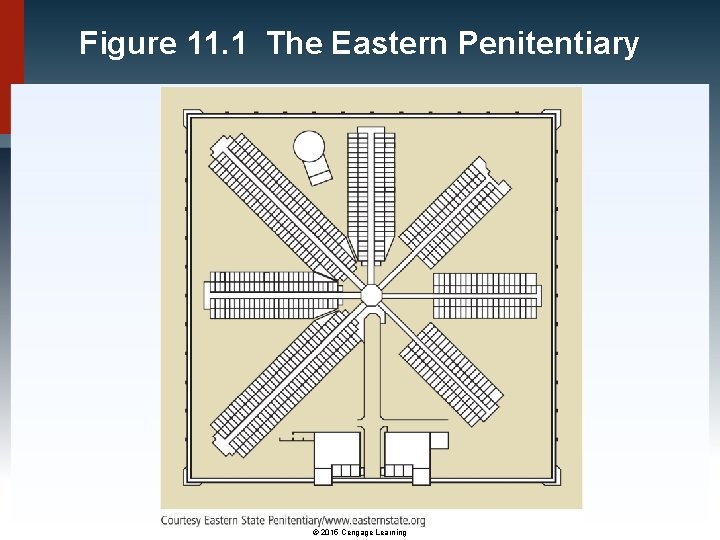
Pennsylvania • Pennsylvania System – Western Penitentiary in Pittsburgh PA – Eastern Penitentiary in Cherry Hill PA – Silence as a virtue – Separate confinement – Transform wrongdoers into honest citizens © 2015 Cengage Learning
Figure 11. 1 The Eastern Penitentiary © 2015 Cengage Learning
New York • New York System – Newgate Prison overcrowded – Opened Auburn Prison – Obedience – Congregate system – Inmates work together silently – Elmira Reformatory 1876 © 2015 Cengage Learning
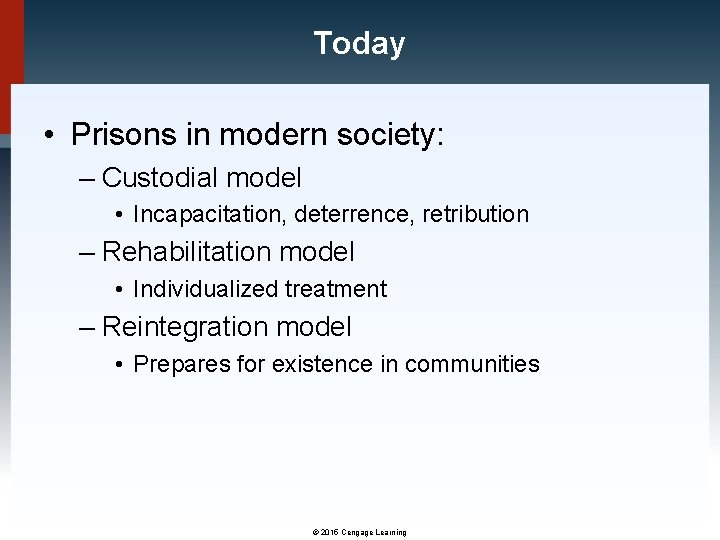
Today • Prisons in modern society: – Custodial model • Incapacitation, deterrence, retribution – Rehabilitation model • Individualized treatment – Reintegration model • Prepares for existence in communities © 2015 Cengage Learning
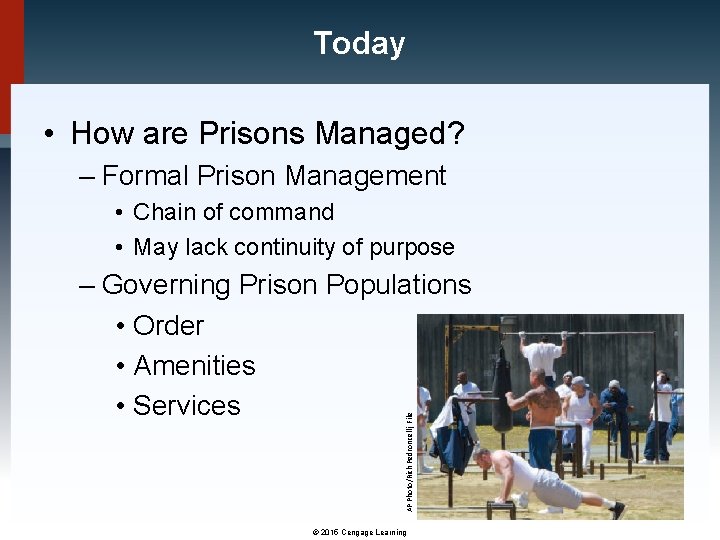
Today • How are Prisons Managed? – Formal Prison Management • Chain of command • May lack continuity of purpose AP Photo/Rich Pedroncelli, File – Governing Prison Populations • Order • Amenities • Services © 2015 Cengage Learning
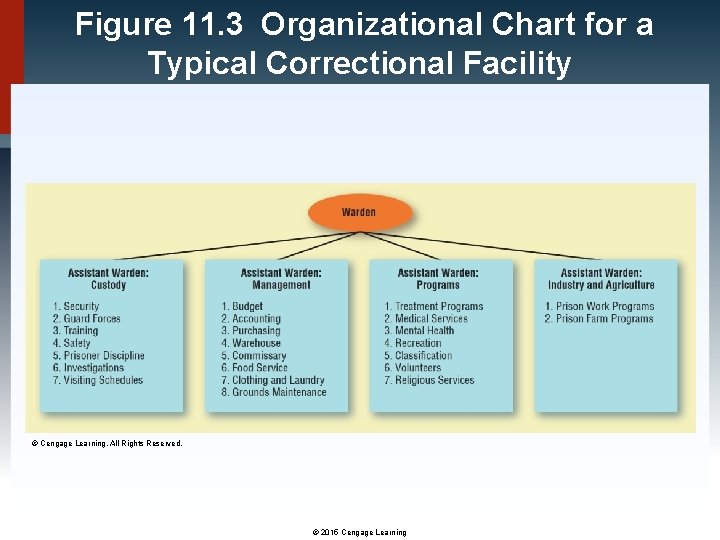
Figure 11. 3 Organizational Chart for a Typical Correctional Facility © Cengage Learning. All Rights Reserved. © 2015 Cengage Learning
LO 2 List and briefly explain the four types of prisons. © 2015 Cengage Learning
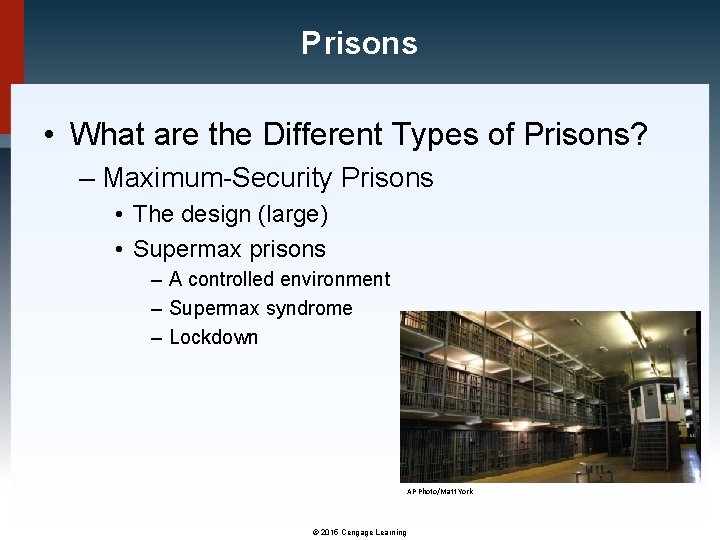
Prisons • What are the Different Types of Prisons? – Maximum-Security Prisons • The design (large) • Supermax prisons – A controlled environment – Supermax syndrome – Lockdown AP Photo/Matt York © 2015 Cengage Learning
Prisons • What are the Different Types of Prisons? – Medium-Security Prisons • • Prisoners who have committed less serious crimes Offer more educational and training programs Prisoners have more freedom of movement Levels of surveillance are lower © 2015 Cengage Learning
Prisons • What are the Different Types of Prisons? – Minimum-Security Prison • No armed guards • Prisoners allowed TV, computers, freedom of movement • Educational and employment opportunities © 2015 Cengage Learning
LO 3 List the factors that have caused the prison population to grow dramatically in the last several decades. © 2015 Cengage Learning
Prison Growth • What Trends are Driving the American Prison Population? – Factors in prison population growth • Penal harm movement • Enhancement and stricter enforcement of drug laws • Increased probability of incarceration • Inmates serving more time for each crime • Federal prison growth • Rising incarceration rates of women © 2015 Cengage Learning
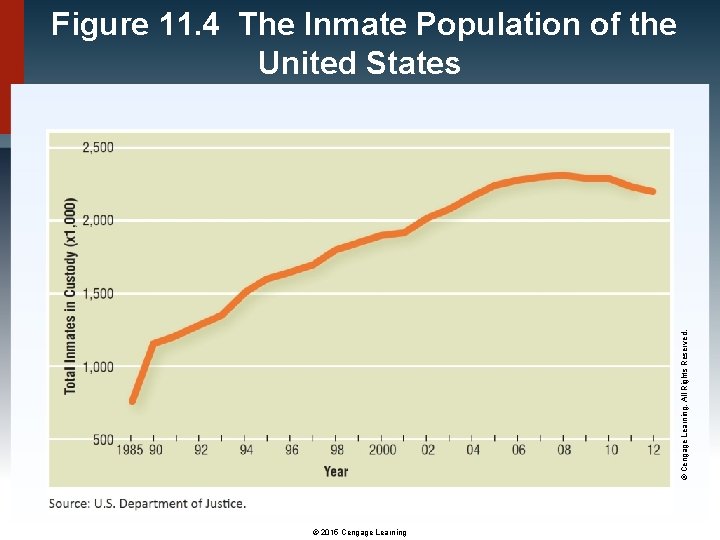
© Cengage Learning. All Rights Reserved. Figure 11. 4 The Inmate Population of the United States © 2015 Cengage Learning
Prison Growth • Decarceration – Decreasing probability that nonviolent offenders will be sentenced to prison – Increasing the rate of release of nonviolent offenders from prison – Decreasing the rate of imprisonment for probation and parole violators © 2015 Cengage Learning
Privatization • What are Private Prisons? – Correctional facilities operated by private corporations instead of the government. – Why Privatize? • Labor costs • Competitive bidding • Less red tape © 2015 Cengage Learning
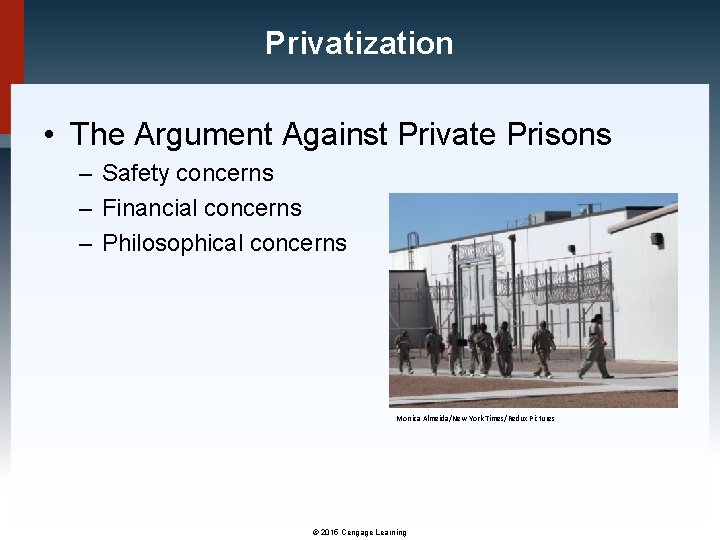
Privatization • The Argument Against Private Prisons – Safety concerns – Financial concerns – Philosophical concerns Monica Almeida/New York Times/Redux Pictures © 2015 Cengage Learning
LO 4 Summarize the distinction between jails and prisons, and indicate the importance of jails in the American correctional system. © 2015 Cengage Learning
Jails • Why are Jails So Important? – The function of jails • Holding those convicted of misdemeanors. • Receiving individuals pending arraignment and holding them while awaiting trial, conviction, or sentencing. • Temporarily detaining juveniles • Holding the mentally ill pending transfer to health facilities. © 2015 Cengage Learning
Jails • Why are Jails So Important? – The function of jails • Detaining probation or parole violators. • Housing inmates awaiting transfer to federal or state prisons. • Operating community-based corrections programs. © 2015 Cengage Learning
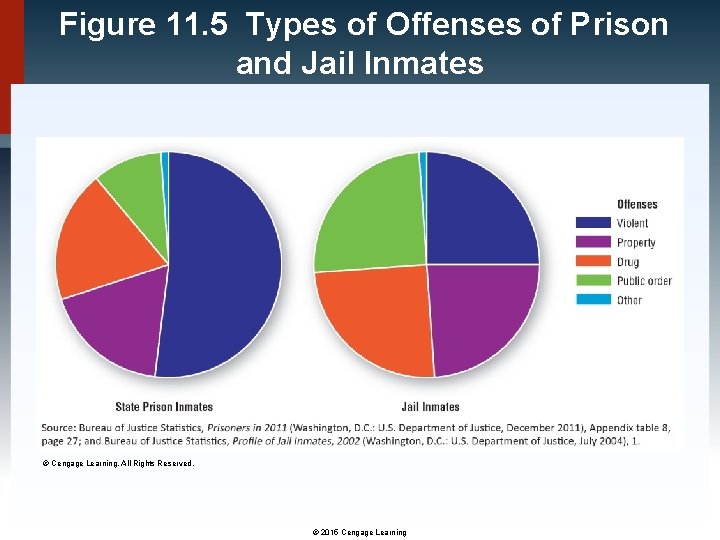
Figure 11. 5 Types of Offenses of Prison and Jail Inmates © Cengage Learning. All Rights Reserved. © 2015 Cengage Learning
Jails • Why are Jails So Important? – Pretrial detainees – Sentenced jail inmates – Realities of jail • Terms are generally too short to allow the prisoner to gain any benefit from the jail’s treatment facilities. • Jails are chronically overcrowded. – Other jail inmates © 2015 Cengage Learning
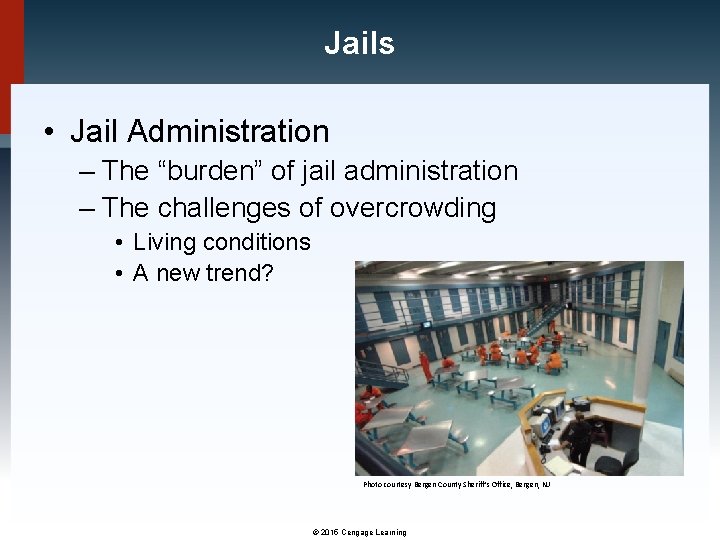
Jails • Jail Administration – The “burden” of jail administration – The challenges of overcrowding • Living conditions • A new trend? Photo courtesy Bergen County Sheriff’s Office, Bergen, NJ © 2015 Cengage Learning
CAREERPREP Deputy Sheriff/Jail Division Job Description: • Be responsible for supervising jail inmates by ensuring that order, discipline, safety, and security are maintained. • Transport or escort inmates and defendants from jail to courtrooms, attorneys’ offices, or medical facilities. Annual Salary Range? $44, 000–$55, 000 For additional information, visit: www. usdsa. org © 2015 Cengage Learning Kaupo Kikkas/i. Stockphoto. com What Kind of Training Is Required? • Depending on the jurisdiction, possession of a high school diploma or bachelor’s degree, as well as successful completion of written and physical examinations, training, and a probationary period. • Some states require completion of a “jail academy” training course of up to sixteen weeks including field training.
LO 5 Indicate some of the consequences of our high rates of incarceration. © 2015 Cengage Learning
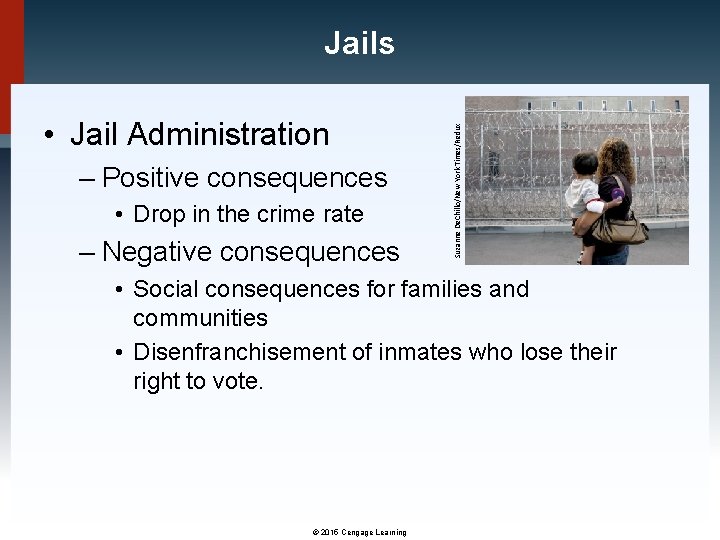
• Jail Administration – Positive consequences • Drop in the crime rate – Negative consequences Suzanne De. Chillo/New York Times/Redux Jails • Social consequences for families and communities • Disenfranchisement of inmates who lose their right to vote. © 2015 Cengage Learning