
Chapter 11 Output Stages and Power Amplifiers from
- Slides: 43
Chapter #11: Output Stages and Power Amplifiers from Microelectronic Circuits Text by Sedra and Smith Oxford Publishing Oxford University Publishing Microelectronic Circuits by Adel S. Sedra and Kenneth C. Smith (0195323033)
Introduction § IN THIS CHAPTER YOU WILL LEARN § The classification of amplifier output stages on the basis of the fraction of the cycle of an input sine wave during which the transistor conducts. § Analysis and design of a variety of output-stage types ranging from the simple but power-inefficient emitter follower class (class A) to the popular push-pull class AB circuit in both bipolar and CMOS technologies. § Thermal considerations in the design and fabrication of highoutput power circuits. Oxford University Publishing Microelectronic Circuits by Adel S. Sedra and Kenneth C. Smith (0195323033)
Introduction § IN THIS CHAPTER YOU WILL LEARN § Useful and interesting circuit techniques employed in the design of power amplifiers. § Special types of MOS transistors optimized for high-power applications. Oxford University Publishing Microelectronic Circuits by Adel S. Sedra and Kenneth C. Smith (0195323033)
Introduction § One important aspect of an amplifier is output resistance. § This affects its ability to deliver a load without loss of gain (or significant loss). § Large signals are of interest and small-signal models cannot be applied. § Total harmonic distortion is good measure of linearity of output stage. Oxford University Publishing Microelectronic Circuits by Adel S. Sedra and Kenneth C. Smith (0195323033)
Introduction § Most challenging aspect of output stage design is efficiency. § Power dissipation is highly correlated to internal junction temperature. Oxford University Publishing Microelectronic Circuits by Adel S. Sedra and Kenneth C. Smith (0195323033)
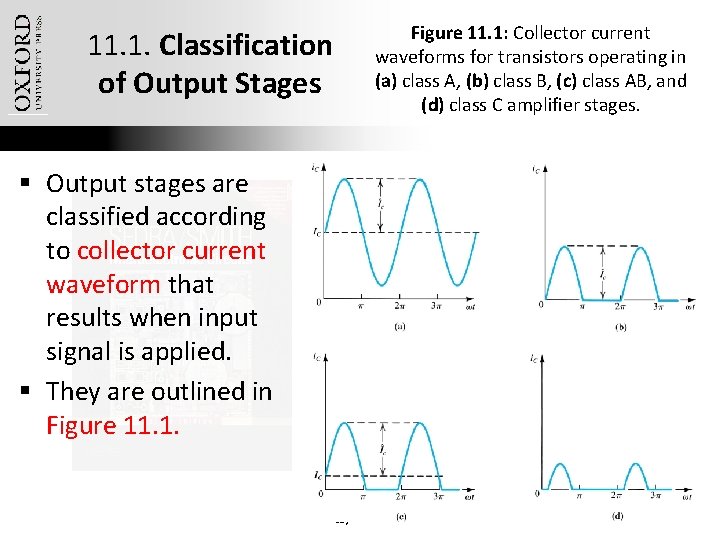
11. 1. Classification of Output Stages § Output stages are classified according to collector current waveform that results when input signal is applied. § They are outlined in Figure 11. 1. Oxford University Publishing Microelectronic Circuits by Adel S. Sedra and Kenneth C. Smith (0195323033) Figure 11. 1: Collector current waveforms for transistors operating in (a) class A, (b) class B, (c) class AB, and (d) class C amplifier stages.
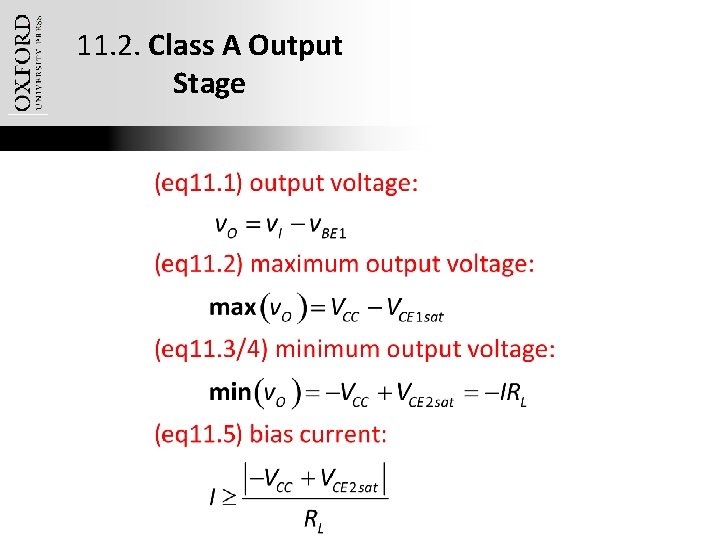
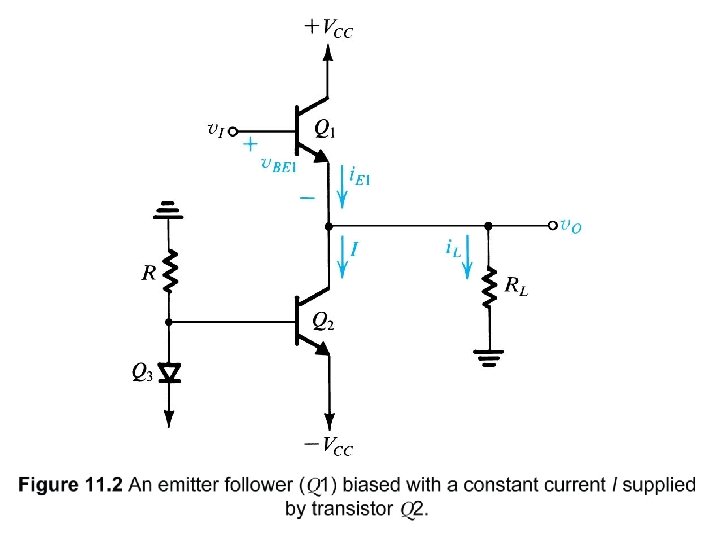
11. 2. Class A Output Stage Oxford University Publishing Microelectronic Circuits by Adel S. Sedra and Kenneth C. Smith (0195323033)
Oxford University Publishing Microelectronic Circuits by Adel S. Sedra and Kenneth C. Smith (0195323033)
Oxford University Publishing Microelectronic Circuits by Adel S. Sedra and Kenneth C. Smith (0195323033)
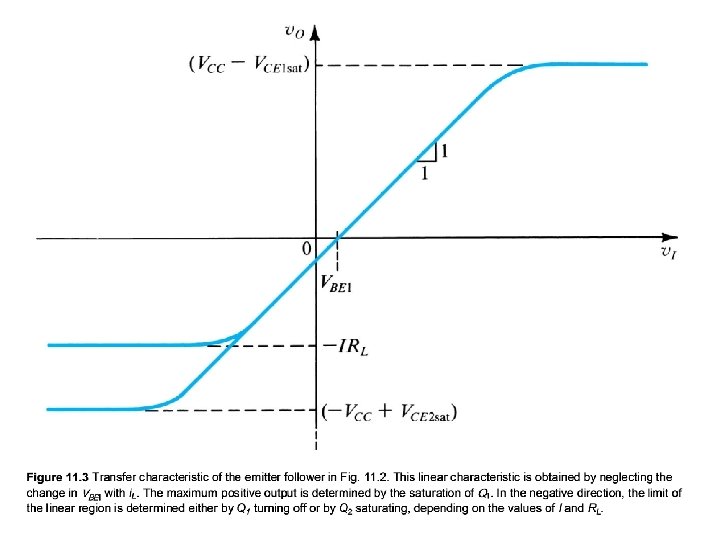
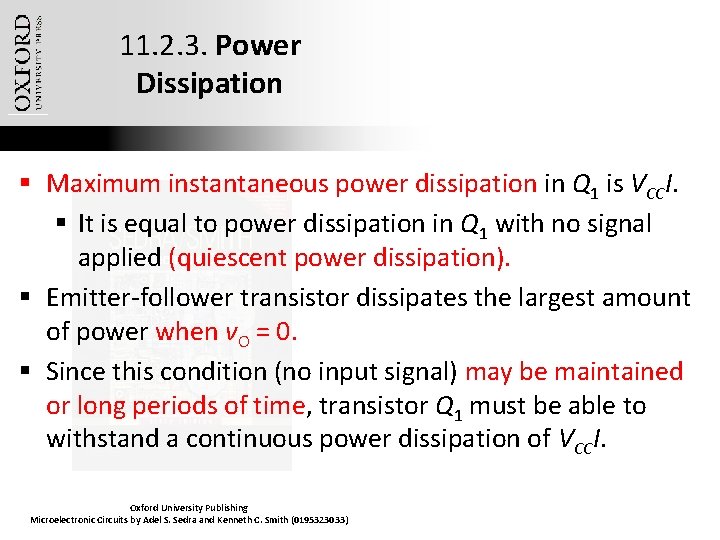
11. 2. 3. Power Dissipation § Maximum instantaneous power dissipation in Q 1 is VCCI. § It is equal to power dissipation in Q 1 with no signal applied (quiescent power dissipation). § Emitter-follower transistor dissipates the largest amount of power when v. O = 0. § Since this condition (no input signal) may be maintained or long periods of time, transistor Q 1 must be able to withstand a continuous power dissipation of VCCI. Oxford University Publishing Microelectronic Circuits by Adel S. Sedra and Kenneth C. Smith (0195323033)
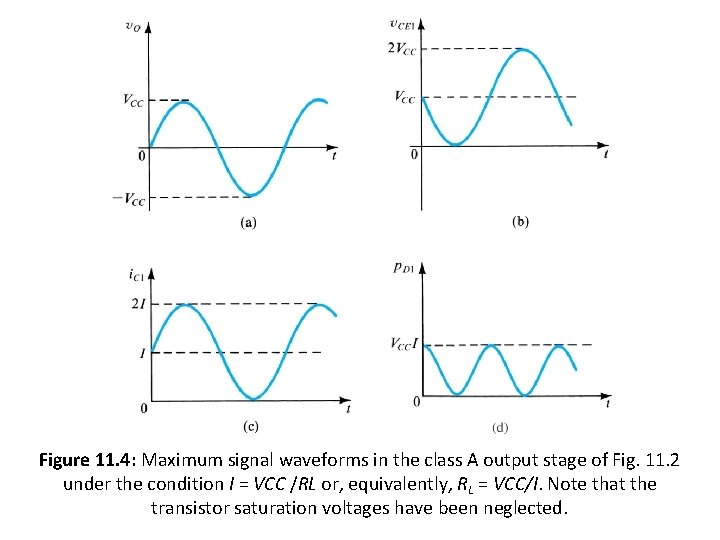
Figure 11. 4: Maximum signal waveforms in the class A output stage of Fig. 11. 2 under the condition I = VCC /RL or, equivalently, RL = VCC/I. Note that the Oxford University Publishing transistor saturation voltages have been neglected. Microelectronic Circuits by Adel S. Sedra and Kenneth C. Smith (0195323033)
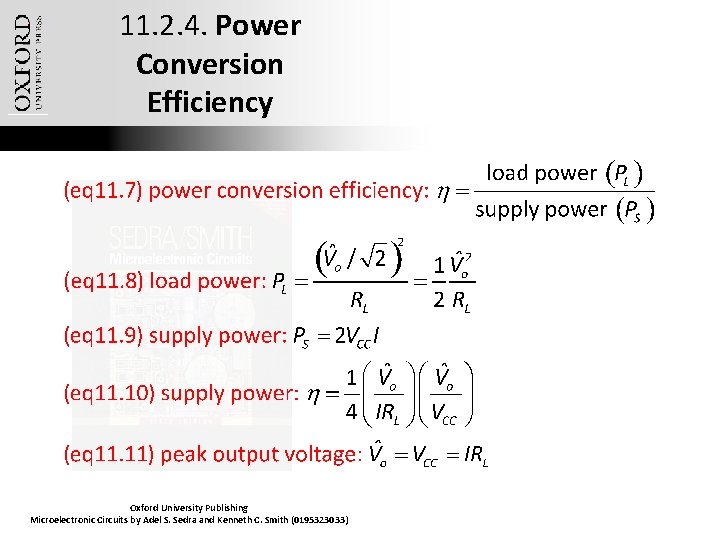
11. 2. 4. Power Conversion Efficiency Oxford University Publishing Microelectronic Circuits by Adel S. Sedra and Kenneth C. Smith (0195323033)
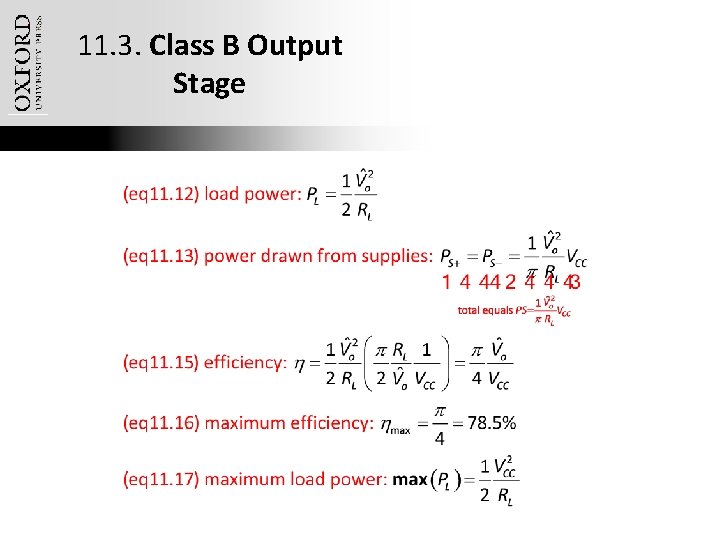
11. 3. Class B Output Stage Oxford University Publishing Microelectronic Circuits by Adel S. Sedra and Kenneth C. Smith (0195323033)
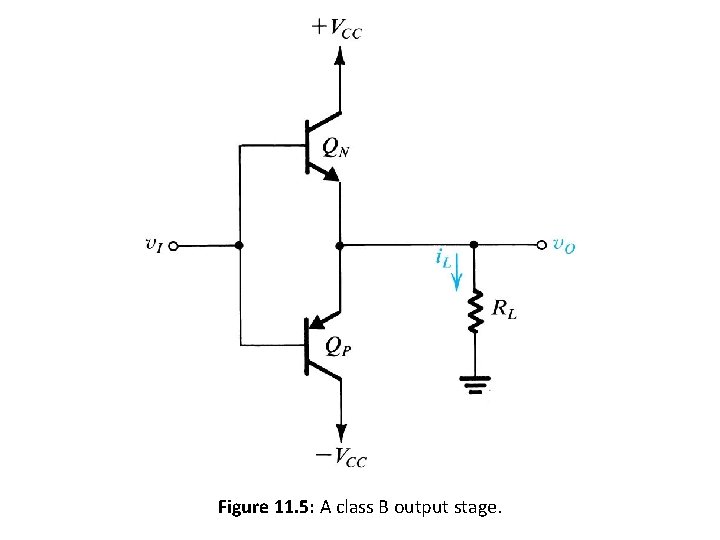
Figure 11. 5: A class B output stage. Oxford University Publishing Microelectronic Circuits by Adel S. Sedra and Kenneth C. Smith (0195323033)
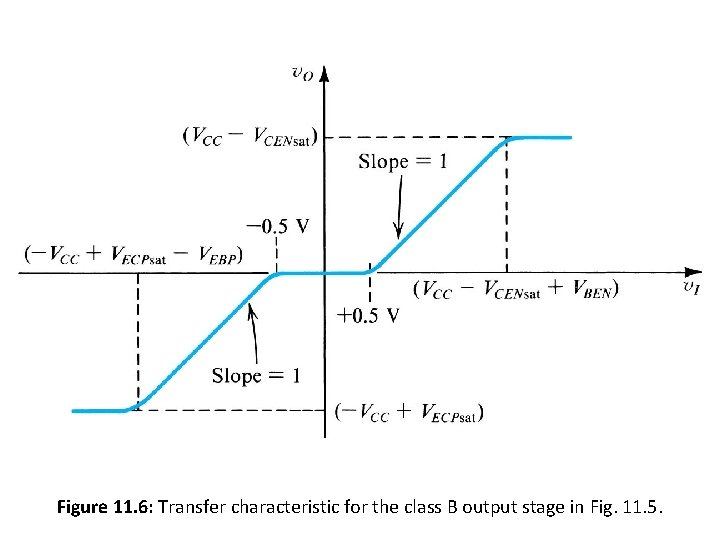
Figure 11. 6: Transfer characteristic for the class B output stage in Fig. 11. 5. Oxford University Publishing Microelectronic Circuits by Adel S. Sedra and Kenneth C. Smith (0195323033)
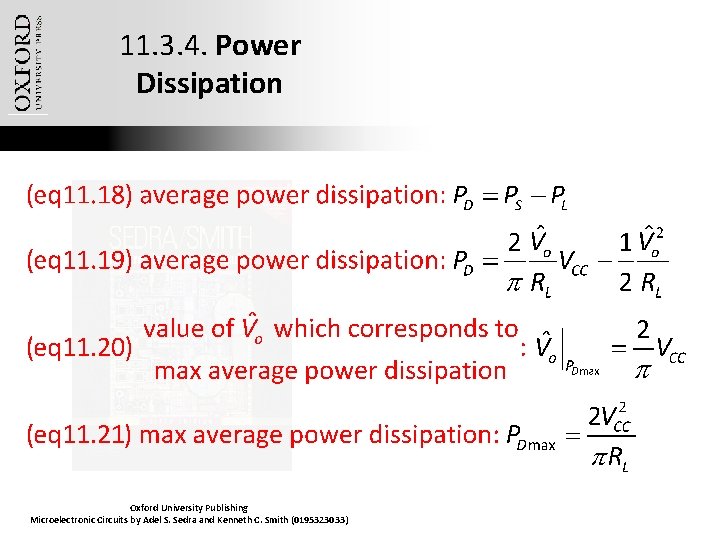
11. 3. 4. Power Dissipation Oxford University Publishing Microelectronic Circuits by Adel S. Sedra and Kenneth C. Smith (0195323033)
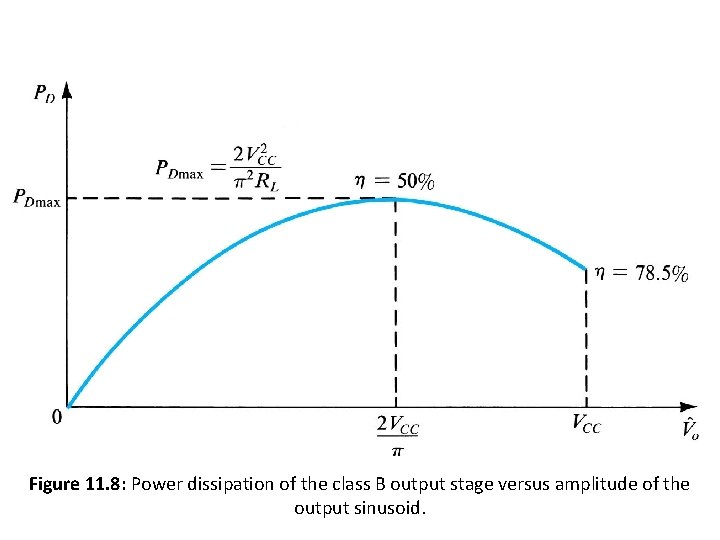
Figure 11. 8: Power dissipation of the class B output stage versus amplitude of the Oxford University Publishing output sinusoid. Microelectronic Circuits by Adel S. Sedra and Kenneth C. Smith (0195323033)
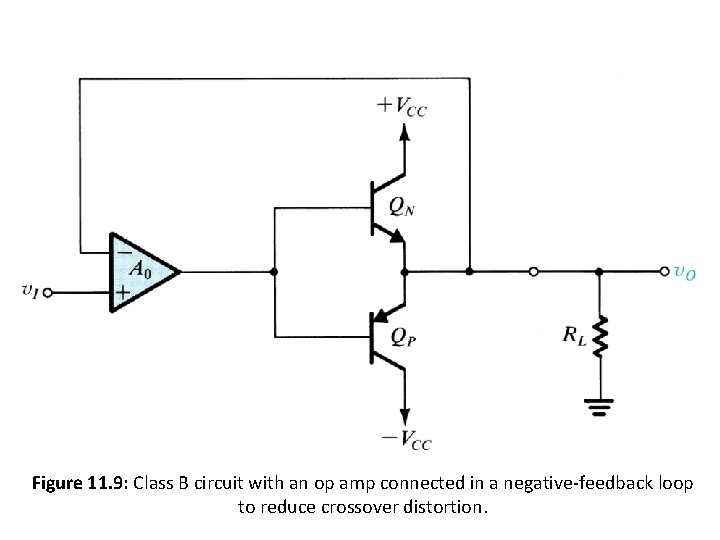
11. 3. 5. Reducing Crossover Distortion § Crossover distortion of class B output stage may be reduced substantially: § Employing High-gain Op-amp § Overall Negative Feedback § 0. 7 V deadband is reduced to 0. 7/A 0. § Slew-rate limitation of op-amp will cause alternate turning on and off of output transistors to be noticeable § More practical solution is class AB stage. Oxford University Publishing Microelectronic Circuits by Adel S. Sedra and Kenneth C. Smith (0195323033)
Figure 11. 9: Class B circuit with an op amp connected in a negative-feedback loop Oxford University Publishing to reduce crossover distortion. Microelectronic Circuits by Adel S. Sedra and Kenneth C. Smith (0195323033)
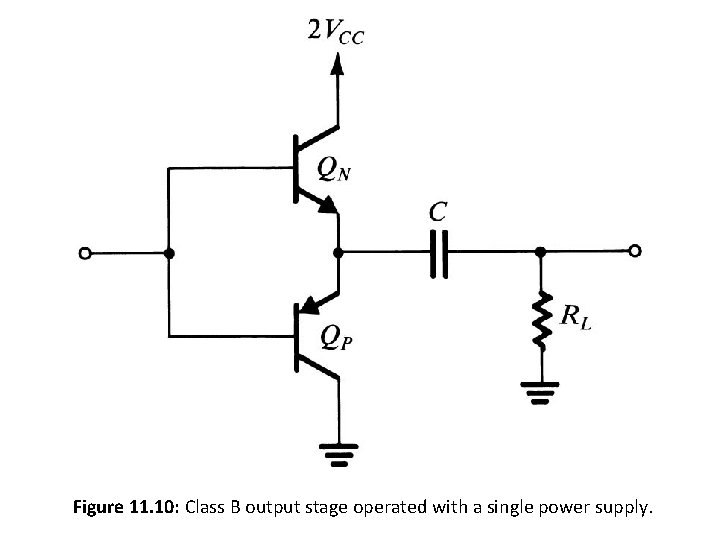
Figure 11. 10: Class B output stage operated with a single power supply. Oxford University Publishing Microelectronic Circuits by Adel S. Sedra and Kenneth C. Smith (0195323033)
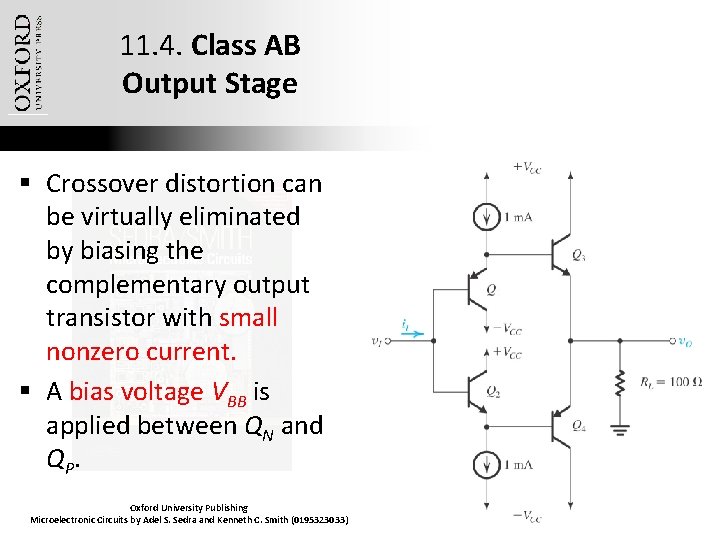
11. 4. Class AB Output Stage § Crossover distortion can be virtually eliminated by biasing the complementary output transistor with small nonzero current. § A bias voltage VBB is applied between QN and QP. Oxford University Publishing Microelectronic Circuits by Adel S. Sedra and Kenneth C. Smith (0195323033)
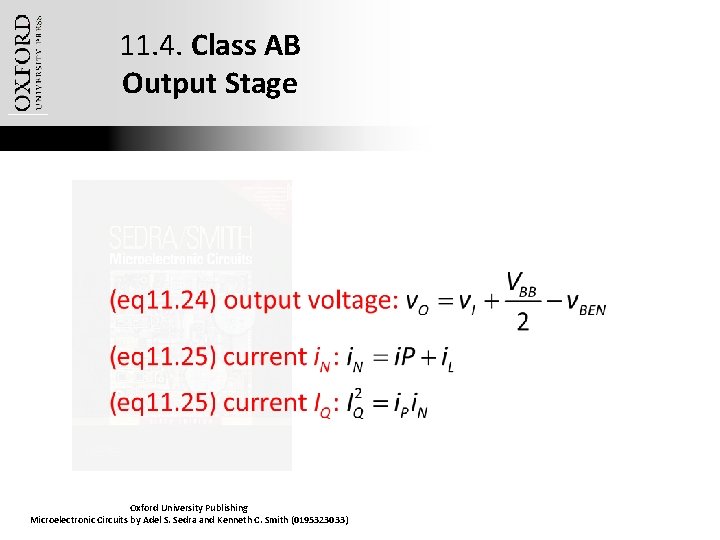
11. 4. Class AB Output Stage Oxford University Publishing Microelectronic Circuits by Adel S. Sedra and Kenneth C. Smith (0195323033)
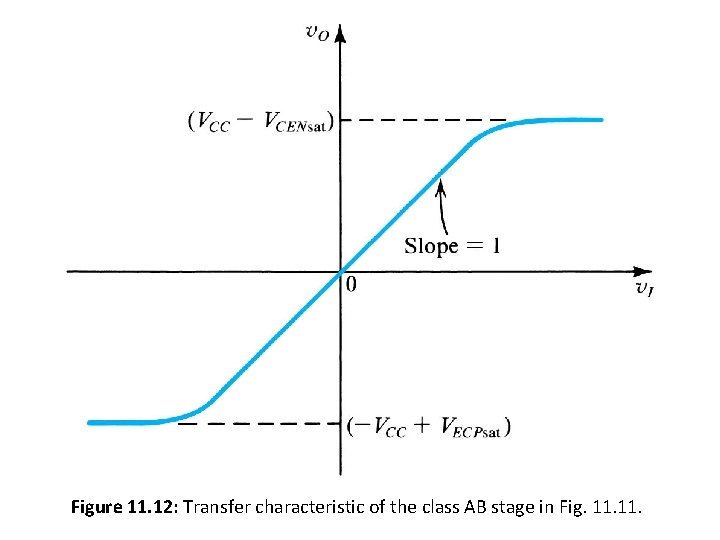
Figure 11. 12: Transfer characteristic of the class AB stage in Fig. 11. Oxford University Publishing Microelectronic Circuits by Adel S. Sedra and Kenneth C. Smith (0195323033)
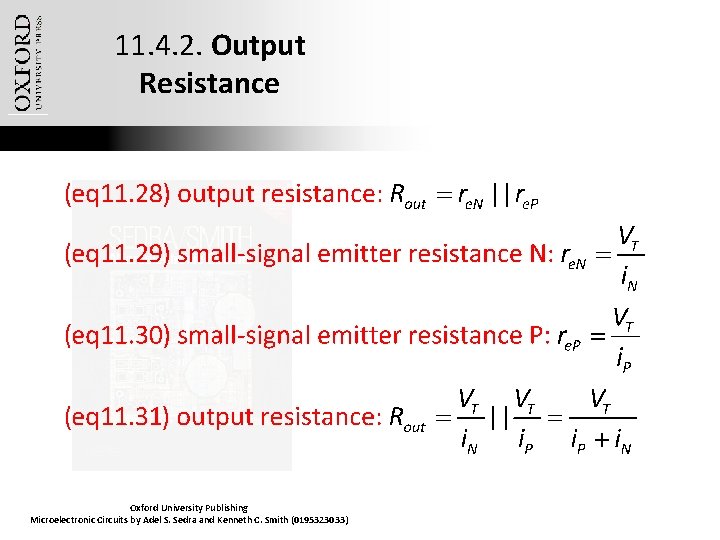
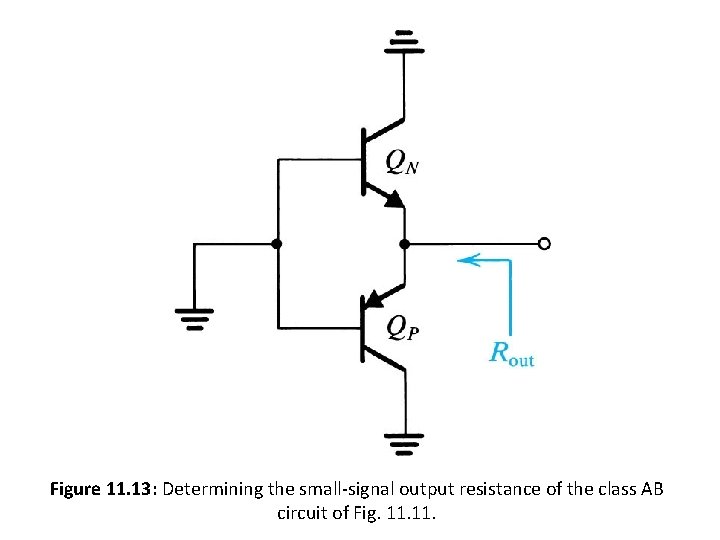
11. 4. 2. Output Resistance Oxford University Publishing Microelectronic Circuits by Adel S. Sedra and Kenneth C. Smith (0195323033)
Figure 11. 13: Determining the small-signal output resistance of the class AB Oxford University Publishing circuit of Fig. 11. Microelectronic Circuits by Adel S. Sedra and Kenneth C. Smith (0195323033)
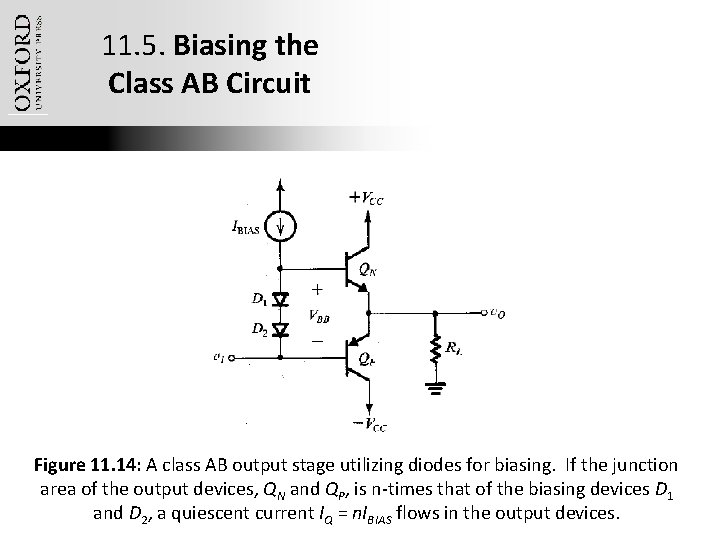
11. 5. Biasing the Class AB Circuit § Figure 11. 14 shows class AB circuit with bias voltage VBB. § Constant current IBIAS is passed through pair of diodes D 1 and D 2. § In circuits that supply large amounts of power, the output transistors are large-geometry devices. § Biasing diodes, however, need not be large. Oxford University Publishing Microelectronic Circuits by Adel S. Sedra and Kenneth C. Smith (0195323033)
11. 5. Biasing the Class AB Circuit Figure 11. 14: A class AB output stage utilizing diodes for biasing. If the junction area of the output devices, QN and QP, is n-times that of the biasing devices D 1 Oxford University Publishing , a. S. quiescent current IQ = n. IBIAS flows in the output devices. Microelectronicand Circuits D by 2 Adel Sedra and Kenneth C. Smith (0195323033)
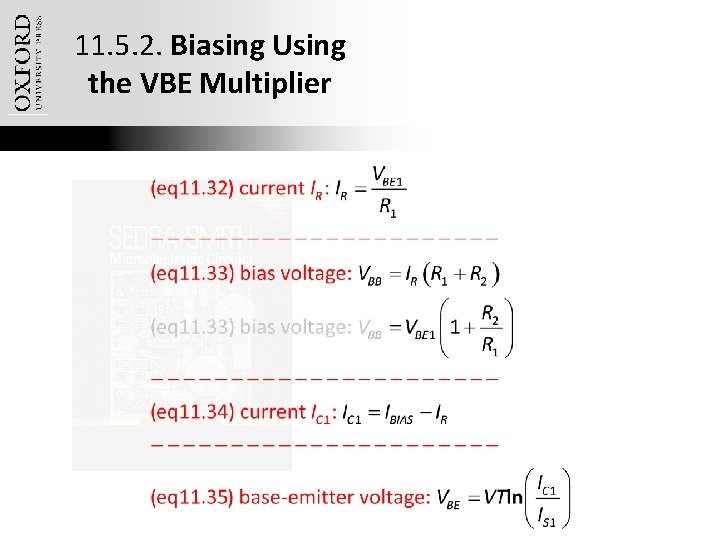
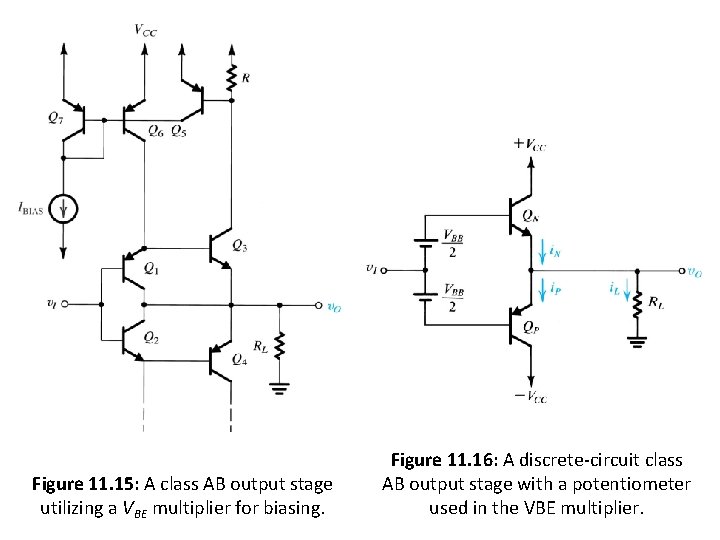
11. 5. 2. Biasing Using the VBE Multiplier Oxford University Publishing Microelectronic Circuits by Adel S. Sedra and Kenneth C. Smith (0195323033)
Figure 11. 15: A class AB output stage University Publishing utilizing a VOxford multiplier for biasing. BEAdel Microelectronic Circuits by S. Sedra and Kenneth C. Smith (0195323033) Figure 11. 16: A discrete-circuit class AB output stage with a potentiometer used in the VBE multiplier.
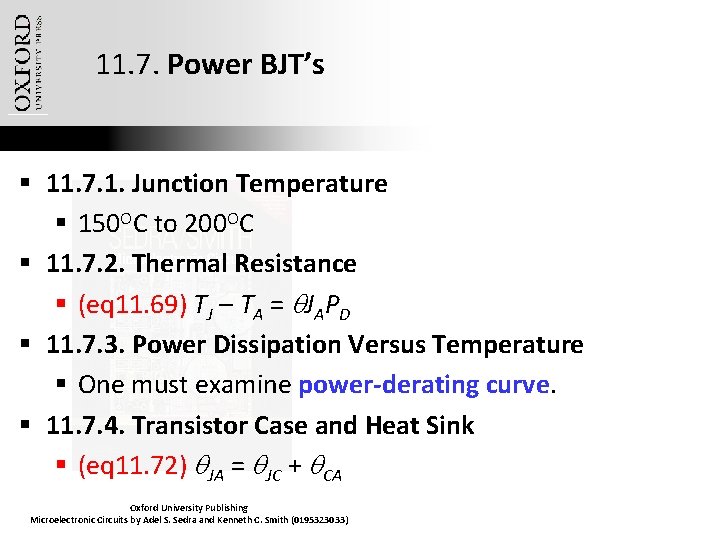
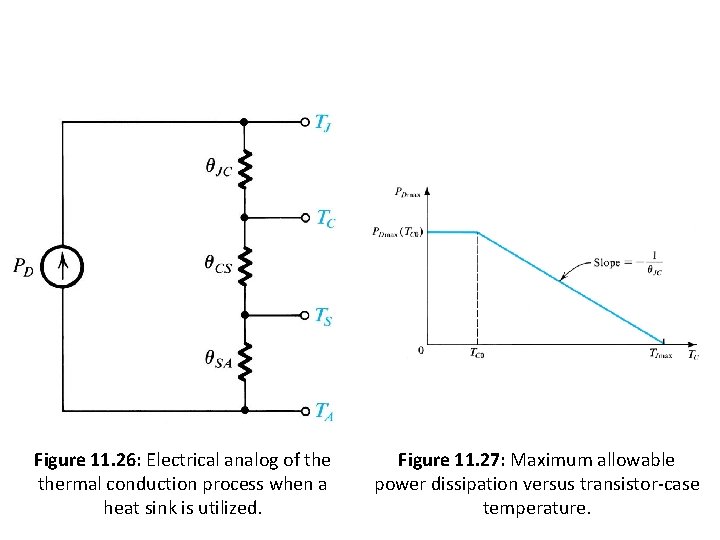
11. 7. Power BJT’s § 11. 7. 1. Junction Temperature § 150 OC to 200 OC § 11. 7. 2. Thermal Resistance § (eq 11. 69) TJ – TA = q. JAPD § 11. 7. 3. Power Dissipation Versus Temperature § One must examine power-derating curve. § 11. 7. 4. Transistor Case and Heat Sink § (eq 11. 72) q. JA = q. JC + q. CA Oxford University Publishing Microelectronic Circuits by Adel S. Sedra and Kenneth C. Smith (0195323033)
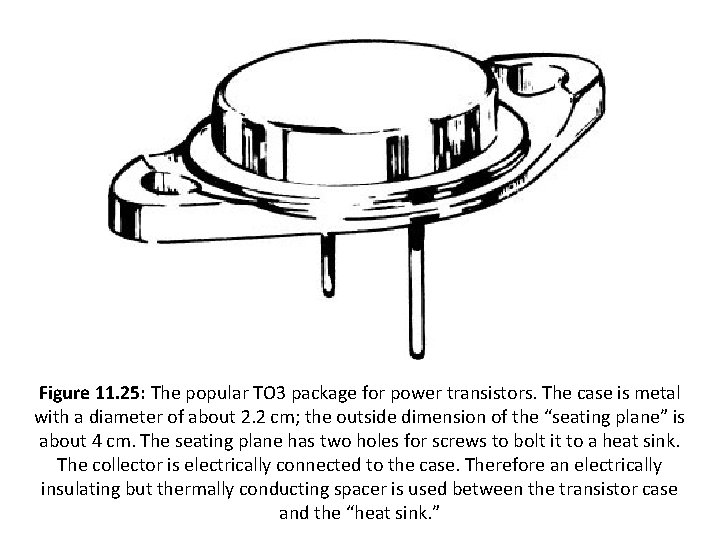
Figure 11. 25: The popular TO 3 package for power transistors. The case is metal with a diameter of about 2. 2 cm; the outside dimension of the “seating plane” is about 4 cm. The seating plane has two holes for screws to bolt it to a heat sink. The collector is electrically connected to the case. Therefore an electrically insulating but thermally conducting spacer is used between the transistor case Oxford University Publishing and the “heat sink. ” Microelectronic Circuits by Adel S. Sedra and Kenneth C. Smith (0195323033)
Figure 11. 26: Electrical analog of thermal conduction process when a Oxford University Publishing heat sink is utilized. Microelectronic Circuits by Adel S. Sedra and Kenneth C. Smith (0195323033) Figure 11. 27: Maximum allowable power dissipation versus transistor-case temperature.
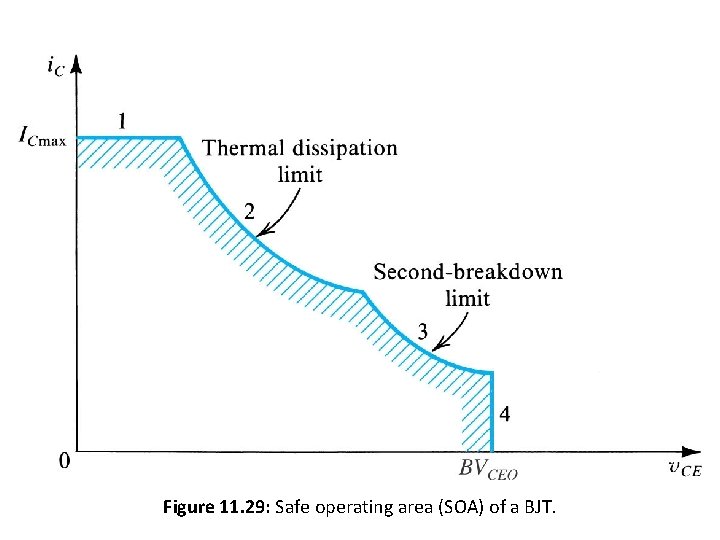
11. 7. 5. The BJT Safe Operating Area § The maximum allowable current ICMax. Exceeding this current on a continuous basis can result in melting the wires that bond the device to the package terminals. § The maximum power dissipation hyperbola. This is the locus of the points for which v. CEi. C = PDmax (at TC 0). For temperatures TC > TC 0, the power derating curves described in Section 11. 7. 4 should be used to obtain the applicable PDmax and thus a correspondingly lower hyperbola. Oxford University Publishing Microelectronic Circuits by Adel S. Sedra and Kenneth C. Smith (0195323033)
11. 7. 5. The BJT Safe Operating Area § The second-breakdown limit. Second breakdown is a phenomenon that results because current flow across the emitter-base junction is not uniform. Rather, the current density is greatest near the periphery of the junction. § Hot Spots § Thermal Runaway § The collector-to-emitter breakdown voltage (BVCEO). Oxford University Publishing Microelectronic Circuits by Adel S. Sedra and Kenneth C. Smith (0195323033)
Figure 11. 29: Safe operating area (SOA) of a BJT. Oxford University Publishing Microelectronic Circuits by Adel S. Sedra and Kenneth C. Smith (0195323033)
11. 7. 6. Parameter Values of Power Transistors § At high currents, the exponential i. C-v. BE relationship exhibits a factor of 2 reduction in the exponent. § b is low, typically 30 to 80 (but can be as low as 5). It is important to note that b has a positive temperature coefficient. § At high currents rp becomes very small (a few ohms) and rx becomes important. § f. T is low (a few MHz), Cm is large, Cp is even larger. § ICBO is large, BVCEO is typically 50 to 100 V. § ICmax is typically in ampere range, as high as 100 A. Oxford University Publishing Microelectronic Circuits by Adel S. Sedra and Kenneth C. Smith (0195323033)
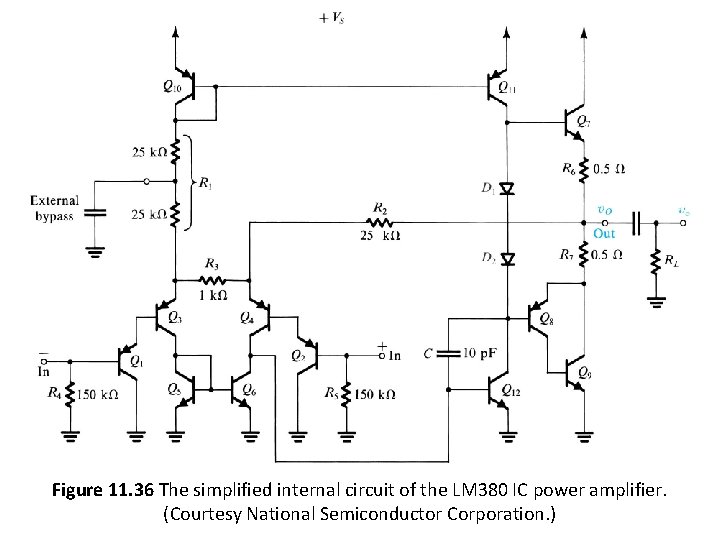
11. 9. IC Power Amplifiers § High-gain, small-signal amplifier followed by class AB output stage. § Overall negative feedback is already applied. § Output current-driving capability of any general-purpose op-amp may be increased by cascading it with class B or class AB output stage. § Hybrid IC Oxford University Publishing Microelectronic Circuits by Adel S. Sedra and Kenneth C. Smith (0195323033)
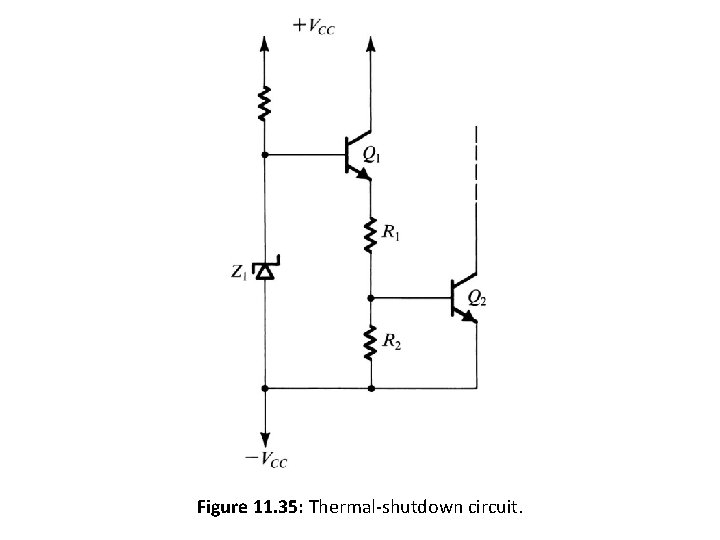
Figure 11. 35: Thermal-shutdown circuit. Oxford University Publishing Microelectronic Circuits by Adel S. Sedra and Kenneth C. Smith (0195323033)
Figure 11. 36 The simplified internal circuit of the LM 380 IC power amplifier. Oxford University Publishing National Semiconductor Corporation. ) Microelectronic Circuits by Adel (Courtesy S. Sedra and Kenneth C. Smith (0195323033)
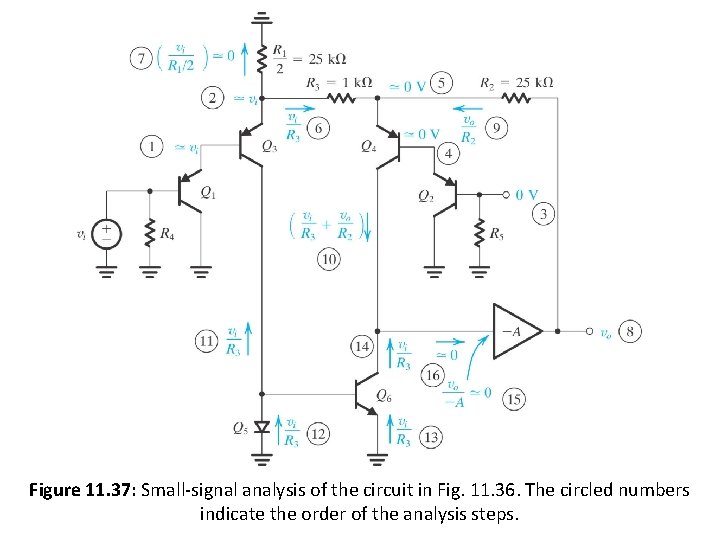
Figure 11. 37: Small-signal analysis of the circuit in Fig. 11. 36. The circled numbers Oxford University Publishing indicate the(0195323033) order of the analysis steps. Microelectronic Circuits by Adel S. Sedra and Kenneth C. Smith
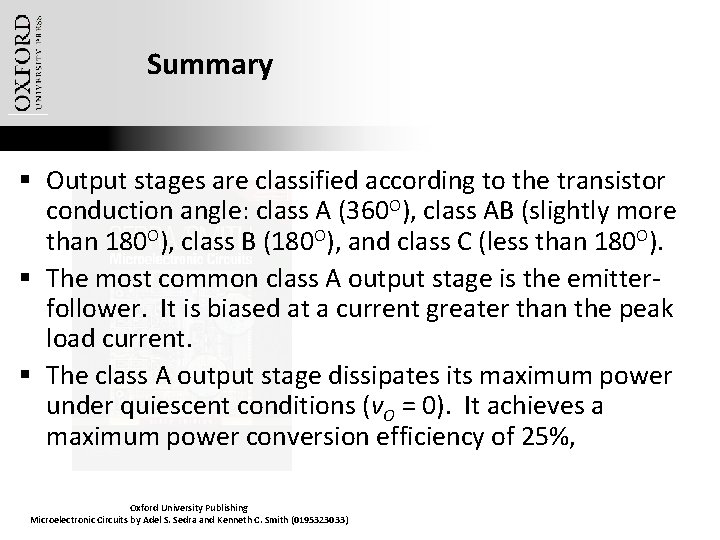
Summary § Output stages are classified according to the transistor conduction angle: class A (360 O), class AB (slightly more than 180 O), class B (180 O), and class C (less than 180 O). § The most common class A output stage is the emitterfollower. It is biased at a current greater than the peak load current. § The class A output stage dissipates its maximum power under quiescent conditions (v. O = 0). It achieves a maximum power conversion efficiency of 25%, Oxford University Publishing Microelectronic Circuits by Adel S. Sedra and Kenneth C. Smith (0195323033)
Summary § The class B stage is biased at zero current, and thus dissipates no power in quiescence. § The class B stage can achieve a power conversion efficiency as high as 78. 5%. § The class B stage suffers from crossover distortion. § The class AB output stage is biased at a small current; thus both transistors conduct for small input signals, and crossover distortion is virtually eliminated. Oxford University Publishing Microelectronic Circuits by Adel S. Sedra and Kenneth C. Smith (0195323033)
Summary § Except for an additional small quiescent power dissipation, the power relationships of the class AB stage are similar to those in class B. § To guard against the possibility of thermal runaway, the bias voltage of the class AB circuit is made to vary with temperature in the same manner as does VBE of the output transistors. § The classical CMOS class AB output stage suffers from reducing output signal-swing. This problem may be overcome by replacing the source-follower output transistor with a pair of complementary devices. Oxford University Publishing Microelectronic Circuits by Adel S. Sedra and Kenneth C. Smith (0195323033)