
Chapter 11 Ocean Basins Oceans 5 major oceans
Chapter 11 Ocean Basins
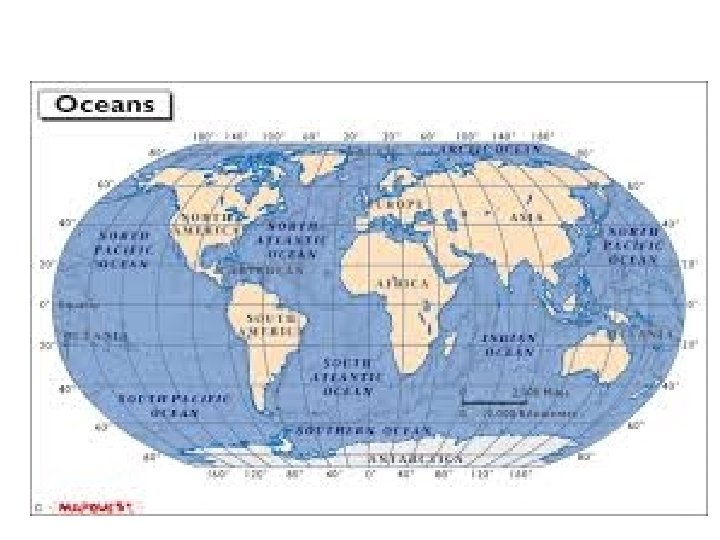
Oceans • 5 major oceans – Largest to smallest – Pacific, Atlantic, Indian, Southern, Arctic – Southern ocean includes all the southern portions of the Pacific, Indian and Atlantic • Basins: Low points on the Earths’ surface – Precipitation falls on land is captured by a DRAINAGE Basin which eventually reaches the oceans
Oceans support life • Oceans control – The earth’s temperature – Create weather patterns – A source of water (precipitation on water -> water originated in the ocean)
Origin of Ocean water • Scientists >>> Came from Volcanoes – The earth started as a hot rock of molten lava – The earth cooled down but heat was released from deep within the earth through Volcanoes – Water trapped turned into water vapour > evaporated and condensed to return as precipitation • Scientists >>> a large comet carrying ice hit the earth
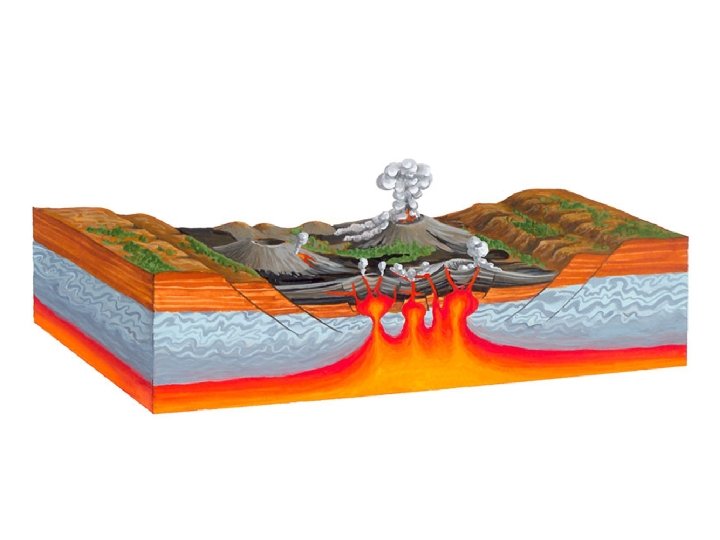
Features of the ocean floor • Same features on land are found on the ocean floor – Valleys, mountain ranges, flat plains, canyons, and volcanoes • Ocean floor has two distinct parts: – Ocean basin – Ocean margins


Ocean basins • Similar forces that work on land apply to ocean floor – Storm waters erode coral – Icebergs gouge deep grooves • The greatest influence > tectonic processes – Movement of the earth’s crust – Tectonic plates float over molten rock > magma – Oceanic plates – under the ocean – Continental plates – under the continents
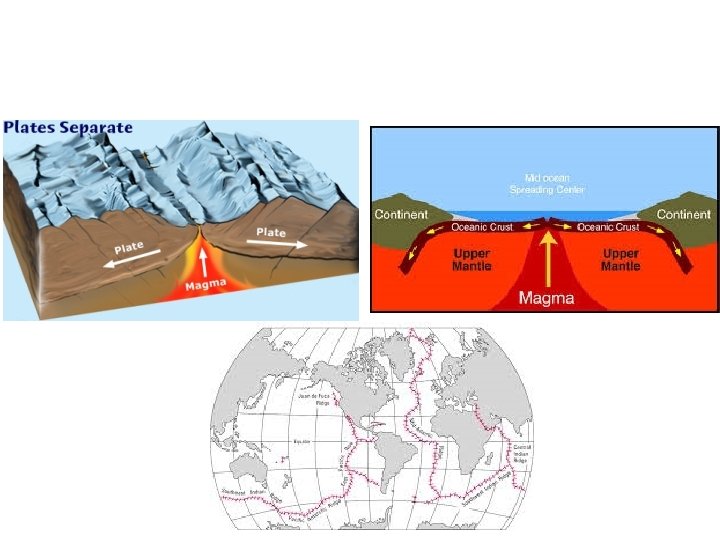
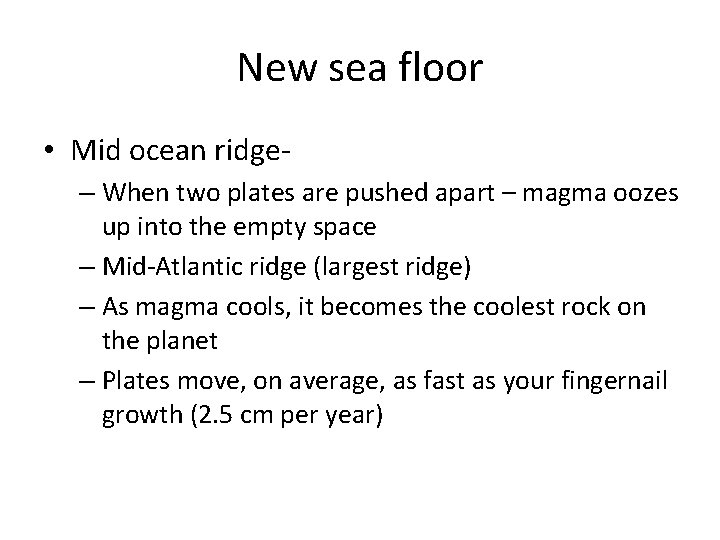
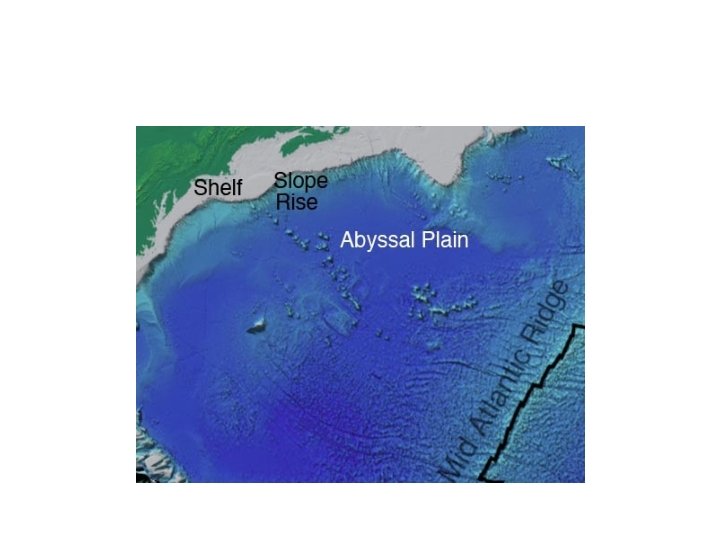
New sea floor • Mid ocean ridge– When two plates are pushed apart – magma oozes up into the empty space – Mid-Atlantic ridge (largest ridge) – As magma cools, it becomes the coolest rock on the planet – Plates move, on average, as fast as your fingernail growth (2. 5 cm per year)
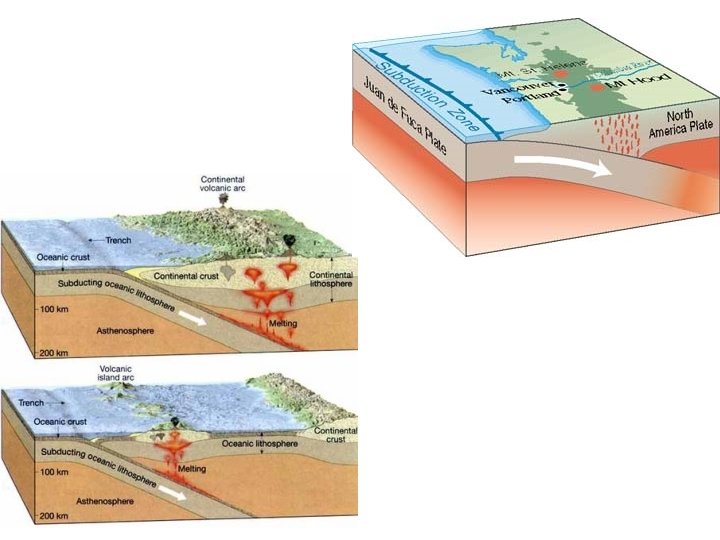
Subduction • Eventually a oceanic plate comes in contact with a continental plate • Denser plate is forced underneath the less dense plate > Subduction • This is the formation of an ocean trench • Abyssal plains: flat areas of the ocean floor – makes up 30% of the ocean floor – Sediments can be 1 km thick on the abyssal plain
Continental margins • Regions of the ocean floor that lie underwater along the edge of the continents • Continental shelf >> a flat area that extends from the continents shoreline to the ocean basin • Continental slope >> steep area that drops off rapidly to the ocean basin • Turbidity currents >> result when too much sediments build up and are suddenly released like a landslide • Continental rise >> where the sediments finally rest at the bottom of the slope
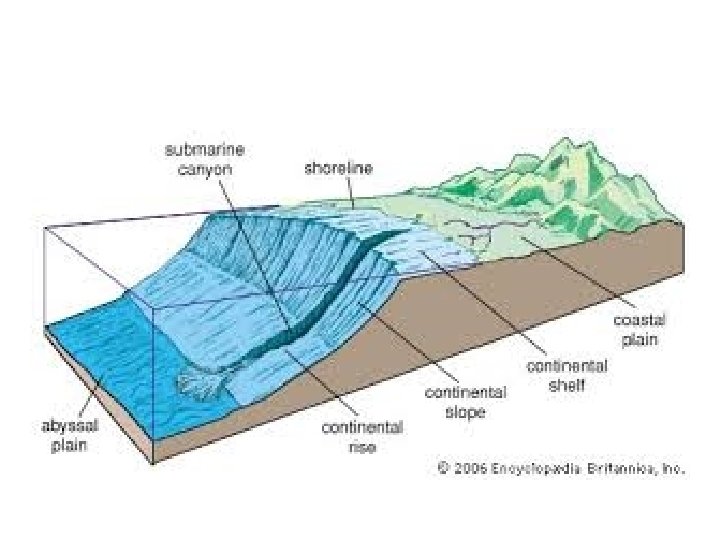
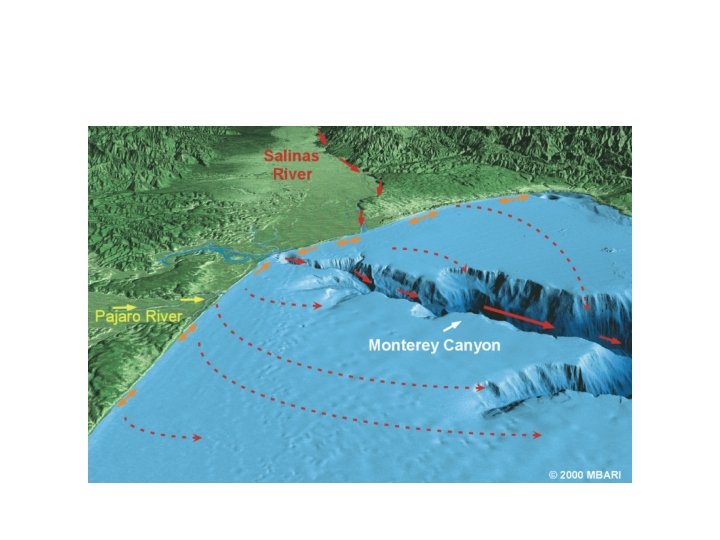
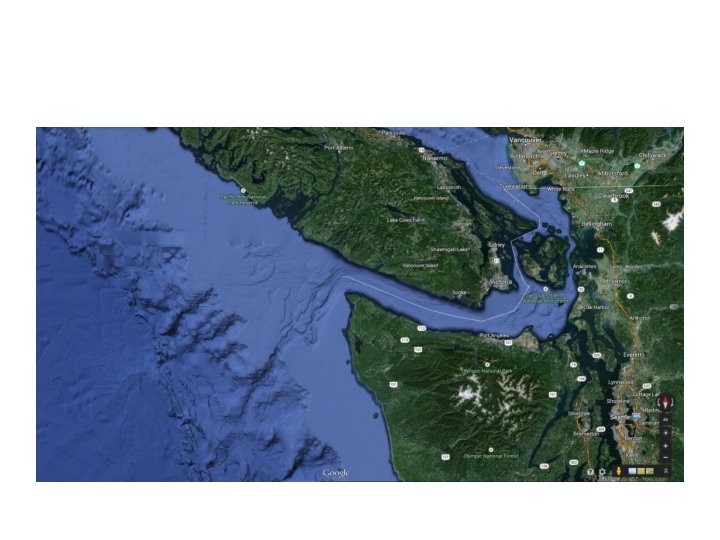
Submarine canyons • Some turbidity currents are so powerful that they carve out deep canyons >> Submarine canyons • Also found where large rivers reach the ocean – Fraser river meets the pacific
- Slides: 20