
Chapter 11 management skills Section 11 1 Management







- Slides: 40
Chapter 11 management skills Section 11. 1 Management Structures Section 11. 2 Management Functions
Section 11. 1 Management Structures CONNECT When do you have to manage your time or resources?
Section 11. 1 Management Structures • Explain how horizontally organized companies differ from vertically organized companies. • Name three levels of management in a vertically organized company. • Explain how a self-managed team functions.
Section 11. 1 Management Structures Two types of management structures are vertical and horizontal or a combination of both.
Section 11. 1 Management Structures • management • vertical organization • top management • middle management • supervisory-level management • horizontal organization • empowerment
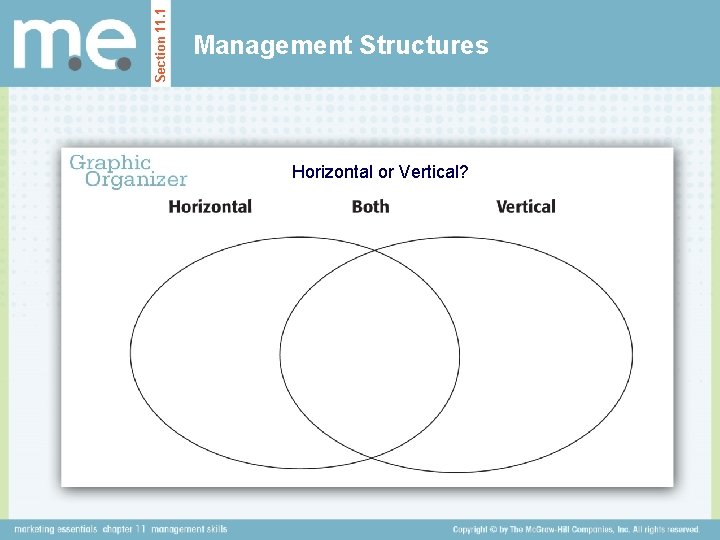
Section 11. 1 Management Structures Horizontal or Vertical?
Section 11. 1 Management Structures Horizontal or Vertical?
Section 11. 1 Management Structures Leadership in the 21 st Century What is management? management The process of achieving company goals by effective use of resources through planning, organizing, and controlling.
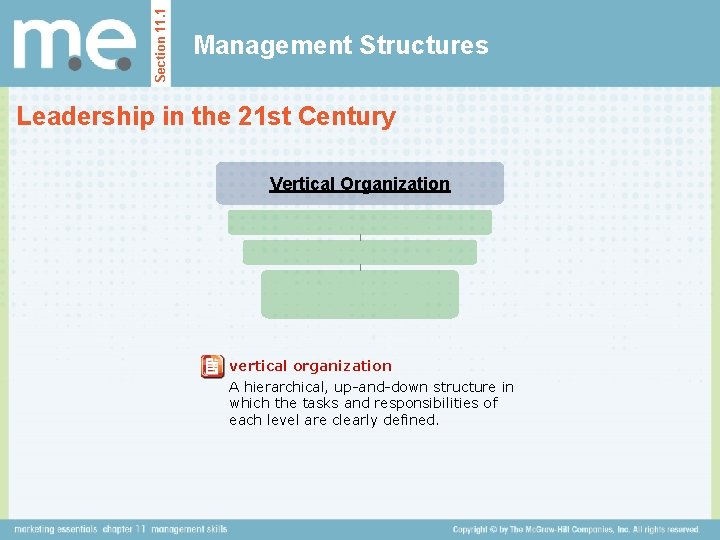
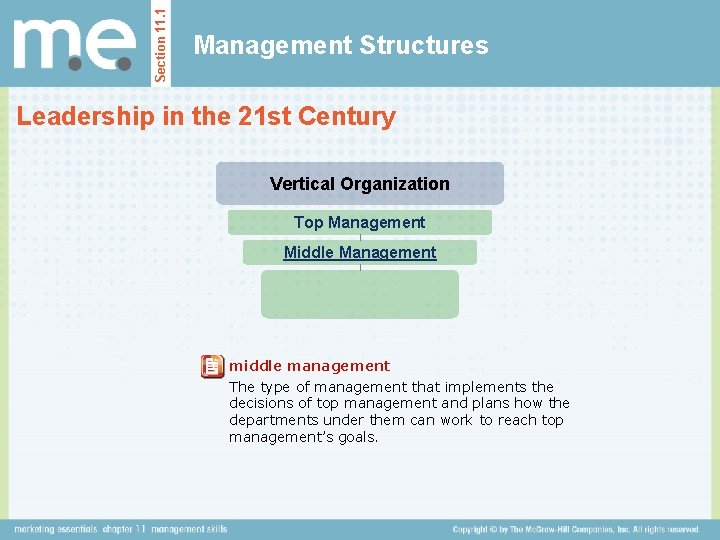
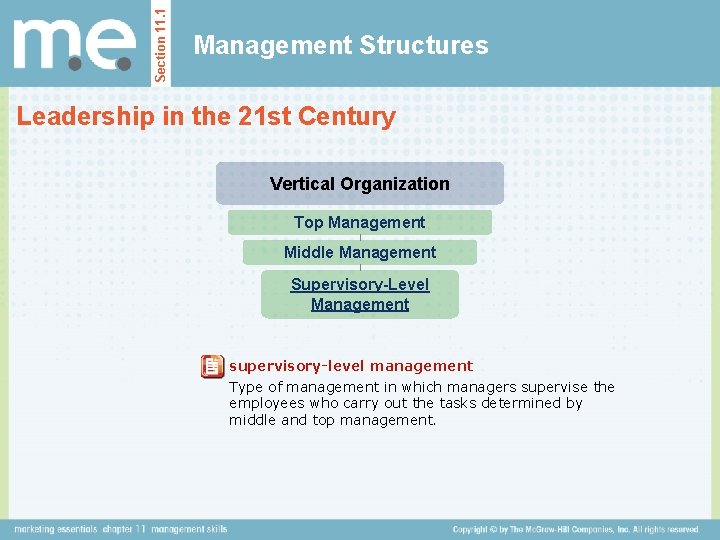
Section 11. 1 Management Structures Leadership in the 21 st Century Vertical Organization vertical organization A hierarchical, up-and-down structure in which the tasks and responsibilities of each level are clearly defined.
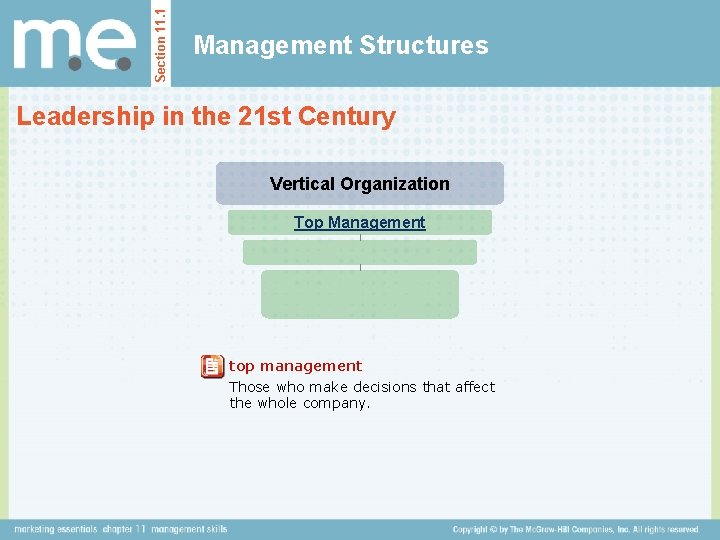
Section 11. 1 Management Structures Leadership in the 21 st Century Vertical Organization Top Management top management Those who make decisions that affect the whole company.
Section 11. 1 Management Structures Leadership in the 21 st Century Vertical Organization Top Management Middle Management middle management The type of management that implements the decisions of top management and plans how the departments under them can work to reach top management’s goals.
Section 11. 1 Management Structures Leadership in the 21 st Century Vertical Organization Top Management Middle Management Supervisory-Level Management supervisory-level management Type of management in which managers supervise the employees who carry out the tasks determined by middle and top management.
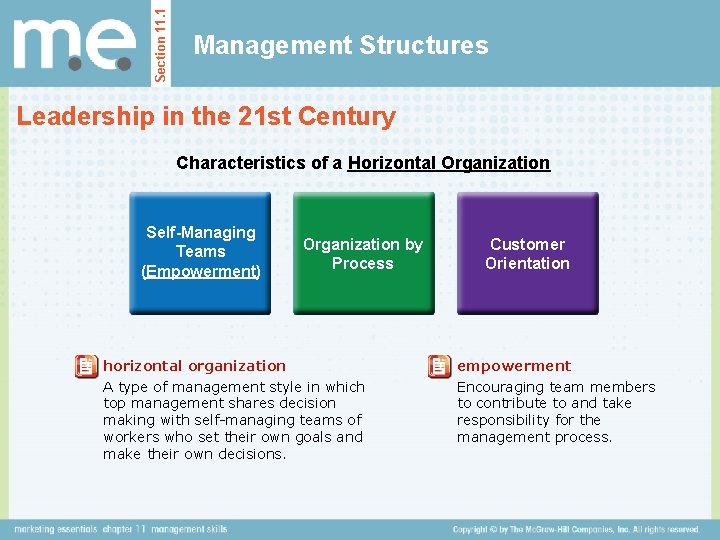
Section 11. 1 Management Structures Leadership in the 21 st Century Characteristics of a Horizontal Organization Self-Managing Teams (Empowerment) Organization by Process horizontal organization A type of management style in which top management shares decision making with self-managing teams of workers who set their own goals and make their own decisions. Customer Orientation empowerment Encouraging team members to contribute to and take responsibility for the management process.
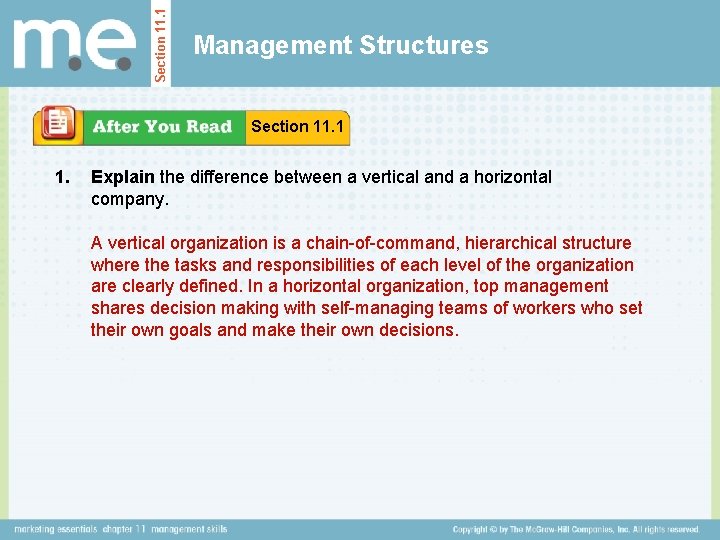
Section 11. 1 Management Structures Section 11. 1 1. Explain the difference between a vertical and a horizontal company. A vertical organization is a chain-of-command, hierarchical structure where the tasks and responsibilities of each level of the organization are clearly defined. In a horizontal organization, top management shares decision making with self-managing teams of workers who set their own goals and make their own decisions.
Section 11. 1 Management Structures Section 11. 1 2. List two advantages of horizontal organization. Personnel costs are reduced in a horizontal organization because fewer managers are required. Members of self-managed teams are empowered as they are given authority to make their own decisions, complete their tasks, and coordinate their activities with other groups within the company.
Section 11. 1 Management Structures Section 11. 1 3. Identify three levels of management in a vertical organization. The three levels are top management, middle management, and supervisory-level management.
Section 11. 2 Management Functions CONNECT Why do you think it might be important for managers to have good interpersonal skills?
Section 11. 2 Management Functions • Name three functions of management. • Describe the management techniques used by effective managers. • Explain how to manage employees properly.
Section 11. 2 Management Functions Understanding basic management functions is essential to success in the field of marketing.
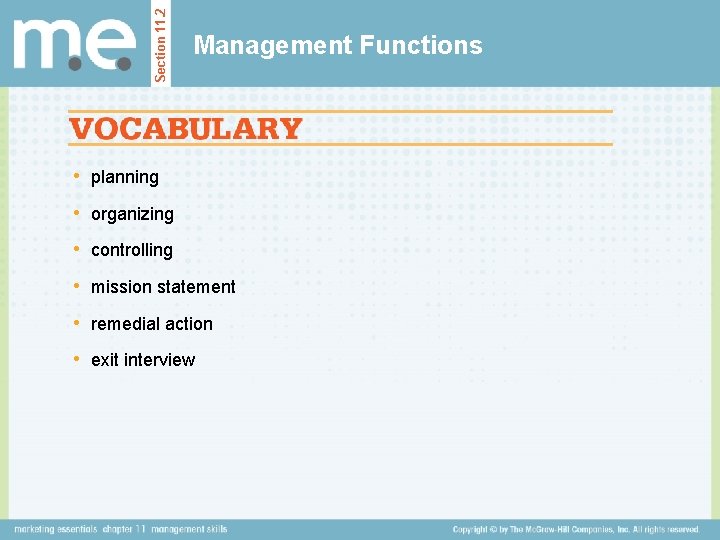
Section 11. 2 Management Functions • planning • organizing • controlling • mission statement • remedial action • exit interview
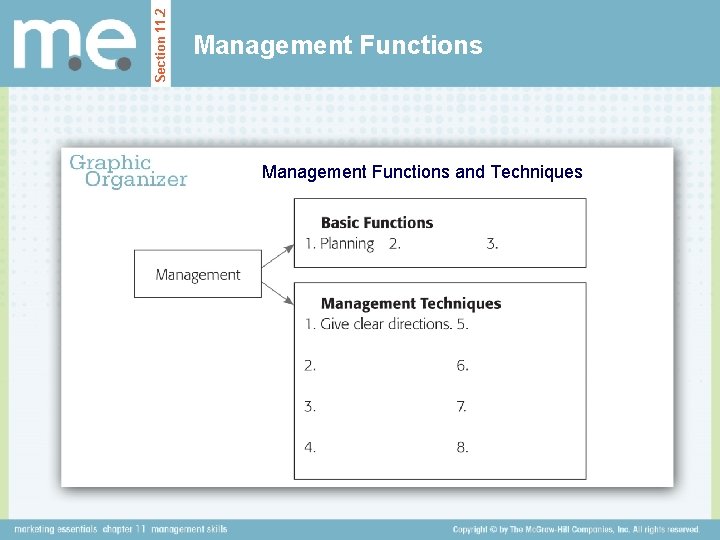
Section 11. 2 Management Functions and Techniques
Section 11. 2 Management Functions and Techniques
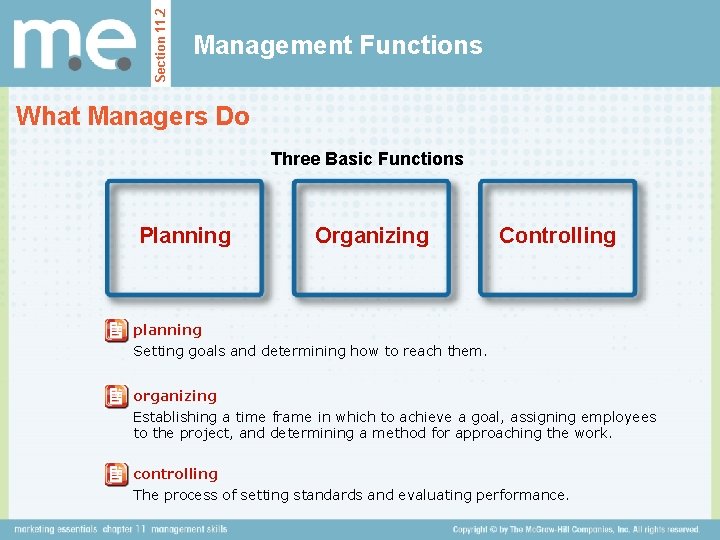
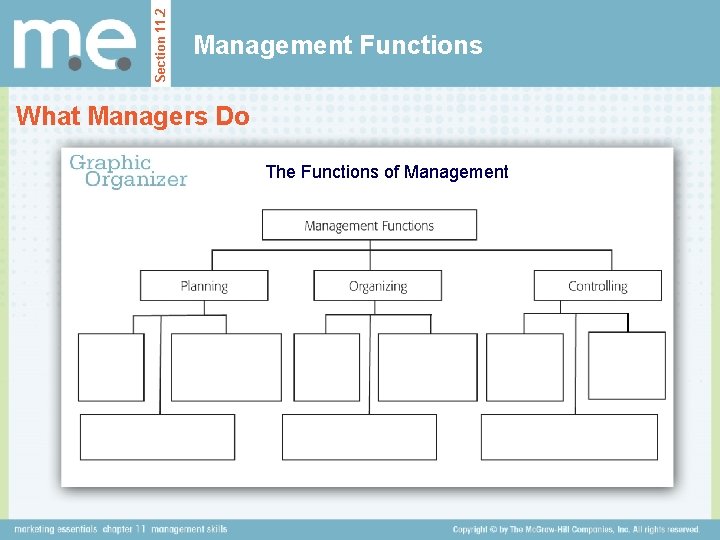
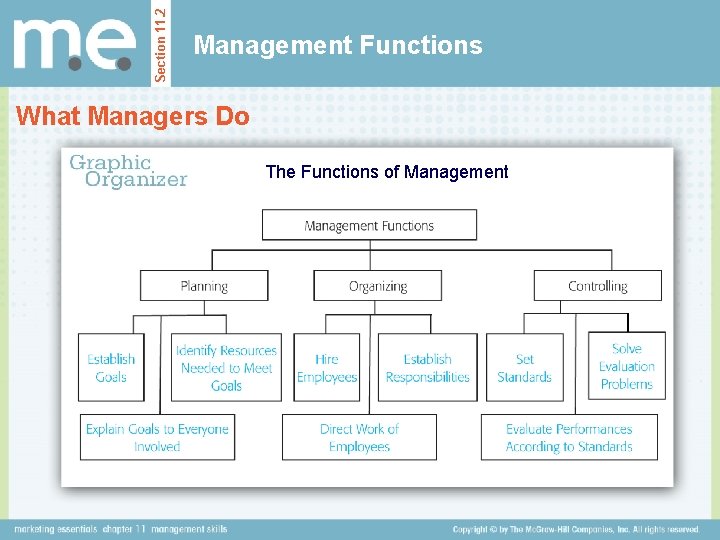
Section 11. 2 Management Functions What Managers Do Three Basic Functions Planning Organizing Controlling planning Setting goals and determining how to reach them. organizing Establishing a time frame in which to achieve a goal, assigning employees to the project, and determining a method for approaching the work. controlling The process of setting standards and evaluating performance.
Section 11. 2 Management Functions What Managers Do The Functions of Management
Section 11. 2 Management Functions What Managers Do The Functions of Management
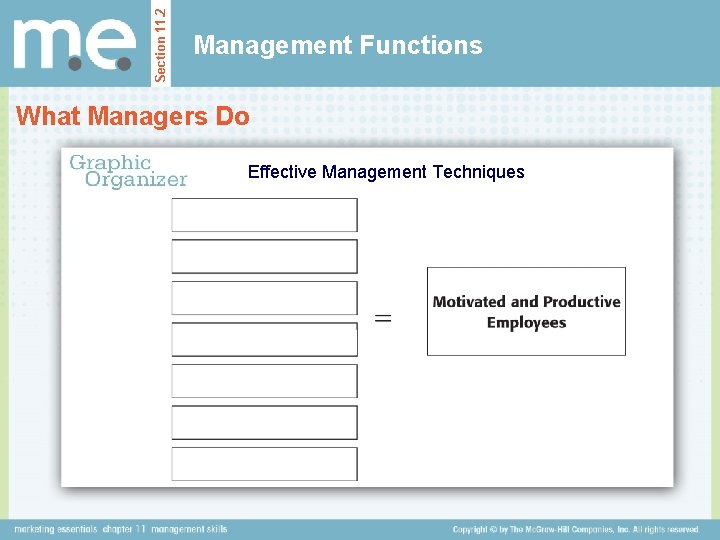
Section 11. 2 Management Functions What Managers Do Effective Management Techniques
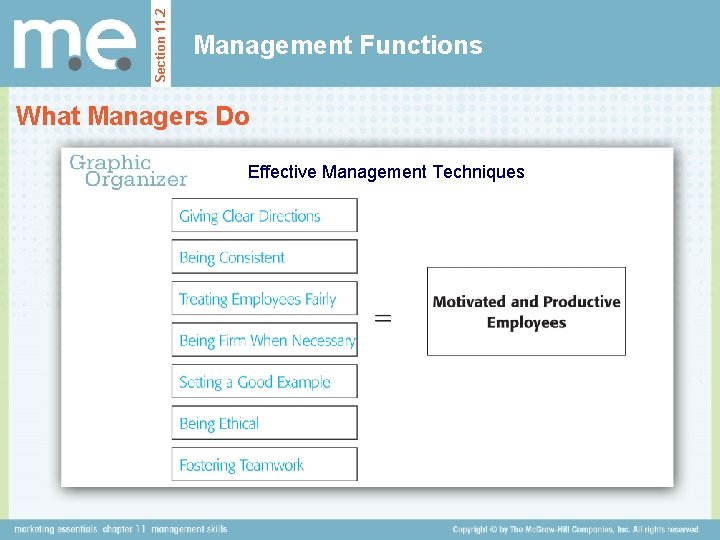
Section 11. 2 Management Functions What Managers Do Effective Management Techniques
Section 11. 2 Management Functions What Managers Do Management Styles Authoritarian Democratic Participatory Teamwork Discussion Management Delegating Style
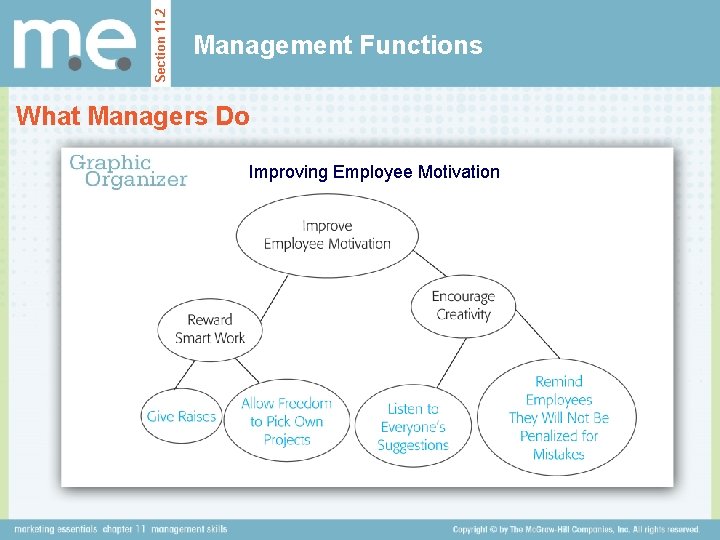
Section 11. 2 Management Functions What Managers Do Employee Motivation Rewards Encourage Creativity
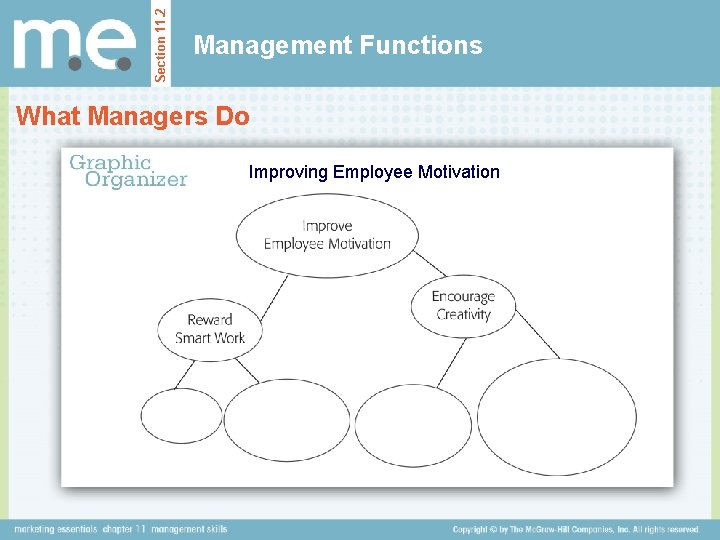
Section 11. 2 Management Functions What Managers Do Improving Employee Motivation
Section 11. 2 Management Functions What Managers Do Improving Employee Motivation
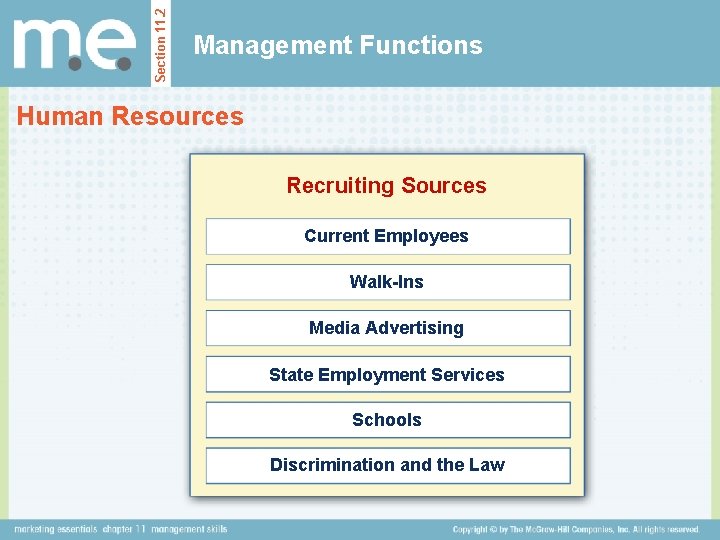
Section 11. 2 Management Functions Human Resources Recruiting Sources Current Employees Walk-Ins Media Advertising State Employment Services Schools Discrimination and the Law
Section 11. 2 Management Functions Human Resources Tips for Hiring New Employees Follow all laws that govern the hiring process. Conduct at least two interviews. Have at least two people interview final applicants. Ask only questions that are job related. Do some pre-employment testing.
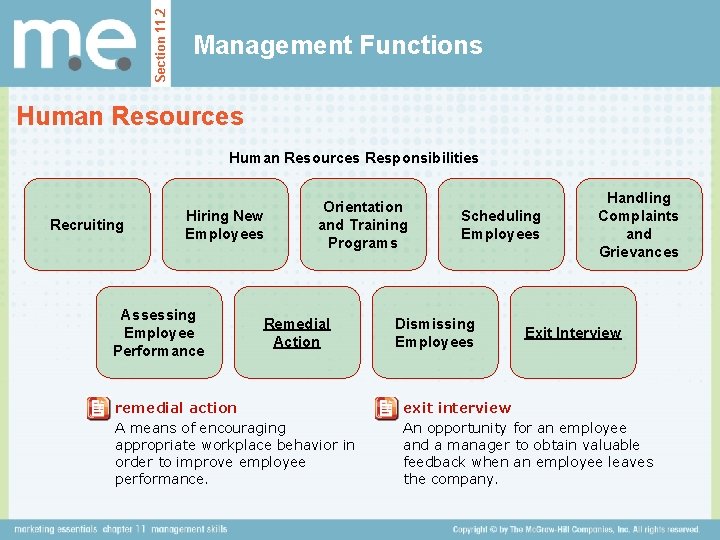
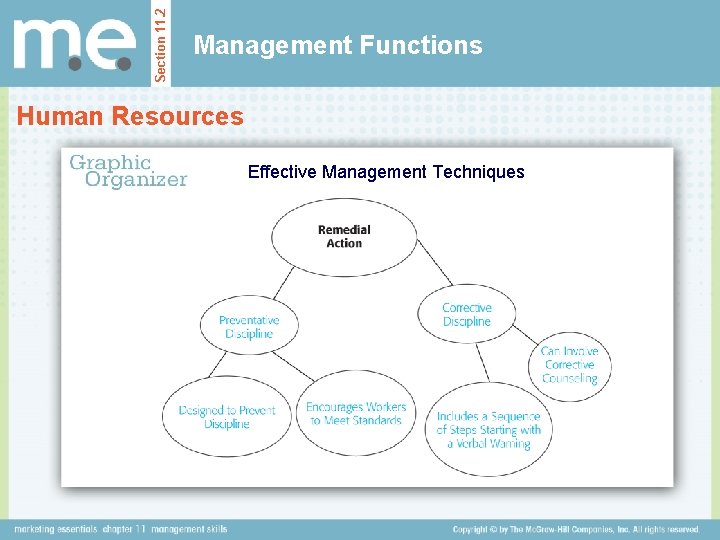
Section 11. 2 Management Functions Human Resources Responsibilities Recruiting Hiring New Employees Assessing Employee Performance Orientation and Training Programs Remedial Action remedial action A means of encouraging appropriate workplace behavior in order to improve employee performance. Scheduling Employees Dismissing Employees Handling Complaints and Grievances Exit Interview exit interview An opportunity for an employee and a manager to obtain valuable feedback when an employee leaves the company.
Section 11. 2 Management Functions Human Resources Effective Management Techniques
Section 11. 2 Management Functions Human Resources Effective Management Techniques
Section 11. 2 Management Functions Section 11. 2 1. List the three functions of management. The three functions of management are planning, organizing, and controlling.
Section 11. 2 Management Functions Section 11. 2 2. Explain the meaning of delegating responsibility. Delegating means giving jobs or duties to other people to do, rather than trying to do everything yourself.
Section 11. 2 Management Functions Section 11. 2 3. Discuss the purpose of assessing employee performance. The purpose of assessing employee performance is to develop better workers and a more effective and profitable company.
End of Chapter 11 management skills Section 11. 1 Management Structures Section 11. 2 Management Functions