
Chapter 11 Lesson 1 Introduction to Engine Parts
- Slides: 21
Chapter 11 Lesson 1 Introduction to Engine Parts, Operation and Function
The engine is the source of power for the vehicle � It converts the energy stored in fuel into motion �
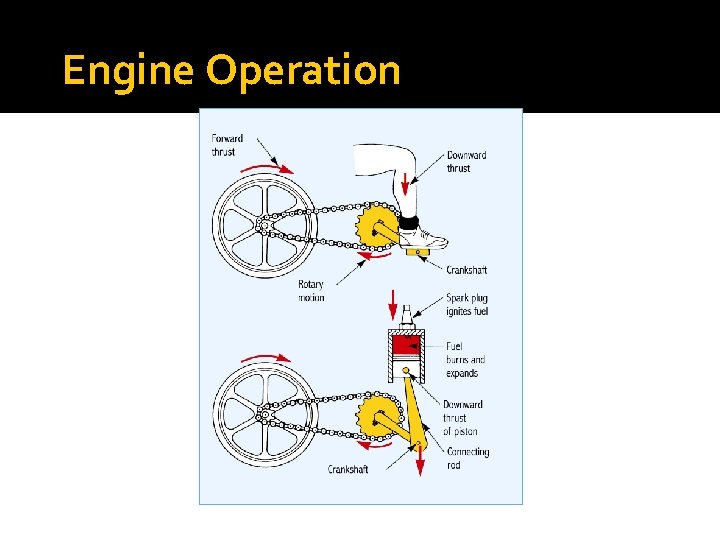
Engine Operation Fuel is burned inside the engine’s combustion chamber to produce heat � Heat causes expansion of gases in the engine � Expansion in the combustion chamber produces pressure � Engine components convert pressure into rotating motion �
Engine Operation
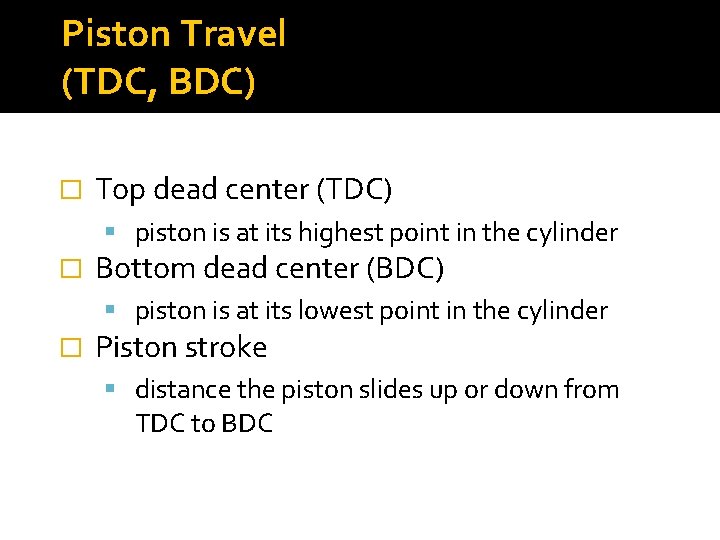
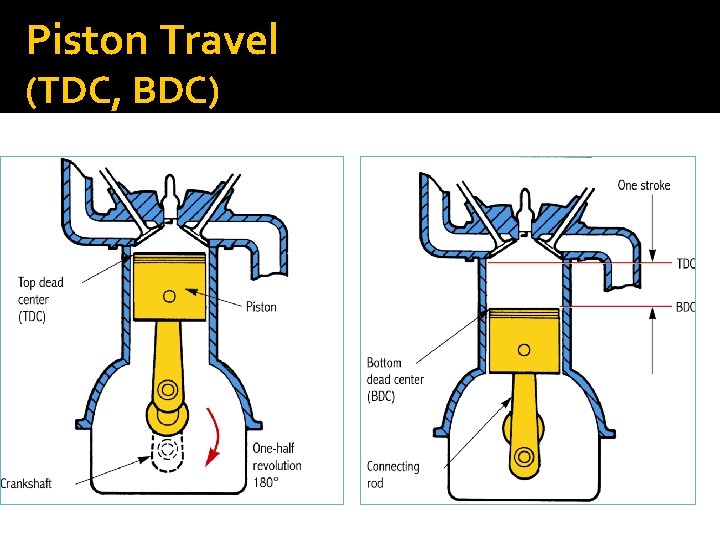
Piston Travel (TDC, BDC) � Top dead center (TDC) piston is at its highest point in the cylinder � Bottom dead center (BDC) piston is at its lowest point in the cylinder � Piston stroke distance the piston slides up or down from TDC to BDC
Piston Travel (TDC, BDC)
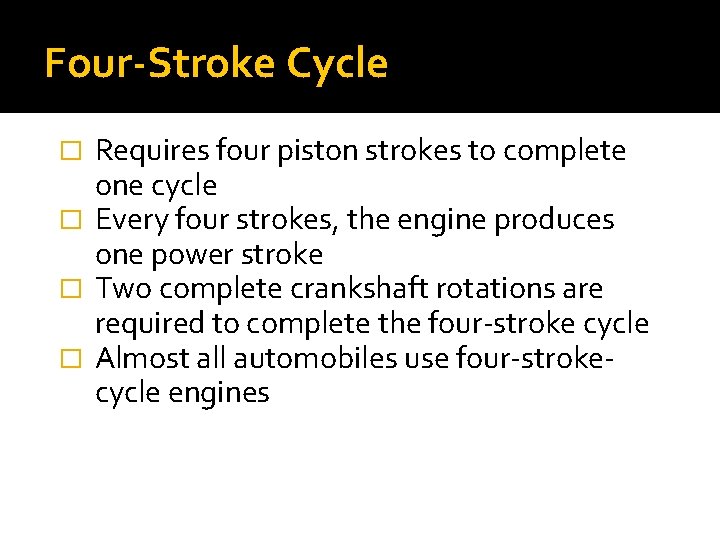
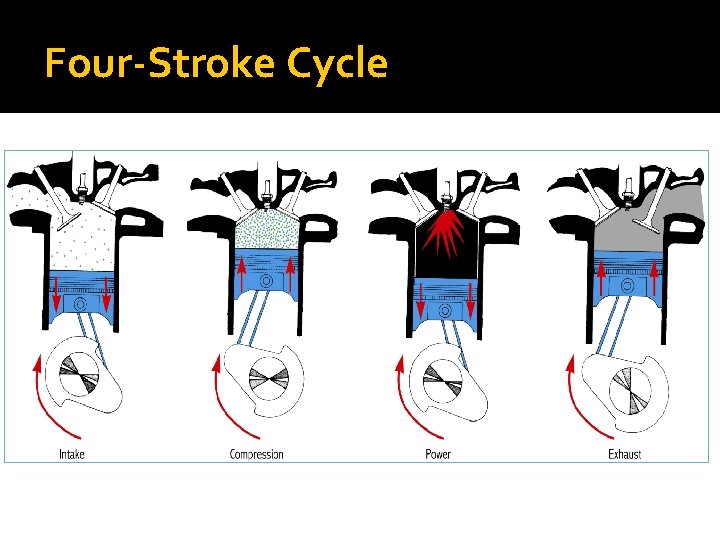
Four-Stroke Cycle Requires four piston strokes to complete one cycle � Every four strokes, the engine produces one power stroke � Two complete crankshaft rotations are required to complete the four-stroke cycle � Almost all automobiles use four-strokecycle engines �
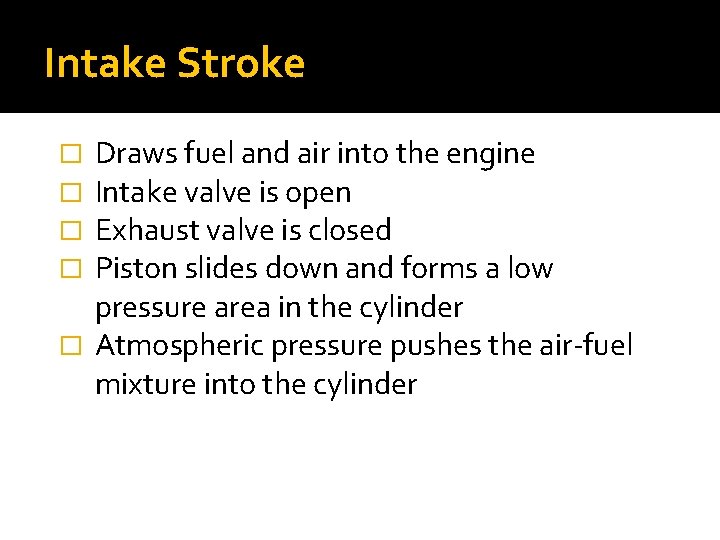
Intake Stroke Draws fuel and air into the engine Intake valve is open Exhaust valve is closed Piston slides down and forms a low pressure area in the cylinder � Atmospheric pressure pushes the air-fuel mixture into the cylinder � �
Compression Stroke Compresses (squeezes) the air-fuel mixture, making it more combustible � Piston slides upward � Both valves are closed �
Power Stroke � � � Burns the air-fuel mixture and pushes the piston down with tremendous force Both valves are closed Spark plug fires, igniting the air-fuel mixture Pressure forms on the top of the piston Piston is forced down, rotating the crankshaft
Exhaust Stroke � � � Removes the burned gases from the cylinder Piston moves upward Intake valve is closed Exhaust valve is open Burned gases are pushed out the exhaust port
Four-Stroke Cycle
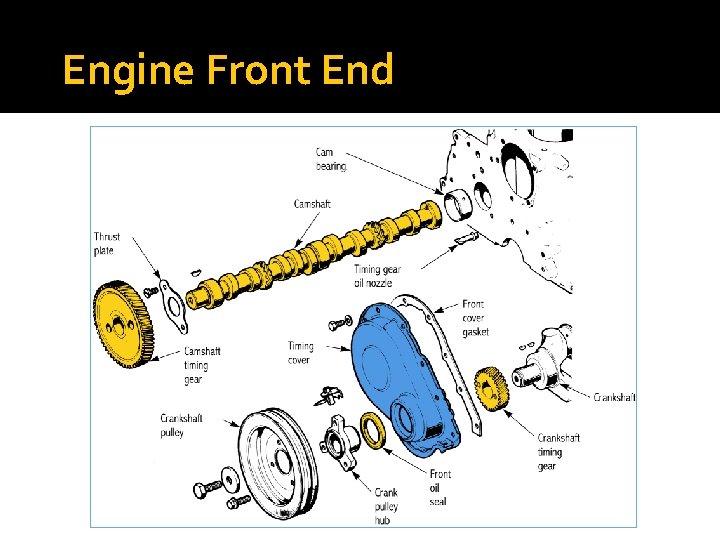
Operates the engine camshaft and sometimes the oil pump, distributor, engine sensors, and diesel injection pump � Consists of a drive mechanism, a front cover, an oil seal, and a crankshaft damper �
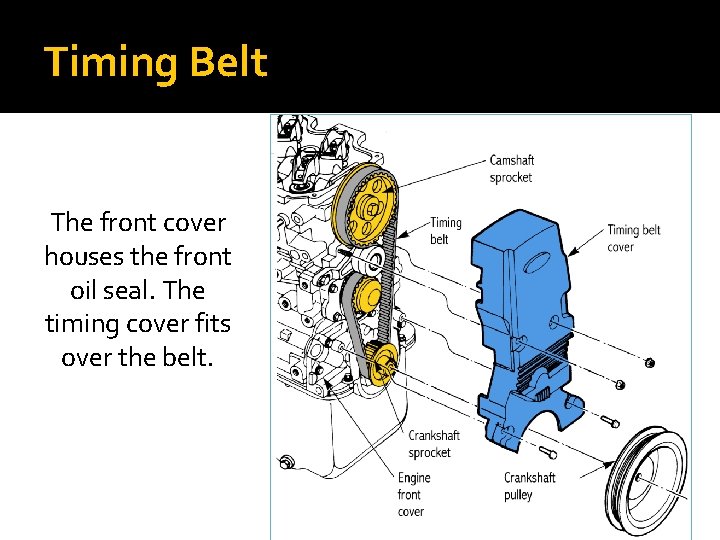
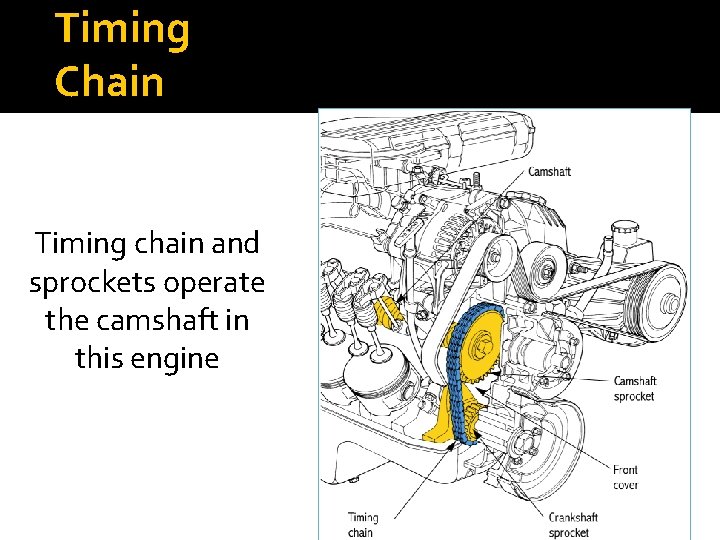
Camshaft Drive Needed to turn the camshaft at one-half engine speed � Often called the timing belt, timing chain, or timing gears because they time the camshaft with the crankshaft �
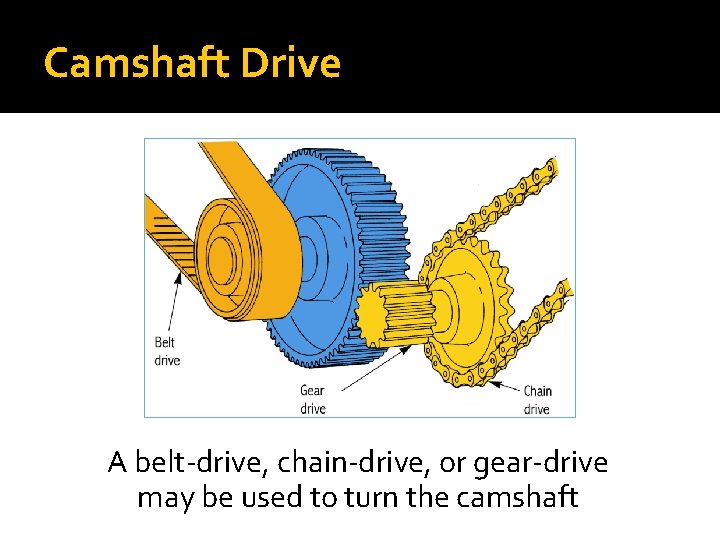
Camshaft Drive A belt-drive, chain-drive, or gear-drive may be used to turn the camshaft
Front Cover Bolts over the crankshaft snout Holds an oil seal that seals the front of the crankshaft � When the engine uses a gear- or chaintype camshaft drive, the front cover may be called the timing cover � �
Engine Front End
Timing Belt The front cover houses the front oil seal. The timing cover fits over the belt.
Timing Chain Timing chain and sprockets operate the camshaft in this engine
Crank Damper Heavy wheel on the crankshaft snout Mounted in rubber Helps prevent crankshaft vibration and damage � Also called the harmonic balancer or vibration damper � � �
Workbook Exercise �Questions 1 -6 and 45 – 47 �Pages 145 – 147 and 156 - 159