
Chapter 11 Improving Communication Climates Confirming Messages Refers










- Slides: 34
Chapter 11: Improving Communication Climates
Confirming Messages • Refers to the emotional tone of a relationship • Recognition • Acknowledgement • Endorsement
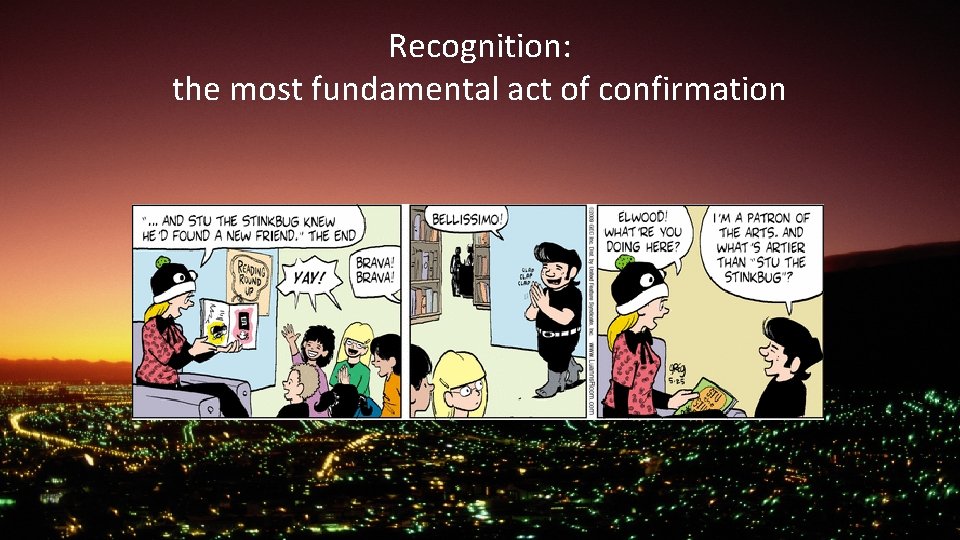
Recognition: the most fundamental act of confirmation
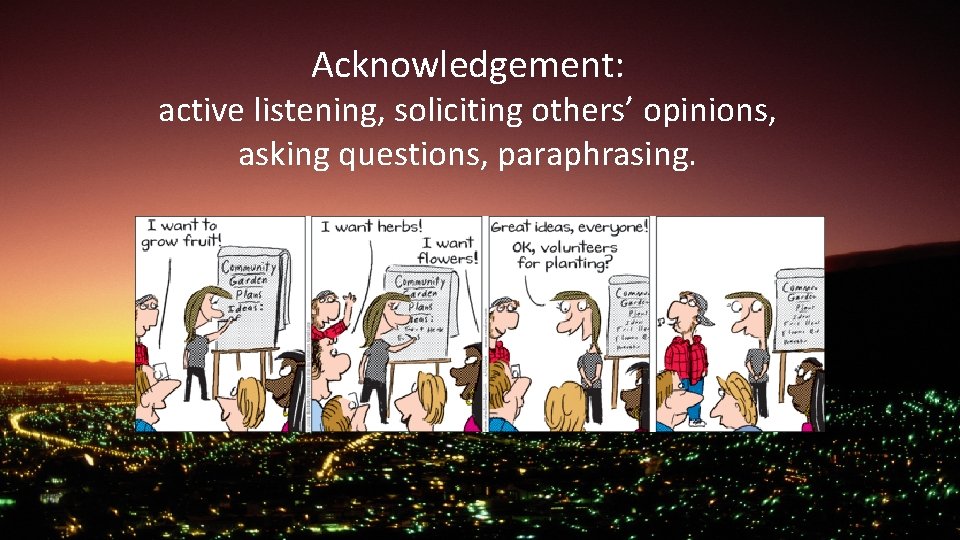
Acknowledgement: active listening, soliciting others’ opinions, asking questions, paraphrasing.
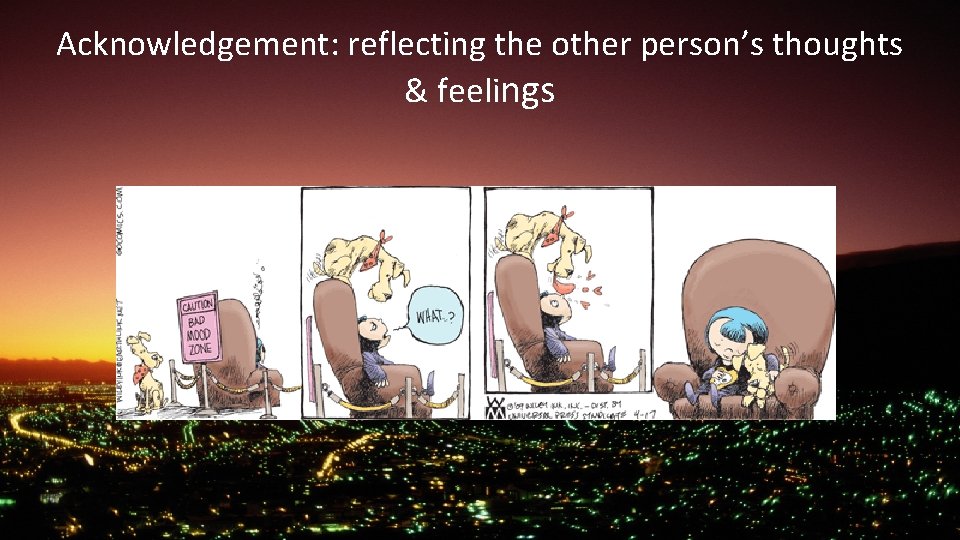
Acknowledgement: reflecting the other person’s thoughts & feelings
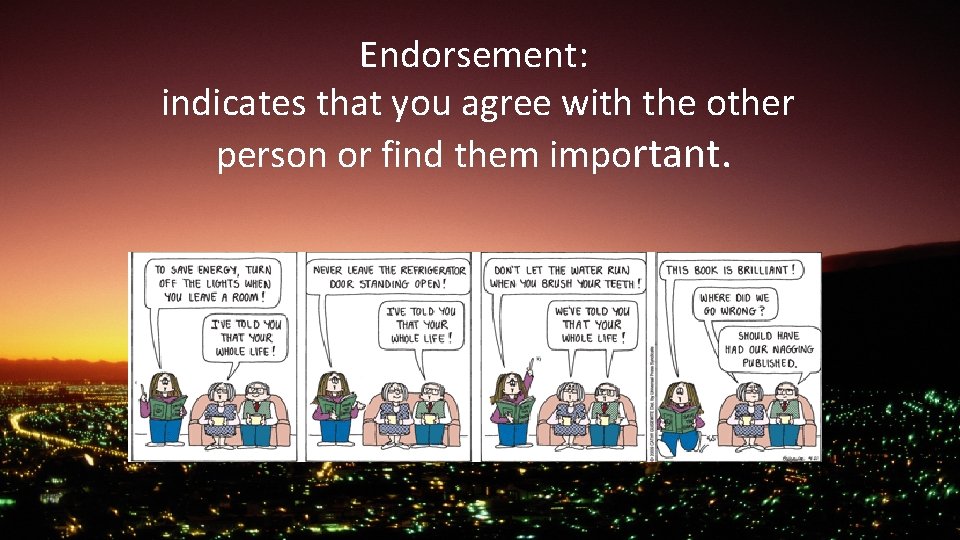
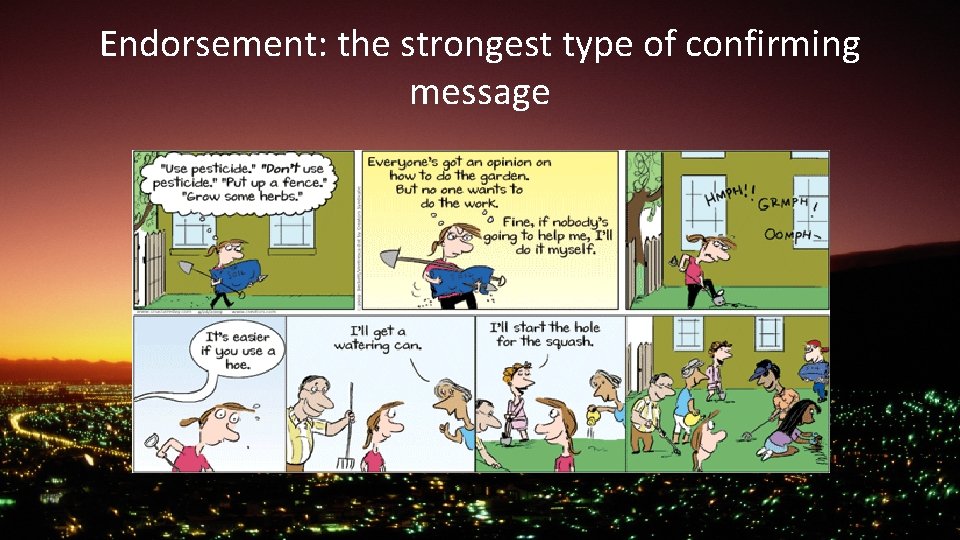
Endorsement: indicates that you agree with the other person or find them important.
Endorsement: the strongest type of confirming message
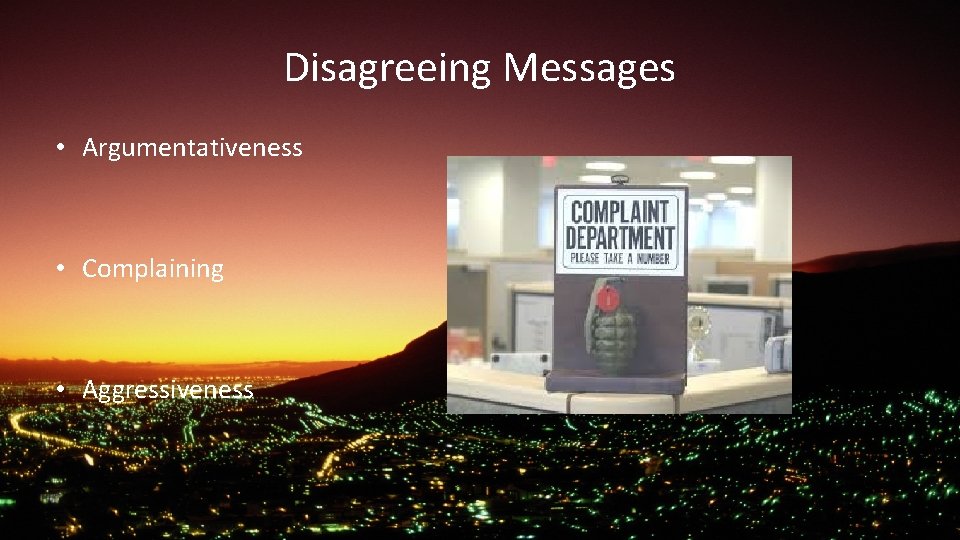
Disagreeing Messages • Argumentativeness • Complaining • Aggressiveness
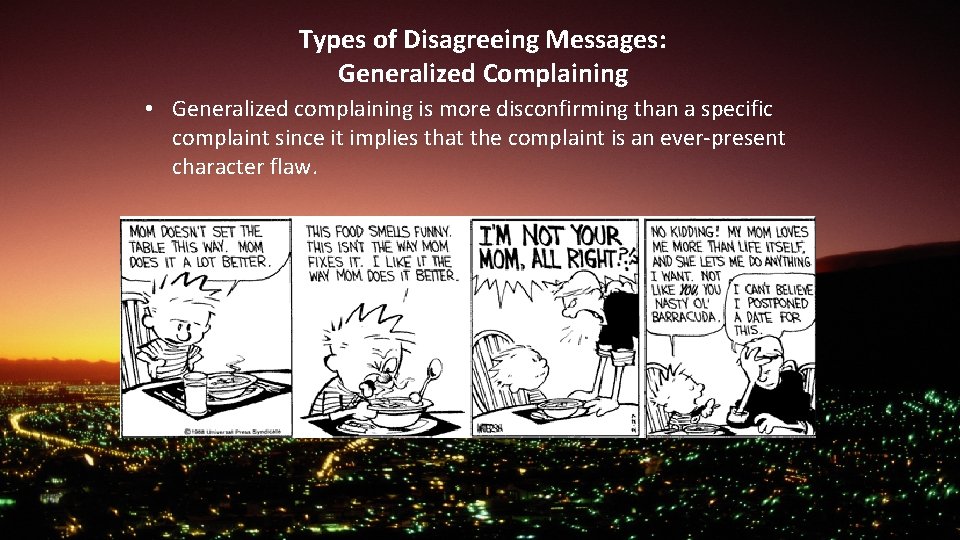
Types of Disagreeing Messages: Generalized Complaining • Generalized complaining is more disconfirming than a specific complaint since it implies that the complaint is an ever-present character flaw.
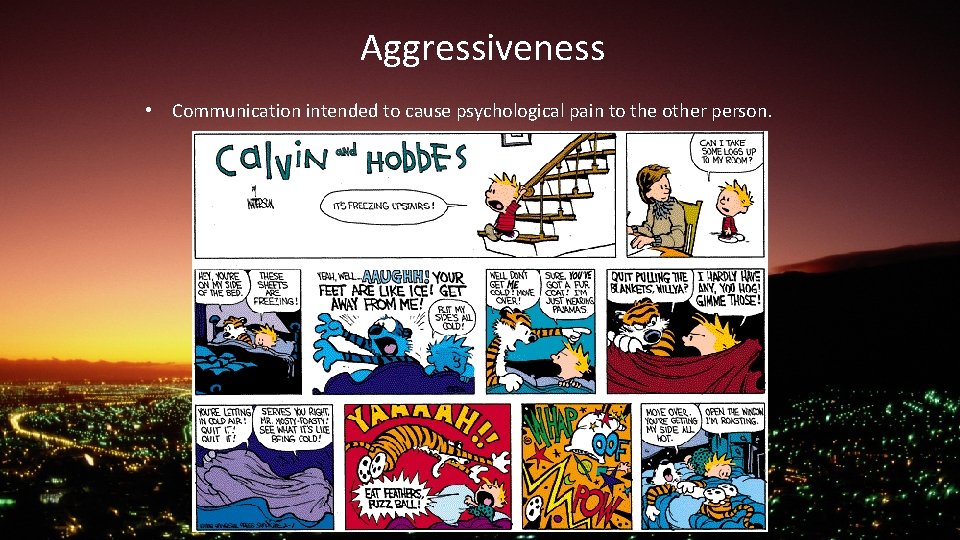
Aggressiveness • Communication intended to cause psychological pain to the other person.
Disconfirming Messages • Disconfirming messages show a lack of regard for the other person, by disputing or ignoring some part of that person’s message.
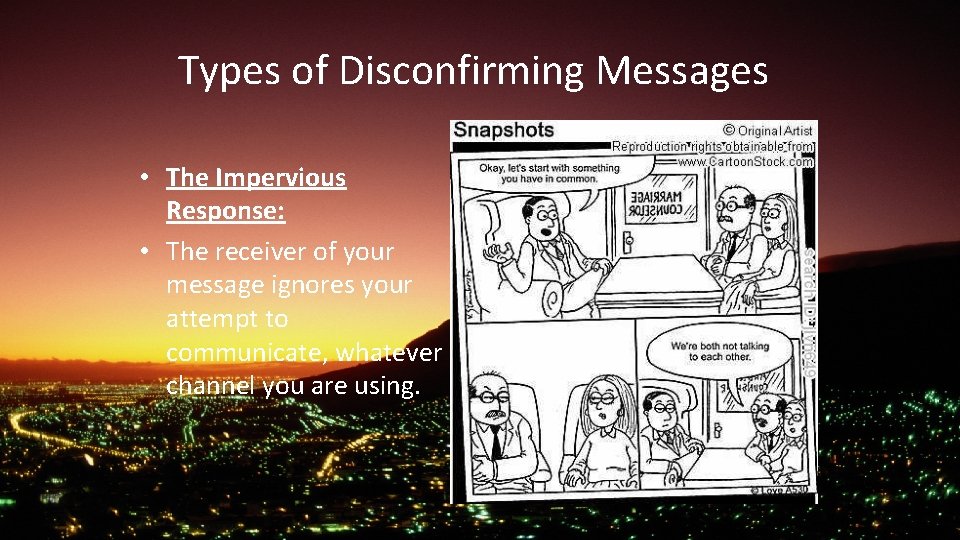
Types of Disconfirming Messages • The Impervious Response: • The receiver of your message ignores your attempt to communicate, whatever channel you are using.
Types of Disconfirming Messages: Interrupting • Interrupting: This can be both discouraging and irritating if it happens repeatedly.
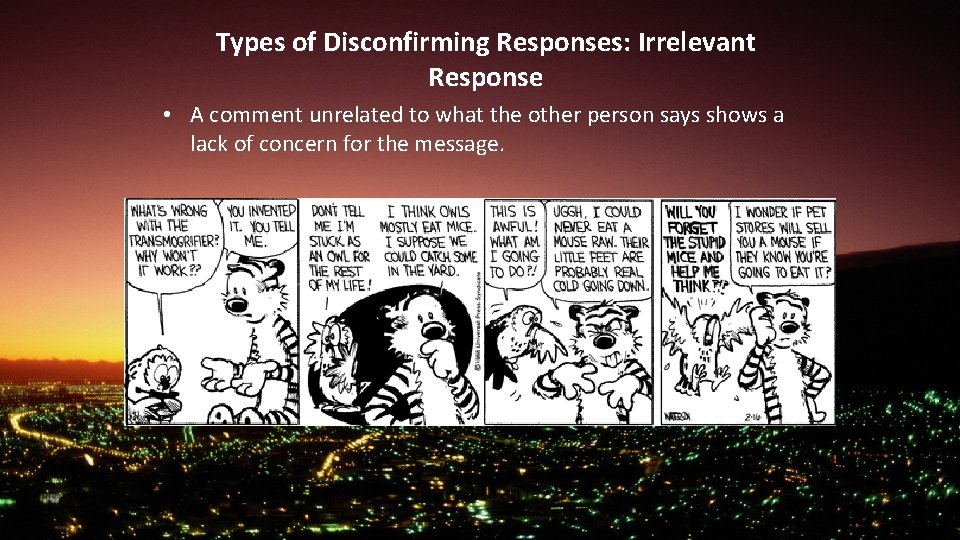
Types of Disconfirming Responses: Irrelevant Response • A comment unrelated to what the other person says shows a lack of concern for the message.
Types of Disconfirming Responses: Impersonal Response • “My husband I agreed when we got married that we wouldn’t have children. But I’m getting older and now I think I can’t face thought that I’ll never have a baby. But my husband won’t discuss it. ” • “Lots of couples have conflicts these days. Half of all marriages end in divorce. ”
Types of Disconfirming Responses • Tangential Response • This response is a little like the irrelevant response, except the receiver doesn’t ignore the message completely. • He or she uses it as a starting point to change the subject. • She: I think it may have been a mistake to go with Joe and Karen on this trip. They’re really driving me crazy. • He: Yeah, well, you wanted to take this trip and I want to find my passport, so why don’t you look in the bedroom and I’ll search in here?
Types of Disconfirming Responses • Ambiguous Responses • These responses convey more than one meaning and leave the other person unsure as to what the message really conveys. • He: Would you like to out sometime? • She: Maybe. • He: Are you free this Friday? • She: Probably. See you later.
Types of Disconfirming Responses • Incongruous Responses • These responses contain two messages which seem to deny or contradict each other. • He: Are you mad at me? • She: Mad? ! NO, I’M NOT MAD!!!! • She: I’m sorry my paper’s late, but does it look okay? • Professor: Oh, it looks just fine. (chuckles) Hee, hee!
How Communication Climates Develop • Both verbal & nonverbal behavior contribute to climates • Self-perpetuating spirals: a pattern in which each partner’s message reinforces the other’s. • Escalatory conflict spirals • De-escalatory conflict spirals
The Negative Escalatory Spiral
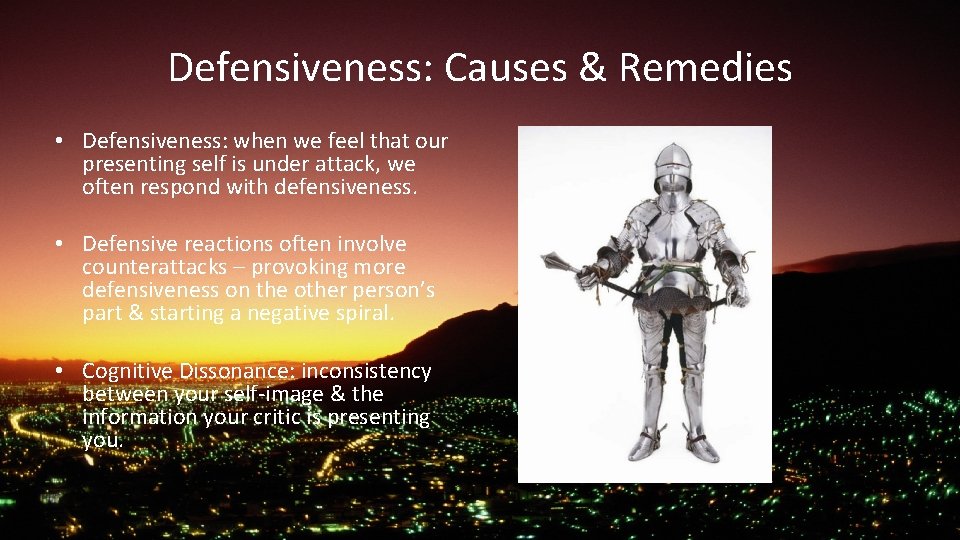
Defensiveness: Causes & Remedies • Defensiveness: when we feel that our presenting self is under attack, we often respond with defensiveness. • Defensive reactions often involve counterattacks – provoking more defensiveness on the other person’s part & starting a negative spiral. • Cognitive Dissonance: inconsistency between your self-image & the information your critic is presenting you.
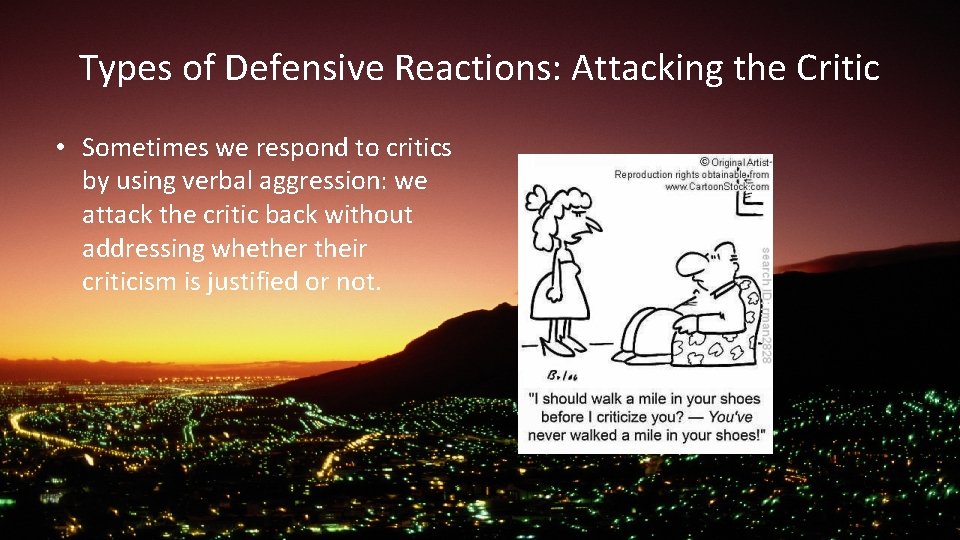
Types of Defensive Reactions: Attacking the Critic • Sometimes we respond to critics by using verbal aggression: we attack the critic back without addressing whether their criticism is justified or not.
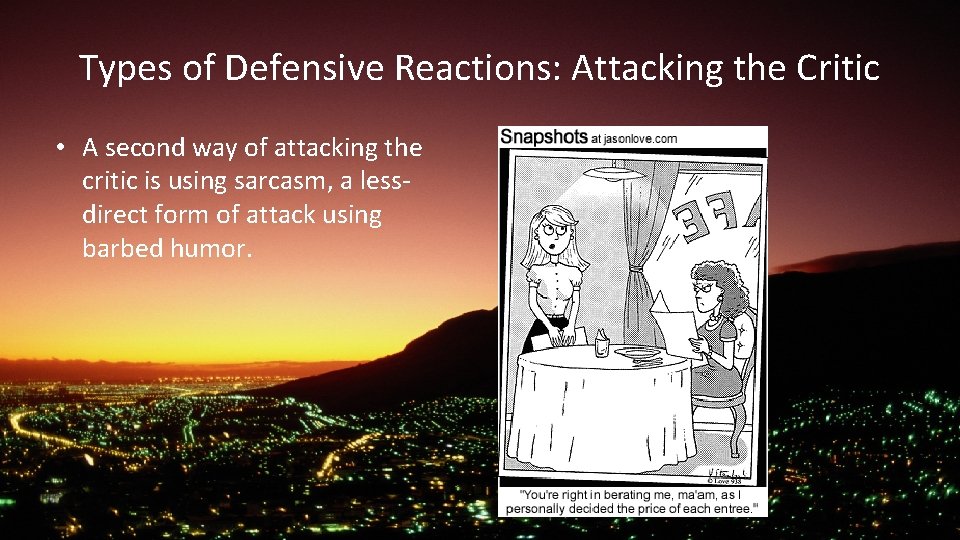
Types of Defensive Reactions: Attacking the Critic • A second way of attacking the critic is using sarcasm, a lessdirect form of attack using barbed humor.
Types of Defensive Reactions: Distorting Critical Information • Another way of protecting ourselves from criticism is to distort the information in a way that leaves our presenting self undamaged. • Rationalizing involves the creation of plausible but untrue excuses for our behavior.
Types of Defensive Behavior: Distorting Critical Information • Compensation occurs when we try to hide a flaw that someone else has exposed by pointing out a strength in a different area. • Compensating can be valid when used to sincerely make up for wrongdoing, but can also be used to avoid facing up to a genuine weakness & doing something about it.
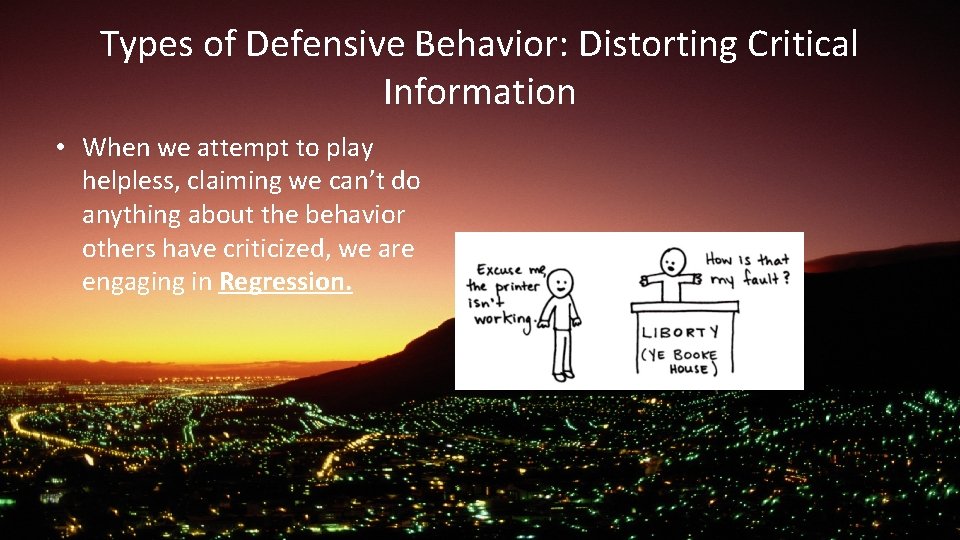
Types of Defensive Behavior: Distorting Critical Information • When we attempt to play helpless, claiming we can’t do anything about the behavior others have criticized, we are engaging in Regression.
Types of Defensive Behavior: Avoiding Dissonant Information • Physical Avoidance: steering clear of people who are likely to attack your presenting self.
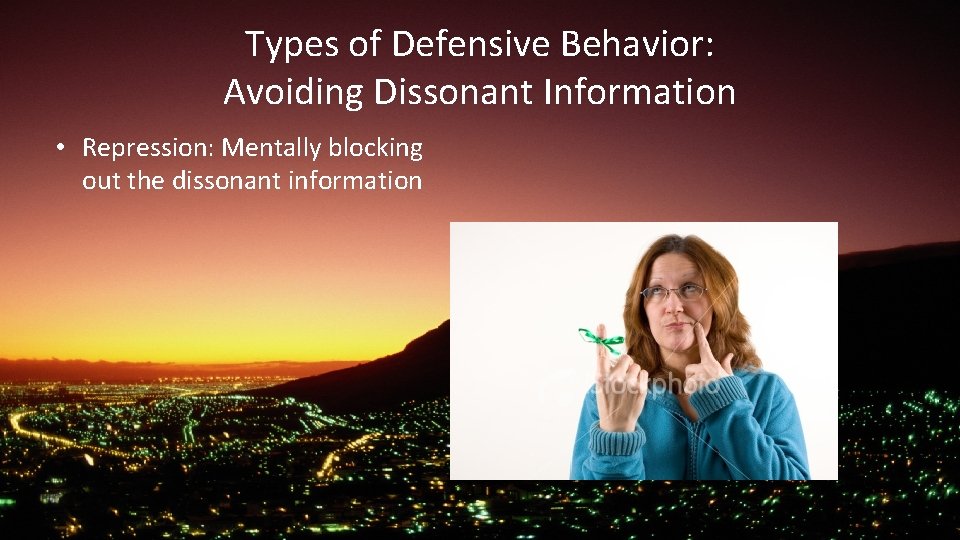
Types of Defensive Behavior: Avoiding Dissonant Information • Repression: Mentally blocking out the dissonant information
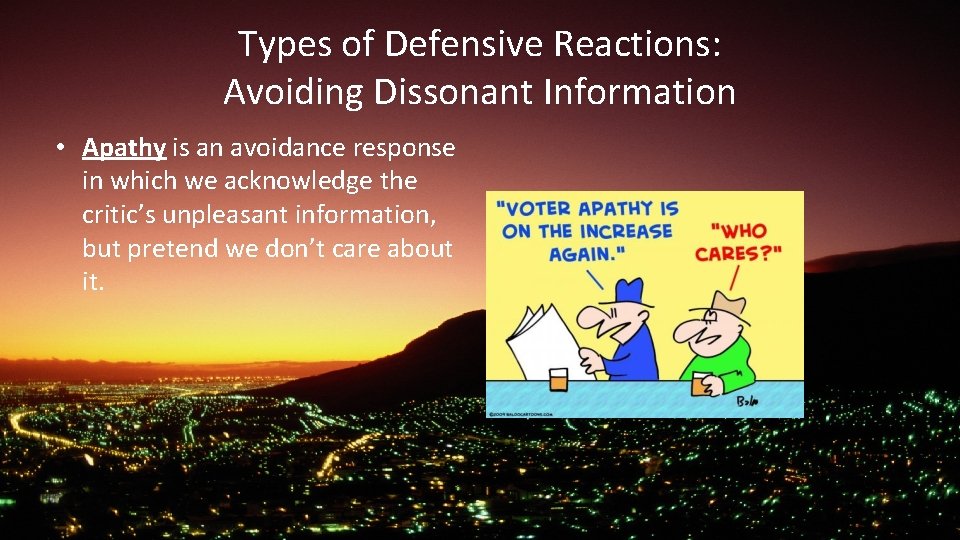
Types of Defensive Reactions: Avoiding Dissonant Information • Apathy is an avoidance response in which we acknowledge the critic’s unpleasant information, but pretend we don’t care about it.
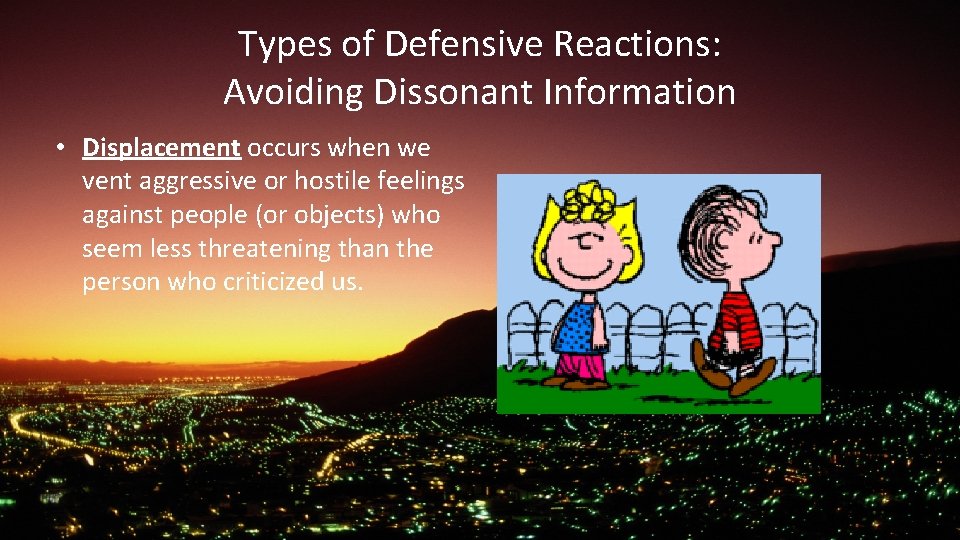
Types of Defensive Reactions: Avoiding Dissonant Information • Displacement occurs when we vent aggressive or hostile feelings against people (or objects) who seem less threatening than the person who criticized us.
Preventing Defensiveness in Others • The Gibb Categories, invented by researcher Jack Gibb • Each category has two types of behavior: defensive-arousing behavior or behaviors that lessen defensiveness by conveying messages of respect.
The Gibb Categories: Preventing Defensiveness in Others • Likely to Produce Defensiveness and start a negative spiral: • • • Evaluation Control Strategy Neutrality Superiority Certainty • Less likely to produce defensiveness, more conducive to cooperation: • • • Description Problem Orientation Spontaneity Empathy Equality Provisionalism
Responding Nondefensively to Criticism • Seek More Information Ask for Specifics Guess About Specifics Paraphrase the Speaker’s Ideas Ask What the Critic Wants Ask About the Consequences of Your Behavior – Ask What else is Wrong – – –
Responding Nondefensively to Criticism • Agree with the Critic – Agree when you’re caught in the wrong – Agree with the truth or facts – Agree that the critic has a right to his/her perception.