
Chapter 11 Genetics Gregor Mendel Used pure breed
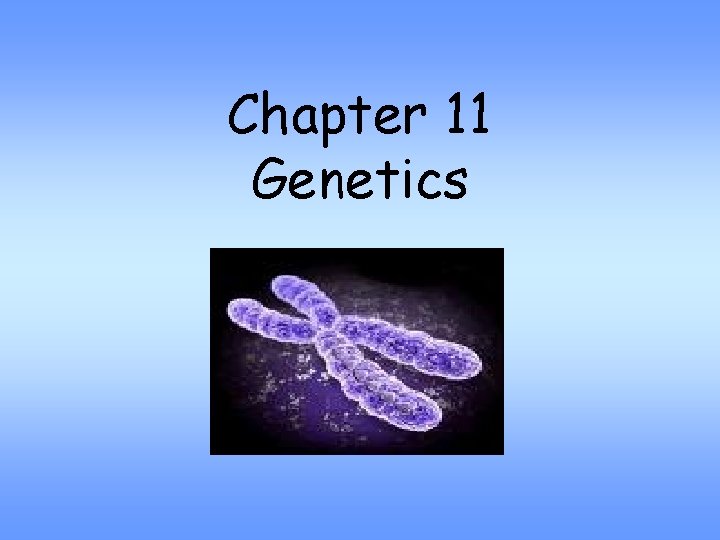
Chapter 11 Genetics
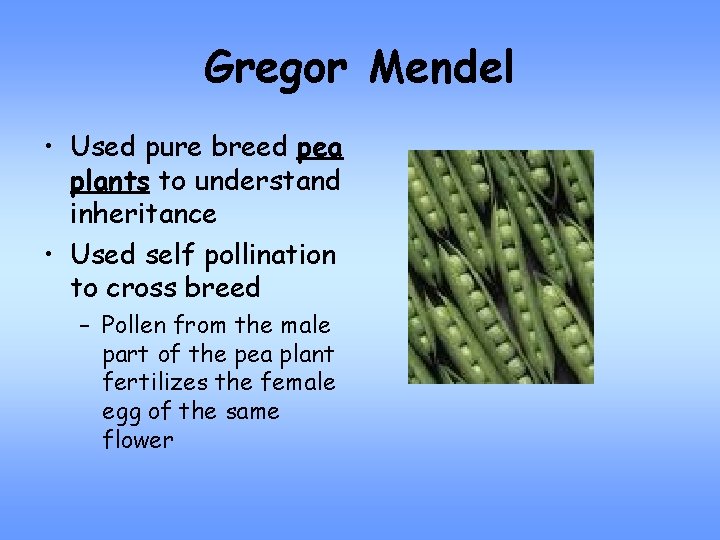
Gregor Mendel • Used pure breed pea plants to understand inheritance • Used self pollination to cross breed – Pollen from the male part of the pea plant fertilizes the female egg of the same flower
Cross Pollination • Cross Pollination – Mendel cut away the male parts of the plant and then dusted pollen from another plant on the flower – Seed that come from cross-pollination inherit all of the characteristics from two parents
Genes and Dominance • A trait is a specific characteristic that varies from one individual to another • The chemical factors that determine traits are called genes • The different forms of a gene are called alleles • Video Clip!!
Mendel’s Work • Mendel crossed two pure breed plants with different forms of the same trait – One plant was tall and one plant was short (trait: plant height) • The offspring plants were called hybrids – Hybrids are the offspring of crosses between parents with different forms of a trait
Principle of Dominance • The principle of dominance states that some alleles are dominant and others are recessive – An organism with a dominant allele for a specific trait will always show that form of the trait. – An organism with a recessive allele for a specific trait will only show that form only when the dominant allele for that trait is not present.
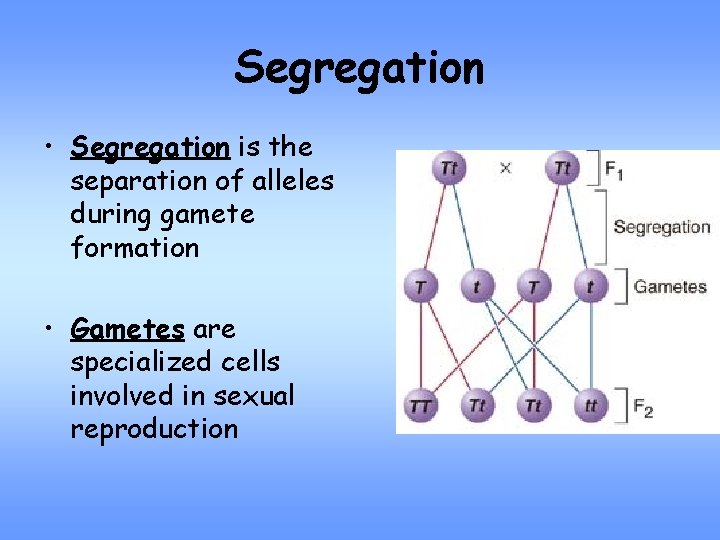
Segregation • Segregation is the separation of alleles during gamete formation • Gametes are specialized cells involved in sexual reproduction
Probability and Punnet Squares • Principle of probability can be used to predict the outcomes of genetic crosses. • Probability is the likelihood that a particular event will occur. – Probability can predict the outcome of genetic crosses because alleles segregate randomly.

Punnet Squares • These can be used to predict and compare the genetic variations that will result from a cross. T T TT 50% t Tt 50%
Punnet Square, cont. • Homozygous – TT or tt, organisms that have two identical alleles for a particular trait. • Heterozygous – Tt, organisms that have different alleles for the same trait
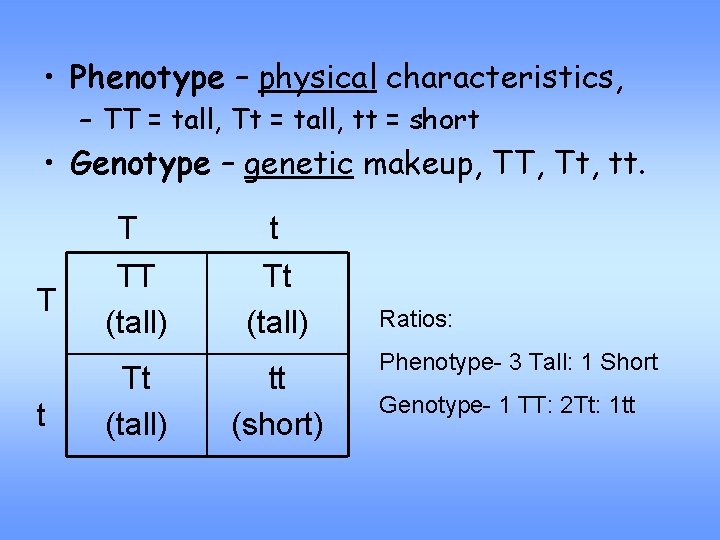
• Phenotype – physical characteristics, – TT = tall, Tt = tall, tt = short • Genotype – genetic makeup, TT, Tt, tt. T t T TT (tall) Tt (tall) tt (short) Ratios: Phenotype- 3 Tall: 1 Short Genotype- 1 TT: 2 Tt: 1 tt
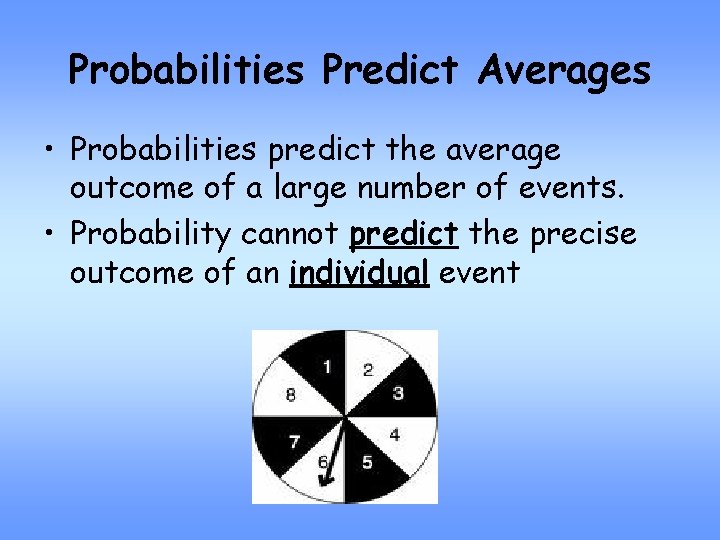
Probabilities Predict Averages • Probabilities predict the average outcome of a large number of events. • Probability cannot predict the precise outcome of an individual event
Mendelian Genetics • Mendel found that the gene controlling seed shape did not affect the gene controlling seed color. • Principle of Independent Assortment – Genes for different traits can segregate independently during the formation of gametes
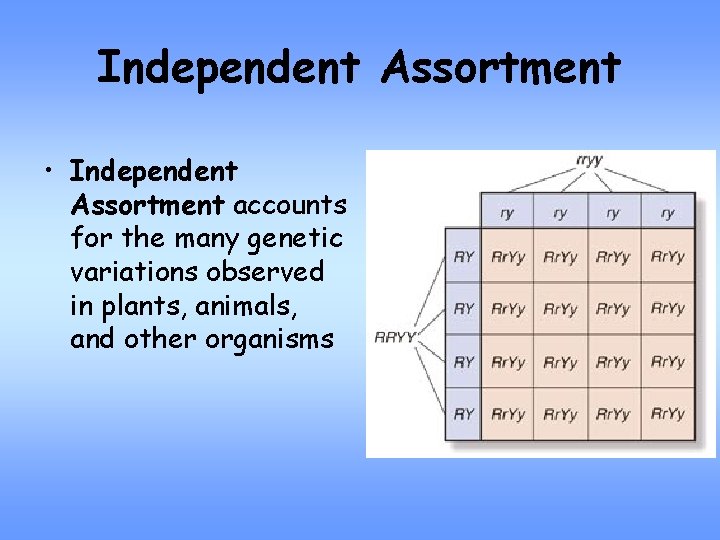
Independent Assortment • Independent Assortment accounts for the many genetic variations observed in plants, animals, and other organisms
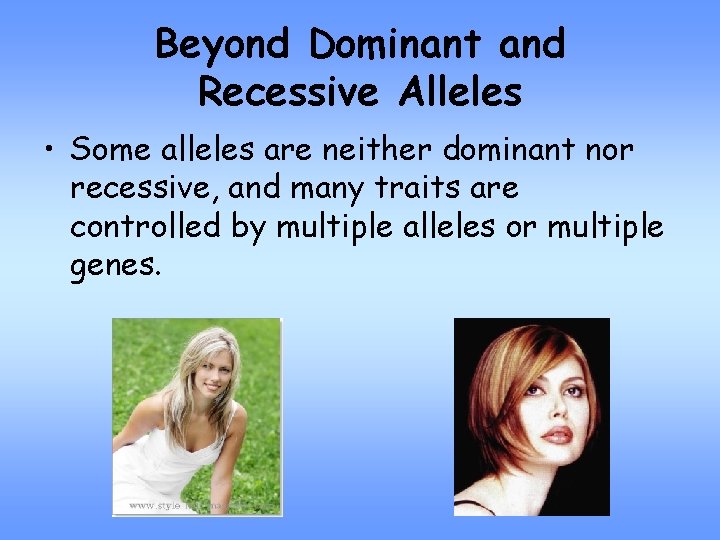
Beyond Dominant and Recessive Alleles • Some alleles are neither dominant nor recessive, and many traits are controlled by multiple alleles or multiple genes.
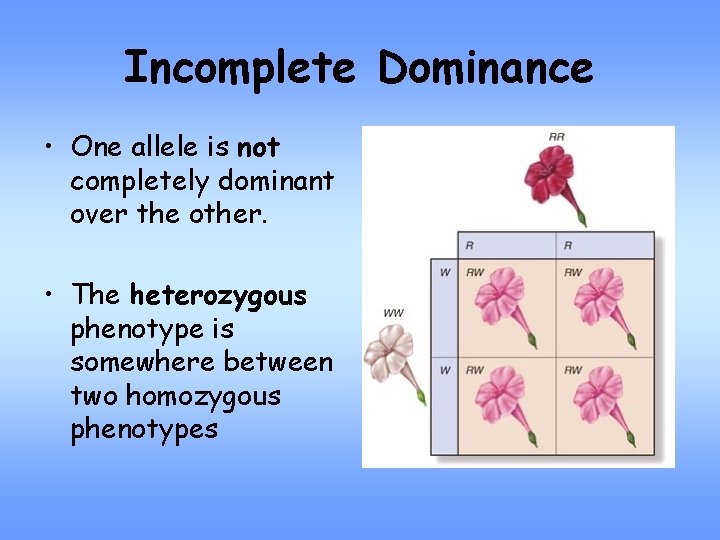
Incomplete Dominance • One allele is not completely dominant over the other. • The heterozygous phenotype is somewhere between two homozygous phenotypes
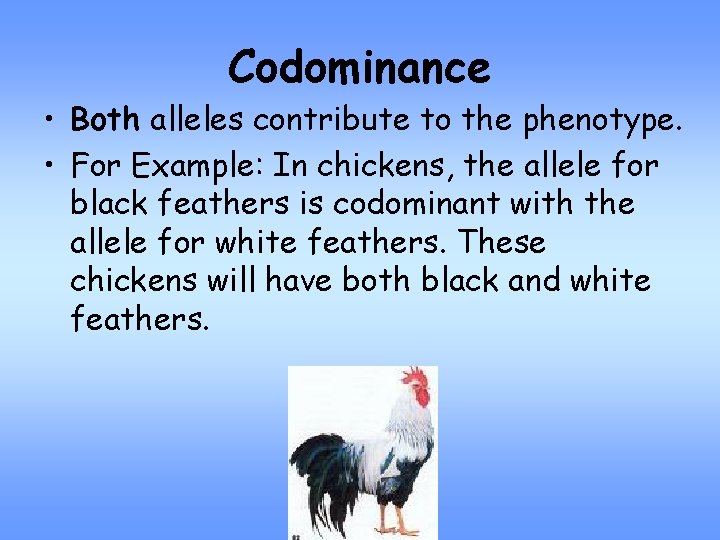
Codominance • Both alleles contribute to the phenotype. • For Example: In chickens, the allele for black feathers is codominant with the allele for white feathers. These chickens will have both black and white feathers.
Multiple Alleles/Polygenic Traits • Multiple alleles are when there is more than two possible alleles that exist for each trait in a population. Example: blood type (A, B, AB, O) • Polygenic traits are traits that are controlled by 2 or more genes. Example: variations in human skin color; height
Meiosis • The daughter cells (haploid) produced contain only HALF of the number of chromosomes as the original parent cell (diploid). • How does this happen? Meiosis is a process of reduction division—that is, the number of chromosomes is cut in half. No replication occurs.
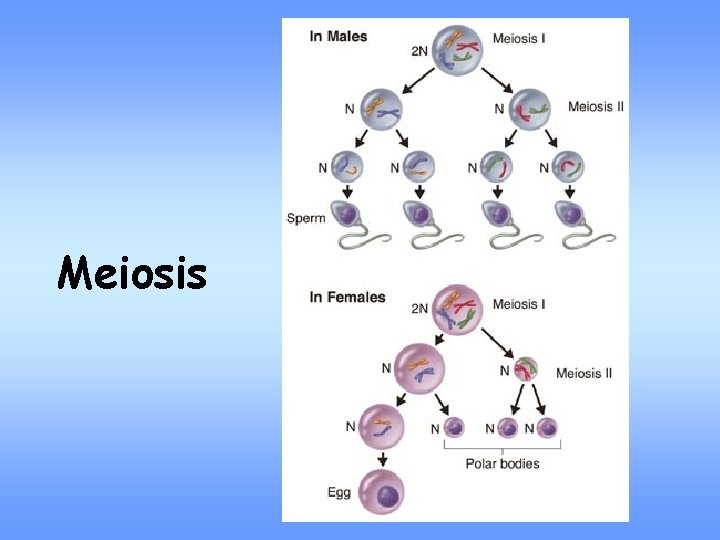
Meiosis
Crossing-over • During meiosis I, chromosomes pair up with their corresponding homologous pair chromosomes. They form a tetrad. • These tetrads exchange alleles and form new allele combinations in a process known as crossing-over. • Video Clip!!
- Slides: 21