
Chapter 11 Formulas that Regulate the Qi Definition

- Slides: 38
Chapter 11 Formulas that Regulate the Qi
Definition Formulas for regulating qi are mainly composed of herbs for regulating qi, having the effects of activating qi and directing qi downward, and are applied to syndrome due to qi stagnation or syndrome of reversed flow of qi.
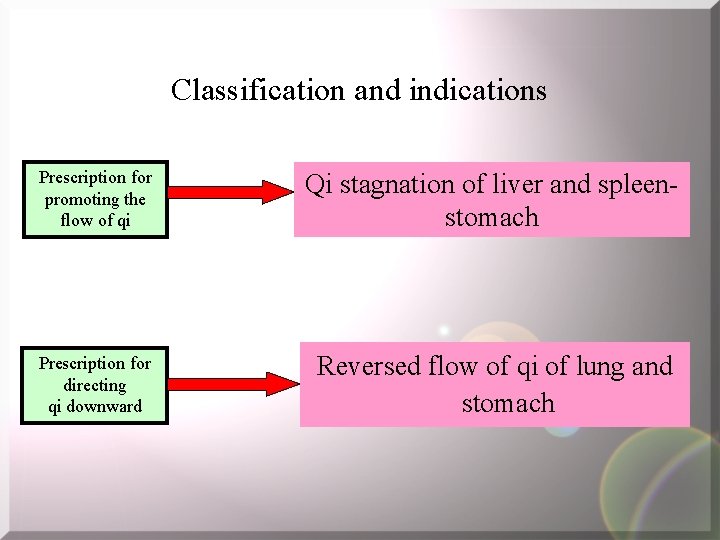
Classification and indications Prescription for promoting the flow of qi Qi stagnation of liver and spleenstomach Prescription for directing qi downward Reversed flow of qi of lung and stomach
Cautions 1、Firstly, it is important to distinguish excess from deficiency. 2、Secondly, complicated syndrome should be distinguished. 3、Properties of the substances of these formulas should be considered.
Stagnation-Relieving Pills Yue Ju Wan Danxi's Experiential Therapies Zhu Danxi (Jin, and Yuan Period)
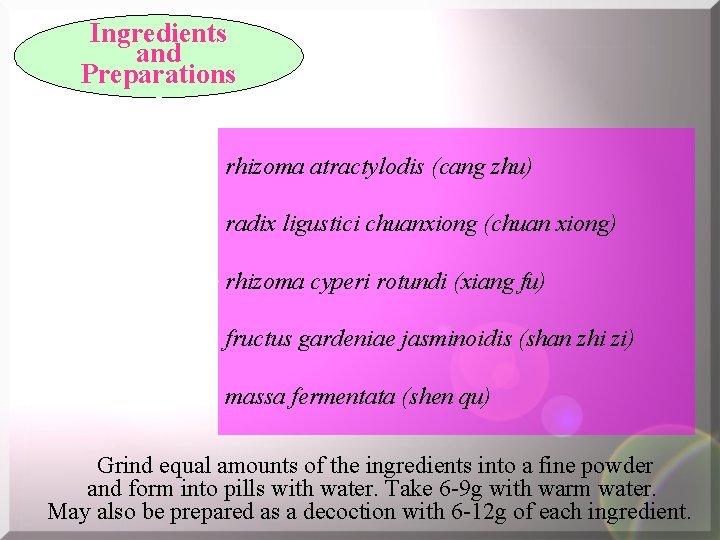
Ingredients and Preparations rhizoma atractylodis (cang zhu) radix ligustici chuanxiong (chuan xiong) rhizoma cyperi rotundi (xiang fu) fructus gardeniae jasminoidis (shan zhi zi) massa fermentata (shen qu) Grind equal amounts of the ingredients into a fine powder and form into pills with water. Take 6 -9 g with warm water. May also be prepared as a decoction with 6 -12 g of each ingredient.
Actions Promoting flow of qi to relieve stagnation
Indication Six kinds of stagnancy. (Syndromes of stagnation of qi, blood, phlegm, fire, dampness and food. )
Pathogenesis Qi stagnation of the liver and spleen
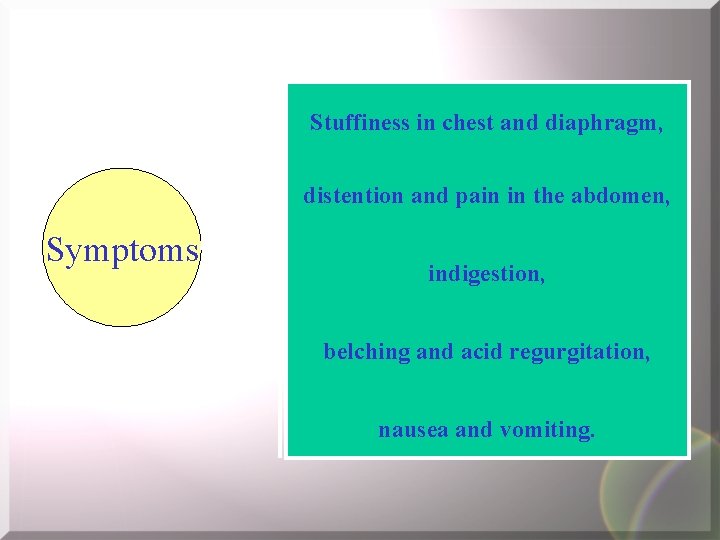
Stuffiness in chest and diaphragm, distention and pain in the abdomen, Symptoms indigestion, belching and acid regurgitation, nausea and vomiting.
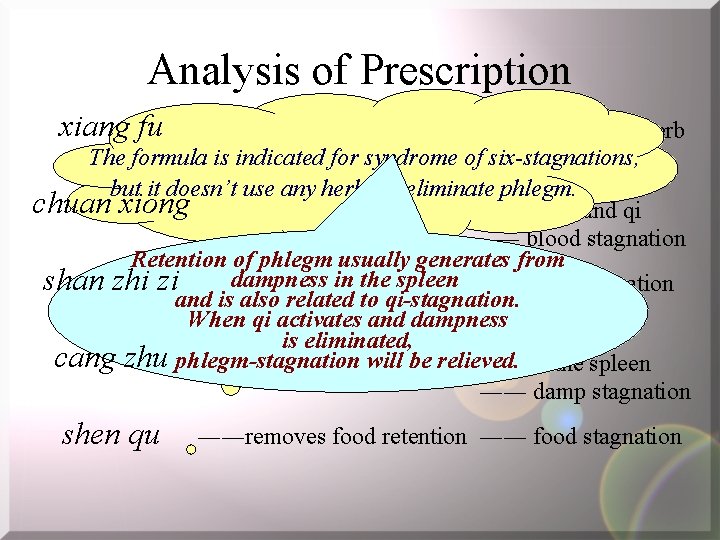
Analysis of Prescription xiang fu ――activates qi and relieves stagnation—chief herb The formula is indicated for syndrome of―― six-stagnations, qi stagnation but it doesn’t use any herbs to eliminate phlegm. chuan xiong ――promotes the circulation of blood and qi ―― blood stagnation Retention of phlegm usually generates from dampness thepurges spleenfire―― fire stagnation shan zhi zi ――clears heat in and is also related to qi-stagnation. When qi activates and dampness is eliminated, cang zhu phlegm-stagnation willand be relieved. ――dries dampness strengthens the spleen ―― damp stagnation shen qu ――removes food retention ―― food stagnation
Pinellia and Magnolia Decoction Ban Xia Hou Po Tang Synopsis of the Golder Chamber Zhang Zhongjing (Han Dynasty)
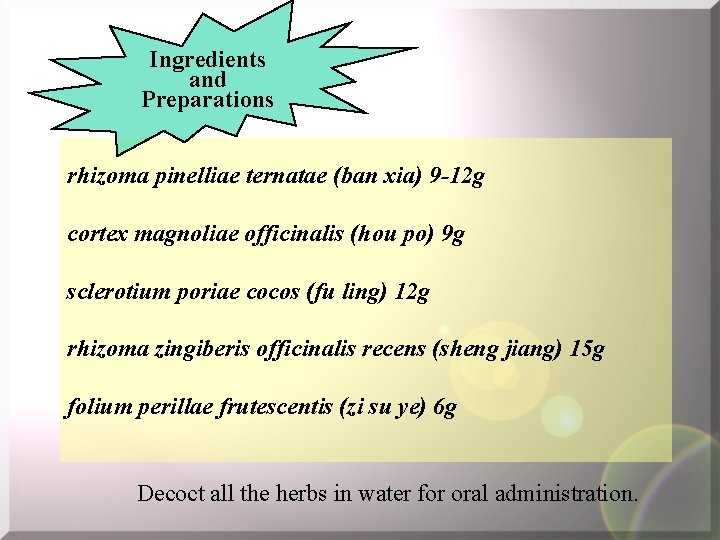
Ingredients and Preparations rhizoma pinelliae ternatae (ban xia) 9 -12 g cortex magnoliae officinalis (hou po) 9 g sclerotium poriae cocos (fu ling) 12 g rhizoma zingiberis officinalis recens (sheng jiang) 15 g folium perillae frutescentis (zi su ye) 6 g Decoct all the herbs in water for oral administration.
Actions Promoting the flow of qi to dissipate accumulation and descending the adverse flow of qi to resolve phlegm
Indication Plum-stone syndrome
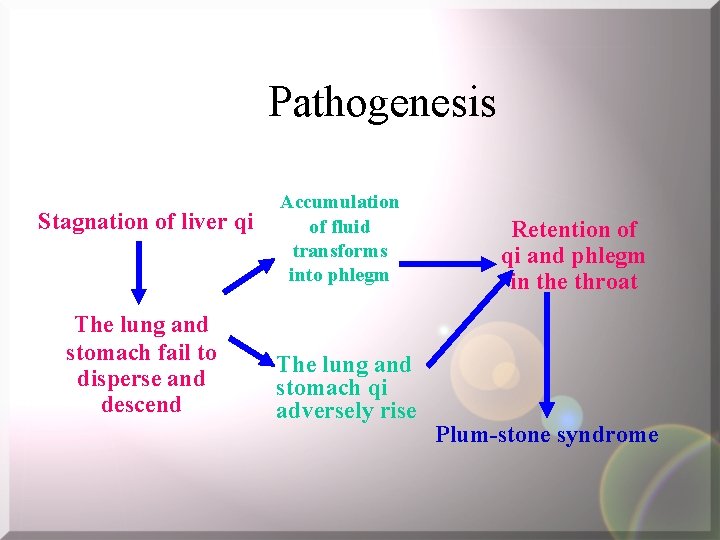
Pathogenesis Stagnation of liver qi The lung and stomach fail to disperse and descend Accumulation of fluid transforms into phlegm The lung and stomach qi adversely rise Retention of qi and phlegm in the throat Plum-stone syndrome
Syndrome A subjective sensation as if something stuffed in the throat,which can neither be thrown up nor swallowed down, stuffy chest and hypochondrium, or cough or vomiting, white and moist or greasy coating, slippery or wiry slippery pulse.
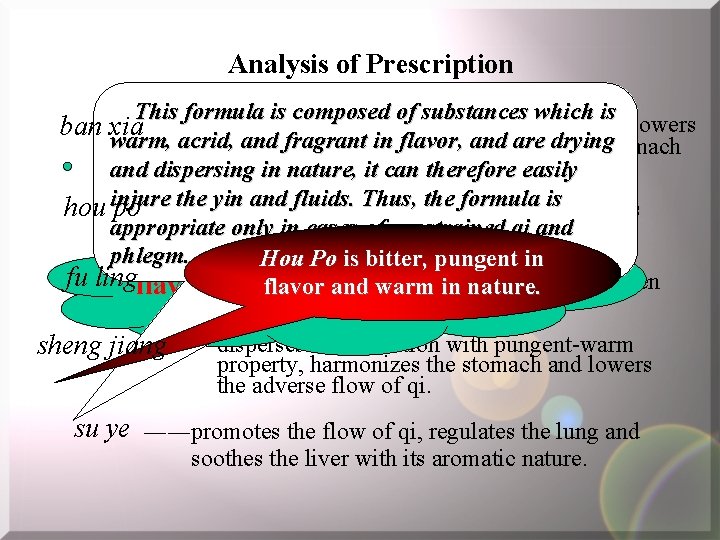
Analysis of Prescription This formula is composed of substances which is ――resolves phlegm, disperses accumulation and lowers ban xia warm, acrid, and fragrant and are drying the adverse flow ofinqiflavor, and harmonizes the stomach and dispersing in nature, it can therefore easily the yin and fluids. Thus, thesensation formulaof is fullness hou injure po ――lowers qi and relieves appropriate only in cases of constrained qi and Ban Xia is. Hou acrid bitter in in phlegm. Po isand bitter, pungent fu lingflavor, ――leaches outand dampness and strengthens warm dry in nature. flavor and warm in nature. the spleen sheng jiang ――disperses accumulation with pungent-warm property, harmonizes the stomach and lowers the adverse flow of qi. su ye ――promotes the flow of qi, regulates the lung and soothes the liver with its aromatic nature.
Inu. Ja and Red Ochre Decoction Xuan Fu Dai Zhe Tang Treatise on Cold-Attack Zhang Zhongjing ( Han Dynasty)
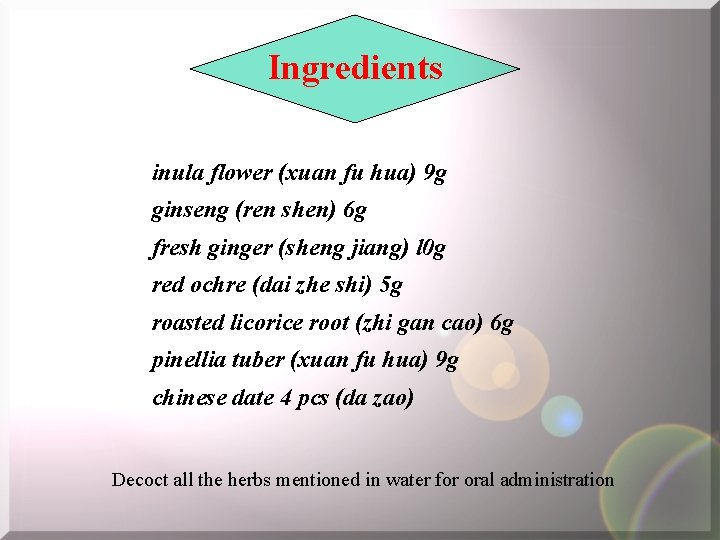
Ingredients inula flower (xuan fu hua) 9 g ginseng (ren shen) 6 g fresh ginger (sheng jiang) l 0 g red ochre (dai zhe shi) 5 g roasted licorice root (zhi gan cao) 6 g pinellia tuber (xuan fu hua) 9 g chinese date 4 pcs (da zao) Decoct all the herbs mentioned in water for oral administration
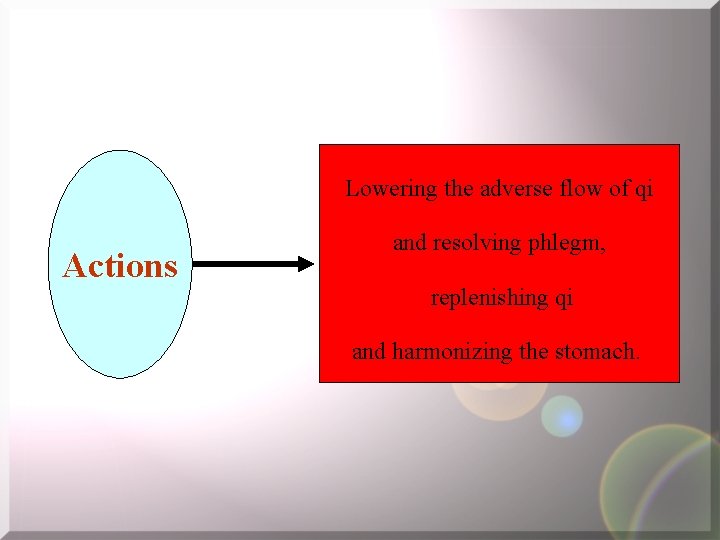
Lowering the adverse flow of qi Actions and resolving phlegm, replenishing qi and harmonizing the stomach.
Indication Syndrome with phlegm retention and reversed flow of qi due to deficiency of stomach
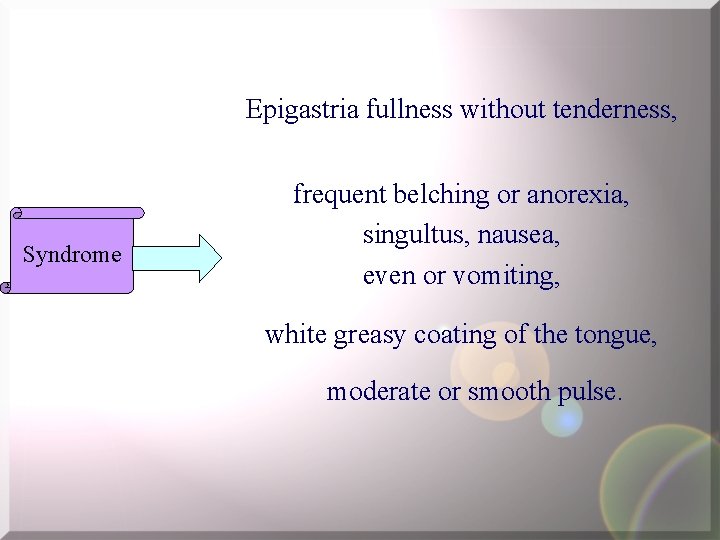
Epigastria fullness without tenderness, Syndrome frequent belching or anorexia, singultus, nausea, even or vomiting, white greasy coating of the tongue, moderate or smooth pulse.
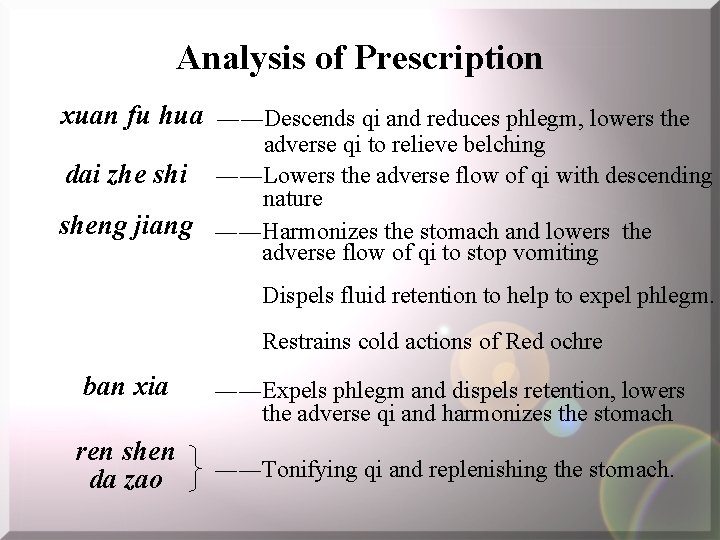
Analysis of Prescription xuan fu hua ――Descends qi and reduces phlegm, lowers the adverse qi to relieve belching dai zhe shi ――Lowers the adverse flow of qi with descending nature sheng jiang ――Harmonizes the stomach and lowers the adverse flow of qi to stop vomiting Dispels fluid retention to help to expel phlegm. Restrains cold actions of Red ochre ban xia ren shen da zao ――Expels phlegm and dispels retention, lowers the adverse qi and harmonizes the stomach ――Tonifying qi and replenishing the stomach.
Perilla Seed Qi-Lowering Decoction Su Zi Jiang Qi Tang Prescriptions of Peaceful Benevolent Dispensary
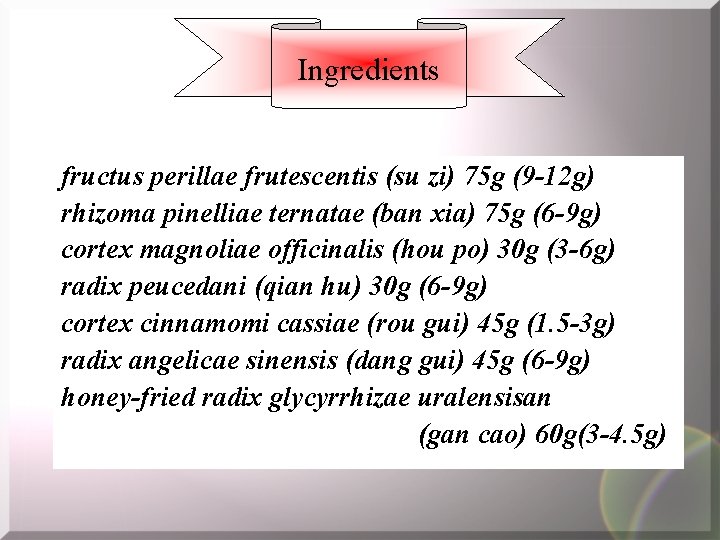
Ingredients fructus perillae frutescentis (su zi) 75 g (9 -12 g) rhizoma pinelliae ternatae (ban xia) 75 g (6 -9 g) cortex magnoliae officinalis (hou po) 30 g (3 -6 g) radix peucedani (qian hu) 30 g (6 -9 g) cortex cinnamomi cassiae (rou gui) 45 g (1. 5 -3 g) radix angelicae sinensis (dang gui) 45 g (6 -9 g) honey-fried radix glycyrrhizae uralensisan (gan cao) 60 g(3 -4. 5 g)
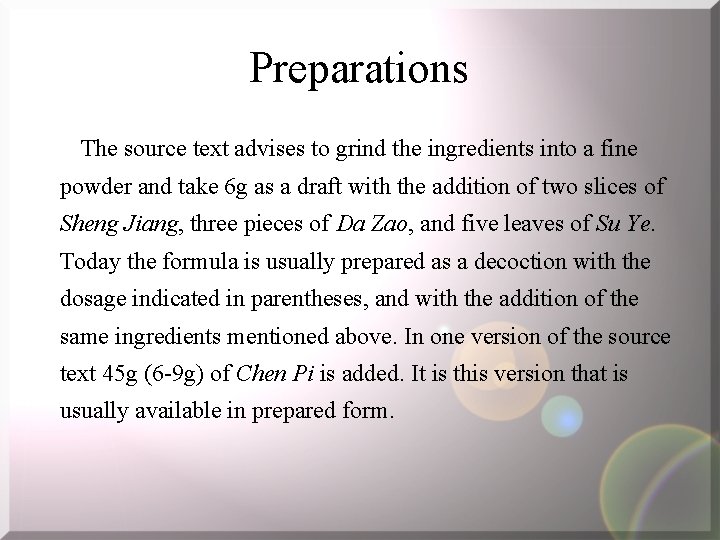
Preparations The source text advises to grind the ingredients into a fine powder and take 6 g as a draft with the addition of two slices of Sheng Jiang, three pieces of Da Zao, and five leaves of Su Ye. Today the formula is usually prepared as a decoction with the dosage indicated in parentheses, and with the addition of the same ingredients mentioned above. In one version of the source text 45 g (6 -9 g) of Chen Pi is added. It is this version that is usually available in prepared form.
Actions Lowering adverse flow of qi to relieve asthma, expelling phlegm to stop cough
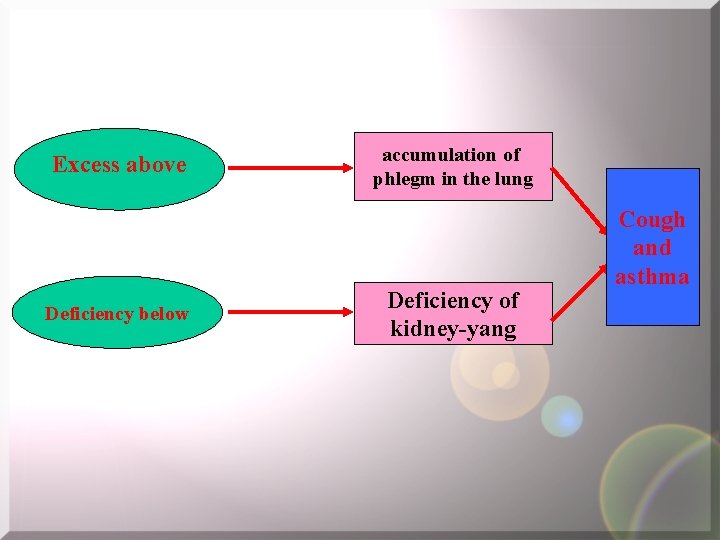
Indication Syndromes of cough and asthma with upper excess and lower deficiency
Excess above Deficiency below accumulation of phlegm in the lung Deficiency of kidney-yang Cough and asthma
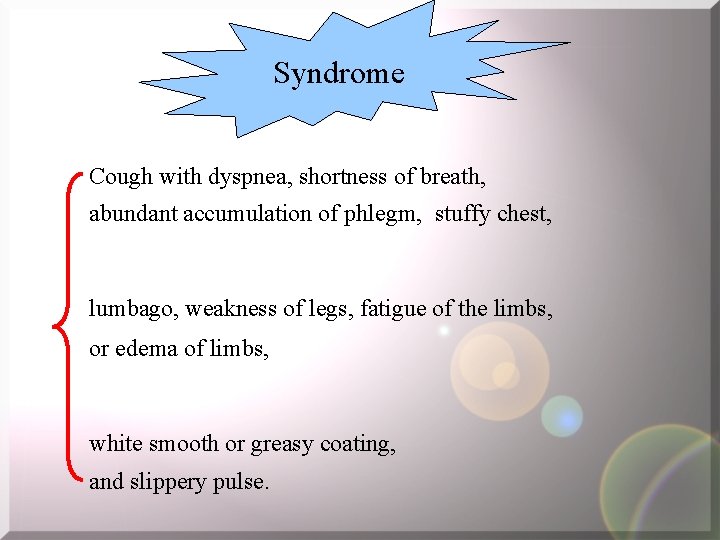
Syndrome Cough with dyspnea, shortness of breath, abundant accumulation of phlegm, stuffy chest, lumbago, weakness of legs, fatigue of the limbs, or edema of limbs, white smooth or greasy coating, and slippery pulse.
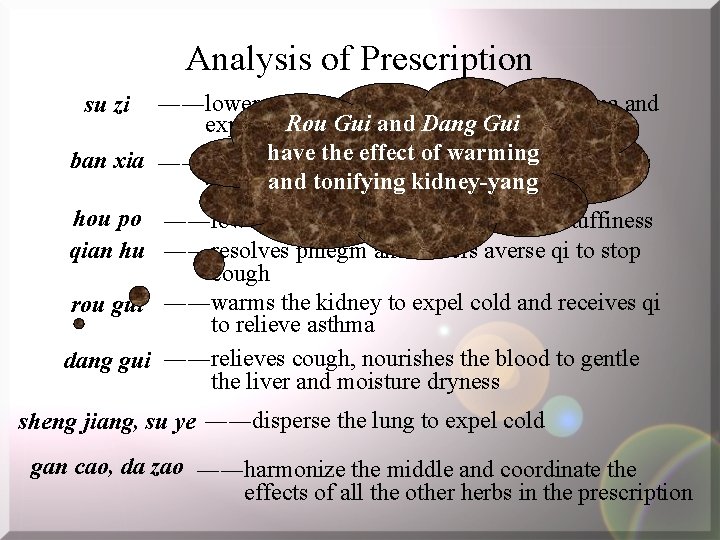
Analysis of Prescription ――lowers adverse flow of qi to relieve asthma and Rou Gui and cough Dang Gui expels phlegm to stop have the effect of warming ban xia ――dries dampness, eliminates phlegm and lowers adverseand qi tonifying kidney-yang su zi hou po ――lowers adverse qi and relieves chest stuffiness qian hu ――resolves phlegm and lowers averse qi to stop cough rou gui ――warms the kidney to expel cold and receives qi to relieve asthma dang gui ――relieves cough, nourishes the blood to gentle the liver and moisture dryness sheng jiang, su ye ――disperse the lung to expel cold gan cao, da zao ――harmonize the middle and coordinate the effects of all the other herbs in the prescription
Asthma-Relieving Decoction Ding Chuan Tang Wonderful Prescriptions for Everyone's Life-Preserving Zhang Shiche (Ming Dynasty)
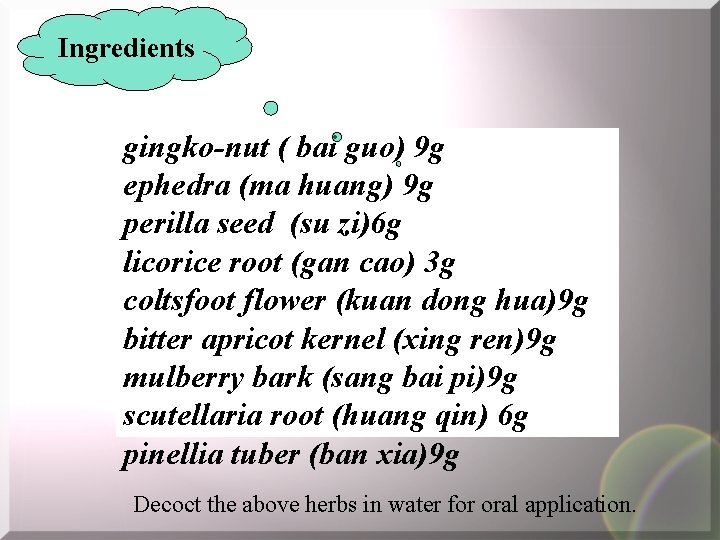
Ingredients gingko-nut ( bai guo) 9 g ephedra (ma huang) 9 g perilla seed (su zi)6 g licorice root (gan cao) 3 g coltsfoot flower (kuan dong hua)9 g bitter apricot kernel (xing ren)9 g mulberry bark (sang bai pi)9 g scutellaria root (huang qin) 6 g pinellia tuber (ban xia)9 g Decoct the above herbs in water for oral application.
Actions Dispersing the lung to lower adverse flow of qi, clearing away heat and expectorating phlegm.
Internal accumulation of phlegm Indication -heat with the attack of windcold on the exterior.
Cough, asthma, profuse yellowish and viscid phlegm, Syndrome or aversion to cold, fever, yellow, greasy coating of the tongue slippery, rapid pulse.
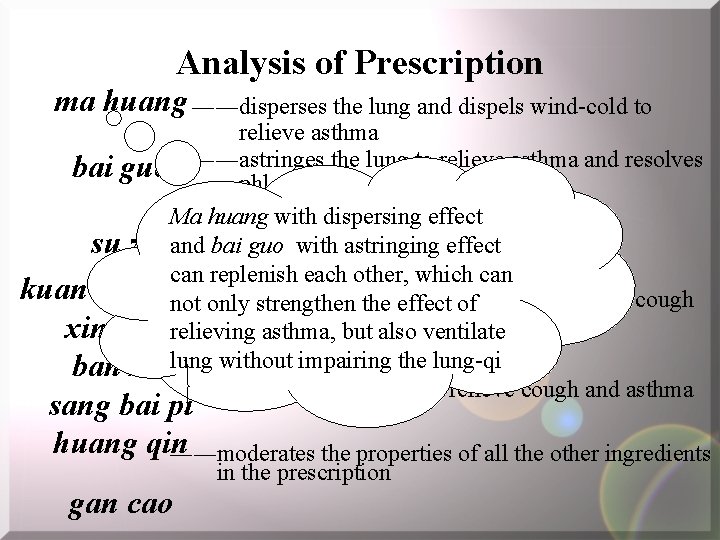
Analysis of Prescription ma huang ――disperses the lung and dispels wind-cold to relieve asthma the lung to relieve asthma and resolves bai guo ――astringes phlegm. Ma huang with dispersing effect su zi and bai guo with astringing effect can replenish each adverse other, which ――lowering flow can of qi to relieve kuan dong hua asthma andthe resolves phlegm to relieve cough not only strengthen effect of xing renrelieving asthma, but also ventilate ban xialung without impairing the lung-qi ―clears away lung-heat to relieve cough and asthma sang bai pi huang qin ――moderates the properties of all the other ingredients gan cao in the prescription