
Chapter 11 Exterior Design Factors Introduction House design
- Slides: 33
Chapter 11 Exterior Design Factors
Introduction • House design does not stop once room arrangements are determined – Exterior must also be considered – Often a client has a certain style in mind that dictates layout of floor plan
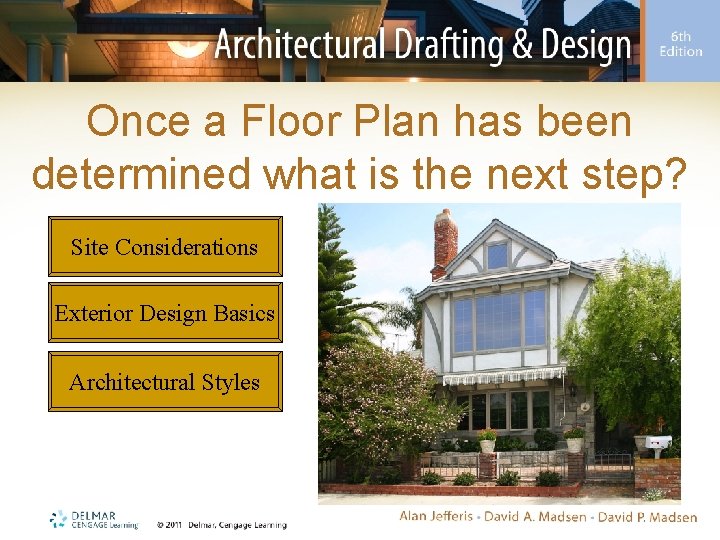
Once a Floor Plan has been determined what is the next step? Site Considerations Exterior Design Basics Architectural Styles
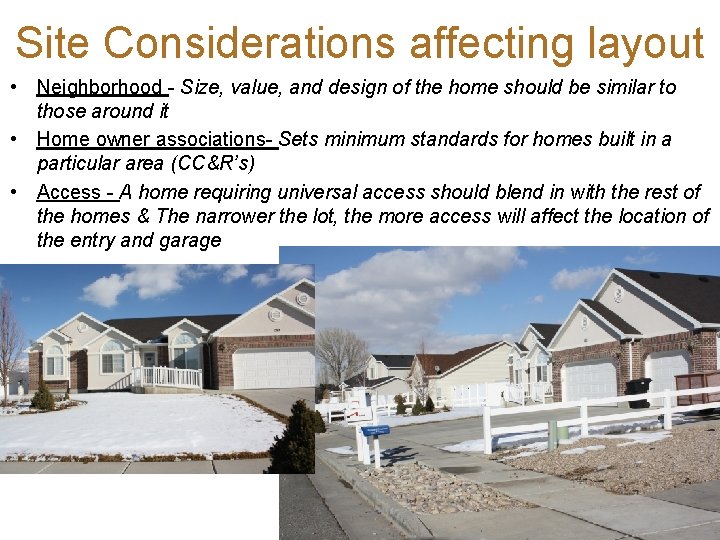
Site Considerations affecting layout • Neighborhood - Size, value, and design of the home should be similar to those around it • Home owner associations- Sets minimum standards for homes built in a particular area (CC&R’s) • Access - A home requiring universal access should blend in with the rest of the homes & The narrower the lot, the more access will affect the location of the entry and garage
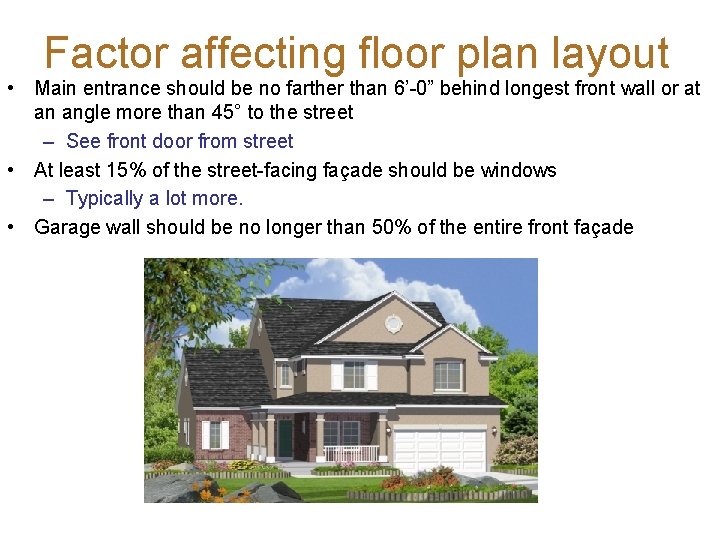
Factor affecting floor plan layout • Main entrance should be no farther than 6’-0” behind longest front wall or at an angle more than 45° to the street – See front door from street • At least 15% of the street-facing façade should be windows – Typically a lot more. • Garage wall should be no longer than 50% of the entire front façade
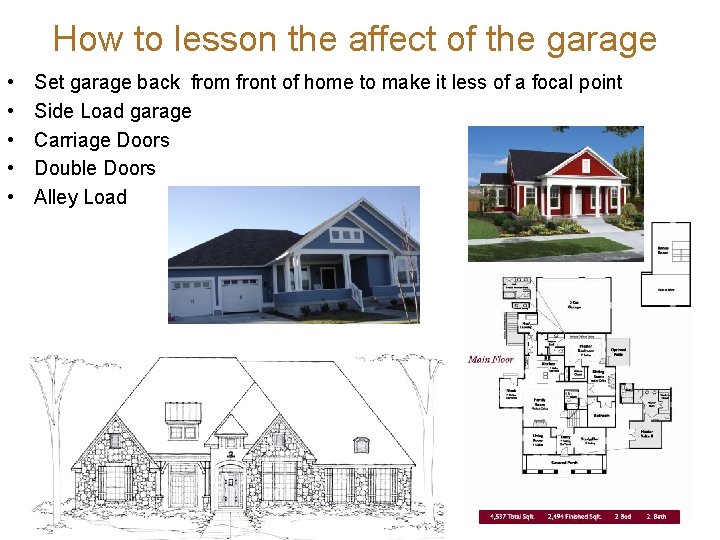
How to lesson the affect of the garage • • • Set garage back from front of home to make it less of a focal point Side Load garage Carriage Doors Double Doors Alley Load
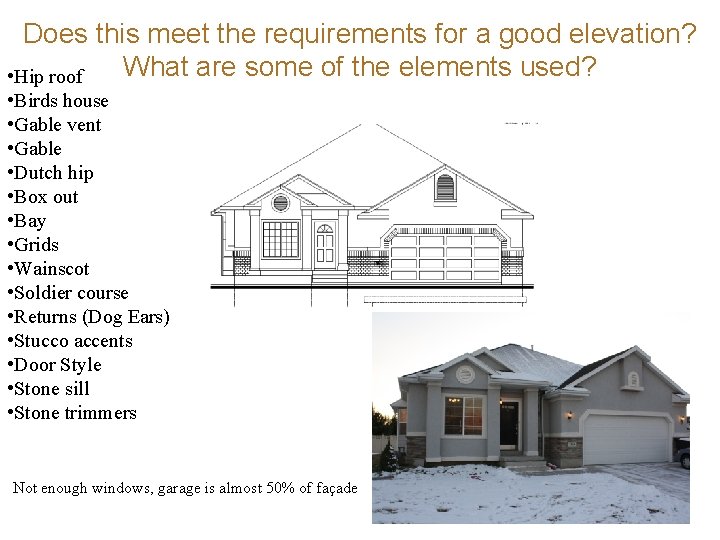
Does this meet the requirements for a good elevation? What are some of the elements used? • Hip roof • Birds house • Gable vent • Gable • Dutch hip • Box out • Bay • Grids • Wainscot • Soldier course • Returns (Dog Ears) • Stucco accents • Door Style • Stone sill • Stone trimmers Not enough windows, garage is almost 50% of façade
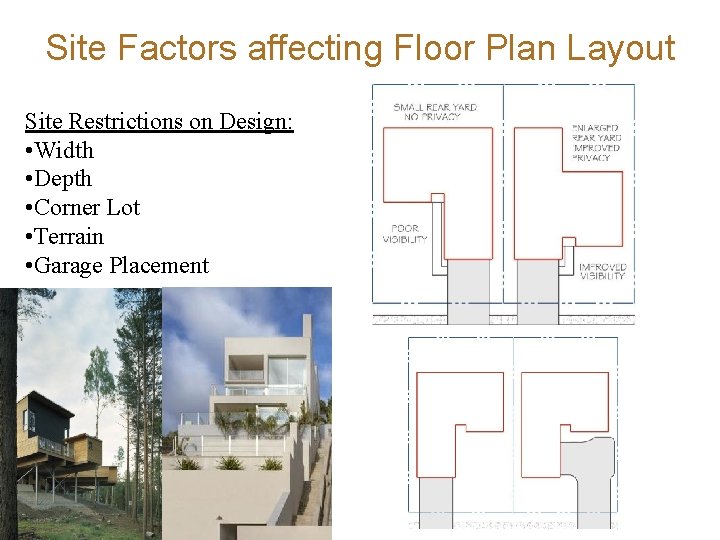
Site Factors affecting Floor Plan Layout Site Restrictions on Design: • Width • Depth • Corner Lot • Terrain • Garage Placement
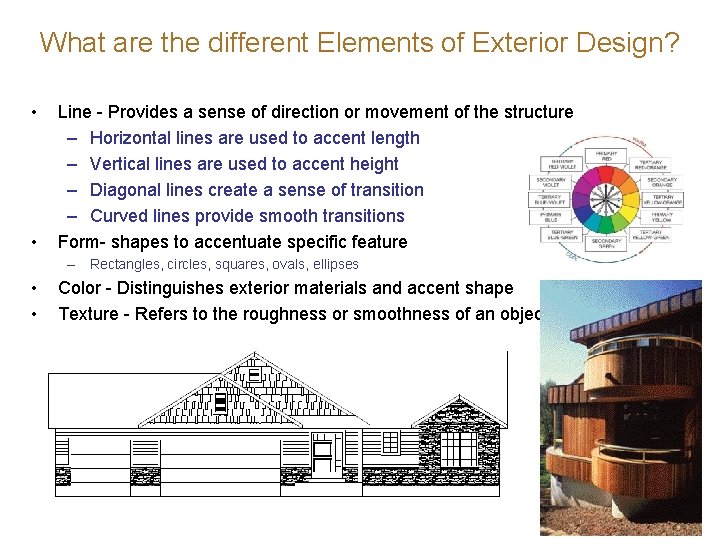
What are the different Elements of Exterior Design? • • Line - Provides a sense of direction or movement of the structure – Horizontal lines are used to accent length – Vertical lines are used to accent height – Diagonal lines create a sense of transition – Curved lines provide smooth transitions Form- shapes to accentuate specific feature – Rectangles, circles, squares, ovals, ellipses • • Color - Distinguishes exterior materials and accent shape Texture - Refers to the roughness or smoothness of an object
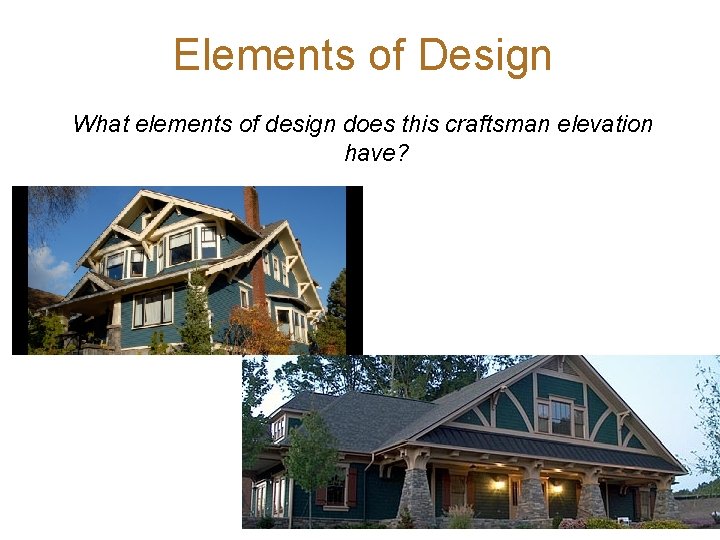
Elements of Design What elements of design does this craftsman elevation have?
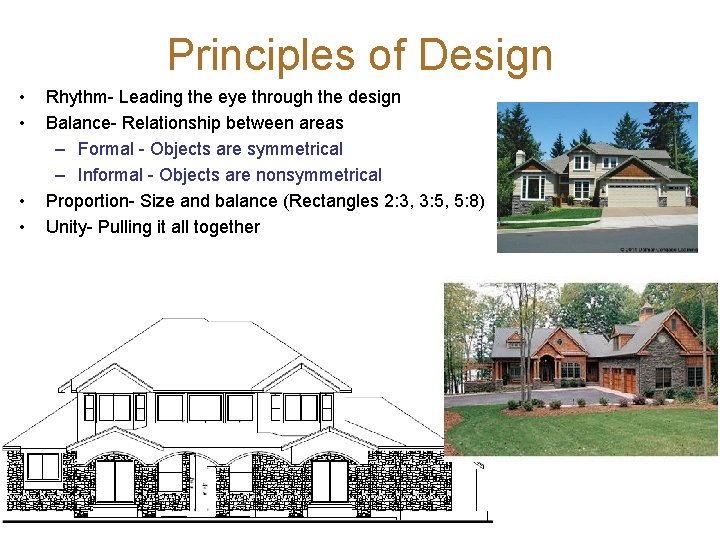
Principles of Design • • Rhythm- Leading the eye through the design Balance- Relationship between areas – Formal - Objects are symmetrical – Informal - Objects are nonsymmetrical Proportion- Size and balance (Rectangles 2: 3, 3: 5, 5: 8) Unity- Pulling it all together
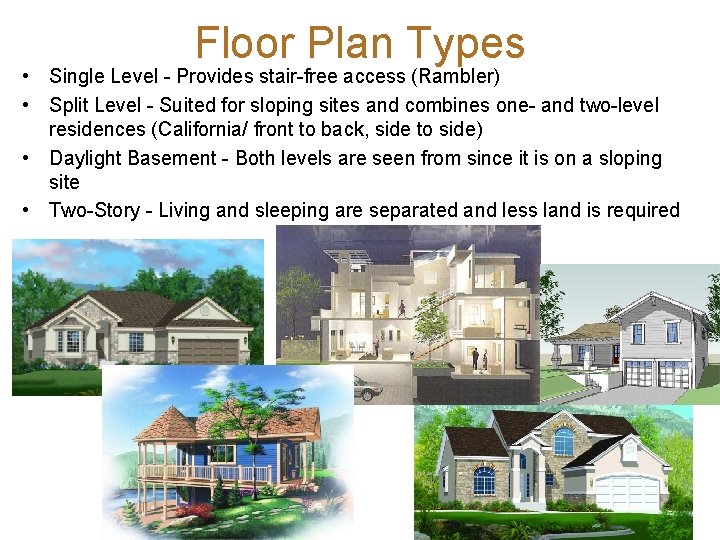
Floor Plan Types • Single Level - Provides stair-free access (Rambler) • Split Level - Suited for sloping sites and combines one- and two-level residences (California/ front to back, side to side) • Daylight Basement - Both levels are seen from since it is on a sloping site • Two-Story - Living and sleeping are separated and less land is required
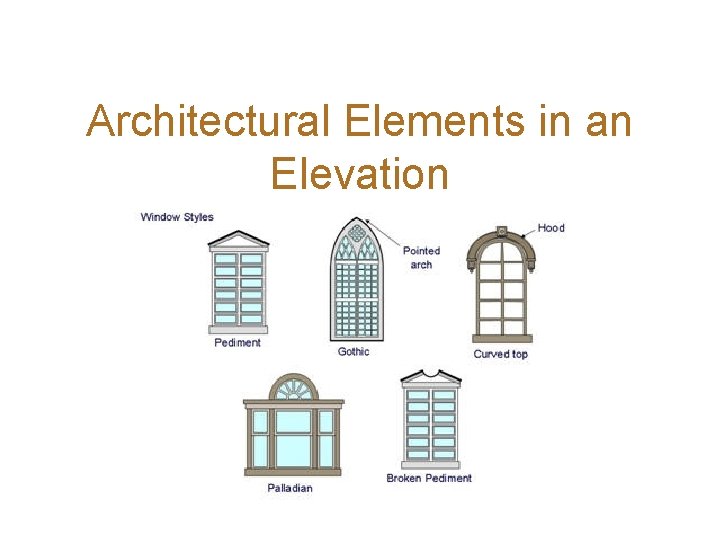
Architectural Elements in an Elevation
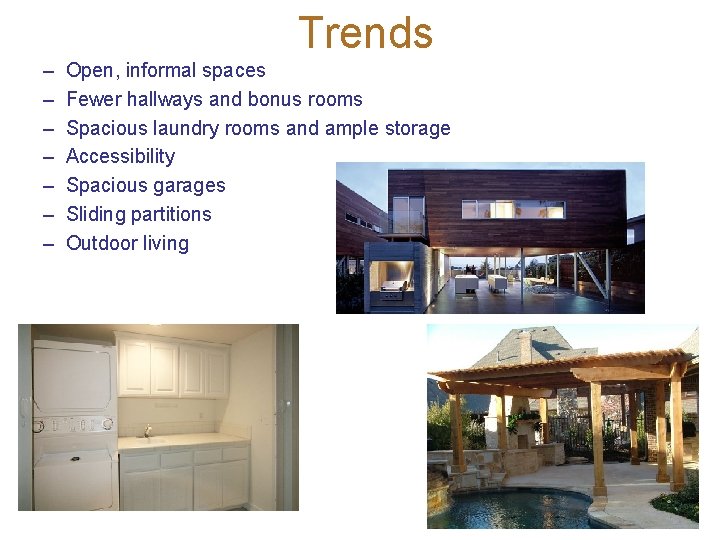
Trends – – – – Open, informal spaces Fewer hallways and bonus rooms Spacious laundry rooms and ample storage Accessibility Spacious garages Sliding partitions Outdoor living
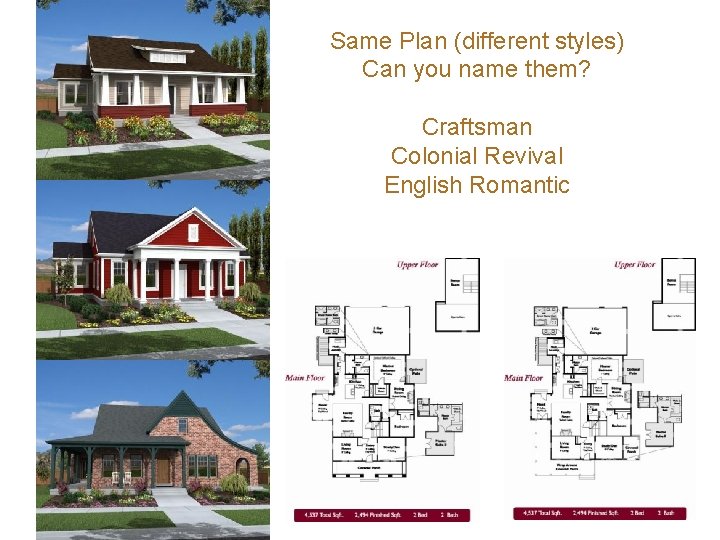
Same Plan (different styles) Can you name them? Craftsman Colonial Revival English Romantic
Exterior Styles Exercise • Pick Arch. Style – 5 points describing style – Share with Class • • • • Colonial Revival Southern Colonial Georgian Saltbox Garrison Cape Cod Federal Greek Revival Southern Colonial English Romantic Dutch French Spanish Farm house Ranch • • • • Victorian Contemporary Craftsman Gothic Queen Anne Italian Villa Art Deco Bungalow Tudor Eclectic Vernacular International Prairie House Frank Lloyd Wright Frank Gehry
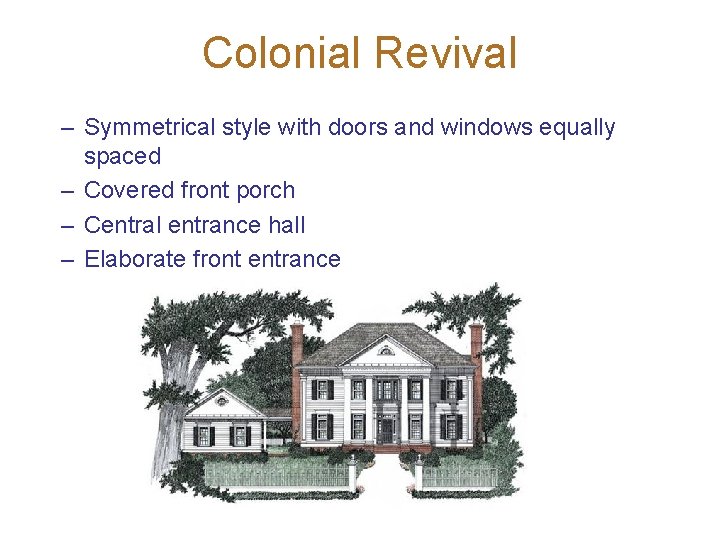
Colonial Revival – Symmetrical style with doors and windows equally spaced – Covered front porch – Central entrance hall – Elaborate front entrance
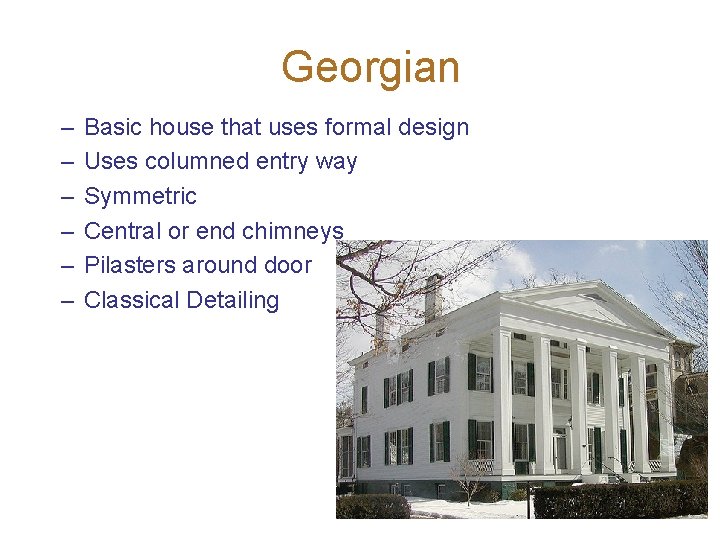
Georgian – – – Basic house that uses formal design Uses columned entry way Symmetric Central or end chimneys Pilasters around door Classical Detailing
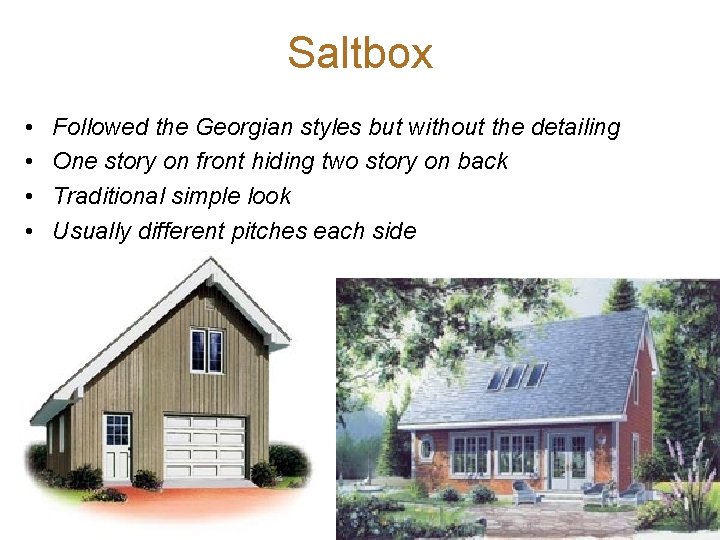
Saltbox • • Followed the Georgian styles but without the detailing One story on front hiding two story on back Traditional simple look Usually different pitches each side
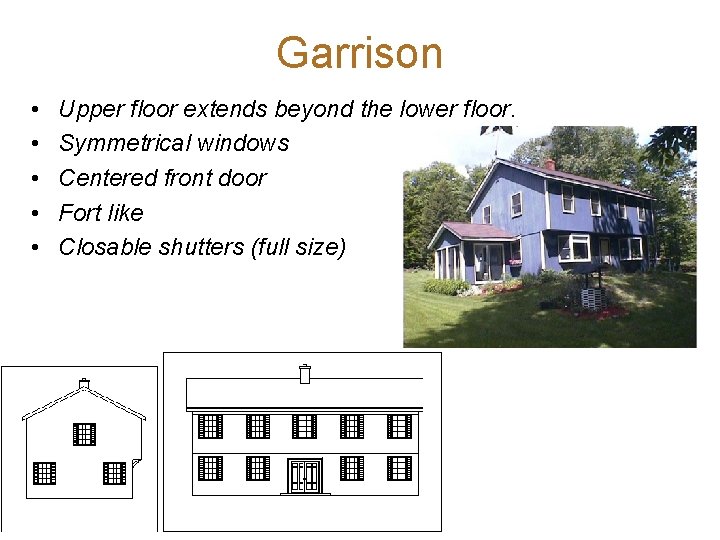
Garrison • • • Upper floor extends beyond the lower floor. Symmetrical windows Centered front door Fort like Closable shutters (full size)
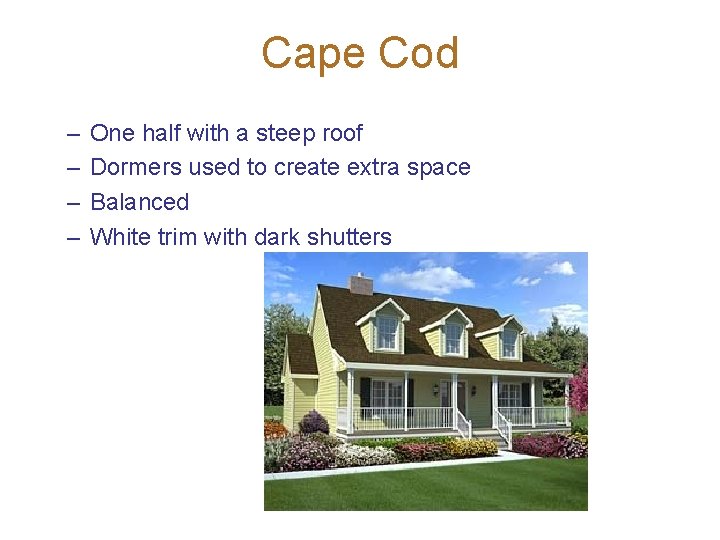
Cape Cod – – One half with a steep roof Dormers used to create extra space Balanced White trim with dark shutters
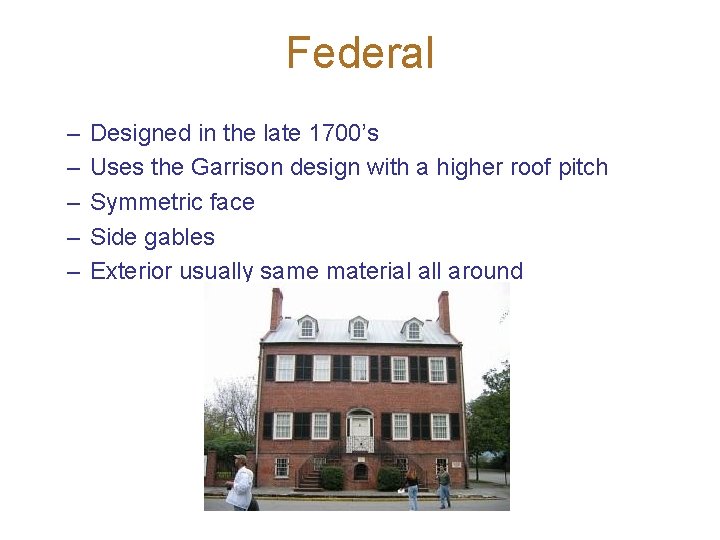
Federal – – – Designed in the late 1700’s Uses the Garrison design with a higher roof pitch Symmetric face Side gables Exterior usually same material all around
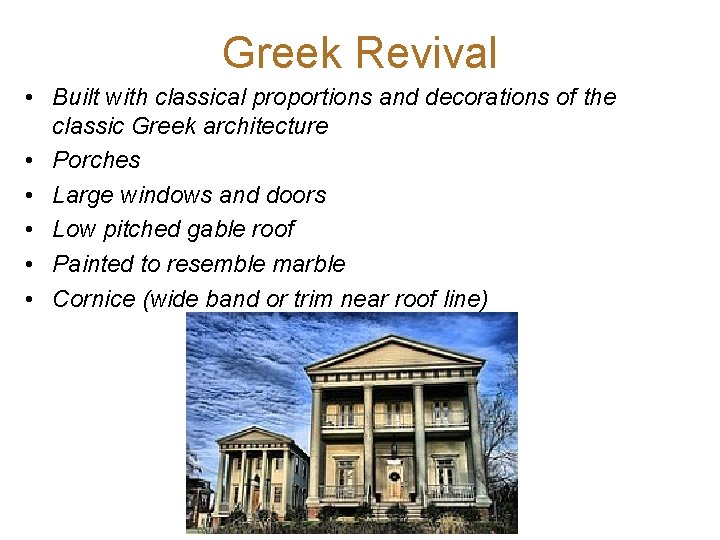
Greek Revival • Built with classical proportions and decorations of the classic Greek architecture • Porches • Large windows and doors • Low pitched gable roof • Painted to resemble marble • Cornice (wide band or trim near roof line)
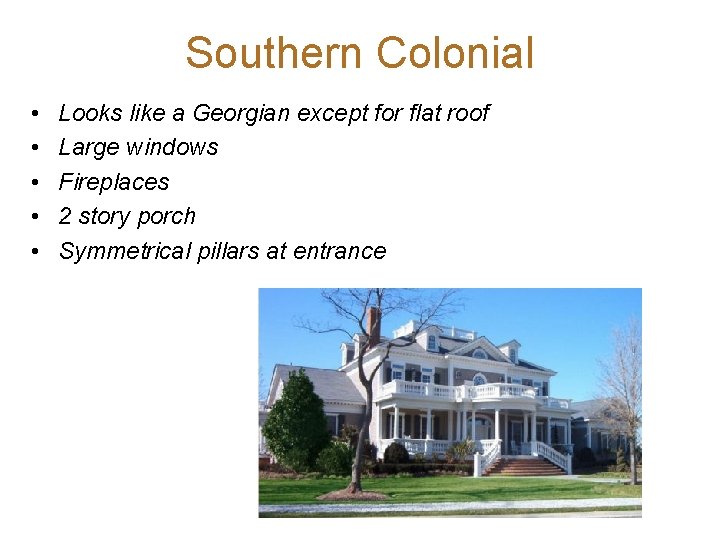
Southern Colonial • • • Looks like a Georgian except for flat roof Large windows Fireplaces 2 story porch Symmetrical pillars at entrance
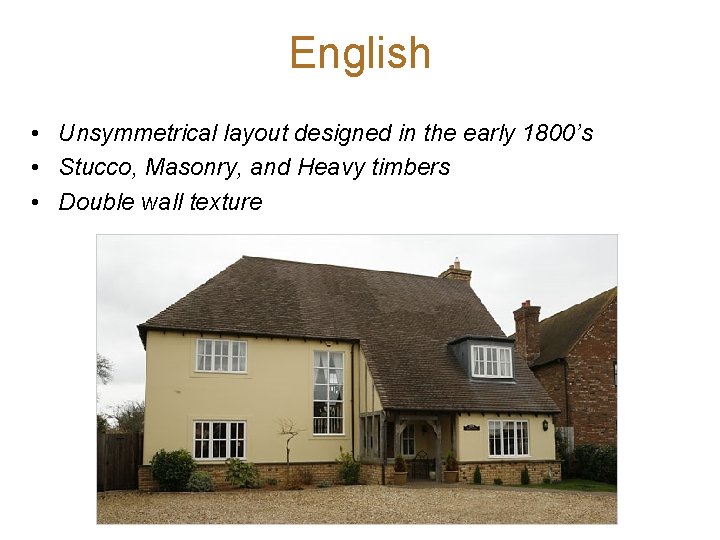
English • Unsymmetrical layout designed in the early 1800’s • Stucco, Masonry, and Heavy timbers • Double wall texture
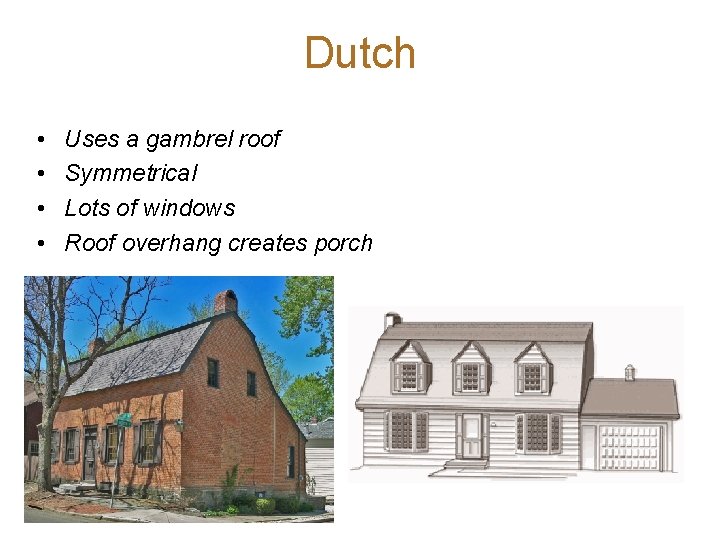
Dutch • • Uses a gambrel roof Symmetrical Lots of windows Roof overhang creates porch
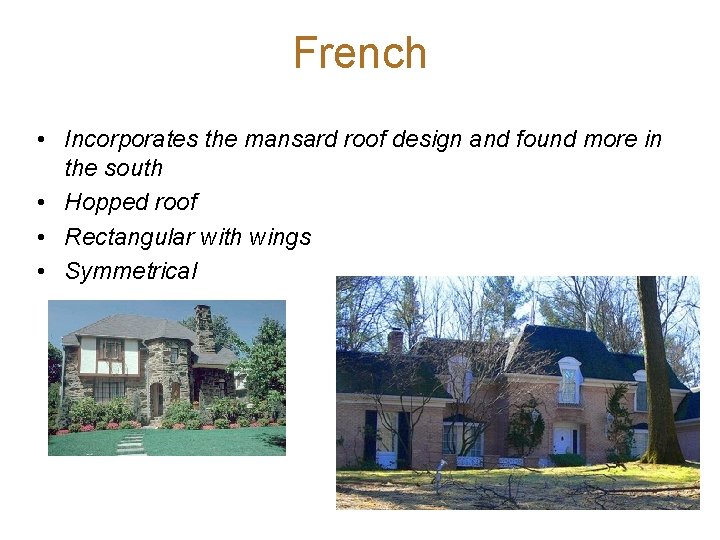
French • Incorporates the mansard roof design and found more in the south • Hopped roof • Rectangular with wings • Symmetrical
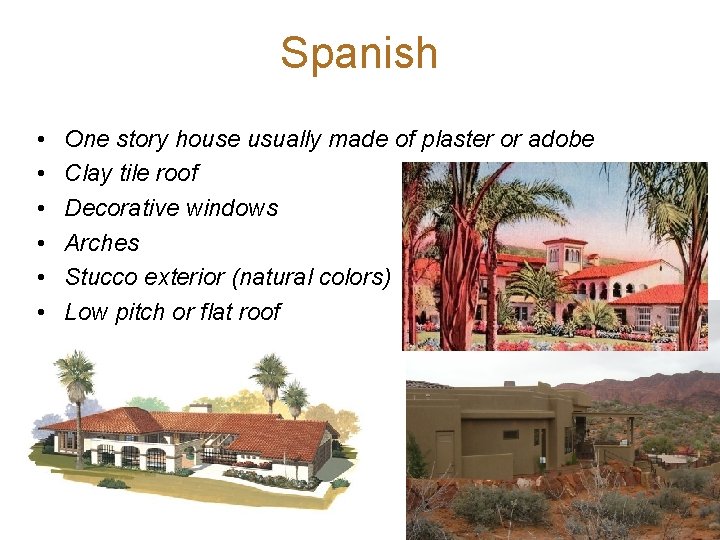
Spanish • • • One story house usually made of plaster or adobe Clay tile roof Decorative windows Arches Stucco exterior (natural colors) Low pitch or flat roof
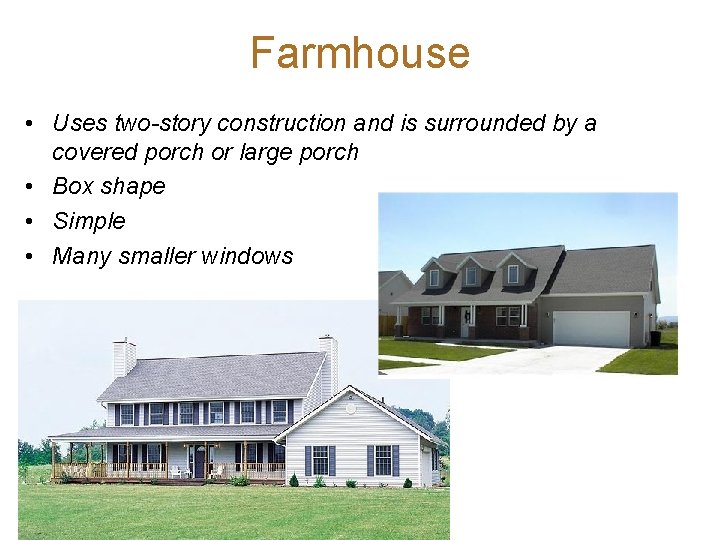
Farmhouse • Uses two-story construction and is surrounded by a covered porch or large porch • Box shape • Simple • Many smaller windows
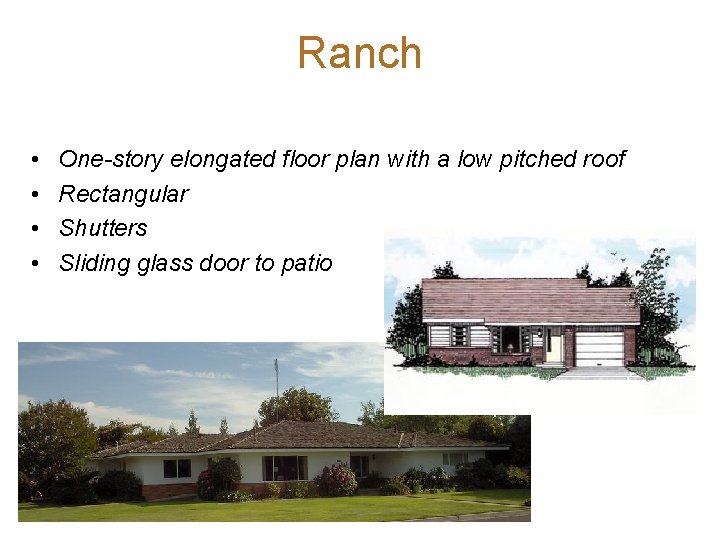
Ranch • • One-story elongated floor plan with a low pitched roof Rectangular Shutters Sliding glass door to patio
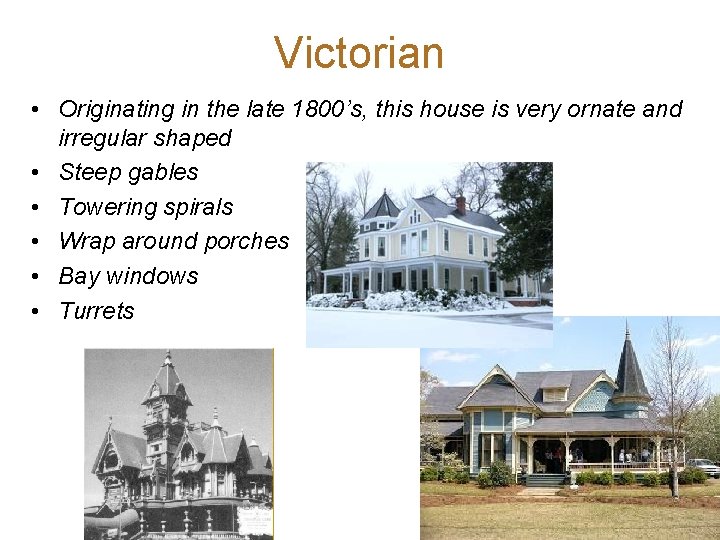
Victorian • Originating in the late 1800’s, this house is very ornate and irregular shaped • Steep gables • Towering spirals • Wrap around porches • Bay windows • Turrets
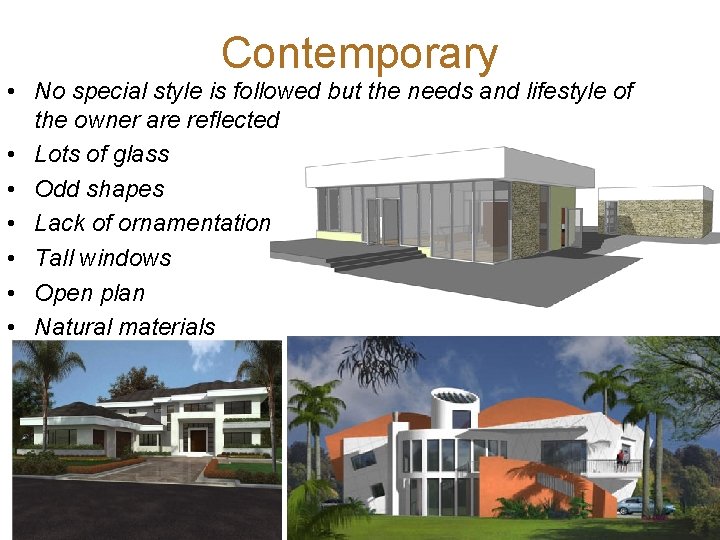
Contemporary • No special style is followed but the needs and lifestyle of the owner are reflected • Lots of glass • Odd shapes • Lack of ornamentation • Tall windows • Open plan • Natural materials
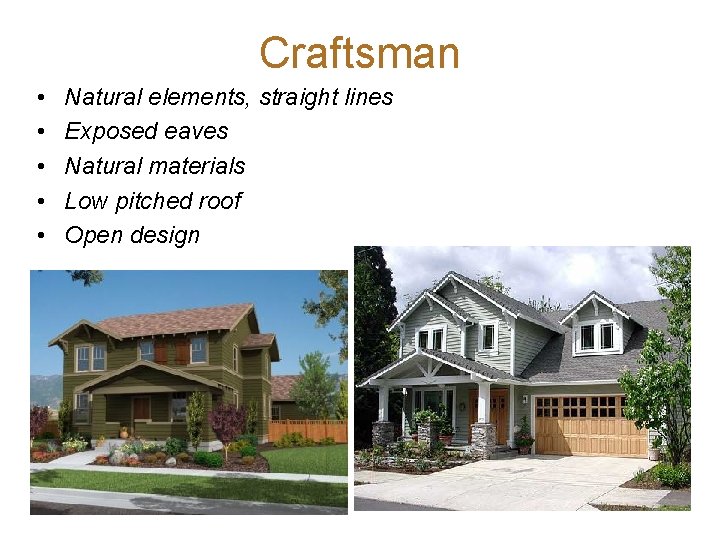
Craftsman • • • Natural elements, straight lines Exposed eaves Natural materials Low pitched roof Open design