
Chapter 11 Energy Energy The capacity to do
- Slides: 31
Chapter 11 Energy
Energy • The capacity to do work
Potential Energy (U) • Stored energy
Kinetic Energy (K) • Energy due to motion
Energy is measured in terms of the work that is produced or can be produced.
Energy has the same unit as work (J)
Like work, energy is a scalar quantity
Regardless of its form, energy is either potential or kinetic
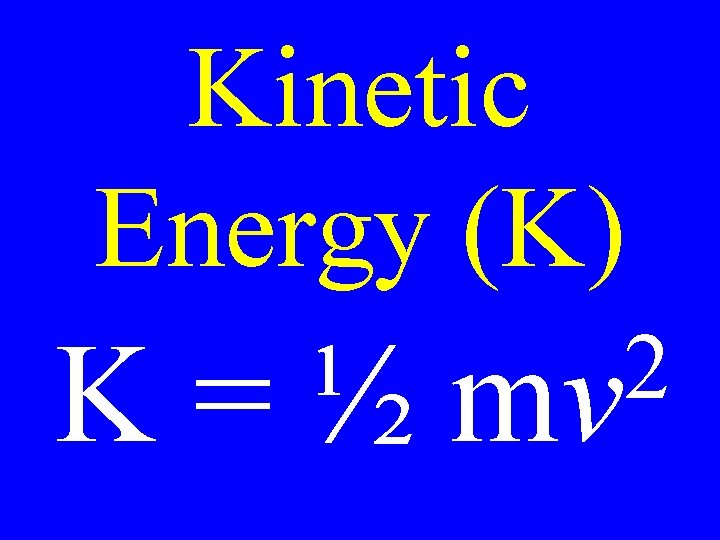
Kinetic Energy (K) K=½ 2 mv
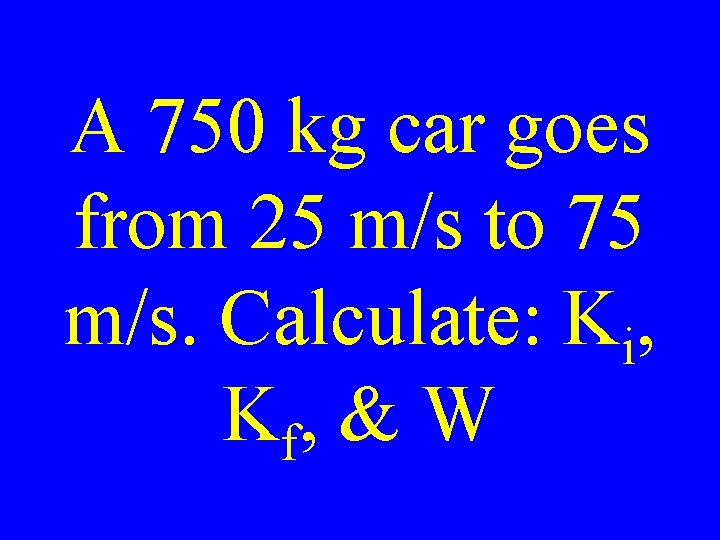
A 750 kg car goes from 25 m/s to 75 m/s. Calculate: Ki, K f, & W
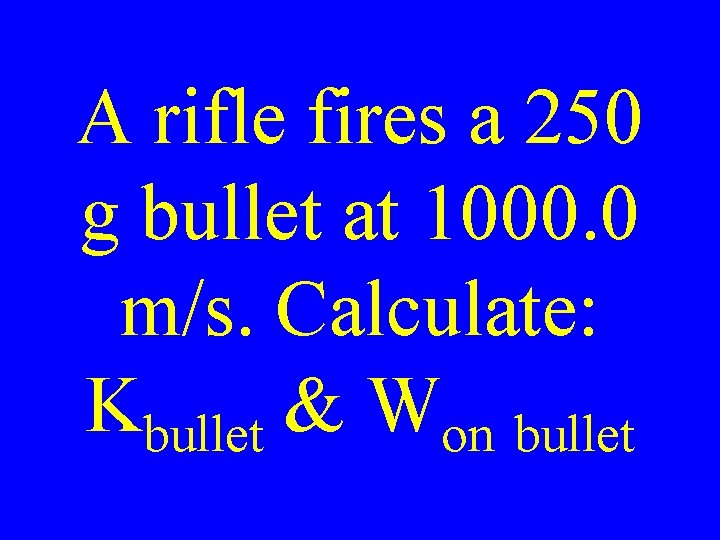
A rifle fires a 250 g bullet at 1000. 0 m/s. Calculate: Kbullet & Won bullet
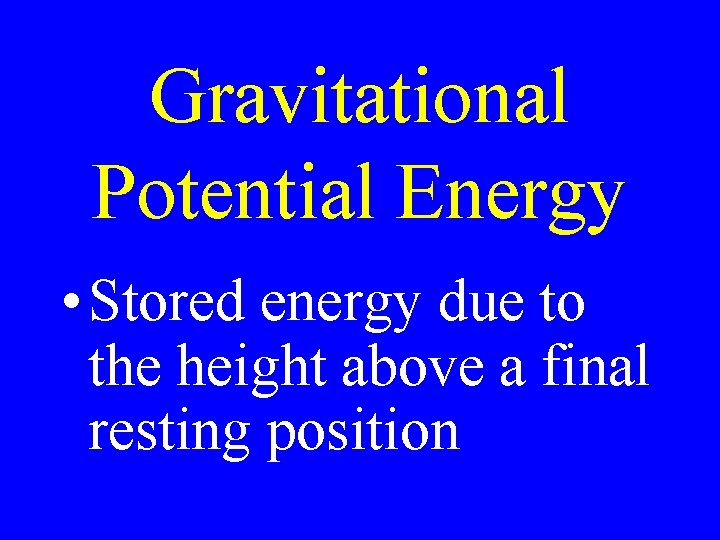
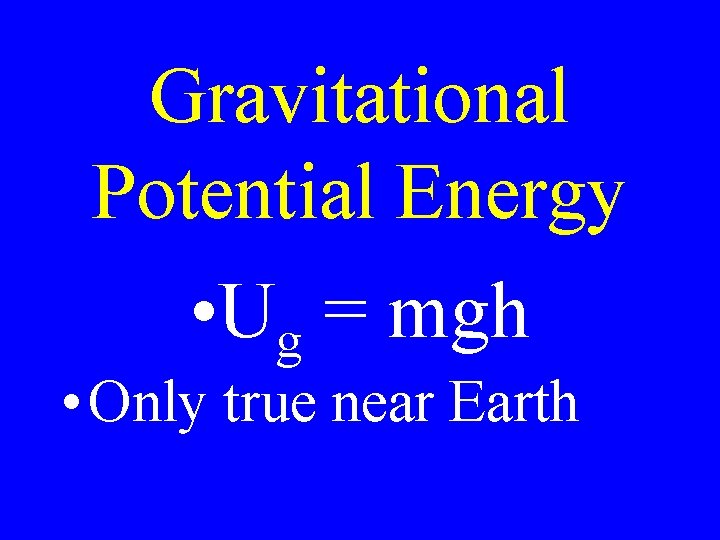
Gravitational Potential Energy • Stored energy due to the height above a final resting position
Gravitational Potential Energy • Ug = mgh • Only true near Earth
A 50. 0 kg woman climbs to an altitude of 0. 80 km. Calculate: Ug
A cannon fires a 100. 0 kg projectile at 1. 0 o km/s at 36. 87 from horizontal. Calculate the maximun Ug:
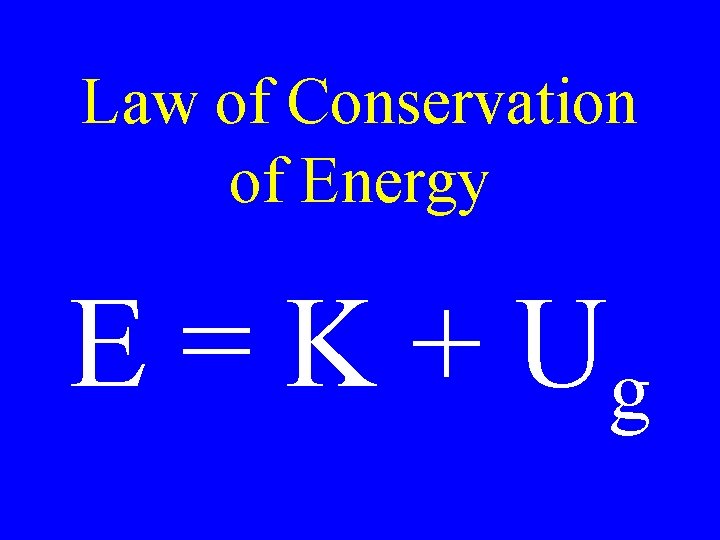
Law of Conservation of Energy • In a closed system, the total energy is constant
Law of Conservation of Energy E = K + Ug
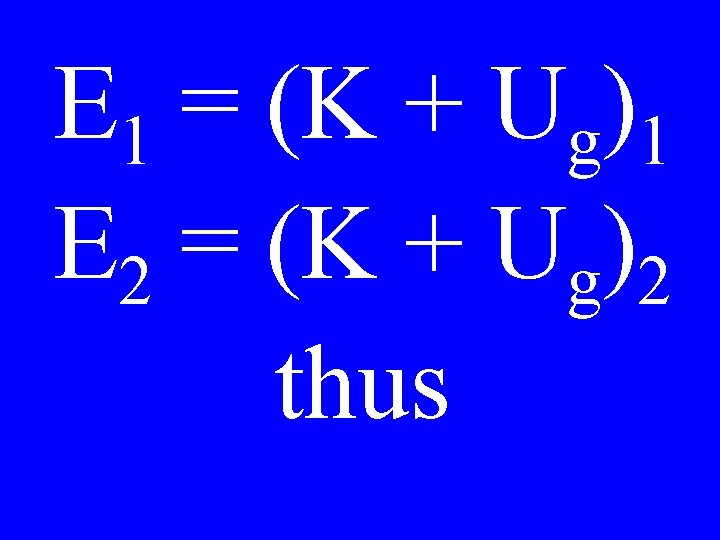
E 1 = (K + Ug)1 E 2 = (K + Ug)2 thus
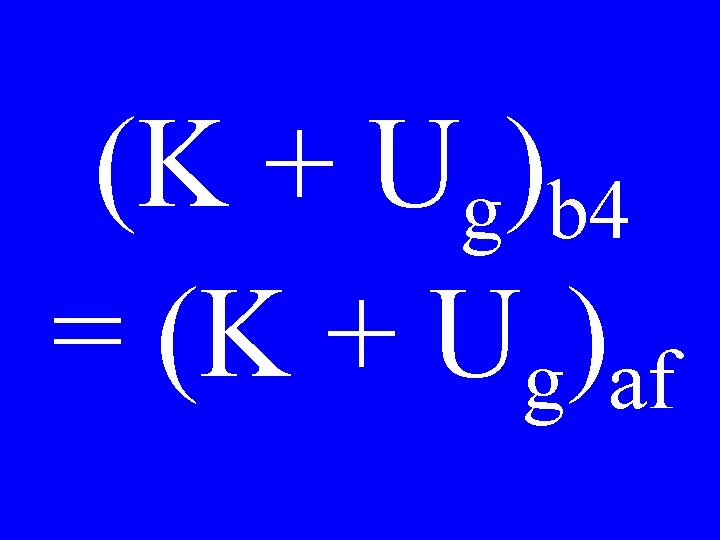
(K + Ug)b 4 = (K + Ug)af
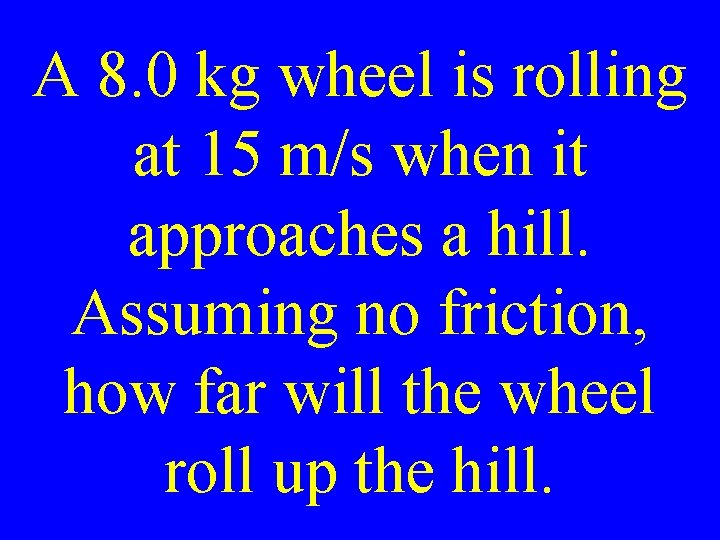
A 8. 0 kg wheel is rolling at 15 m/s when it approaches a hill. Assuming no friction, how far will the wheel roll up the hill.
A 50. 0 kg man skis down an 0. 80 km hill. Calculate: Ug(top), K(bottom) , & v(bottom)
A cannon fires a 4. 0 Mg projectile at 250 m/s at o 36. 87 from H. Calculate Ug & K at every 5. 0 s interval & Umax while in flight.
A cannon fires a 8. 0 Mg projectile at 1250 m/s at o 36. 87 from horizontal. Calculate E, Umax & Kmax.
Energy of Collisions • Although momentum is conserved in collisions the kinetic energy may not be conserved.
Elastic Collisions • Collisions in which kinetic energy is conserved
Inelastic Collisions • Collisions in which the kinetic is not conserved
A 2. 0 g bullet moving at 750 m/s strikes and is embedded in a 248 g block. Calculate: vfblock, Kb 4, & Kafter
The 5. 0 kg head of a sledge hammer moving at 20. 0 m/s strikes a 25 kg stake (Ff = 250 N) and bounces back at 2. 0 m/s. Calculate: Dp. H, Dps, KH 1, KH 2, Ks, , DKT, vs, & ds
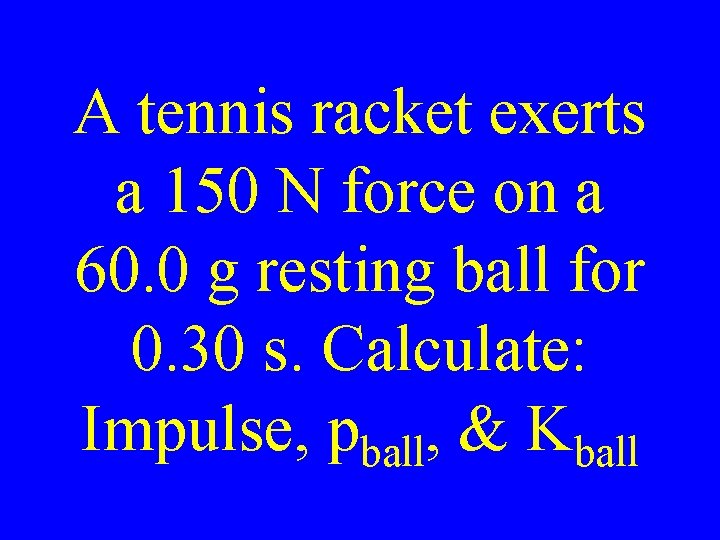
A tennis racket exerts a 150 N force on a 60. 0 g resting ball for 0. 30 s. Calculate: Impulse, pball, & Kball
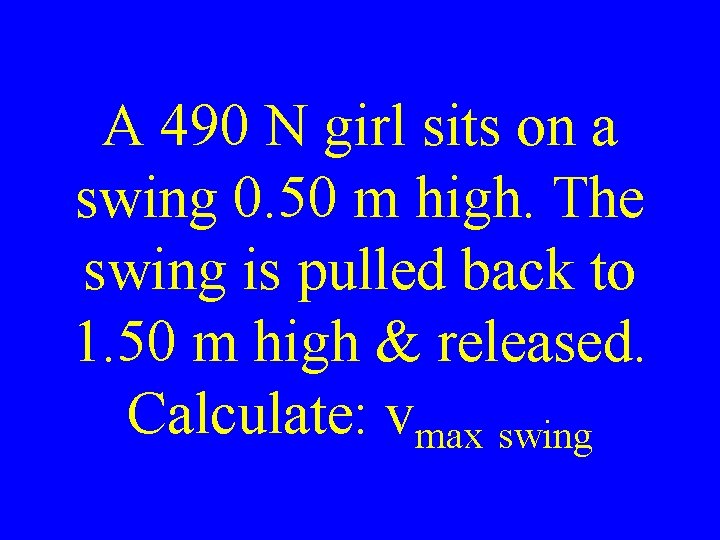
A 490 N girl sits on a swing 0. 50 m high. The swing is pulled back to 1. 50 m high & released. Calculate: vmax swing
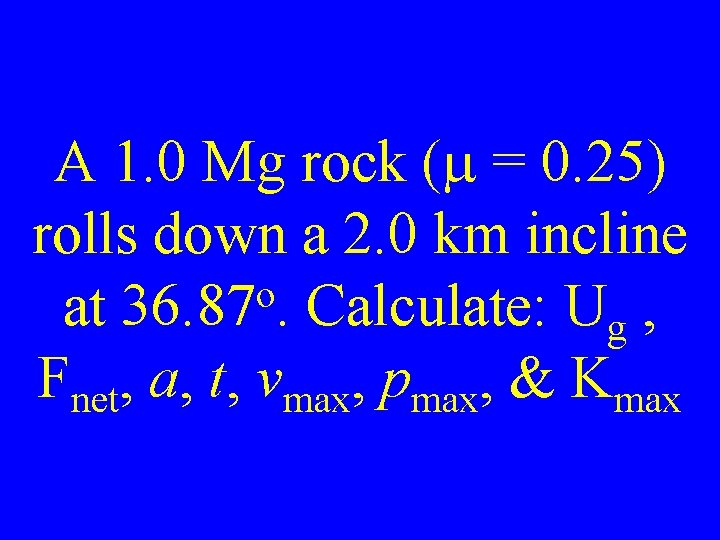
A 1. 0 Mg rock (m = 0. 25) rolls down a 2. 0 km incline o at 36. 87. Calculate: Ug , Fnet, a, t, vmax, pmax, & Kmax