
CHAPTER 11 Designing Territories WHAT IS A TERRITORY




- Slides: 19
CHAPTER 11 Designing Territories
WHAT IS A TERRITORY? ä Number of present and potential customers located within a geographic area and assigned to a sales person
BENEFITS OF TERRITORIES Ensures proper market coverage ä Improves customer relations ä Increases morale and productivity ä Control and evaluation ä Reduces selling costs ä
WHEN ARE TERRITORIES UNNECESSARY? When contacts are infrequent ä When a great deal of prospecting is involved ä
DESIGNING TERRITORIES ä The ideal situation: have all districts equal in sales potential and work load
DESIGNING TERRITORIES Select a control unit for boundaries ä Analyze workload ä Determine territories based on sales potential and call patterns ä Assign people to territories ä Establish a coverage plan ä Ongoing assessment ä
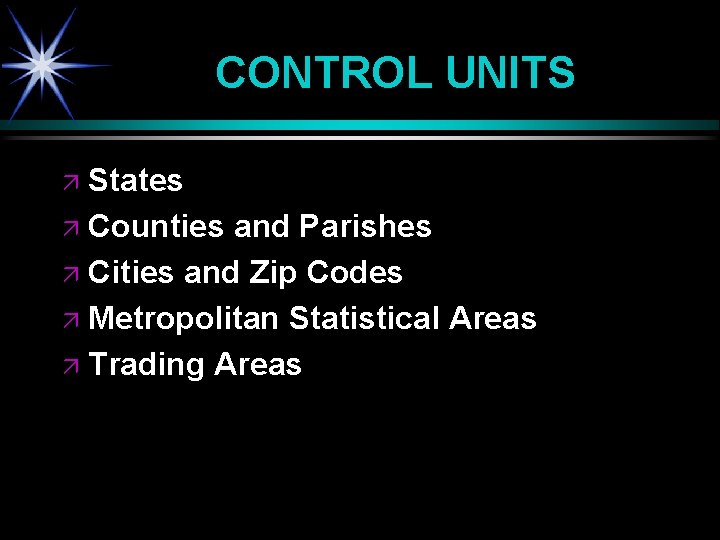
CONTROL UNITS States ä Counties and Parishes ä Cities and Zip Codes ä Metropolitan Statistical Areas ä Trading Areas ä
ANALYZING WORKLOADS Nature of the job ä Nature of the product ä Stage of market development ä Intensity of market coverage ä Competition ä Market characteristics ä
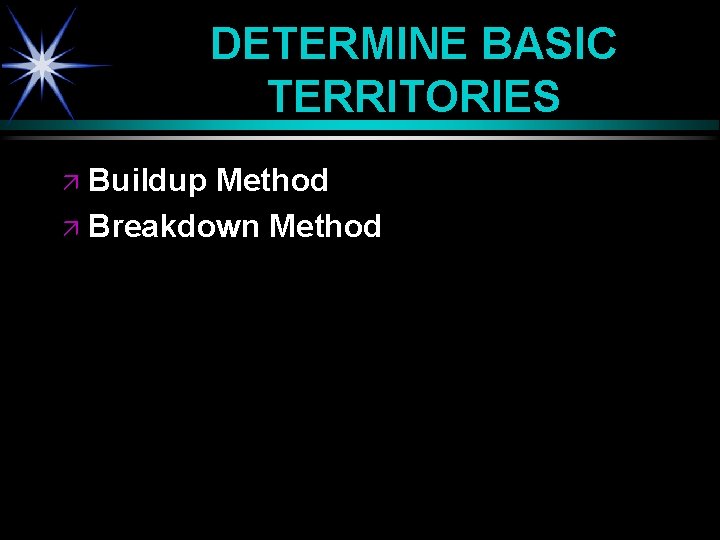
DETERMINE BASIC TERRITORIES Buildup Method ä Breakdown Method ä
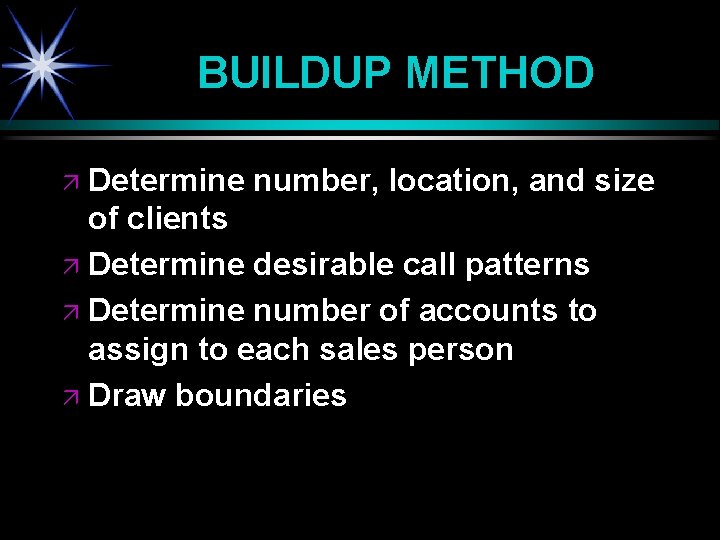
BUILDUP METHOD Determine number, location, and size of clients ä Determine desirable call patterns ä Determine number of accounts to assign to each sales person ä Draw boundaries ä
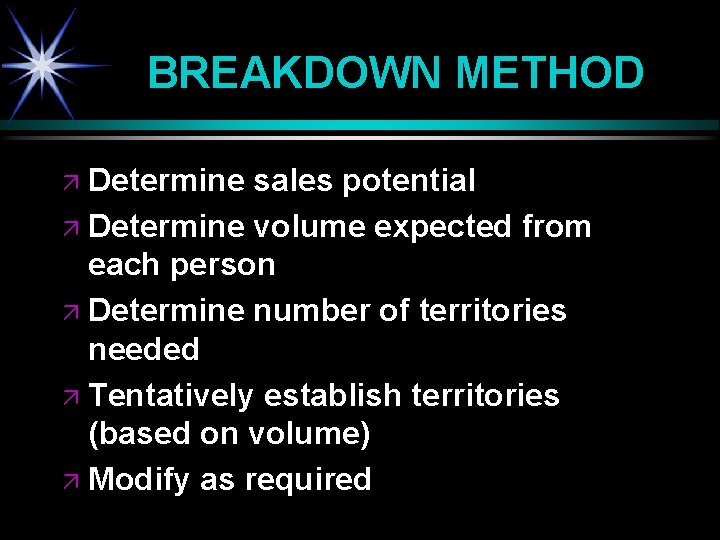
BREAKDOWN METHOD Determine sales potential ä Determine volume expected from each person ä Determine number of territories needed ä Tentatively establish territories (based on volume) ä Modify as required ä
BREAKDOWN METHOD ä EXAMPLE TO DETERMINE NUMBER OF TERRITORIES: If total potential is $20 million and average volume person is $500, 000 then 40 sales reps are required in 40 territories
BREAKDOWN METHOD ä EXAMPLE TO DETERMINE TERRITORY VOLUME: With 40 reps, we should establish territories with 2. 5% of the company’s total sales potential (100%/40 = 2. 5)
USING SOFTWARE Save time ä Costly ä Some programs can’t adjust for physical barriers ä
FROM THE INTERNET. . . ä Software Examples: ä Tactician 4 <http: //www. tactician. com/product/ prd 002. htm> ä Territory Mapper <http: //www. territorymapper. com/>
ASSIGNING PEOPLE TO TERRITORIES Match characteristics ä Overlapping territories ä Personnel issues when revising territories ä
TERRITORIAL COVERAGE Routing ä Scheduling ä
ONGOING ASSESSMENT ä Sales and costs studies
FROM THE TEXT. . . ä Read everything from Chapter 11 except “Simulating New Territories” on pages 530 to 531.