
Chapter 11 Communication 11 1 Copyright 2015 Pearson
- Slides: 12
Chapter 11: Communication 11 -1 Copyright © 2015 Pearson Education Ltd.
LO 1 Main Functions of Communication ØCommunication serves four major functions within a group or organization: 1. Control 2. Motivation 3. Emotional Expression 4. Information 11 -2 Copyright © 2015 Pearson Education Ltd.
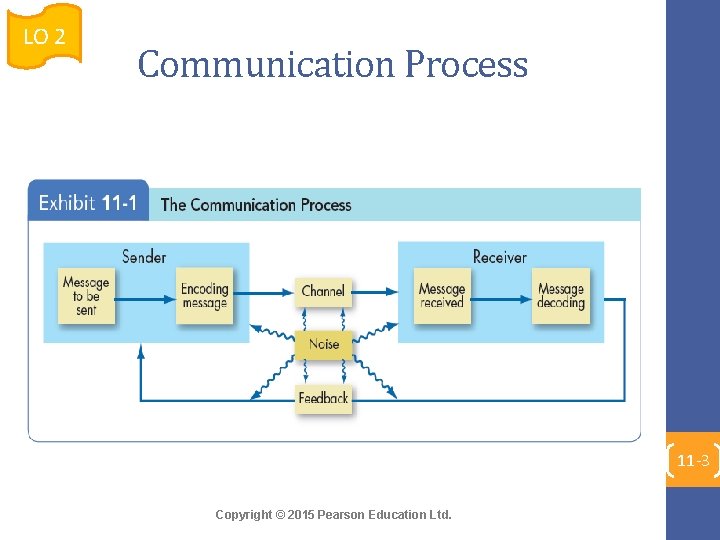
LO 2 Communication Process 11 -3 Copyright © 2015 Pearson Education Ltd.
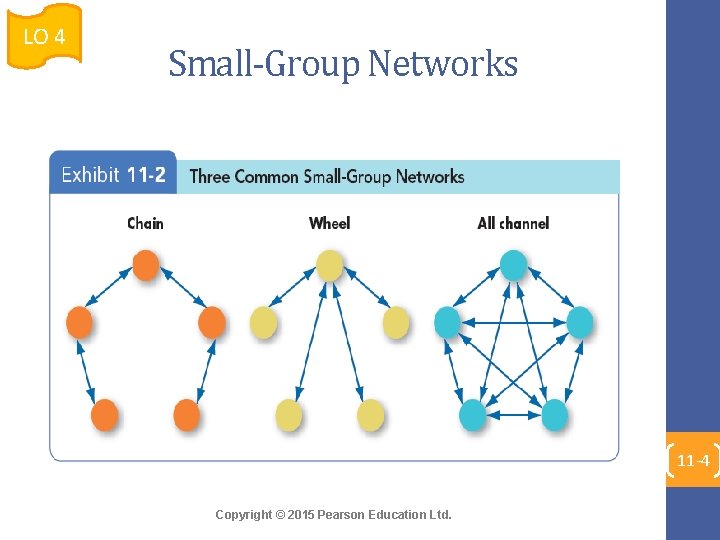
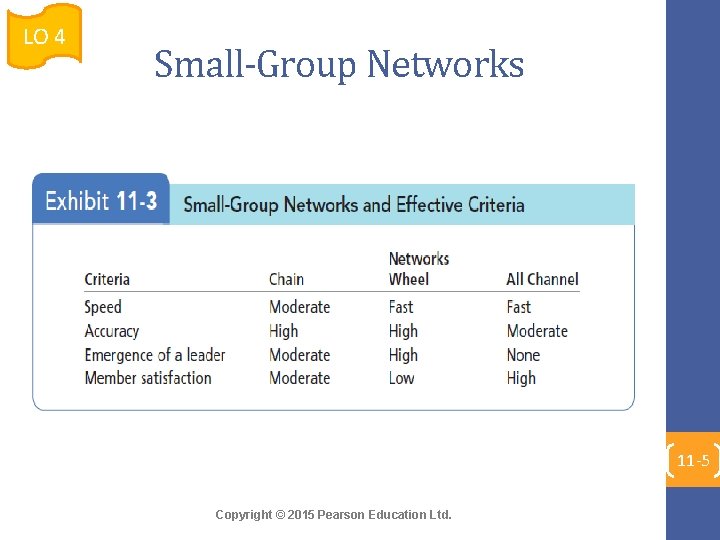
LO 4 Small-Group Networks 11 -4 Copyright © 2015 Pearson Education Ltd.
LO 4 Small-Group Networks 11 -5 Copyright © 2015 Pearson Education Ltd.
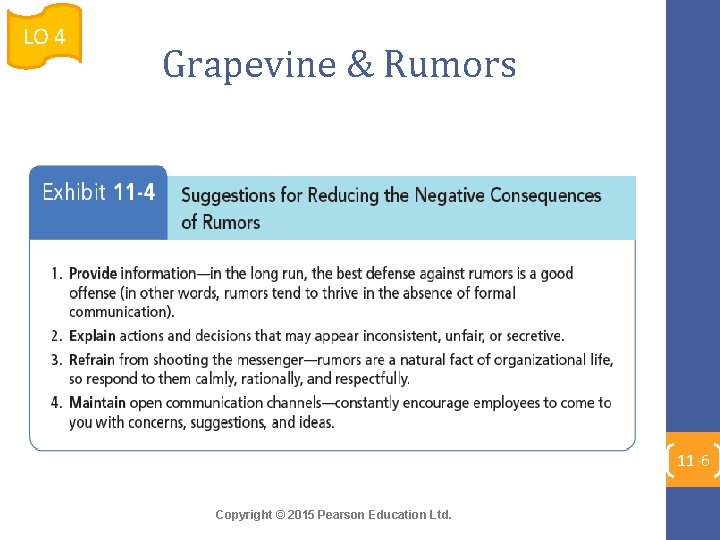
LO 4 Grapevine & Rumors 11 -6 Copyright © 2015 Pearson Education Ltd.
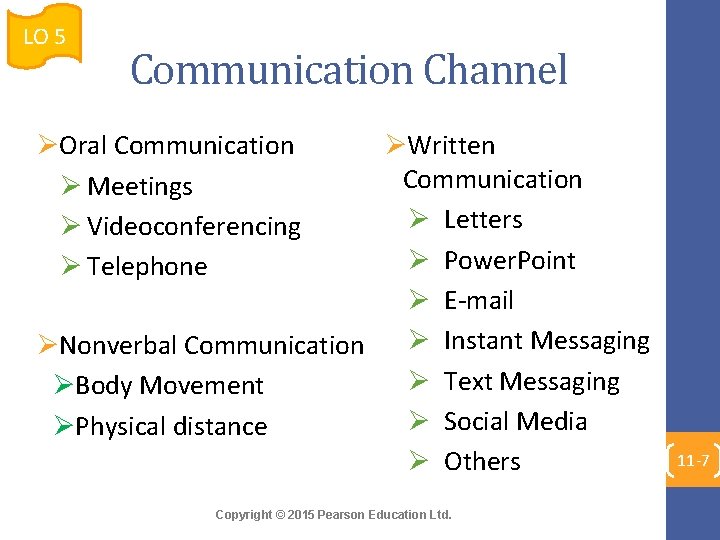
LO 5 Communication Channel ØOral Communication Ø Meetings Ø Videoconferencing Ø Telephone ØWritten Communication Ø Letters Ø Power. Point Ø E-mail Ø Instant Messaging ØNonverbal Communication Ø Text Messaging ØBody Movement Ø Social Media ØPhysical distance Ø Others Copyright © 2015 Pearson Education Ltd. 11 -7
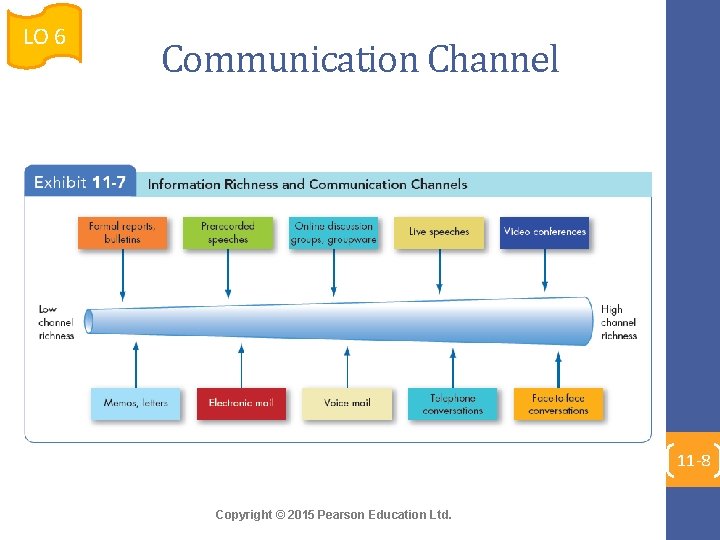
LO 6 Communication Channel 11 -8 Copyright © 2015 Pearson Education Ltd.
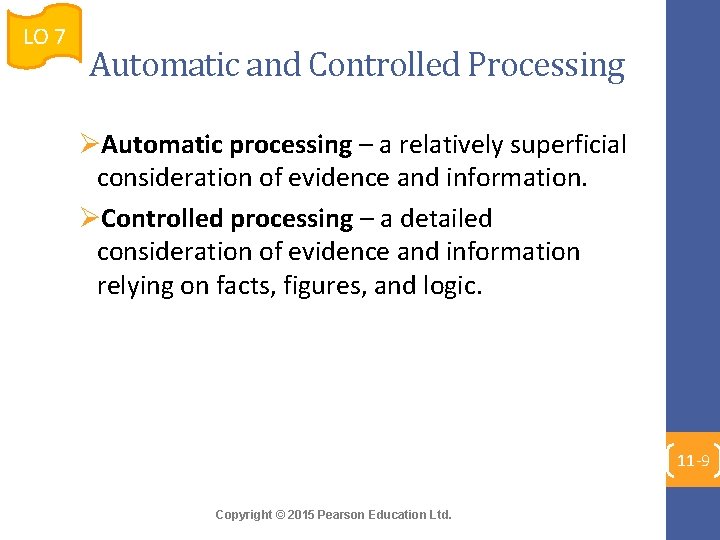
LO 7 Automatic and Controlled Processing ØAutomatic processing – a relatively superficial consideration of evidence and information. ØControlled processing – a detailed consideration of evidence and information relying on facts, figures, and logic. 11 -9 Copyright © 2015 Pearson Education Ltd.
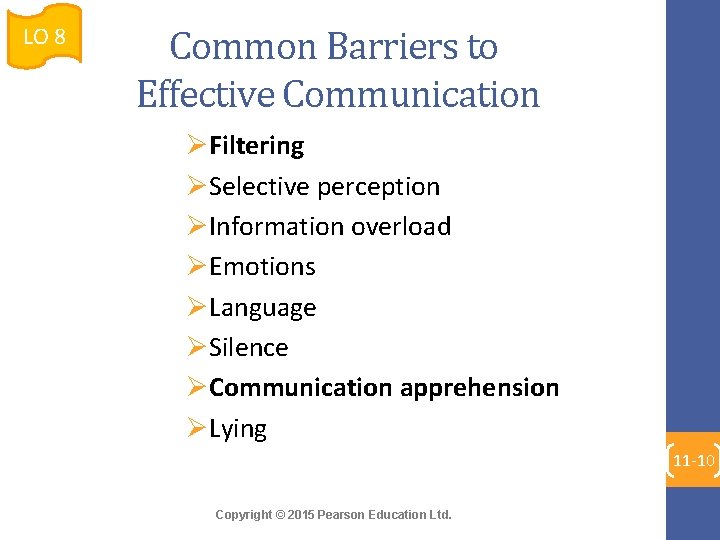
LO 8 Common Barriers to Effective Communication ØFiltering ØSelective perception ØInformation overload ØEmotions ØLanguage ØSilence ØCommunication apprehension ØLying 11 -10 Copyright © 2015 Pearson Education Ltd.
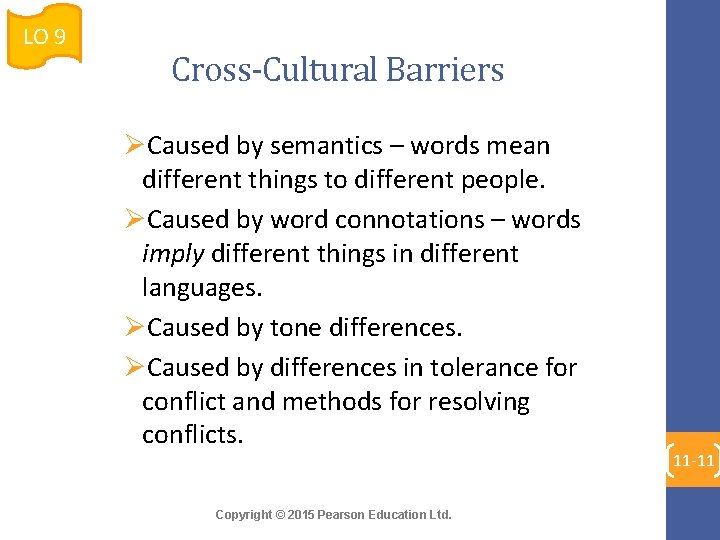
LO 9 Cross-Cultural Barriers ØCaused by semantics – words mean different things to different people. ØCaused by word connotations – words imply different things in different languages. ØCaused by tone differences. ØCaused by differences in tolerance for conflict and methods for resolving conflicts. Copyright © 2015 Pearson Education Ltd. 11 -11
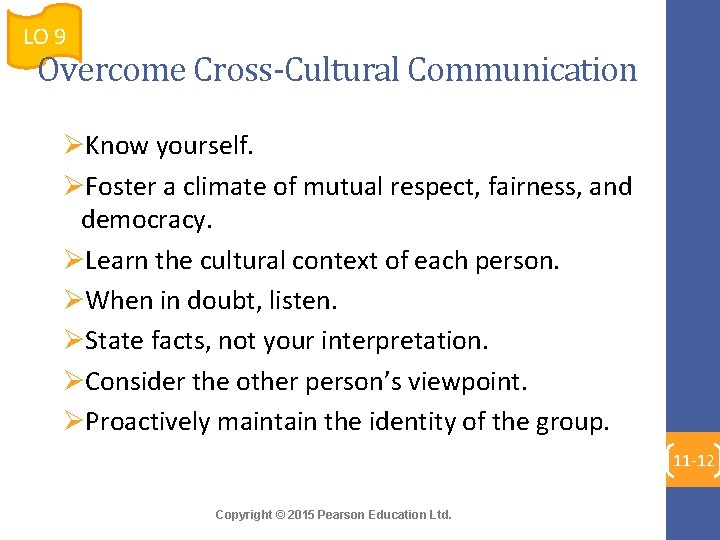
LO 9 Overcome Cross-Cultural Communication ØKnow yourself. ØFoster a climate of mutual respect, fairness, and democracy. ØLearn the cultural context of each person. ØWhen in doubt, listen. ØState facts, not your interpretation. ØConsider the other person’s viewpoint. ØProactively maintain the identity of the group. 11 -12 Copyright © 2015 Pearson Education Ltd.