
CHAPTER 11 CLASSIFYING LIFE Why and how do


- Slides: 22
CHAPTER 11 CLASSIFYING LIFE
Why and how do scientists classify living things?
WHAT’S IN A NAME? • Identifying and organizing is important to managing God’s creation. • Adam had to name the animals.
taxonomy the science of classifying organisms
HIERARCHY OF ORGANISMS • Classification by genetic information, or by phenotypes? • Taxa: 8 classification groups • Domains and kingdoms – Three domains: Archaea, Bacteria, Eukarya – Seven kingdoms
• Definitions of species – A group of organisms that look the same and have the same structure – A group of organisms that can produce fertile offspring – There are exceptions to every definition
NAMING ORGANISMS • Linnaeus invented a system using binomial nomenclature – Genus name and species name – Latin – Scientific name • Typed in italics, with first part capitalized
11 A REVIEW QUESTIONS 1. How does taxonomy help people fulfill the Creation Mandate?
11 A REVIEW QUESTIONS 2. Boloceroides daphneae was a type of sea anemone discovered in 2006. But in 2014, it was reclassified into a new family separate from sea anemones and renamed Relicanthus daphneae. What does this tell you about the nature of taxonomy?
How is classification used to support evolutionary theory?
CHANGING RELATIONSHIPS • Systematics: the science of classification – Evolutionary relationships – Phylogeny: constructing the evolutionary history of organisms – Cladistics: the reclassifying of organisms according to their evolutionary history
• Some useful discoveries have been made with systematics • A worldview question
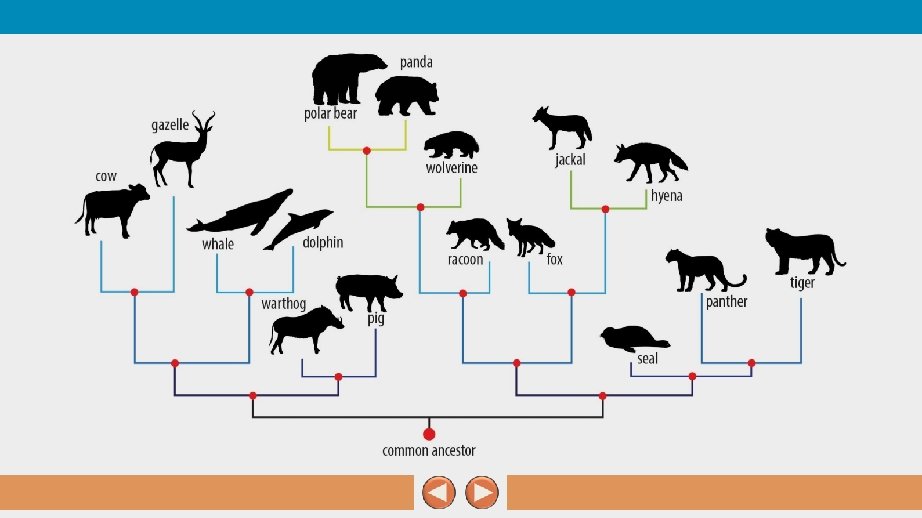
CLASSIFICATION AND A SECULAR WORLDVIEW • Phylogenetic tree (“tree of life”) – Shows supposed evolutionary relationships – May include extinct organisms
• Clades: branches of the phylogenetic tree – Dots represent divergence • Emergence of a derived trait – Convergence: two dissimilar species evolving the same derived trait • This type of classifying can make some strange connections!
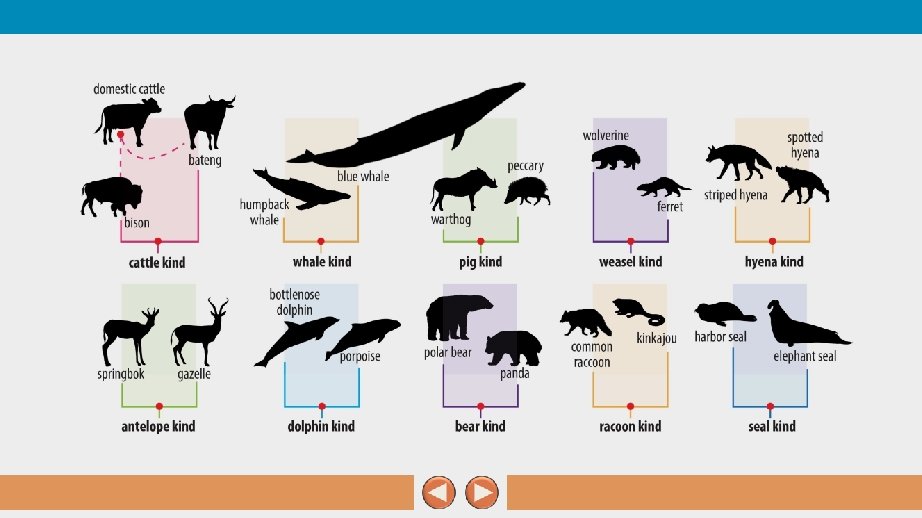
CLASSIFICATION AND A BIBLICAL WORLDVIEW • Genetics can be used to support a biblical worldview. • Baraminology: looking at life on the basis of created kinds – Both genetics and physical features – “Orchard of life”
• The first of each kind were created by God during the creation week. • Divergence only occurs within a kind. • Speciation is a “speedy” process. • Convergence is evidence of design.
11 B REVIEW QUESTIONS 1. How are organisms classified differently today than they were in the past?
11 B REVIEW QUESTIONS 2. What two areas of study are the foundation for today’s evolutionary classification?
CHAPTER 11 REVIEW QUESTIONS 1. What is the purpose of classification? How is this purpose in line with fulfilling the Creation Mandate?
CHAPTER 11 REVIEW QUESTIONS 2. Using Table 11 -2, describe one difference between kingdom Chromista and kingdom Plantae.