
Chapter 11 Cell Communication Why do cells communicate
- Slides: 70
Chapter 11 Cell Communication
Why do cells communicate? �Regulation - cells need to control cellular processes. �Environmental Stimuli - cells need to be able to respond to signals from their environment.
Evolution of Cell Signaling �A signal transduction pathway is a series of steps by which a signal on a cell’s surface is converted into a specific cellular response Copyright © 2008 Pearson Education, Inc. , publishing as Pearson Benjamin Cummings
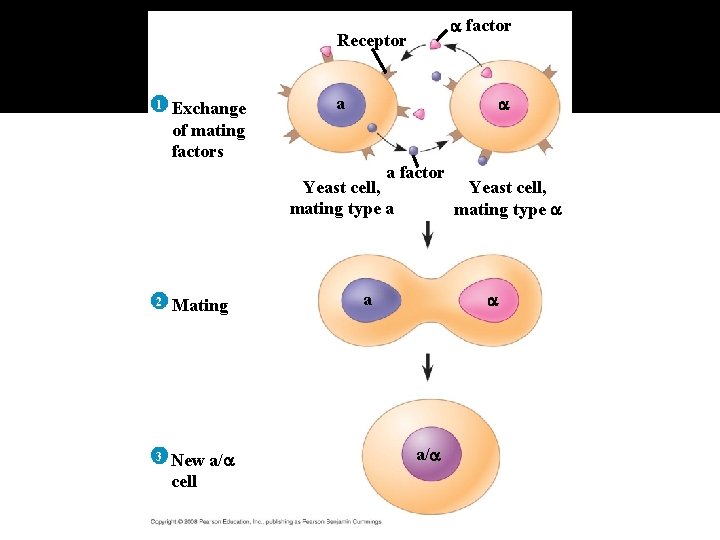
Fig. 11 -2 factor Receptor 1 Exchange of mating factors a a factor Yeast cell, mating type a 2 Mating 3 New a/ cell Yeast cell, mating type a a/
�Pathway similarities suggest that ancestral signaling molecules evolved in prokaryotes and were modified later in eukaryotes Copyright © 2008 Pearson Education, Inc. , publishing as Pearson Benjamin Cummings
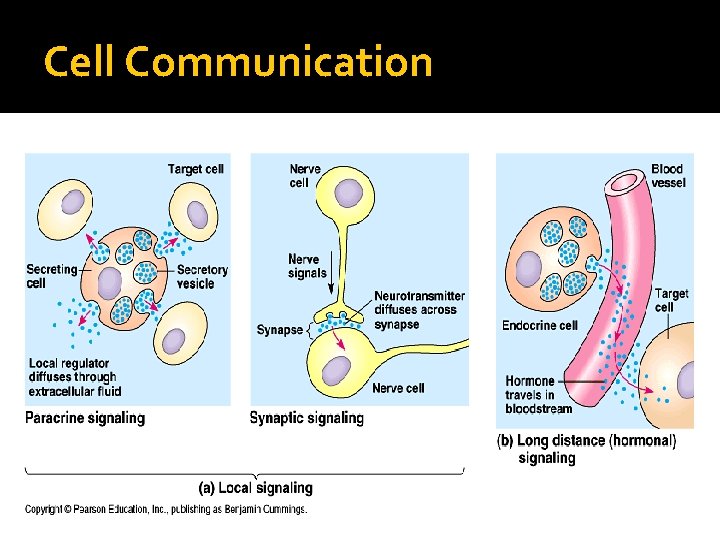
�In many cases, animal cells communicate using local regulators, messenger molecules that travel only short distances �In long-distance signaling, plants and animals use chemicals called hormones Copyright © 2008 Pearson Education, Inc. , publishing as Pearson Benjamin Cummings
Cell Communication
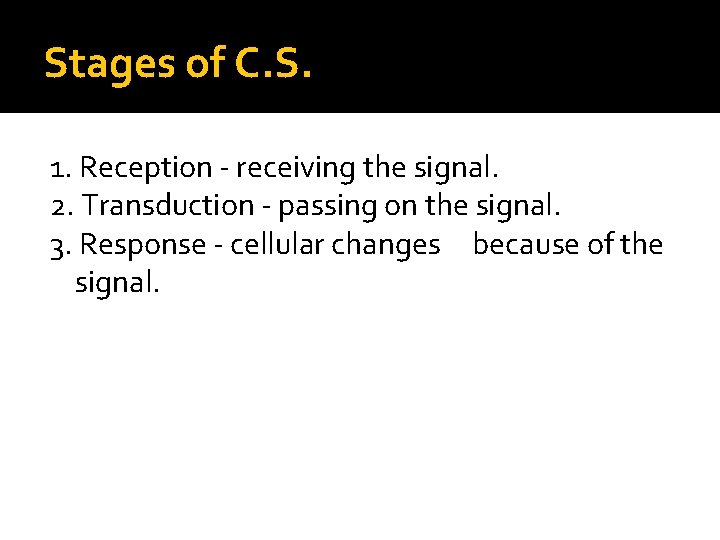
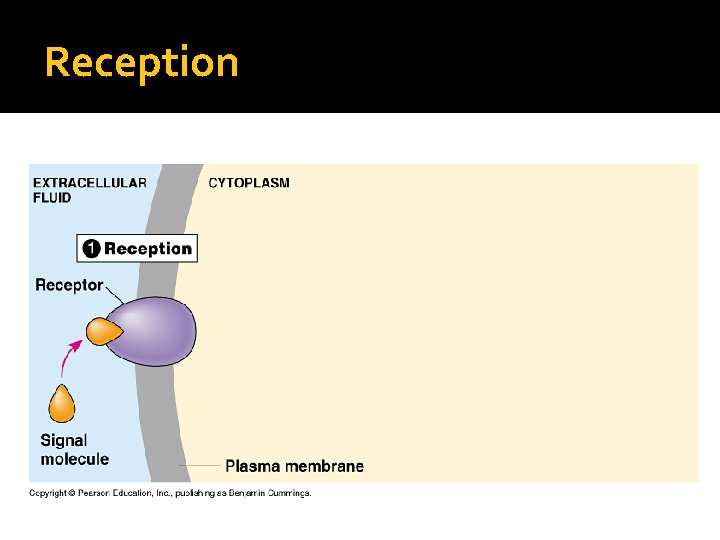
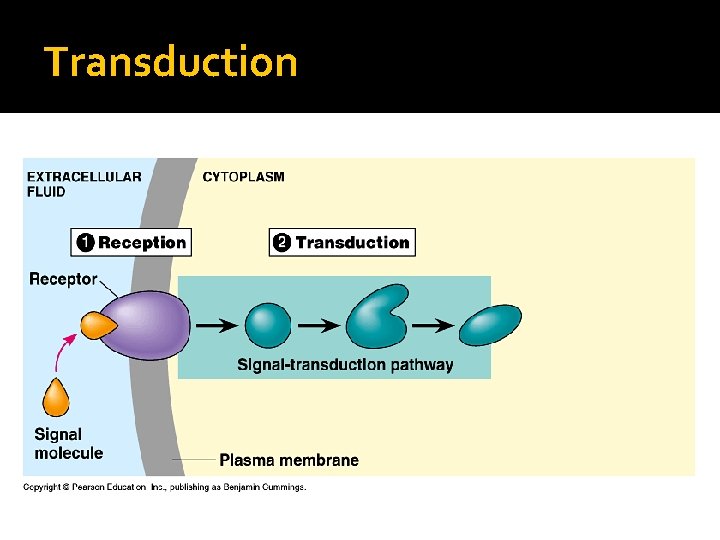
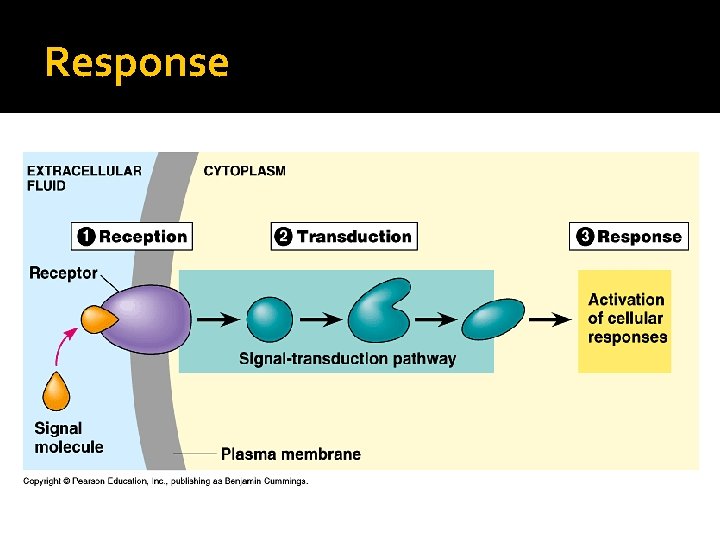
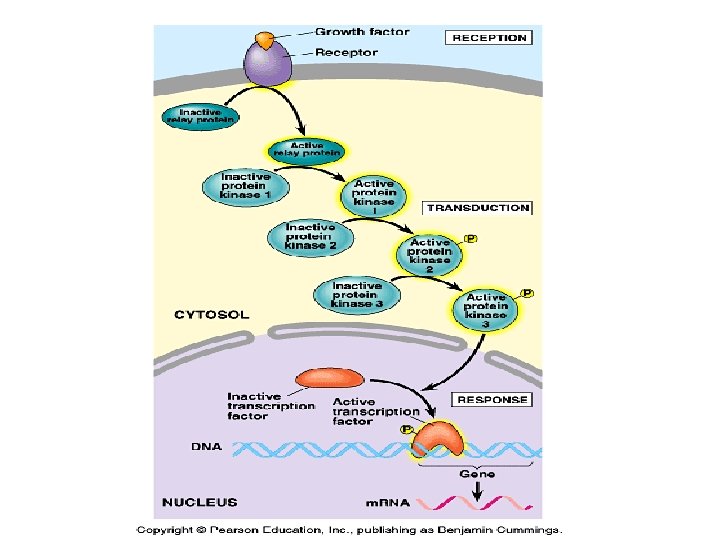
Stages of C. S. 1. Reception - receiving the signal. 2. Transduction - passing on the signal. 3. Response - cellular changes because of the signal.
Reception
Transduction
Response
Reception �The target cell’s detection of a signal coming from outside the cell. �May occur by: Direct Contact Through signal molecules
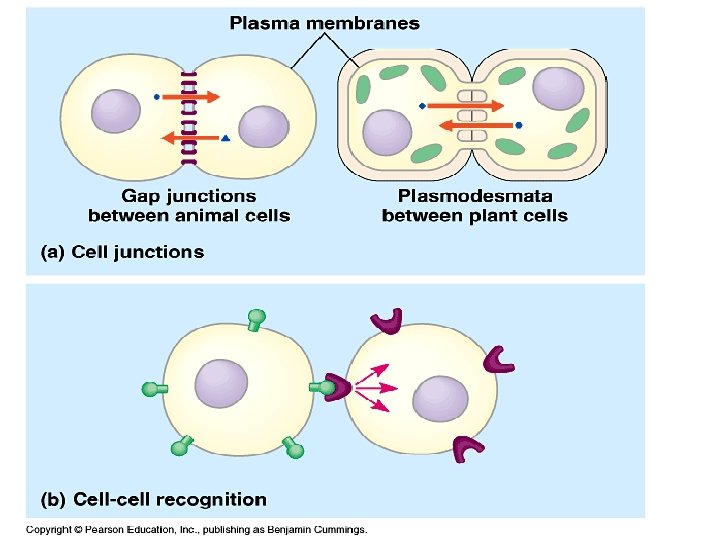
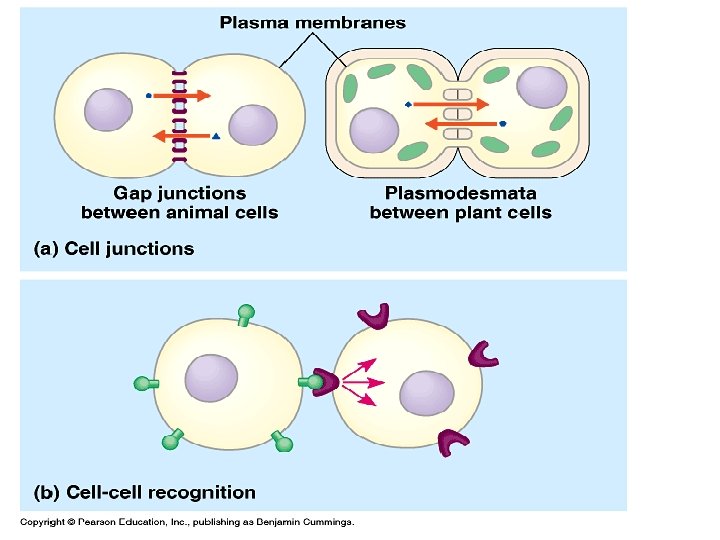
Direct Contact �When molecules can flow directly from cell to cell without crossing membranes. �Plants - plasmodesmata �Animals - gap junctions
Direct Contact �May also occur by cell surface molecules that project from the surface and “touch” another cell.
Signal Molecules �The actual chemical signal that travels from cell to cell. �Often water soluble. �Usually too large to travel through membranes. �Double reason why they can’t cross cell membranes.
Signal Molecules �Behave as “ligands”: binds to a larger one. a smaller molecule that
Receptor Molecules �Usually made of protein. �Change shape when bind to a signal molecule. �Transmits information from the exterior to the interior of a cell.
Receptor Mechanisms 1. G-Protein linked 2. Tyrosine-Kinase 3. Ion channels 4. Intracellular
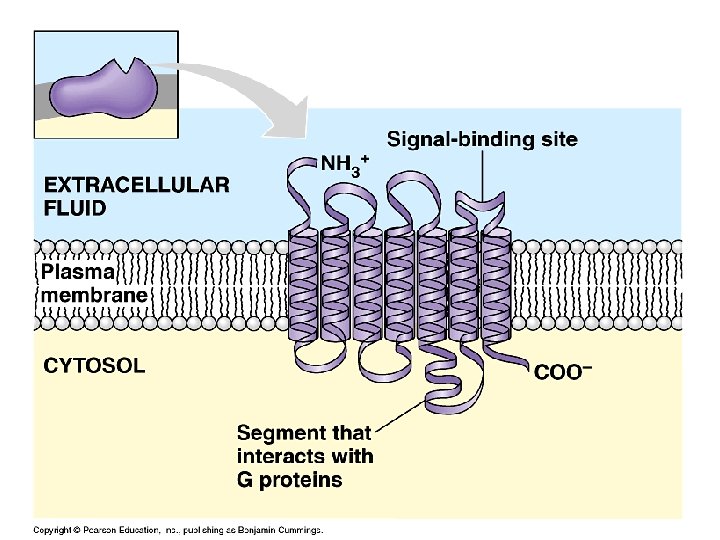
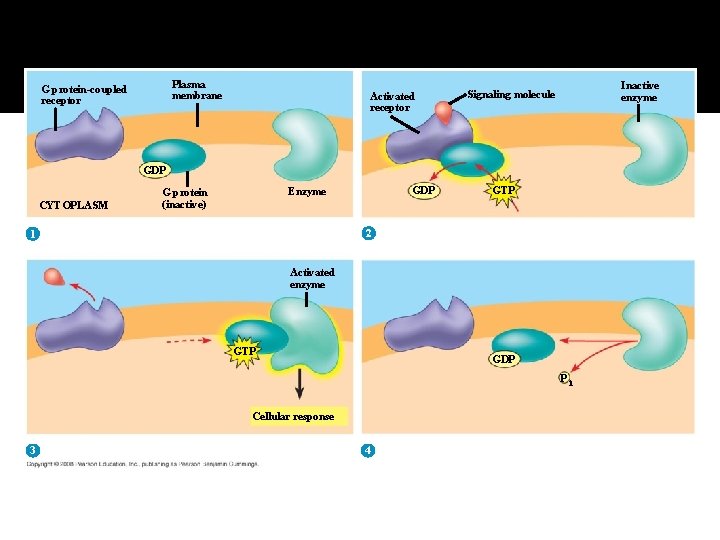
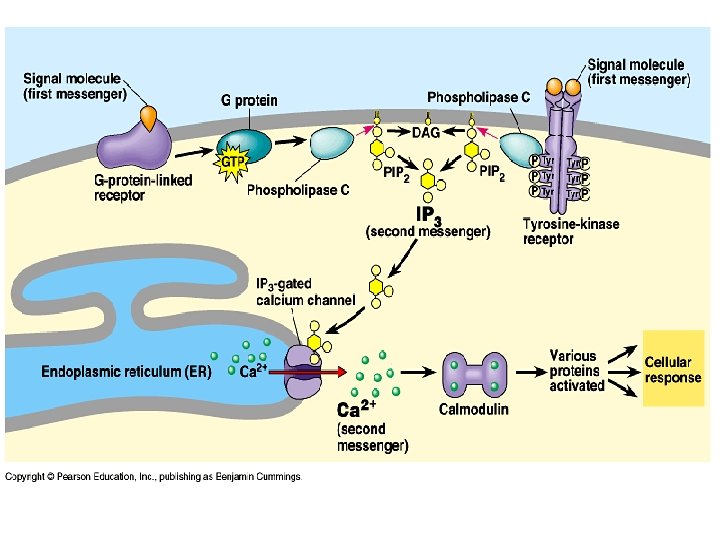
G-protein linked �Plasma membrane receptor. �Works with “G-protein”, an intracellular protein with GDP or GTP.
G-protein �GDP and GTP acts as a switch. �If GDP - inactive �If GTP - active
G-protein �When active (GTP), the protein binds to another protein (enzyme) and alters its activation. �Active state is only temporary.
Fig. 11 -7 b Plasma membrane G protein-coupled receptor Activated receptor Inactive enzyme Signaling molecule GDP CYTOPLASM GDP Enzyme G protein (inactive) GTP 2 1 Activated enzyme GTP GDP Pi Cellular response 3 4
G-protein linked receptors �Very widespread and diverse in functions. �Ex - vision, smell, blood vessel development.
G-protein linked receptors �Many diseases work by affecting g-protein linked receptors. �Ex - whooping cough, botulism, cholera, some cancers
G-protein linked receptors �Up to 60% of all medicines exert their effects through G-protein linked receptors.
Tyrosine-Kinase Receptors �Extends through the cell membrane. �Intracellular part functions as a “kinase”, which transfers P from ATP to tyrosine on a substrate protein.
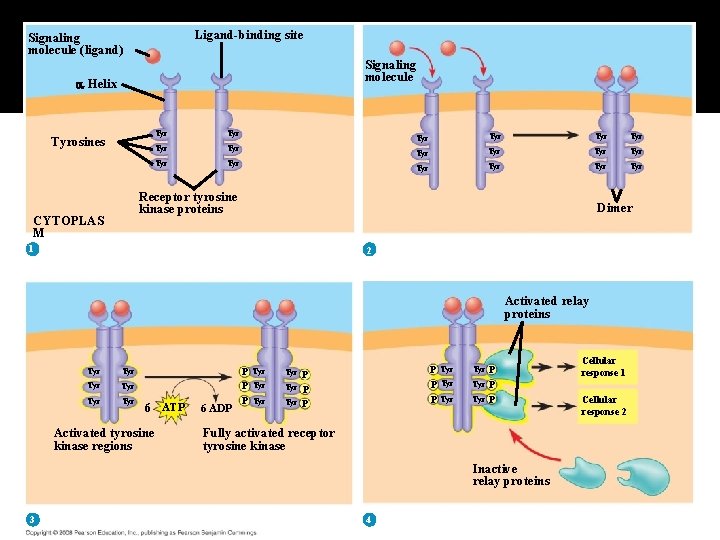
Mechanism 1. Ligand binding - causes two receptor molecules to aggregate. 2. Activation of Tyrosine-kinase parts in cytoplasm. 3. Phosphorylation of tyrosines by ATP. 4. After phophorylation, receptor protein fully activated and is recognized by specific relay proteins in cell
Fig. 11 -7 c Ligand-binding site Signaling molecule (ligand) Signaling molecule Helix Tyrosines Tyr Tyr Tyr Tyr Tyr Receptor tyrosine kinase proteins CYTOPLAS M Dimer 1 2 Activated relay proteins Tyr Tyr P P Tyr Tyr 6 ATP Activated tyrosine kinase regions 6 ADP Tyr P P P Tyr Tyr P P Fully activated receptor tyrosine kinase Inactive relay proteins 3 4 Cellular response 1 Cellular response 2
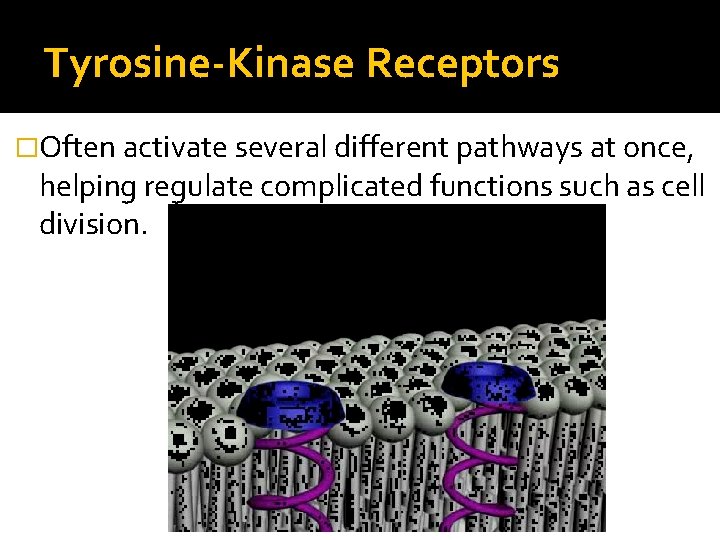
Tyrosine-Kinase Receptors �Often activate several different pathways at once, helping regulate complicated functions such as cell division.
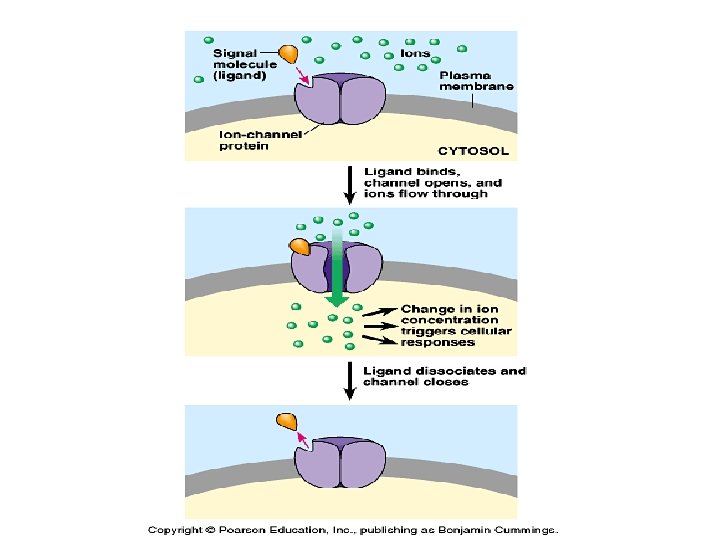
Ion-channel Receptors �Protein pores in the membrane that open or close in response to chemical signals. �Allow or block the flow of ions such as Na+ or Ca 2+.
Ion-channel Receptors �Activated by a ligand on the extracellular side. �Causes a change in ion concentration inside the cell. �Ex - nervous system signals.
Intracellular Proteins �Become activated & cause the cellular response.
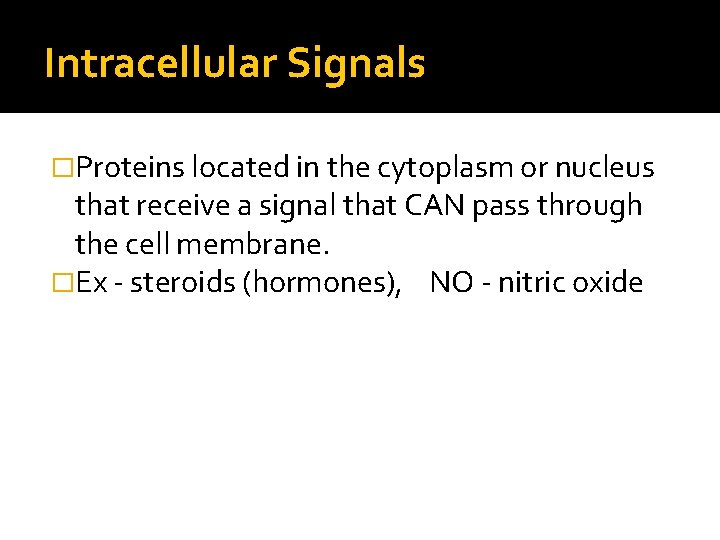
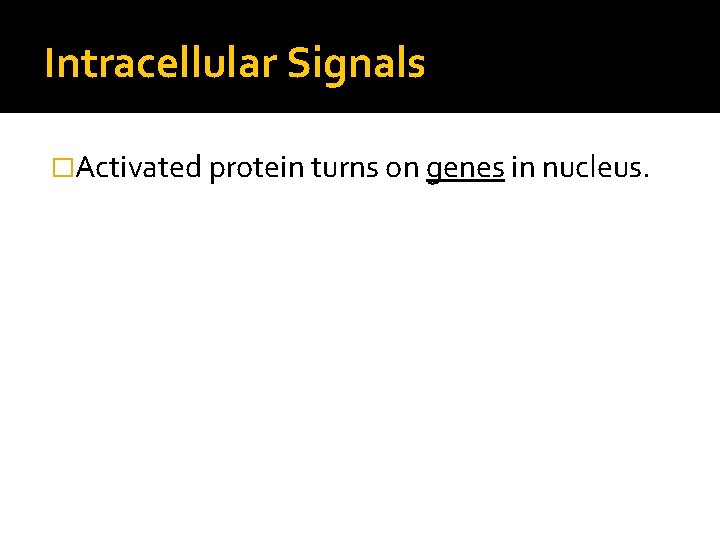
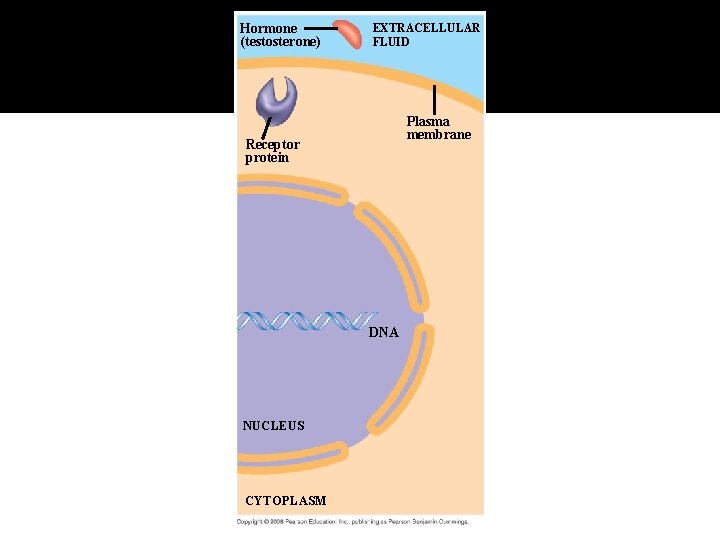
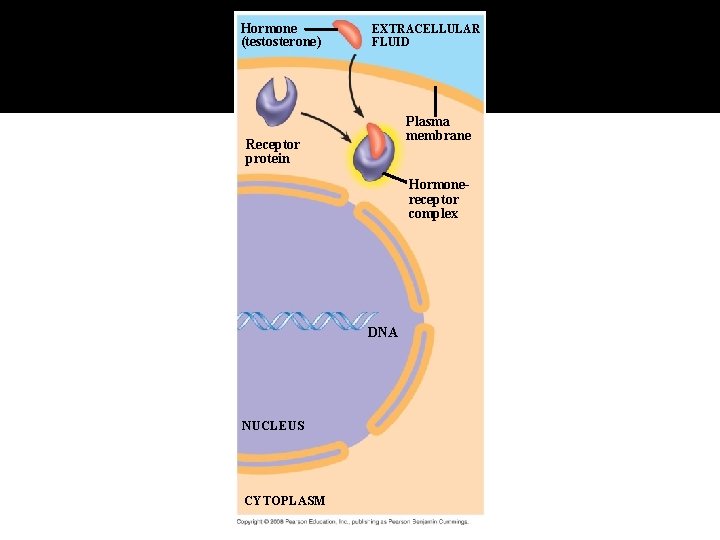
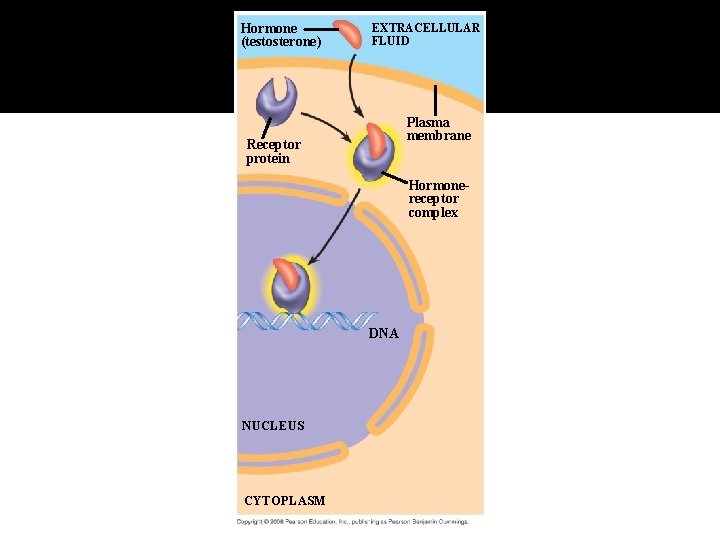
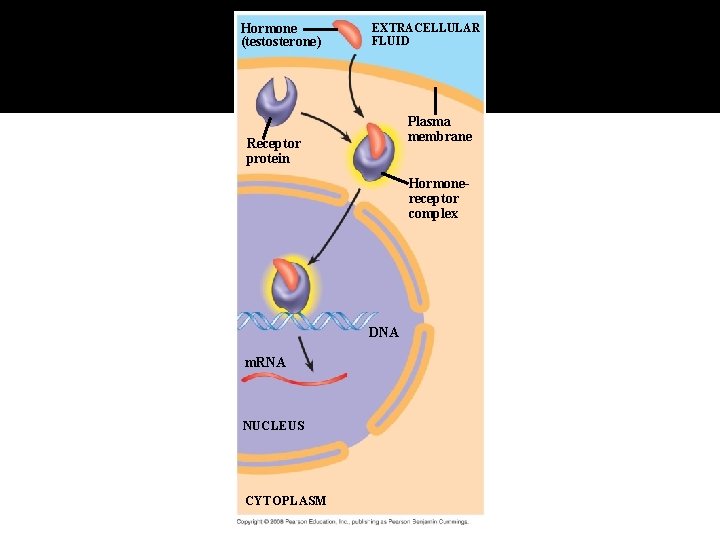
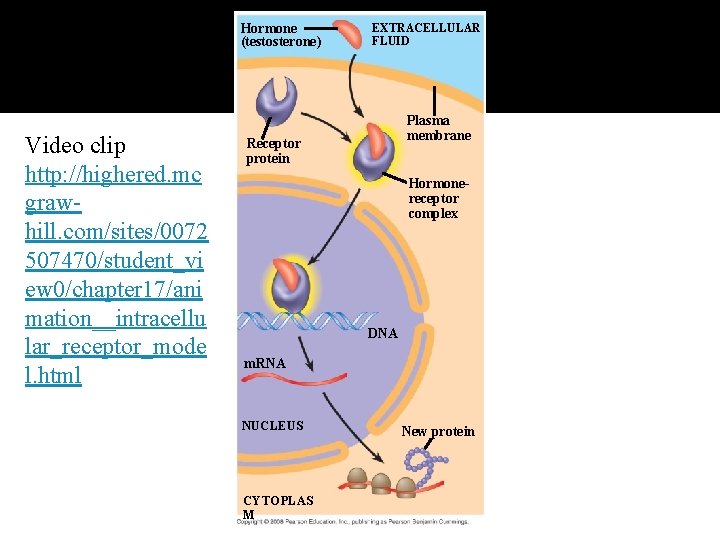
Intracellular Signals �Proteins located in the cytoplasm or nucleus that receive a signal that CAN pass through the cell membrane. �Ex - steroids (hormones), NO - nitric oxide
Intracellular Signals �Activated protein turns on genes in nucleus.
Fig. 11 -8 -1 Hormone (testosterone) EXTRACELLULAR FLUID Plasma membrane Receptor protein DNA NUCLEUS CYTOPLASM
Fig. 11 -8 -2 Hormone (testosterone) EXTRACELLULAR FLUID Plasma membrane Receptor protein Hormonereceptor complex DNA NUCLEUS CYTOPLASM
Fig. 11 -8 -3 Hormone (testosterone) EXTRACELLULAR FLUID Plasma membrane Receptor protein Hormonereceptor complex DNA NUCLEUS CYTOPLASM
Fig. 11 -8 -4 Hormone (testosterone) EXTRACELLULAR FLUID Plasma membrane Receptor protein Hormonereceptor complex DNA m. RNA NUCLEUS CYTOPLASM
Fig. 11 -8 -5 Hormone (testosterone) Video clip http: //highered. mc grawhill. com/sites/0072 507470/student_vi ew 0/chapter 17/ani mation__intracellu lar_receptor_mode l. html EXTRACELLULAR FLUID Plasma membrane Receptor protein Hormonereceptor complex DNA m. RNA NUCLEUS CYTOPLAS M New protein
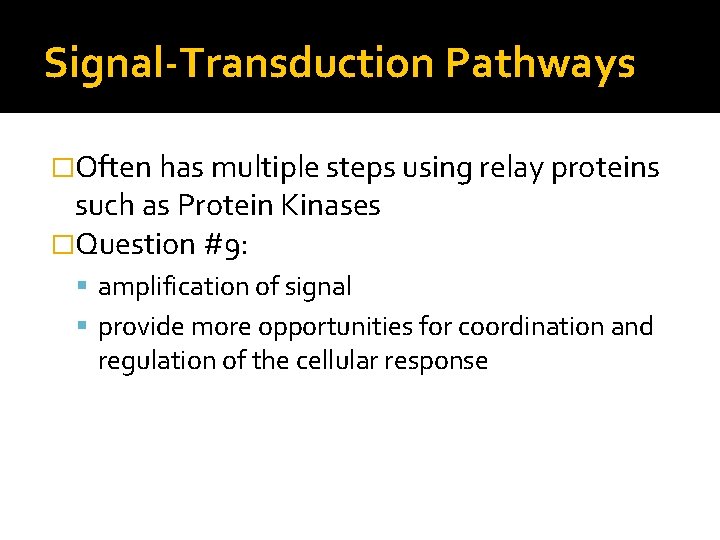
Signal-Transduction Pathways �Often has multiple steps using relay proteins such as Protein Kinases �Question #9: amplification of signal provide more opportunities for coordination and regulation of the cellular response
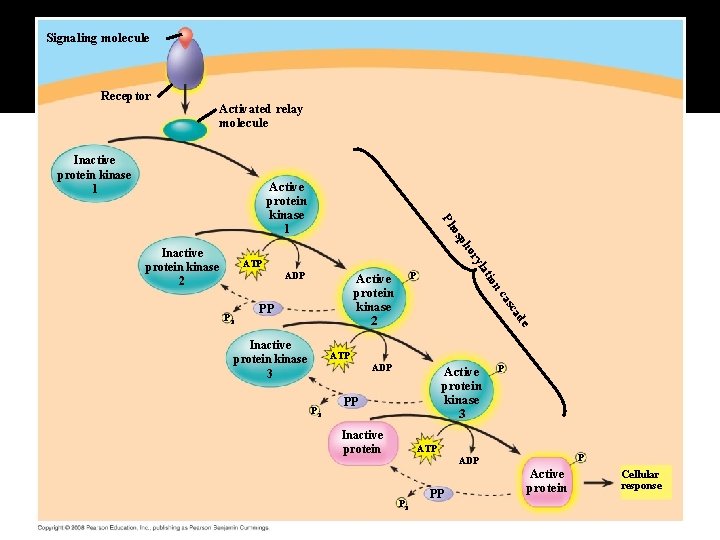
Protein Phosphorylation �Protein kinases transfer phosphates from ATP to protein… phosphorylation (this activates the protein) �Protein phosphatases remove the phosphates from proteins… dephosphorylation �Acts as a molecular switch
Fig. 11 -9 Signaling molecule Receptor Activated relay molecule Inactive protein kinase 1 Inactive protein kinase 2 ry ho p os Ph Active protein kinase 1 de Inactive protein kinase 3 sca PP ca Pi P Active protein kinase 2 ion ADP lat ATP ADP Pi Active protein kinase 3 PP Inactive protein P ATP P ADP Pi PP Active protein Cellular response
Amplification �Protein Kinases often work in a cascade with each being able to activate several molecules. �Result - from one signal, many molecules can be activated.
Secondary Messengers �Small water soluble, non-protein molecules or ions that pass on a signal. �Spread rapidly by diffusion. �Activates relay proteins. �Examples - c. AMP, Ca 2+
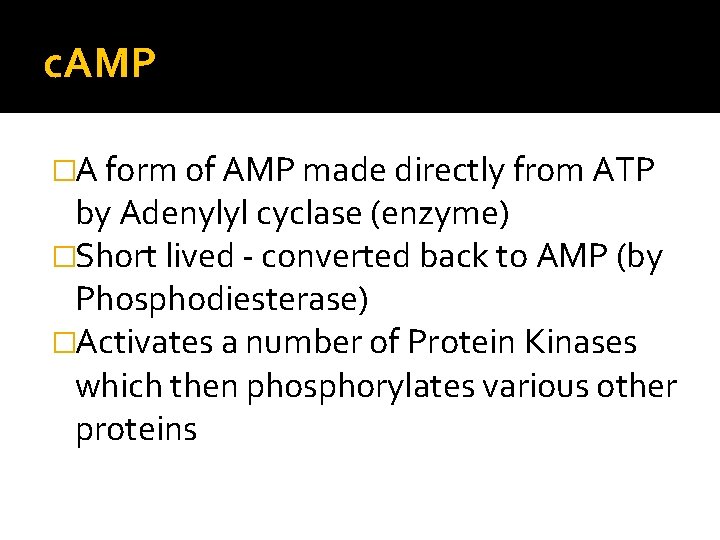
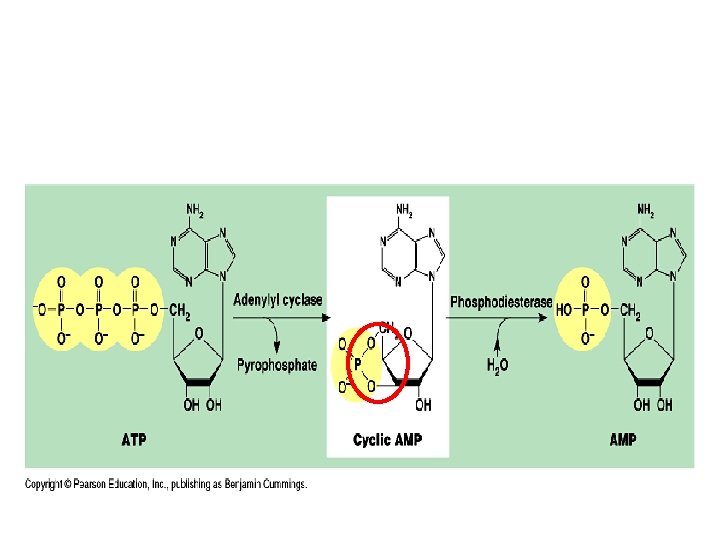
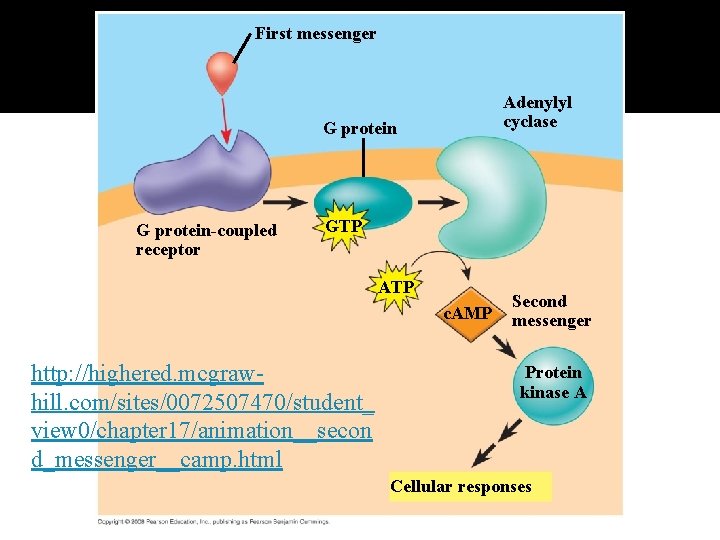
c. AMP �A form of AMP made directly from ATP by Adenylyl cyclase (enzyme) �Short lived - converted back to AMP (by Phosphodiesterase) �Activates a number of Protein Kinases which then phosphorylates various other proteins
Fig. 11 -11 First messenger Adenylyl cyclase G protein-coupled receptor GTP ATP c. AMP http: //highered. mcgrawhill. com/sites/0072507470/student_ view 0/chapter 17/animation__secon d_messenger__camp. html Second messenger Protein kinase A Cellular responses
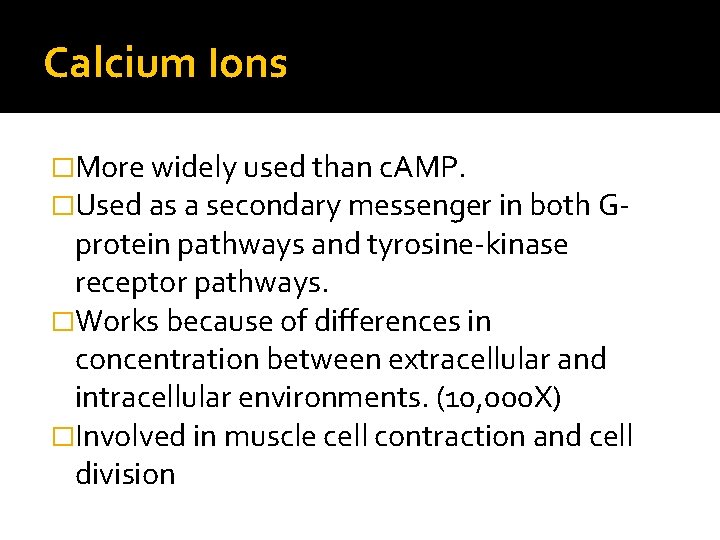
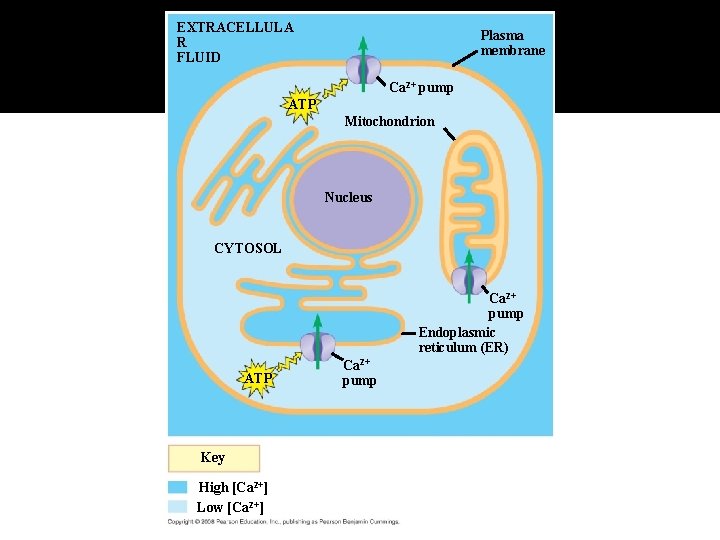
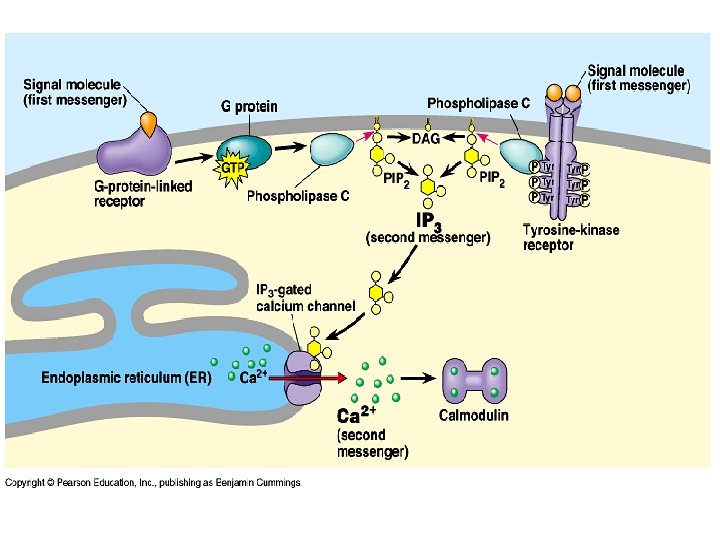
Calcium Ions �More widely used than c. AMP. �Used as a secondary messenger in both G- protein pathways and tyrosine-kinase receptor pathways. �Works because of differences in concentration between extracellular and intracellular environments. (10, 000 X) �Involved in muscle cell contraction and cell division
Fig. 11 -12 EXTRACELLULA R FLUID Plasma membrane Ca 2+ pump ATP Mitochondrion Nucleus CYTOSOL Ca 2+ pump Endoplasmic reticulum (ER) ATP Key High [Ca 2+] Low [Ca 2+] Ca 2+ pump
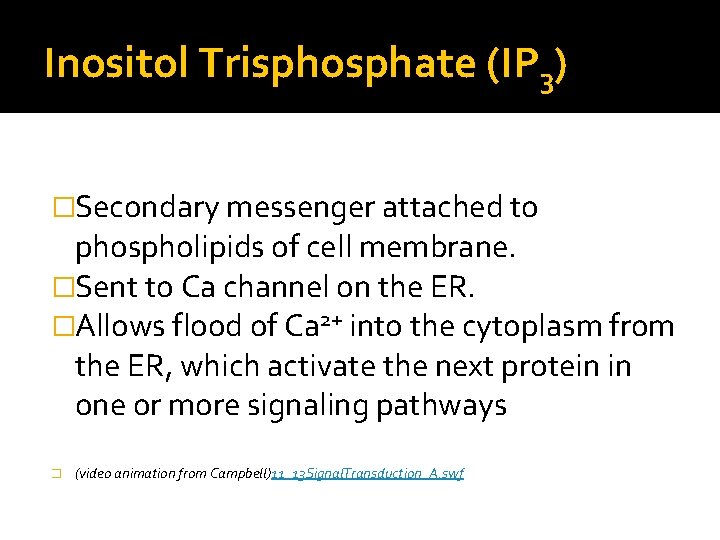
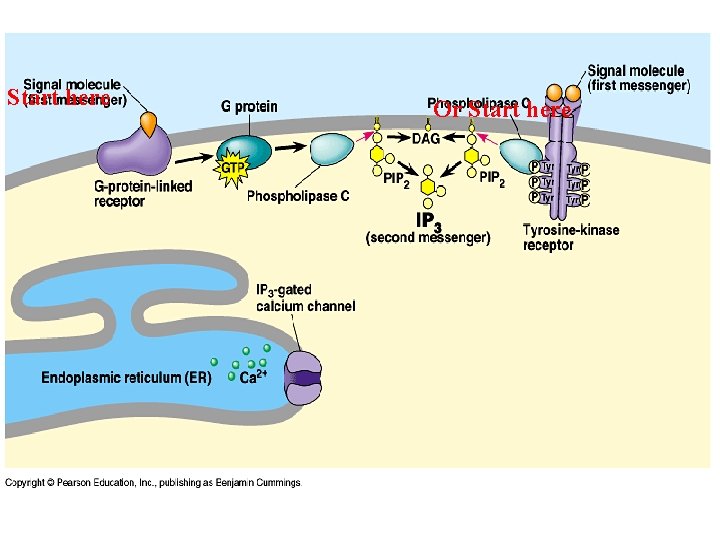
Inositol Trisphosphate (IP 3) �Secondary messenger attached to phospholipids of cell membrane. �Sent to Ca channel on the ER. �Allows flood of Ca 2+ into the cytoplasm from the ER, which activate the next protein in one or more signaling pathways � (video animation from Campbell)11_13 Signal. Transduction_A. swf
Start here Or Start here
Cellular Responses �#18 �Cytoplasmic Regulation �Transcription Regulation in the nucleus (DNA --> RNA).
Cytoplasmic Regulation �Rearrangement of the cytoskeleton. �Opening or closing of an ion channel. �Alteration of cell metabolism.
Transcription Regulation (Nucleus) �Activating protein synthesis for new enzymes. �Transcription control factors are often activated by a Protein Kinase.
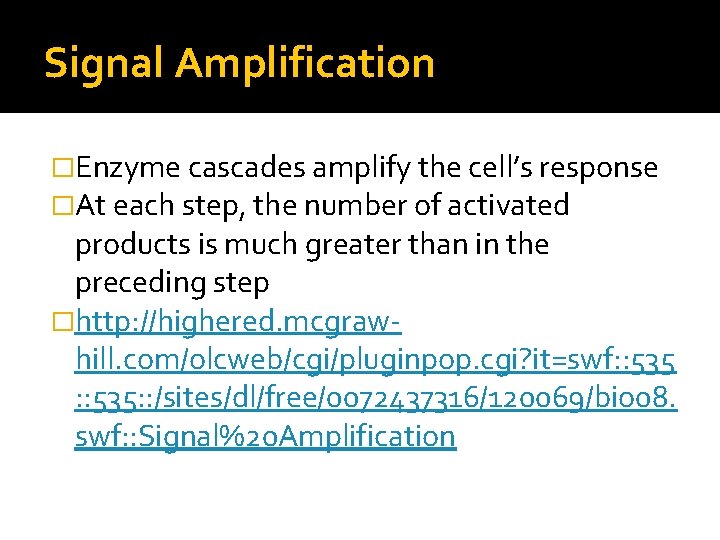
Signal Amplification �Enzyme cascades amplify the cell’s response �At each step, the number of activated products is much greater than in the preceding step �http: //highered. mcgrawhill. com/olcweb/cgi/pluginpop. cgi? it=swf: : 535: : /sites/dl/free/0072437316/120069/bio 08. swf: : Signal%20 Amplification
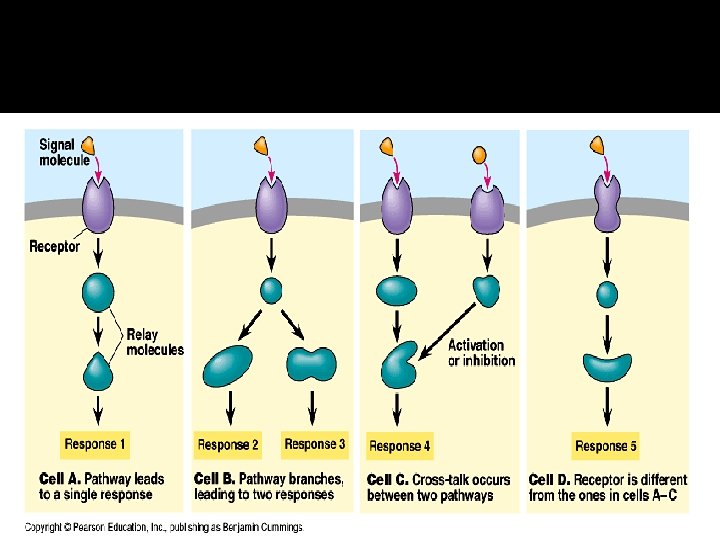
Specificity of Cell Signaling �Different kinds of cells have different collections of proteins (allows cells to detect and respond to different signals) �Same signal can have different effects in cells with different proteins and pathways �Pathway branching and “cross-talk” further help the cell coordinate incoming signals
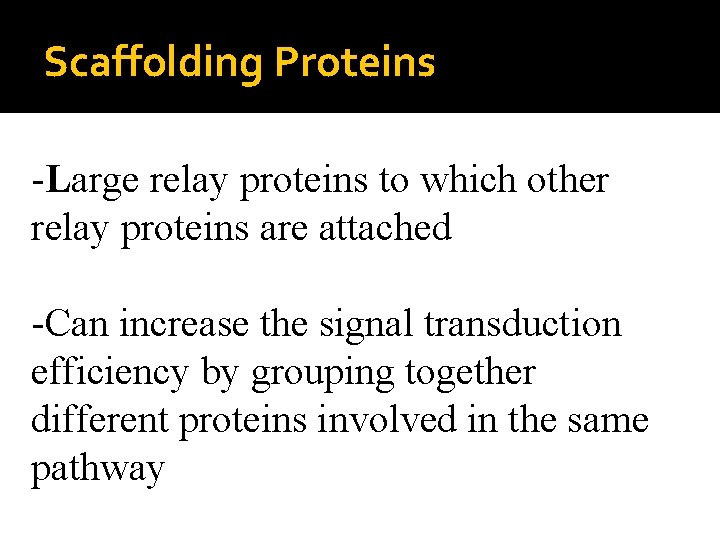
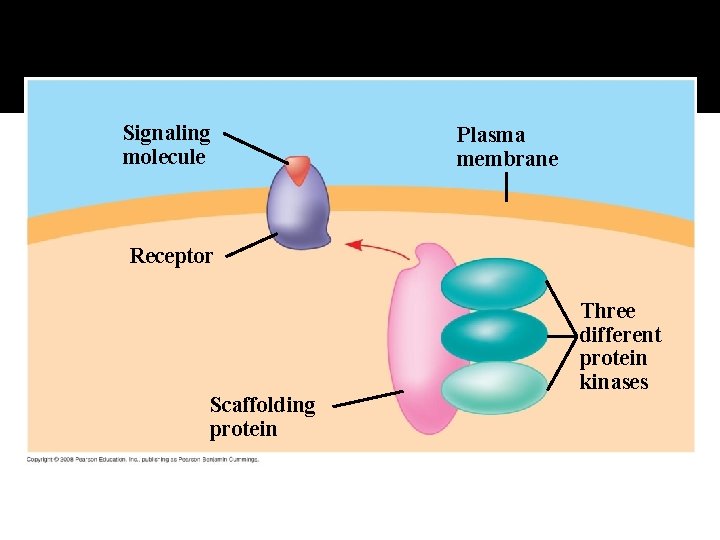
Scaffolding Proteins -Large relay proteins to which other relay proteins are attached -Can increase the signal transduction efficiency by grouping together different proteins involved in the same pathway
Fig. 11 -18 Signaling molecule Plasma membrane Receptor Scaffolding protein Three different protein kinases
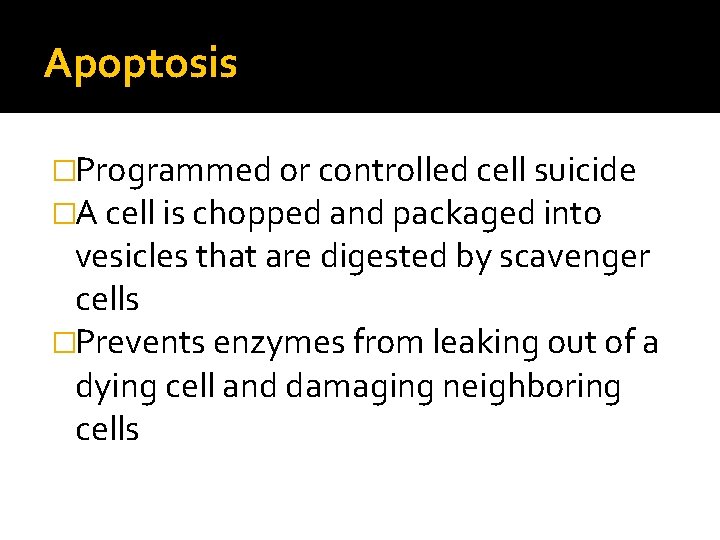
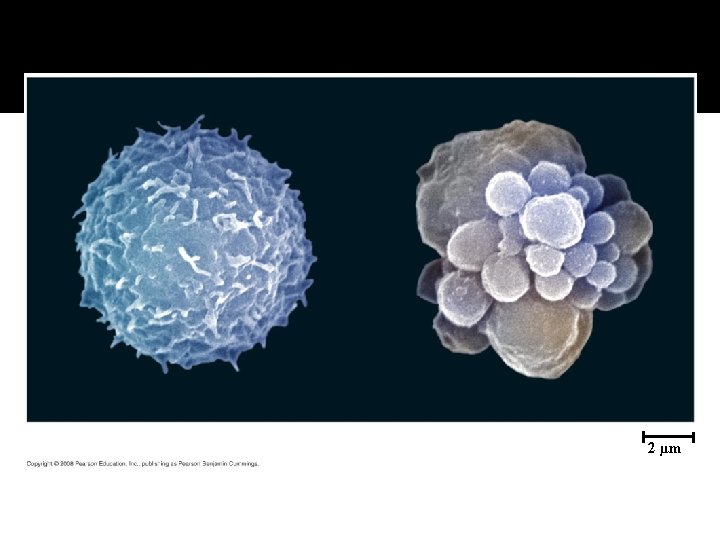
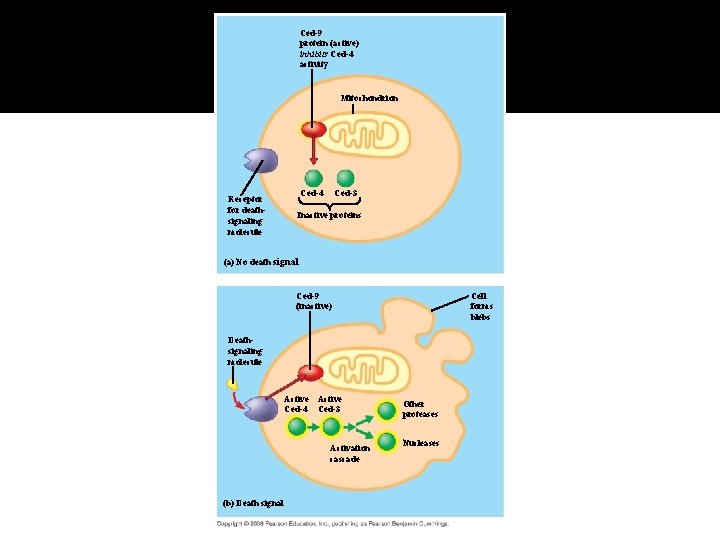
Apoptosis �Programmed or controlled cell suicide �A cell is chopped and packaged into vesicles that are digested by scavenger cells �Prevents enzymes from leaking out of a dying cell and damaging neighboring cells
Fig. 11 -19 2 µm
Fig. 11 -20 Ced-9 protein (active) inhibits Ced-4 activity Mitochondrion Receptor for deathsignaling molecule Ced-4 Ced-3 Inactive proteins (a) No death signal Ced-9 (inactive) Cell forms blebs Deathsignaling molecule Active Ced-4 Active Ced-3 Activation cascade (b) Death signal Other proteases Nucleases
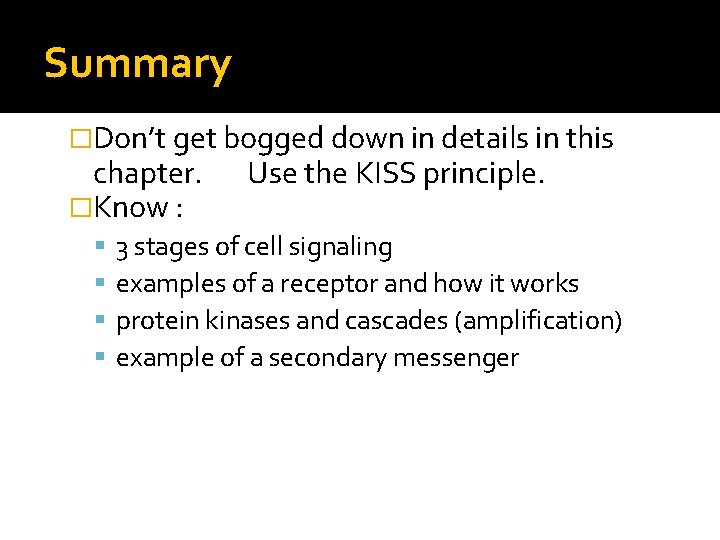
Summary �Don’t get bogged down in details in this chapter. �Know : Use the KISS principle. 3 stages of cell signaling examples of a receptor and how it works protein kinases and cascades (amplification) example of a secondary messenger