
CHAPTER 11 Bl 168 LIFE ROLES DIFFERENT LIFE
CHAPTER 11: Bl 168 - LIFE ROLES
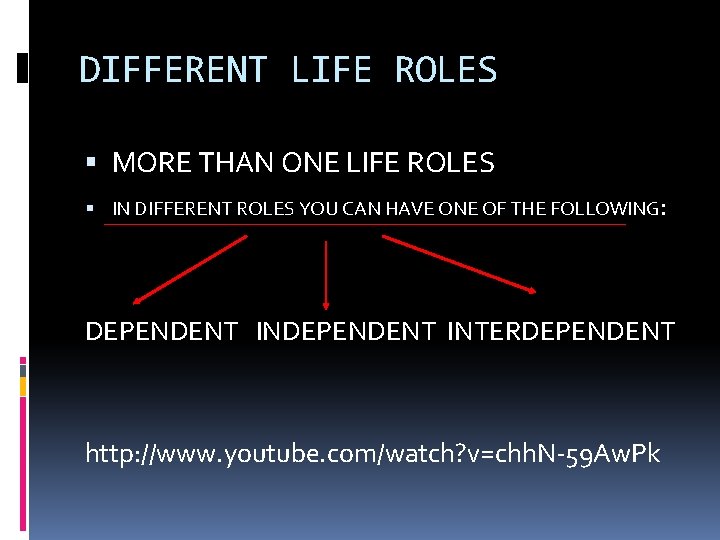
DIFFERENT LIFE ROLES MORE THAN ONE LIFE ROLES IN DIFFERENT ROLES YOU CAN HAVE ONE OF THE FOLLOWING: DEPENDENT INTERDEPENDENT http: //www. youtube. com/watch? v=chh. N-59 Aw. Pk
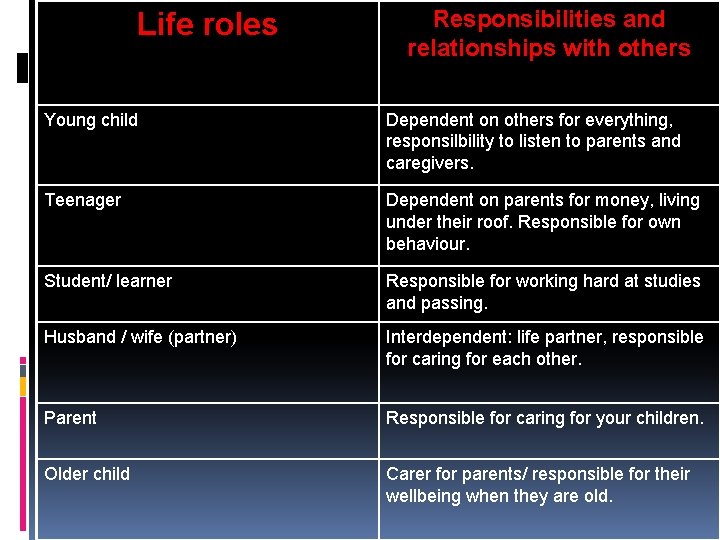
Life roles Responsibilities and relationships with others Young child Dependent on others for everything, responsilbility to listen to parents and caregivers. Teenager Dependent on parents for money, living under their roof. Responsible for own behaviour. Student/ learner Responsible for working hard at studies and passing. Husband / wife (partner) Interdependent: life partner, responsible for caring for each other. Parent Responsible for caring for your children. Older child Carer for parents/ responsible for their wellbeing when they are old.
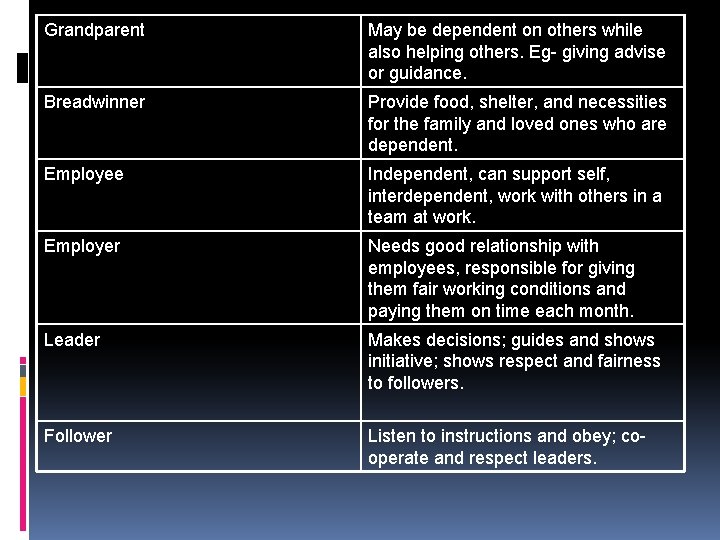
Grandparent May be dependent on others while also helping others. Eg- giving advise or guidance. Breadwinner Provide food, shelter, and necessities for the family and loved ones who are dependent. Employee Independent, can support self, interdependent, work with others in a team at work. Employer Needs good relationship with employees, responsible for giving them fair working conditions and paying them on time each month. Leader Makes decisions; guides and shows initiative; shows respect and fairness to followers. Follower Listen to instructions and obey; cooperate and respect leaders.

1. 2. Changing roles Roles change, sometimes you take on new roles. Sometimes the nature and relationships of your current or present roles change. Some roles are more important than others. Your role and relationship with your parents change as you grow up. As a small child you think your parents are wonderful and know everything, as a teenager you question your parents on everything and think they know nothing. As a grownup you realise that your parents actually do know alot. You then become a parent yourself and this role becomes more important than your role as child. OR when you get a girlfriend, it may happen that your role and relationship with your friends gets neglected.
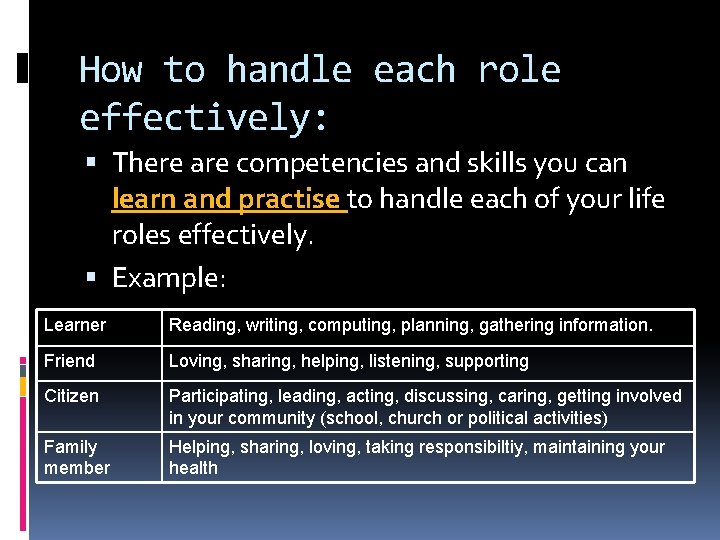
How to handle each role effectively: There are competencies and skills you can learn and practise to handle each of your life roles effectively. Example: Learner Reading, writing, computing, planning, gathering information. Friend Loving, sharing, helping, listening, supporting Citizen Participating, leading, acting, discussing, caring, getting involved in your community (school, church or political activities) Family member Helping, sharing, loving, taking responsibiltiy, maintaining your health
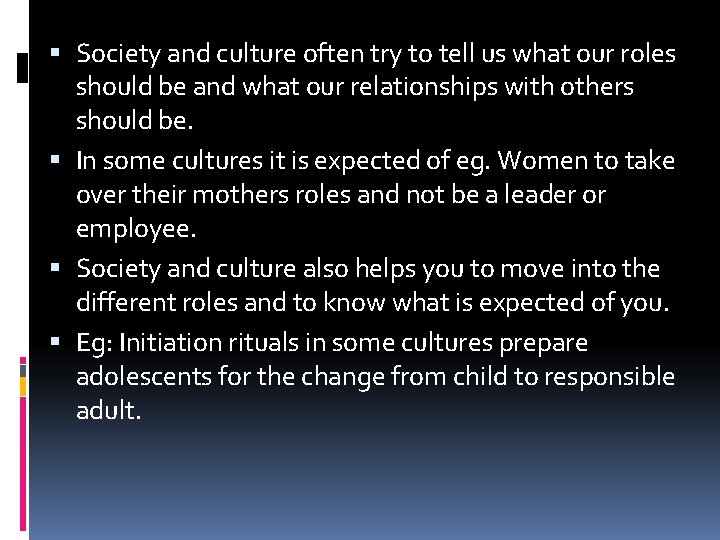
Society and culture often try to tell us what our roles should be and what our relationships with others should be. In some cultures it is expected of eg. Women to take over their mothers roles and not be a leader or employee. Society and culture also helps you to move into the different roles and to know what is expected of you. Eg: Initiation rituals in some cultures prepare adolescents for the change from child to responsible adult.
- Slides: 7