
Chapter 11 BCell Activation and Differentiation Dr Capers
Chapter 11 B-Cell Activation and Differentiation Dr. Capers IMMUNOLOGY
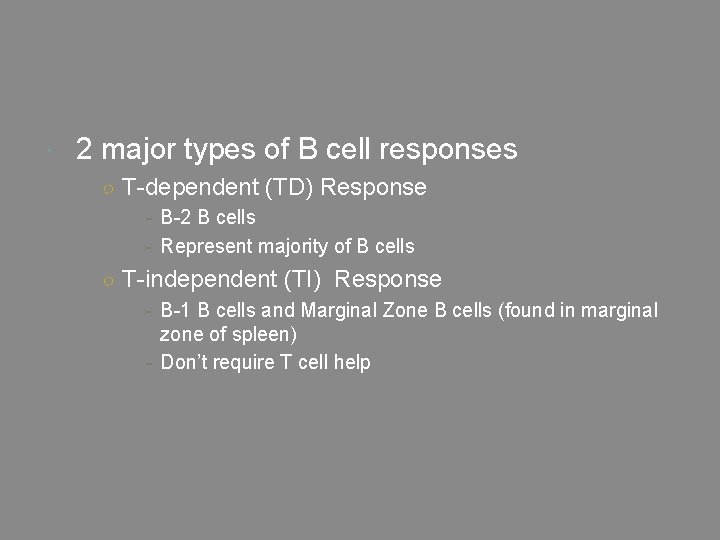
2 major types of B cell responses ○ T-dependent (TD) Response - B-2 B cells - Represent majority of B cells ○ T-independent (TI) Response - B-1 B cells and Marginal Zone B cells (found in marginal zone of spleen) - Don’t require T cell help
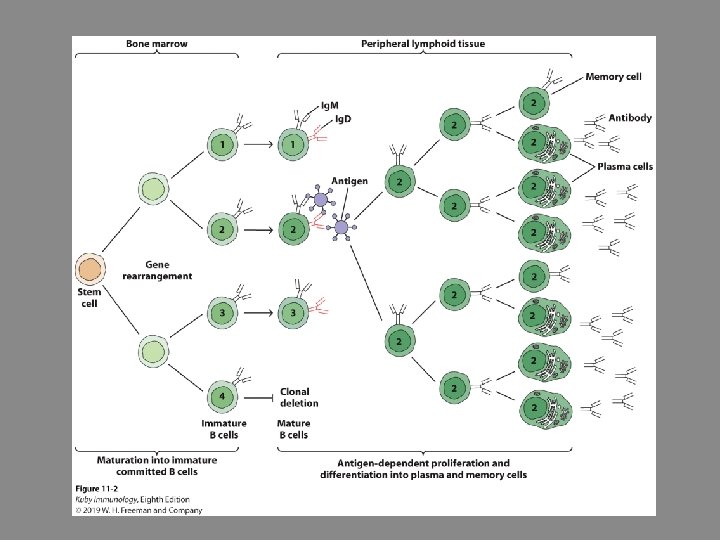
B-2 B cell activation – T cell dependent B cell encounters specific antigen B cell presents to T helper cell Co-stimulatory molecules are needed Cytokines are released by T cell for full B cell activation Proliferation, some of the B cells become plasma cells Some of the B cell clones move to germinal centers of lymph nodes, somatic hypermutation can occur Class switching occurs
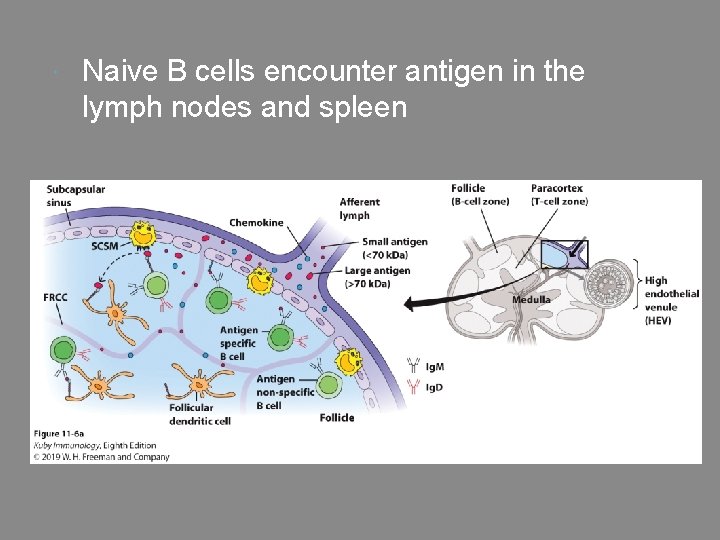
Naive B cells encounter antigen in the lymph nodes and spleen
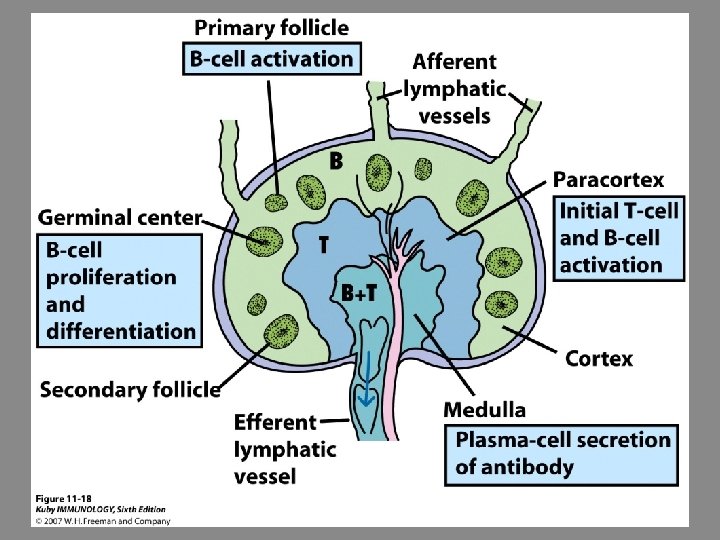
Germinal centers arise within 7 -10 days after initial exposure to thymus-dependent antigen in lymph node ○ 3 events in germinal centers Somatic hypermutation – affinity maturation for the antigen - Somatic hypermutation only occurs in germinal centers and only after T-dependent antigen stimulation Class switching Formation of plasma and memory B cells
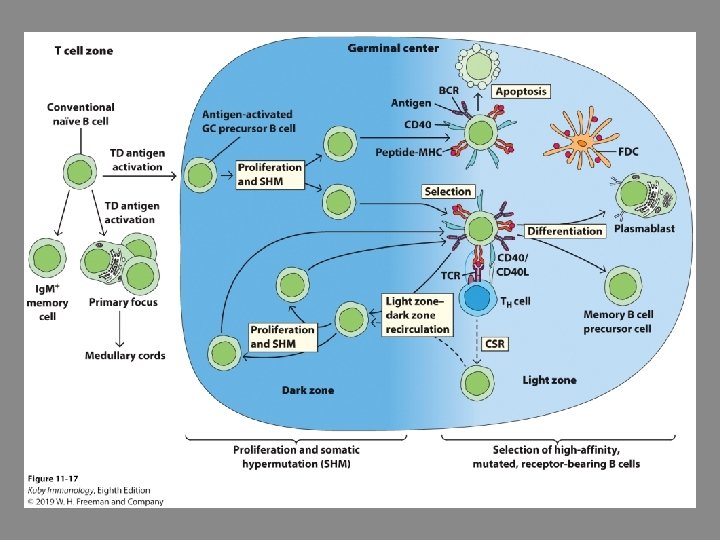
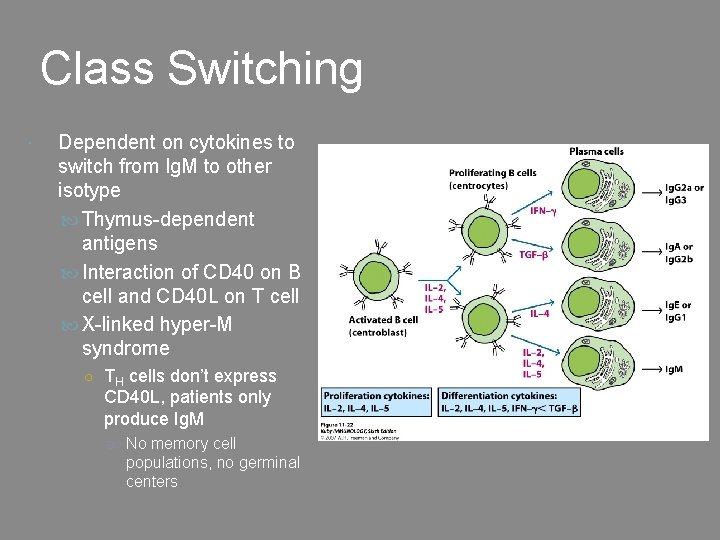
Class Switching Dependent on cytokines to switch from Ig. M to other isotype Thymus-dependent antigens Interaction of CD 40 on B cell and CD 40 L on T cell X-linked hyper-M syndrome ○ TH cells don’t express CD 40 L, patients only produce Ig. M No memory cell populations, no germinal centers
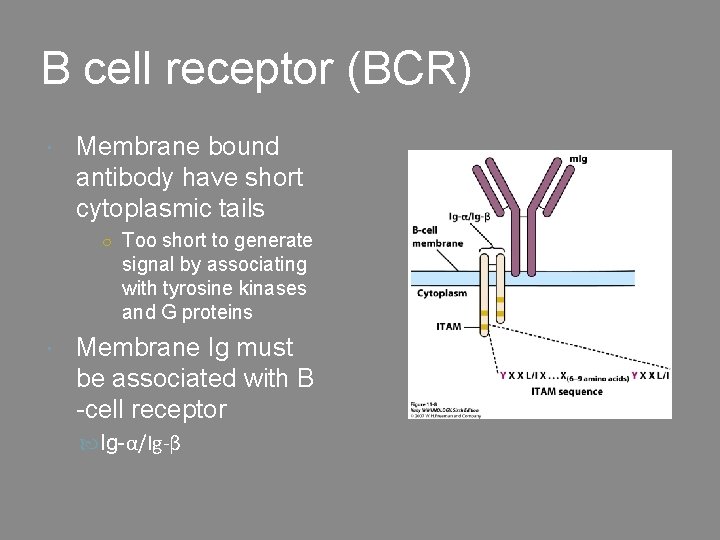
B cell receptor (BCR) Membrane bound antibody have short cytoplasmic tails ○ Too short to generate signal by associating with tyrosine kinases and G proteins Membrane Ig must be associated with B -cell receptor Ig-α/Ig-β
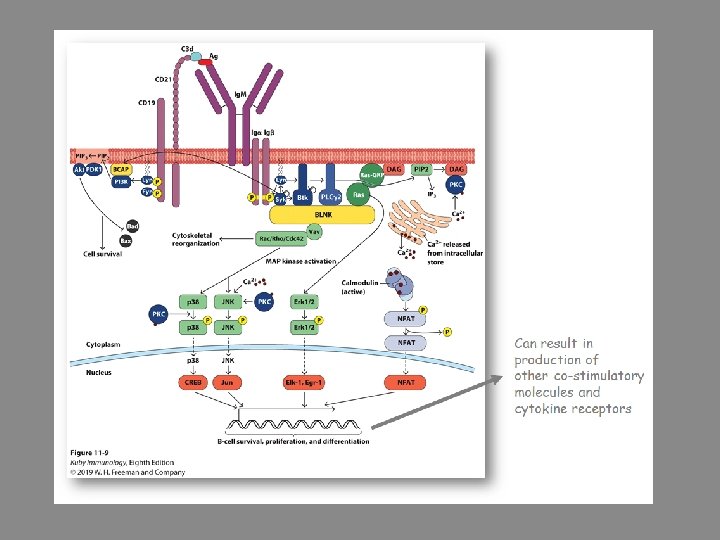
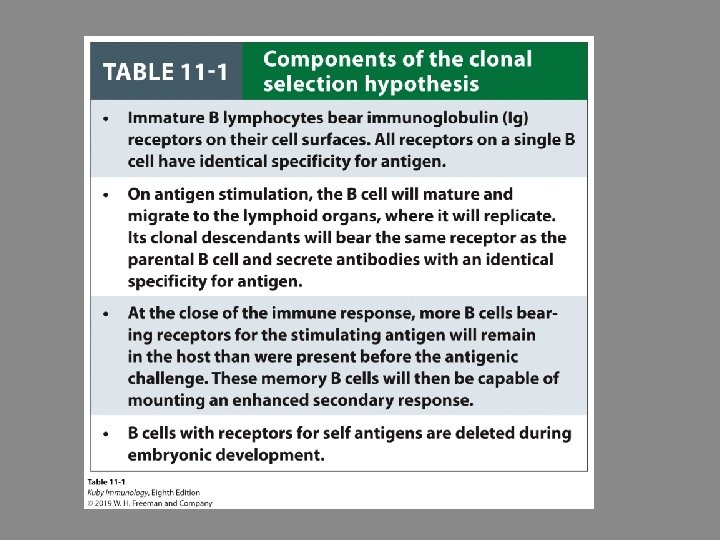
Following activation by antigen in the presence of T cells, B-2 B cells differentiate into ○ Plasma cells ○ Memory cells ○ Activated germinal center B cells (secrete high- affinity antibody)
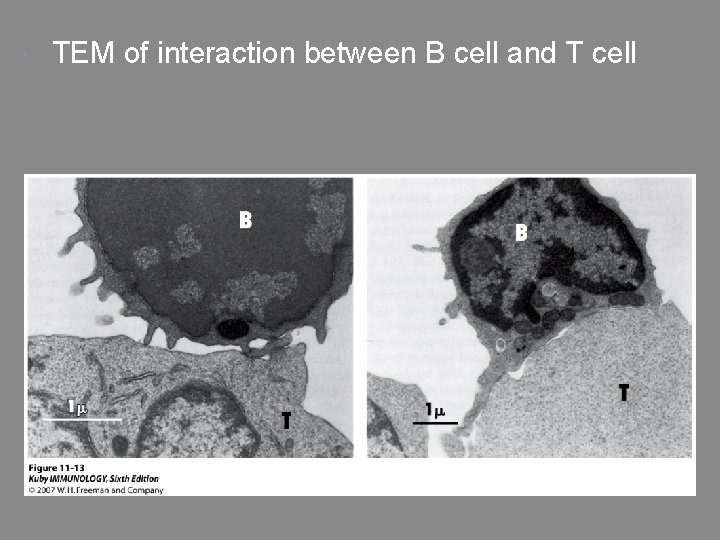
TEM of interaction between B cell and T cell
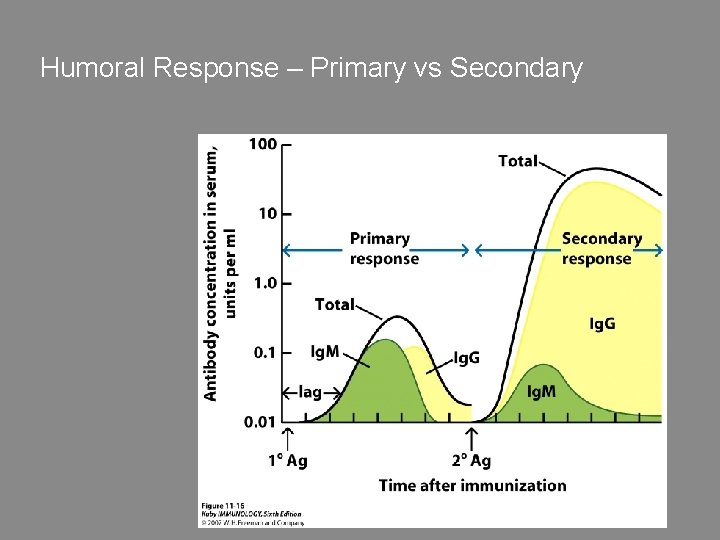
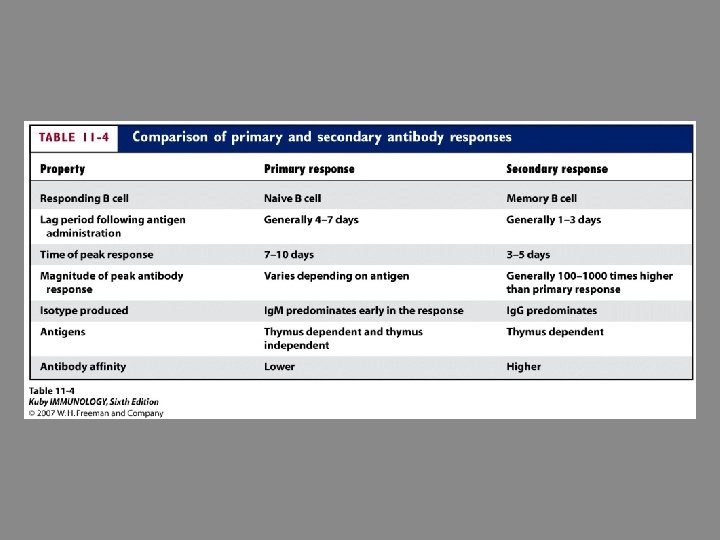
Humoral Response – Primary vs Secondary
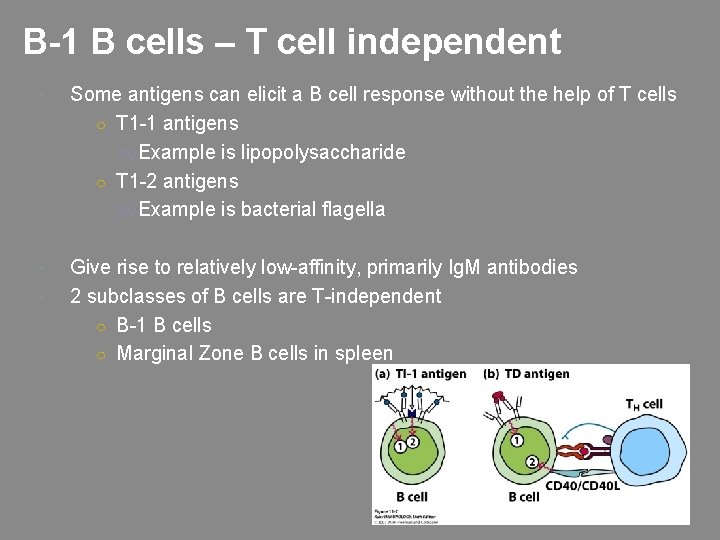
B-1 B cells – T cell independent Some antigens can elicit a B cell response without the help of T cells ○ T 1 -1 antigens Example is lipopolysaccharide ○ T 1 -2 antigens Example is bacterial flagella Give rise to relatively low-affinity, primarily Ig. M antibodies 2 subclasses of B cells are T-independent ○ B-1 B cells ○ Marginal Zone B cells in spleen
T-independent B cells do not produce immunological memory
Regulation Humoral and cell-mediated branches must be heavily regulated Cytokines play important role Antigenic competition Previous encounter with antigen can render animal tolerant or may result in formation of memory cells Presence of antibody can suppress response to antigen Some vaccines are given to babies after maternal Ig. G (that was transferred across placenta) has left system Vaccination before this will prevent proper response and development of long-lasting memory cells
- Slides: 19