
Chapter 11 Audit of Acquisition Cycle and Inventory
- Slides: 11
Chapter 11 Audit of Acquisition Cycle and Inventory
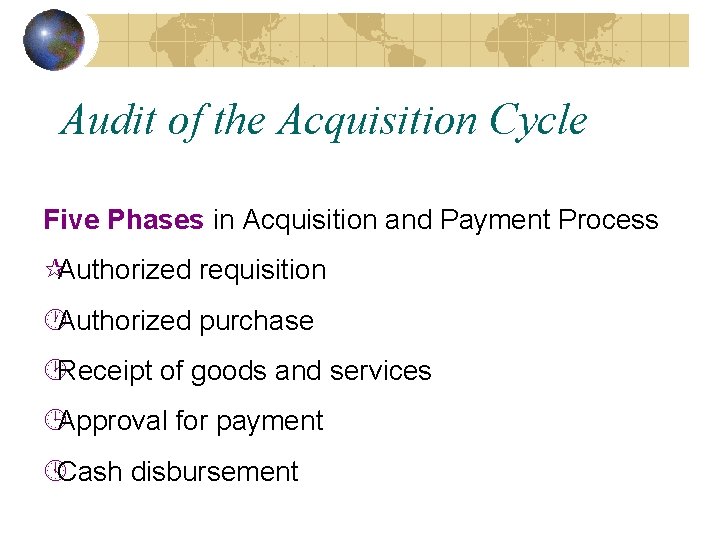
Audit of the Acquisition Cycle Five Phases in Acquisition and Payment Process ¶Authorized requisition ·Authorized purchase ¸Receipt of goods and services ¹Approval for payment ºCash disbursement
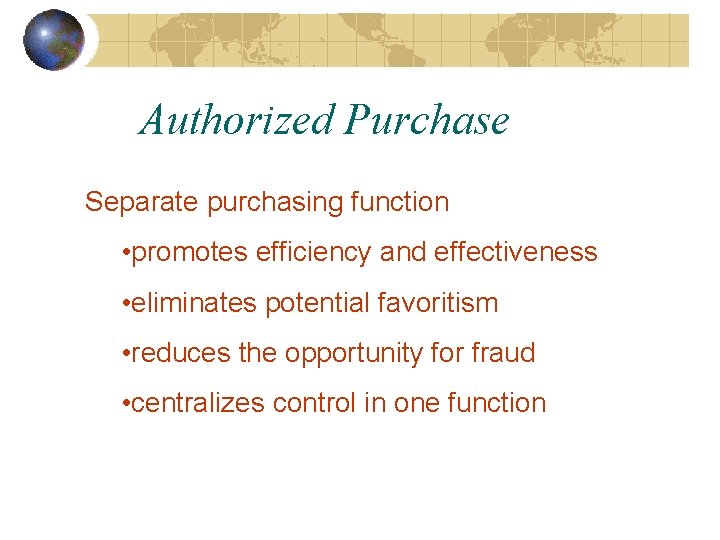
Authorized Purchase Separate purchasing function • promotes efficiency and effectiveness • eliminates potential favoritism • reduces the opportunity for fraud • centralizes control in one function
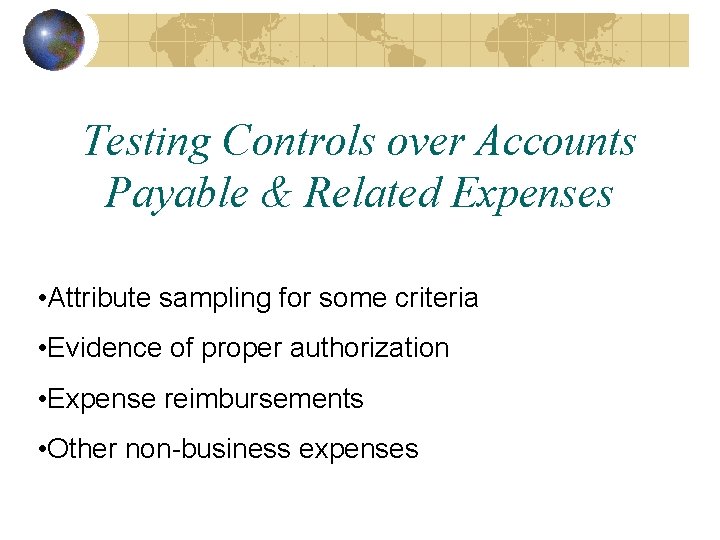
Testing Controls over Accounts Payable & Related Expenses • Attribute sampling for some criteria • Evidence of proper authorization • Expense reimbursements • Other non-business expenses
Substantive Tests of Accounts Payable • Testing for completeness • Accounts payable confirmations • Testing subsequent disbursements • Analytical review of related expense accounts • Year-end cutoff tests • Review of contracts for purchase commitments.
Audits of Expense Accounts • Detailed test of expense accounts • Analytical procedures of expense accounts
Audit of Inventory and Cost of Goods Sold • Inventory is a complex accounting and auditing area because of: Diversity of items High volume Various accounting valuation methods Obsolete inventory
Inventory • Audits of inventories are complex because: • Many frauds involve inflating inventory • Inventory easily transportable • Multiple locations • Difficulty identifying obsolete inventory • Defective inventory • Valuation • Returned goods • Diversity of products • Complex valuation methods
Internal Controls for Inventory • Well-conceived inventory control system should ensure üall purchases authorized üaccounting system ensures timely, accurate, complete recording üreceipt of inventory properly accounted for ücost accounting system up to date üperpetual inventory system üinventory reviewed for obsolescence
Internal Control for Inventory • Well-conceived inventory control system should ensure • management reviews and manages inventory • new product introduction is controlled • long term contracts are closely monitored
Substantive Testing of Inventory and Cost of Goods Sold • Assertions and audit procedures for inventory: • Existence: complete year-end physical inventory • Completeness: cutoff tests • Rights: review of long term contracts etc. • Valuation: combination of direct tests & analytics • Disclosure: review GAAP guidelines and client unusual circumstances