
Chapter 11 Alcohols and Ethers Ethers Structure and
- Slides: 15
Chapter 11: Alcohols and Ethers • Ethers: Structure and Properties • Synthesis of Ethers • Reactions of Ethers • Epoxides: Synthesis and Opening • Anti 1, 2 Dihydroxylation of Alkenes
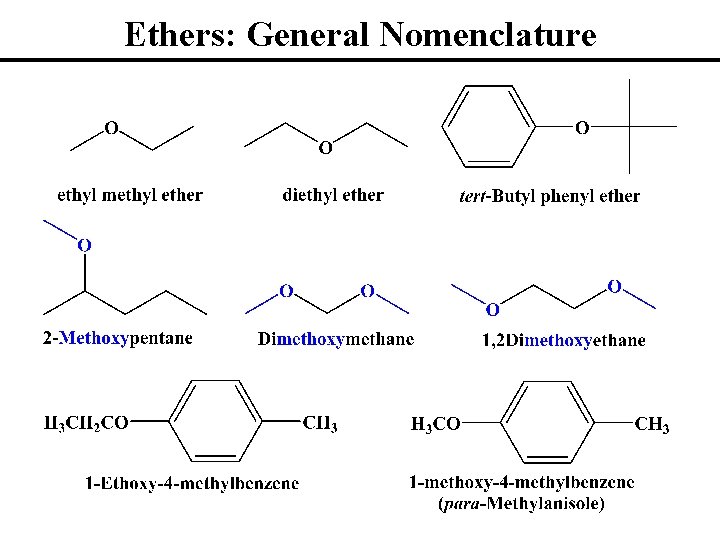
Ethers: General Nomenclature
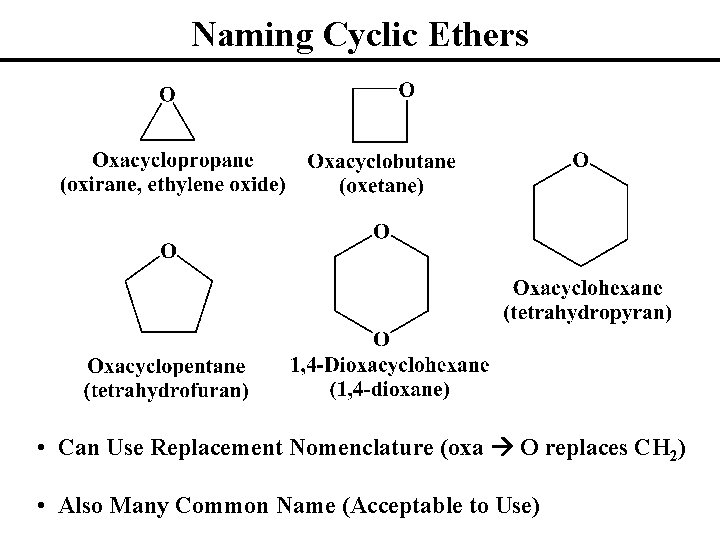
Naming Cyclic Ethers • Can Use Replacement Nomenclature (oxa O replaces CH 2) • Also Many Common Name (Acceptable to Use)
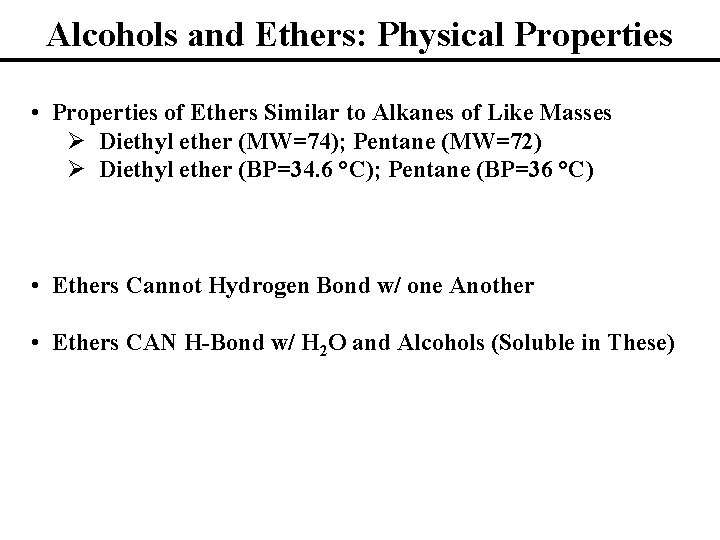
Alcohols and Ethers: Physical Properties • Properties of Ethers Similar to Alkanes of Like Masses Ø Diethyl ether (MW=74); Pentane (MW=72) Ø Diethyl ether (BP=34. 6 °C); Pentane (BP=36 °C) • Ethers Cannot Hydrogen Bond w/ one Another • Ethers CAN H-Bond w/ H 2 O and Alcohols (Soluble in These)
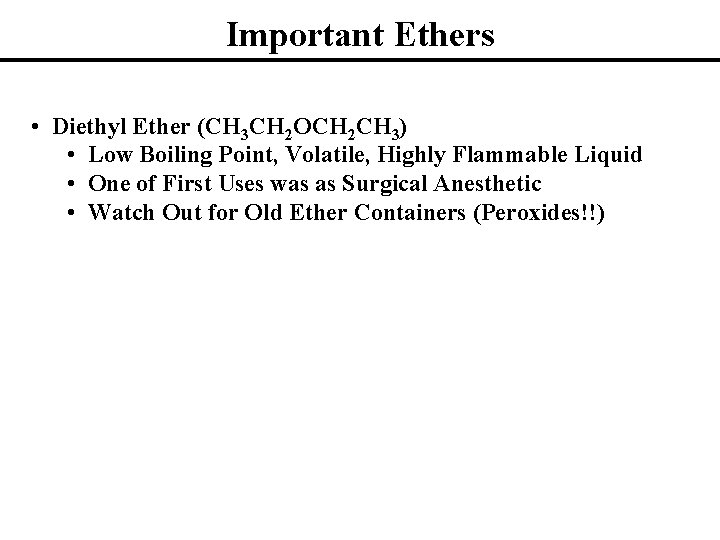
Important Ethers • Diethyl Ether (CH 3 CH 2 OCH 2 CH 3) • Low Boiling Point, Volatile, Highly Flammable Liquid • One of First Uses was as Surgical Anesthetic • Watch Out for Old Ether Containers (Peroxides!!)
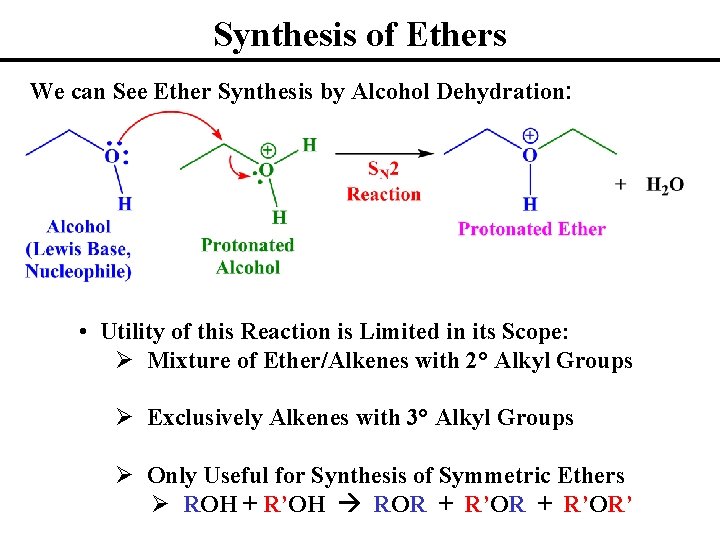
Synthesis of Ethers We can See Ether Synthesis by Alcohol Dehydration: • Utility of this Reaction is Limited in its Scope: Ø Mixture of Ether/Alkenes with 2° Alkyl Groups Ø Exclusively Alkenes with 3° Alkyl Groups Ø Only Useful for Synthesis of Symmetric Ethers Ø ROH + R’OH ROR + R’OR’
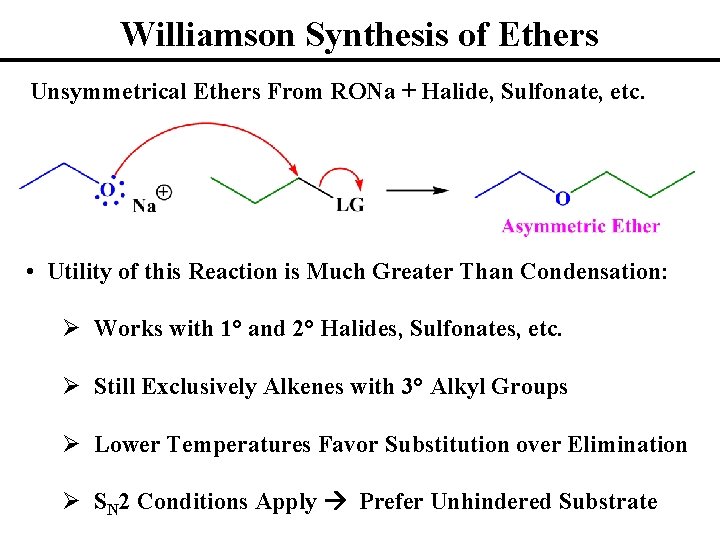
Williamson Synthesis of Ethers Unsymmetrical Ethers From RONa + Halide, Sulfonate, etc. • Utility of this Reaction is Much Greater Than Condensation: Ø Works with 1° and 2° Halides, Sulfonates, etc. Ø Still Exclusively Alkenes with 3° Alkyl Groups Ø Lower Temperatures Favor Substitution over Elimination Ø SN 2 Conditions Apply Prefer Unhindered Substrate
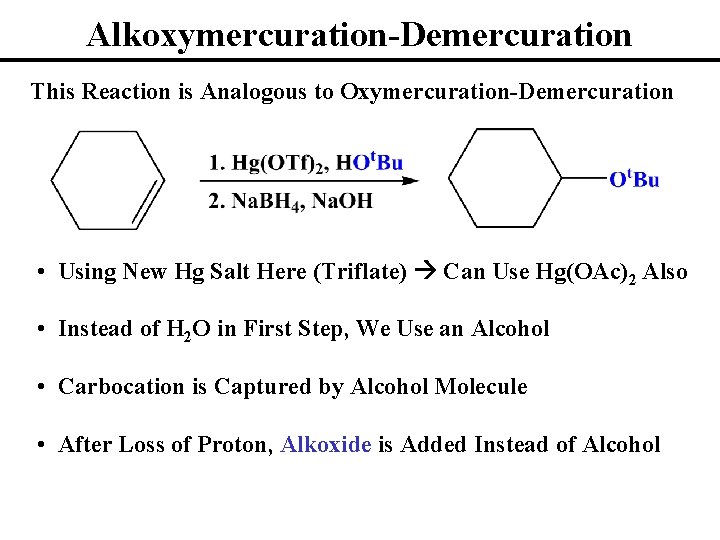
Alkoxymercuration-Demercuration This Reaction is Analogous to Oxymercuration-Demercuration • Using New Hg Salt Here (Triflate) Can Use Hg(OAc)2 Also • Instead of H 2 O in First Step, We Use an Alcohol • Carbocation is Captured by Alcohol Molecule • After Loss of Proton, Alkoxide is Added Instead of Alcohol
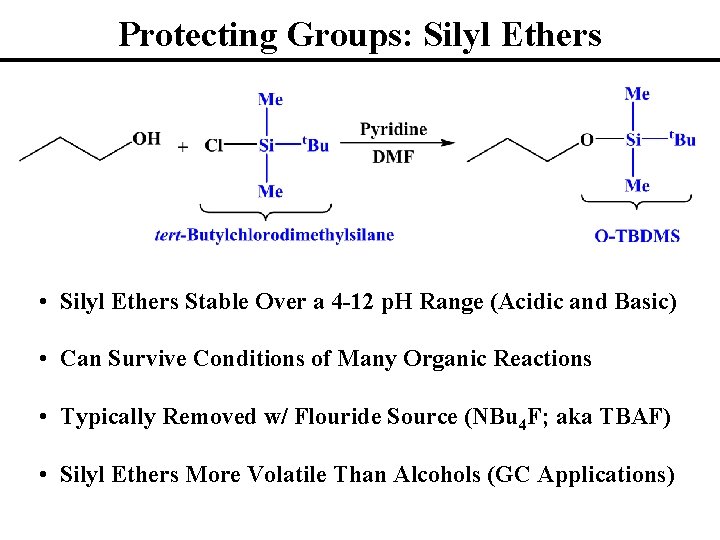
Protecting Groups: Silyl Ethers • Silyl Ethers Stable Over a 4 -12 p. H Range (Acidic and Basic) • Can Survive Conditions of Many Organic Reactions • Typically Removed w/ Flouride Source (NBu 4 F; aka TBAF) • Silyl Ethers More Volatile Than Alcohols (GC Applications)
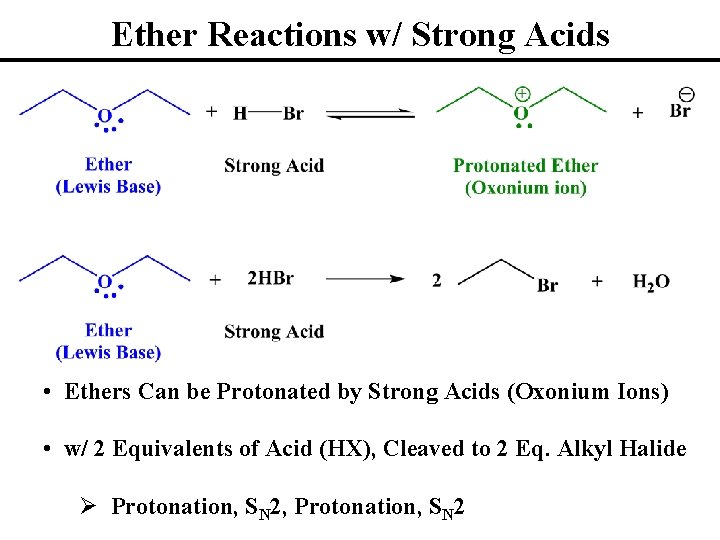
Ether Reactions w/ Strong Acids • Ethers Can be Protonated by Strong Acids (Oxonium Ions) • w/ 2 Equivalents of Acid (HX), Cleaved to 2 Eq. Alkyl Halide Ø Protonation, SN 2, Protonation, SN 2
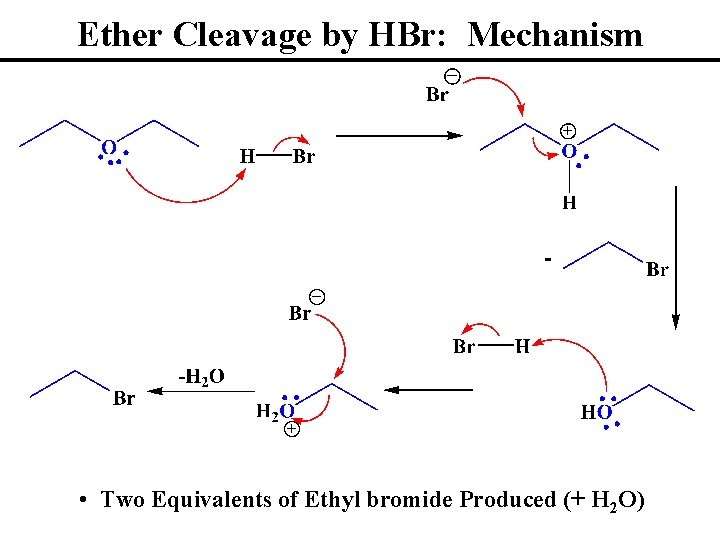
Ether Cleavage by HBr: Mechanism • Two Equivalents of Ethyl bromide Produced (+ H 2 O)
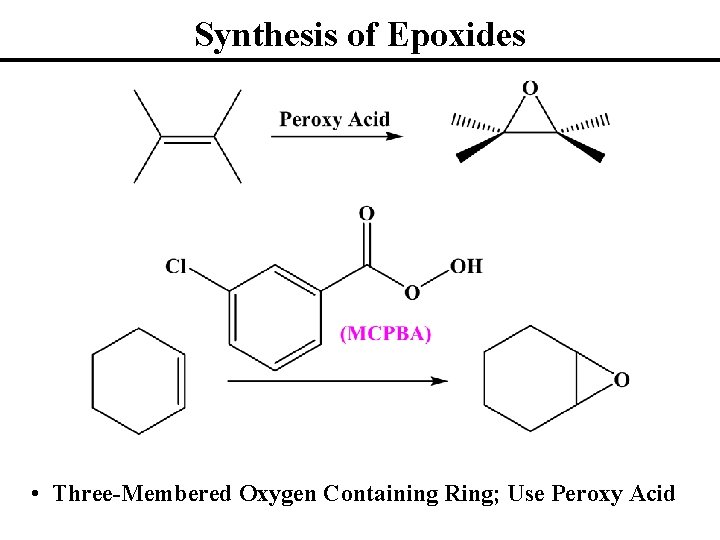
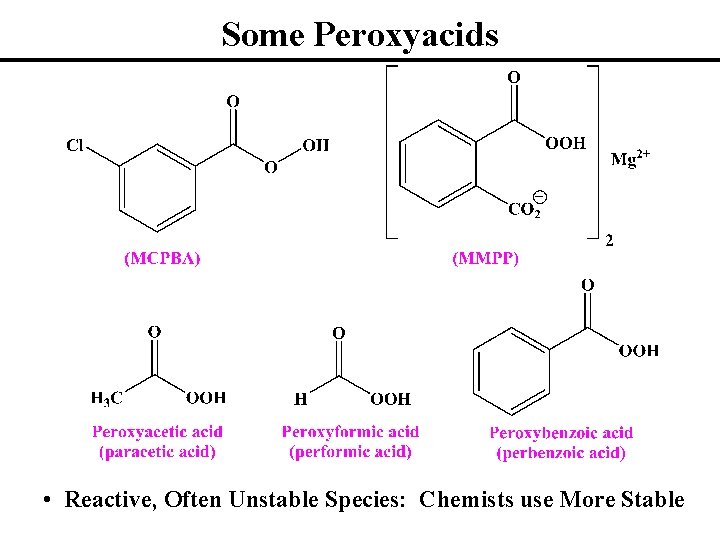
Synthesis of Epoxides • Three-Membered Oxygen Containing Ring; Use Peroxy Acid
Some Peroxyacids • Reactive, Often Unstable Species: Chemists use More Stable
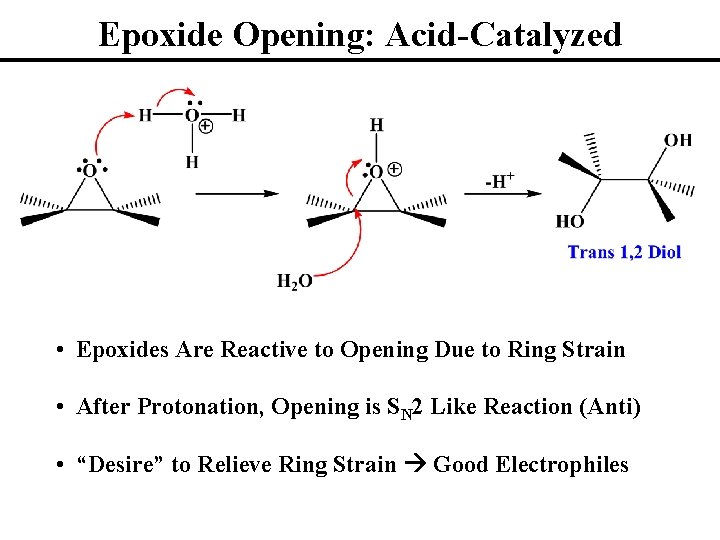
Epoxide Opening: Acid-Catalyzed • Epoxides Are Reactive to Opening Due to Ring Strain • After Protonation, Opening is SN 2 Like Reaction (Anti) • “Desire” to Relieve Ring Strain Good Electrophiles
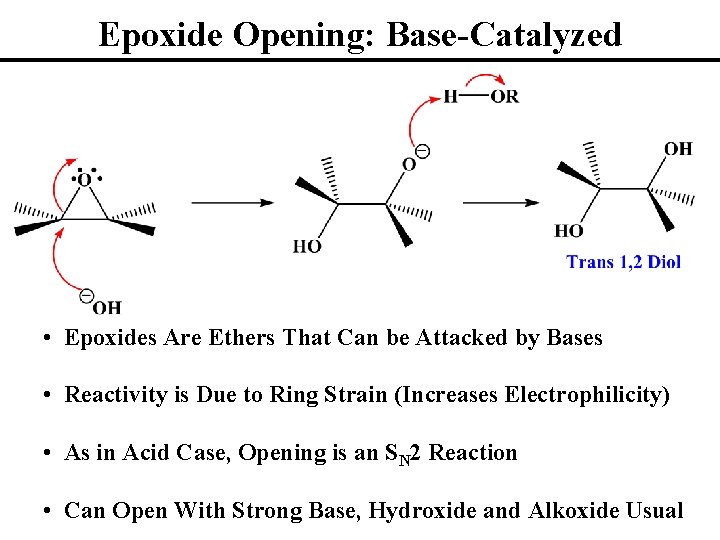
Epoxide Opening: Base-Catalyzed • Epoxides Are Ethers That Can be Attacked by Bases • Reactivity is Due to Ring Strain (Increases Electrophilicity) • As in Acid Case, Opening is an SN 2 Reaction • Can Open With Strong Base, Hydroxide and Alkoxide Usual