
Chapter 11 4 Meiosis Meiosis Vocabulary Diploid Haploid
Chapter 11 -4 Meiosis
Meiosis Vocabulary • • • Diploid Haploid Gametes Homologous chromosomes Crossing over Tetrad
So lets talk about making a person • So who do you look like? • What holds the genetic information? • How is this genetic information passed to the next child? • How many sets of chromosomes do you have? • What are homologous chromosomes? • Where do you get your sets of chromosomes?
Meiosis • Most cells have two sets of chromosomes – This is called diploid (2 sets of 23) – 2 n = diploid #, humans 2 n = 46 • Gametes have one set of chromosomes – This is called haploid cell (1 set of 23) – n = haploid #, humans n = 23 – Sperm, egg, pollen are examples • Meiosis is the process of making haploid cells from diploid cells • Haploid + haploid = diploid /fertilization
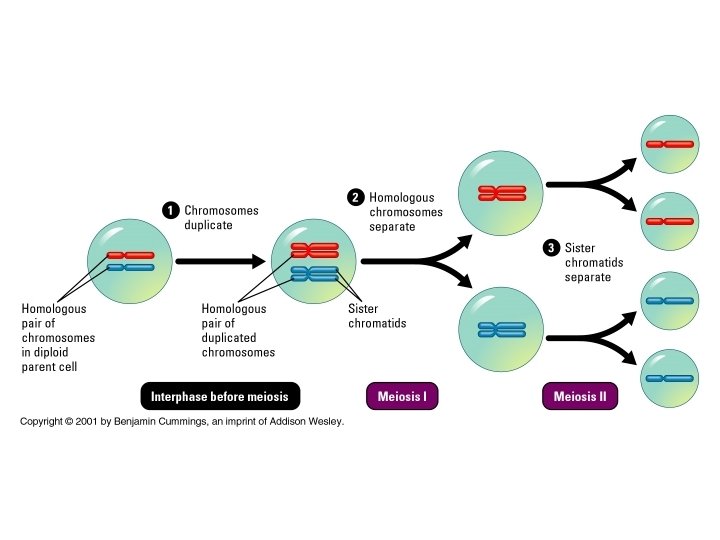
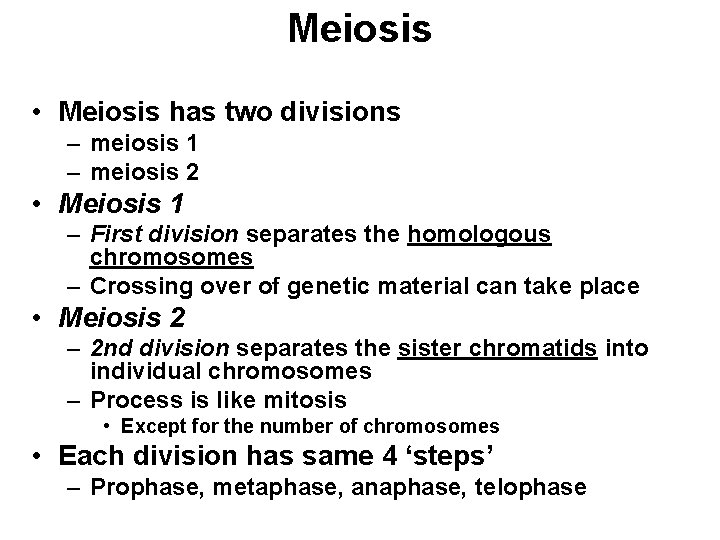
Meiosis • Meiosis has two divisions – meiosis 1 – meiosis 2 • Meiosis 1 – First division separates the homologous chromosomes – Crossing over of genetic material can take place • Meiosis 2 – 2 nd division separates the sister chromatids into individual chromosomes – Process is like mitosis • Except for the number of chromosomes • Each division has same 4 ‘steps’ – Prophase, metaphase, anaphase, telophase
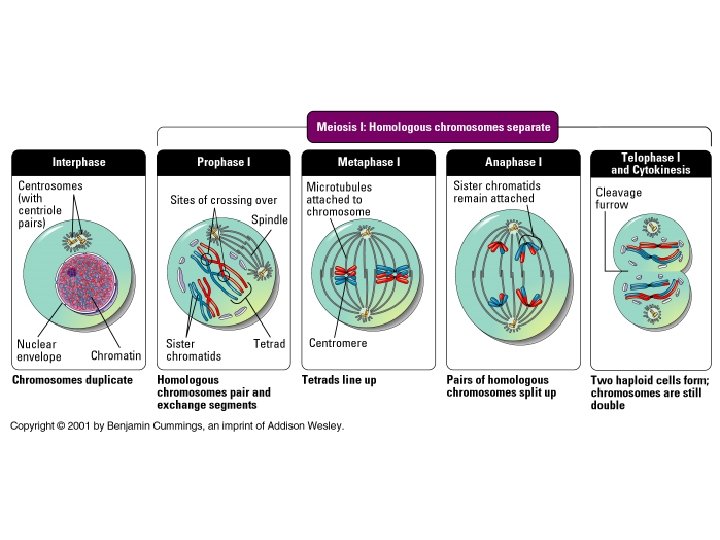
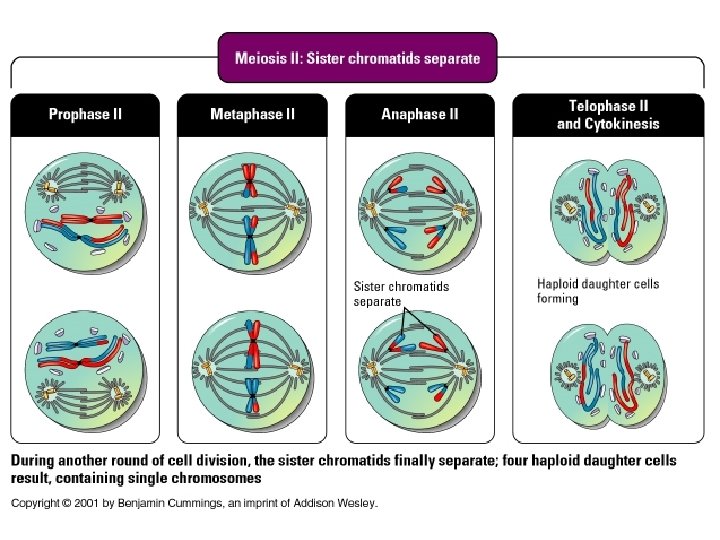
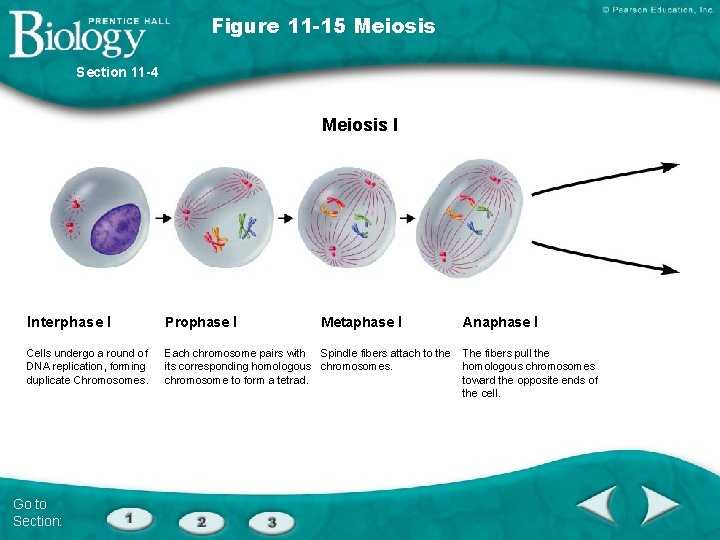
Figure 11 -15 Meiosis Section 11 -4 Meiosis I Interphase I Prophase I Cells undergo a round of DNA replication, forming duplicate Chromosomes. Each chromosome pairs with Spindle fibers attach to the its corresponding homologous chromosomes. chromosome to form a tetrad. Go to Section: Metaphase I Anaphase I The fibers pull the homologous chromosomes toward the opposite ends of the cell.
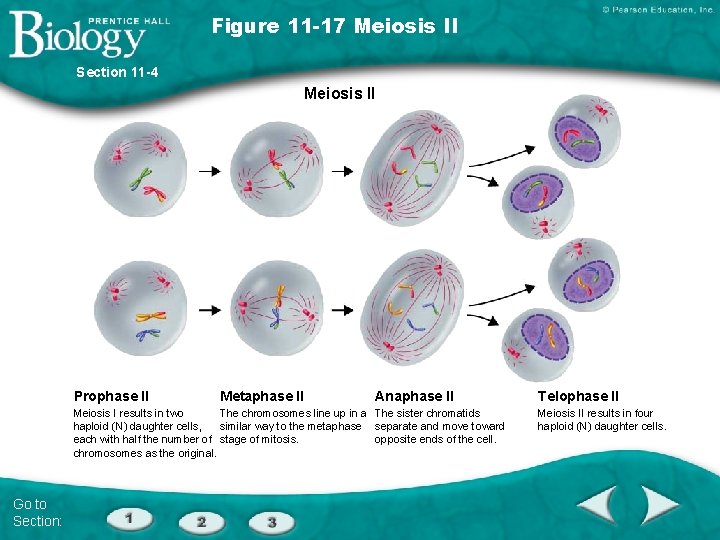
Figure 11 -17 Meiosis II Section 11 -4 Meiosis II Prophase II Metaphase II Anaphase II Meiosis I results in two The chromosomes line up in a The sister chromatids haploid (N) daughter cells, similar way to the metaphase separate and move toward each with half the number of stage of mitosis. opposite ends of the cell. chromosomes as the original. Go to Section: Telophase II Meiosis II results in four haploid (N) daughter cells.
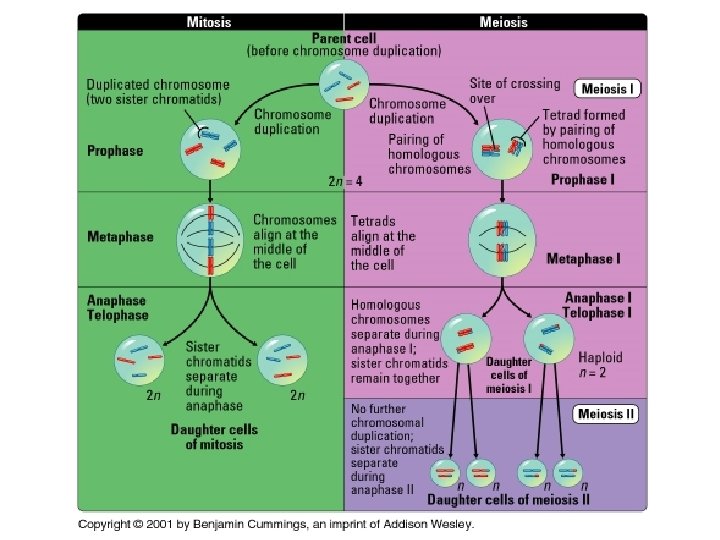
Mitosis vs Meiosis • Mitosis – 1 division – 2 daughter cells – Exact copies of parent cells – Diploid to diploid – Purpose • Growth • Repair • Asexual reproduction • Meiosis – 2 divisions • 1 st separates pairs – – 4 daughter cells Each unique Diploid to haploid Purpose • Make gametes/ sex cells • Leads to genetic variation due to crossing over
- Slides: 12