
Chapter 11 2 SOCIAL DEVELOPMENT FROM 1 TO

- Slides: 18
Chapter 11 -2 SOCIAL DEVELOPMENT FROM 1 TO 3
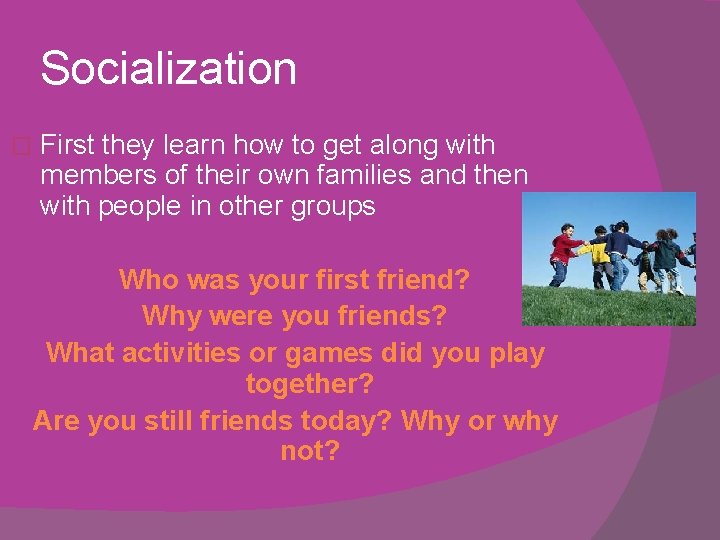
Socialization � First they learn how to get along with members of their own families and then with people in other groups Who was your first friend? Why were you friends? What activities or games did you play together? Are you still friends today? Why or why not?
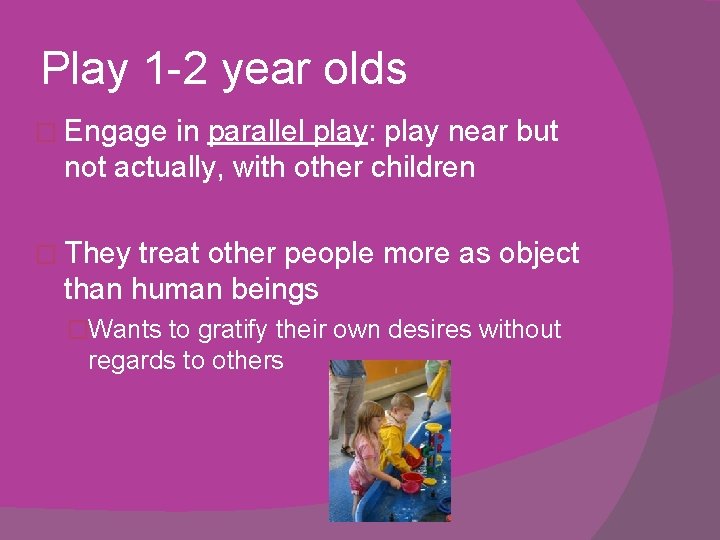
Play 1 -2 year olds � Engage in parallel play: play near but not actually, with other children � They treat other people more as object than human beings �Wants to gratify their own desires without regards to others
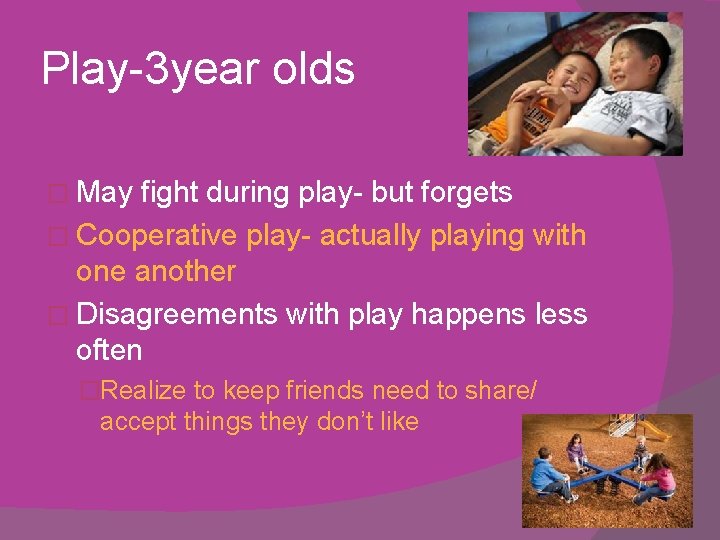
Play-3 year olds � May fight during play- but forgets � Cooperative play- actually playing with one another � Disagreements with play happens less often �Realize to keep friends need to share/ accept things they don’t like
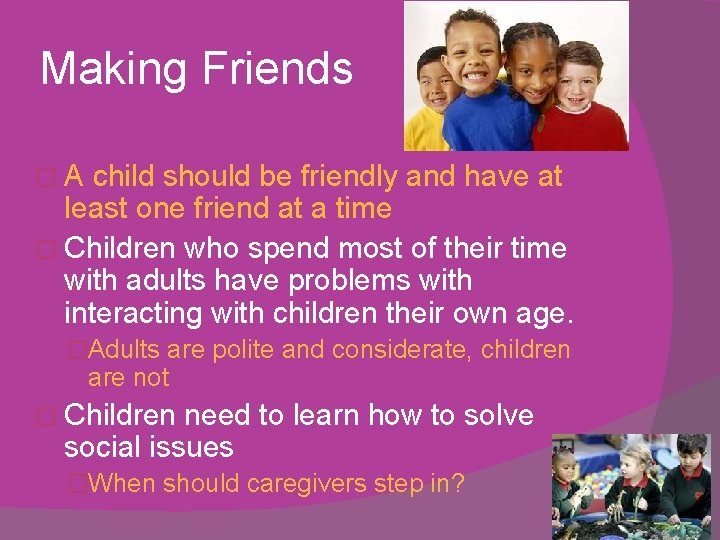
Making Friends �A child should be friendly and have at least one friend at a time � Children who spend most of their time with adults have problems with interacting with children their own age. �Adults are polite and considerate, children are not � Children need to learn how to solve social issues �When should caregivers step in?
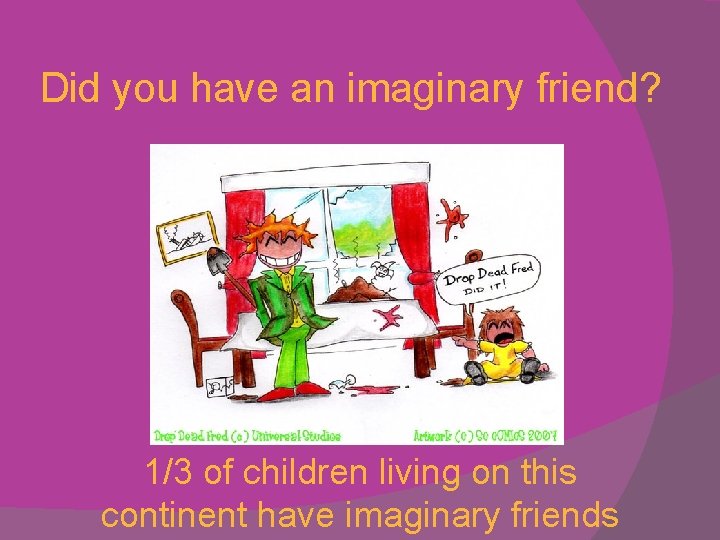
Did you have an imaginary friend? 1/3 of children living on this continent have imaginary friends
Imaginary Friends � May appear as early as age 2 - more common at 3 / 4 �Have a high imagination Helps children experiment with different feelings � The friend mirrors everything the child does or experiences � The only time to be concerned if it continues in adolescence � �Can have one imaginary friend for months or a year �Some children have multiple Imaginary friends
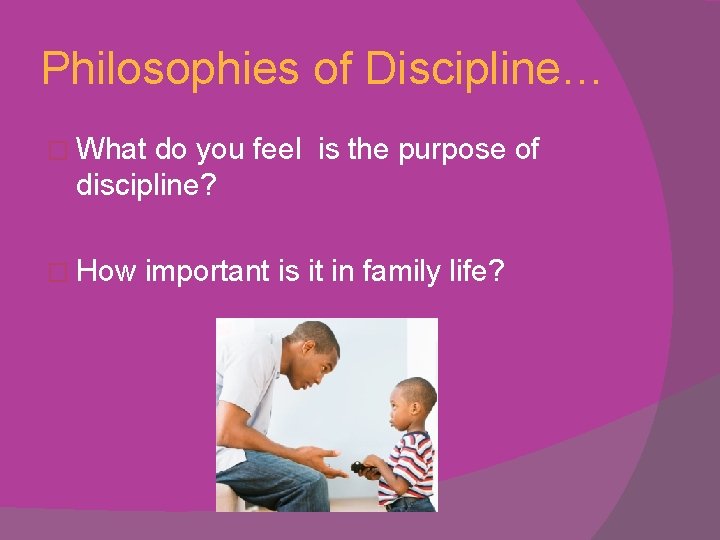
Philosophies of Discipline… � What do you feel is the purpose of discipline? � How important is it in family life?
Guidelines for Guidance � Using firmness and understanding to help children learn how to control their own behavior � Purpose: to help child learn self-discipline- the ability of children to control their own behavior � Helps children learn to get along with others and how to handle feelings in acceptable ways � Make sure you are consistent- all caregivers! � Helps with moral development �Right from wrong
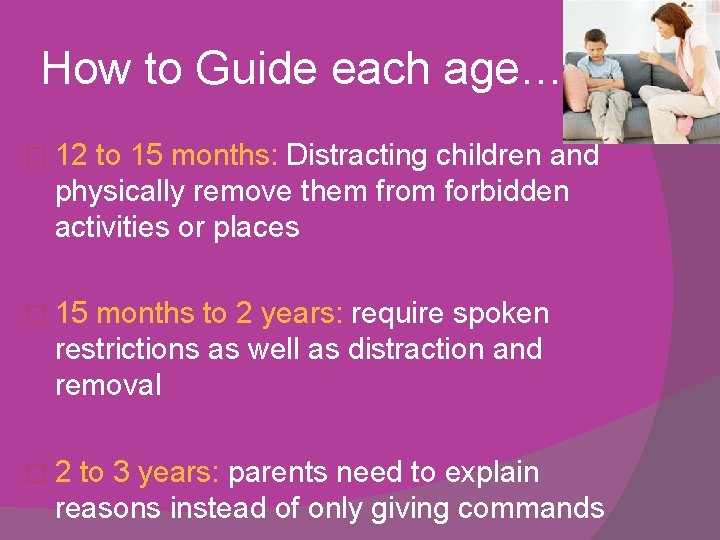
How to Guide each age…. � 12 to 15 months: Distracting children and physically remove them from forbidden activities or places � 15 months to 2 years: require spoken restrictions as well as distraction and removal � 2 to 3 years: parents need to explain reasons instead of only giving commands
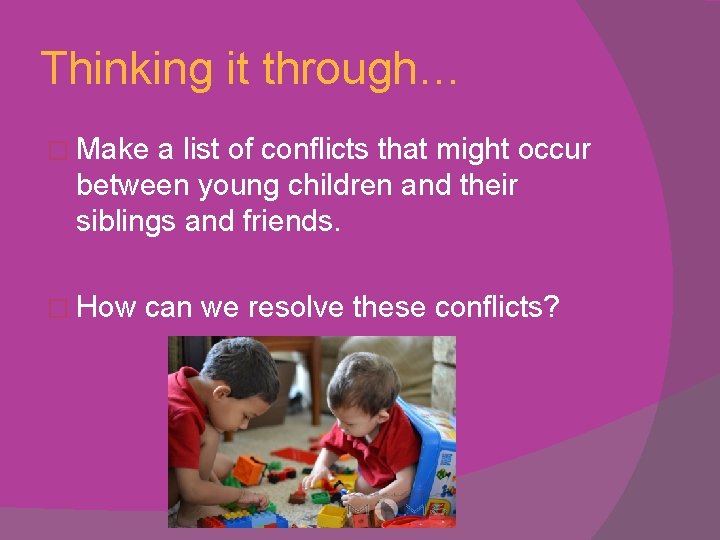
Thinking it through… � Make a list of conflicts that might occur between young children and their siblings and friends. � How can we resolve these conflicts?
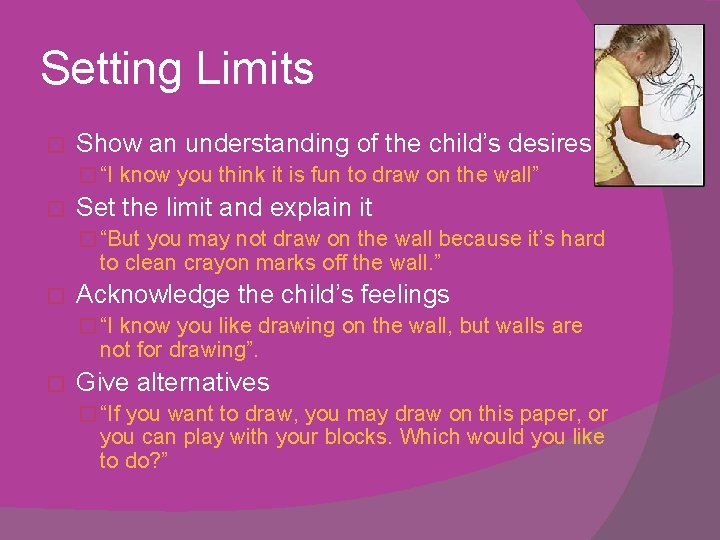
Setting Limits � Show an understanding of the child’s desires � “I know you think it is fun to draw on the wall” � Set the limit and explain it � “But you may not draw on the wall because it’s hard to clean crayon marks off the wall. ” � Acknowledge the child’s feelings � “I know you like drawing on the wall, but walls are not for drawing”. � Give alternatives � “If you want to draw, you may draw on this paper, or you can play with your blocks. Which would you like to do? ”
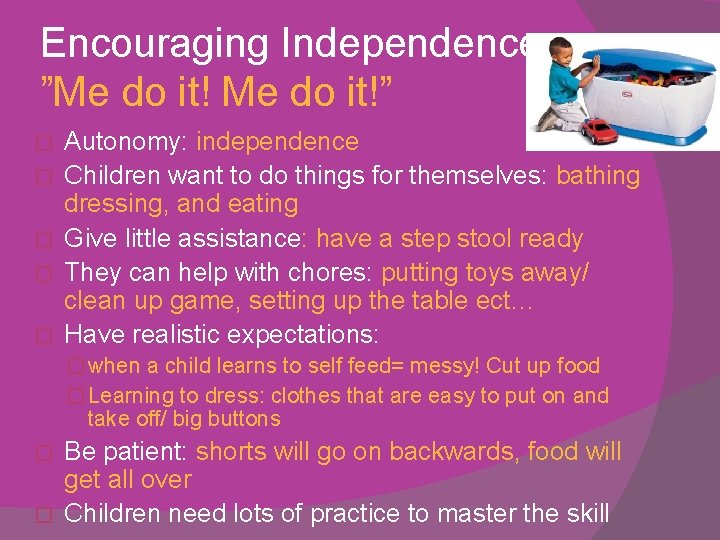
Encouraging Independence”Me do it!” � � � Autonomy: independence Children want to do things for themselves: bathing dressing, and eating Give little assistance: have a step stool ready They can help with chores: putting toys away/ clean up game, setting up the table ect… Have realistic expectations: � when a child learns to self feed= messy! Cut up food � Learning to dress: clothes that are easy to put on and take off/ big buttons Be patient: shorts will go on backwards, food will get all over � Children need lots of practice to master the skill �
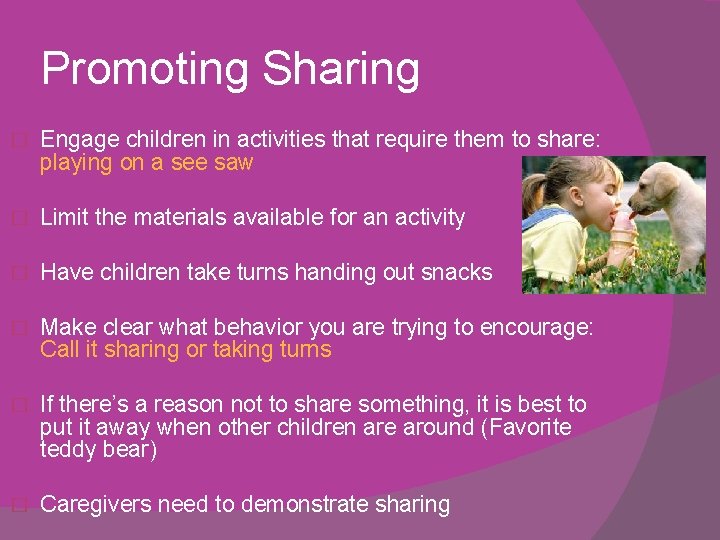
Promoting Sharing � Engage children in activities that require them to share: playing on a see saw � Limit the materials available for an activity � Have children take turns handing out snacks � Make clear what behavior you are trying to encourage: Call it sharing or taking turns � If there’s a reason not to share something, it is best to put it away when other children are around (Favorite teddy bear) � Caregivers need to demonstrate sharing
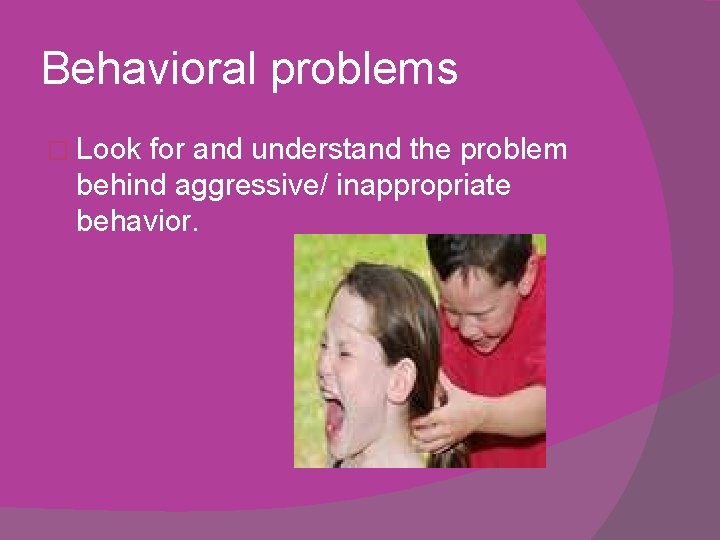
Behavioral problems � Look for and understand the problem behind aggressive/ inappropriate behavior.
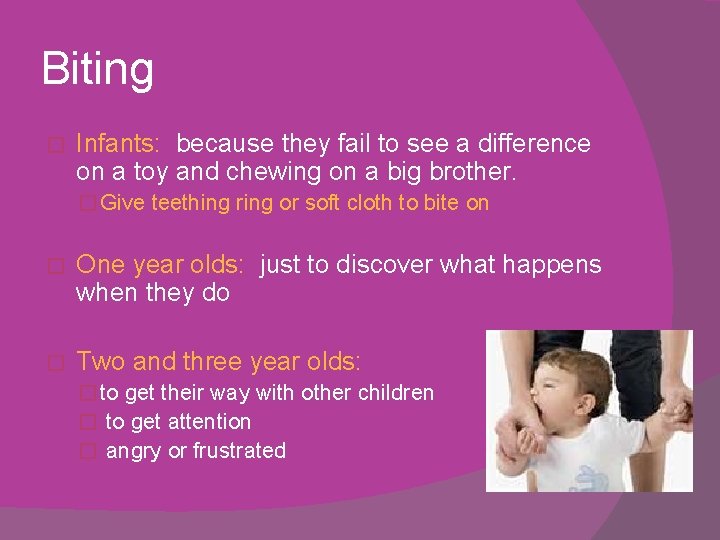
Biting � Infants: because they fail to see a difference on a toy and chewing on a big brother. � Give teething ring or soft cloth to bite on � One year olds: just to discover what happens when they do � Two and three year olds: � to get their way with other children � to get attention � angry or frustrated
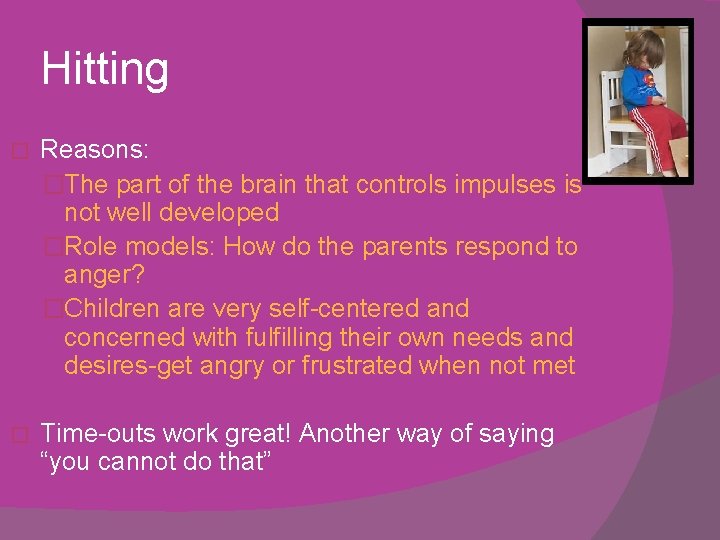
Hitting � Reasons: �The part of the brain that controls impulses is not well developed �Role models: How do the parents respond to anger? �Children are very self-centered and concerned with fulfilling their own needs and desires-get angry or frustrated when not met � Time-outs work great! Another way of saying “you cannot do that”
Negative statements… � Write 3 negative statements that someone might say to a child one to three on a sheet of paper…. � With the person sitting next to you, switch papers. � Now change your partners statements to a more positive statement.