
Chapter 10 Violent Crime Introduction Expressive violence acts


- Slides: 58
Chapter 10 Violent Crime
Introduction § § Expressive violence: acts the vent rage, anger, and frustration Instrumental violence: acts that improve a financial or social position
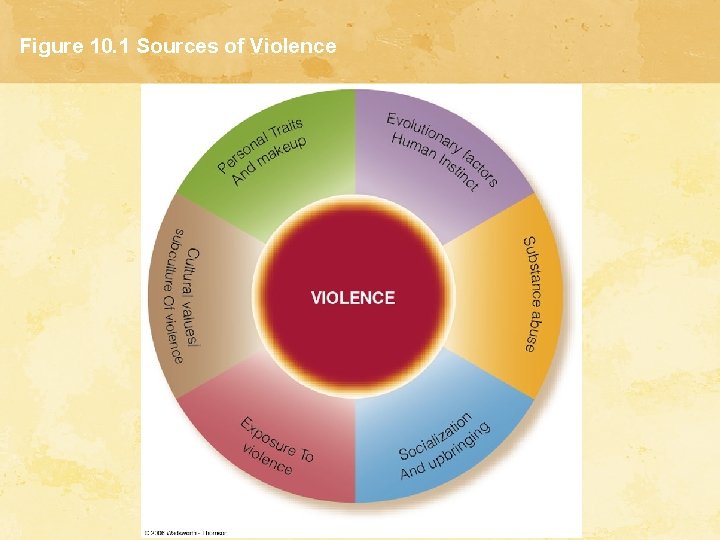
The Causes of Violence • Personal Traits and Makeup § Neurological impairments § Low intelligence § Abnormal personality structures
Figure 10. 1 Sources of Violence
The Causes of Violence • Evolutionary Factors/Human Instinct § Eros: the life instinct § Thanatos: the death instinct § Aggression and violence are inborn instincts § Violence is committed primarily by males
The Causes of Violence • Substance Abuse § Psychopharmacological relationship: between drugs and crime § Economic Compulsive Behavior: drug ingestion may cause economic compulsive behavior § Systemic link: occurs when drug dealers turn violent in competition with rival gangs
The Causes of Violence • Socialization and Upbringing § Children exposed to violence at home, school, and environment are more likely to use violence themselves § Parents who fail to set adequate limits reinforce a child’s coercive behavior § Physical punishment may lead to anger and defiance
The Causes of Violence • Abused Children § Abused children are likely to later engage in delinquent behaviors § Abused children are likely to physically abuse siblings § Abused children are likely to engage in spousal abuse
The Causes of Violence • The Brutalization Process § Lonnie Athens links violence to early child abuse § Classified people into: nonviolent, and incipiently violent § Four types of violent attacks: 1) physically defensive, 2) frustrative, 3) malefic, and 4) frustrative-malefic
The Causes of Violence • Exposure to Violence § People who are constantly exposed to violence may adopt violent methods themselves § Girls are more likely to be victims of sexual abuse and boys are more likely to participate in fights, stabbings or shootings § Crusted over: refers to children who do not express their feelings (vulnerable to the lure of delinquent gangs)
The Causes of Violence • Cultural values/Subculture of Violence § Marvin Wolfgang and Franco Ferracuti formulated the concept of a subculture of violence § Violence is legitimized by norms and customs § Violence is higher in subculture areas within urban areas
The Causes of Violence • Peer Group Influences § Gangs are more likely to own guns and weapons § Gang violence may be initiated for: • Display of toughness • Retaliation for actual or perceived grievances • Protection of ownership (graffiti) • Protection of turf
The Causes of Violence • Regional Values § Raymond Gastil found a significant relationship between murder rates a residence in the South § Gastil contends the southern culture promotes violence § UCRs support the higher rates of murder in the South
The Causes of Violence • National Values § National characteristics are predictive of violence: • social disorganization • economic stress • child abuse rates • violence by government • political corruption • inefficient justice systems.
Forcible Rape • Common law definition: “the carnal knowledge of a female forcibly and against her will”
Forcible Rape • History of Rape § Men staked claim to women by rape § “Heiress stealing” involved men trying to force wealthy women into marriage § Peasant women and married women could not be victims of rape until the 16 th century
Forcible Rape • Rape and the Military § Rape has been associated with armies and warfare (spoils of war) § Rape has been used to intentionally impregnate women § Rape is used as “weapon of war”
CNN Clip - Sexual Assaults In The Military
Forcible Rape • Incidence of Rape § 94, 000 rapes/attempted rapes were reported in 2003 (UCRs) § Rape has been in a decade-long decline § Population density influences rape § About 46 percent of rape offenders are under 25 years of age § NCVS estimates rapes in 2003 were about 200, 000
Forcible Rape • Types of Rape and Rapists § Some rapes are planned and some are spontaneous § Nicolas Groth suggested every rape encounter contains either anger, power, or sadism § Power rapist (55 percent) § Anger rapist (40 percent) § Sadistic rapist (5 percent)
Forcible Rape • Gang versus Individual Rape § Women subjected to rape by multiple offenders are more likely to experience violence such as beatings or the use of weapons § Gang rape victims are more likely to resist than those attacked by single victims § Gang rape victims are more likely to report the rape
Forcible Rape • Serial Rape § Serial rapists tend to be White males § Rape may be “blitz” styled or “captured” § Some use personal or professional relationships to gain access to their targets (I. E. police officers)
Forcible Rape • Acquaintance Rape § Date Rape: is estimated to affect 15 to 20 percent of all college women § Marital Rape: almost every state recognizes marital rape as a crime § Statutory Rape: sexual relations between underage minor female and an adult male, which an be consensual or forced § About 50 percent of rape involves acquaintances
Forcible Rape • The Causes of Rape § Evolutionary, biological factors: rape is instinctual § Male socialization: men socialized to “no means yes” (virility mystique) § Hypermasculinity: expression of male anger toward women § Psychological abnormality: narcissistic personality disorder § Social learning: learned through interaction with peers (Nicholas Groth) § Sexual motivation: Notion that rapists prefer younger victims. (most criminologist reject this view)
Forcible Rape • Rape and the Law § Sexist treatment by the legal system § Police may be hesitant when no obvious signs of violence has occurred § Aggravated rapes are prosecuted more frequently
Forcible Rape • Proving Rape § Jurors are often swayed by the notion the rape was victim precipitated § Prosecutors must establish the act was forced and violent § The victims demeanor is crucial to successful prosecution § Consent: essential to prove the act was involuntary § Rape Shield Laws: protect women from being questioned about sexual history § Violence Against Women Act in 1994: allows women to sue in federal court (civil rights violations)
Murder and Homicide • Definition of Murder: “the unlawful killing of a human being with malice aforethought. ” • Degrees of Murder § First-degree murder • Premeditation • Deliberation § Second-degree murder • Wanton disregard § Manslaughter • Voluntary (heat of passion) • Involuntary (negligent) § Born and alive • Feticide
Murder and Homicide • The Nature and Extent of Murder § About 16, 300 people killed in 2003 § Almost one-quarter of homicides occur in cities with populations of more than 1 million § Murder victims (75 percent) and offenders (90 percent) tend to be male § About 49 percent of all victims are African Americans § Infanticide (about 500 per year) § Eldercide (less than 5 percent per year)
Murder and Homicide • Weblink: http: //www. ojp. usdoj. gov/bjs/homicide/elders. htm
Murder and Homicide • Murderous Relations § Stranger homicides typically occur during commission of a felony § Acquaintance homicides are more common involving family and friends • Spousal Relations § Men may kill spouses or partners for fear of losing control and power § Most females murder after suffering repeated violent attacks § Some people kill mates out of jealousy (love triangles)
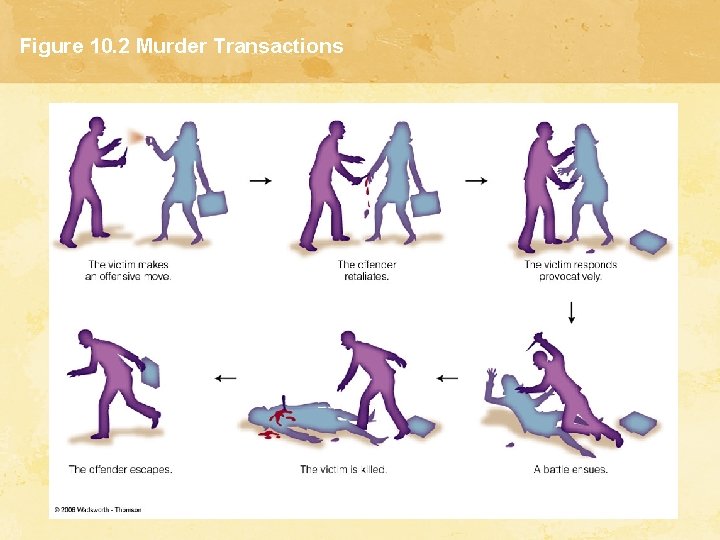
Murder and Homicide • Personal Relations § Most murder occurs between people who are acquainted § David Lukenbill suggested murder follows a sequential pattern after the victim makes what is considered an offensive move • Stranger Relations § Stranger homicides occur most frequently during rapes, robberies and burglaries § Impact of habitual criminal statutes • Student Relations § 90 percent of schools with 1000 or more students experience violence each year § Many offenders have history of being abused or bullied
Figure 10. 2 Murder Transactions
Murder and Homicide • Serial Murder § There are more than one type of serial killer • Thrill killers: sexual sadism or dominance (most common) • Mission killers: to reform the world • Expedience killers: for profit or protection
Murder and Homicide • Serial Murderers and their Motivations § Violence begins in childhood § Mental illness, sexual frustration, neurological damage, child abuse, and neglect § Most experts view serial killers as sociopaths
Murder and Homicide • Female Serial Killers § 10 -15 % of serial killers are women § Males are more likely to use violence than women § Females are most likely to poison the victims § Education levels are below average and they are likely in low status positions, if employed
Assault and Battery • Definition of battery: requires offensive touching (i. e slapping, hitting, or punching) • Definition of assault: requires no actual touching, but involves wither attempted battery or intentionally frightening the victim by word or deed.
Assault and Battery • Nature and Extent of Assault § Road rage § 857, 000 assaults reported in 2003 § Most arrests are young White males (80 percent) § Assault rates highest in urban areas during the summer in the South and the West § Most common weapons are blunt instruments
Assault and Battery • Assault in the home § Women face the greatest risk of assault • Child Abuse § Child Abuse (85 percent of fatalities were younger than six years of age) § Neglect (59 percent) § Physical abuse (19 percent) § Sexual abuse (10 percent) § Emotional abuse (7 percent)
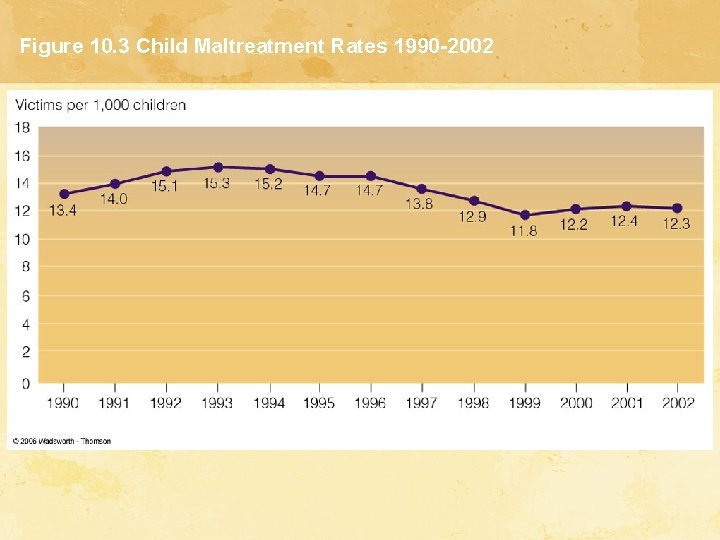
Figure 10. 3 Child Maltreatment Rates 1990 -2002
Assault and Battery • Causes of Child Abuse § Family violence is perpetuated § Abusive parents were abused themselves § Blended families § Parents isolated from friends, neighbors, or relatives
Assault and Battery • Sexual Abuse § Women suffer some form of sexual violence (1 in 5) § Recent studies suggest incidence of sexual abuse is in decline: • Effectiveness of prevention • Overlooked cases § Children who have been abused experience life-long symptoms
Assault and Battery • Parental Abuse § The younger the child the higher the rate of Child-to-parent violence § Children are more violent to mothers § Boys hit parents more than girls do
Assault and Battery • Spousal Abuse § Occurred throughout recorded history • Nature and Extent of Spousal Abuse § Observers suggest 16 percent of families experienced husbandwife assaults § Factors associated with spousal abuse include: alcohol, hostility, excessive brooding, social approval, socioeconomic factors, flashes of anger, military service, having been battered as a child, and unpredictableness
Robbery • Definition of robbery: “the taking or attempting to take anything of value from the care, custody or control of a person or persons by force or threat of force or violence and/or by putting the victim in fear. ” § In 2003, the FBI recorded 413, 000 robberies compared to 554, 000 by the NCVS § Northeastern states have the highest rates § There has been a decade-long drop in rates
Robbery • The Armed Robber § Unlikely to be a professional rather opportunistic § Robberies seem to peak during the winter months § Choose vulnerable victims
Robbery • Acquaintance Robbery § Victims are often reluctant to report acquaintance robbery § Some robbers are motivated by street justice § Because the robber knows the person, they will have inside information § Acquaintance robbers frequently target people in close proximity because of the convenience
Robbery • Rational Robbery § Most robbers are opportunistic § Patterns of robbery suggest it is not a random act § Robbers choose vulnerable victims and times § Women robbers may feign sexual interests to lure a victim
Emerging Forms of Interpersonal Violence • Hate Crimes are violent acts directed toward a particular person or members of a group merely because the targets share certain racial, ethnic, religious, or gender characteristics • Thrill-seeking hate crimes (sadistic thrills) • Reactive hate crimes (defensive stand) • Mission hate crimes (duty bound) § Retaliatory hate crimes are committed in response to hate crime whether real or percieved
Emerging Forms of Interpersonal Violence • The Nature and Extent of Hate Crime § During 2003, 9, 100 offenses were reported § Racial bias accounts for nearly 49 percent § Religious bias accounts for 17 percent § Ethnicity or national origin bias accounts for 14 percent § Bias against physical or mental disability accounts for 0. 5 percent
Emerging Forms of Interpersonal Violence • Controlling Hate Crimes § Most state have enacted some form of legislation to combat hate crime § 39 states have laws against bias motivated violence § 19 states have mandates regarding the collection of hate crime data § Some suggest bias crimes should be punished more severely due to the likely chance of violence • Legal Controls § Virginia v. Black (2003) upheld by the Supreme Court prohibiting cross burning as intimidation
Emerging Forms of Interpersonal Violence • Workplace Violence § Considered the third leading cause of occupational injury or death § More than 2 million people are victimized each year • Creating Workplace Violence § Factors include: management style, romantic relationships, and irate clients and customers • The Extent of Workplace Violence § 18 percent of all violent crime § Assaults are the most common (1. 3 million) § Police officer are the greatest risk, along with correctional officers, taxi drivers, and bartenders
Emerging Forms of Interpersonal Violence • Stalking § Affects 1. 4 million victims annually § Most stalking stops within one to two years § Most victims know their stalker § Women are most likely to be stalked by an intimate partner, whereas men are stalked by strangers or casual acquaintances
Terrorism • What is Terrorism? § International terrorism involves citizens or territory of more than one country § Typically involves a type of political crime to promote change § Some terrorists seek to bring about economic or social reforms (labor or wearing fur disputes) § Terrorist and Guerilla terms used interchangeably but they are different (terrorists have urban focus)
Terrorism • A Brief History of Terrorism § Assassination of Caesar considered terrorism § Became popular during the French Revolution (1700 s) § The Irish Republican Army (1916) § Resistance to German troops during WW II
Terrorism • Contemporary Forms of Terrorism § Revolutionary Terrorism: Use violence in an attempt to replace the existing government § Political Terrorism: Is directed shaping political or religious ideology § Nationalist Terrorism: Ethnic or religious groups wanting its own independent homeland § Cause-Based Terrorism: Use violence to impose their social or religious code on the world § Environmental Terrorism: Is directed at slowing down developers believed to be threatening the environment § State-Sponsored Terrorism: Repressive government regime forces its people into oppression and stifles political dissent § Criminal Terrorism: Incorporates crimes such as drug dealing, kidnapping, and selling of nuclear materials
Terrorism • What Motivates Terrorists? § Socialization to violence § Extreme ideological beliefs § Feelings of alienation and failure (psychological disturbances)
Terrorism • Responses to Terrorism § Increased intelligence gathering (globally) § 1994 Violent Crime Act (authorized death penalty for terrorists) § USA Patriot Act ( investigation tactics) § The Foreign Terrorist Tracking Task Force (2001)
Terrorism • Law Enforcement Responses § FBI and creation of the Cyber Division § Homeland Security • BTS (Borders and Transportation Security) • EPR (Emergency Preparedness and Response) • S&T (Research and development of WMD) • IAIP (Information Analysis and Infrastructure Protection)