
Chapter 10 The French Revolution AP EUROPEAN HISTORY
- Slides: 22
Chapter 10 “The French Revolution” AP EUROPEAN HISTORY MR. RICK PURRINGTON MARSHALL HIGH SCHOOL
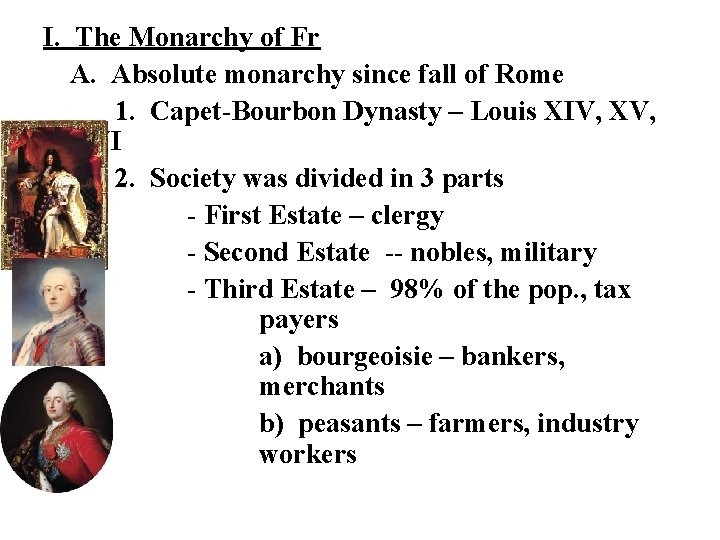
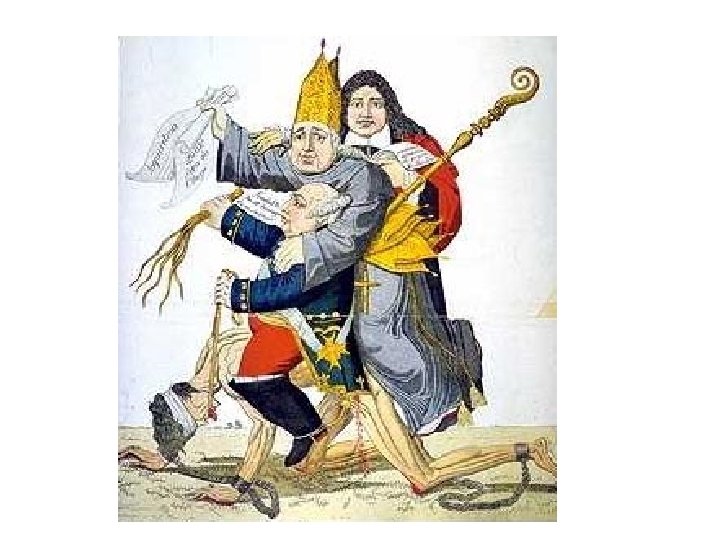
I. The Monarchy of Fr A. Absolute monarchy since fall of Rome 1. Capet-Bourbon Dynasty – Louis XIV, XVI 2. Society was divided in 3 parts - First Estate – clergy - Second Estate -- nobles, military - Third Estate – 98% of the pop. , tax payers a) bourgeoisie – bankers, merchants b) peasants – farmers, industry workers
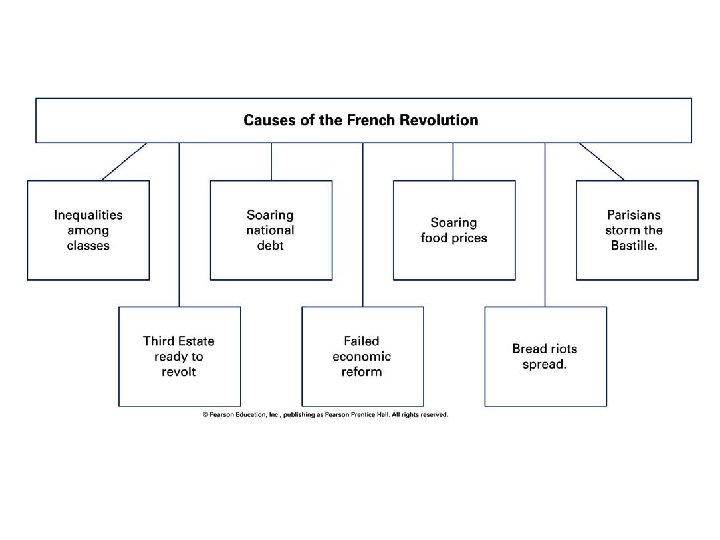
B. What causes revolution? IDEAS + DISCONTENT 1) Third estate in 1780’s: - resented the other estates - is struggling from poor harvest, high $$ ofbread - had been reading Enlightenment ideas - had heard of the Am Rev. - is overtaxed yet national treasury is depleted - is frustrated w/incompetent King Louis XVI and Queen “Madame Defecit” - began protesting, demanding liberty, equality, fraternity “Man is born free and everywhere he is in chains”
“What is the Third Estate? EVERYTHING What has it been in the political order up to now? NOTHING What is it asking for? To become SOMETHING. LIBERTÉ, EGALITÉ, FRATERNITÉ!” ~French pamphlet
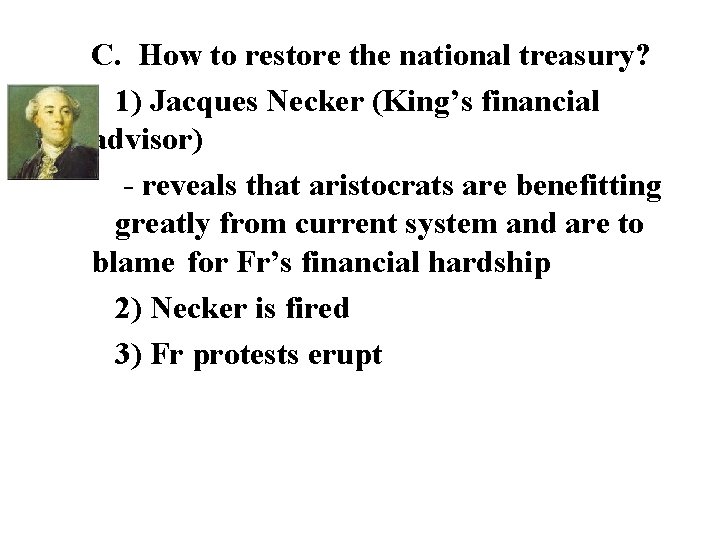
C. How to restore the national treasury? 1) Jacques Necker (King’s financial advisor) - reveals that aristocrats are benefitting greatly from current system and are to blame for Fr’s financial hardship 2) Necker is fired 3) Fr protests erupt
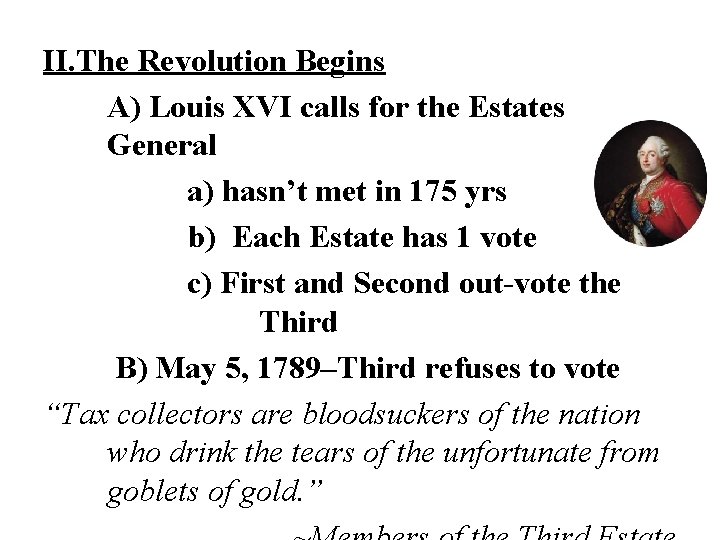
II. The Revolution Begins A) Louis XVI calls for the Estates General a) hasn’t met in 175 yrs b) Each Estate has 1 vote c) First and Second out-vote the Third B) May 5, 1789–Third refuses to vote “Tax collectors are bloodsuckers of the nation who drink the tears of the unfortunate from goblets of gold. ”
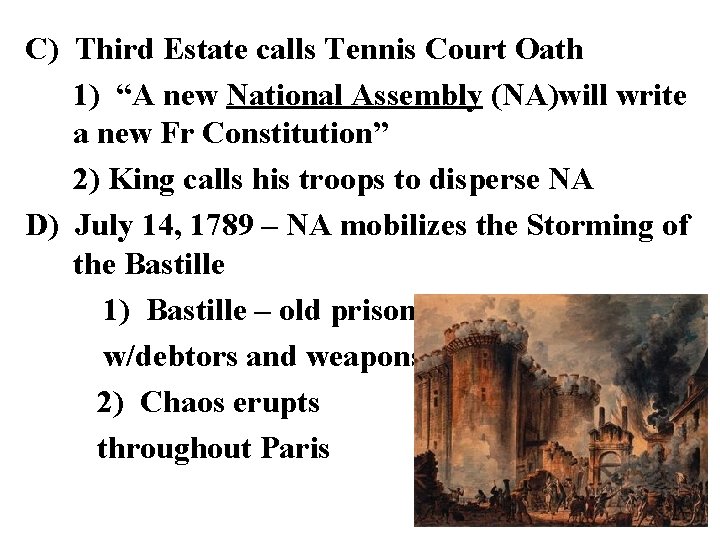
C) Third Estate calls Tennis Court Oath 1) “A new National Assembly (NA)will write a new Fr Constitution” 2) King calls his troops to disperse NA D) July 14, 1789 – NA mobilizes the Storming of the Bastille 1) Bastille – old prison w/debtors and weapons 2) Chaos erupts throughout Paris
III. National Assembly creates a Constitutional Monarchy (Moderate Phase 1789 -1791) A) Immediate changes are forced upon the King 1) tithe tax, estate system to be abolished 2) Louis XVI is still King but must accept the Revolution 3) 1789 – “Declaration of the Rights of Man” a) ideas of the Enlightenment = freedom of speech, press, religion, etc. b) “Men are born and remain free and equal in rights. ”
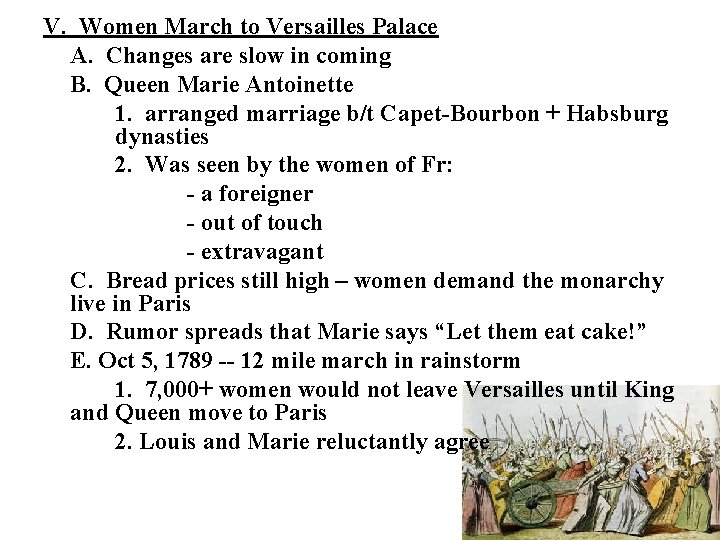
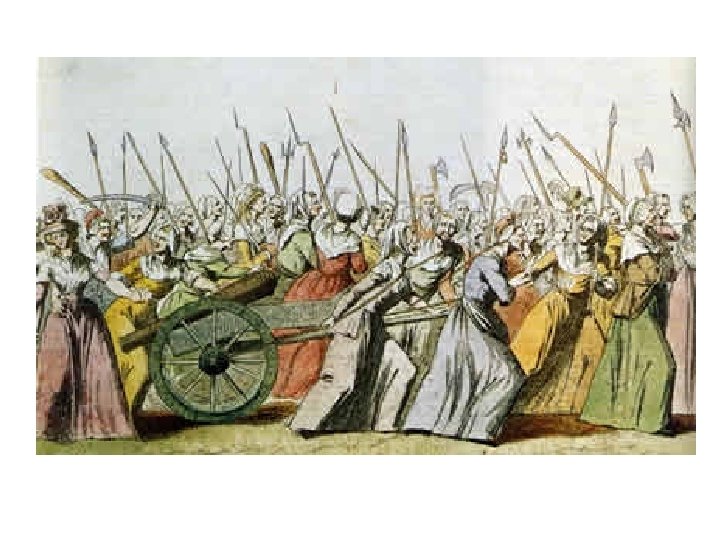
V. Women March to Versailles Palace A. Changes are slow in coming B. Queen Marie Antoinette 1. arranged marriage b/t Capet-Bourbon + Habsburg dynasties 2. Was seen by the women of Fr: - a foreigner - out of touch - extravagant C. Bread prices still high – women demand the monarchy live in Paris D. Rumor spreads that Marie says “Let them eat cake!” E. Oct 5, 1789 -- 12 mile march in rainstorm 1. 7, 000+ women would not leave Versailles until King and Queen move to Paris 2. Louis and Marie reluctantly agree
F. Louis and Marie Escape Paris 1. “The Flight to Varennes” a) June 1791 -Marie convinces Louis to flee in disguise - Recognized in Varennes, escorted back to Paris - Now seen as traitors 2. What to do with Louis and Marie?
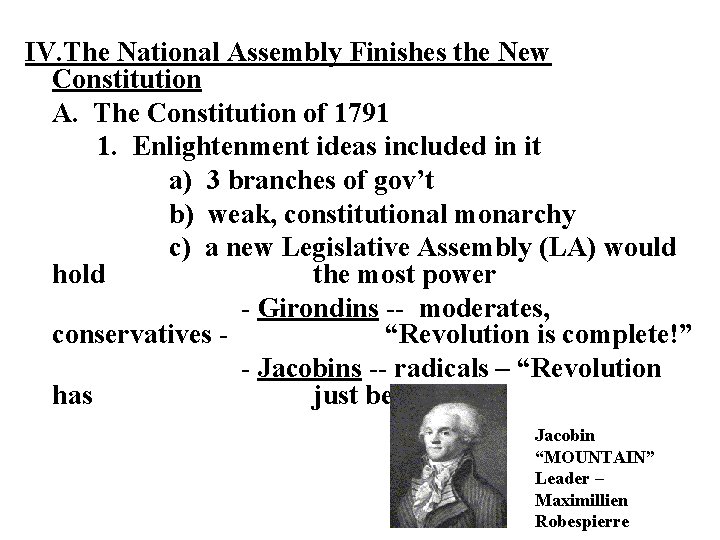
IV. The National Assembly Finishes the New Constitution A. The Constitution of 1791 1. Enlightenment ideas included in it a) 3 branches of gov’t b) weak, constitutional monarchy c) a new Legislative Assembly (LA) would hold the most power - Girondins -- moderates, conservatives “Revolution is complete!” - Jacobins -- radicals – “Revolution has just begun!” Jacobin “MOUNTAIN” Leader – Maximillien Robespierre
V. War A. Declaration of Pillnitz - Au and Pr demand Fr monarchy be restored B. Sans-culottes and Jacobins - demand monarchy be abolished C. LA declares war on Au, Pr, Br –a preemptive strike D. LA votes to officially end the office of king
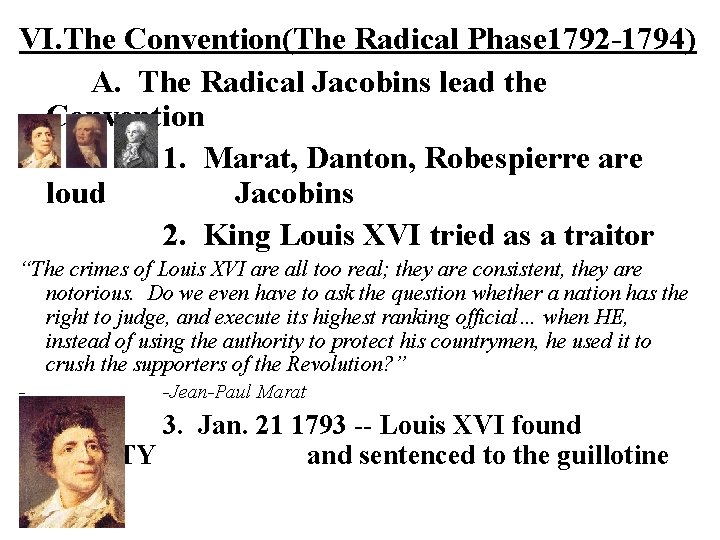
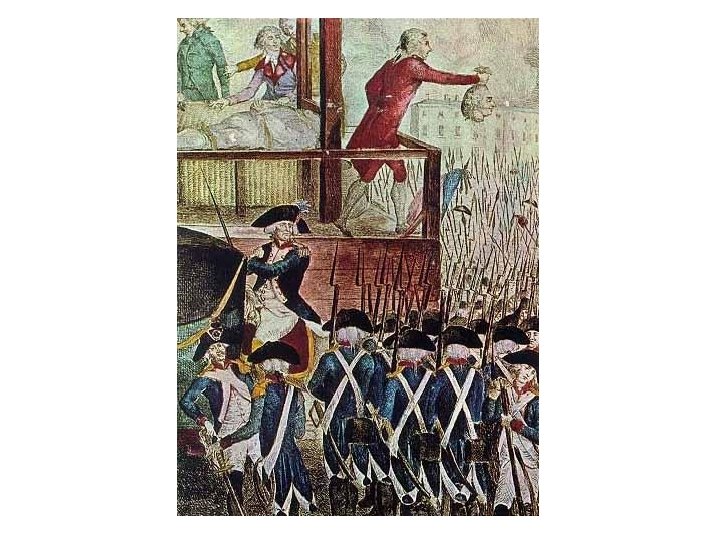
VI. The Convention(The Radical Phase 1792 -1794) A. The Radical Jacobins lead the Convention 1. Marat, Danton, Robespierre are loud Jacobins 2. King Louis XVI tried as a traitor “The crimes of Louis XVI are all too real; they are consistent, they are notorious. Do we even have to ask the question whether a nation has the right to judge, and execute its highest ranking official… when HE, instead of using the authority to protect his countrymen, he used it to crush the supporters of the Revolution? ” - -Jean-Paul Marat 3. Jan. 21 1793 -- Louis XVI found GUILTY and sentenced to the guillotine
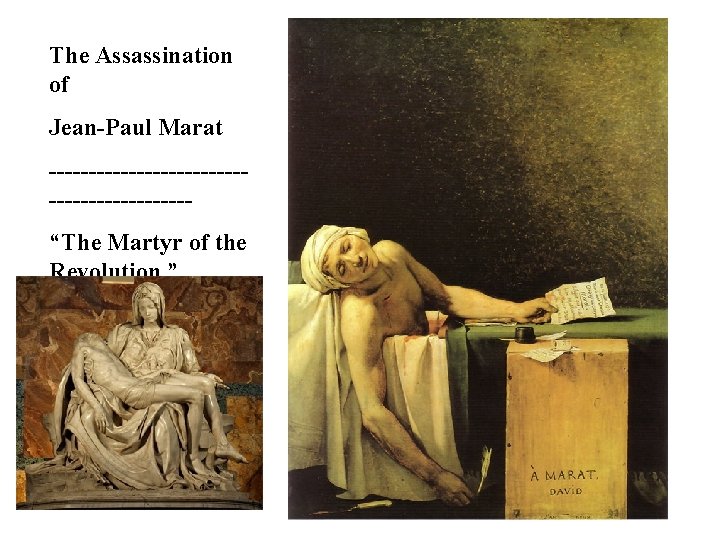
VII. The Reign of Terror (1793 -1794) A. “Threats” to the Revolution are everywhere 1. war w/ Au, Pr 2. nobles and clergy are rebelling 3. The Convention is being challenged by Girondins 4. July 1793 -- Marat is assassinated by a Girondin Charlotte Corday
The Assassination of Jean-Paul Marat ---------------------“The Martyr of the Revolution. ”
B. The Committee of Public Safety (CPS) 1. 12 Convention members who will “Save the Revolution” 2. Constitution of 1791 is suspended 3. De-Christianization is enacted - “the goddess of reason” 4. led by Robespierre - believed a republic of “virtue” could only be achieved through “terror. ” “Terror is nothing other than justice, prompt, severe, and inflexible. Terror without virtue is disastrous, but virtue without terror is powerless. Softness to traitors will destroy us all. ”
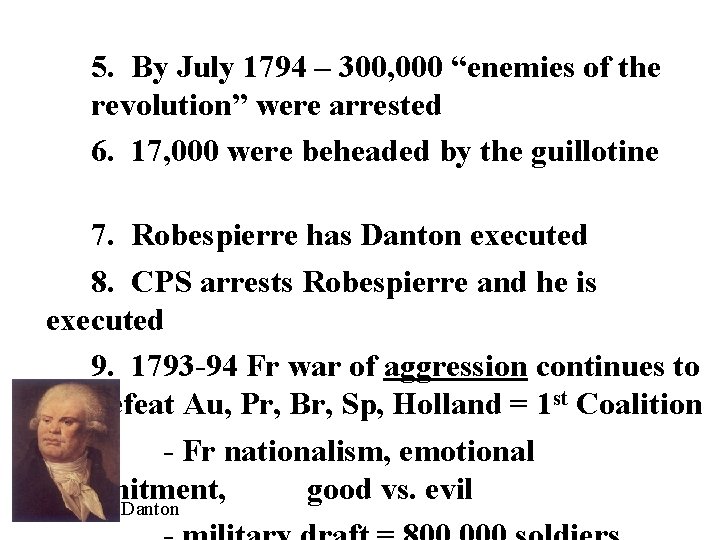
5. By July 1794 – 300, 000 “enemies of the revolution” were arrested 6. 17, 000 were beheaded by the guillotine 7. Robespierre has Danton executed 8. CPS arrests Robespierre and he is executed 9. 1793 -94 Fr war of aggression continues to defeat Au, Pr, Br, Sp, Holland = 1 st Coalition - Fr nationalism, emotional commitment, good vs. evil Danton
VIII. The Directory (Napoleonic Phase 17951815) A. The Constitution of 1795 1. moderate 5 man leadership system called “The Directory” 2. a 2 house legislature 3. continued warring w/Eu 4. unsure, weak, corrupt, and unpopular with the people