
Chapter 10 The Endocrine System The Endocrine System
- Slides: 53
Chapter 10 The Endocrine System
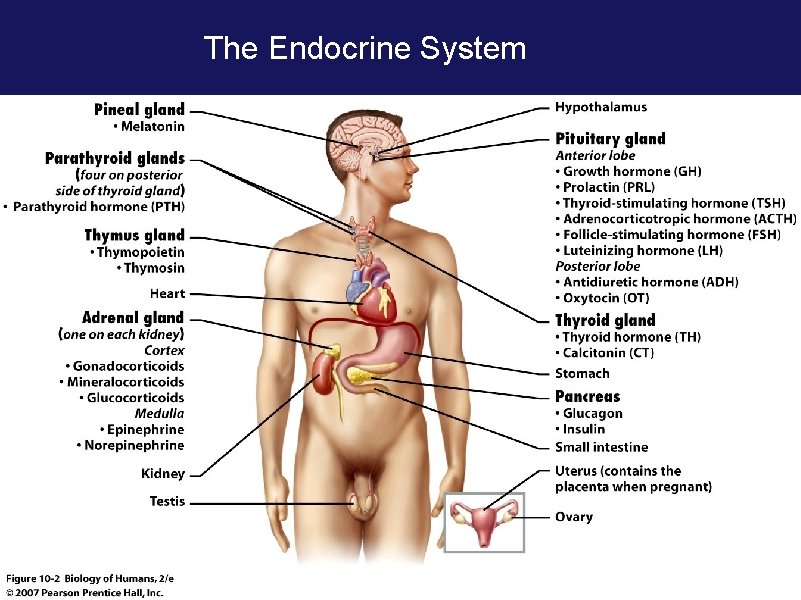
The Endocrine System
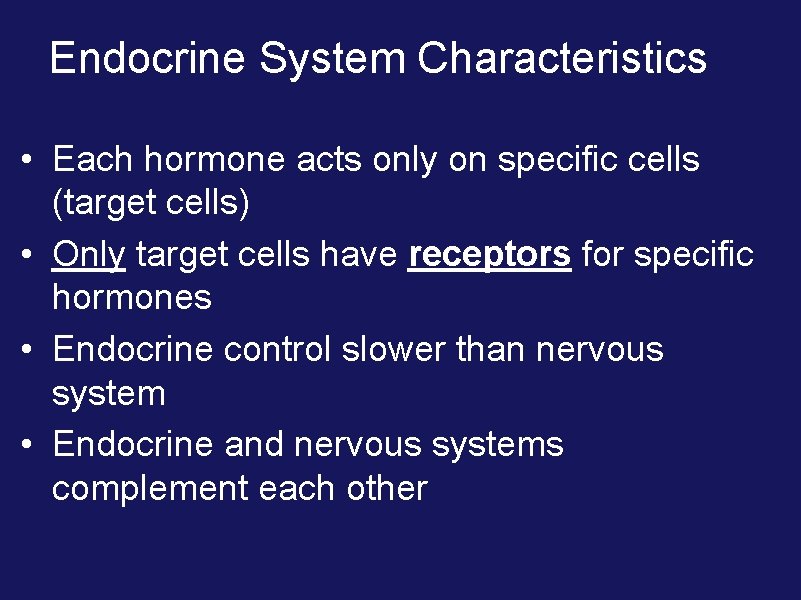
Endocrine System Characteristics • Each hormone acts only on specific cells (target cells) • Only target cells have receptors for specific hormones • Endocrine control slower than nervous system • Endocrine and nervous systems complement each other
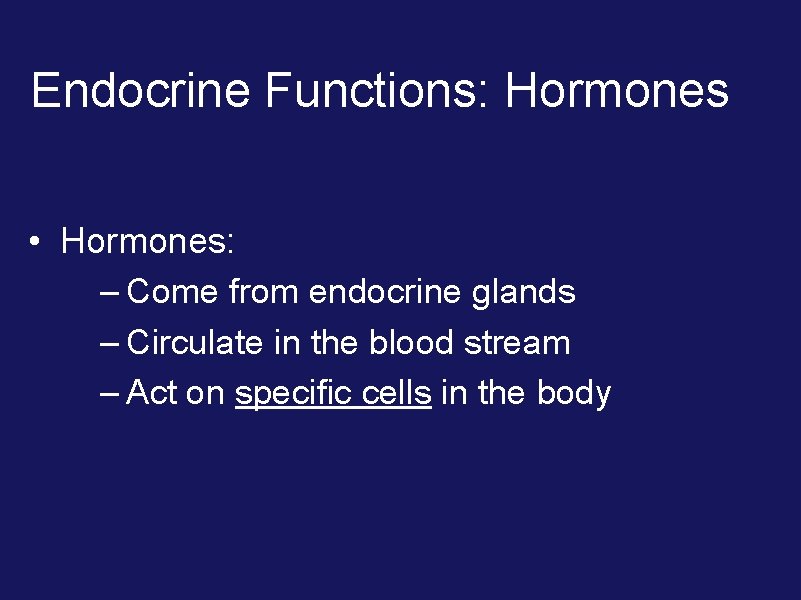
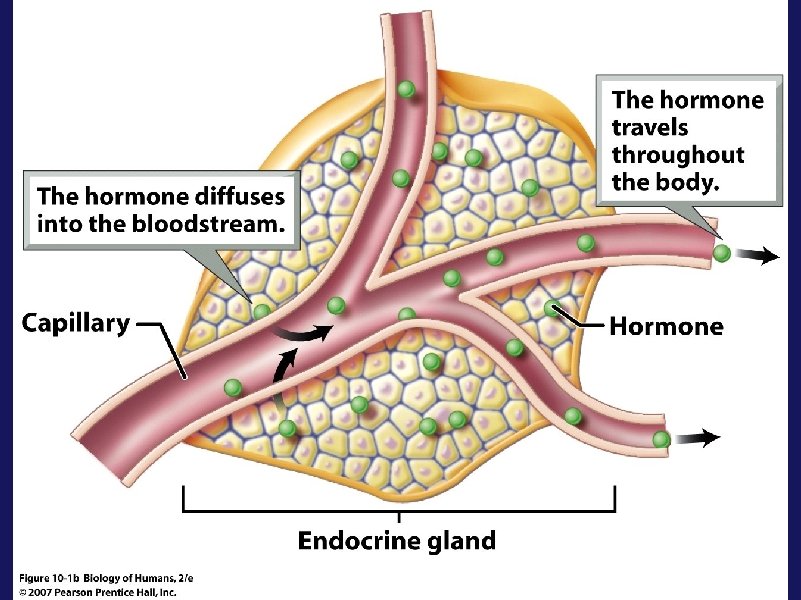
Endocrine Functions: Hormones • Hormones: – Come from endocrine glands – Circulate in the blood stream – Act on specific cells in the body
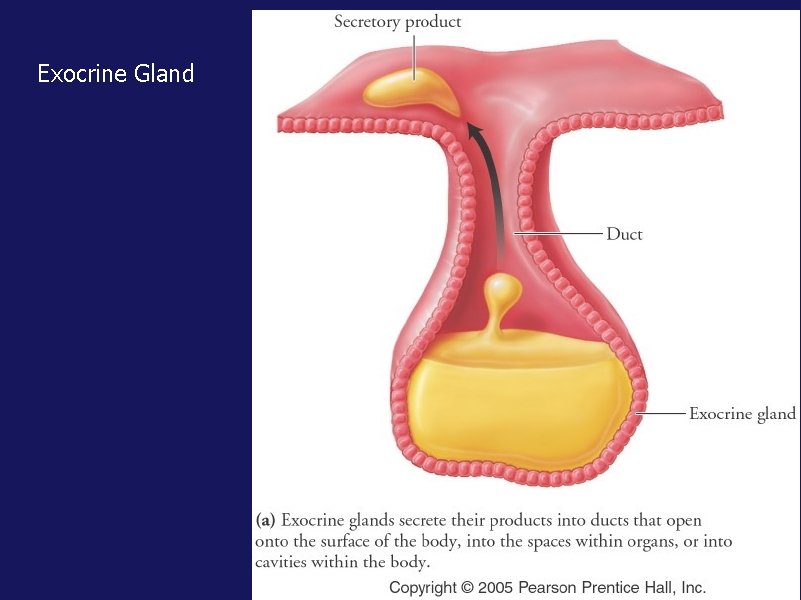
Exocrine Gland
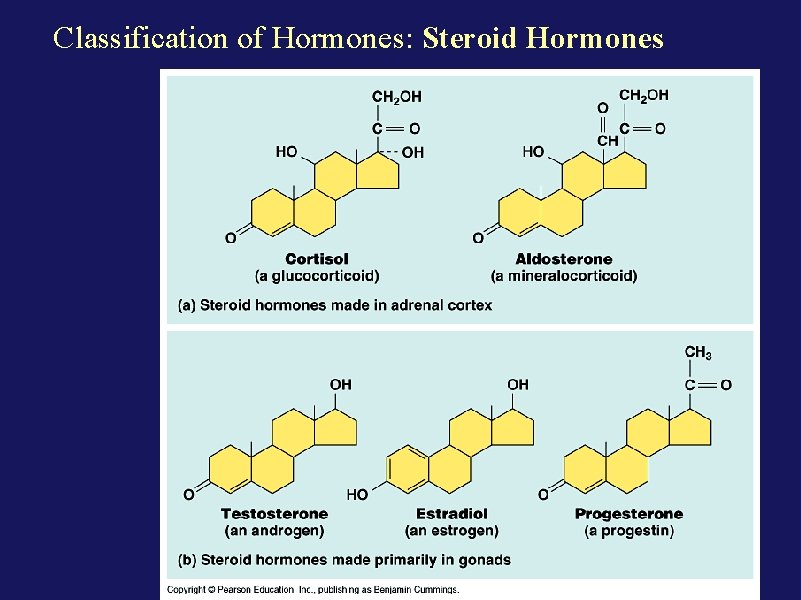
Classification of Hormones: Steroid Hormones
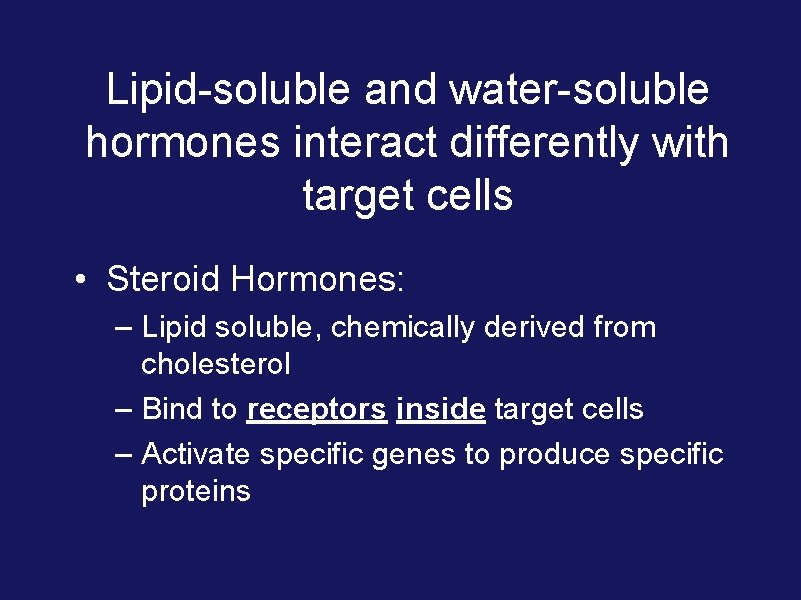
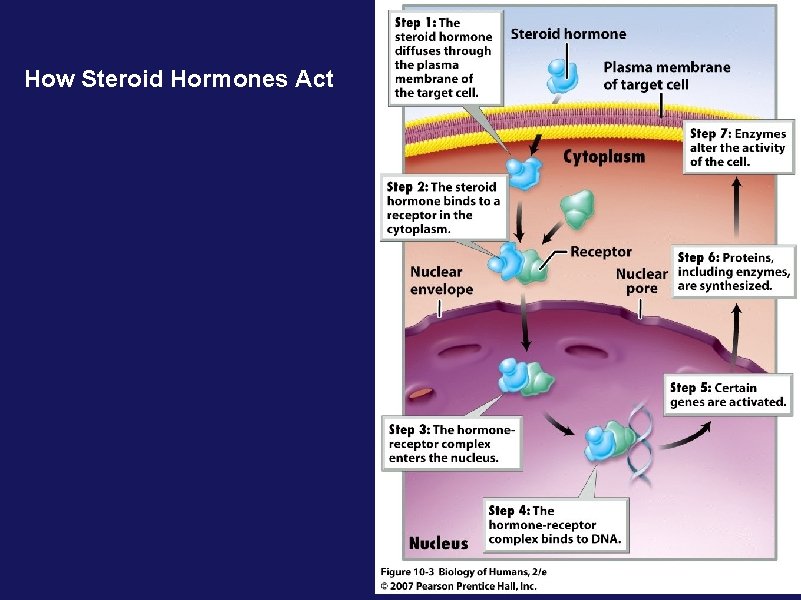
Lipid-soluble and water-soluble hormones interact differently with target cells • Steroid Hormones: – Lipid soluble, chemically derived from cholesterol – Bind to receptors inside target cells – Activate specific genes to produce specific proteins
How Steroid Hormones Act
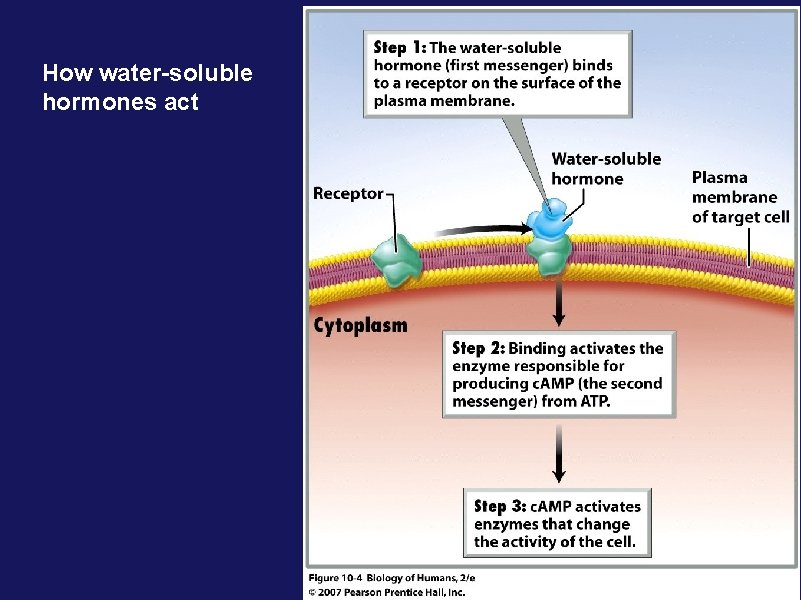
Characteristics of Non-steroid Hormones • Nonsteroid hormones: – Water soluble – Bind to receptors on target cell membranes – Work through intermediate mechanisms (second messengers) to activate existing enzymes – Faster action than steroid hormones; time to action = seconds to minutes
How water-soluble hormones act
Hormone Receptors • All hormones work through receptors • Target cells (and only target cells) for a hormone contain receptors for that hormone • Example: Estrogen Receptor Knockout (ERKO) mouse (and human)
In order for a hormone to work on a cell (or tissue): A. Receptors are useful but not essential B. Receptors for that hormone must be present
Feedback mechanisms regulate the secretion of hormones • Refer to in-class worksheet
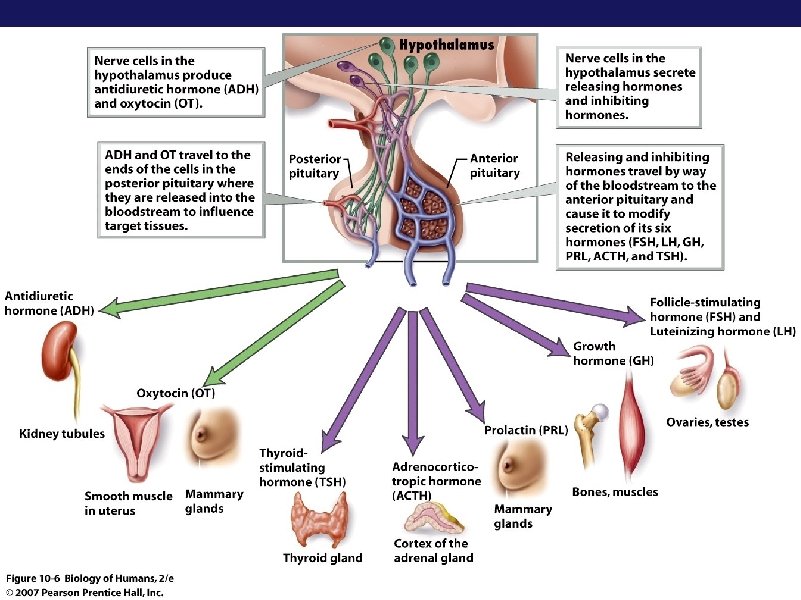
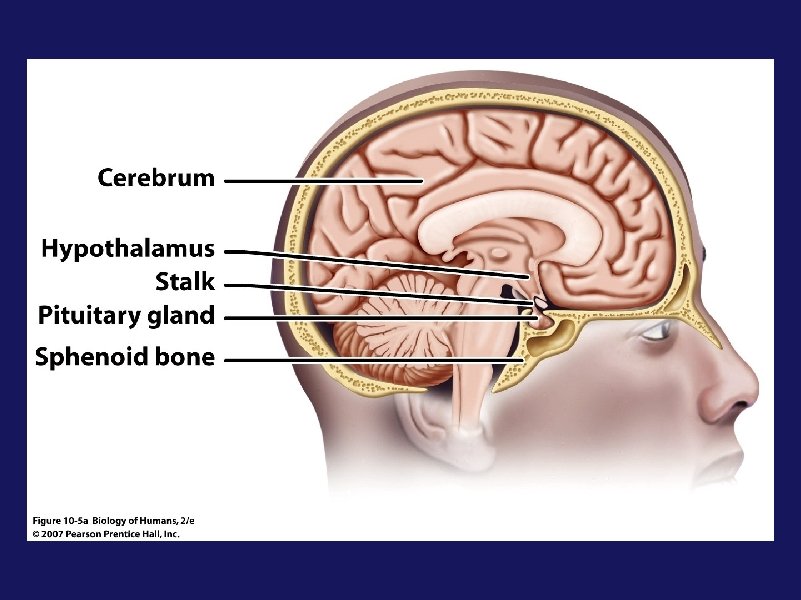
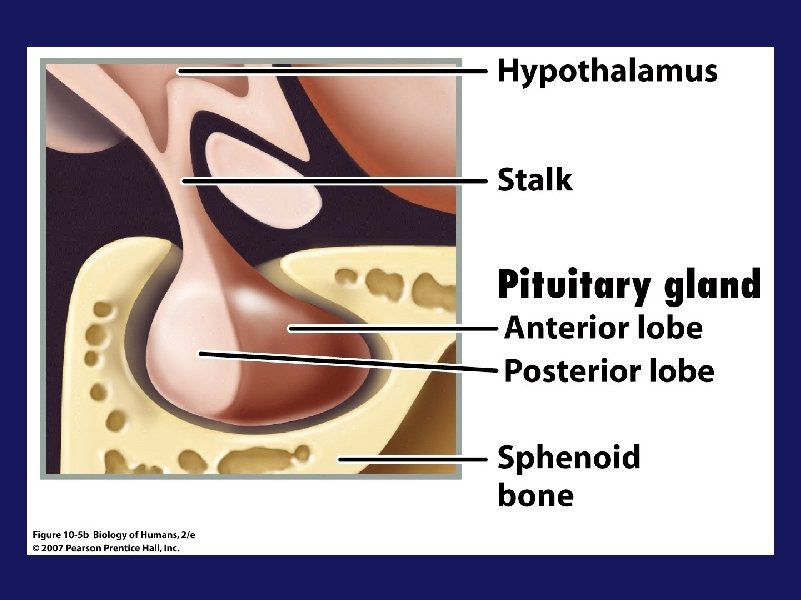
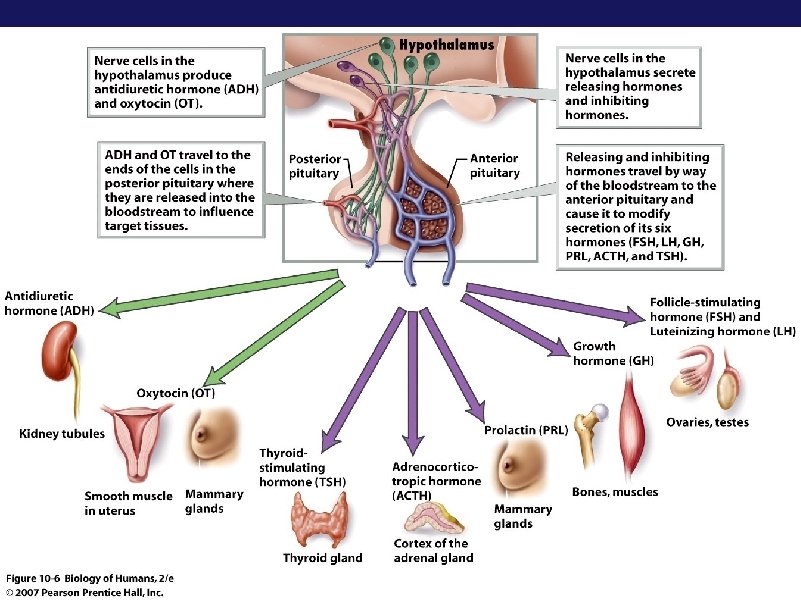
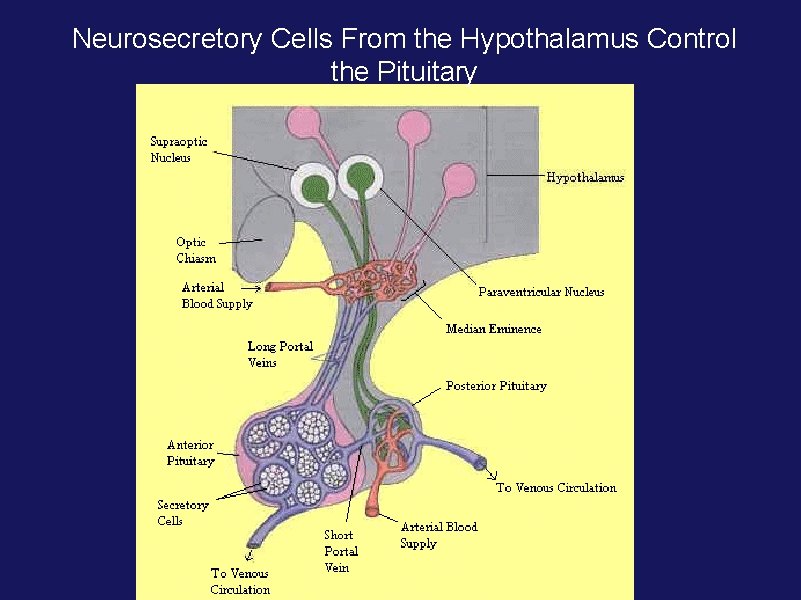
Hypothalamus and Pituitary Glands • Hormones from the hypothalamus regulate the pituitary gland • Neurosecretory cells: part neuron; part endocrine organ • Pituitary hormones often prompt other glands to release hormones
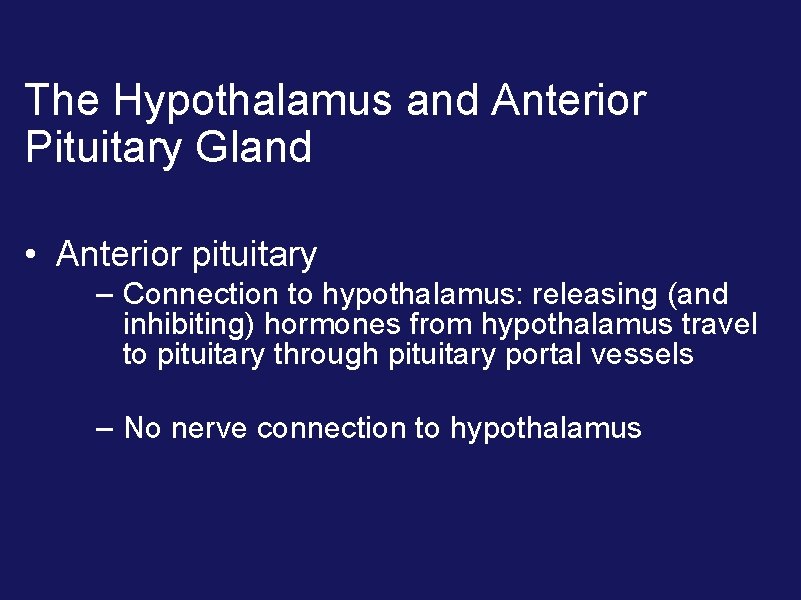
The Hypothalamus and Anterior Pituitary Gland • Anterior pituitary – Connection to hypothalamus: releasing (and inhibiting) hormones from hypothalamus travel to pituitary through pituitary portal vessels – No nerve connection to hypothalamus
Neurosecretory Cells From the Hypothalamus Control the Pituitary
True/False Neurosecretory cells have characteristics of both hormone secreting cells and neurons
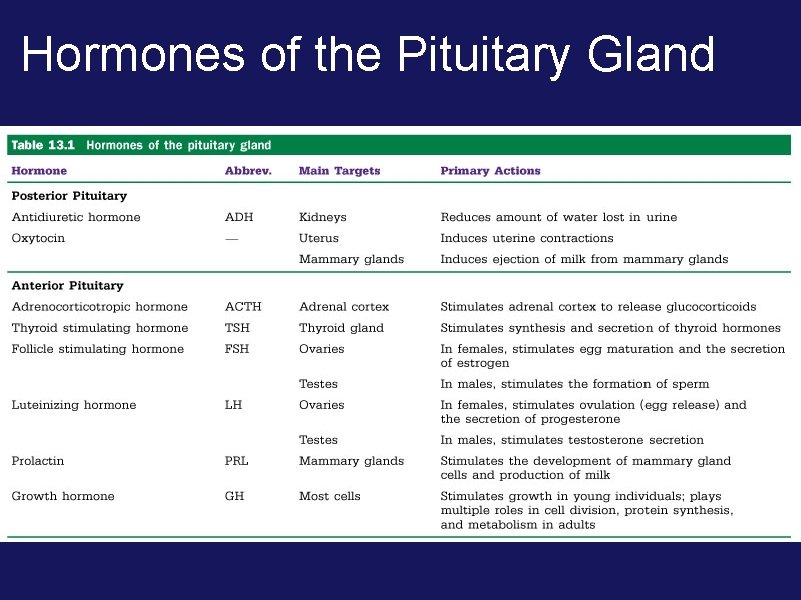
Hormones of the Pituitary Gland
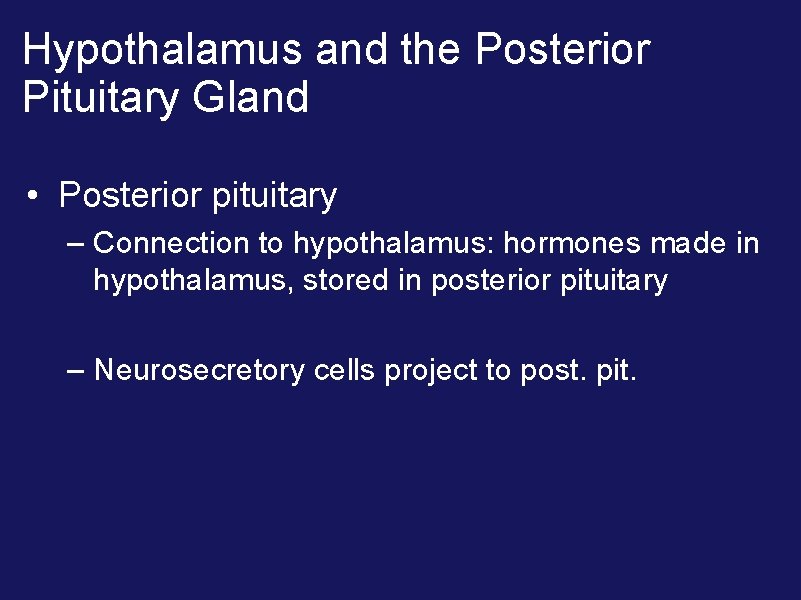
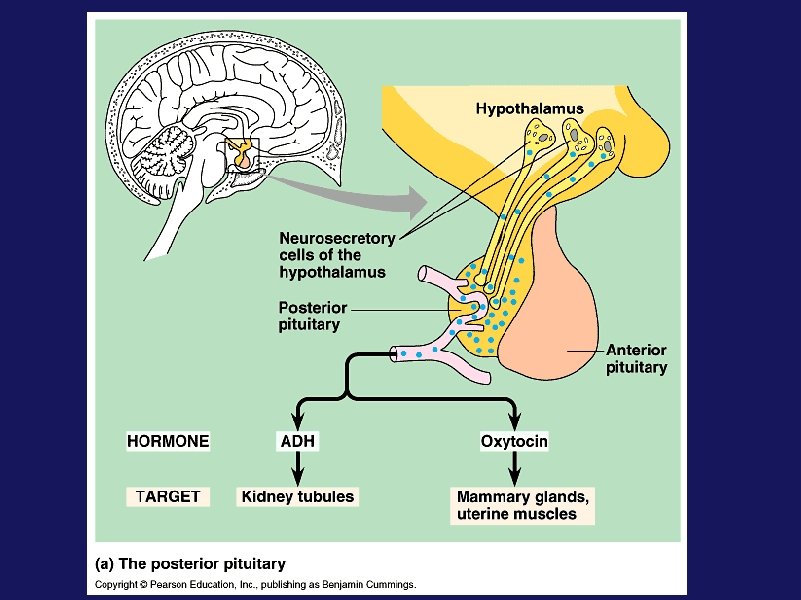
Hypothalamus and the Posterior Pituitary Gland • Posterior pituitary – Connection to hypothalamus: hormones made in hypothalamus, stored in posterior pituitary – Neurosecretory cells project to post. pit.
Hypothalamus and the Posterior Pituitary Gland • Posterior pituitary Hormones (protein) • Antidiuretic hormone (ADH): conserves water in kidneys, regulates water balance in body • Regulated by: –High/Low water intake –Alcohol
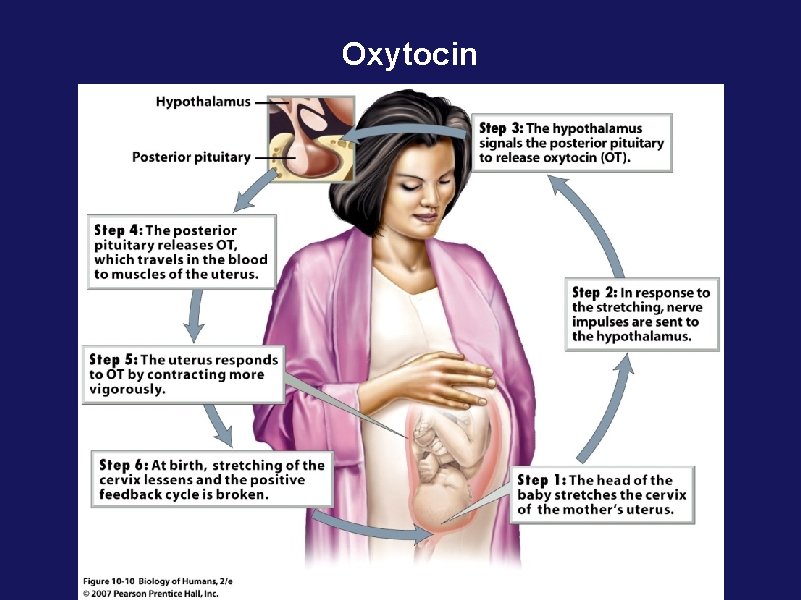
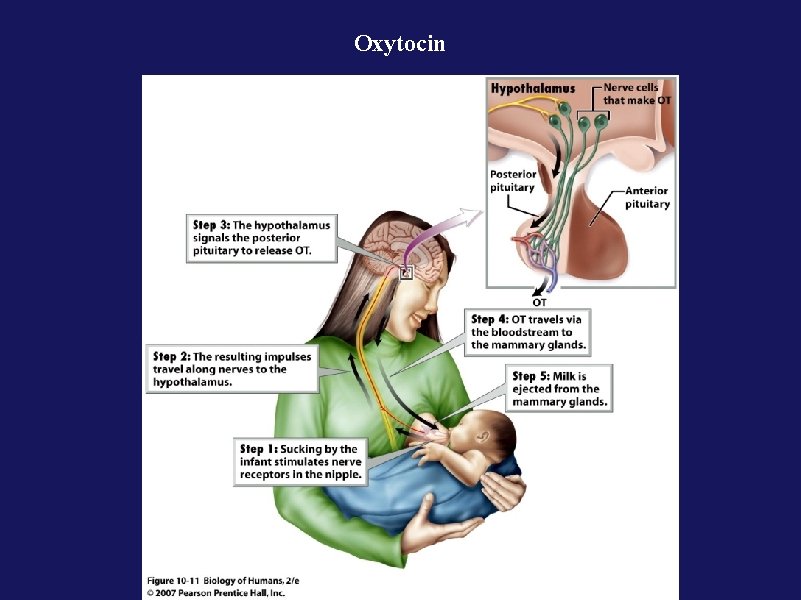
Hypothalamus and the Posterior Pituitary Gland • Posterior pituitary Hormones (protein) • Oxytocin induces: –Uterine contractions during labor –Milk ejection through neuroendocrine reflex –Behavioral Effects: Love/Trust/Bonding
Oxytocin
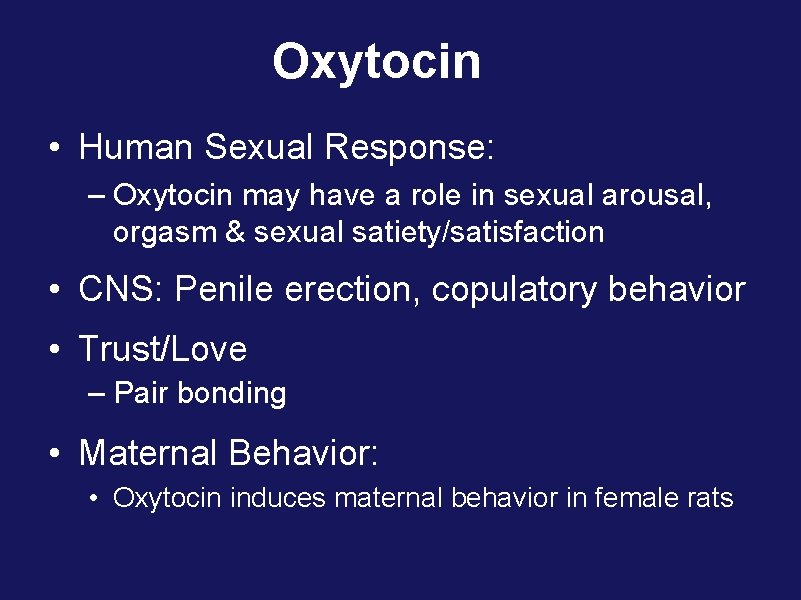
Oxytocin • Human Sexual Response: – Oxytocin may have a role in sexual arousal, orgasm & sexual satiety/satisfaction • CNS: Penile erection, copulatory behavior • Trust/Love – Pair bonding • Maternal Behavior: • Oxytocin induces maternal behavior in female rats
Oxytocin
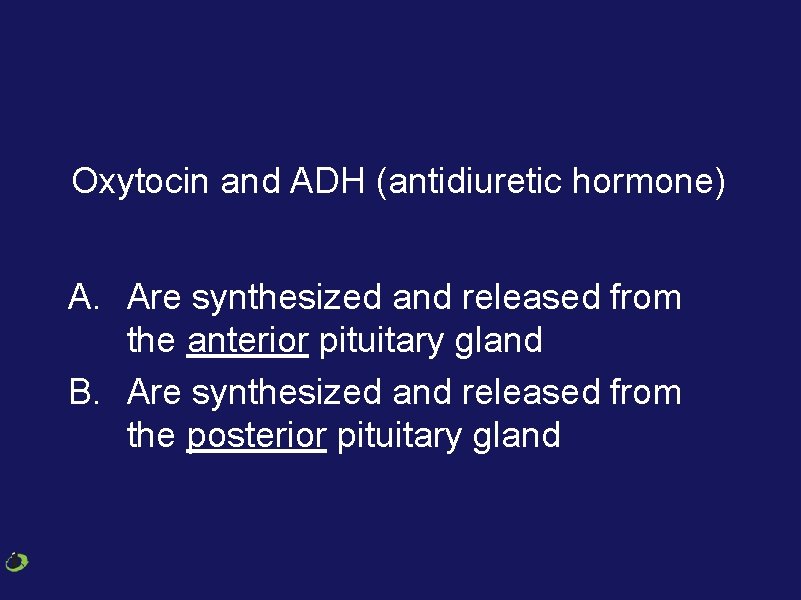
Oxytocin and ADH (antidiuretic hormone) A. Are synthesized and released from the anterior pituitary gland B. Are synthesized and released from the posterior pituitary gland
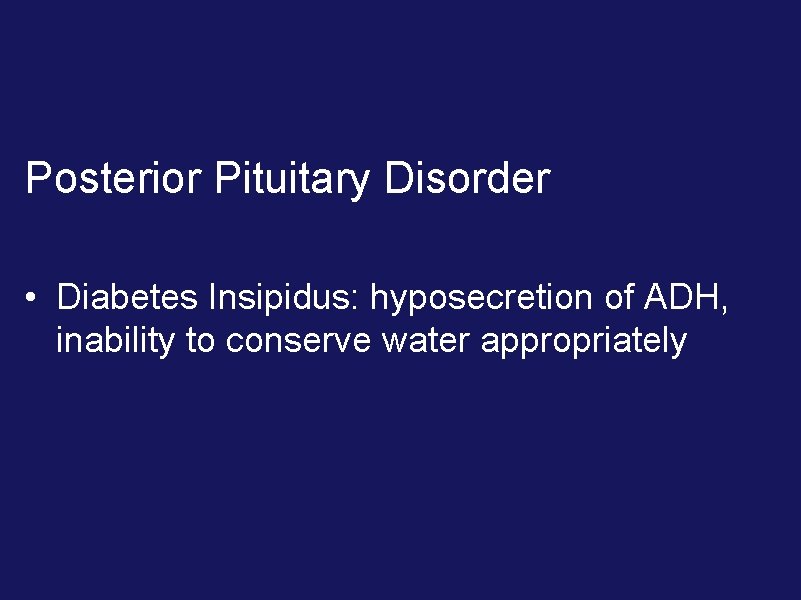
Posterior Pituitary Disorder • Diabetes Insipidus: hyposecretion of ADH, inability to conserve water appropriately
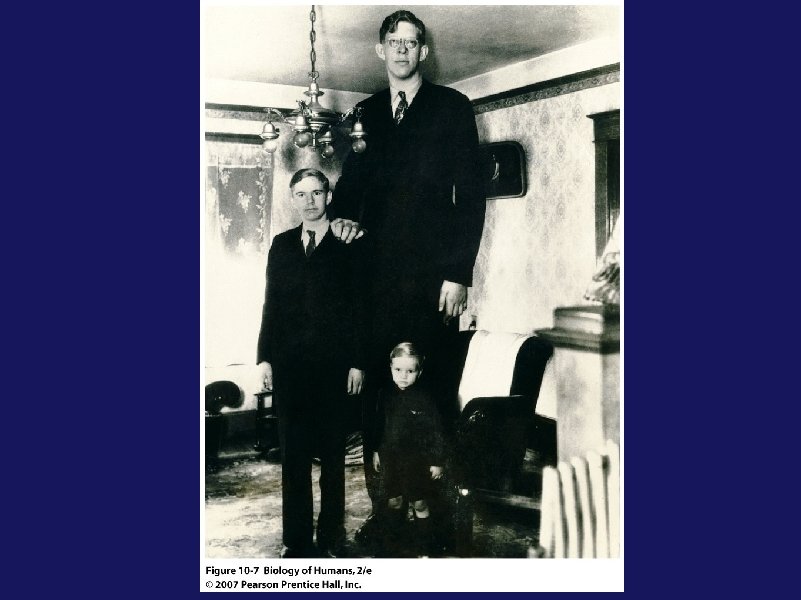
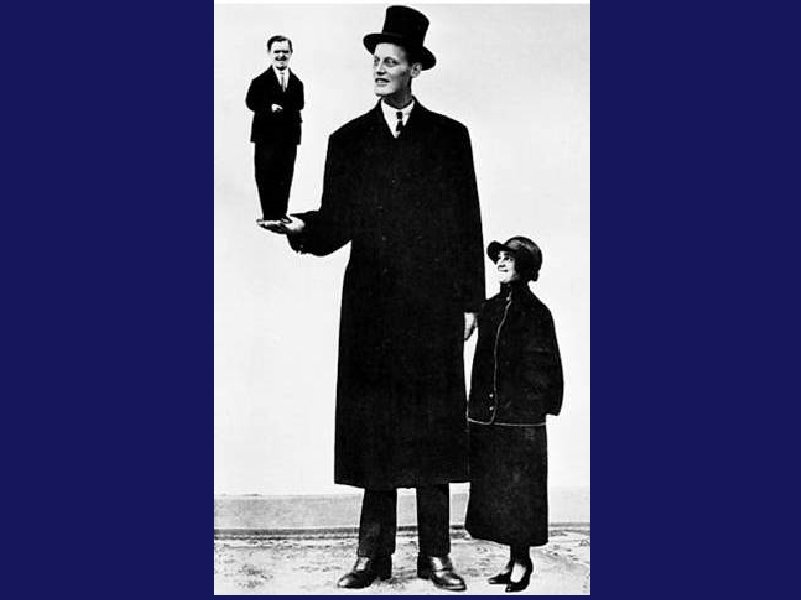
Anterior Pituitary Disorders • Gigantism: hypersecretion of growth hormone (during growth phase) • Pituitary Dwarfism: hyposecretion of growth hormone (during growth phase)
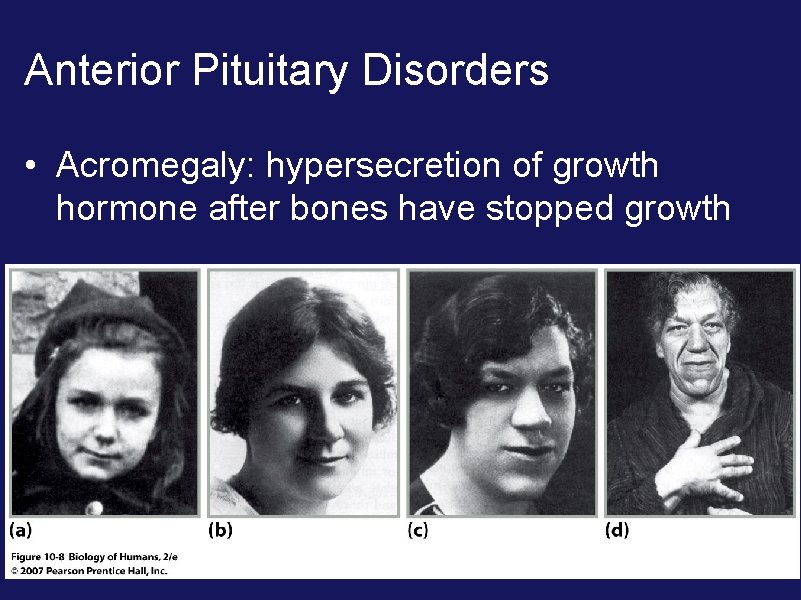
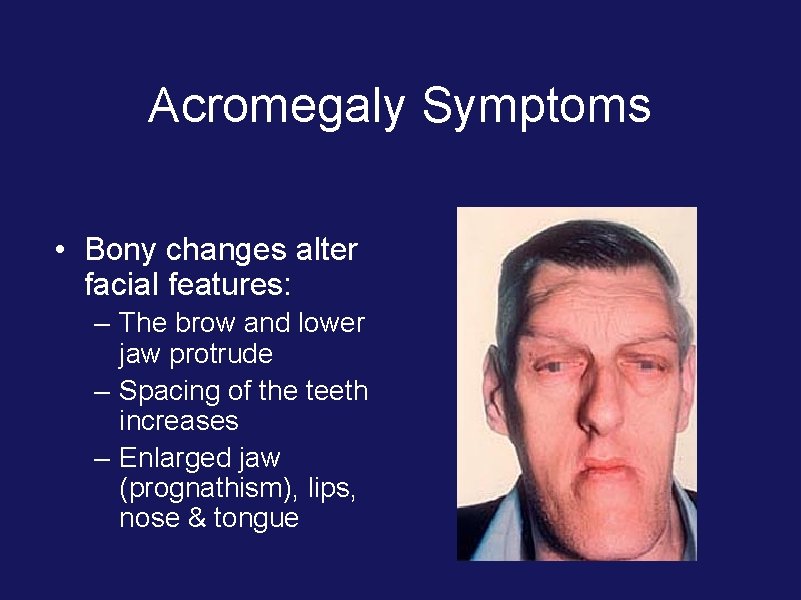
Anterior Pituitary Disorders • Acromegaly: hypersecretion of growth hormone after bones have stopped growth
Acromegaly Symptoms • Bony changes alter facial features: – The brow and lower jaw protrude – Spacing of the teeth increases – Enlarged jaw (prognathism), lips, nose & tongue
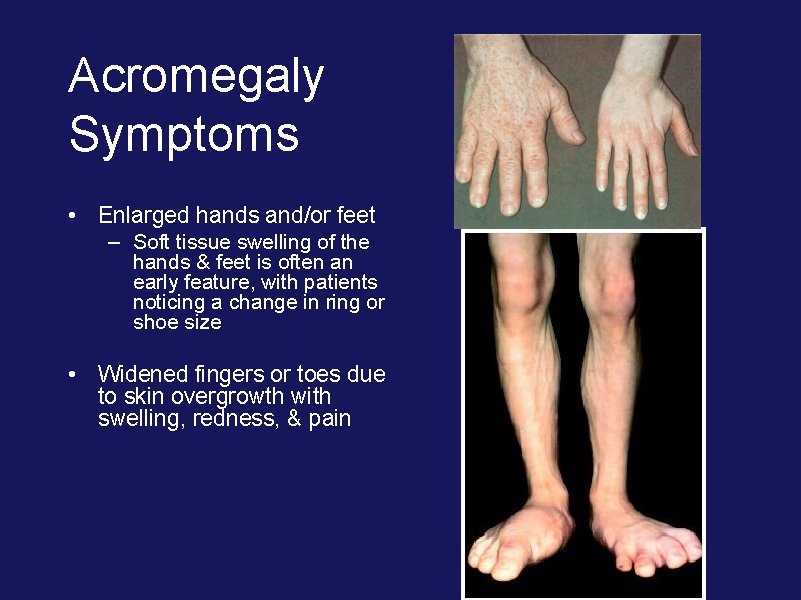
Acromegaly Symptoms • Enlarged hands and/or feet – Soft tissue swelling of the hands & feet is often an early feature, with patients noticing a change in ring or shoe size • Widened fingers or toes due to skin overgrowth with swelling, redness, & pain
Why is Growth Hormone an Abused Drug? • Role of GH in Normal Adults – Increases muscle growth – Decreases fat stores
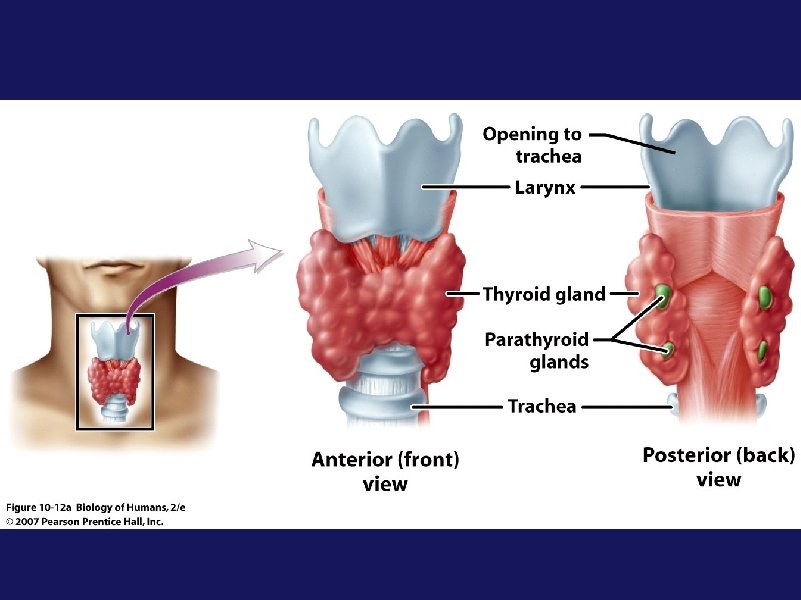
Thyroid Gland
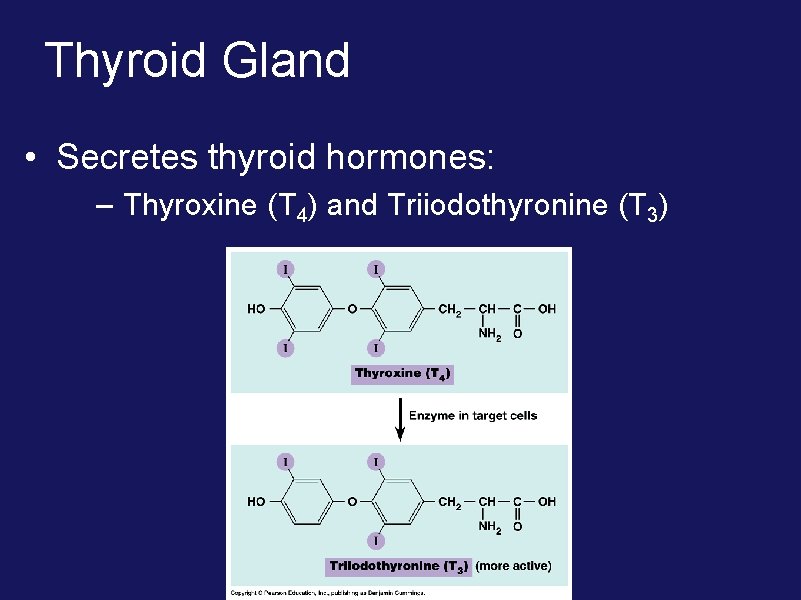
Thyroid Gland • Secretes thyroid hormones: – Thyroxine (T 4) and Triiodothyronine (T 3)
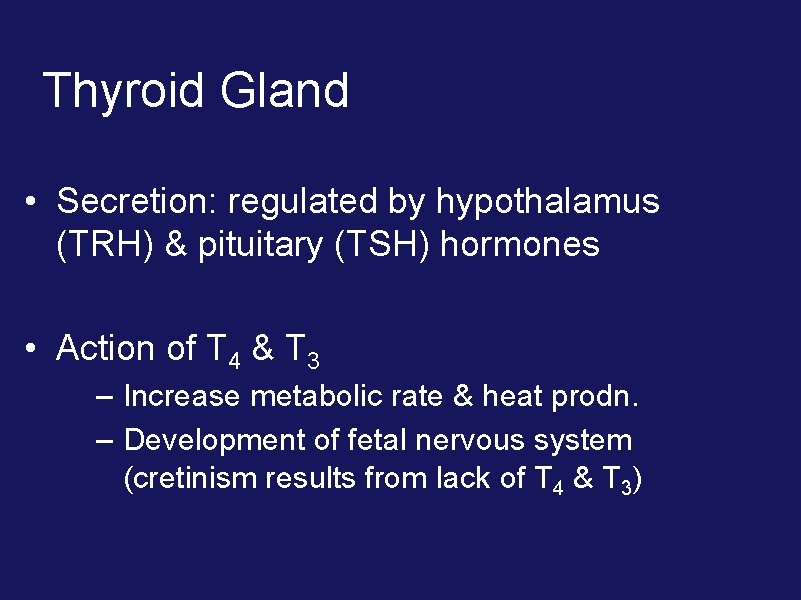
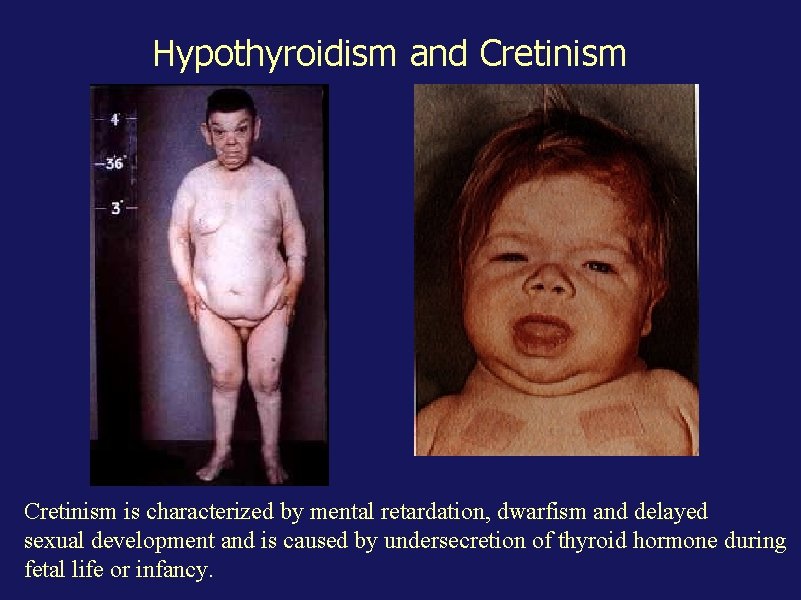
Thyroid Gland • Secretion: regulated by hypothalamus (TRH) & pituitary (TSH) hormones • Action of T 4 & T 3 – Increase metabolic rate & heat prodn. – Development of fetal nervous system (cretinism results from lack of T 4 & T 3)
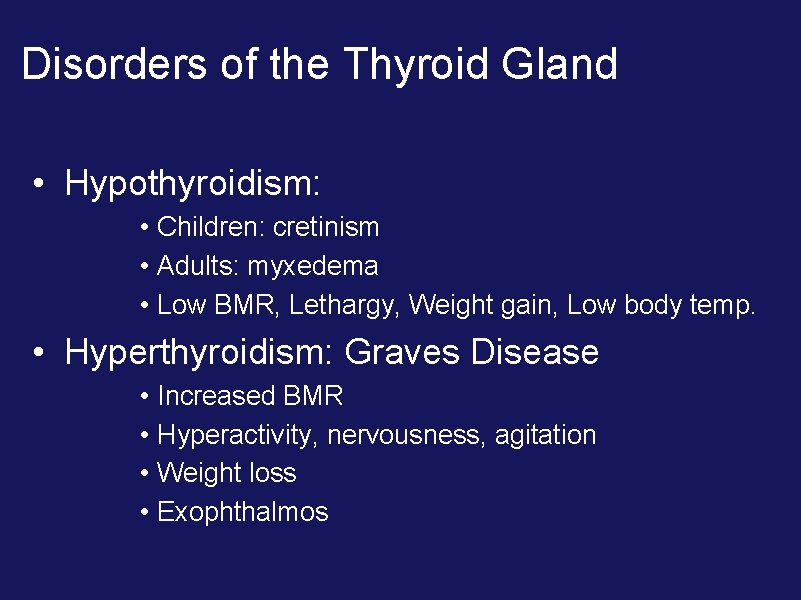
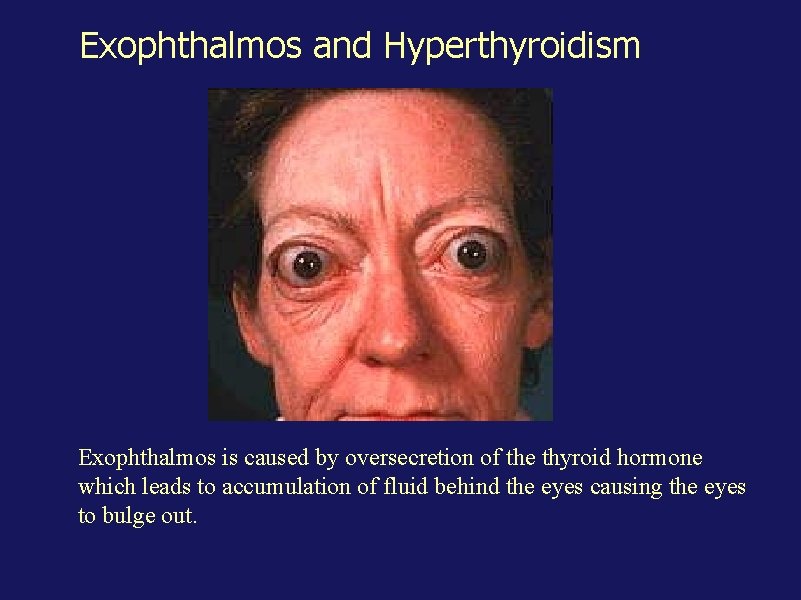
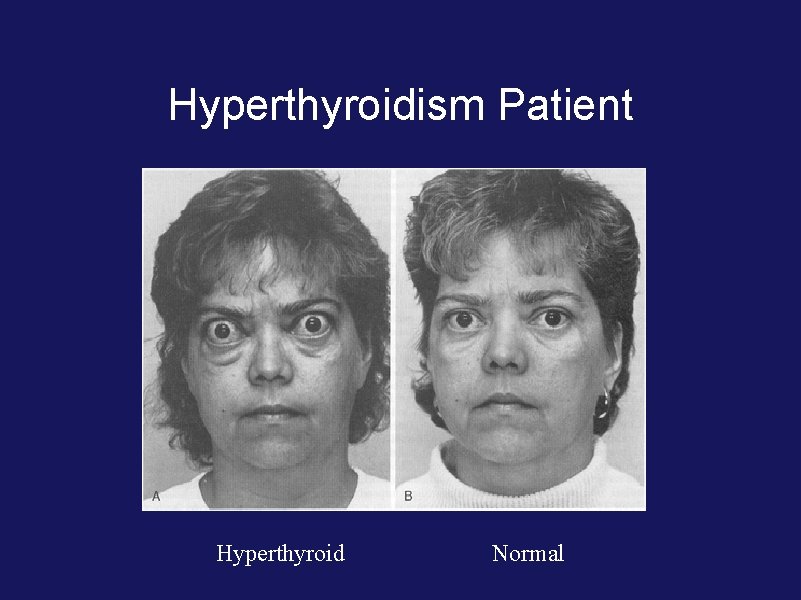
Disorders of the Thyroid Gland • Hypothyroidism: • Children: cretinism • Adults: myxedema • Low BMR, Lethargy, Weight gain, Low body temp. • Hyperthyroidism: Graves Disease • • Increased BMR Hyperactivity, nervousness, agitation Weight loss Exophthalmos
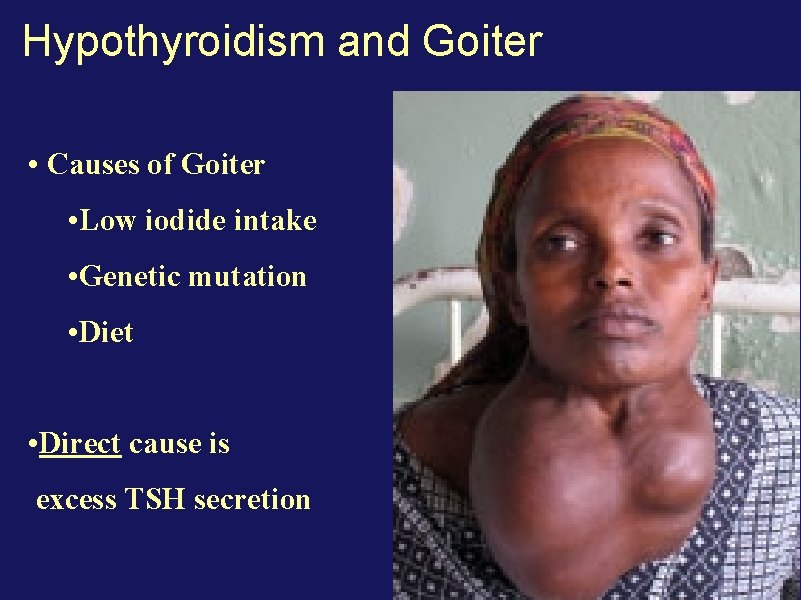
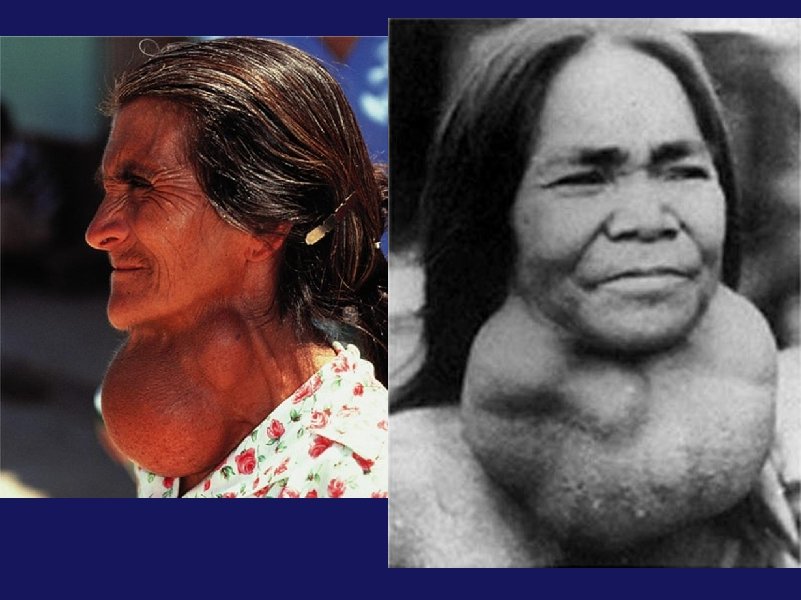
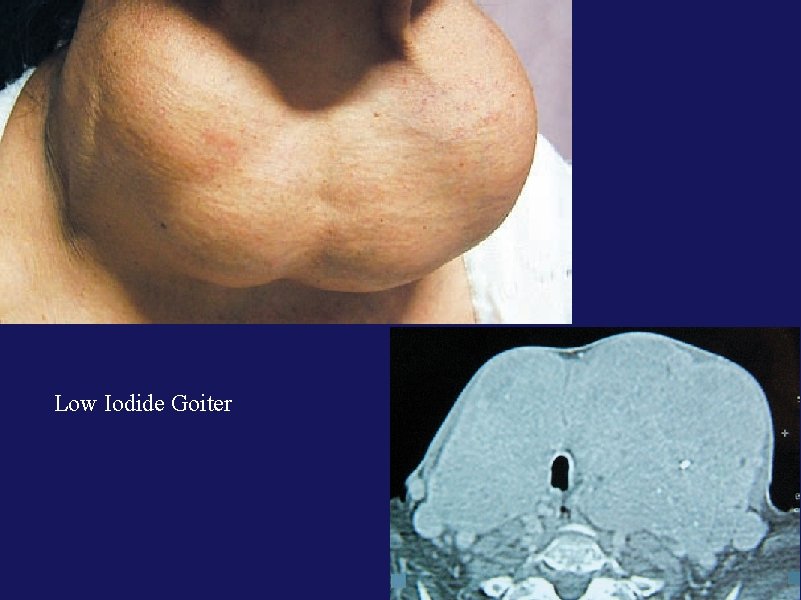
Hypothyroidism and Goiter • Causes of Goiter • Low iodide intake • Genetic mutation • Diet • Direct cause is excess TSH secretion
Low Iodide Goiter
Goiters can be caused by: A. Too little iodide in the diet B. Too much iodide in the diet
Too little iodide in the diet causes a goiter because: A. Not enough T 3/T 4 is produced B. Not enough negative fdbk of T 3/T 4 on the pituitary/hypothalamus C. Excess secretion of TSH (Thyroid Stimulating Hormone)
The factor that most often is the direct stimulus that causes a goiter is excess: A. Iodide B. T 3/T 4 C. TSH (Thyroid Stimulating Hormone)
Exophthalmos and Hyperthyroidism Exophthalmos is caused by oversecretion of the thyroid hormone which leads to accumulation of fluid behind the eyes causing the eyes to bulge out.
Hyperthyroidism Patient Hyperthyroid Normal
Hypothyroidism and Cretinism is characterized by mental retardation, dwarfism and delayed sexual development and is caused by undersecretion of thyroid hormone during fetal life or infancy.