
CHAPTER 10 SUPPLY CHAIN STRATEGY 1 Supply Chain
- Slides: 31
CHAPTER 10 SUPPLY CHAIN STRATEGY 1
Supply Chain Strategy • Supply chain management • Competitive advantage • Aligning product and supply chain strategy 2
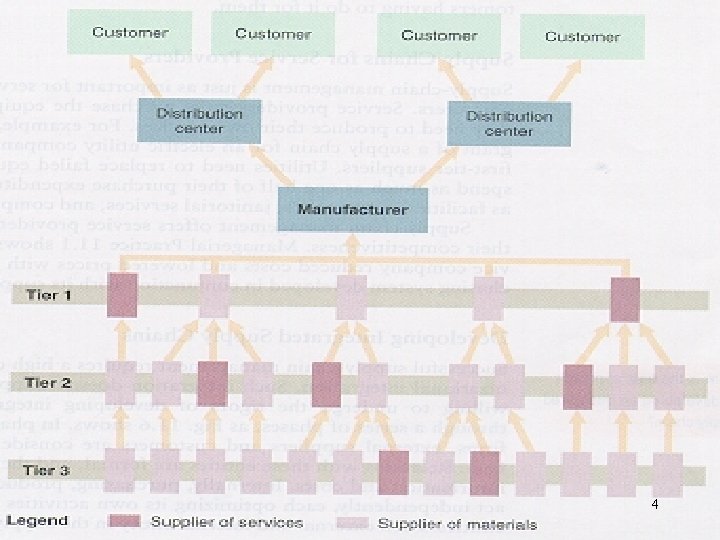
Supply Chain • A supply chain represents all the stages at which value is added in producing and delivering a product or service from suppliers (and their suppliers) to customers (and their customers). 3
4
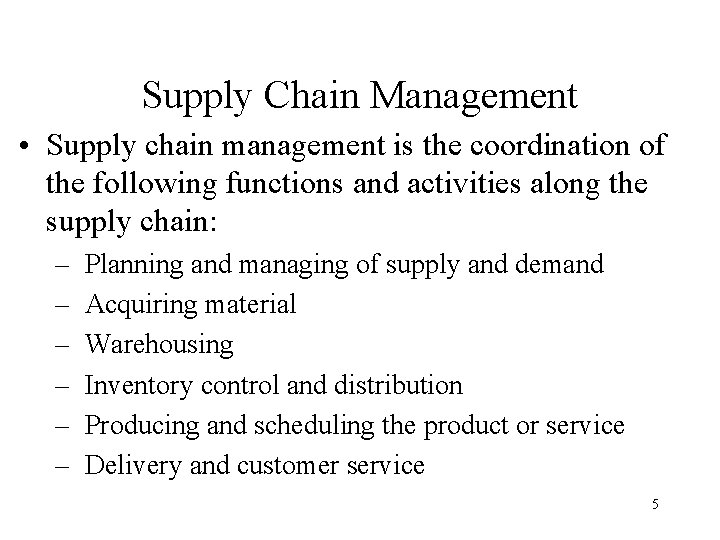
Supply Chain Management • Supply chain management is the coordination of the following functions and activities along the supply chain: – – – Planning and managing of supply and demand Acquiring material Warehousing Inventory control and distribution Producing and scheduling the product or service Delivery and customer service 5
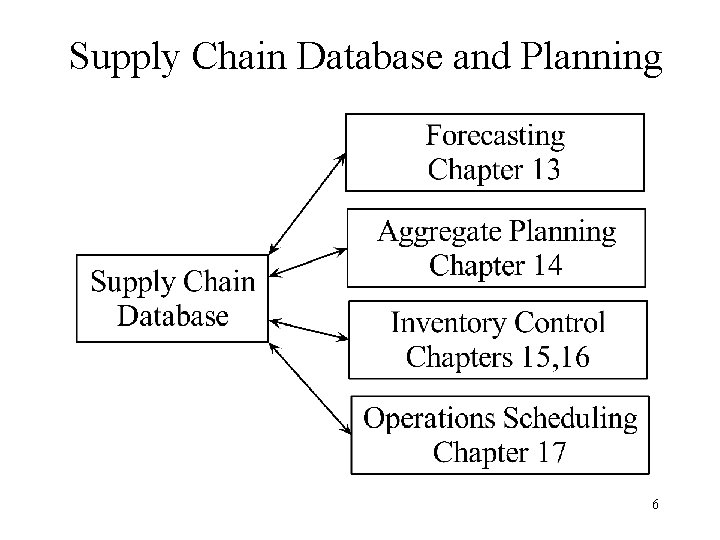
Supply Chain Database and Planning 6
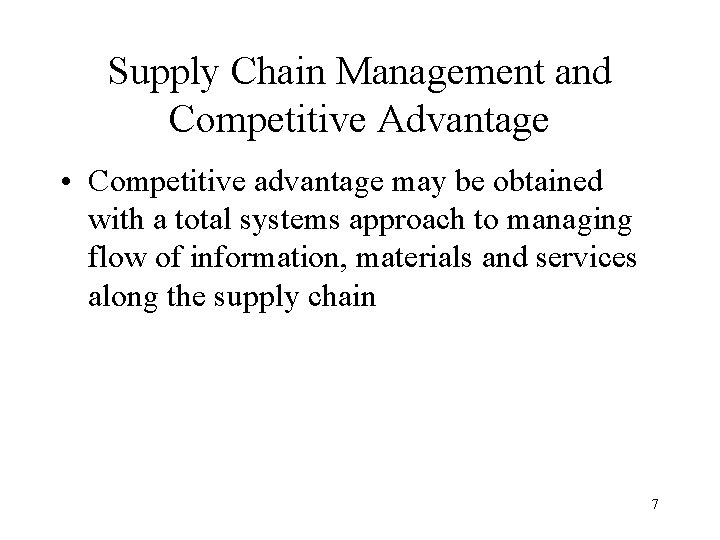
Supply Chain Management and Competitive Advantage • Competitive advantage may be obtained with a total systems approach to managing flow of information, materials and services along the supply chain 7
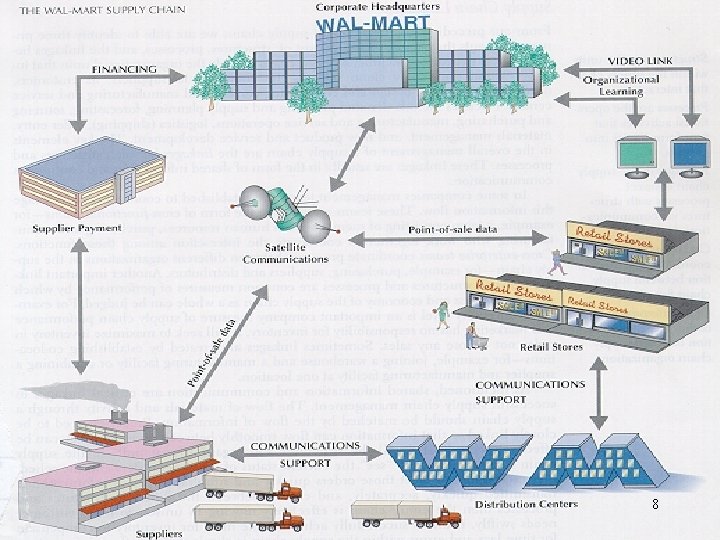
8
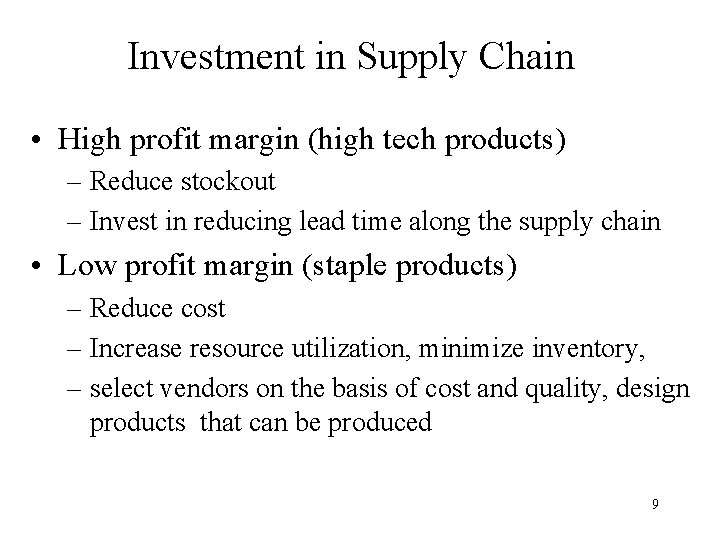
Investment in Supply Chain • High profit margin (high tech products) – Reduce stockout – Invest in reducing lead time along the supply chain • Low profit margin (staple products) – Reduce cost – Increase resource utilization, minimize inventory, – select vendors on the basis of cost and quality, design products that can be produced 9
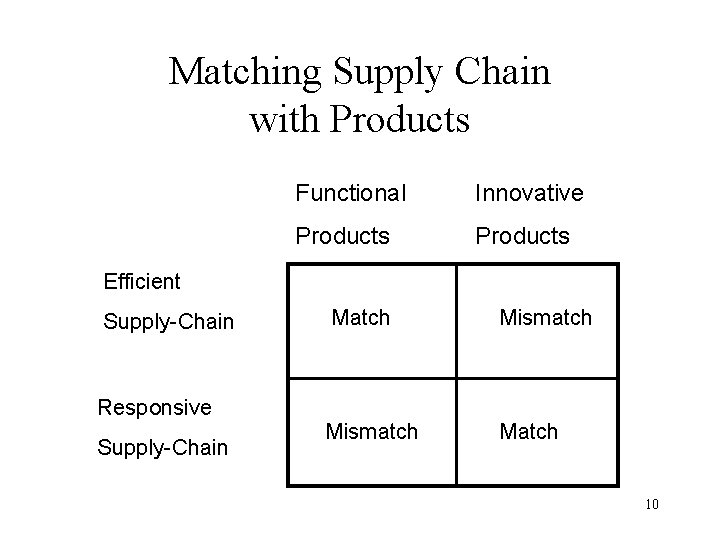
Matching Supply Chain with Products Functional Innovative Products Efficient Supply-Chain Responsive Supply-Chain Match Mismatch Match 10
CHAPTER 11 STRATEGIC CAPACITY MANAGEMENT 11
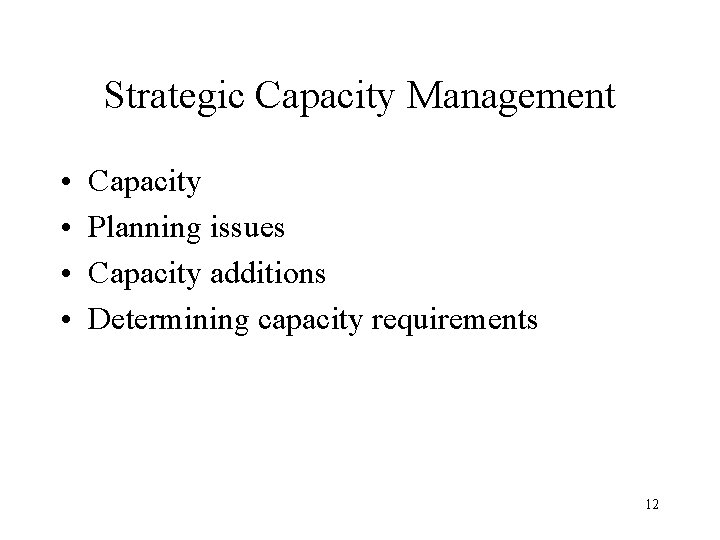
Strategic Capacity Management • • Capacity Planning issues Capacity additions Determining capacity requirements 12
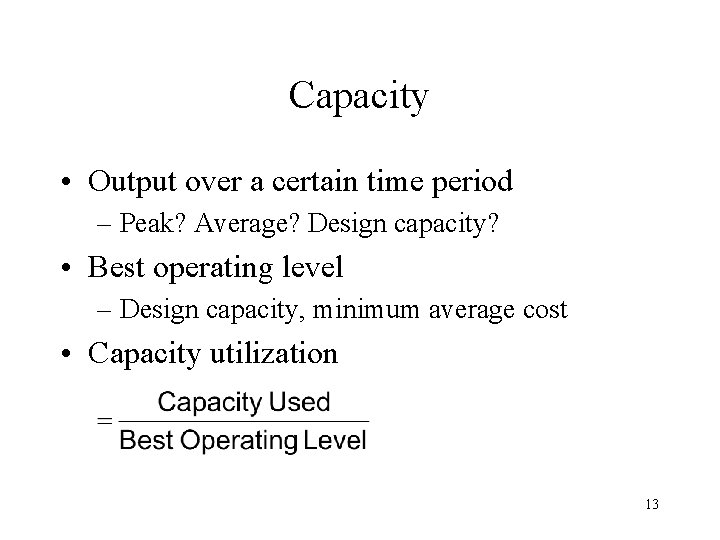
Capacity • Output over a certain time period – Peak? Average? Design capacity? • Best operating level – Design capacity, minimum average cost • Capacity utilization 13
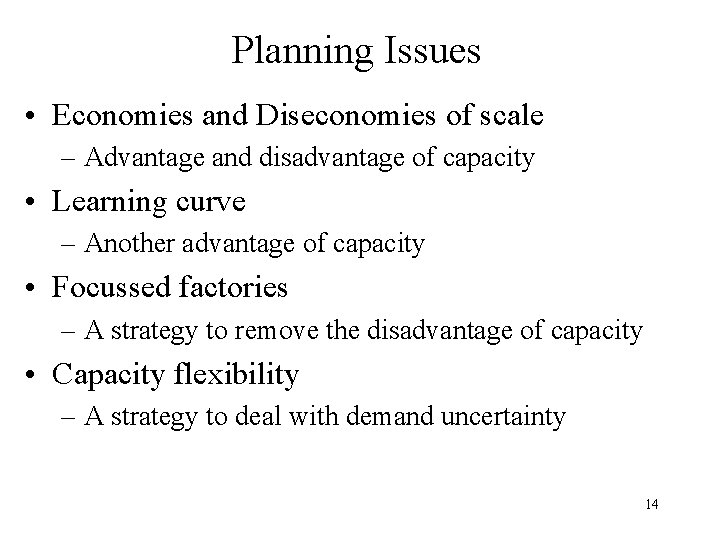
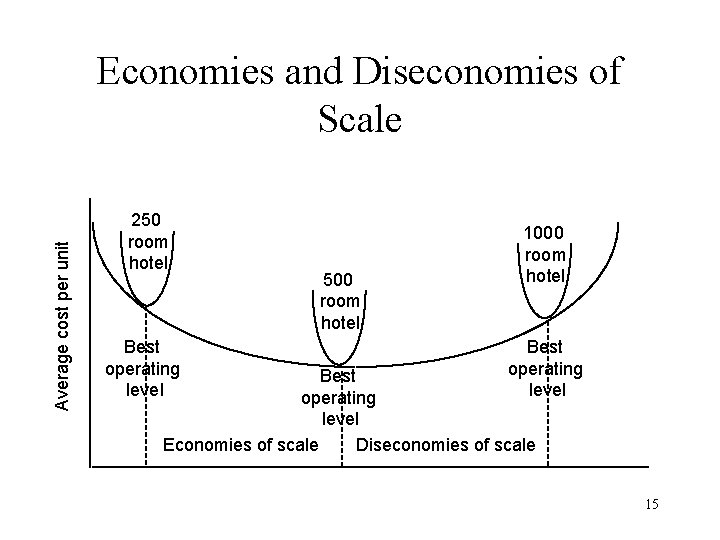
Planning Issues • Economies and Diseconomies of scale – Advantage and disadvantage of capacity • Learning curve – Another advantage of capacity • Focussed factories – A strategy to remove the disadvantage of capacity • Capacity flexibility – A strategy to deal with demand uncertainty 14
Average cost per unit Economies and Diseconomies of Scale 250 room hotel Best operating level 500 room hotel 1000 room hotel Best operating level Economies of scale Diseconomies of scale 15
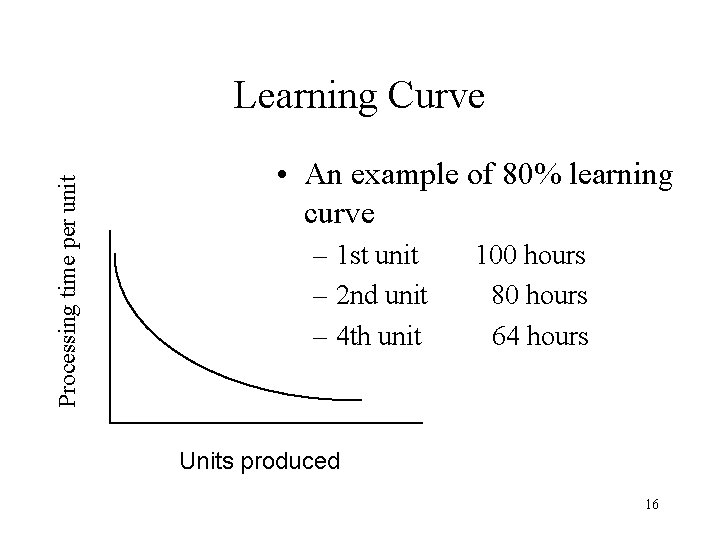
Processing time per unit Learning Curve • An example of 80% learning curve – 1 st unit – 2 nd unit – 4 th unit 100 hours 80 hours 64 hours Units produced 16
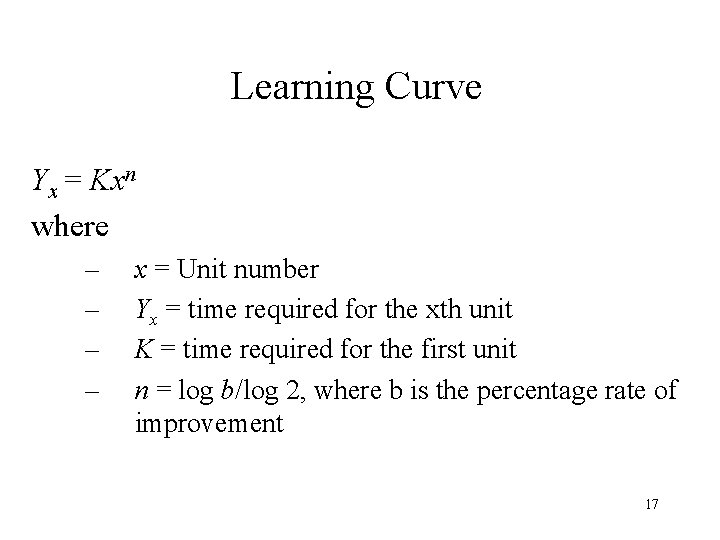
Learning Curve Yx = Kxn where – – x = Unit number Yx = time required for the xth unit K = time required for the first unit n = log b/log 2, where b is the percentage rate of improvement 17
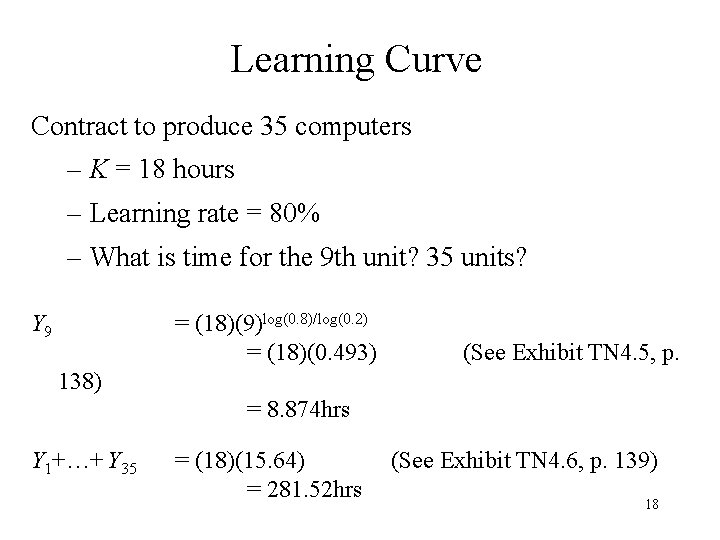
Learning Curve Contract to produce 35 computers – K = 18 hours – Learning rate = 80% – What is time for the 9 th unit? 35 units? Y 9 = (18)(9)log(0. 8)/log(0. 2) = (18)(0. 493) (See Exhibit TN 4. 5, p. 138) = 8. 874 hrs Y 1+…+ Y 35 = (18)(15. 64) = 281. 52 hrs (See Exhibit TN 4. 6, p. 139) 18
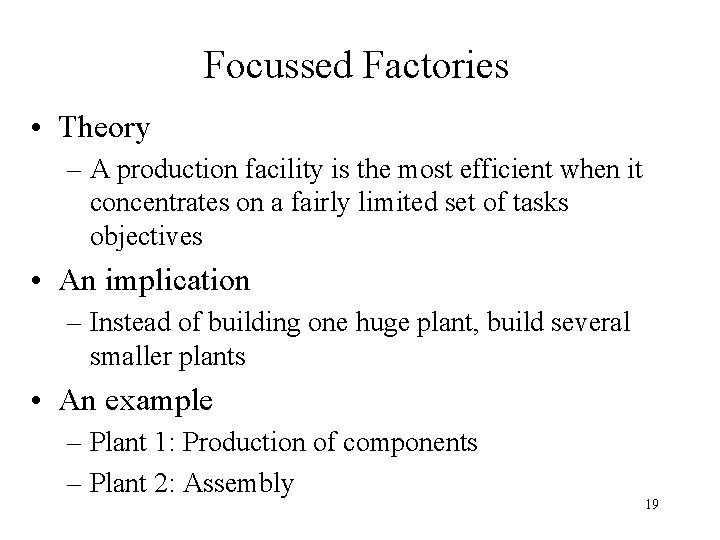
Focussed Factories • Theory – A production facility is the most efficient when it concentrates on a fairly limited set of tasks objectives • An implication – Instead of building one huge plant, build several smaller plants • An example – Plant 1: Production of components – Plant 2: Assembly 19
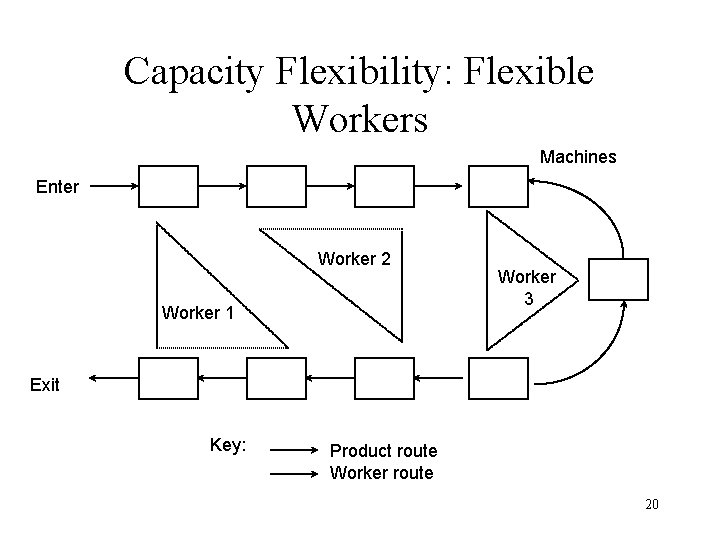
Capacity Flexibility: Flexible Workers Machines Enter Worker 2 Worker 1 Worker 3 Exit Key: Product route Worker route 20
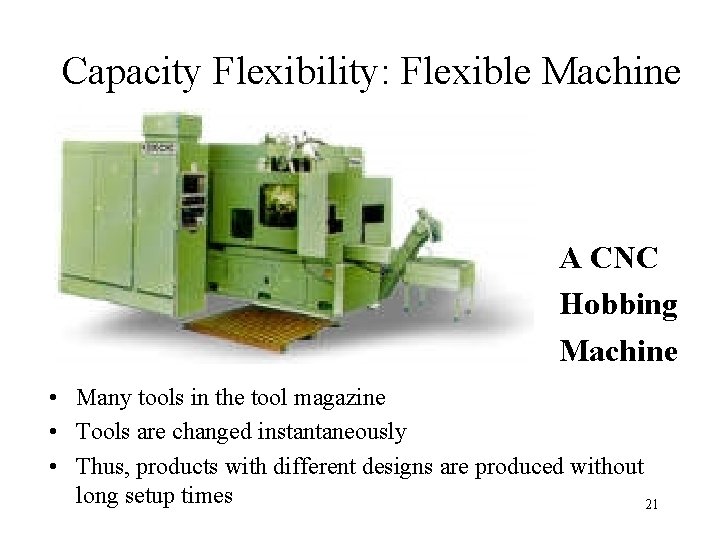
Capacity Flexibility: Flexible Machine A CNC Hobbing Machine • Many tools in the tool magazine • Tools are changed instantaneously • Thus, products with different designs are produced without long setup times 21
Capacity Additions • Maintaining system balance • Frequency of capacity additions – Too frequent: installation, training, premium for up to date technology, loss of production time – Too infrequent: cost of excess capacity • External sources of capacity – Subcontracting – Capacity sharing 22
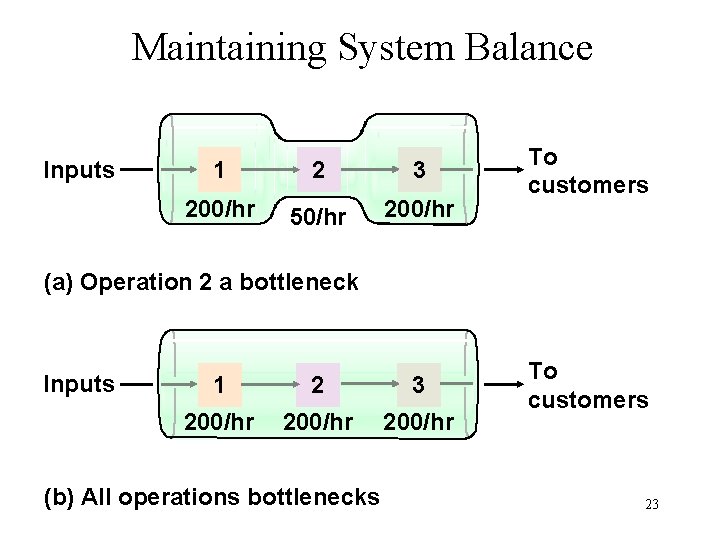
Maintaining System Balance Inputs 1 2 3 200/hr 50/hr 200/hr To customers (a) Operation 2 a bottleneck Inputs 1 2 3 200/hr (b) All operations bottlenecks To customers 23
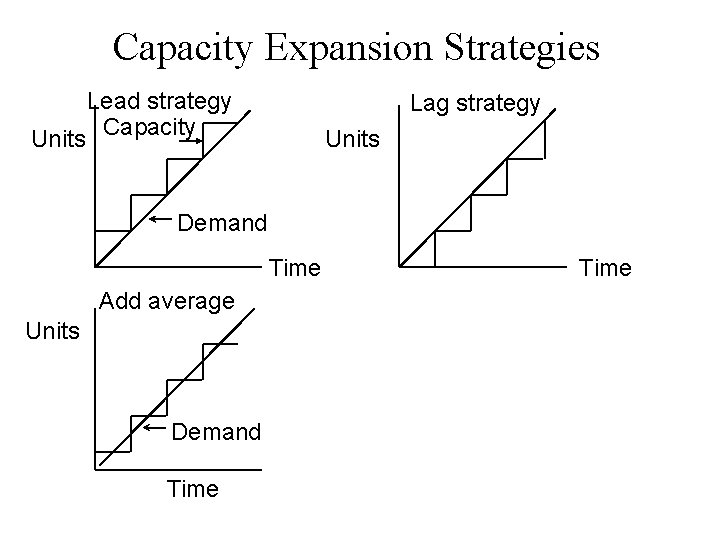
Capacity Expansion Strategies Lead strategy Units Capacity Lag strategy Units Demand Time Add average Units Demand Time
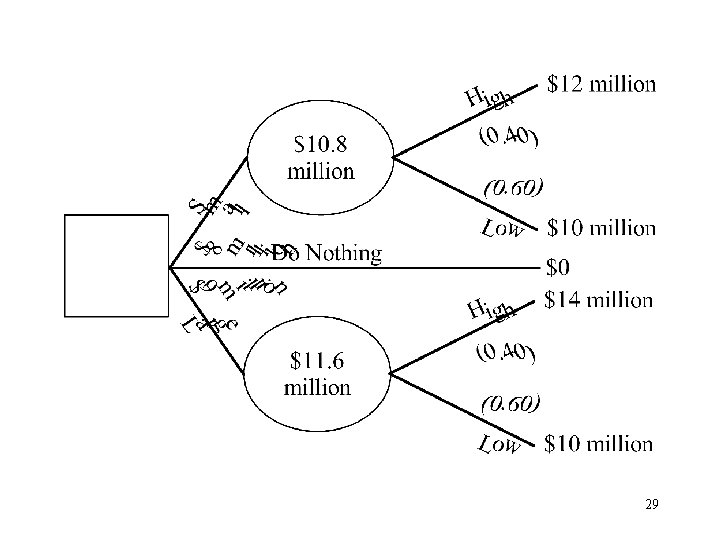
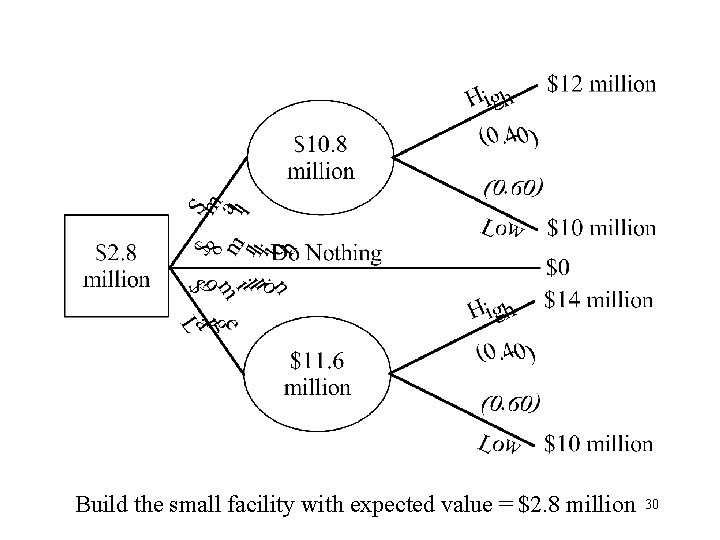
Determining Capacity Requirements • • Estimate capacity requirements Identify gaps Develop alternatives Evaluate the alternatives – Decision tree is a tool used to evaluate alternatives 25
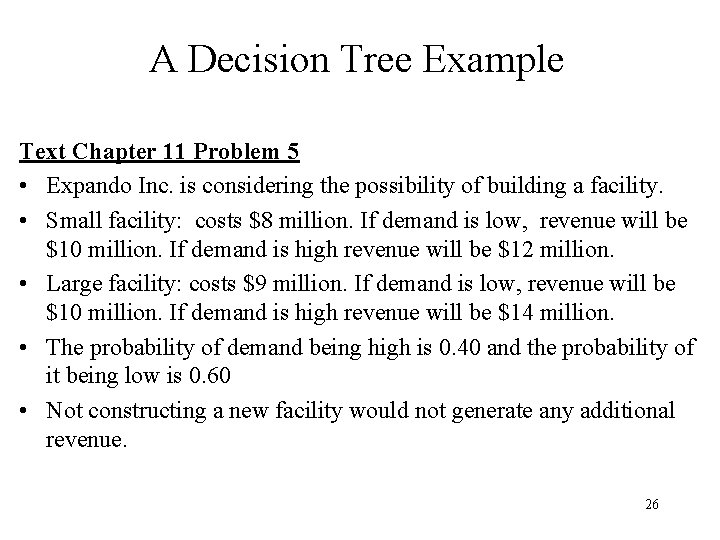
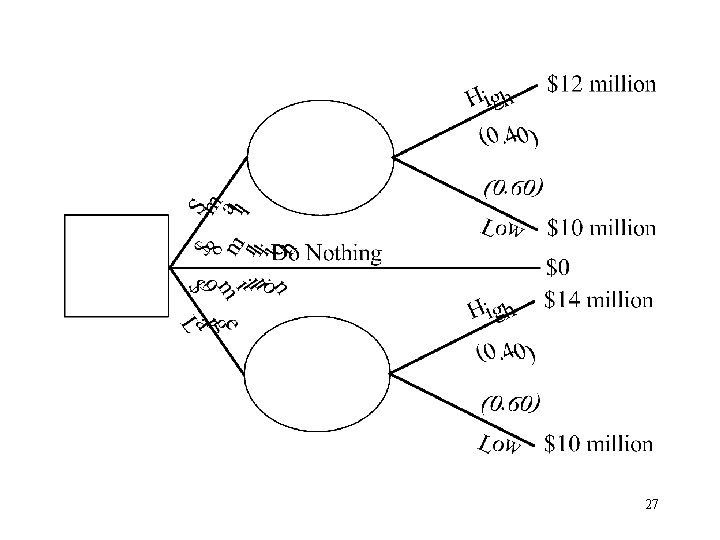
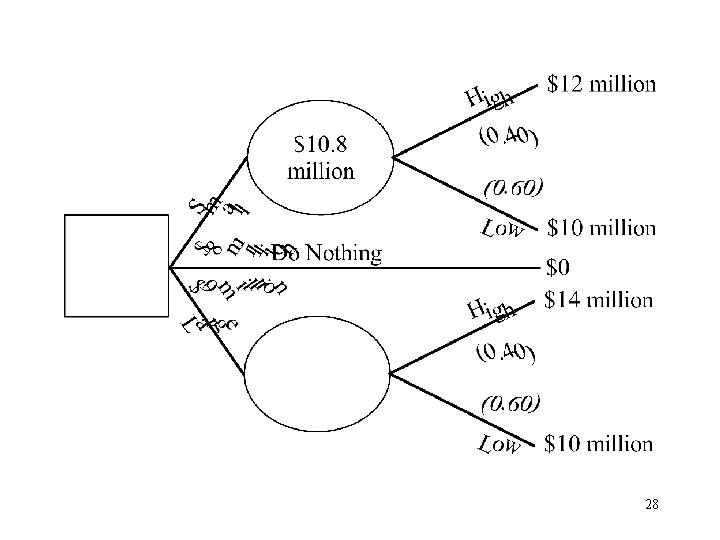
A Decision Tree Example Text Chapter 11 Problem 5 • Expando Inc. is considering the possibility of building a facility. • Small facility: costs $8 million. If demand is low, revenue will be $10 million. If demand is high revenue will be $12 million. • Large facility: costs $9 million. If demand is low, revenue will be $10 million. If demand is high revenue will be $14 million. • The probability of demand being high is 0. 40 and the probability of it being low is 0. 60 • Not constructing a new facility would not generate any additional revenue. 26
27
28
29
Build the small facility with expected value = $2. 8 million 30
Reading and Exercises • Chapter 10 (Supply Chain Strategy) – up to p. 413 • Chapter 11 (Strategic Capacity Management) – up to p. 440 – Problem 6 • Technical Note 4 (Learning Curves) – up to p. 141 – Problems 1, 4 31