
CHAPTER 10 Supply Chain Management CHAPTER OUTLINE 10


- Slides: 24
CHAPTER 10 Supply Chain Management
CHAPTER OUTLINE 10. 1 Supply Chains 10. 2 Supply Chain Management 10. 3 Information Technology Support for Supply Chain Management
LEARNING OBJECTIVES n Define the term supply chain, and discuss the three components of a supply chain. n Define supply chain management, and understand its goals. n Identify various problems that can occur along supply chains. n Explain how information technology supports supply chain management.
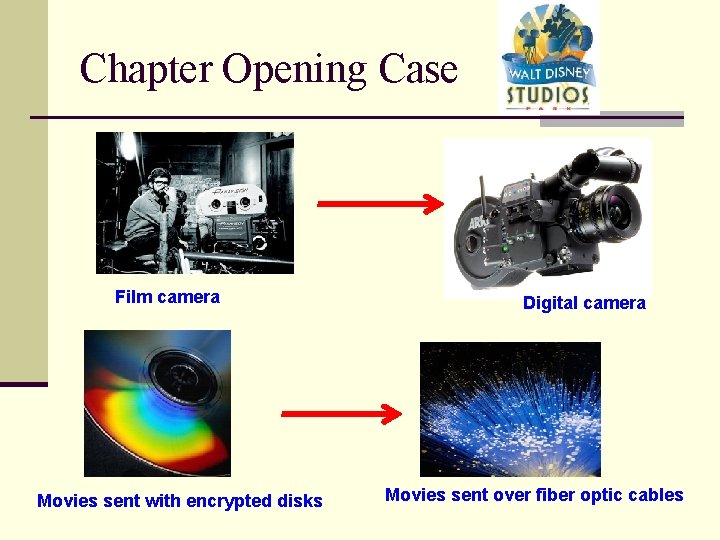
Chapter Opening Case Film camera Movies sent with encrypted disks Digital camera Movies sent over fiber optic cables
10. 1 Supply Chains
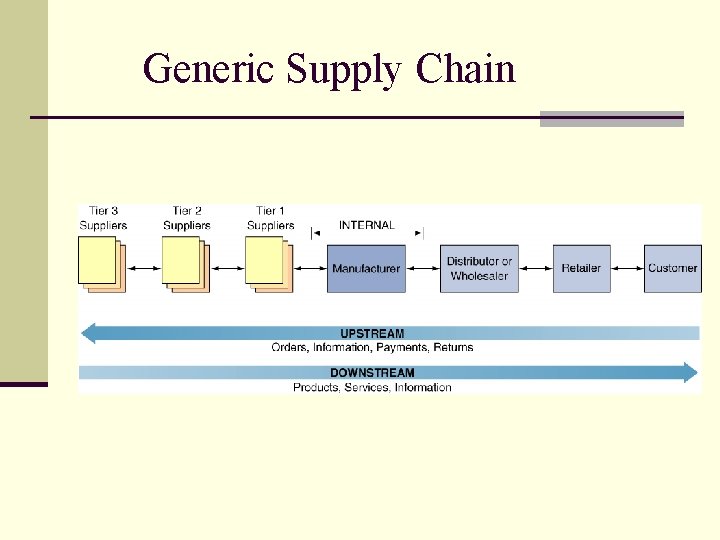
Generic Supply Chain
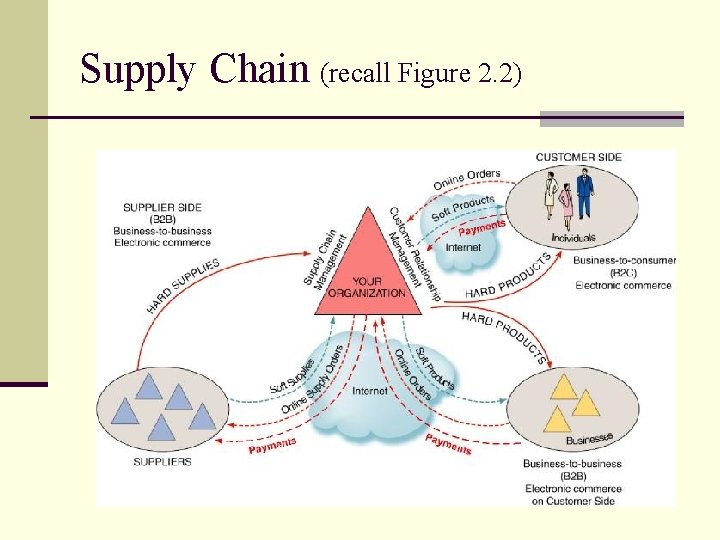
Supply Chain (recall Figure 2. 2)
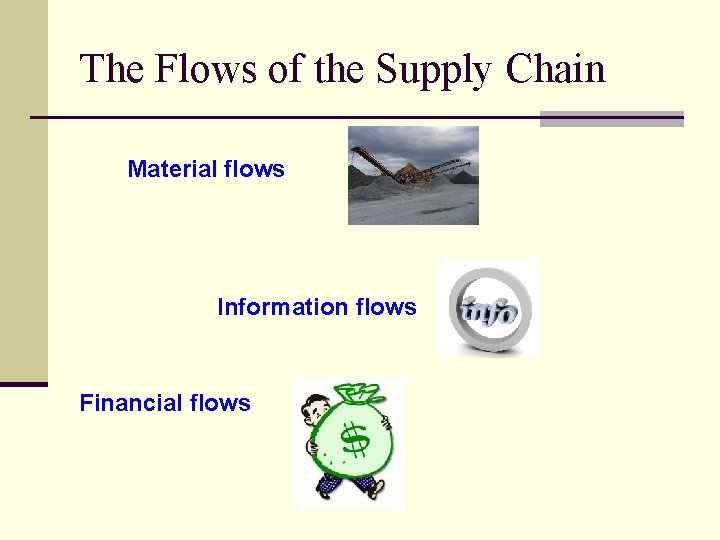
The Flows of the Supply Chain Material flows Information flows Financial flows
10. 2 Supply Chain Management Supply chain management (SCM) Interorganizational information system (IOS)
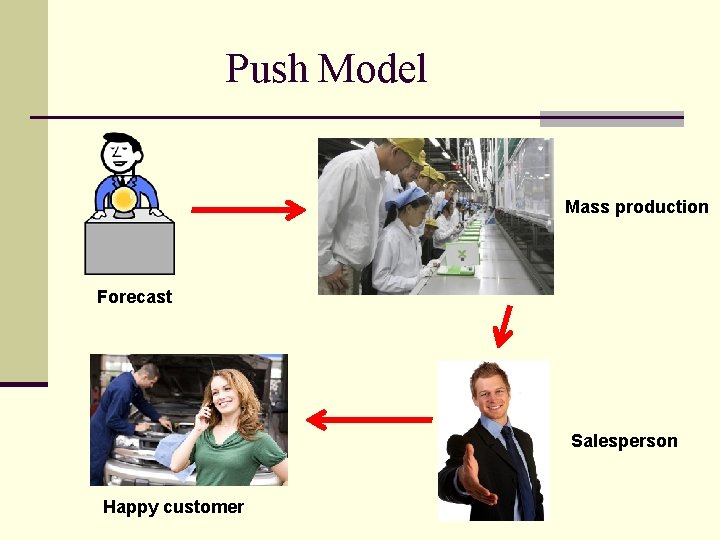
Push Model Mass production Forecast Salesperson Happy customer
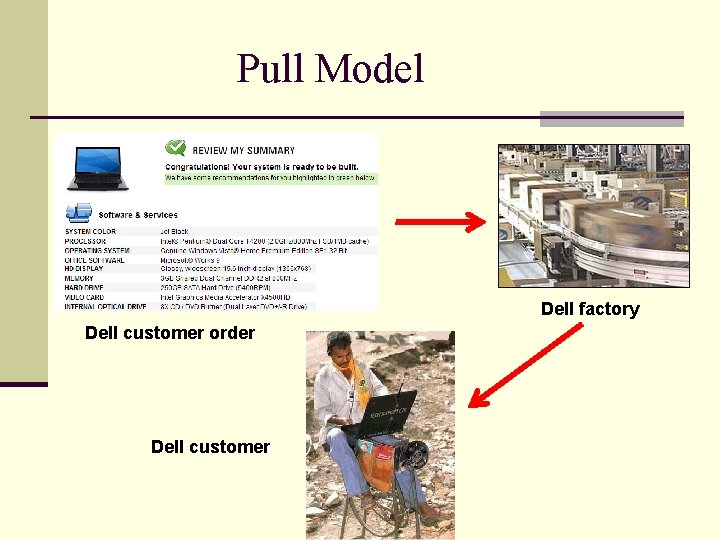
Pull Model Dell factory Dell customer order Dell customer
Problems Along the Supply Chain Poor customer service Poor quality product High inventory costs Loss of revenues New technologies
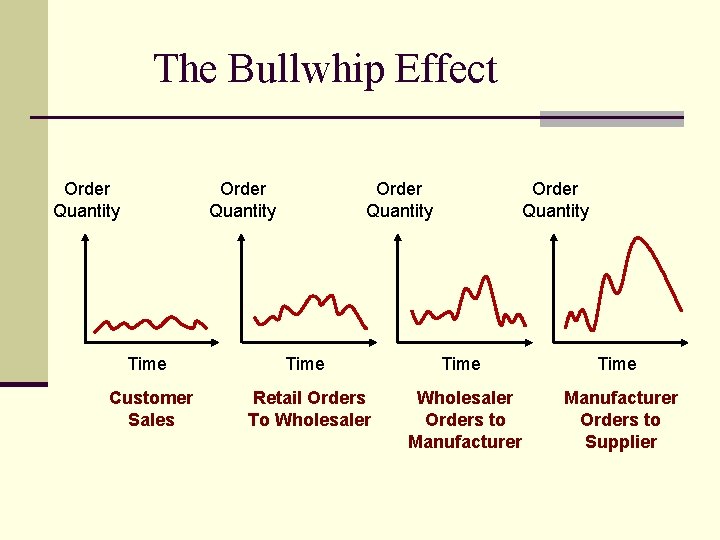
The Bullwhip Effect Order Quantity Time Customer Sales Retail Orders To Wholesaler Orders to Manufacturer Orders to Supplier
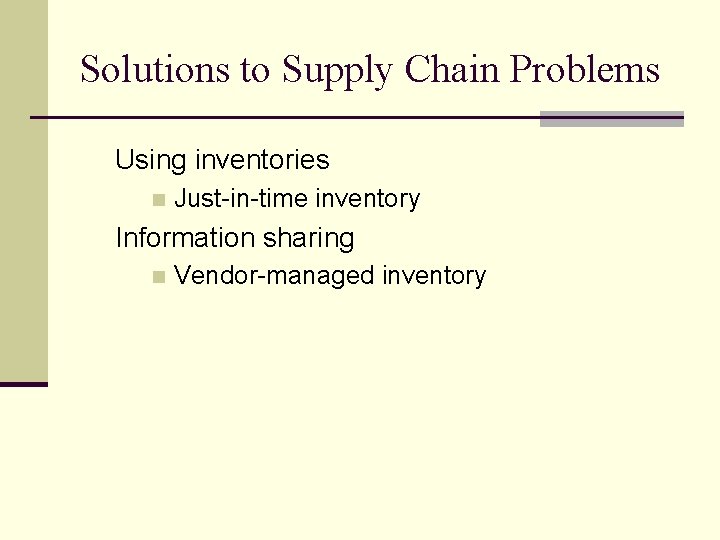
Solutions to Supply Chain Problems Using inventories n Just-in-time inventory Information sharing n Vendor-managed inventory
10. 3 Information Technology Support for Supply Chain Management Electronic data interchange (EDI) Extranets
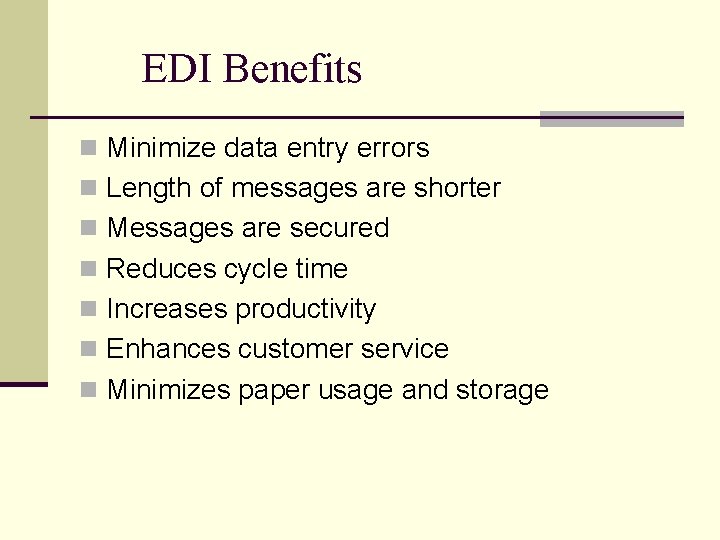
EDI Benefits n Minimize data entry errors n Length of messages are shorter n Messages are secured n Reduces cycle time n Increases productivity n Enhances customer service n Minimizes paper usage and storage
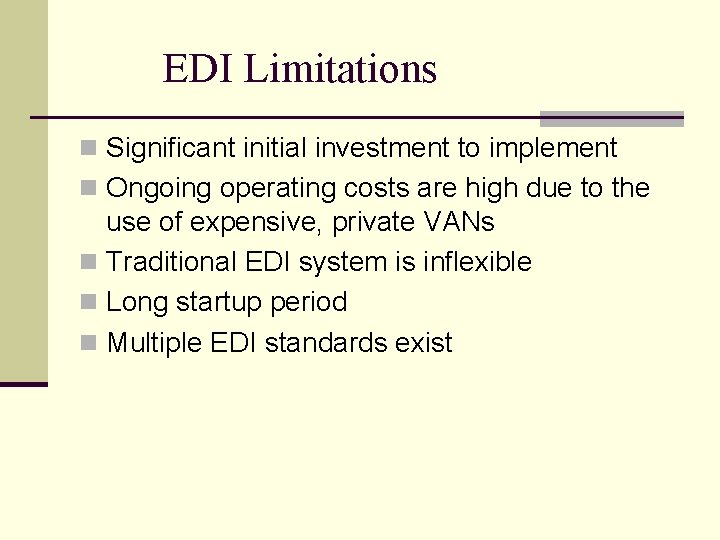
EDI Limitations n Significant initial investment to implement n Ongoing operating costs are high due to the use of expensive, private VANs n Traditional EDI system is inflexible n Long startup period n Multiple EDI standards exist
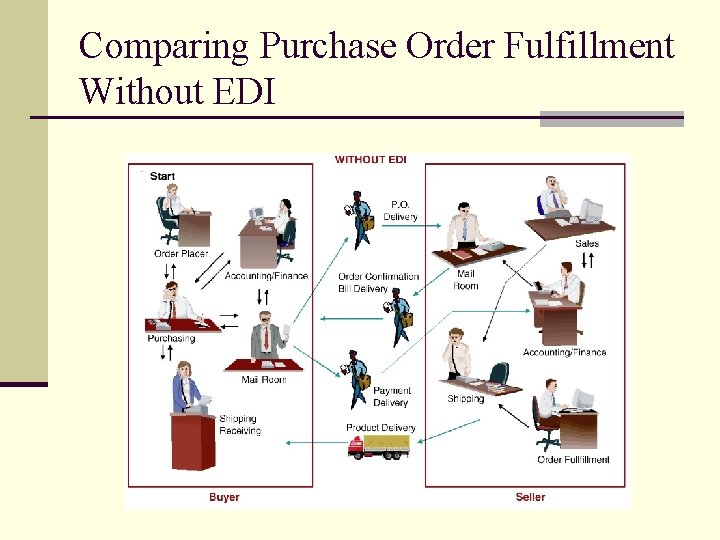
Comparing Purchase Order Fulfillment Without EDI
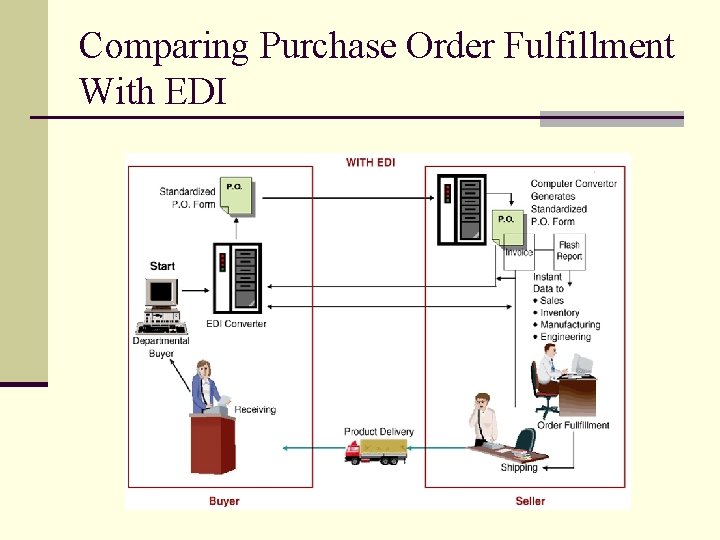
Comparing Purchase Order Fulfillment With EDI
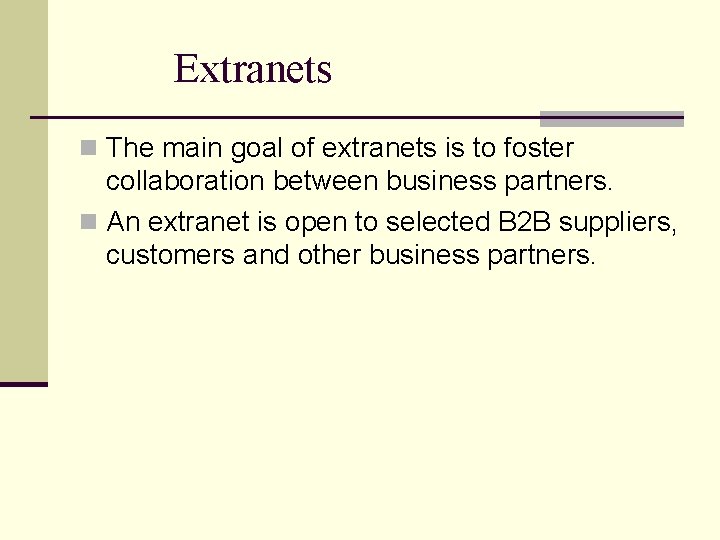
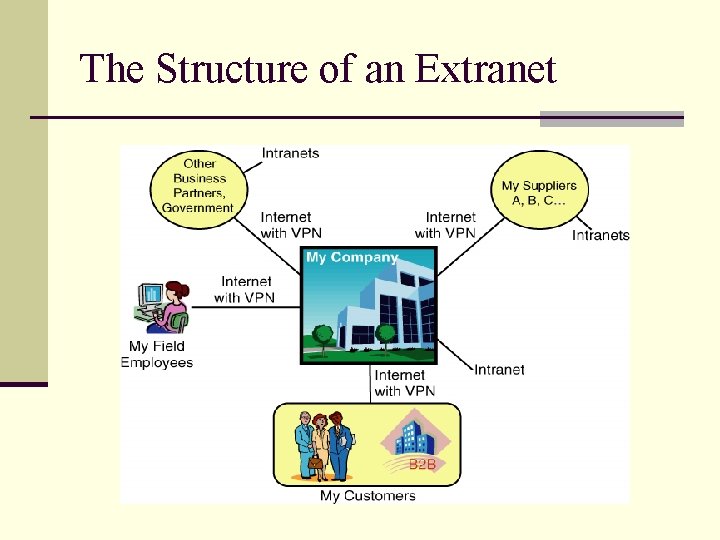
Extranets n The main goal of extranets is to foster collaboration between business partners. n An extranet is open to selected B 2 B suppliers, customers and other business partners.
The Structure of an Extranet
Types of Extranets A company and its dealers, customers or suppliers An industry’s extranet Joint ventures and other business partnerships
Chapter Closing Case