
Chapter 10 Sexual Reproduction and Genetics 10 1
- Slides: 29
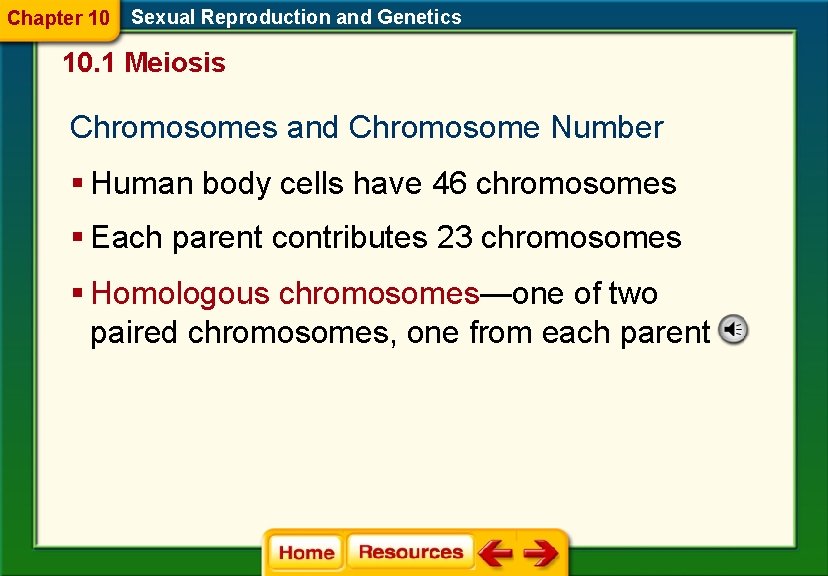
Chapter 10 Sexual Reproduction and Genetics 10. 1 Meiosis Chromosomes and Chromosome Number § Human body cells have 46 chromosomes § Each parent contributes 23 chromosomes § Homologous chromosomes—one of two paired chromosomes, one from each parent
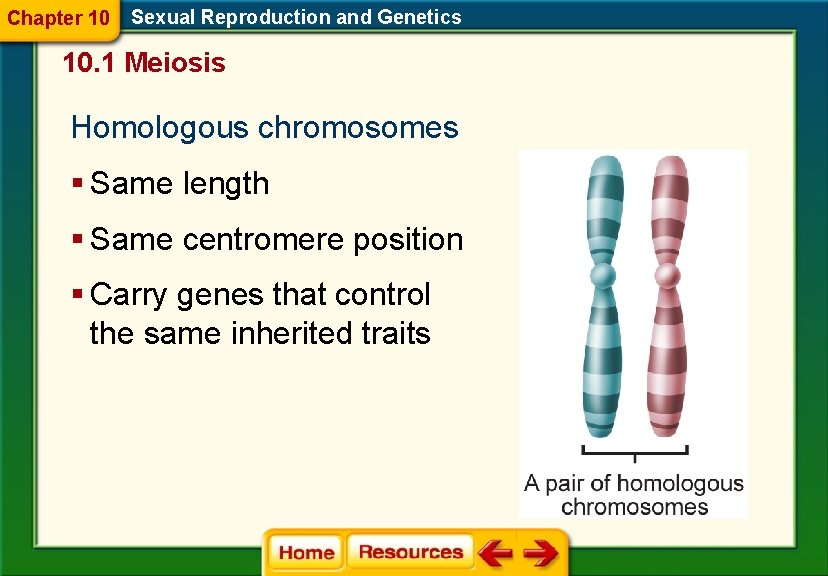
Chapter 10 Sexual Reproduction and Genetics 10. 1 Meiosis Homologous chromosomes § Same length § Same centromere position § Carry genes that control the same inherited traits
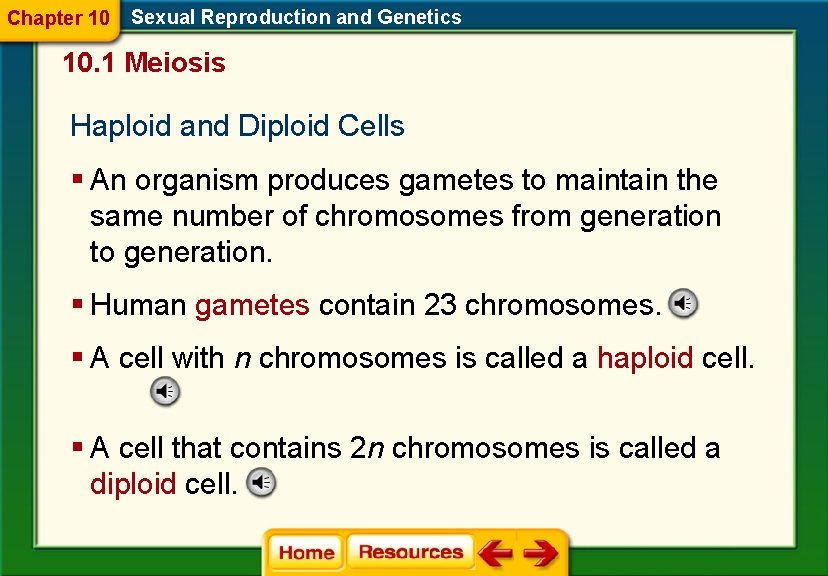
Chapter 10 Sexual Reproduction and Genetics 10. 1 Meiosis Haploid and Diploid Cells § An organism produces gametes to maintain the same number of chromosomes from generation to generation. § Human gametes contain 23 chromosomes. § A cell with n chromosomes is called a haploid cell. § A cell that contains 2 n chromosomes is called a diploid cell.
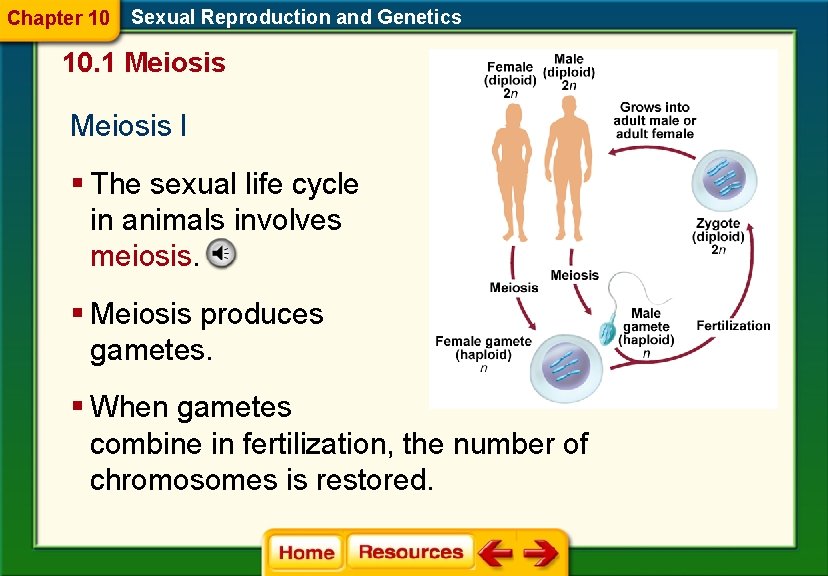
Chapter 10 Sexual Reproduction and Genetics 10. 1 Meiosis I § The sexual life cycle in animals involves meiosis. § Meiosis produces gametes. § When gametes combine in fertilization, the number of chromosomes is restored.
Chapter 10 Sexual Reproduction and Genetics 10. 1 Meiosis Stages of Meiosis I § Reduces the chromosome number by half through the separation of homologous chromosomes § Involves two consecutive cell divisions called meiosis I and meiosis II
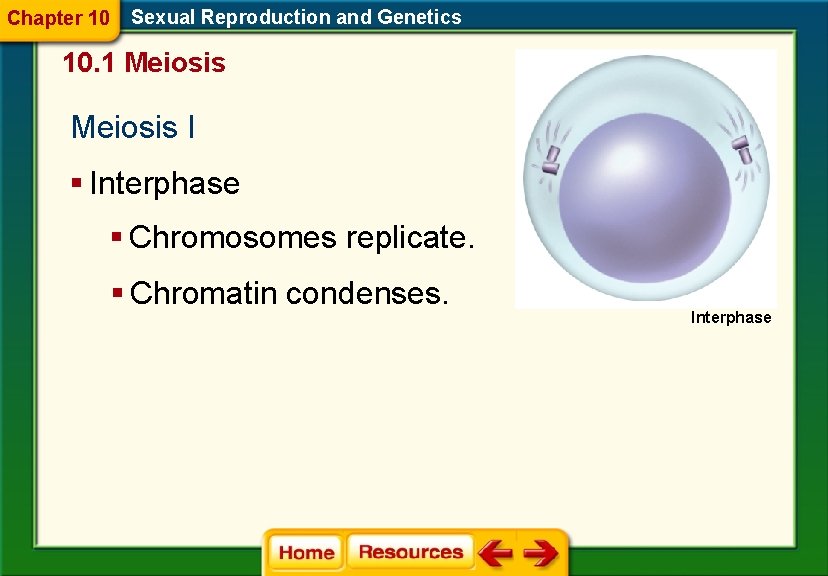
Chapter 10 Sexual Reproduction and Genetics 10. 1 Meiosis I § Interphase § Chromosomes replicate. § Chromatin condenses. Interphase
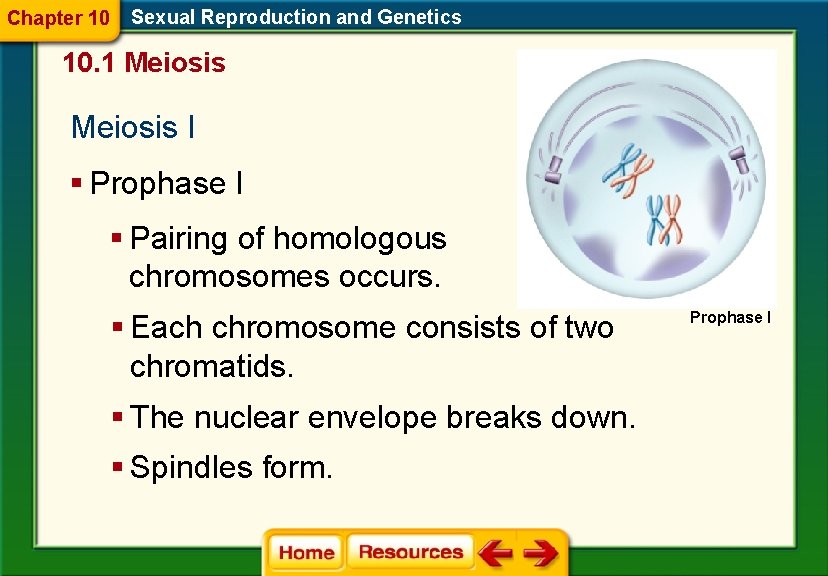
Chapter 10 Sexual Reproduction and Genetics 10. 1 Meiosis I § Prophase I § Pairing of homologous chromosomes occurs. § Each chromosome consists of two chromatids. § The nuclear envelope breaks down. § Spindles form. Prophase I
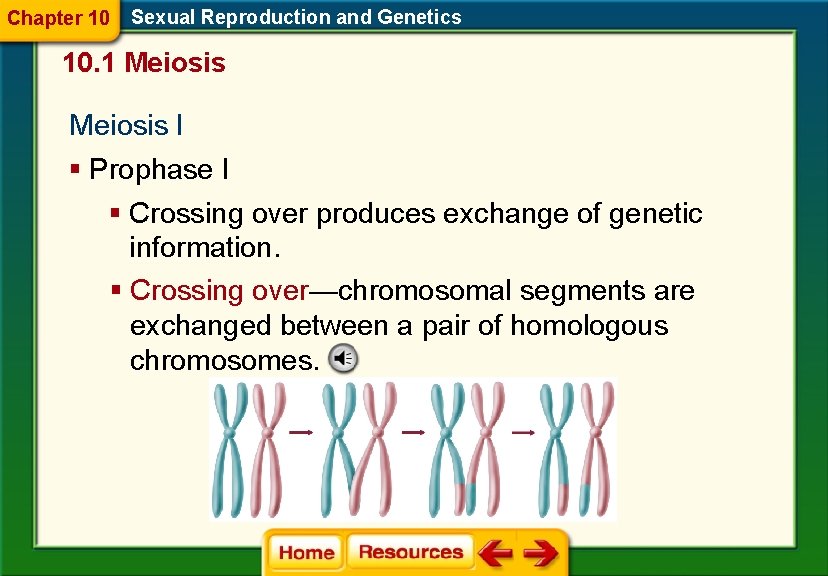
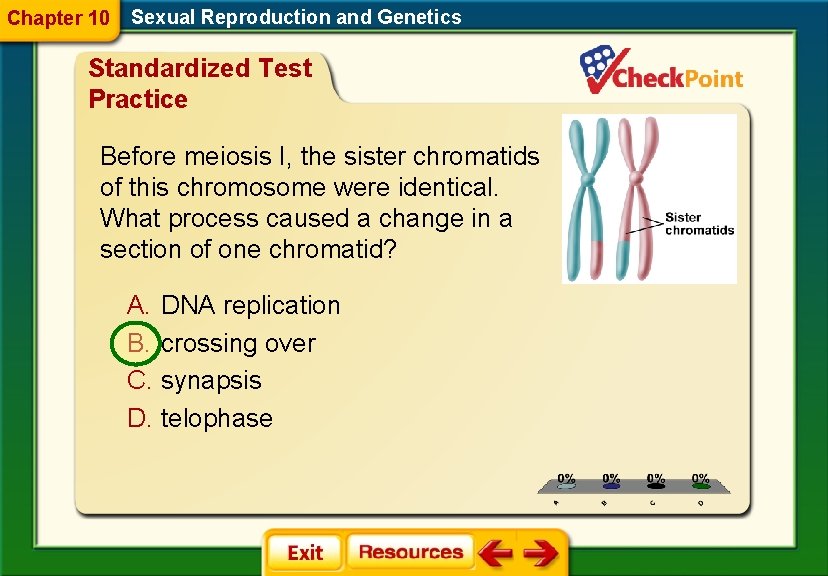
Chapter 10 Sexual Reproduction and Genetics 10. 1 Meiosis I § Prophase I § Crossing over produces exchange of genetic information. § Crossing over—chromosomal segments are exchanged between a pair of homologous chromosomes.
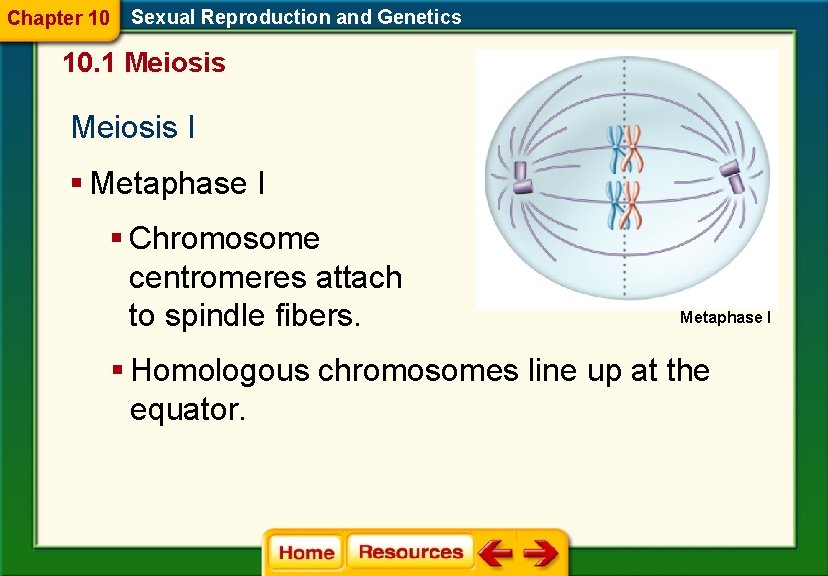
Chapter 10 Sexual Reproduction and Genetics 10. 1 Meiosis I § Metaphase I § Chromosome centromeres attach to spindle fibers. Metaphase I § Homologous chromosomes line up at the equator.
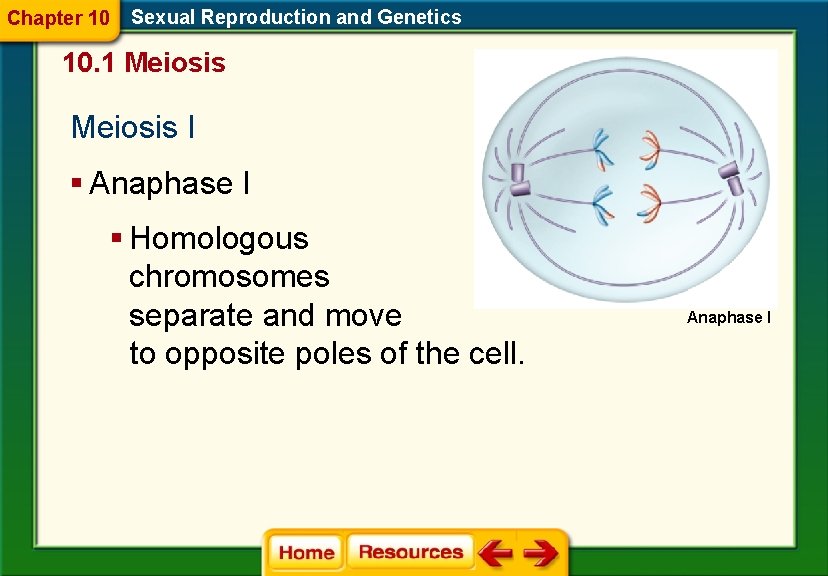
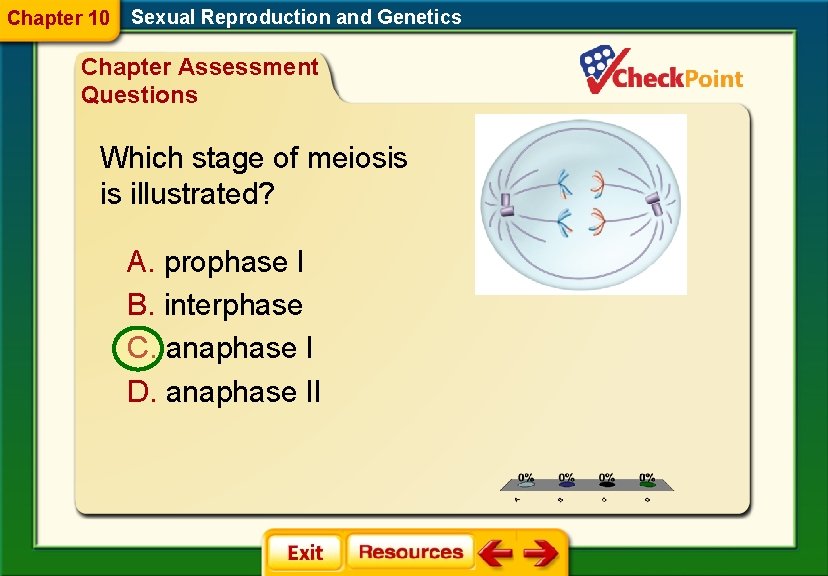
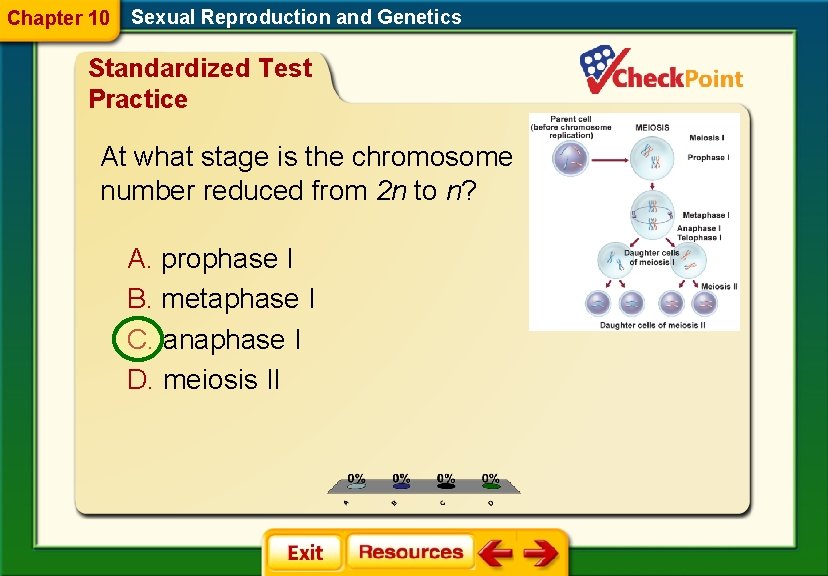
Chapter 10 Sexual Reproduction and Genetics 10. 1 Meiosis I § Anaphase I § Homologous chromosomes separate and move to opposite poles of the cell. Anaphase I
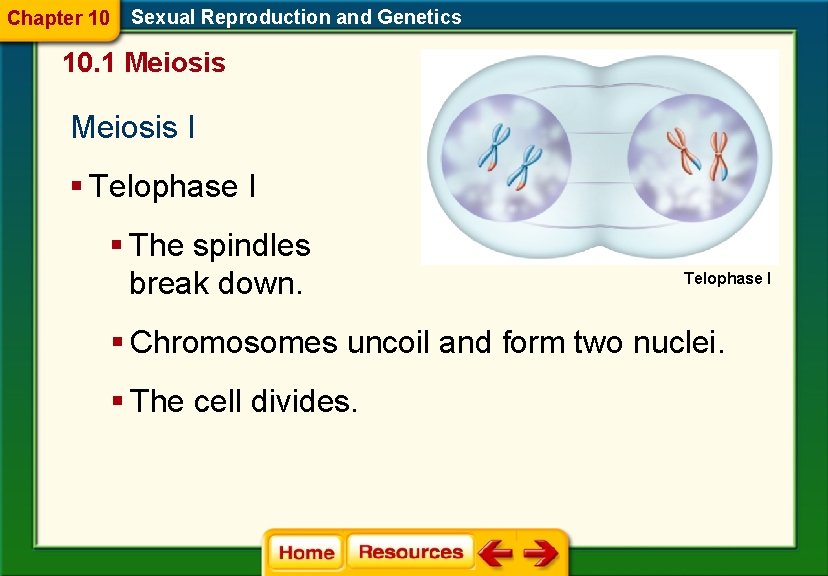
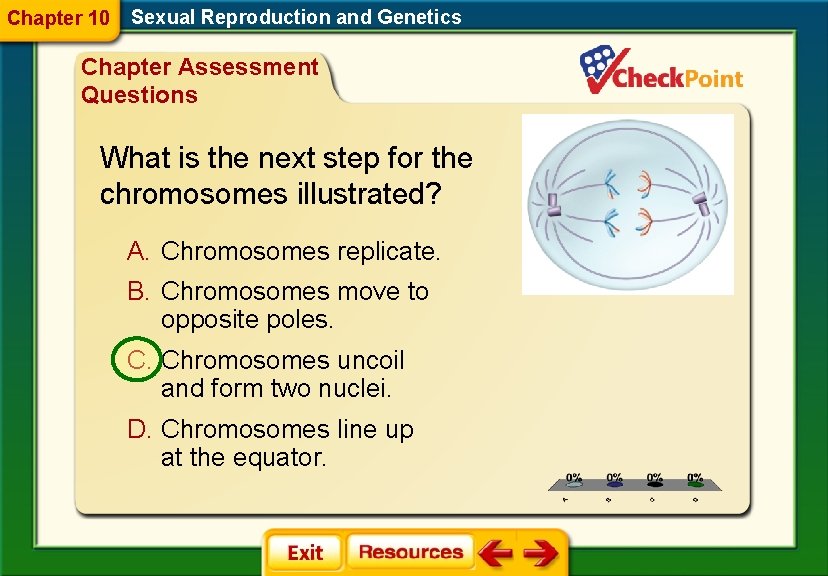
Chapter 10 Sexual Reproduction and Genetics 10. 1 Meiosis I § Telophase I § The spindles break down. Telophase I § Chromosomes uncoil and form two nuclei. § The cell divides.
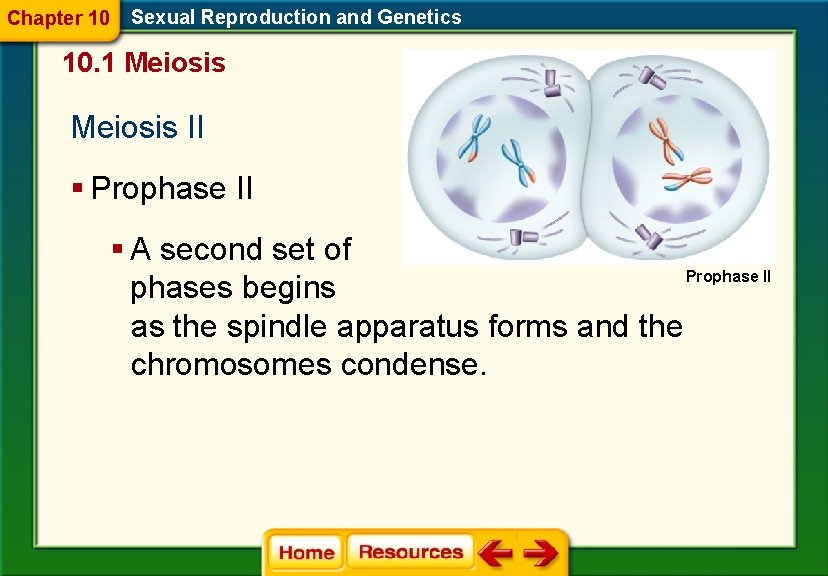
Chapter 10 Sexual Reproduction and Genetics 10. 1 Meiosis II § Prophase II § A second set of Prophase II phases begins as the spindle apparatus forms and the chromosomes condense.
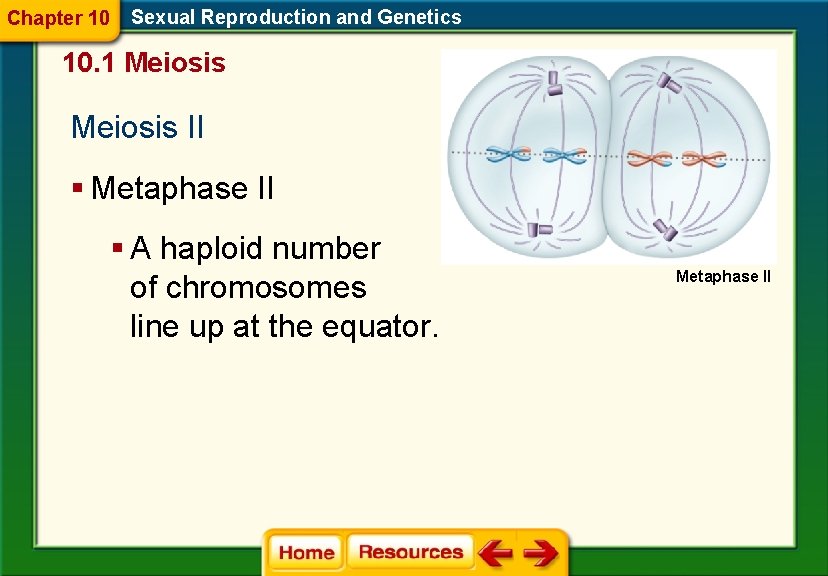
Chapter 10 Sexual Reproduction and Genetics 10. 1 Meiosis II § Metaphase II § A haploid number of chromosomes line up at the equator. Metaphase II
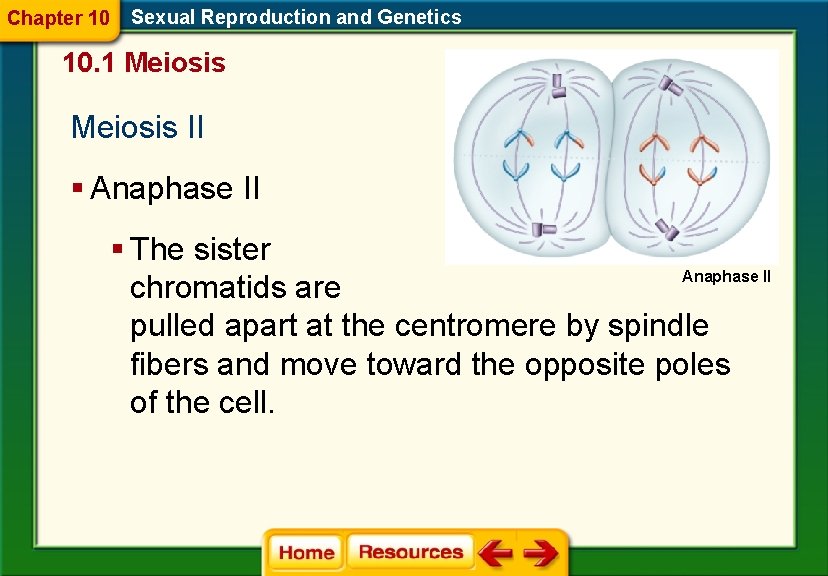
Chapter 10 Sexual Reproduction and Genetics 10. 1 Meiosis II § Anaphase II § The sister Anaphase II chromatids are pulled apart at the centromere by spindle fibers and move toward the opposite poles of the cell.
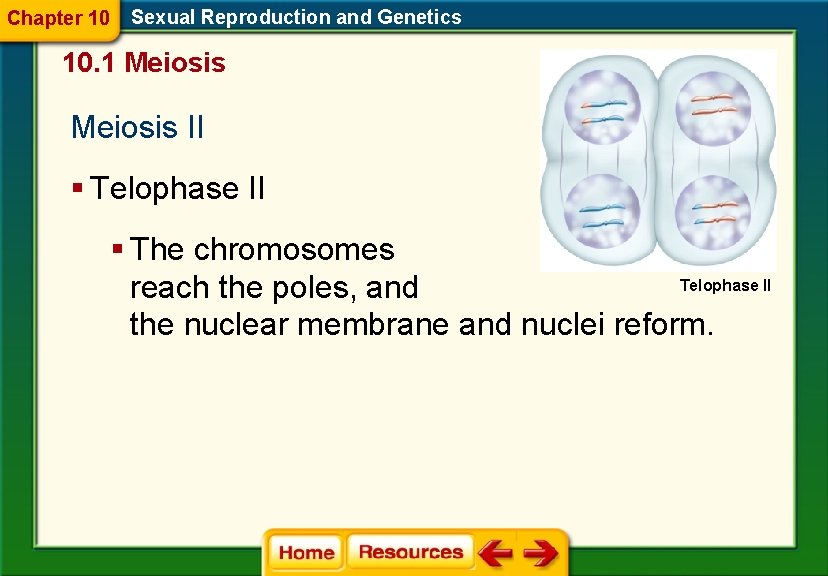
Chapter 10 Sexual Reproduction and Genetics 10. 1 Meiosis II § Telophase II § The chromosomes Telophase II reach the poles, and the nuclear membrane and nuclei reform.
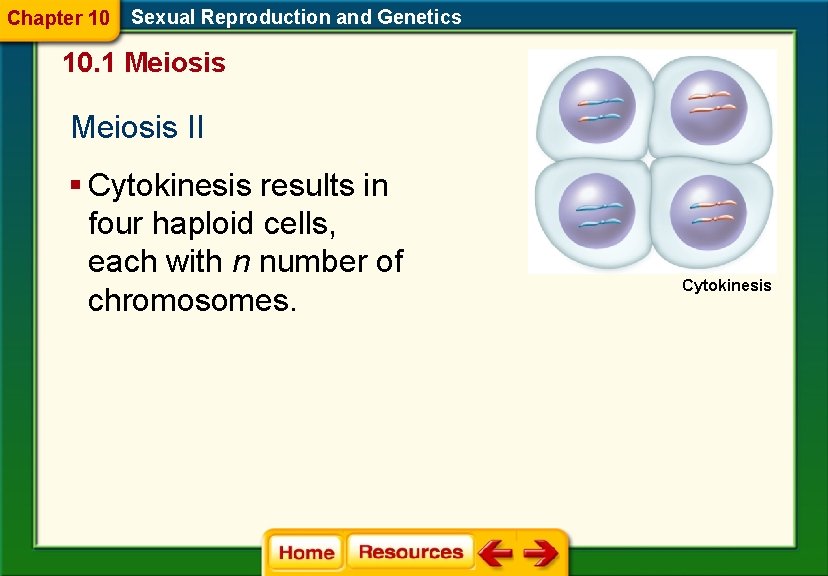
Chapter 10 Sexual Reproduction and Genetics 10. 1 Meiosis II § Cytokinesis results in four haploid cells, each with n number of chromosomes. Cytokinesis
Chapter 10 Sexual Reproduction and Genetics 10. 1 Meiosis The Importance of Meiosis § Meiosis consists of two sets of divisions § Produces four haploid daughter cells that are not identical § Results in genetic variation
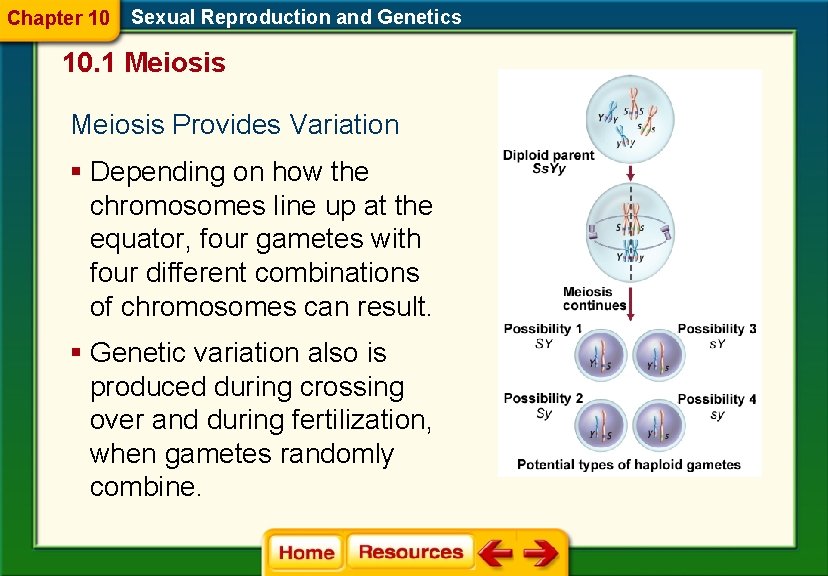
Chapter 10 Sexual Reproduction and Genetics 10. 1 Meiosis Provides Variation § Depending on how the chromosomes line up at the equator, four gametes with four different combinations of chromosomes can result. § Genetic variation also is produced during crossing over and during fertilization, when gametes randomly combine.
Chapter 10 Sexual Reproduction and Genetics 10. 1 Meiosis Sexual Reproduction v. Asexual Reproduction § Asexual reproduction § The organism inherits all of its chromosomes from a single parent. § The new individual is genetically identical to its parent. § Sexual reproduction § Beneficial genes multiply faster over time.
Chapter 10 Sexual Reproduction and Genetics Chapter Diagnostic Questions Which symbol is used to represent the number of chromosomes in a gamete? A. # B. x C. r D. n 1. 2. 3. 4. A B C D
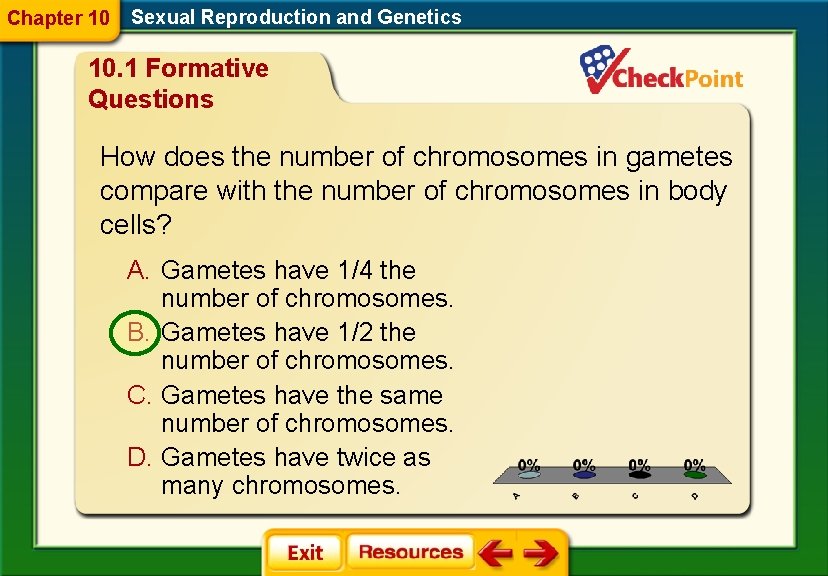
Chapter 10 Sexual Reproduction and Genetics 10. 1 Formative Questions How does the number of chromosomes in gametes compare with the number of chromosomes in body cells? A. Gametes have 1/4 the number of chromosomes. B. Gametes have 1/2 the number of chromosomes. C. Gametes have the same number of chromosomes. D. Gametes have twice as many chromosomes. 1. 2. 3. 4. A B C D
Chapter 10 Sexual Reproduction and Genetics 10. 1 Formative Questions What type of organisms only reproduce asexually? A. bacteria B. protists C. plants D. simple animals 1. 2. 3. 4. A B C D
Chapter 10 Sexual Reproduction and Genetics 10. 3 Formative Questions Two genes on the same chromosome may become separated during meiosis. A. true B. false 1. 2. A B
Chapter 10 Sexual Reproduction and Genetics Chapter Assessment Questions How many chromosomes would a cell have during metaphase I of meiosis if it has 12 chromosomes during interphase? A. 6 B. 12 C. 24 D. 36 1. 2. 3. 4. A B C D
Chapter 10 Sexual Reproduction and Genetics Chapter Assessment Questions Which stage of meiosis is illustrated? A. prophase I B. interphase C. anaphase I D. anaphase II 1. 2. 3. 4. A B C D
Chapter 10 Sexual Reproduction and Genetics Chapter Assessment Questions What is the next step for the chromosomes illustrated? A. Chromosomes replicate. B. Chromosomes move to opposite poles. C. Chromosomes uncoil and form two nuclei. D. Chromosomes line up at the equator. 1. 2. 3. 4. A B C D
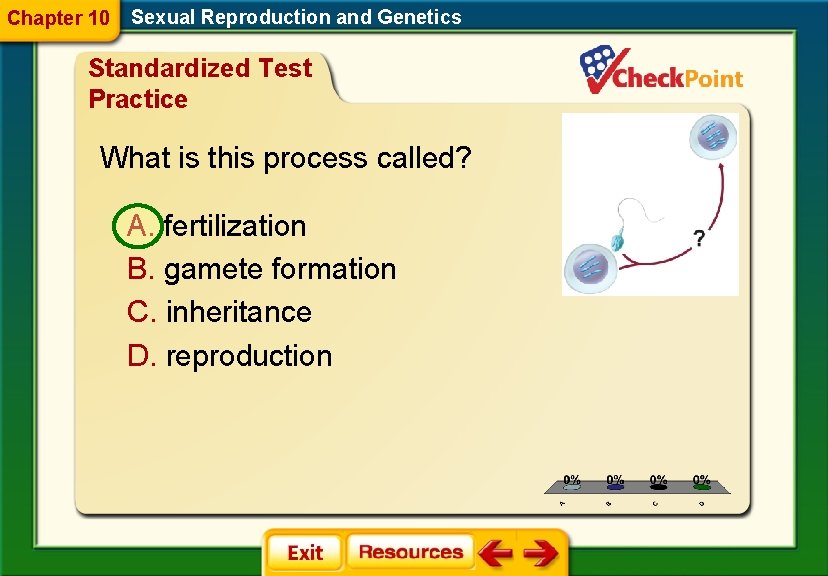
Chapter 10 Sexual Reproduction and Genetics Standardized Test Practice What is this process called? A. fertilization B. gamete formation C. inheritance D. reproduction 1. 2. 3. 4. A B C D
Chapter 10 Sexual Reproduction and Genetics Standardized Test Practice Before meiosis I, the sister chromatids of this chromosome were identical. What process caused a change in a section of one chromatid? A. DNA replication B. crossing over C. synapsis D. telophase 1. 2. 3. 4. A B C D
Chapter 10 Sexual Reproduction and Genetics Standardized Test Practice At what stage is the chromosome number reduced from 2 n to n? A. prophase I B. metaphase I C. anaphase I D. meiosis II 1. 2. 3. 4. A B C D