
Chapter 10 sections 3 and 4 Senate Basics

Chapter 10 sections 3 and 4 Senate
Basics • The Constitution says – Senate “shall be composed of two Senators from each State. ” • So how many are there today? ? ? – Originally, the Constitution provided that senators were chosen by the State legislatures. – Now the Seventeenth Amendment calls for the popular election of senators. • Senators serve for six-year terms.

Why 6 years • Less subject to the pressures of public opinion and special interest • They have more to do because there are less of them • Higher Qualifications • Upper House • No Term limits – Strom Thurmond (South Carolina) • 9 terms • 1954 -2003
Continuous Body • meaning that all of its seats are never up for election at the same time. – Every 2 years (what date) – 1/3 of the senators are up for reelections • This means there is never a federal election where no senators are running • Incumbents: running for re-election

Seniority Rule • This is an unwritten rule about who gets the most important committee posts – The best goes to the longest serving member • Like how the Pro Tempore is chosen – Most strict in choosing Committee chairs • Criticism – Not based on ability and discourages younger members • Defense – More experienced members=gets more respect
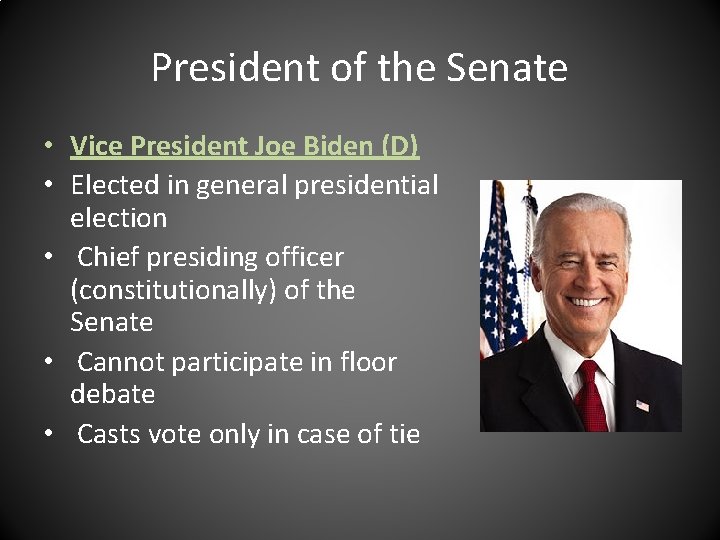
President of the Senate • Vice President Joe Biden (D) • Elected in general presidential election • Chief presiding officer (constitutionally) of the Senate • Cannot participate in floor debate • Casts vote only in case of tie
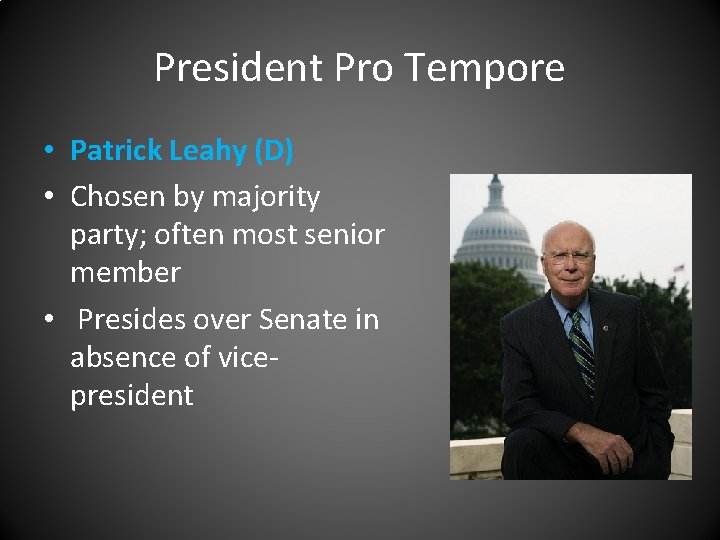
President Pro Tempore • Patrick Leahy (D) • Chosen by majority party; often most senior member • Presides over Senate in absence of vicepresident
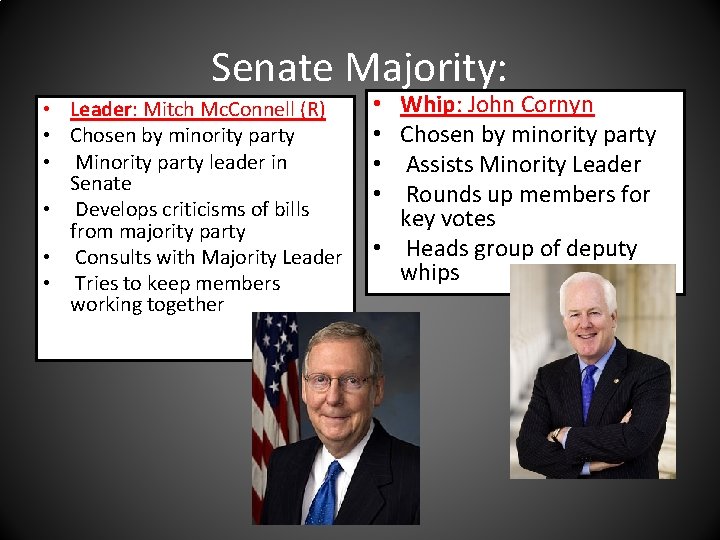
Senate Majority: • Leader: Mitch Mc. Connell (R) • Chosen by minority party • Minority party leader in Senate • Develops criticisms of bills from majority party • Consults with Majority Leader • Tries to keep members working together Whip: John Cornyn Chosen by minority party Assists Minority Leader Rounds up members for key votes • Heads group of deputy whips • •
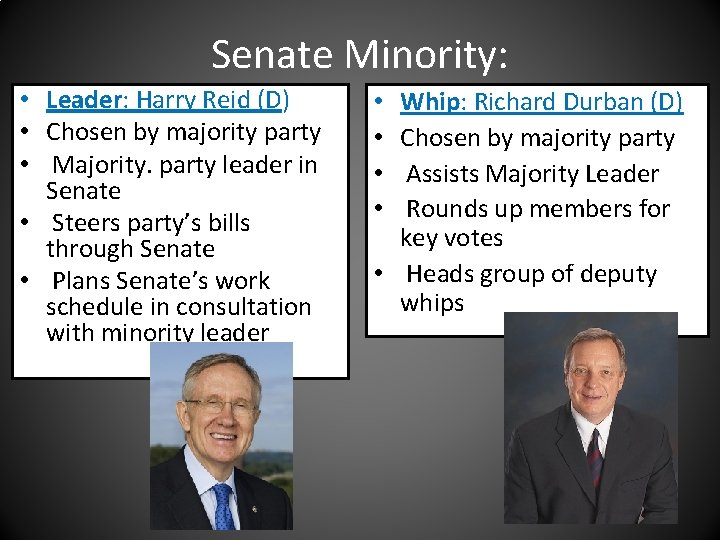
Senate Minority: • Leader: Harry Reid (D) • Chosen by majority party • Majority. party leader in Senate • Steers party’s bills through Senate • Plans Senate’s work schedule in consultation with minority leader Whip: Richard Durban (D) Chosen by majority party Assists Majority Leader Rounds up members for key votes • Heads group of deputy whips • •
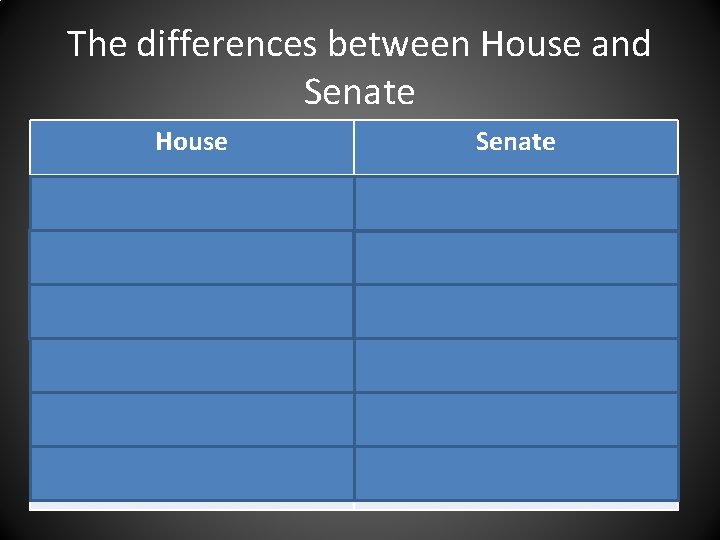
The differences between House and Senate House Senate 435 Members (larger body) 100 Members (smaller body) 2 year terms of office 6 year terms of office Less prestige More prestige Strict rules, limited debate time Flexible rules, nearly unlimited debate time Most work is done in Committees not on the floor Work is split more evenly between committees and the floor Lower visibility in the news media Higher visibility in the news media

Compensation • Congressmen make: $174, 000 • Fringe Benefits – Special tax deductions – Travel allowance – Medical Insurance – Retirement plan – Franking privilege • Mail things post free
Represent the People • How they vote in congress • 3 basic ways they represent the people – Trustee: go with their own gut and not worry about the people. They make their best judgment call – Delegates: agents of the people suppress their own feelings to vote the way people back home would like – Partisan: political party first
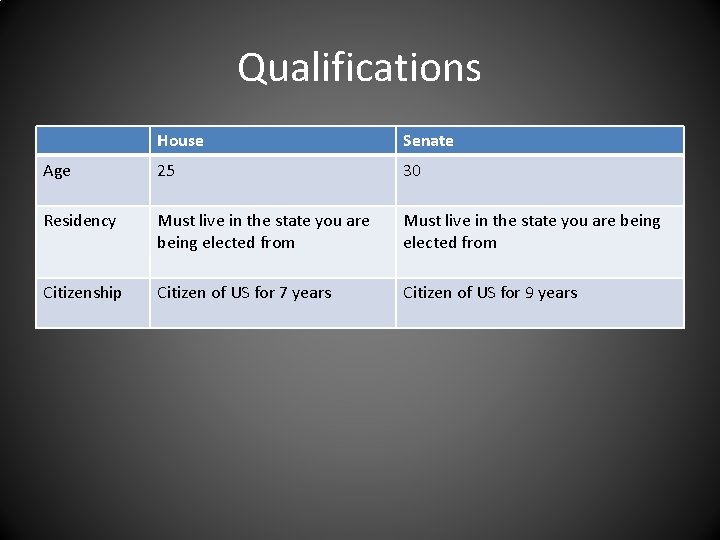
Qualifications House Senate Age 25 30 Residency Must live in the state you are being elected from Citizenship Citizen of US for 7 years Citizen of US for 9 years
- Slides: 13