
Chapter 10 section 2 Plate Tectonics Vocabulary Plate
Chapter 10 section 2 Plate Tectonics
Vocabulary Plate tectonics Asthenosphere Lithosphere Divergent boundary Convergent boundary Transform boundary Convection Ridge push Slab pull
Plate tectonics The theory that explains why and how continents move and is the study of the formation of features in Earth’s crust.
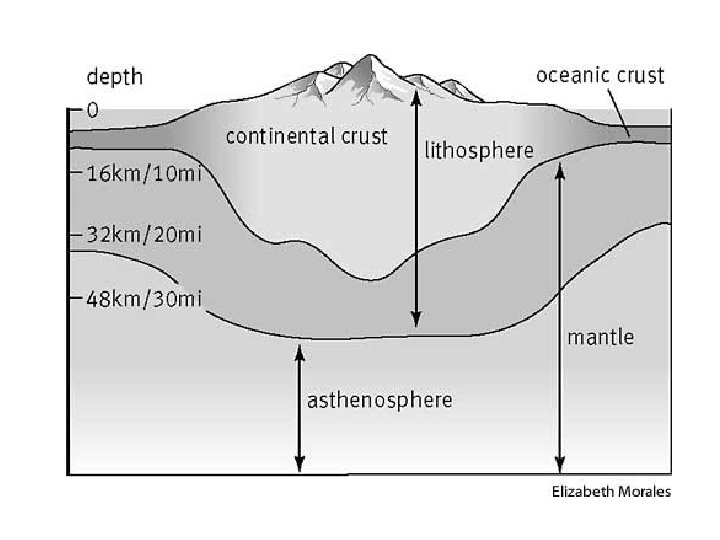
How continents move Lithosphere forms the thin outer shell of the Earth Broken into several blocks called TECTONIC PLATES Asthenosphere- the layer of “plastic rock” just below the lithosphere Tectonic plates “ride” on the asthenosphere

Two types of Crust CONTINENTAL CRUST OCEANIC CRUST Low density Rock rich in silica Very dense Rock rich in Mg and Fe
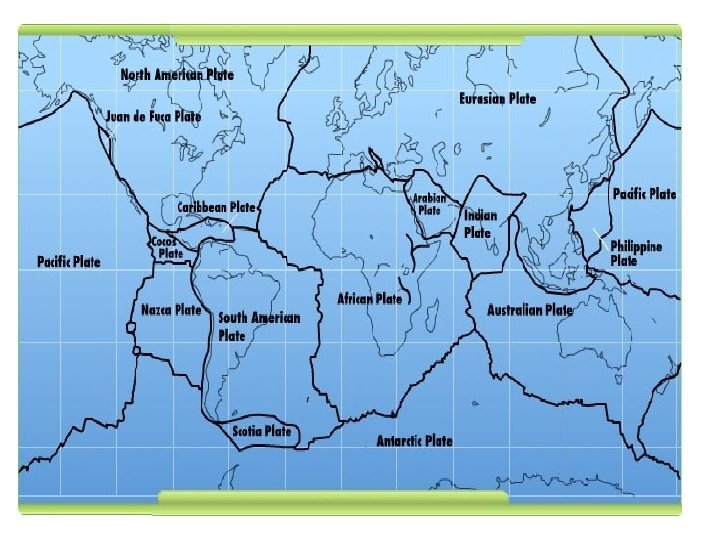
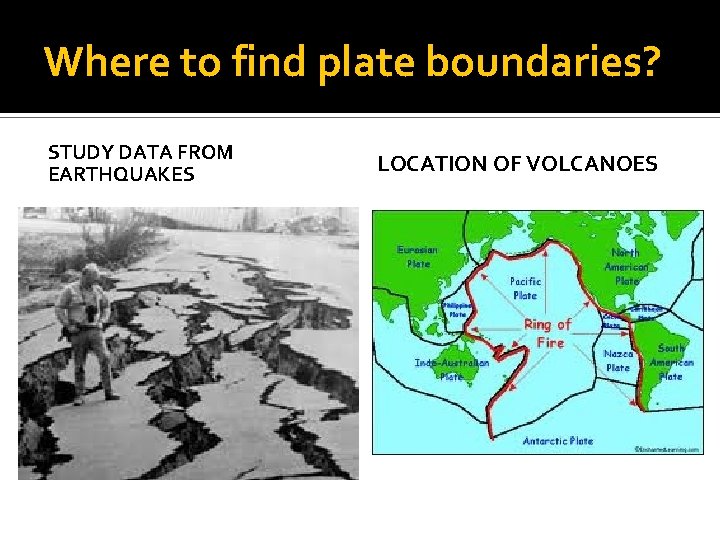
Where to find plate boundaries? STUDY DATA FROM EARTHQUAKES LOCATION OF VOLCANOES
Types of Plate boundaries Divergent Convergent Transform
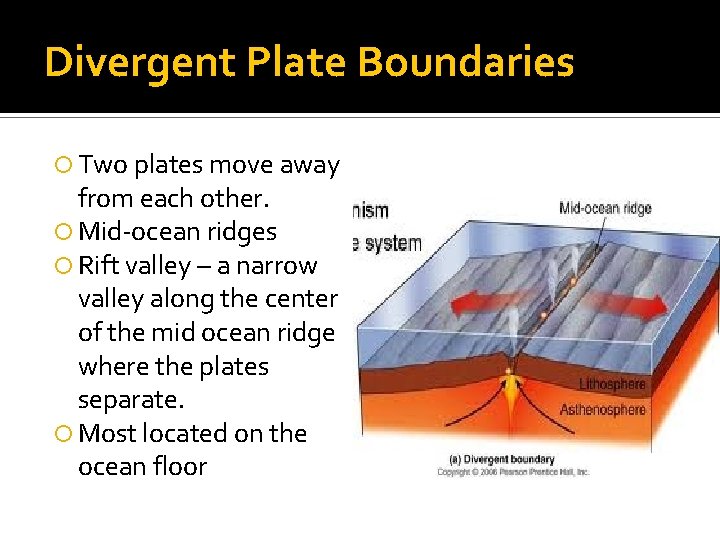
Divergent Plate Boundaries Two plates move away from each other. Mid-ocean ridges Rift valley – a narrow valley along the center of the mid ocean ridge where the plates separate. Most located on the ocean floor
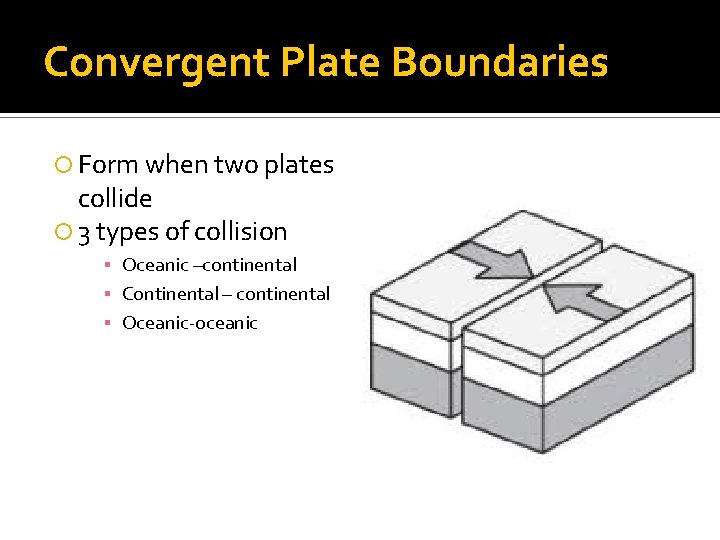
Convergent Plate Boundaries Form when two plates collide 3 types of collision ▪ Oceanic –continental ▪ Continental – continental ▪ Oceanic-oceanic
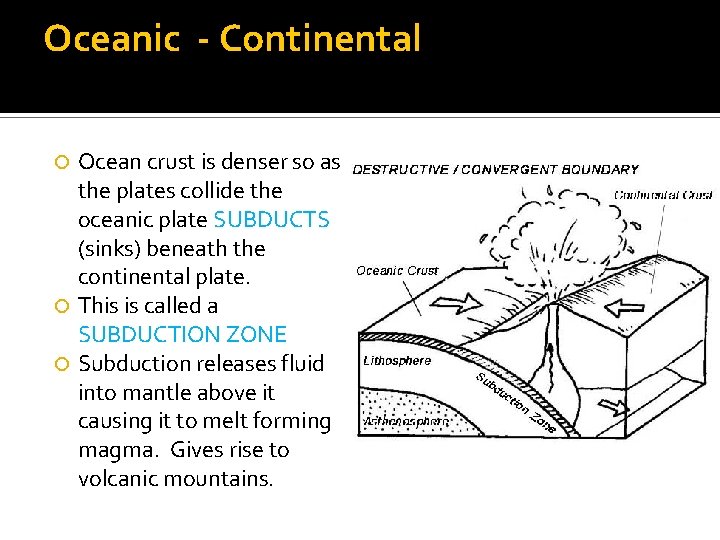
Oceanic - Continental Ocean crust is denser so as the plates collide the oceanic plate SUBDUCTS (sinks) beneath the continental plate. This is called a SUBDUCTION ZONE Subduction releases fluid into mantle above it causing it to melt forming magma. Gives rise to volcanic mountains.
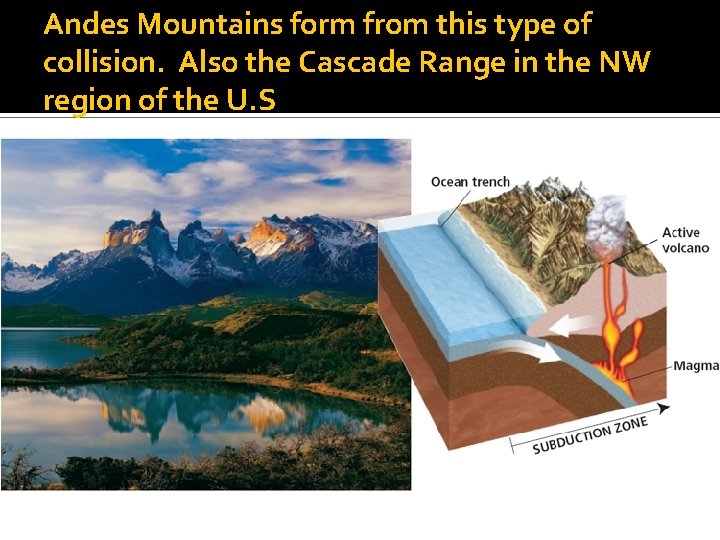
Andes Mountains form from this type of collision. Also the Cascade Range in the NW region of the U. S
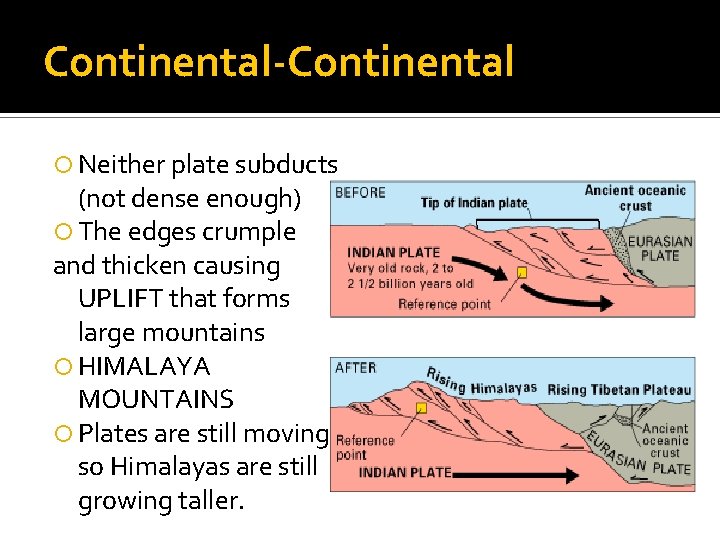
Continental-Continental Neither plate subducts (not dense enough) The edges crumple and thicken causing UPLIFT that forms large mountains HIMALAYA MOUNTAINS Plates are still moving, so Himalayas are still growing taller.
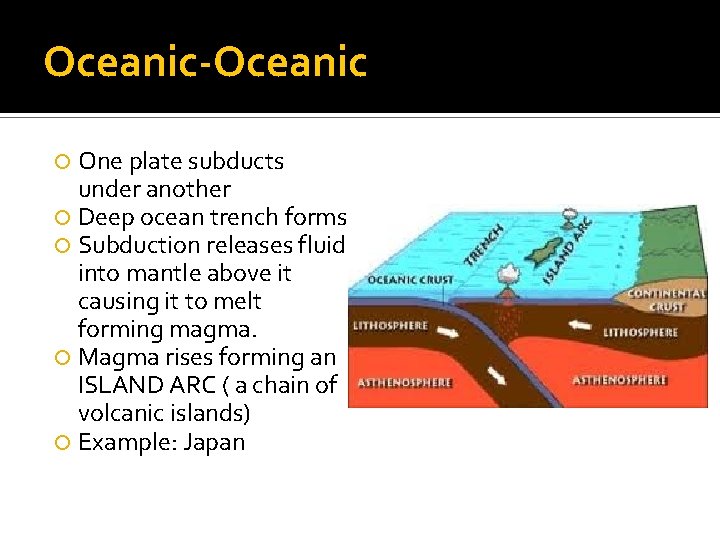
Oceanic-Oceanic One plate subducts under another Deep ocean trench forms Subduction releases fluid into mantle above it causing it to melt forming magma. Magma rises forming an ISLAND ARC ( a chain of volcanic islands) Example: Japan
Folded Mountains Form when tectonic movements squeeze rock layers together into accordion-like folds (C-C collision) Many of the highest mountain ranges formed this way.
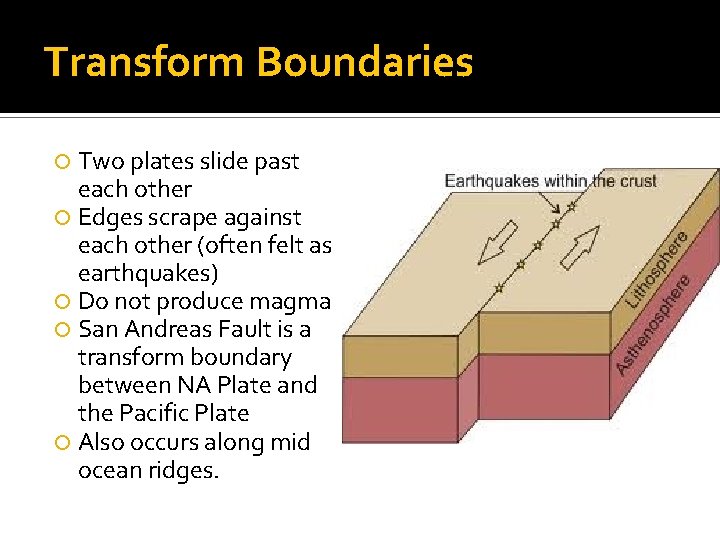
Transform Boundaries Two plates slide past each other Edges scrape against each other (often felt as earthquakes) Do not produce magma San Andreas Fault is a transform boundary between NA Plate and the Pacific Plate Also occurs along mid ocean ridges.
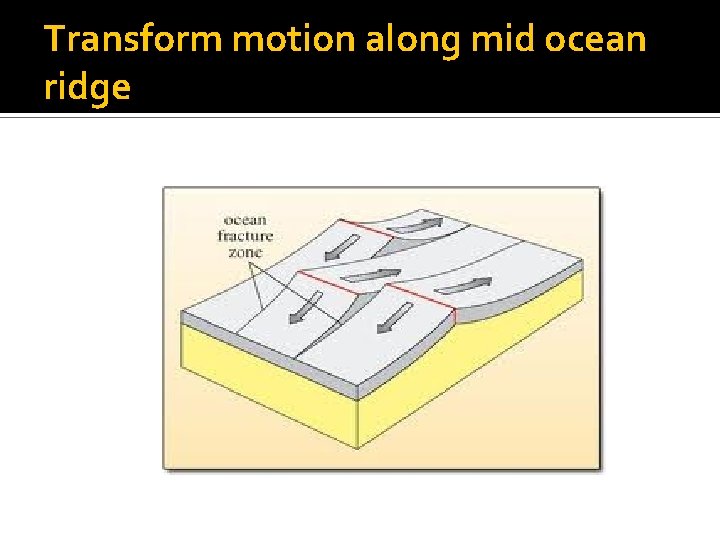
Transform motion along mid ocean ridge
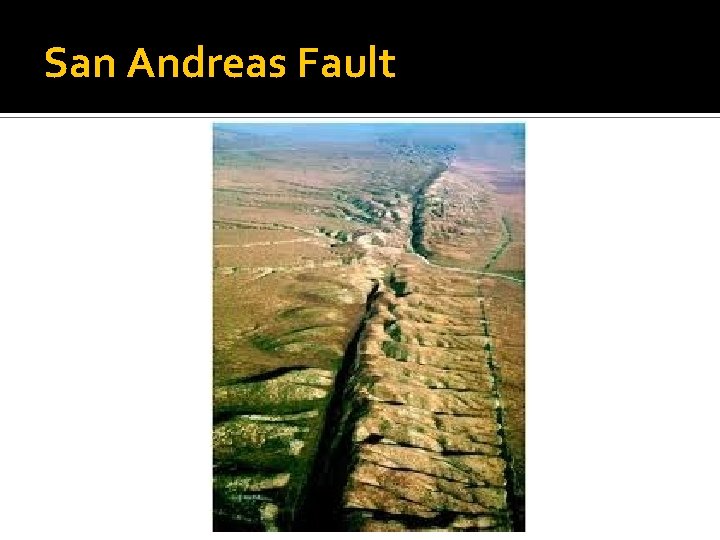
San Andreas Fault
Causes of Plate Motion Mantle Convection Ridge Push Slab Pull
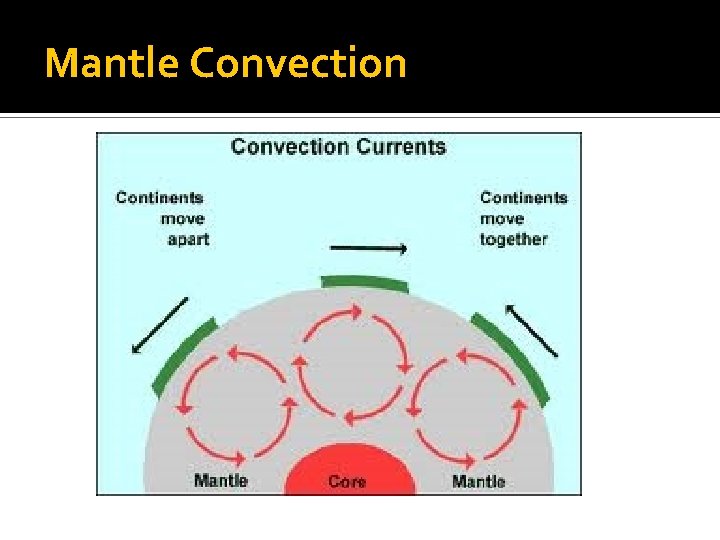
Mantle Convection
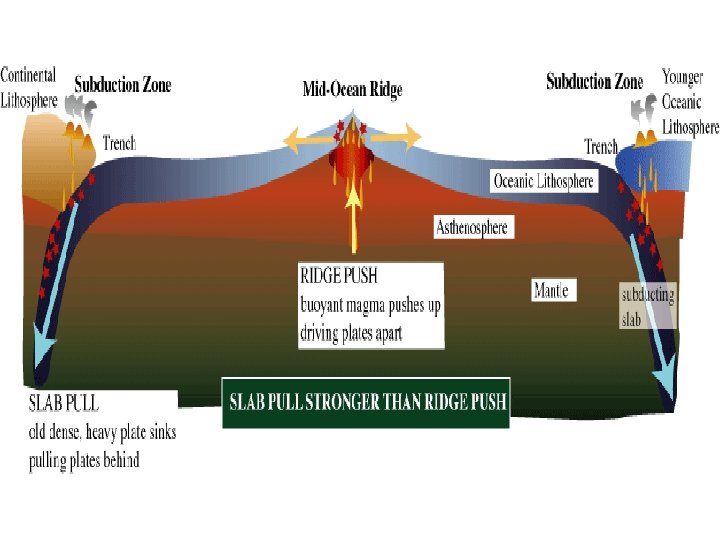
Ridge Push New parts of a plate rise because they are warm and the plate is thin. As hot magma rises to the surface at spreading ridges and forms new crust, the new crust pushes the rest of a plate out of its way. This is called ridge push.
Slab Pull Old parts of a plate are likely to sink down into the mantle at subduction zones because they are colder and thicker than the warm mantle material underneath them. This is called slab pull.
- Slides: 24