
Chapter 10 Respiration Oxygen and Carbon Dioxide Movement
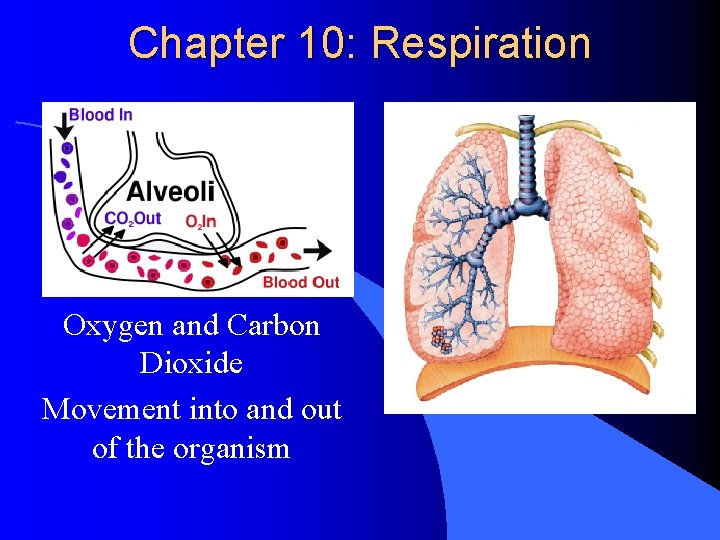
Chapter 10: Respiration Oxygen and Carbon Dioxide Movement into and out of the organism
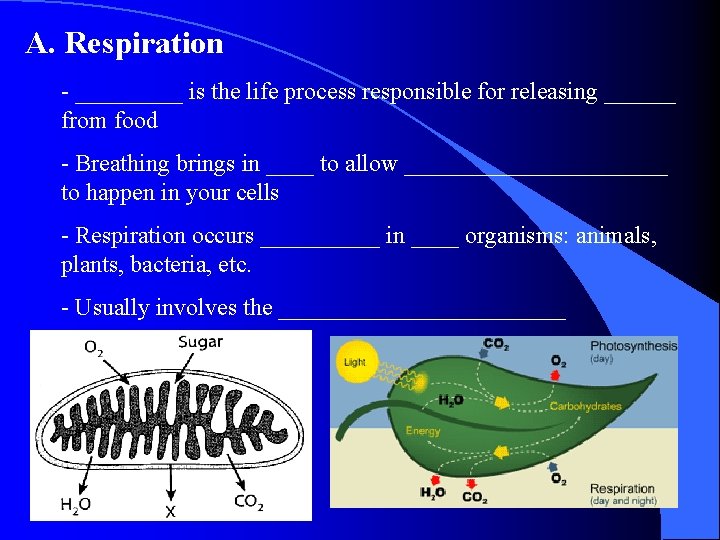
A. Respiration - _____ is the life process responsible for releasing ______ from food - Breathing brings in ____ to allow ___________ to happen in your cells - Respiration occurs _____ in ____ organisms: animals, plants, bacteria, etc. - Usually involves the ____________
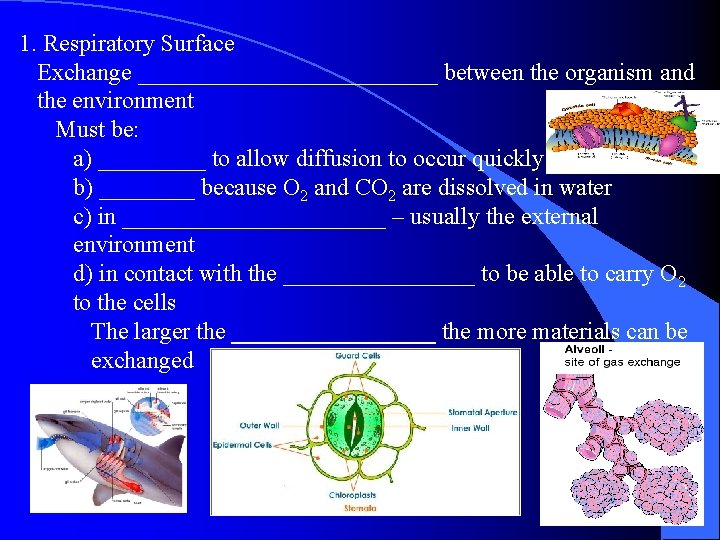
1. Respiratory Surface Exchange _____________ between the organism and the environment Must be: a) _____ to allow diffusion to occur quickly b) ____ because O 2 and CO 2 are dissolved in water c) in ___________ – usually the external environment d) in contact with the ________ to be able to carry O 2 to the cells The larger the _________ the more materials can be exchanged
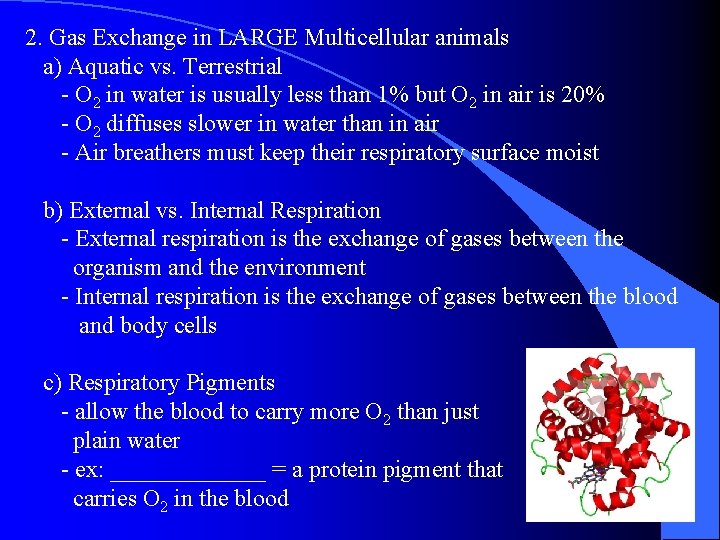
2. Gas Exchange in LARGE Multicellular animals a) Aquatic vs. Terrestrial - O 2 in water is usually less than 1% but O 2 in air is 20% - O 2 diffuses slower in water than in air - Air breathers must keep their respiratory surface moist b) External vs. Internal Respiration - External respiration is the exchange of gases between the organism and the environment - Internal respiration is the exchange of gases between the blood and body cells c) Respiratory Pigments - allow the blood to carry more O 2 than just plain water - ex: _______ = a protein pigment that carries O 2 in the blood
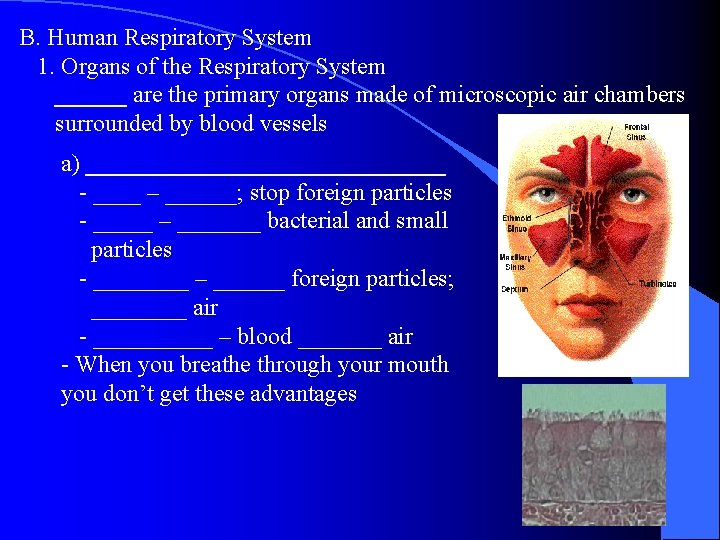
B. Human Respiratory System 1. Organs of the Respiratory System ______ are the primary organs made of microscopic air chambers surrounded by blood vessels a) _______________ - ____ – ______; stop foreign particles - _____ – _______ bacterial and small particles - ____ – ______ foreign particles; ____ air - _____ – blood _______ air - When you breathe through your mouth you don’t get these advantages
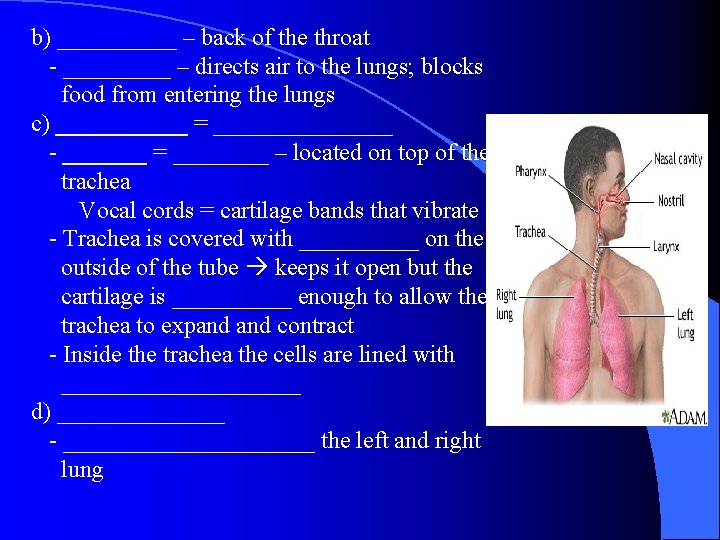
b) _____ – back of the throat - _____ – directs air to the lungs; blocks food from entering the lungs c) ______ = ________ - _______ = ____ – located on top of the trachea Vocal cords = cartilage bands that vibrate - Trachea is covered with _____ on the outside of the tube keeps it open but the cartilage is _____ enough to allow the trachea to expand contract - Inside the trachea the cells are lined with __________ d) _______ - ___________ the left and right lung
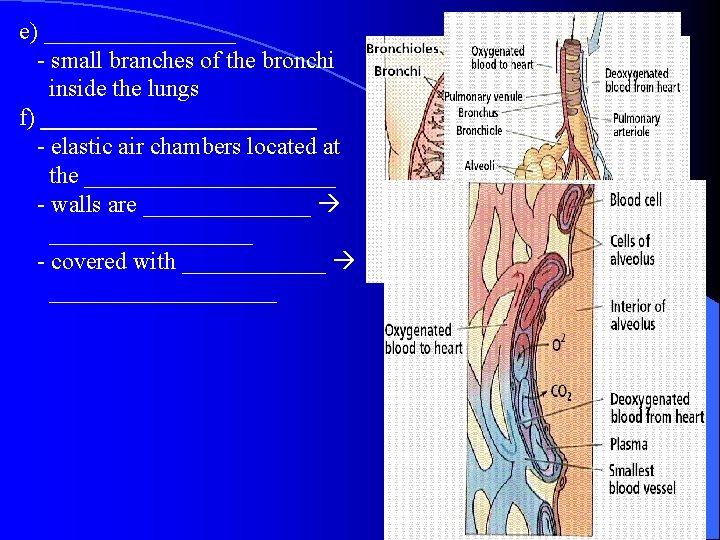
e) ________ - small branches of the bronchi inside the lungs f) ____________ - elastic air chambers located at the ___________ - walls are _________ - covered with __________
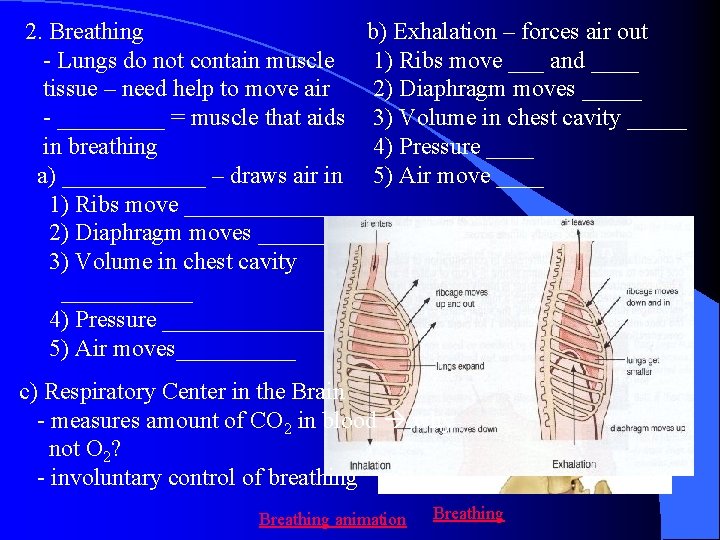
b) Exhalation – forces air out 2. Breathing 1) Ribs move ___ and ____ - Lungs do not contain muscle 2) Diaphragm moves _____ tissue – need help to move air - _____ = muscle that aids 3) Volume in chest cavity _____ 4) Pressure ____ in breathing a) ______ – draws air in 5) Air move ____ 1) Ribs move ______ 2) Diaphragm moves _______ 3) Volume in chest cavity ______ 4) Pressure _______ 5) Air moves_____ c) Respiratory Center in the Brain - measures amount of CO 2 in blood why not O 2? - involuntary control of breathing Breathing animation Breathing
C. Cellular Respiration - process by which organisms release _____ from nutrient molecules - usually ___ combines with ____ to make _________ - ______ is the chemical molecule that cells use for energy - H 2 O, and CO 2 are ________ from cellular respiration - Cellular Respiration is an enzyme controlled reaction Cellular Respiration Overview 2
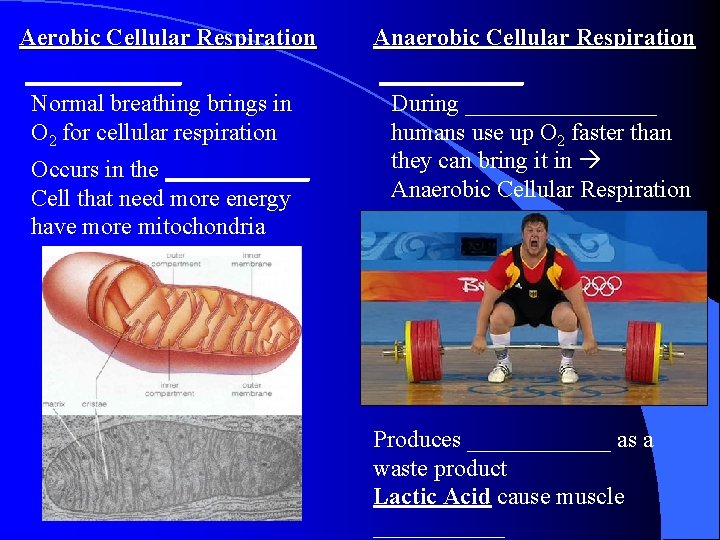
Aerobic Cellular Respiration _______ Normal breathing brings in O 2 for cellular respiration Occurs in the ______ Cell that need more energy have more mitochondria Anaerobic Cellular Respiration ______ During ________ humans use up O 2 faster than they can bring it in Anaerobic Cellular Respiration Produces ______ as a waste product Lactic Acid cause muscle ______
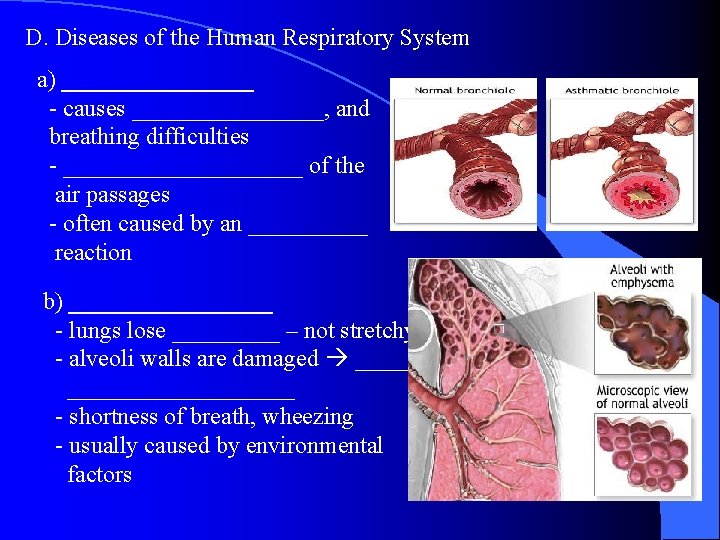
D. Diseases of the Human Respiratory System a) ________ - causes ________, and breathing difficulties - __________ of the air passages - often caused by an _____ reaction b) _________ - lungs lose _____ – not stretchy - alveoli walls are damaged ____________ - shortness of breath, wheezing - usually caused by environmental factors
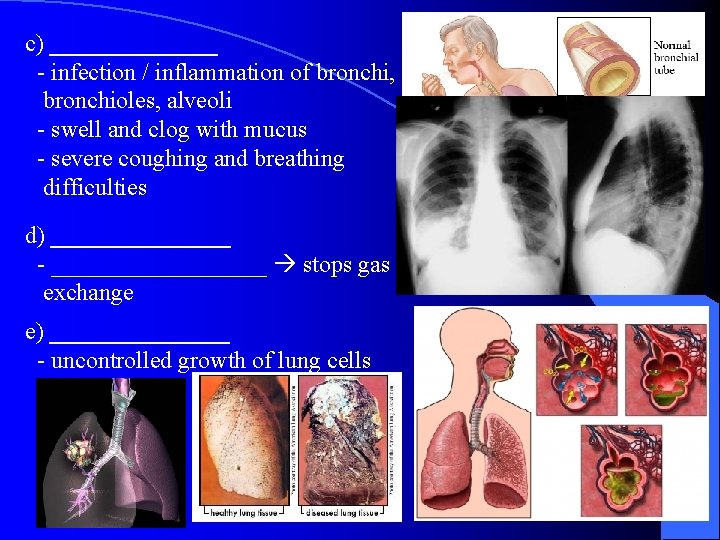
c) _______ - infection / inflammation of bronchi, bronchioles, alveoli - swell and clog with mucus - severe coughing and breathing difficulties d) ________ - _________ stops gas exchange e) ________ - uncontrolled growth of lung cells
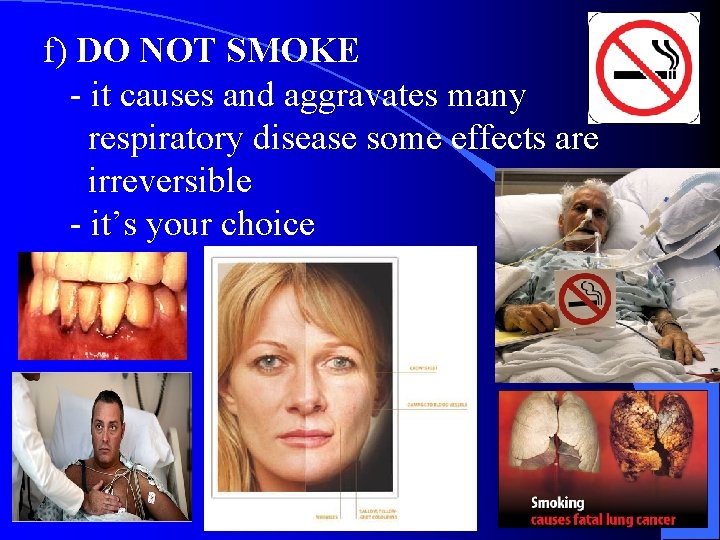
f) DO NOT SMOKE - it causes and aggravates many respiratory disease some effects are irreversible - it’s your choice
- Slides: 13