
CHAPTER 10 Reinforcement Learning Utility Theory QUESTION Recap

- Slides: 22
CHAPTER 10 Reinforcement Learning Utility Theory
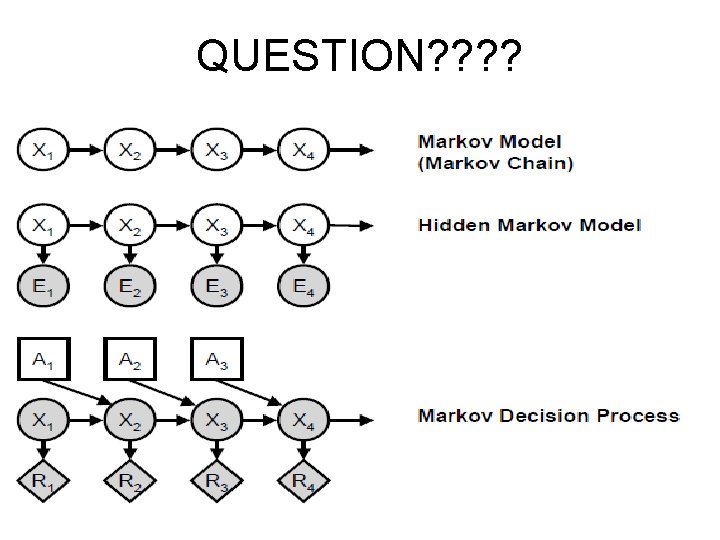
QUESTION? ?
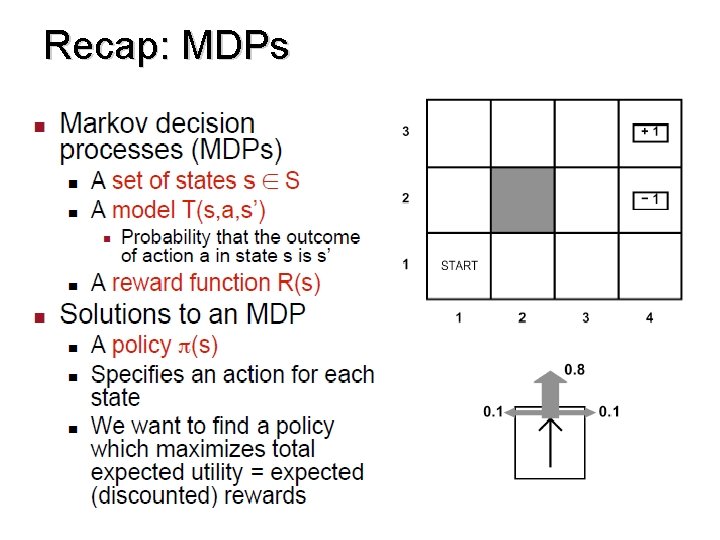
Recap: MDPs
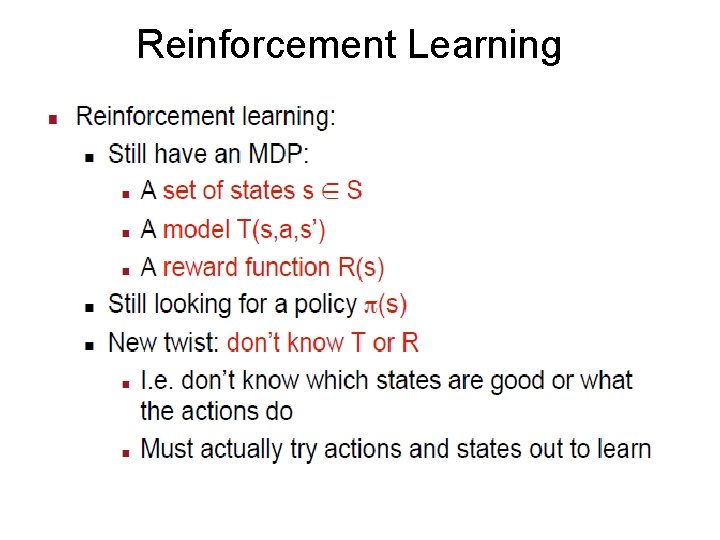
Reinforcement Learning
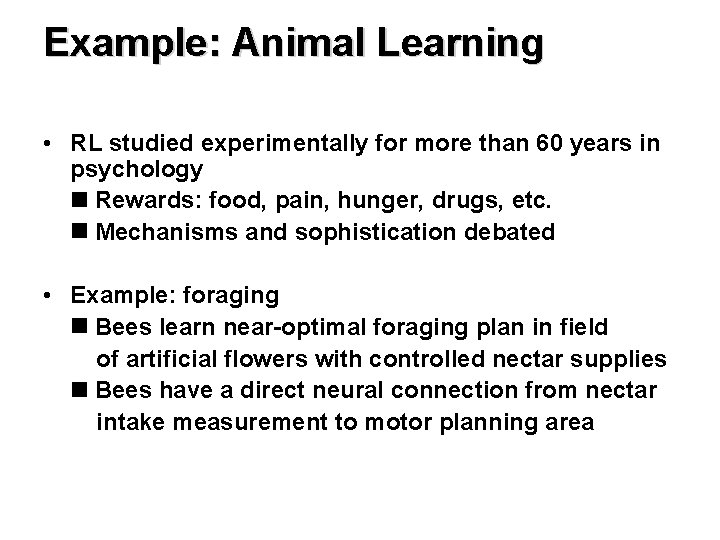
Example: Animal Learning • RL studied experimentally for more than 60 years in psychology Rewards: food, pain, hunger, drugs, etc. Mechanisms and sophistication debated • Example: foraging Bees learn near-optimal foraging plan in field of artificial flowers with controlled nectar supplies Bees have a direct neural connection from nectar intake measurement to motor planning area
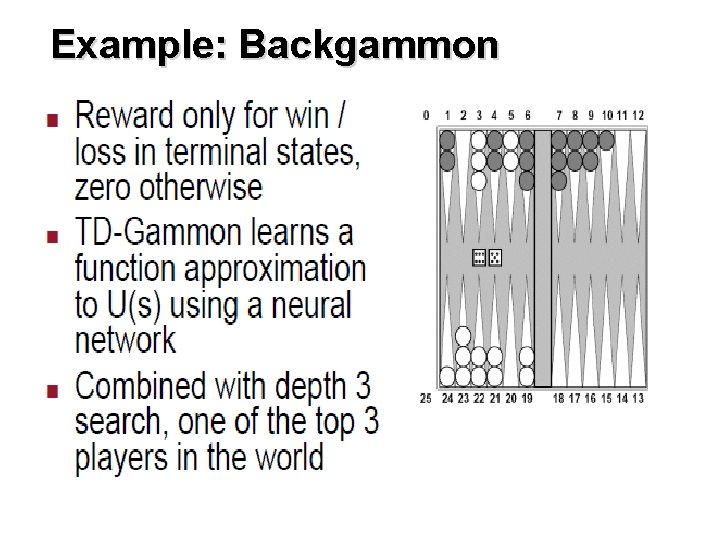
Example: Backgammon
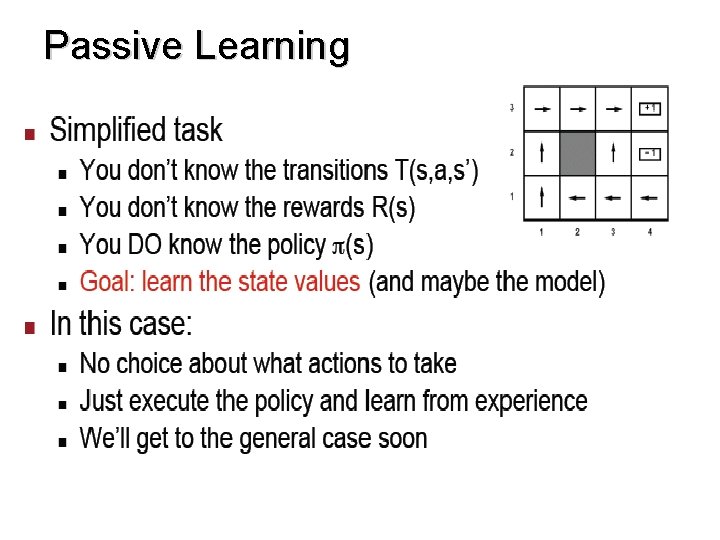
Passive Learning
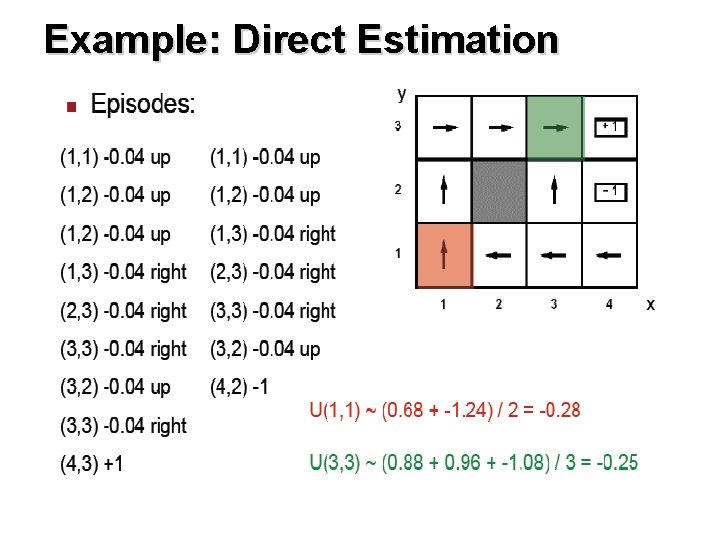
Example: Direct Estimation
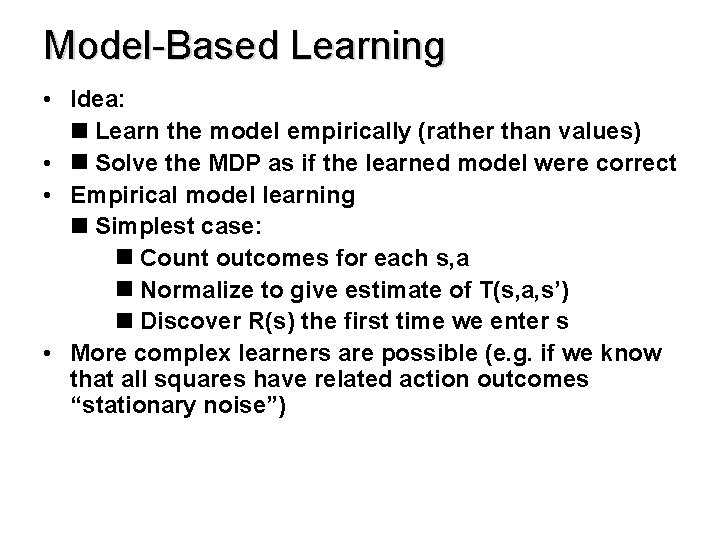
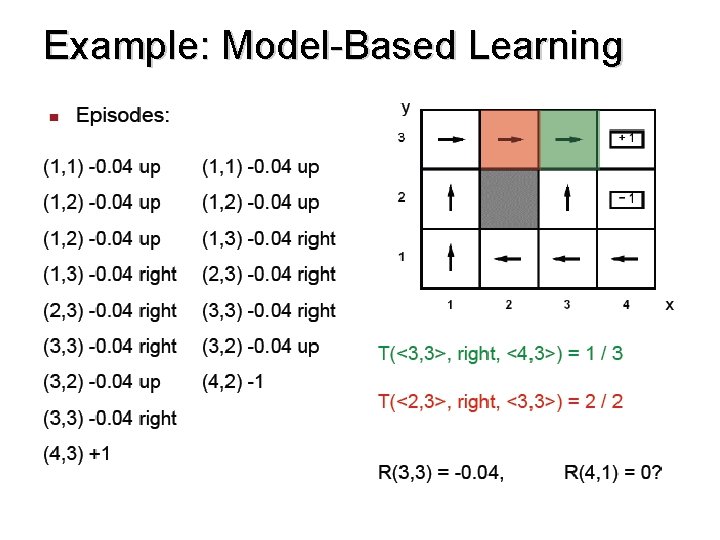
Model-Based Learning • Idea: Learn the model empirically (rather than values) • Solve the MDP as if the learned model were correct • Empirical model learning Simplest case: Count outcomes for each s, a Normalize to give estimate of T(s, a, s’) Discover R(s) the first time we enter s • More complex learners are possible (e. g. if we know that all squares have related action outcomes “stationary noise”)
Example: Model-Based Learning
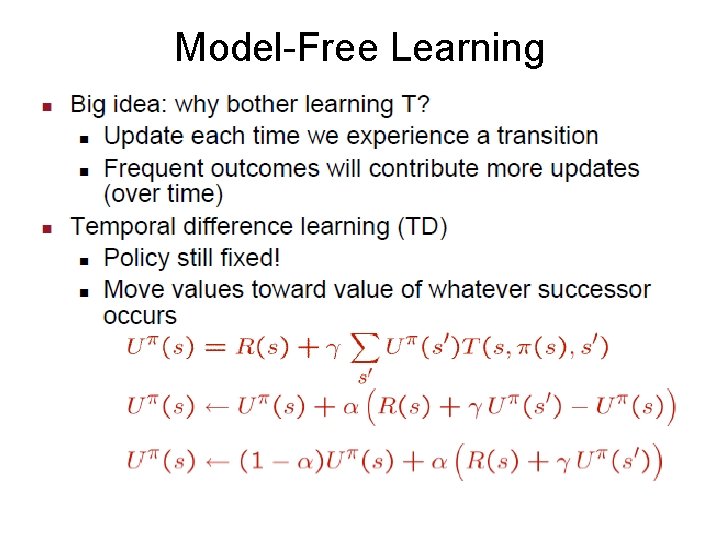
Model-Free Learning
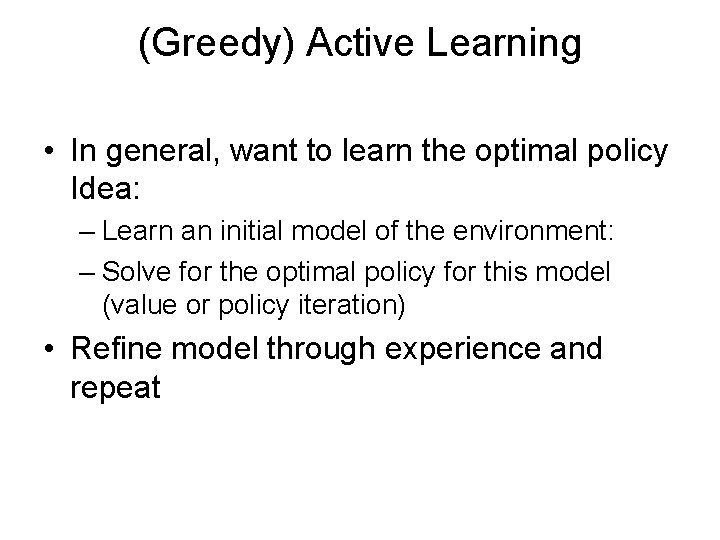
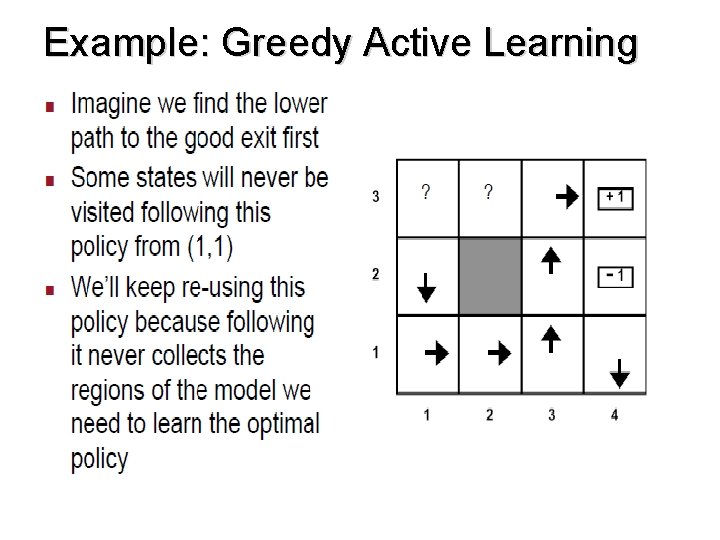
(Greedy) Active Learning • In general, want to learn the optimal policy Idea: – Learn an initial model of the environment: – Solve for the optimal policy for this model (value or policy iteration) • Refine model through experience and repeat
Example: Greedy Active Learning
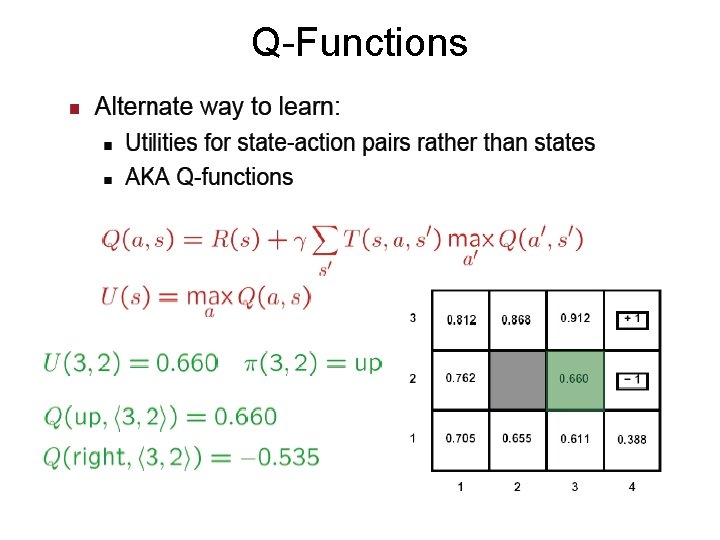
Q-Functions
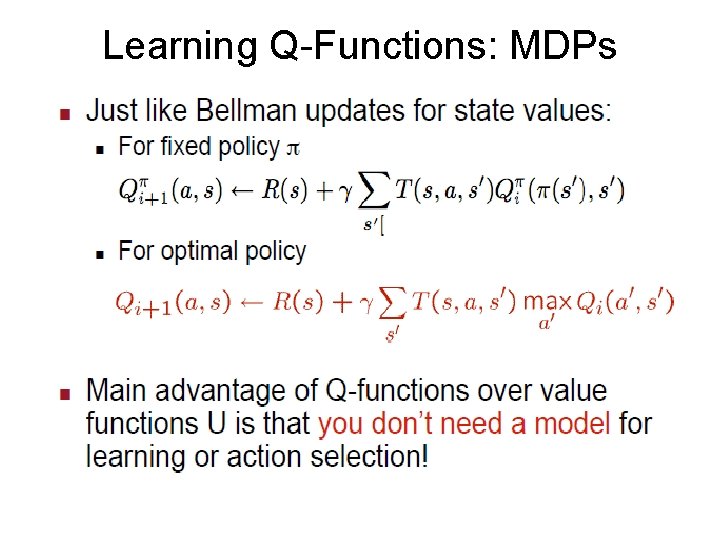
Learning Q-Functions: MDPs
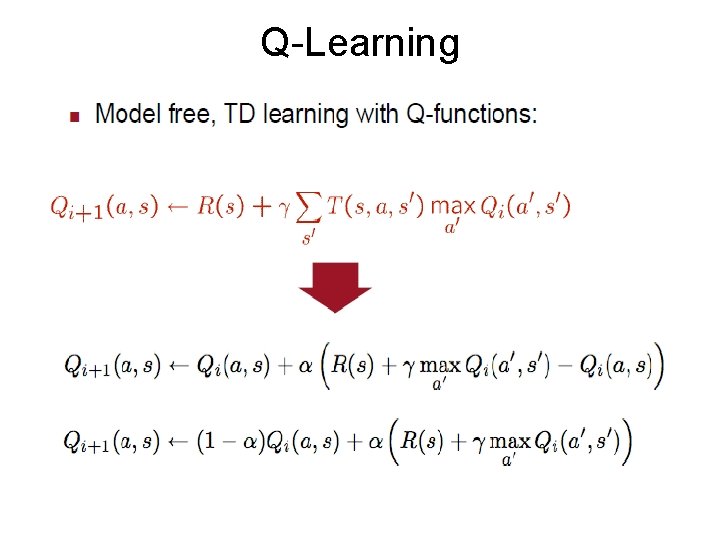
Q-Learning
Exploration / Exploitation
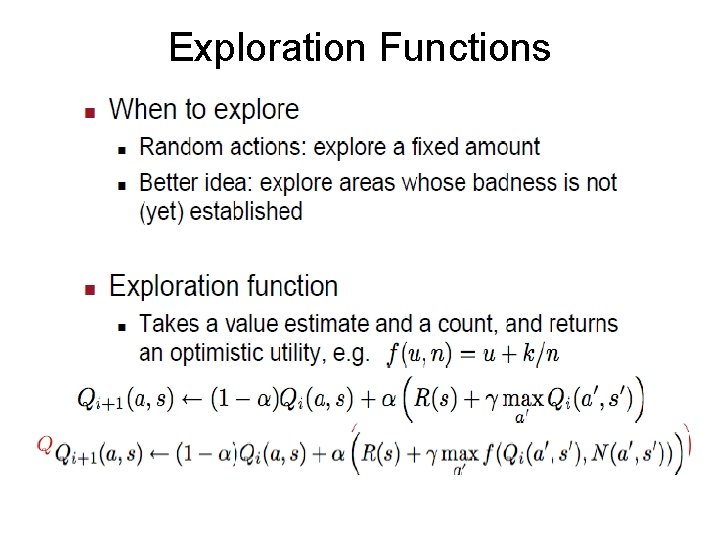
Exploration Functions
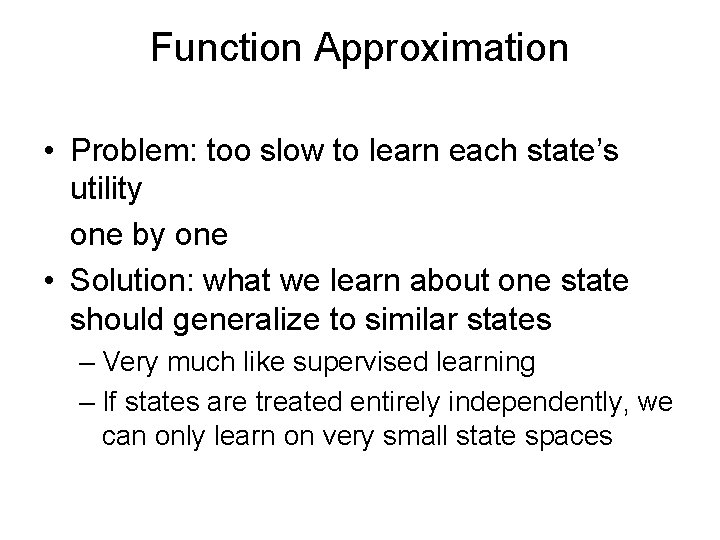
Function Approximation • Problem: too slow to learn each state’s utility one by one • Solution: what we learn about one state should generalize to similar states – Very much like supervised learning – If states are treated entirely independently, we can only learn on very small state spaces
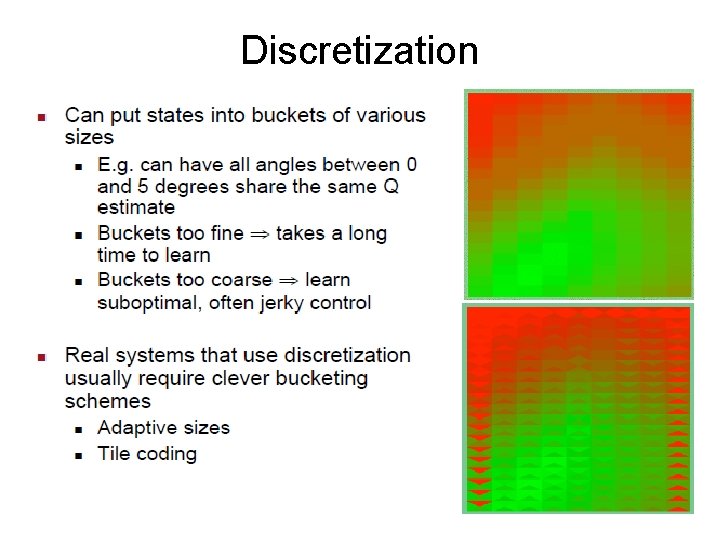
Discretization
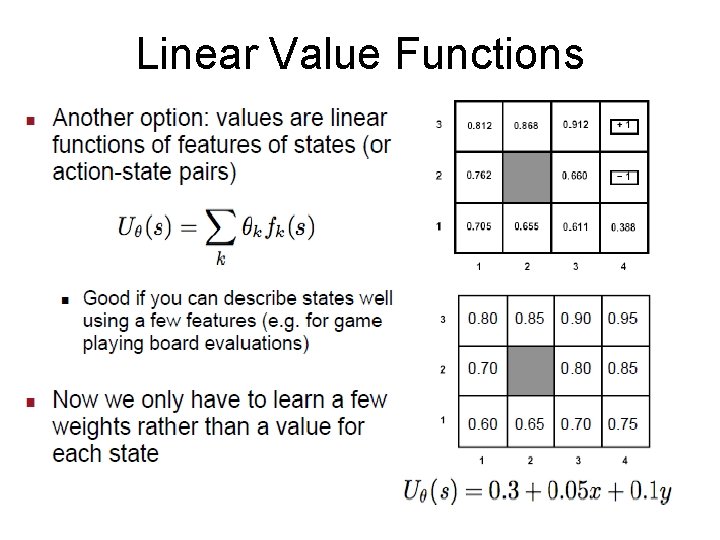
Linear Value Functions
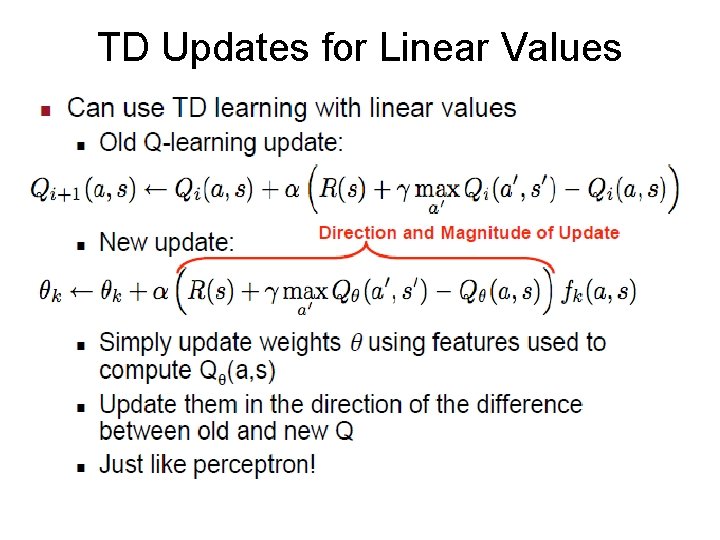
TD Updates for Linear Values