
Chapter 10 Regulatory Strategies 2019 W H Freeman
- Slides: 50
Chapter 10 Regulatory Strategies © 2019 W. H. Freeman and Company
CHAPTER 10 Regulatory Strategies
Ch. 10 Learning Objectives By the end of this chapter, you should be able to: 1. Describe the characteristics of allosteric enzymes and explain how the kinetic curves of such enzymes differ from Michaelis–Menten enzymes. 2. Describe feedback inhibition and how aspartate transcarbamoylase uses it as a regulatory mechanism. 3. Differentiate between homotropic and heterotropic effects and explain how they modify the equilibrium between the T and R forms of an allosteric enzyme. 4. Define isozymes and explain the purpose of isozymes in metabolism. 5. Describe the activity of protein kinases and protein phosphatases. 6. Explain why phosphorylation is an effective means of regulating the activities of target proteins. 7. Define zymogen or proenzyme, and explain why the mechanism of zymogen activation is important physiologically and how it differs from the other control mechanisms discussed in this chapter.
Ch. 10 Outline • 10. 1 Aspartate Transcarbamoylase Is Allosterically Inhibited by the End Product of Its Pathway • 10. 2 Isozymes Provide a Means of Regulation Specific to Distinct Tissues and Developmental Stages • 10. 3 Covalent Modification Is a Means of Regulating Enzyme Activity • 10. 4 Many Enzymes Are Activated by Specific Proteolytic Cleavage
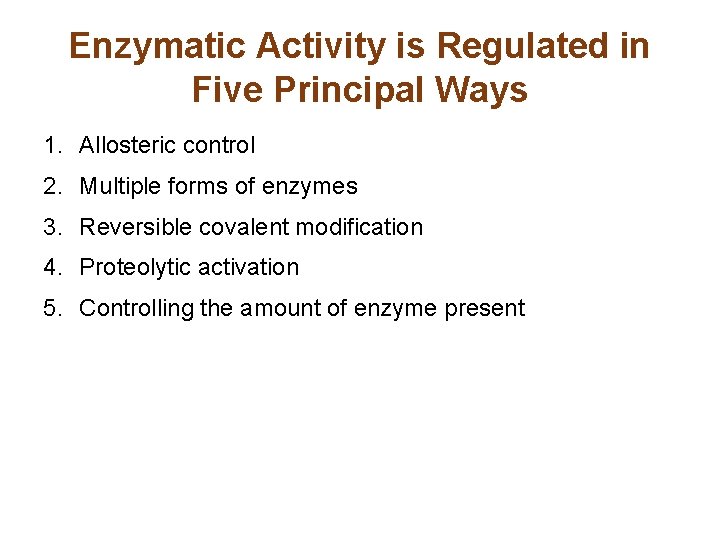
Enzymatic Activity is Regulated in Five Principal Ways 1. Allosteric control 2. Multiple forms of enzymes 3. Reversible covalent modification 4. Proteolytic activation 5. Controlling the amount of enzyme present
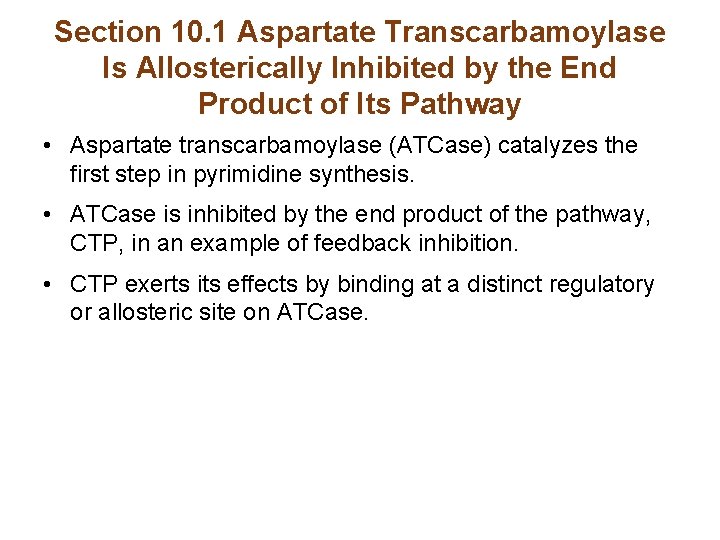
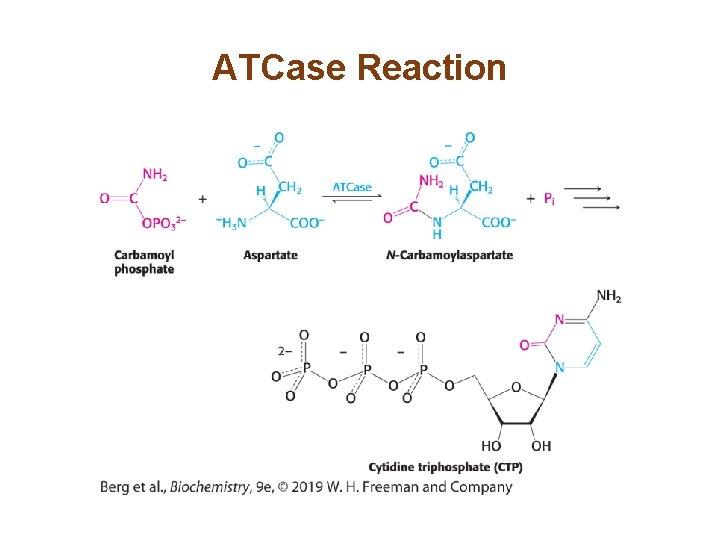
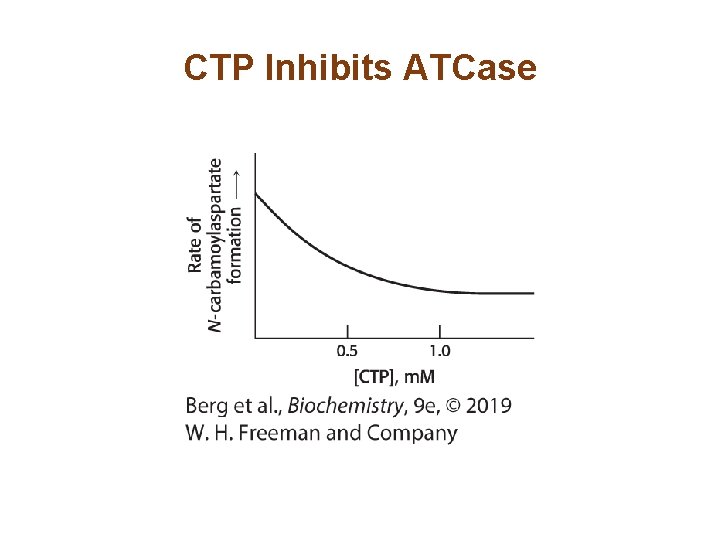
Section 10. 1 Aspartate Transcarbamoylase Is Allosterically Inhibited by the End Product of Its Pathway • Aspartate transcarbamoylase (ATCase) catalyzes the first step in pyrimidine synthesis. • ATCase is inhibited by the end product of the pathway, CTP, in an example of feedback inhibition. • CTP exerts its effects by binding at a distinct regulatory or allosteric site on ATCase.
ATCase Reaction
CTP Inhibits ATCase
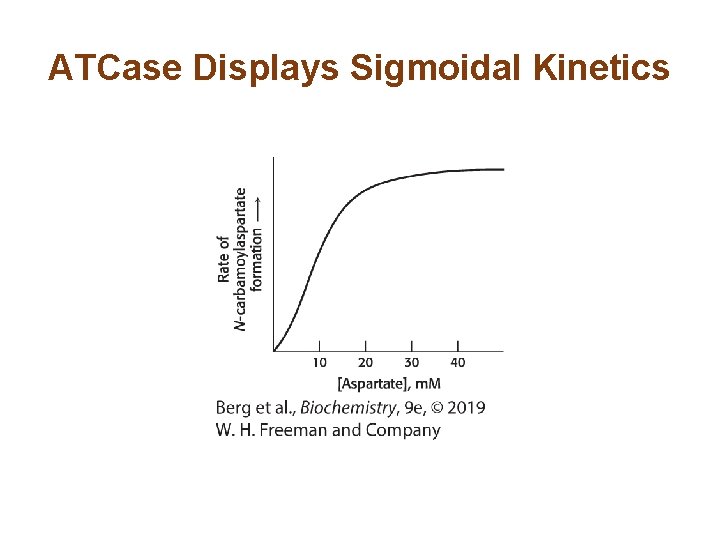
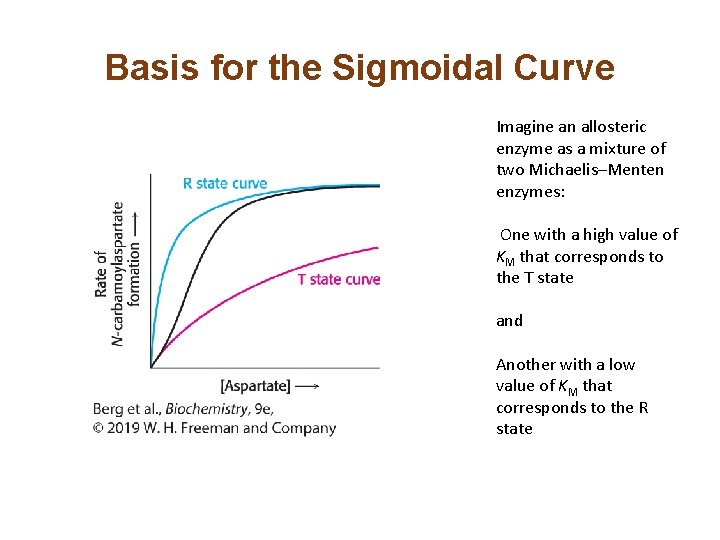
Allosterically Regulated Enzymes do not Follow Michaelis–Menten Kinetics • ATCase, like the majority of allosteric enzymes, displays sigmoidal kinetics. • Sigmoidal curves result from cooperation between subunits.
ATCase Displays Sigmoidal Kinetics
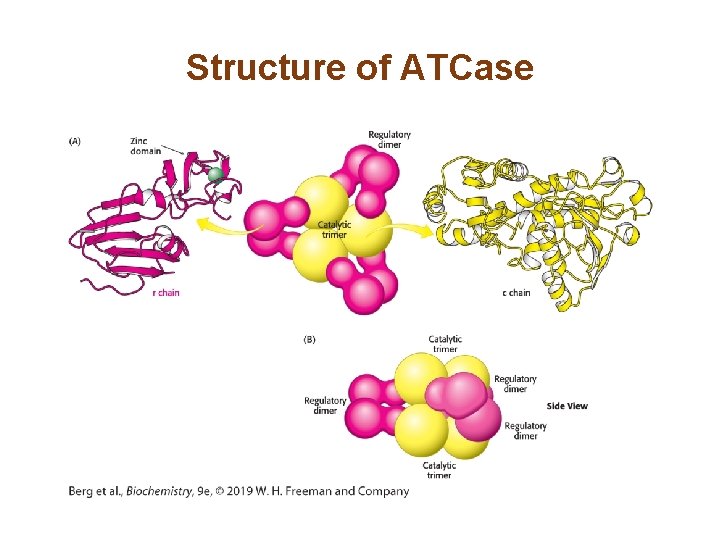
ATCase Consists of Separable Catalytic and Regulatory Subunits • Native ATCase consists of six catalytic and six regulatory subunits (c 6 r 6) organized as two catalytic trimers and two regulatory dimers. • Isolated subunits can be mixed to reconstitute the native enzyme.
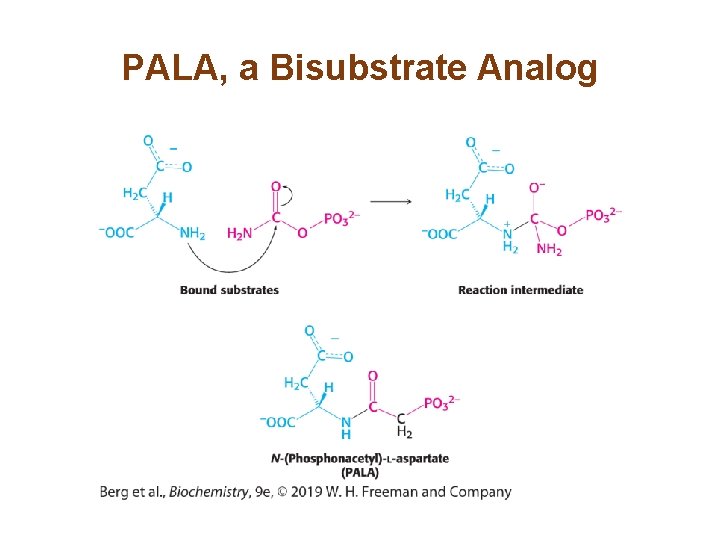
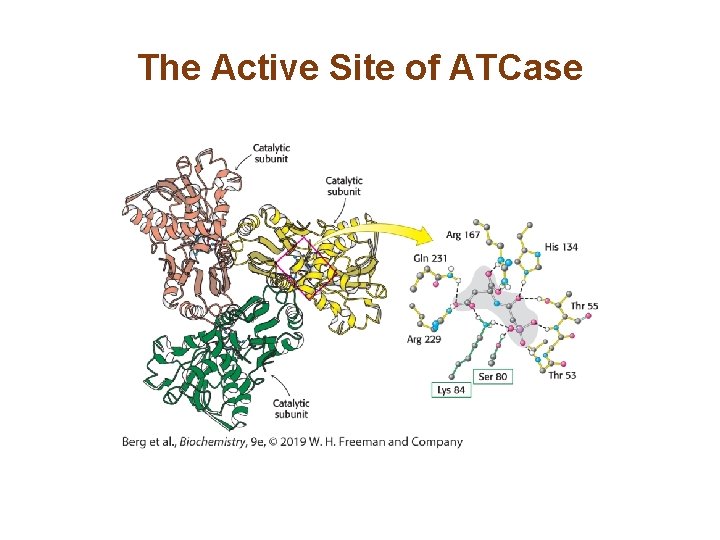
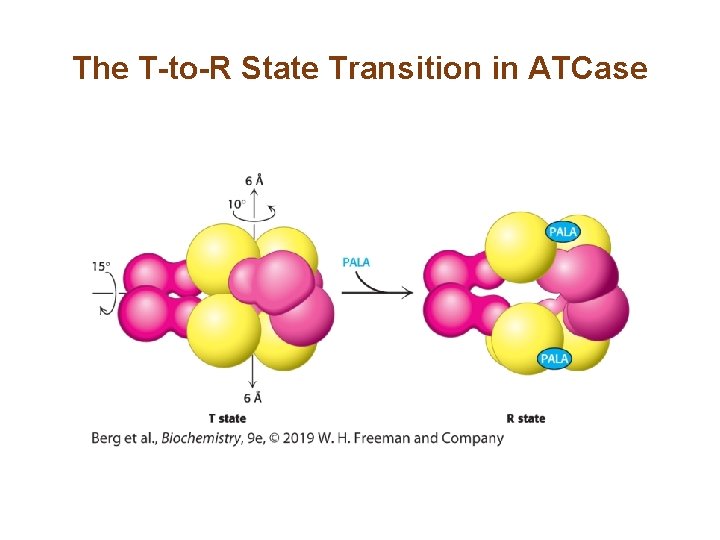
Allosteric Interactions in ATCase are Mediated by Large Changes in Quaternary Structure (1/3) • The catalytic trimers are stacked upon one another, linked by the three regulatory dimers. • The active site was identified by use of the bisubstrate analog PALA. • The active sites are located at the interface of the catalytic subunits. • Binding of PALA causes structural changes that convert the compact, less active T state into the expanded, active R state.
Structure of ATCase
PALA, a Bisubstrate Analog
The Active Site of ATCase
The T-to-R State Transition in ATCase
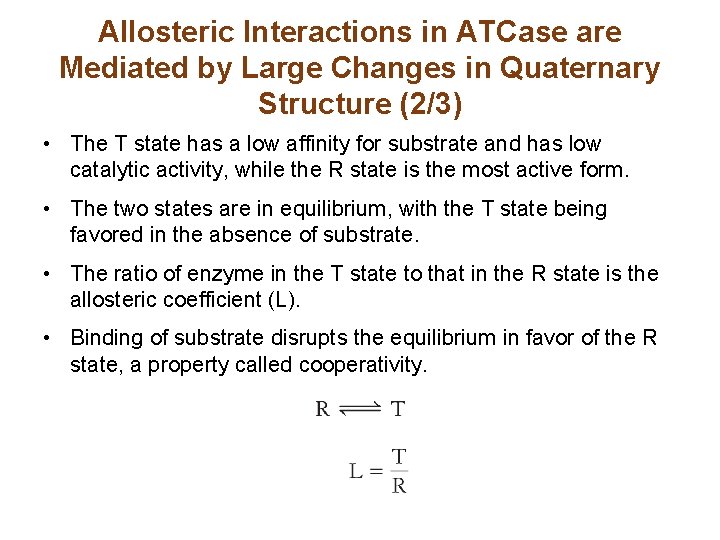
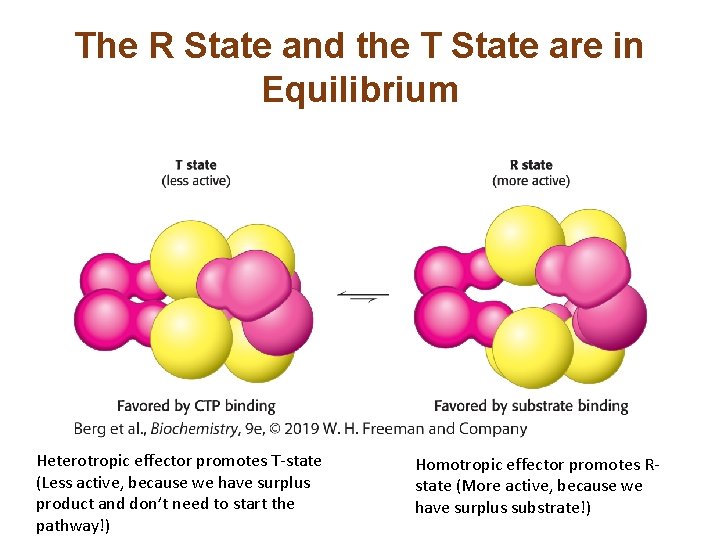
Allosteric Interactions in ATCase are Mediated by Large Changes in Quaternary Structure (2/3) • The T state has a low affinity for substrate and has low catalytic activity, while the R state is the most active form. • The two states are in equilibrium, with the T state being favored in the absence of substrate. • The ratio of enzyme in the T state to that in the R state is the allosteric coefficient (L). • Binding of substrate disrupts the equilibrium in favor of the R state, a property called cooperativity.
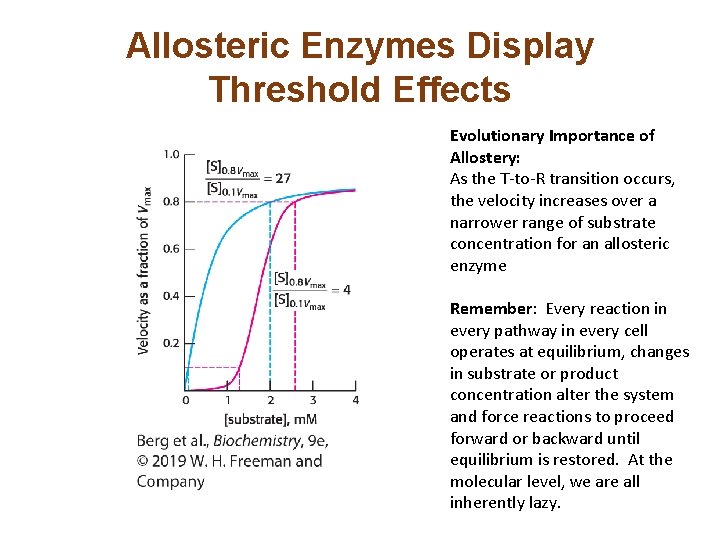
Allosteric Interactions in ATCase are Mediated by Large Changes in Quaternary Structure (3/3) • The effects of substrates on allosteric enzymes are called homotropic effects. • ATCase adheres to the concerted (“all or none”) mechanism for allosteric enzymes, which postulates that all active sites are in the same state, either T or R. – Many other allosteric enzymes, however, have features of both the concerted and the sequential model. • The sigmoidal kinetic curve of allosteric enzymes allows increased sensitivity to changes in substrate concentration, or the threshold effect.
Basis for the Sigmoidal Curve Imagine an allosteric enzyme as a mixture of two Michaelis–Menten enzymes: One with a high value of KM that corresponds to the T state and Another with a low value of KM that corresponds to the R state
Allosteric Enzymes Display Threshold Effects Evolutionary Importance of Allostery: As the T-to-R transition occurs, the velocity increases over a narrower range of substrate concentration for an allosteric enzyme Remember: Every reaction in every pathway in every cell operates at equilibrium, changes in substrate or product concentration alter the system and force reactions to proceed forward or backward until equilibrium is restored. At the molecular level, we are all inherently lazy.
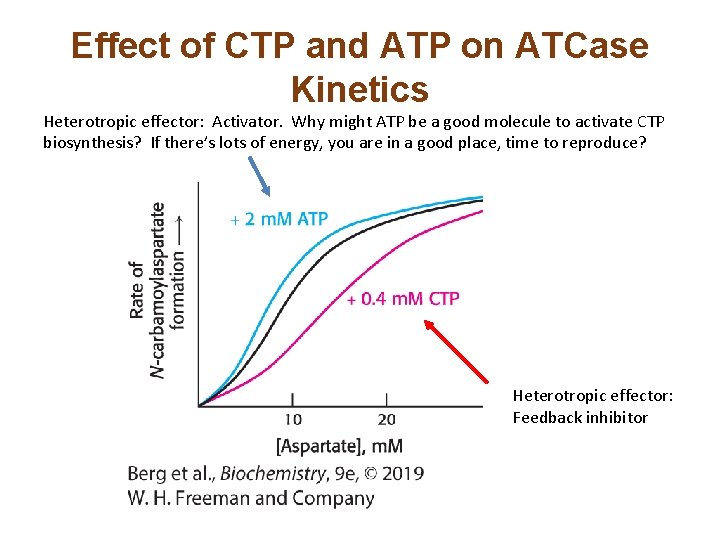
Allosteric Regulators Modulate the T -to-R Equilibrium • Binding of CTP to the regulatory site of ATCase alters the T-to-R equilibrium in favor of the T state, decreasing net enzyme activity. • ATP is a positive regulator of ATCase, altering the Tto-R equilibrium in favor of the R state, increasing net enzyme activity. • L is the equilibrium constant for the T-to-R equilibrium. Allosteric effectors (heterotropic effectors) alter the value of L.
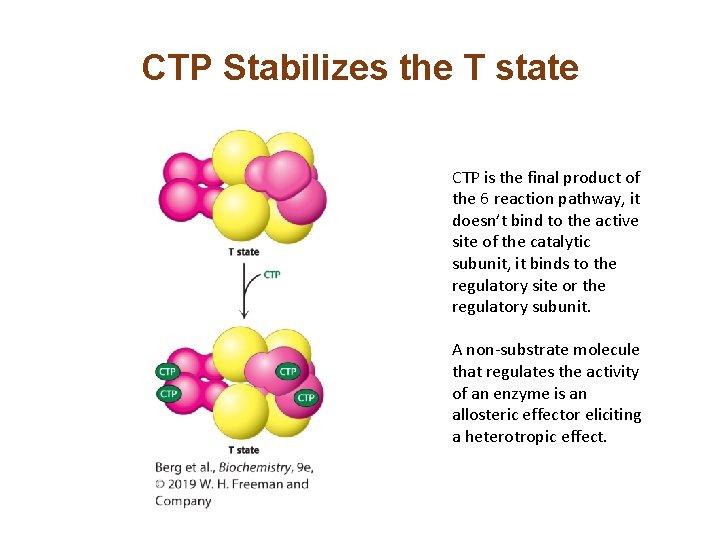
CTP Stabilizes the T state CTP is the final product of the 6 reaction pathway, it doesn’t bind to the active site of the catalytic subunit, it binds to the regulatory site or the regulatory subunit. A non-substrate molecule that regulates the activity of an enzyme is an allosteric effector eliciting a heterotropic effect.
The R State and the T State are in Equilibrium Heterotropic effector promotes T-state (Less active, because we have surplus product and don’t need to start the pathway!) Homotropic effector promotes Rstate (More active, because we have surplus substrate!)
Effect of CTP and ATP on ATCase Kinetics Heterotropic effector: Activator. Why might ATP be a good molecule to activate CTP biosynthesis? If there’s lots of energy, you are in a good place, time to reproduce? Heterotropic effector: Feedback inhibitor
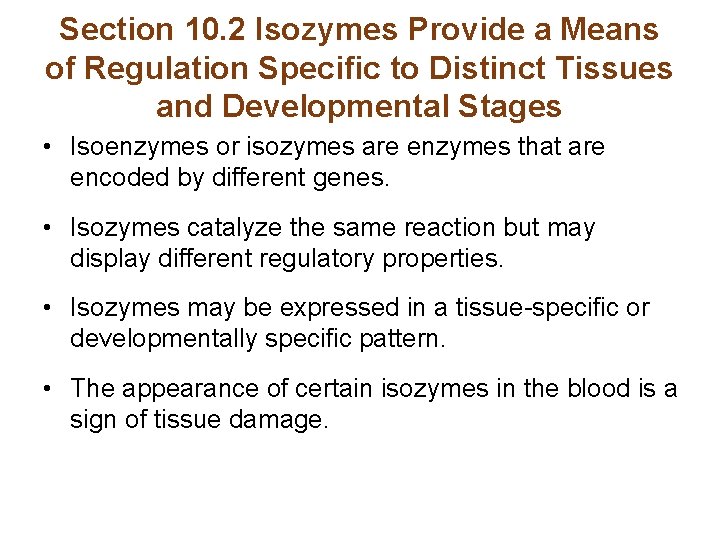
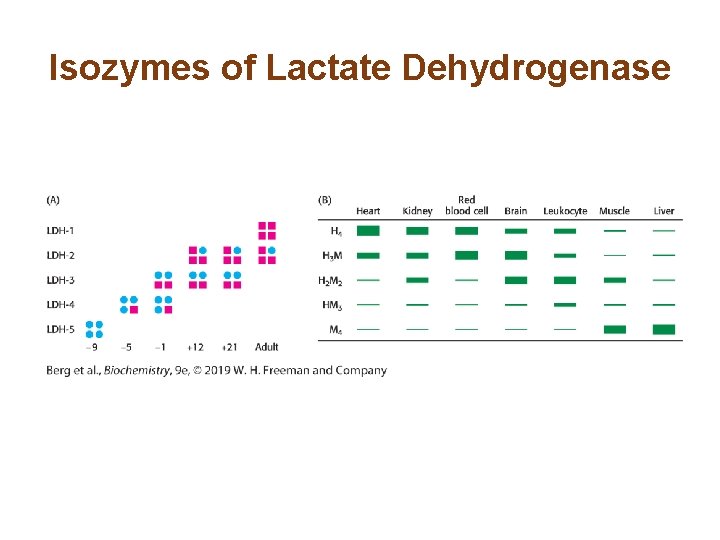
Section 10. 2 Isozymes Provide a Means of Regulation Specific to Distinct Tissues and Developmental Stages • Isoenzymes or isozymes are enzymes that are encoded by different genes. • Isozymes catalyze the same reaction but may display different regulatory properties. • Isozymes may be expressed in a tissue-specific or developmentally specific pattern. • The appearance of certain isozymes in the blood is a sign of tissue damage.
Isozymes of Lactate Dehydrogenase
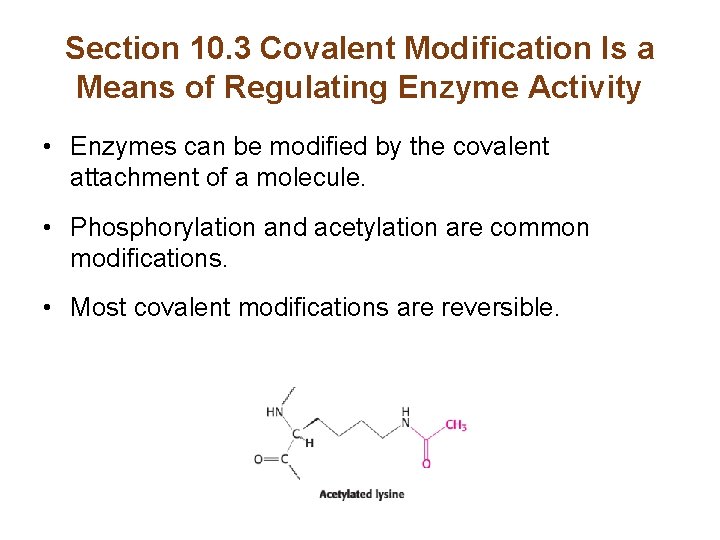
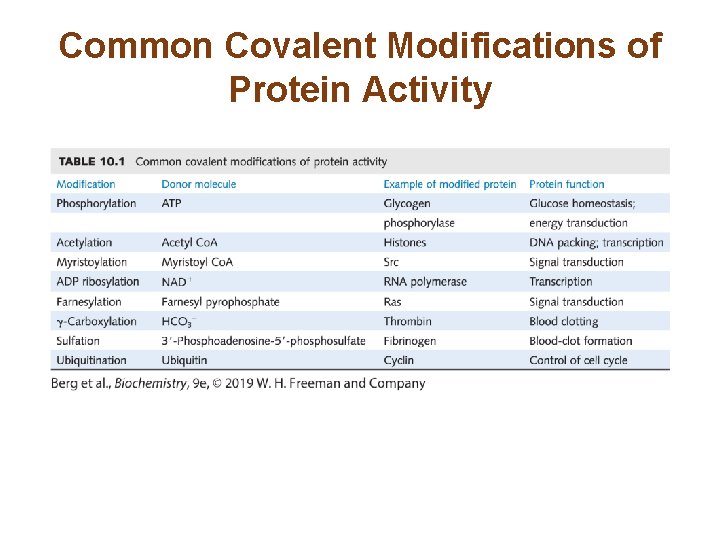
Section 10. 3 Covalent Modification Is a Means of Regulating Enzyme Activity • Enzymes can be modified by the covalent attachment of a molecule. • Phosphorylation and acetylation are common modifications. • Most covalent modifications are reversible.
Common Covalent Modifications of Protein Activity
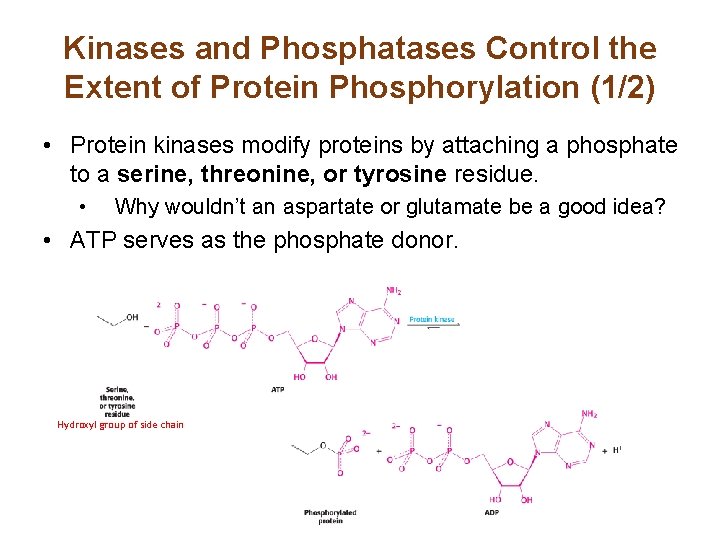
Kinases and Phosphatases Control the Extent of Protein Phosphorylation (1/2) • Protein kinases modify proteins by attaching a phosphate to a serine, threonine, or tyrosine residue. • Why wouldn’t an aspartate or glutamate be a good idea? • ATP serves as the phosphate donor. Hydroxyl group of side chain
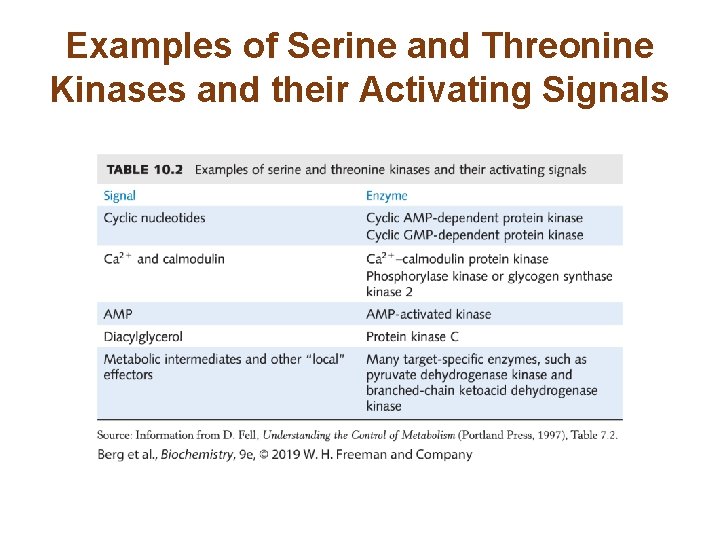
Examples of Serine and Threonine Kinases and their Activating Signals
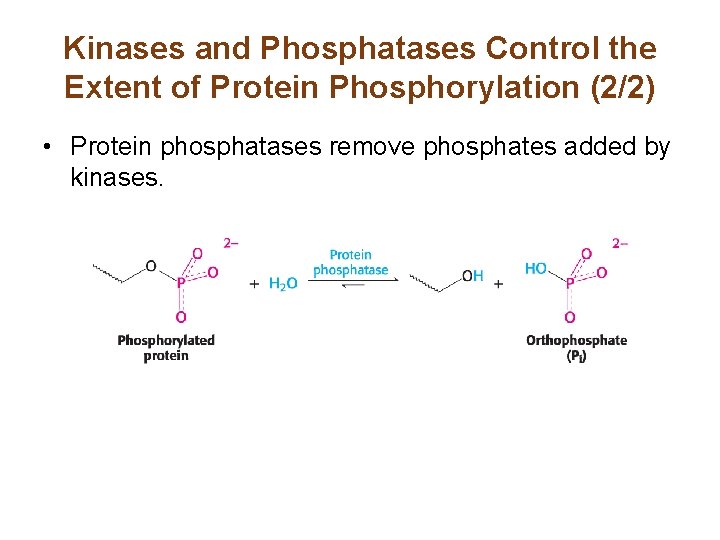
Kinases and Phosphatases Control the Extent of Protein Phosphorylation (2/2) • Protein phosphatases remove phosphates added by kinases.
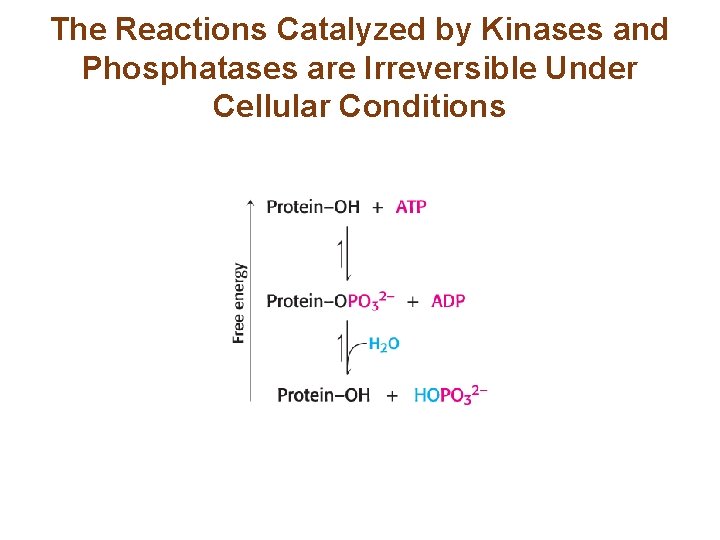
The Reactions Catalyzed by Kinases and Phosphatases are Irreversible Under Cellular Conditions
Phosphorylation is a Highly Effective Means of Regulating the Activities of Target Proteins • Key features of regulation by phosphorylation are as follows: – – – The free energy of phosphorylation is large. The addition of the phosphoryl group alters electrostatic interactions. A phosphoryl group can form hydrogen bonds. Phosphorylation and dephosphorylation can occur rapidly. Phosphorylation can be used to amplify signals. ATP is the cellular energy currency.
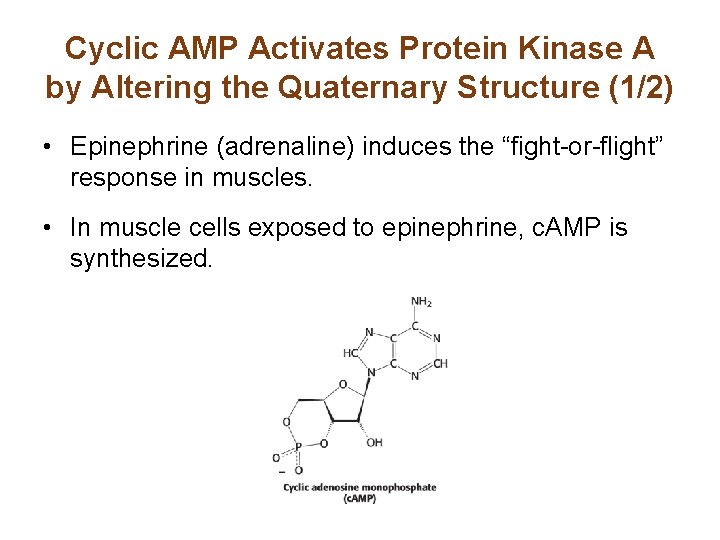
Cyclic AMP Activates Protein Kinase A by Altering the Quaternary Structure (1/2) • Epinephrine (adrenaline) induces the “fight-or-flight” response in muscles. • In muscle cells exposed to epinephrine, c. AMP is synthesized.
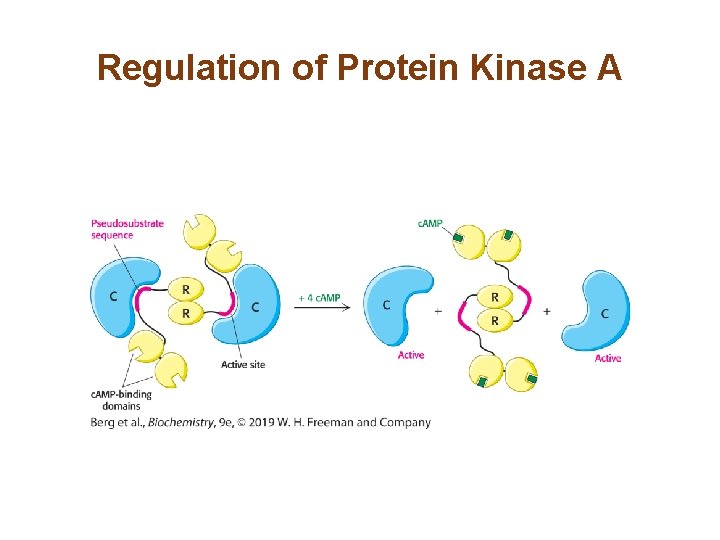
Cyclic AMP Activates Protein Kinase A by Altering the Quaternary Structure (2/2) • c. AMP stimulates protein kinase A (PKA) by binding to PKA’s regulatory (R) subunits, causing their dissociation from the catalytic subunits. The free catalytic (C) subunits are in the active form. • A pseudosubstrate sequence of the R subunit blocks the active site of the C subunit when the subunits are bound to each other.
Regulation of Protein Kinase A
Mutations in Protein Kinase A can Cause Cushing’s Syndrome • Cushing’s syndrome is a collection of diseases resulting from excess secretion of the hormone cortisol by the adrenal cortex. • One cause is now known to be a mutation that causes protein kinase A to be constitutively active (i. e. , “always on”). The mutation causes the catalytic (C) subunit to no longer bind the regulatory (R) subunit so that the enzyme is active even when c. AMP is absent. • This causes unregulated secretion of cortisol, which has various physiological effects, including suppression of the immune system and inhibition of bone growth.
Exercise Modifies the Phosphorylation of Many Proteins • Phosphoproteomics refers to the study of the phosphoproteome (i. e. , all proteins that are modified by phosphorylation). • Recent research has shown that exercise results in the phosphorylation of more than 1000 potential phosphorylation sites on nearly 600 different proteins. • The kinases that catalyze these reactions include protein kinase A and AMP-activated kinase (AMPK). • These modifications affect many biological functions, including an increase in the ability to process fuels aerobically.
Section 10. 4 Many Enzymes Are Activated by Specific Proteolytic Cleavage • Proteolytic cleavage plays a key role in a number of biochemical processes, for example: 1. 2. 3. 4. 5. 6. activation of digestive enzymes blood clotting hormone activation collagen formation developmental processes programmed cell death
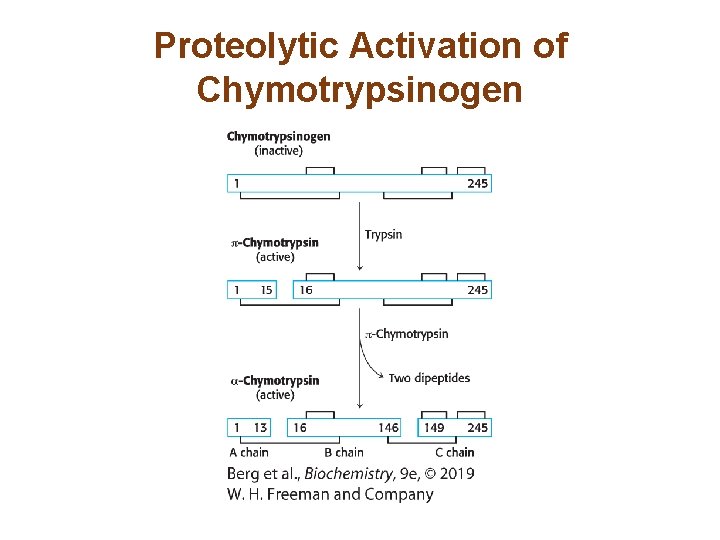
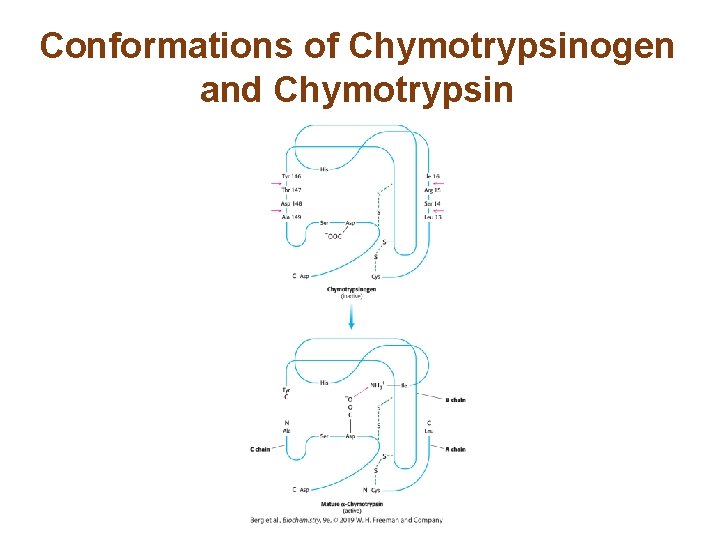
Chymotrypsinogen is Activated by Specific Cleavage of a Single Peptide Bond • The digestive enzyme chymotrypsin is synthesized as an inactive precursor called chymotrypsinogen. • A specific cleavage generates an active enzyme, πchymotrypsin. • Two subsequent cleavages yields the mature enzyme, α-chymotrypsin.
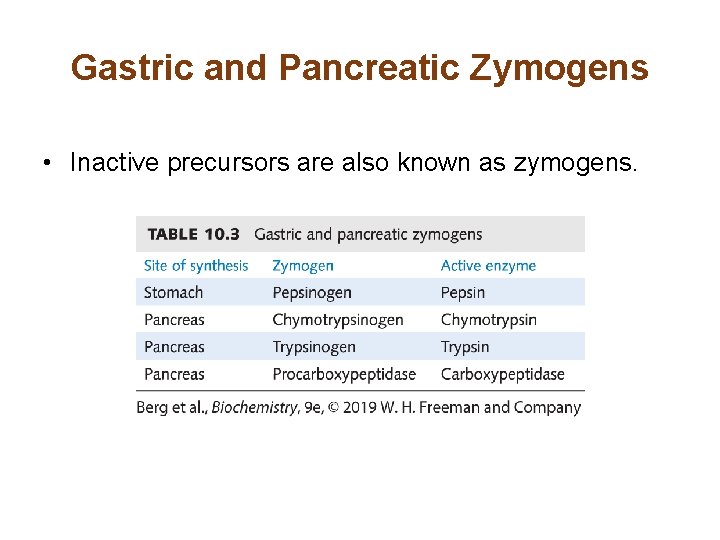
Gastric and Pancreatic Zymogens • Inactive precursors are also known as zymogens.
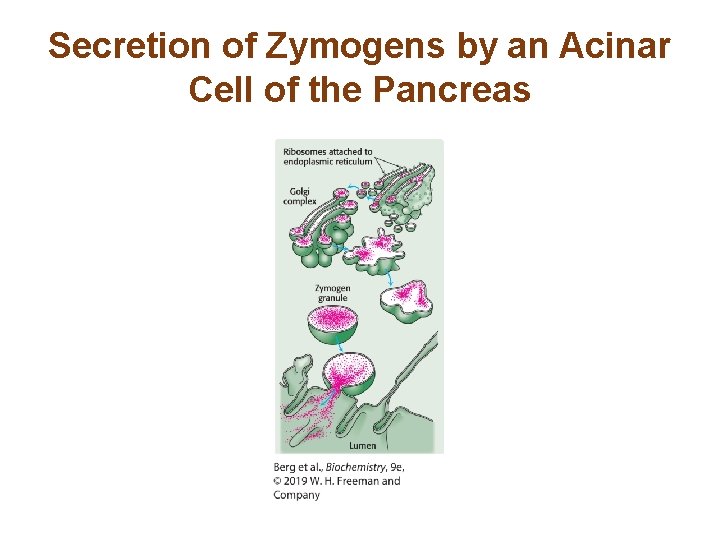
Secretion of Zymogens by an Acinar Cell of the Pancreas
Proteolytic Activation of Chymotrypsinogen
Proteolytic Activation of Chymotrypsinogen Leads to the Formation of a Substrate-binding Site • The conversion of chymotrypsinogen to chymotrypsin results in structural changes that generate the substratebinding site and the oxyanion hole.
Conformations of Chymotrypsinogen and Chymotrypsin
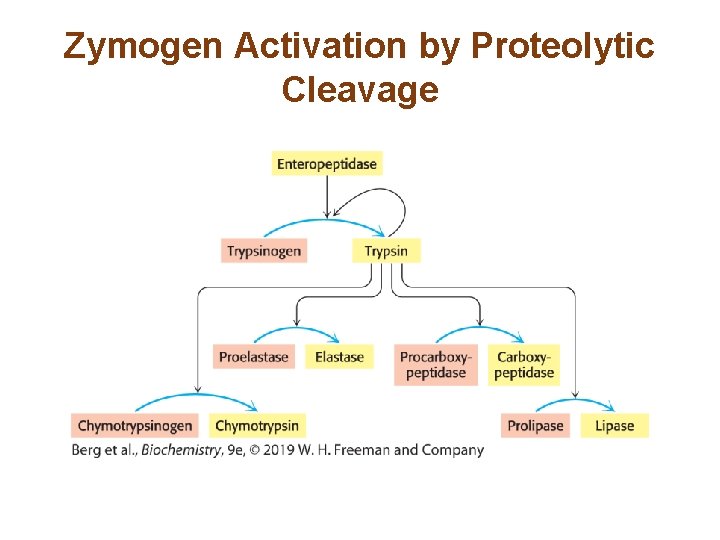
The Generation of Trypsin from Trypsinogen Leads to the Activation of Other Zymogens • Trypsinogen is converted to active trypsin by enteropeptidase. • Trypsin then activates all of the pancreatic zymogens.
Zymogen Activation by Proteolytic Cleavage
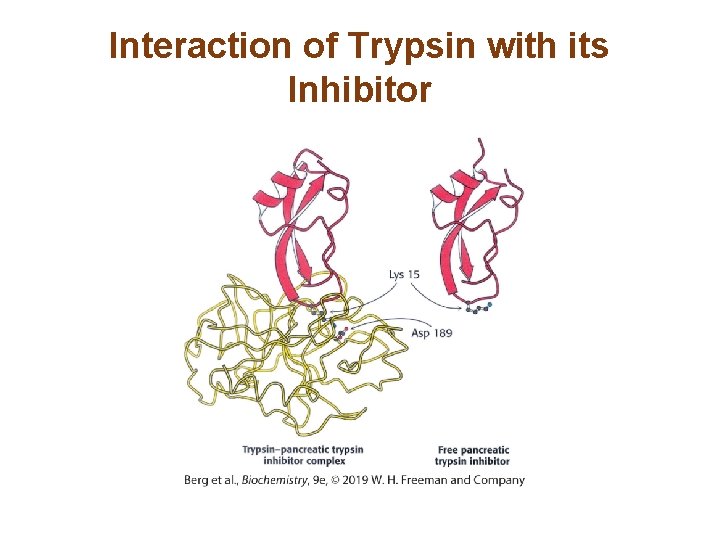
Some Proteolytic Enzymes have Specific Inhibitors (1/2) • Pancreatic trypsin inhibitor protects against premature activation of trypsin in the pancreas. • Trypsin inhibitor is essentially a substrate that binds so tightly to the active site that it cannot progress to the transition state. • Preventing even trace amounts of trypsin from initiating the cascade while the zymogens are still in the pancreas or pancreatic ducts is essential, so trypsin inhibitor binds to any prematurely activated trypsin molecules in the pancreas or pancreatic ducts. • This inhibition prevents severe damage to those tissues, which could lead to acute pancreatitis.
Interaction of Trypsin with its Inhibitor
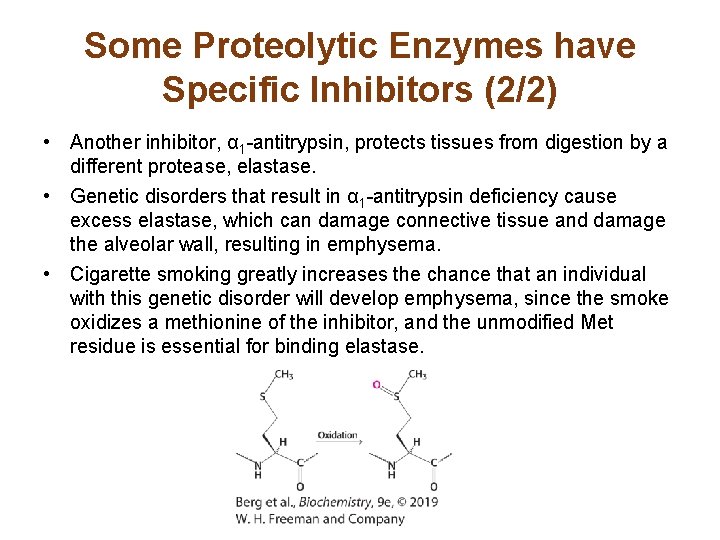
Some Proteolytic Enzymes have Specific Inhibitors (2/2) • Another inhibitor, α 1 -antitrypsin, protects tissues from digestion by a different protease, elastase. • Genetic disorders that result in α 1 -antitrypsin deficiency cause excess elastase, which can damage connective tissue and damage the alveolar wall, resulting in emphysema. • Cigarette smoking greatly increases the chance that an individual with this genetic disorder will develop emphysema, since the smoke oxidizes a methionine of the inhibitor, and the unmodified Met residue is essential for binding elastase.