
Chapter 10 Production and Operations Management Learning Objectives
Chapter 10 Production and Operations Management
Learning Objectives 1 Identify and describe the four main characteristics of production processes. 2 Identify and describe three major production methods. 3 Describe the strategic decisions made by production and operations managers. 4 Identify the steps in the production control process. 5 Discuss the importance of quality control.
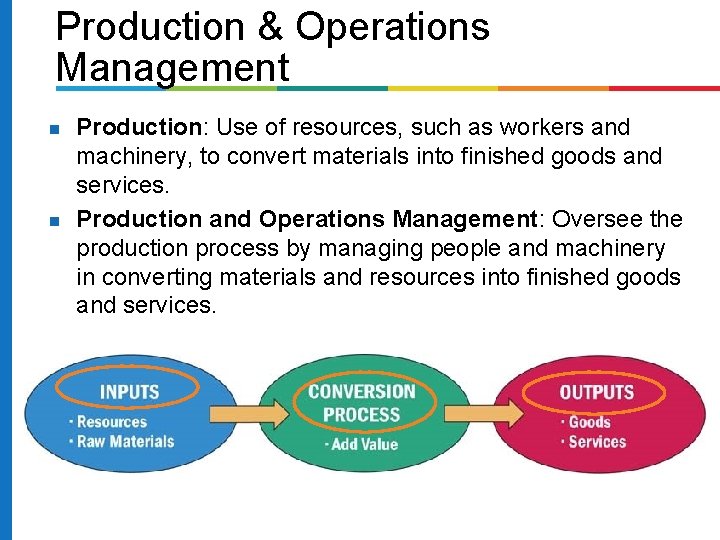
Production & Operations Management Production: Use of resources, such as workers and machinery, to convert materials into finished goods and services. Production and Operations Management: Oversee the production process by managing people and machinery in converting materials and resources into finished goods and services.

Production Systems Page 274
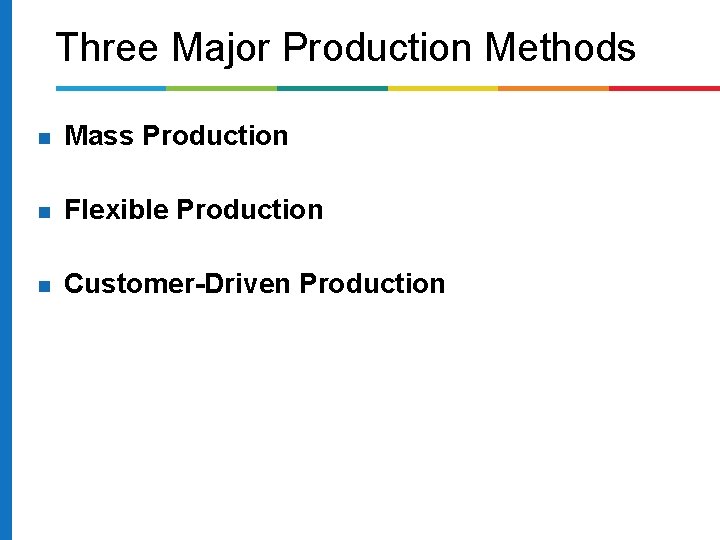
Three Major Production Methods Mass Production Flexible Production Customer-Driven Production
Three Major Production Methods q Mass Production– a system for manufacturing products in large quantities through effective combinations of employees, with specialized skills, mechanization, and standardization – – Assembly line Efficient for large batches Inefficient for smaller batches Boring jobs
Three Major Production Methods Flexible Production– more cost-effective for producing smaller batches using information technology, communication, and cooperation Customer-Driven Production– evaluating customer demands in order to make the connection between products manufactured and products bought
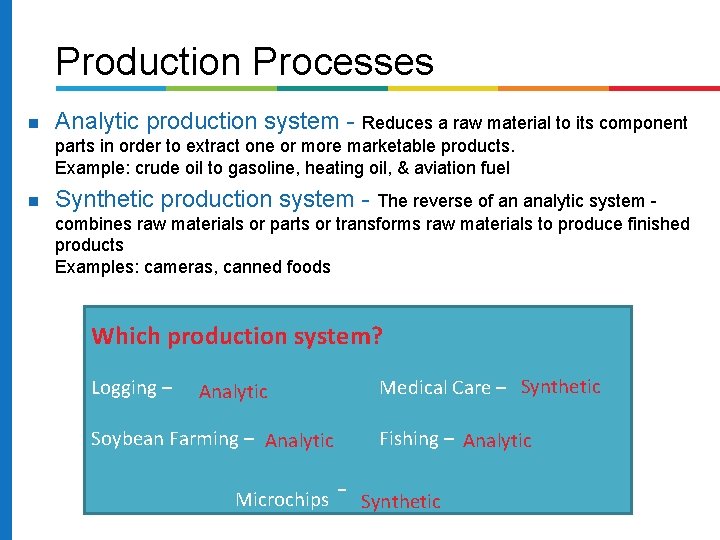
Production Processes Analytic production system - Reduces a raw material to its component parts in order to extract one or more marketable products. Example: crude oil to gasoline, heating oil, & aviation fuel Synthetic production system - The reverse of an analytic system combines raw materials or parts or transforms raw materials to produce finished products Examples: cameras, canned foods Which production system? Logging – Medical Care – Synthetic Analytic Soybean Farming – Analytic Microchips Fishing – Analytic - Synthetic
Production Processes Continuous production process - Takes a long time and/or is costly to shut down Examples: power plant, petroleum refineries Intermittent production process - Generates products in short production runs, shutting down machines frequently or changing their configurations to produce different products Examples: services – restaurants, mechanics, hair stylists
Technology & the Production Process Green Manufacturing Processes – reducing waste from production processes to packaging to delivery Completely automated – no workers required to build or make the products Robots – reprogrammable machines now do boring, and sometimes dangerous, jobs Computer-Aided Design & Manufacturing (CAD & CAM) Flexible Manufacturing Systems Computer-Integrated Manufacturing – integrates elements from above
The Location Decision Transportation Physical Factors Proximity to markets & materials Modes available for inputs and outputs Weather, energy, waste Human Factors Labor supply Taxes & regulations Environment Page 280
The Job of Production Managers Planning the Production Process Selecting the Most Appropriate Layout Implementing the Production Plan Controlling the Production Process See Figure 10. 4 on page 284 and read page 285
The Strategic Decisions Made by Production and Operations Managers Make, Buy, or Lease Decision Choosing whether to manufacture a needed product or component in-house, purchase it from an outside supplier, or lease it. Factors in the decision include: Cost Availability of reliable outside suppliers Duration of the firm’s supply needs Need for confidentiality
Selection of Suppliers Based on comparison of: Quality Prices Dependability of delivery Services offered by competing companies
Inventory Control - function requiring production and operations managers to balance the need to keep stock on hand to meet demand against the costs of carrying inventory Just-in-Time Systems The right part at the right place at just the right time – right before it is needed Materials Requirement Planning computer-based production planning system that lets a firm ensure that it has all the parts and materials it needs to produce its output at the right time and place and in the right amounts
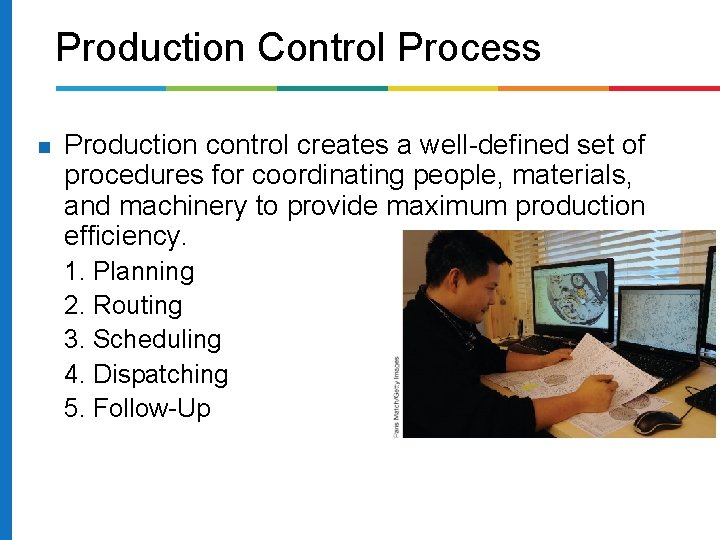
Production Control Process Production control creates a well-defined set of procedures for coordinating people, materials, and machinery to provide maximum production efficiency. 1. Planning 2. Routing 3. Scheduling 4. Dispatching 5. Follow-Up
Quality Control Quality - a good or service free of deficiencies Poor quality can account for 20% loss in revenue Benchmarking is the process of analyzing other firms’ best practices Quality control is measuring goods and services against established quality standards
ISO Standards International Organization for Standardization (ISO)- mission is to promote the development of standardized products to facilitate trade and cooperation across national borders Representatives from more than 146 nations Nearly half a million ISO 9000 certificates have been awarded to companies around the world ISO 14000 series also sets standards for operations that minimize harm to the environment
Chapter 10 Questions Open document in Canvas, answer the five questions, and submit.
- Slides: 19