
Chapter 10 Perfect competition Perfectly competitive market n

- Slides: 18
Chapter 10: Perfect competition
Perfectly competitive market n n many buyers and sellers, identical (also known as homogeneous) products, no barriers to either entry or exit, and buyers and sellers have perfect information.
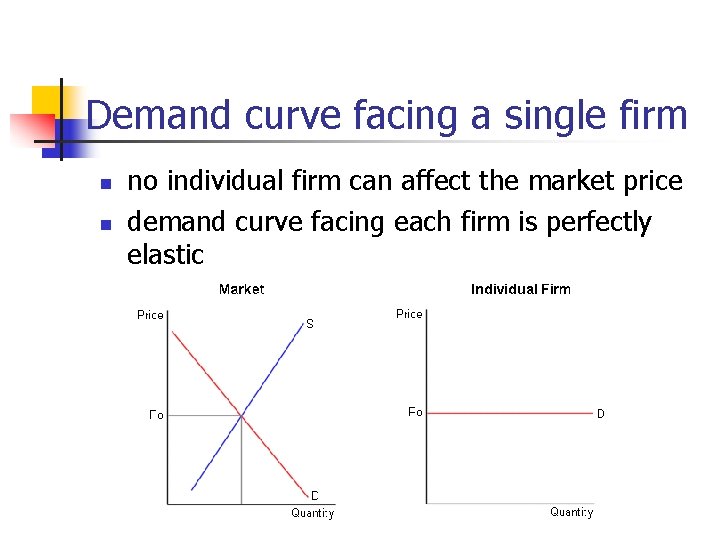
Demand curve facing a single firm n n no individual firm can affect the market price demand curve facing each firm is perfectly elastic
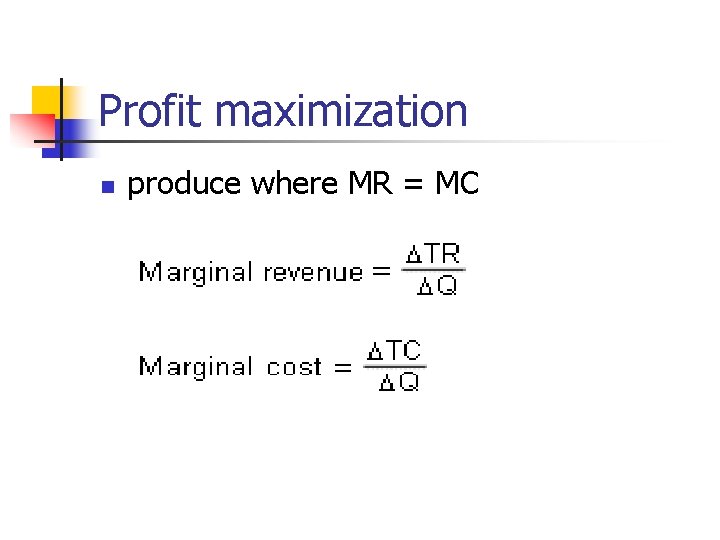
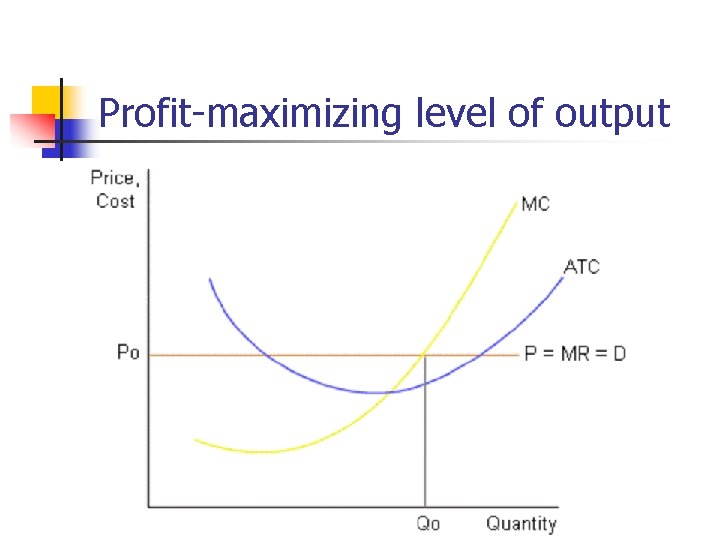
Profit maximization n produce where MR = MC
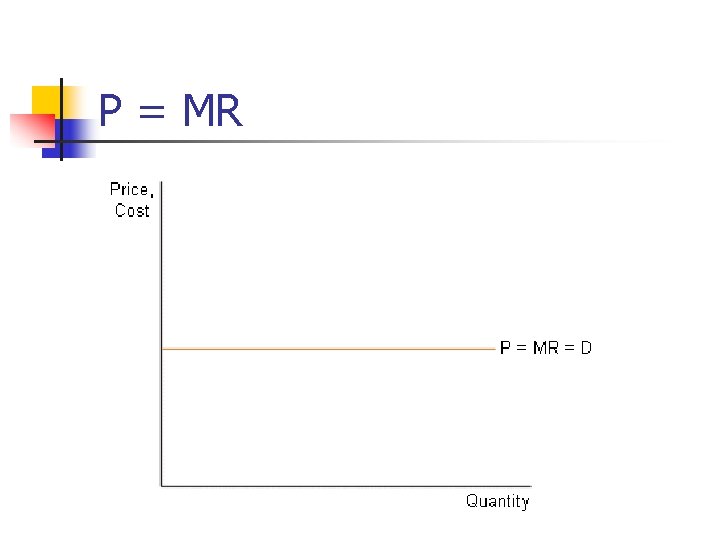
P = MR
Profit-maximizing level of output
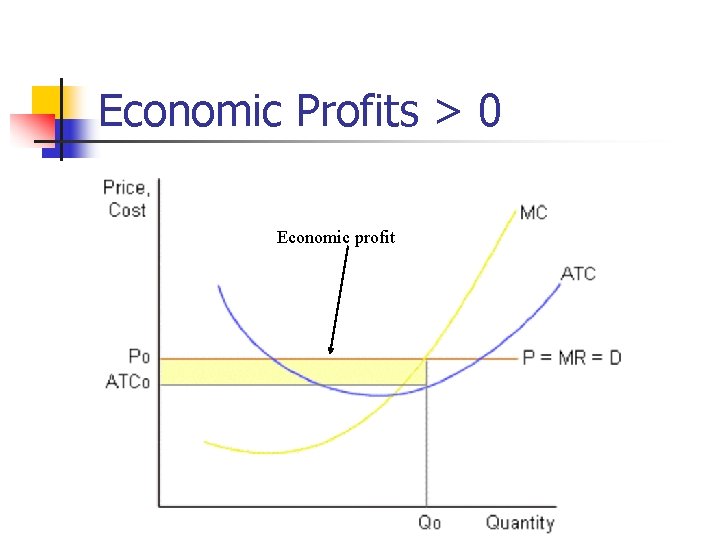
Economic Profits > 0 Economic profit
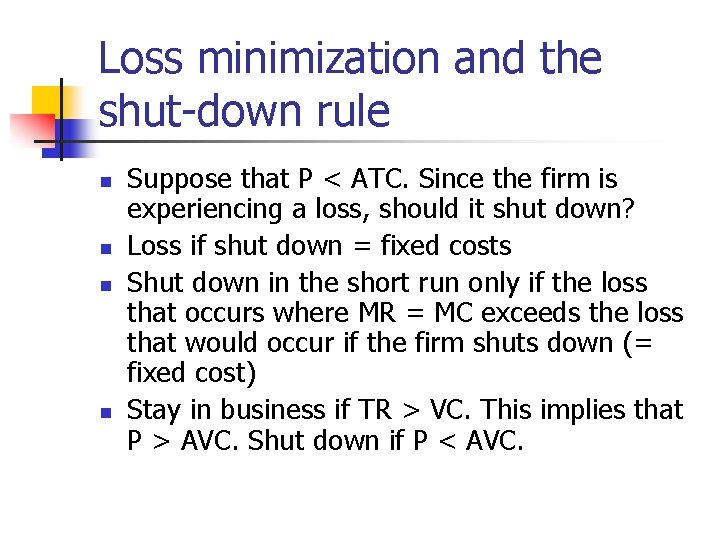
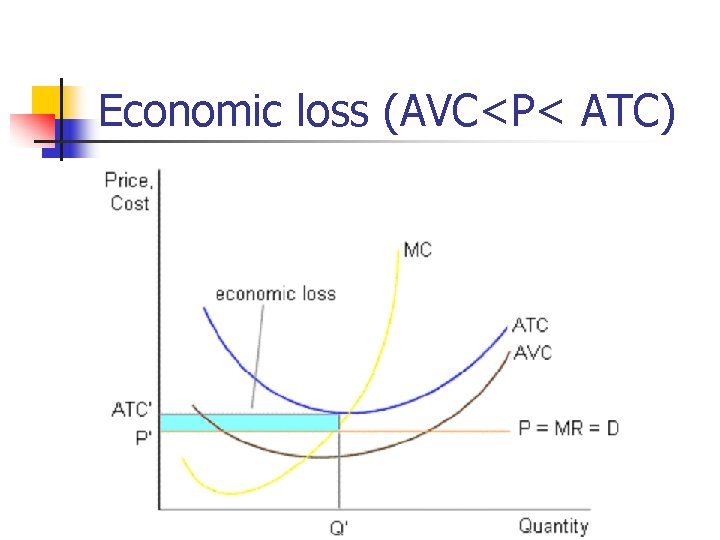
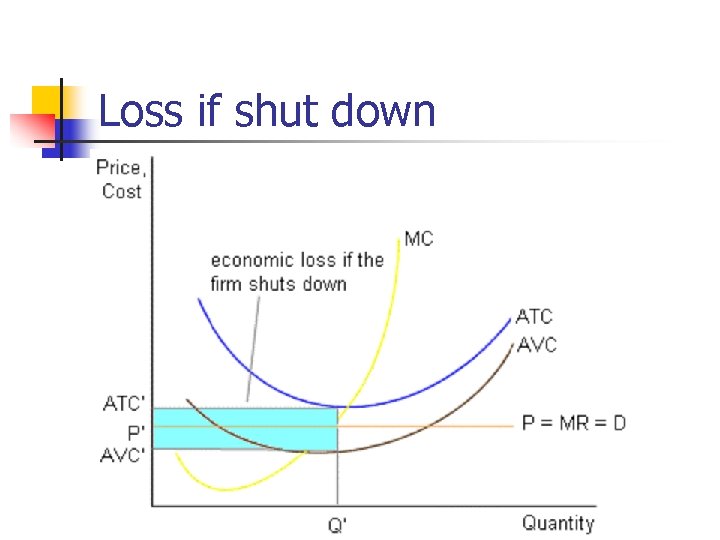
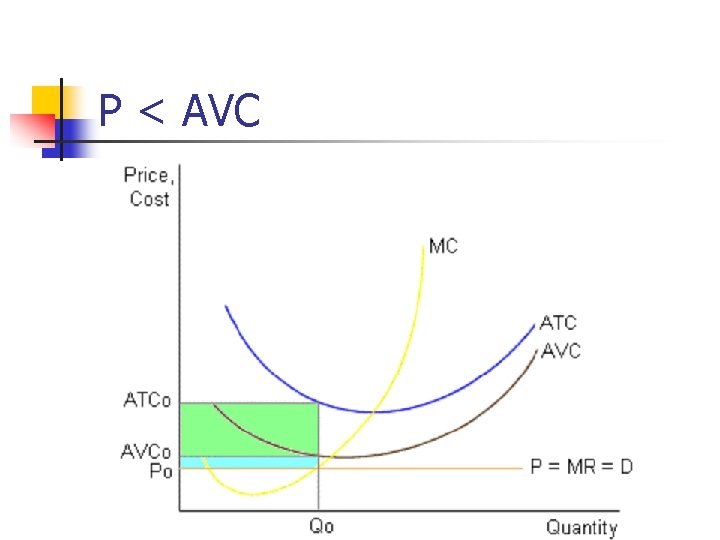
Loss minimization and the shut-down rule n n Suppose that P < ATC. Since the firm is experiencing a loss, should it shut down? Loss if shut down = fixed costs Shut down in the short run only if the loss that occurs where MR = MC exceeds the loss that would occur if the firm shuts down (= fixed cost) Stay in business if TR > VC. This implies that P > AVC. Shut down if P < AVC.
Economic loss (AVC<P< ATC)
Loss if shut down
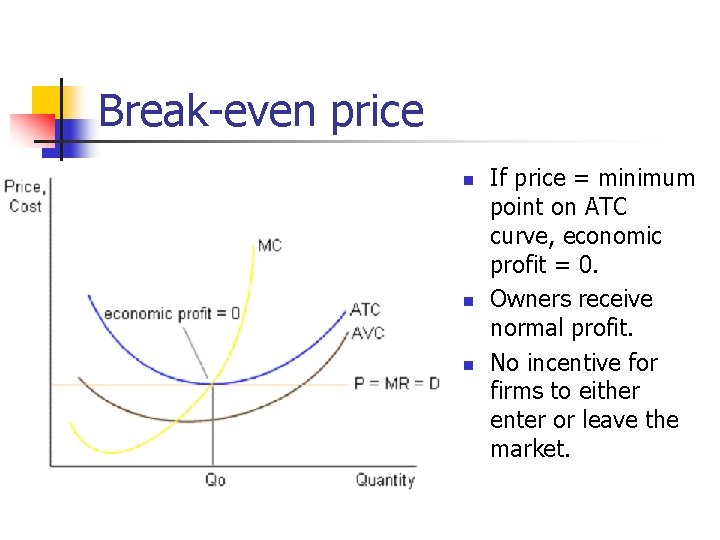
Break-even price n n n If price = minimum point on ATC curve, economic profit = 0. Owners receive normal profit. No incentive for firms to either enter or leave the market.
P < AVC
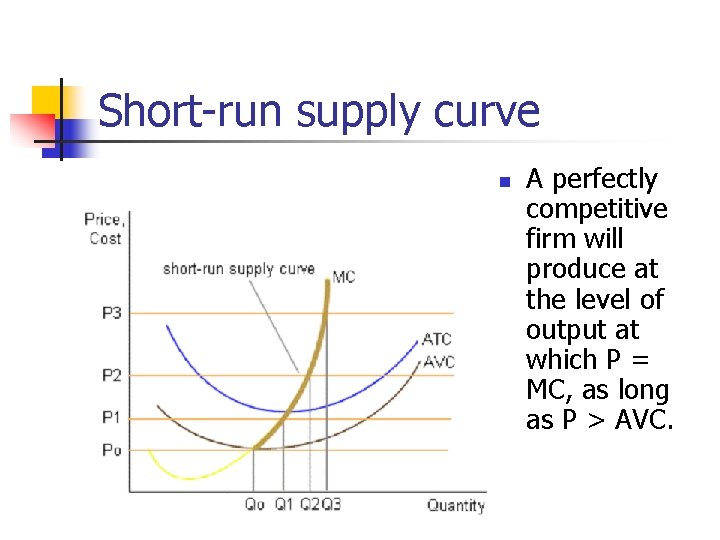
Short-run supply curve n A perfectly competitive firm will produce at the level of output at which P = MC, as long as P > AVC.
Long run n Firms enter if economic profits > 0 n n market supply increases price declines profit declines until economic profit equals zero (and entry stops) Firms exit if economic losses occur n n n market supply decreases price rises losses decline until economic profit equals zero
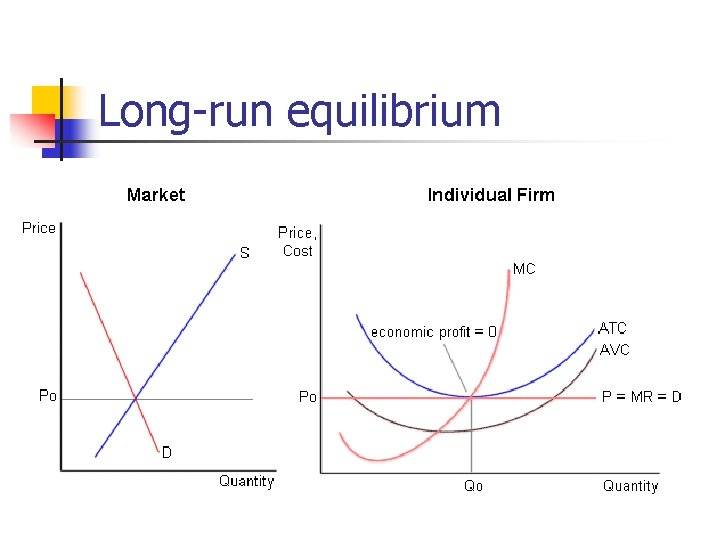
Long-run equilibrium
Long-run equilibrium and economic efficiency n Two desirable efficiency properties (assuming no market failure) n n P = MC (Social marginal benefit = social marginal cost) P = minimum ATC
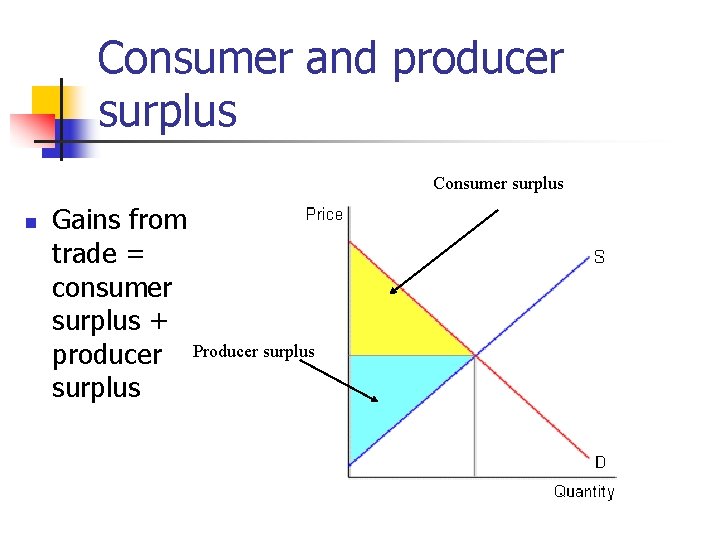
Consumer and producer surplus n n Consumer surplus = net gain from trade received by consumers (MB > P for consumers up to the last unit consumed) Producer surplus = net gain received by producers (P > MC up to the last unit sold)
Consumer and producer surplus Consumer surplus n Gains from trade = consumer surplus + producer Producer surplus