
Chapter 10 Part 1 Introduction to Photosynthesis Ms
- Slides: 26
Chapter 10 (Part 1) Introduction to Photosynthesis Ms. Day AP Biology www. campbellbiology. com
The Process That Feeds the Biosphere § Photosynthesis § the process that converts solar energy into chemical energy § Light + CO 2 + water food § Who or What? § Plants and other autotrophs § They are producers of the biosphere
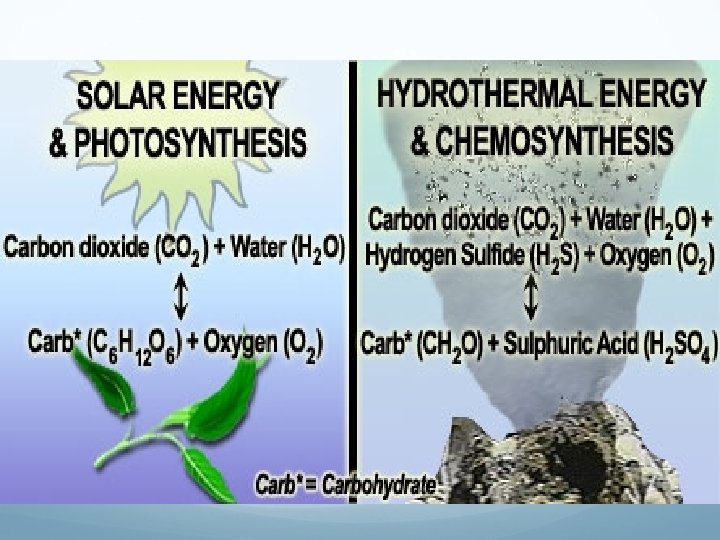
2 Types of Autotrophs 1. Chemoautotrophs Use chemosynthesis to make “food” 2. Photoautotrophs Use photosynthesis to make “food”
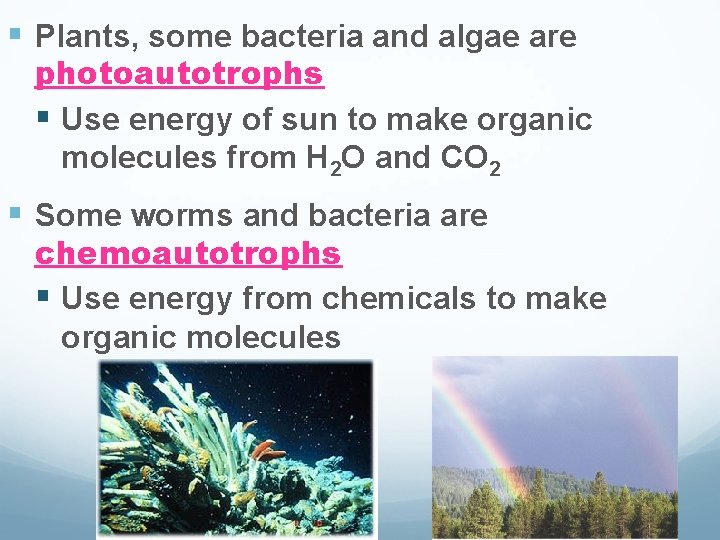
§ Plants, some bacteria and algae are photoautotrophs § Use energy of sun to make organic molecules from H 2 O and CO 2 § Some worms and bacteria are chemoautotrophs § Use energy from chemicals to make organic molecules
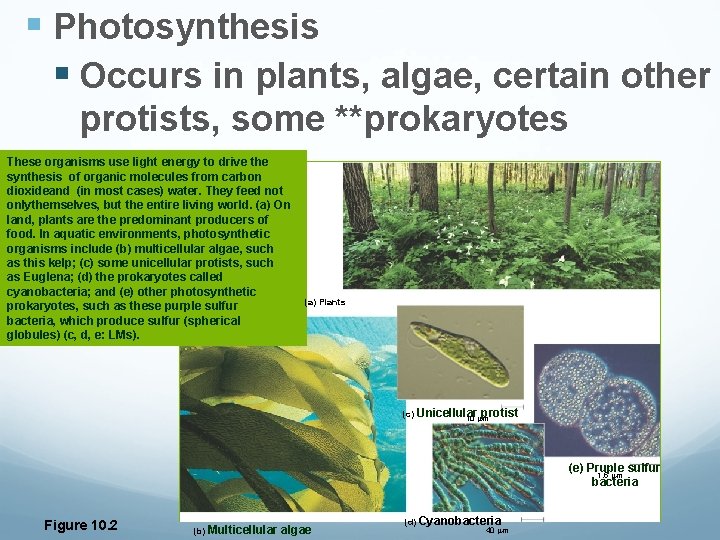
§ Photosynthesis § Occurs in plants, algae, certain other protists, some **prokaryotes These organisms use light energy to drive the synthesis of organic molecules from carbon dioxideand (in most cases) water. They feed not onlythemselves, but the entire living world. (a) On land, plants are the predominant producers of food. In aquatic environments, photosynthetic organisms include (b) multicellular algae, such as this kelp; (c) some unicellular protists, such as Euglena; (d) the prokaryotes called cyanobacteria; and (e) other photosynthetic prokaryotes, such as these purple sulfur bacteria, which produce sulfur (spherical globules) (c, d, e: LMs). (a) Plants (c) Unicellular protist 10 m (e) Pruple sulfur 1. 5 m bacteria Figure 10. 2 (b) Multicellular algae (d) Cyanobacteria 40 m
Autotrophs vs. Heterotrophs § Obtain their organic material from other organisms § They are consumers of the biosphere
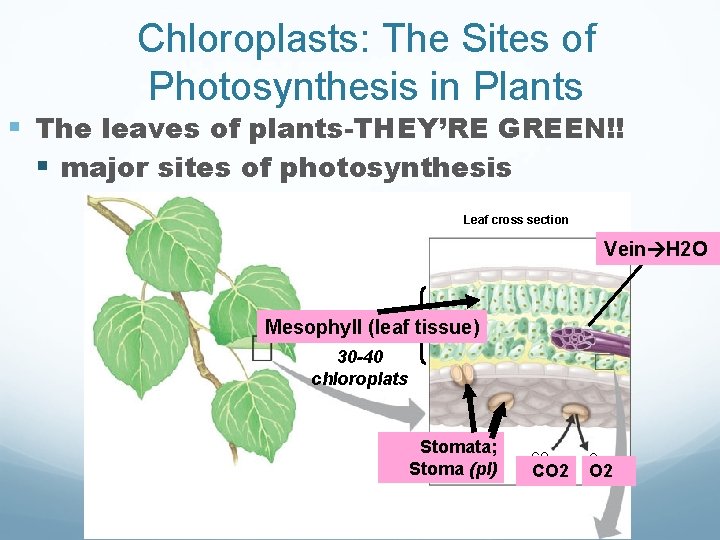
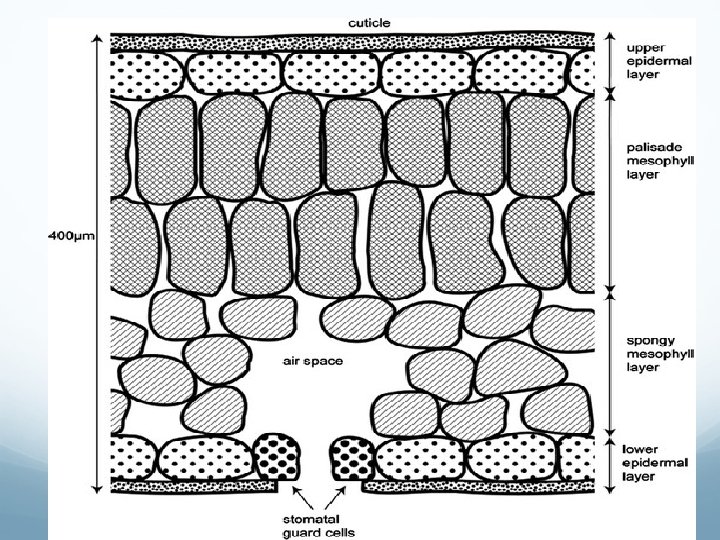
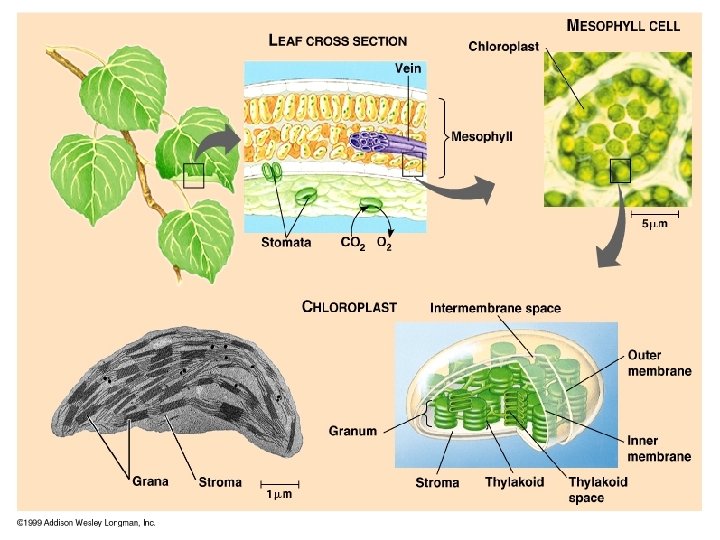
Chloroplasts: The Sites of Photosynthesis in Plants § The leaves of plants-THEY’RE GREEN!! § major sites of photosynthesis Leaf cross section Vein H 2 O Mesophyll (leaf tissue) 30 -40 chloroplats Stomata; Stomata (pl) CO 2 O 2
Leaf Anatomy
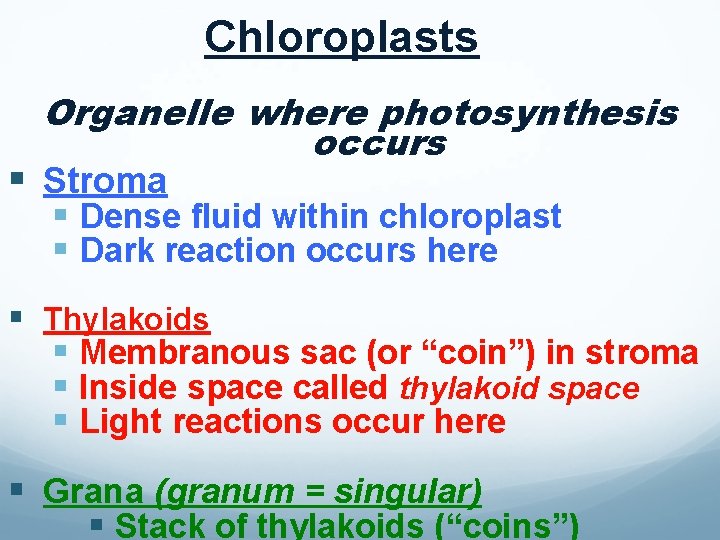
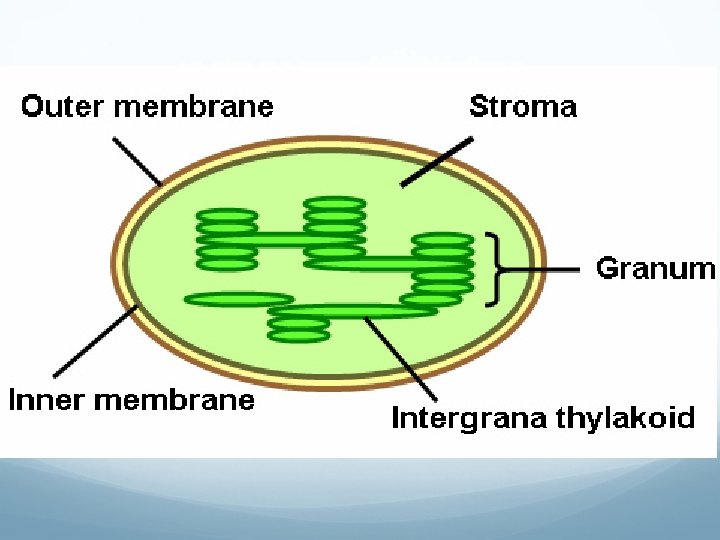
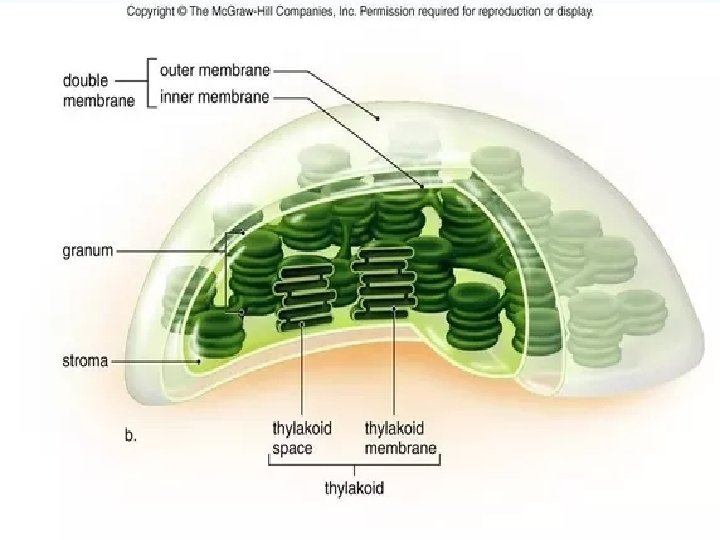
Chloroplasts Organelle where photosynthesis occurs § Stroma § Dense fluid within chloroplast § Dark reaction occurs here § Thylakoids § Membranous sac (or “coin”) in stroma § Inside space called thylakoid space § Light reactions occur here § Grana (granum = singular) § Stack of thylakoids (“coins”)
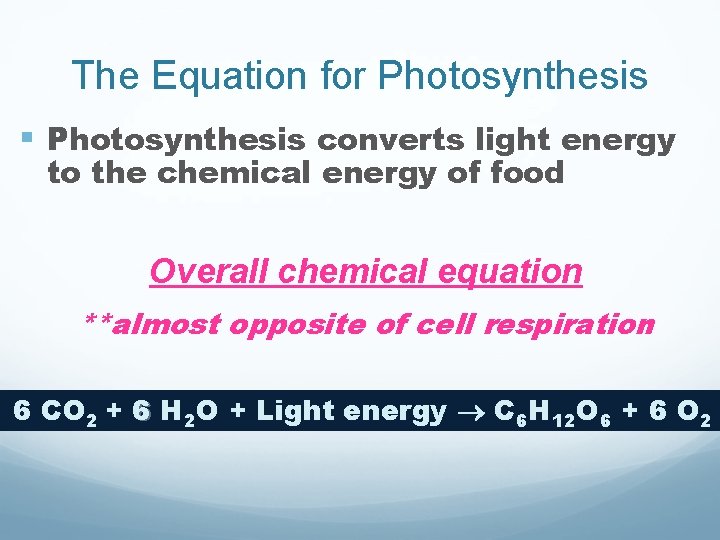
The Equation for Photosynthesis § Photosynthesis converts light energy to the chemical energy of food Overall chemical equation **almost opposite of cell respiration 6 CO 2 + 6 H 2 O + Light energy C 6 H 12 O 6 + 6 O 2
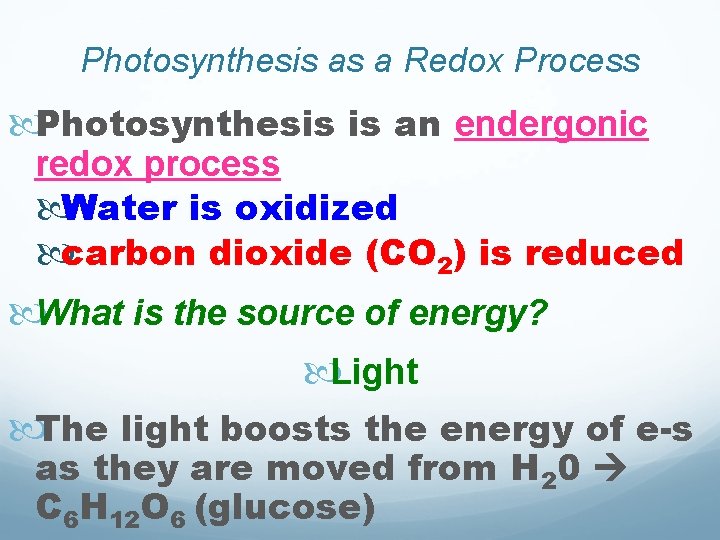
Photosynthesis as a Redox Process Photosynthesis is an endergonic redox process Water is oxidized carbon dioxide (CO 2) is reduced What is the source of energy? Light The light boosts the energy of e-s as they are moved from H 20 C 6 H 12 O 6 (glucose)
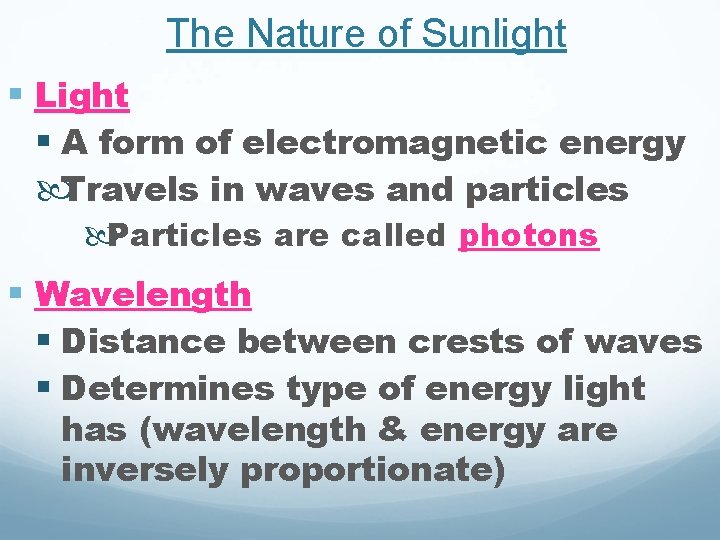
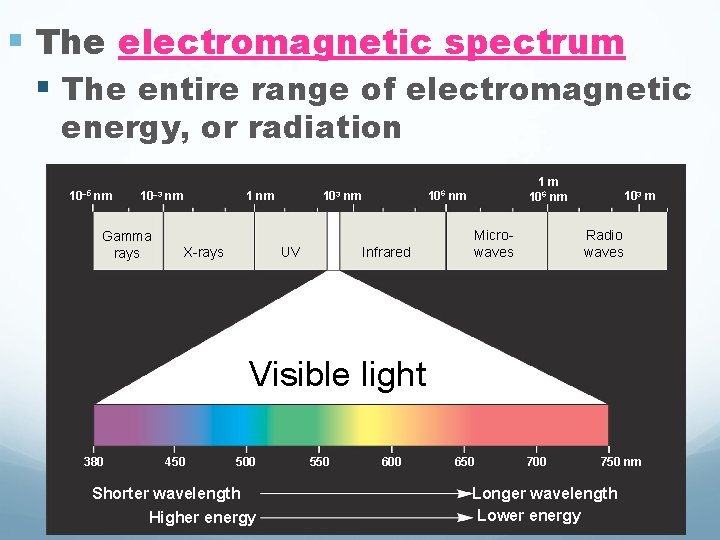
The Nature of Sunlight § Light § A form of electromagnetic energy Travels in waves and particles Particles are called photons § Wavelength § Distance between crests of waves § Determines type of energy light has (wavelength & energy are inversely proportionate)
§ The electromagnetic spectrum § The entire range of electromagnetic energy, or radiation 10– 5 nm 10– 3 Gamma rays 1 nm nm X-rays 103 UV 1 m 106 nm nm Infrared Microwaves 103 m Radio waves Visible light 380 450 500 Shorter wavelength Higher energy 550 600 650 700 750 nm Longer wavelength Lower energy
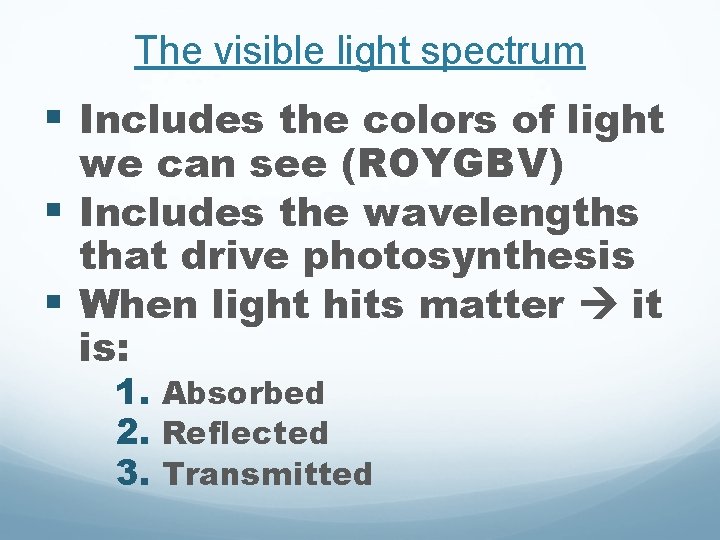
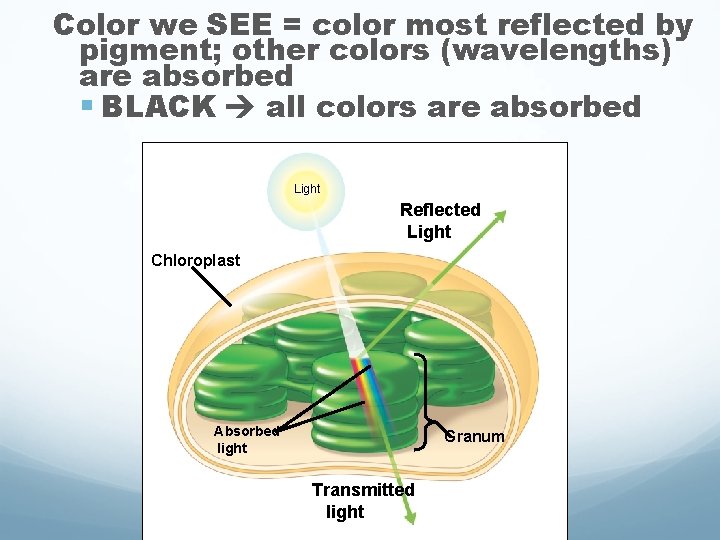
The visible light spectrum § Includes the colors of light we can see (ROYGBV) § Includes the wavelengths that drive photosynthesis § When light hits matter it is: 1. Absorbed 2. Reflected 3. Transmitted
Color we SEE = color most reflected by pigment; other colors (wavelengths) are absorbed § BLACK all colors are absorbed Light Reflected Light Chloroplast Absorbed light Granum Transmitted light
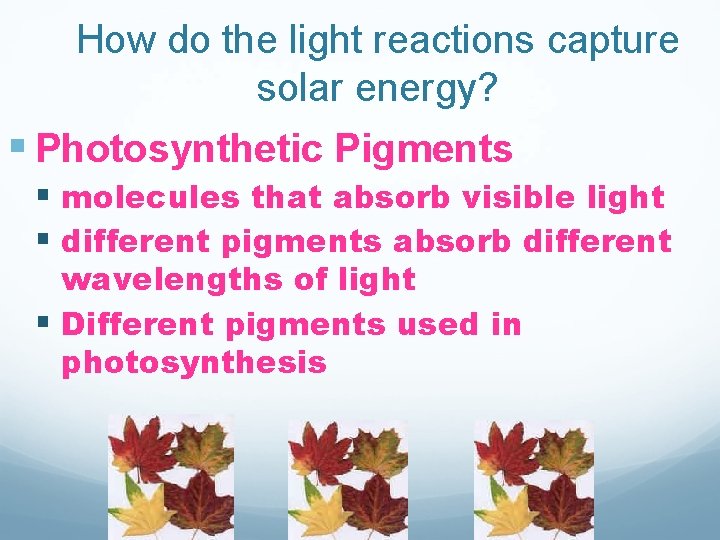
How do the light reactions capture solar energy? § Photosynthetic Pigments § molecules that absorb visible light § different pigments absorb different wavelengths of light § Different pigments used in photosynthesis
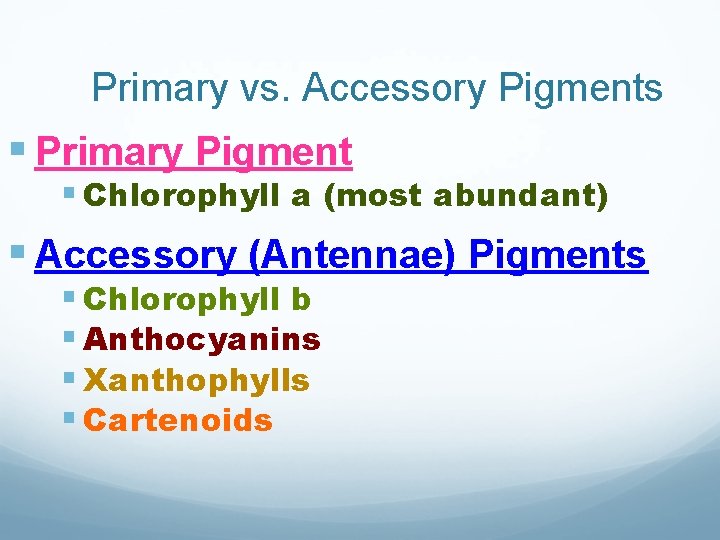
Primary vs. Accessory Pigments § Primary Pigment § Chlorophyll a (most abundant) § Accessory (Antennae) Pigments § Chlorophyll b § Anthocyanins § Xanthophylls § Cartenoids
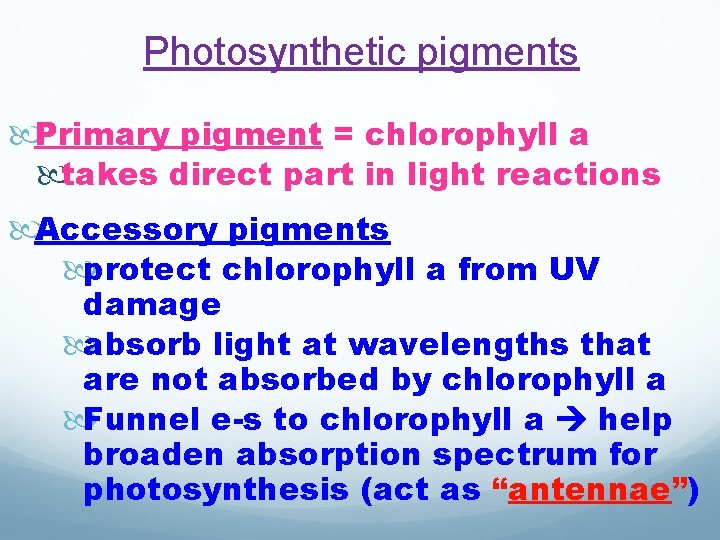
Photosynthetic pigments Primary pigment = chlorophyll a takes direct part in light reactions Accessory pigments protect chlorophyll a from UV damage absorb light at wavelengths that are not absorbed by chlorophyll a Funnel e-s to chlorophyll a help broaden absorption spectrum for photosynthesis (act as “antennae”)
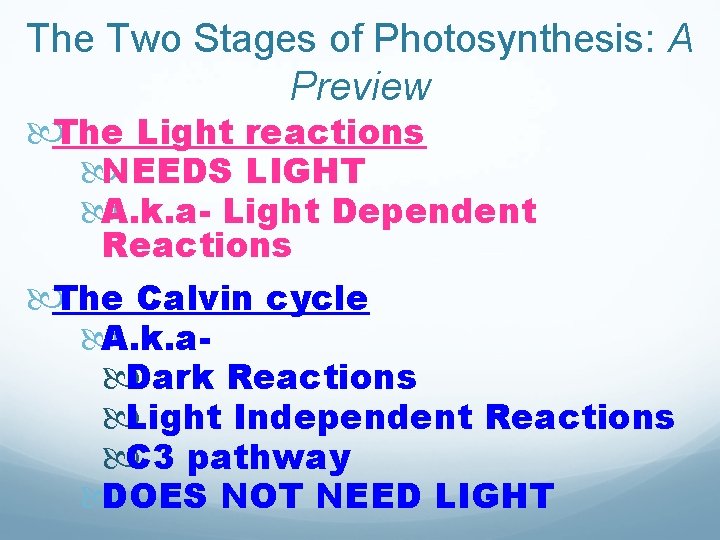
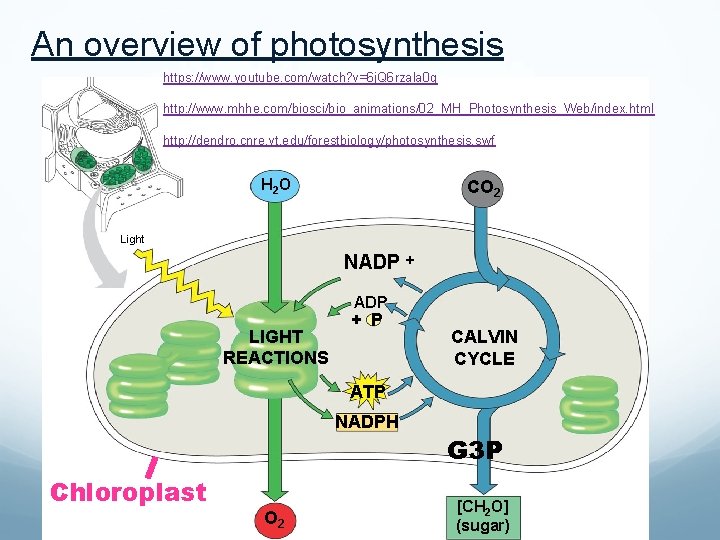
The Two Stages of Photosynthesis: A Preview The Light reactions NEEDS LIGHT A. k. a- Light Dependent Reactions The Calvin cycle A. k. a Dark Reactions Light Independent Reactions C 3 pathway DOES NOT NEED LIGHT
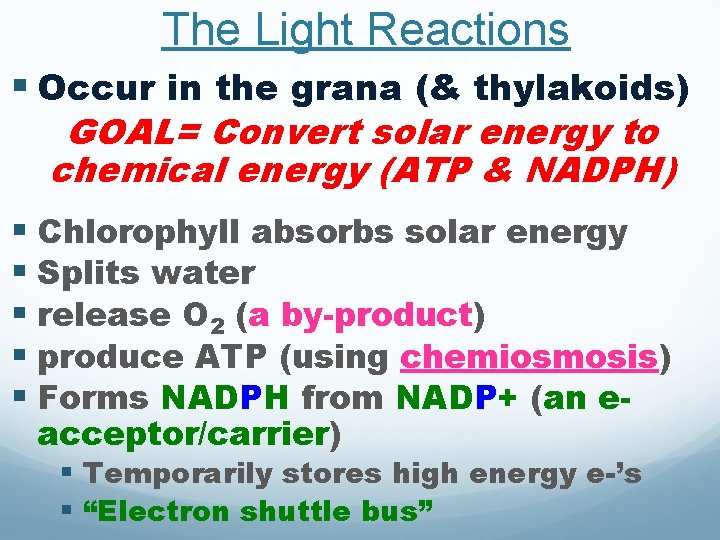
The Light Reactions § Occur in the grana (& thylakoids) GOAL= Convert solar energy to chemical energy (ATP & NADPH) § Chlorophyll absorbs solar energy § Splits water § release O 2 (a by-product) § produce ATP (using chemiosmosis) § Forms NADPH from NADP+ (an eacceptor/carrier) § Temporarily stores high energy e-’s § “Electron shuttle bus”
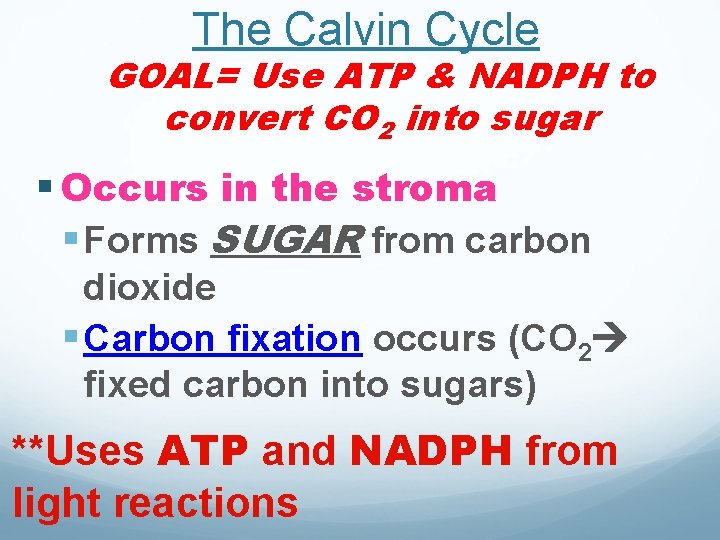
The Calvin Cycle GOAL= Use ATP & NADPH to convert CO 2 into sugar § Occurs in the stroma § Forms SUGAR from carbon dioxide § Carbon fixation occurs (CO 2 fixed carbon into sugars) **Uses ATP and NADPH from light reactions
An overview of photosynthesis https: //www. youtube. com/watch? v=6 j. Q 6 rzala 0 g http: //www. mhhe. com/biosci/bio_animations/02_MH_Photosynthesis_Web/index. html http: //dendro. cnre. vt. edu/forestbiology/photosynthesis. swf H 2 O CO 2 Light NADP LIGHT REACTIONS + P CALVIN CYCLE ATP NADPH Chloroplast O 2 G 3 P [CH 2 O] (sugar)