
Chapter 10 Meiosis Goal Genetic Mixing I Sexual
![Chapter 10: Meiosis ] Goal: Genetic Mixing!!](https://slidetodoc.com/presentation_image/4265f309561748be270341ff9e8f7626/image-1.jpg "Chapter 10: Meiosis ] Goal: Genetic Mixing!!")
- Slides: 18
Chapter 10: Meiosis ] Goal: Genetic Mixing!!
I. Sexual vs Asexual Reproduction A. Asexual: One genetic donor. 1. Produce clone. 2. Disadvantage: No genetic recombination except for mutations. Examples: Sea star, plant clippings.
I. Sexual vs Asexual Reproduction B. Sexual: Offspring product of two genetic donors. 1. Benefit: Genetic recombination. 2. Product of meiosis. 3. Requires (usually) reduction (diploid to haploid) to produce gametes.
II. Basic Genetics A. Vocabulary 1. Gene: A segment of DNA that codes for a particular trait. 2. Allele: Alternate forms of a gene (can be more than 2).
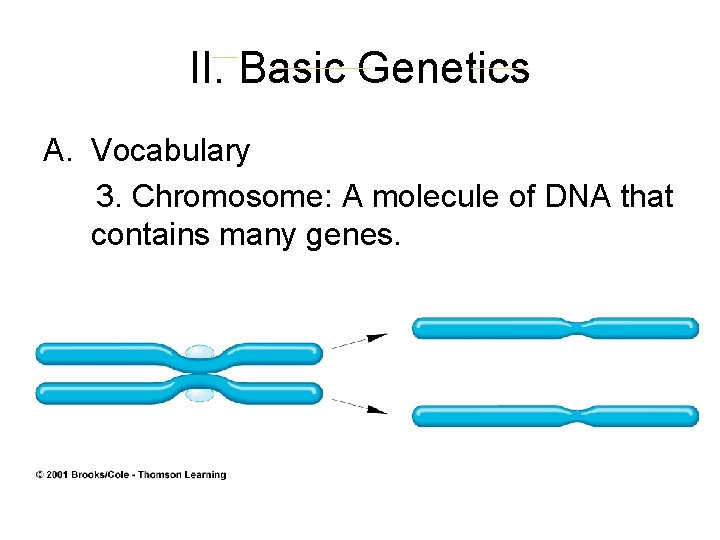
II. Basic Genetics A. Vocabulary 3. Chromosome: A molecule of DNA that contains many genes.
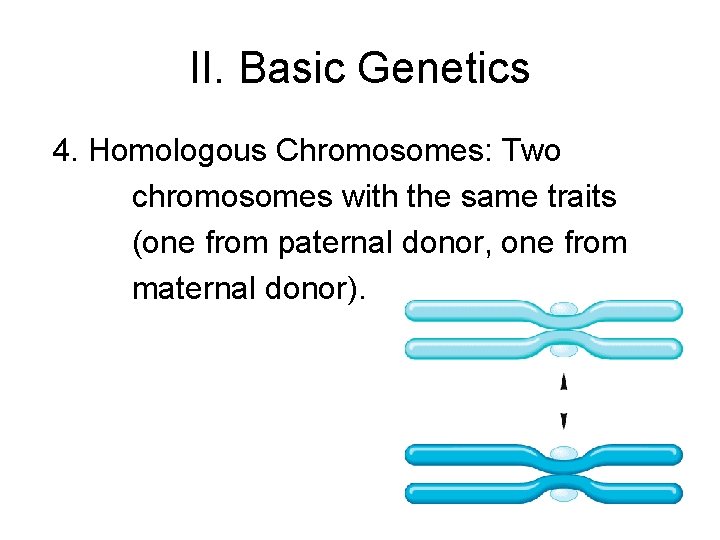
II. Basic Genetics 4. Homologous Chromosomes: Two chromosomes with the same traits (one from paternal donor, one from maternal donor).
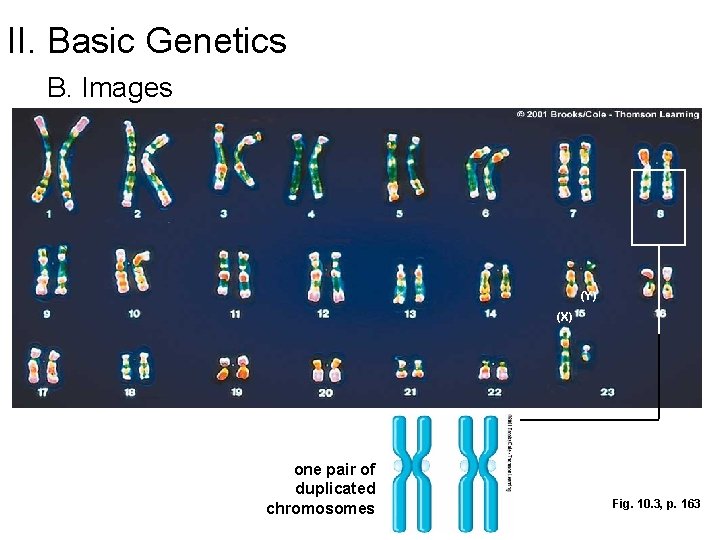
II. Basic Genetics B. Images (Y) (X) one pair of duplicated chromosomes Fig. 10. 3, p. 163
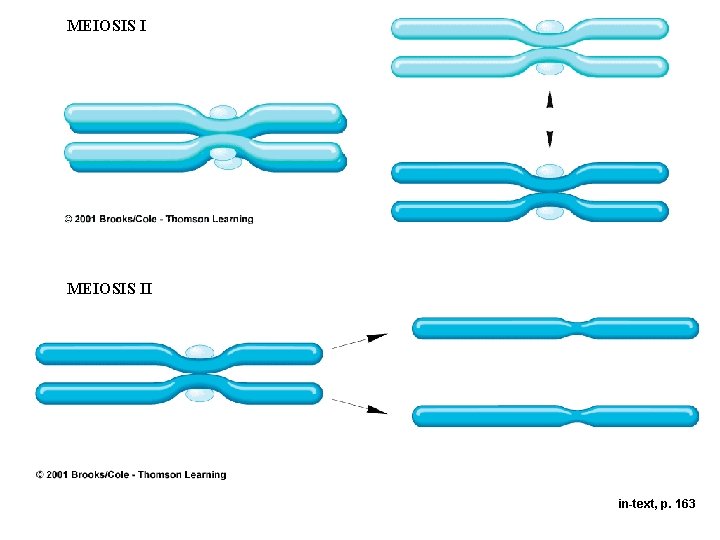
III. Specifics of Meiosis A. Goal: Produce hapliod gametes with a random mix of parental alleles. B. Stages: 1. Meioisis I: The reduction phase (2 n to n) 2. Meiosis II: Basically mitosis (but with haploid cells)
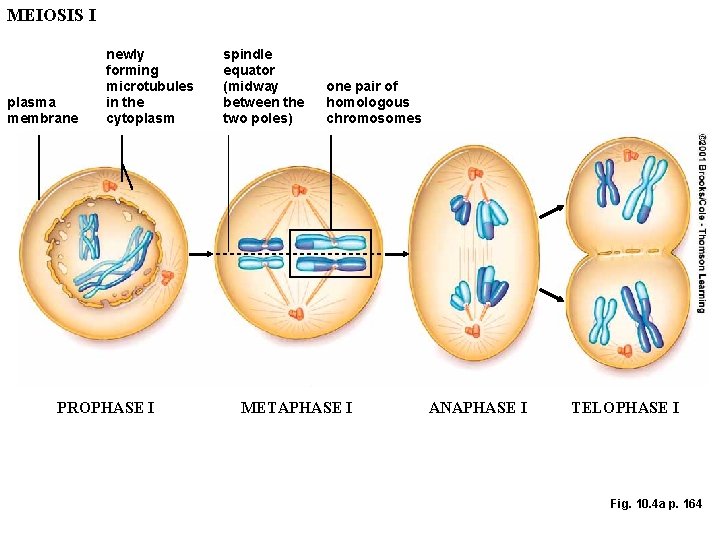
III. Specifics of Meiosis C. Meiosis I: Prophase I: Homologous chromosomes pair up (form tetrad); Cross over may occur; other aspects as observed in mitosis. Metaphase I: Homologous pairs align at equator (not sister chromatids).
III. Specifics of Meiosis C. Meiosis I Anaphase I: Homologous chromosomes are moved to opposite poles. Telophase I: Each nuclei gets one of the homologous chromosomes (thus haploid).
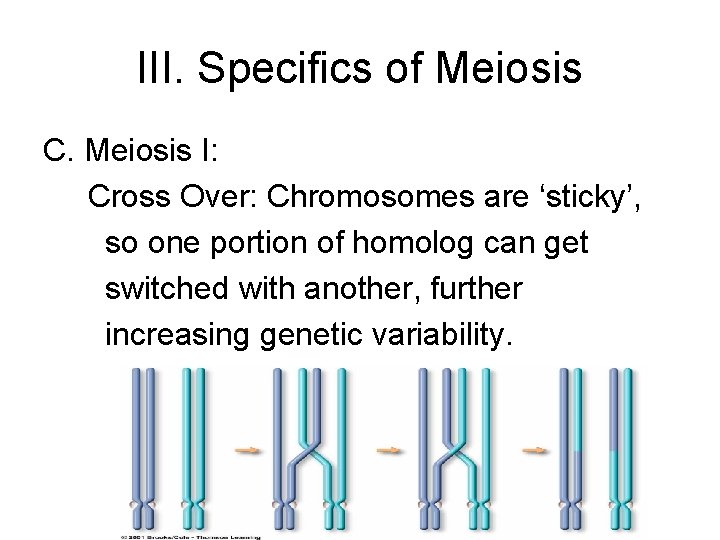
III. Specifics of Meiosis C. Meiosis I: Cross Over: Chromosomes are ‘sticky’, so one portion of homolog can get switched with another, further increasing genetic variability.
MEIOSIS I plasma membrane newly forming microtubules in the cytoplasm PROPHASE I spindle equator (midway between the two poles) one pair of homologous chromosomes METAPHASE I ANAPHASE I TELOPHASE I Fig. 10. 4 a p. 164
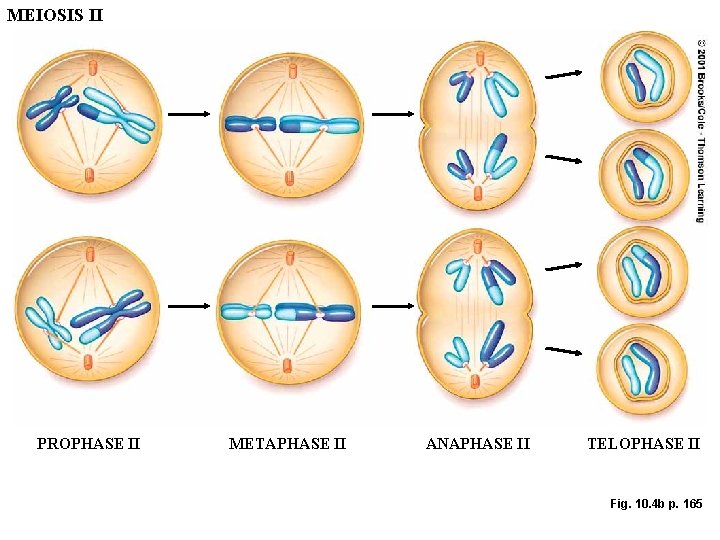
III. Specifics of Meiosis D. Meiosis II: Repeat Mitosis
MEIOSIS II PROPHASE II METAPHASE II ANAPHASE II TELOPHASE II Fig. 10. 4 b p. 165
MEIOSIS II in-text, p. 163
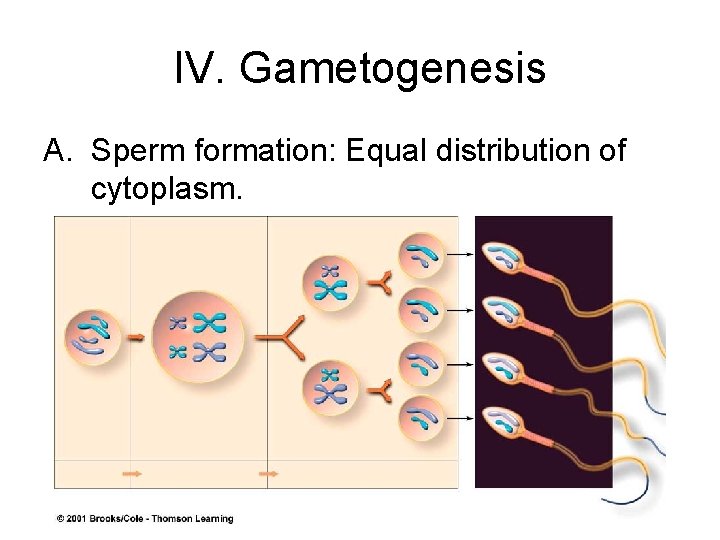
IV. Gametogenesis A. Sperm formation: Equal distribution of cytoplasm.
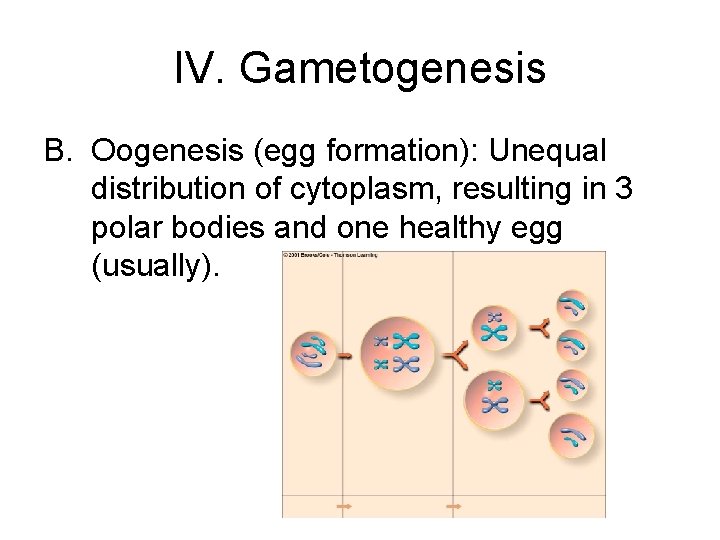
IV. Gametogenesis B. Oogenesis (egg formation): Unequal distribution of cytoplasm, resulting in 3 polar bodies and one healthy egg (usually).
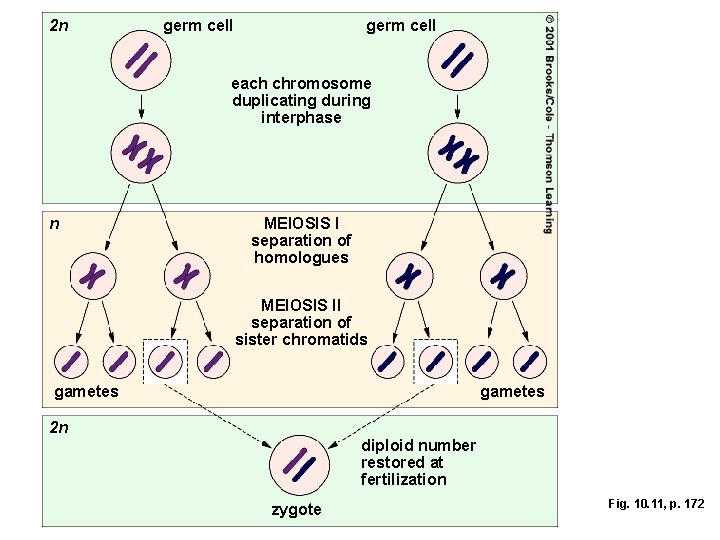
2 n germ cell each chromosome duplicating during interphase n MEIOSIS I separation of homologues MEIOSIS II separation of sister chromatids gametes 2 n diploid number restored at fertilization zygote Fig. 10. 11, p. 172