
Chapter 10 Medieval Kingdoms in Europe LESSON 1
- Slides: 21
Chapter 10 Medieval Kingdoms in Europe LESSON 1 – Feudalism LESSON 2 – Peasants, Trade and Cities LESSON 3 – The Growth of European Kingdoms
Feudalism reached it height by the High Middle Ages (1000 -1300 CE) Stronger kings began to assert their authority Often clashed with lesser kings and lords
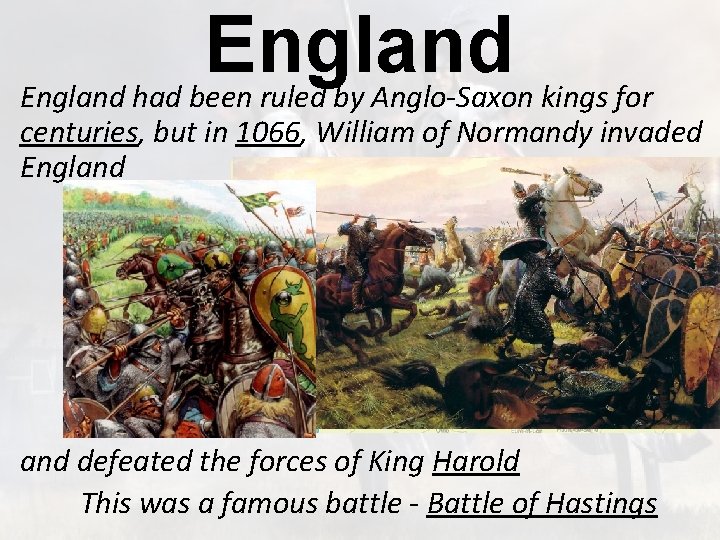
England had been ruled by Anglo-Saxon kings for centuries, but in 1066, William of Normandy invaded England defeated the forces of King Harold This was a famous battle - Battle of Hastings
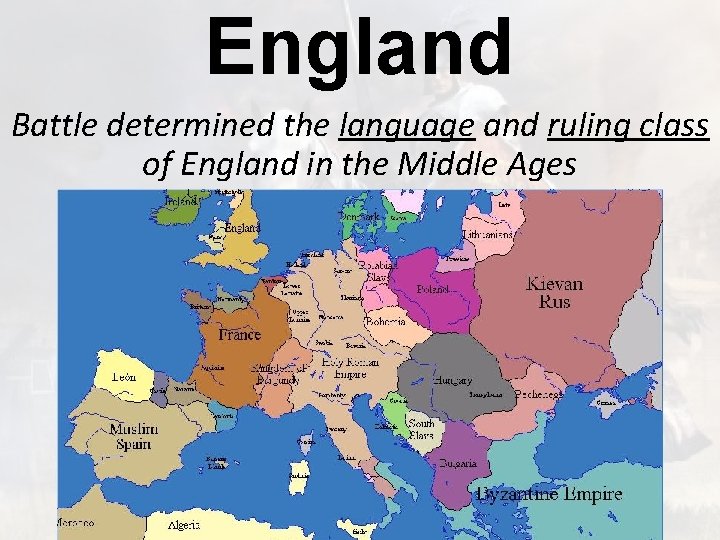
England Battle determined the language and ruling class of England in the Middle Ages
England The Normans spoke French it blended with the locals into a new English language Other traditions blended as well
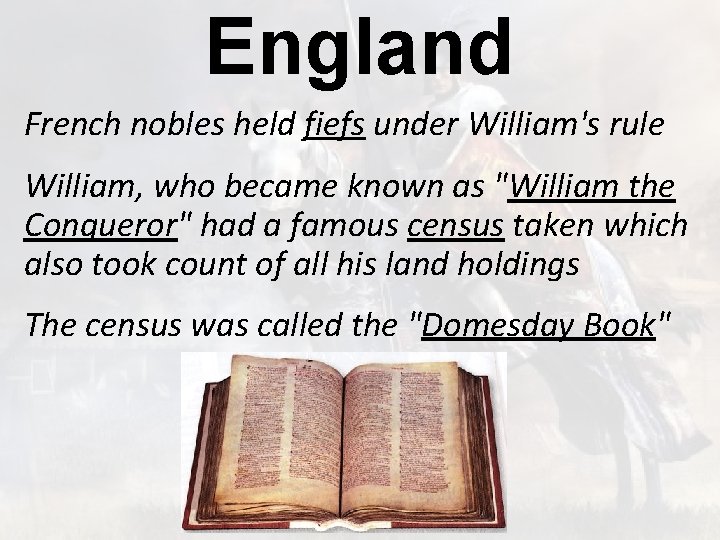
England French nobles held fiefs under William's rule William, who became known as "William the Conqueror" had a famous census taken which also took count of all his land holdings The census was called the "Domesday Book"
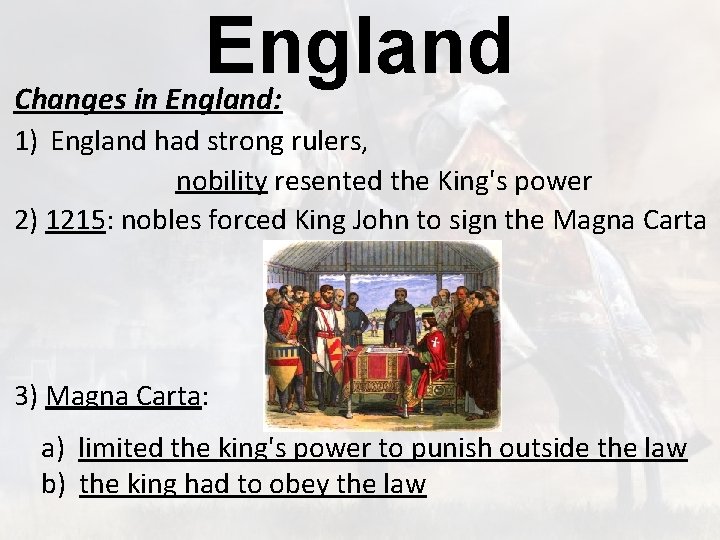
England Changes in England: 1) England had strong rulers, nobility resented the King's power 2) 1215: nobles forced King John to sign the Magna Carta 3) Magna Carta: a) limited the king's power to punish outside the law b) the king had to obey the law
England Changes in England: Parliament: a representative body made up of 1 - two knights from each county 2 - two people per town 3 - all the nobility Eventually became two bodies: The House of Lords/The House of Commons
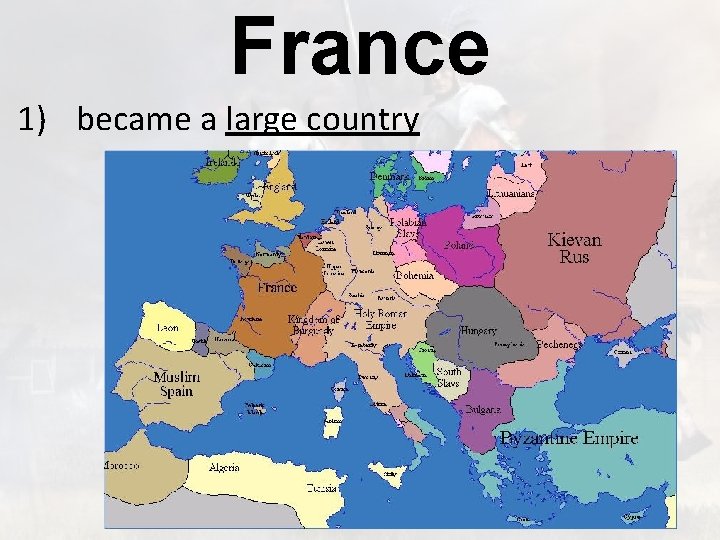
France 1) became a large country
France 2) Best governing monarchy in Europe 3) Parliament with Three Estates: 1 st Estate: Clergy 2 nd Estate: Nobility 3 rd Estate: everyone else
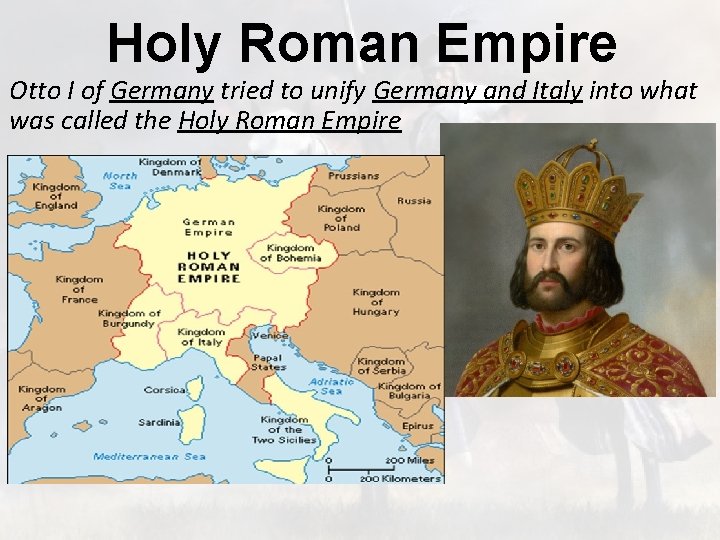
Holy Roman Empire Otto I of Germany tried to unify Germany and Italy into what was called the Holy Roman Empire
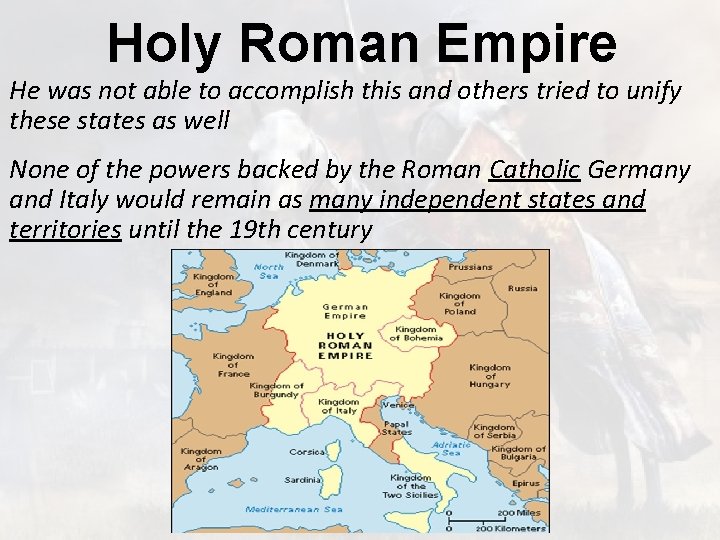
Holy Roman Empire He was not able to accomplish this and others tried to unify these states as well None of the powers backed by the Roman Catholic Germany and Italy would remain as many independent states and territories until the 19 th century
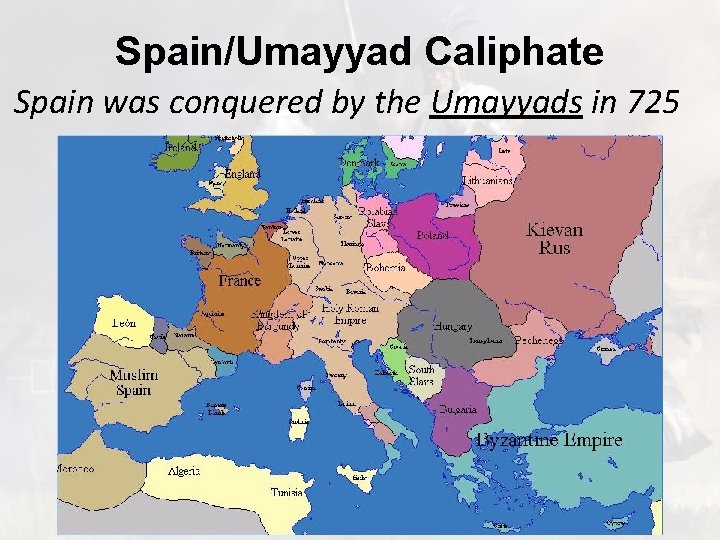
Spain/Umayyad Caliphate Spain was conquered by the Umayyads in 725
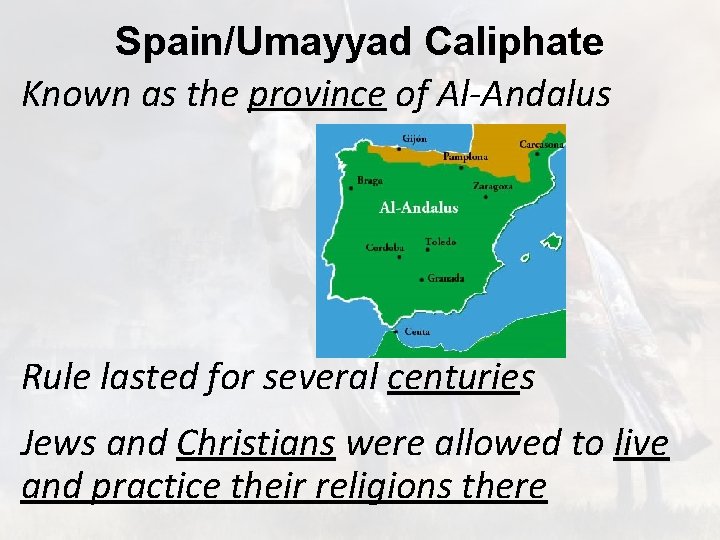
Spain/Umayyad Caliphate Known as the province of Al-Andalus Rule lasted for several centuries Jews and Christians were allowed to live and practice their religions there
Spain/Umayyad Caliphate They had to abide by the concept of DHIMITUDE 1) paid a special tax 2) followed other special rules and limits Several Christian groups resisted and began the RECONQUISTA (Re-Conquering) of Spain
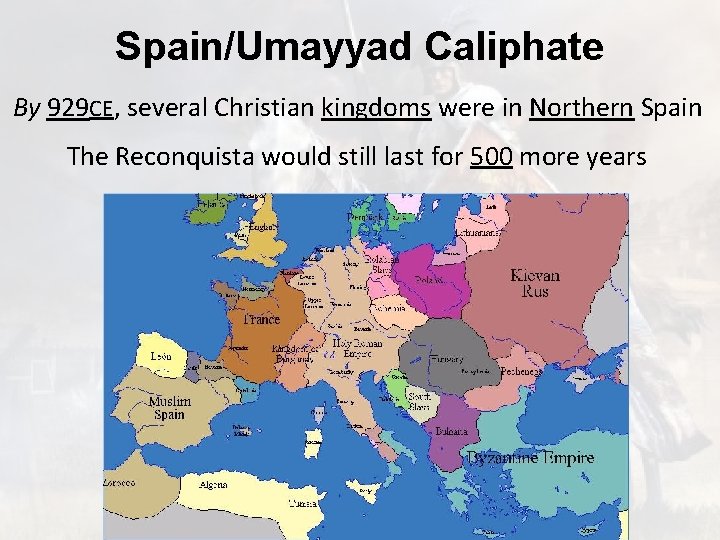
Spain/Umayyad Caliphate By 929 CE, several Christian kingdoms were in Northern Spain The Reconquista would still last for 500 more years
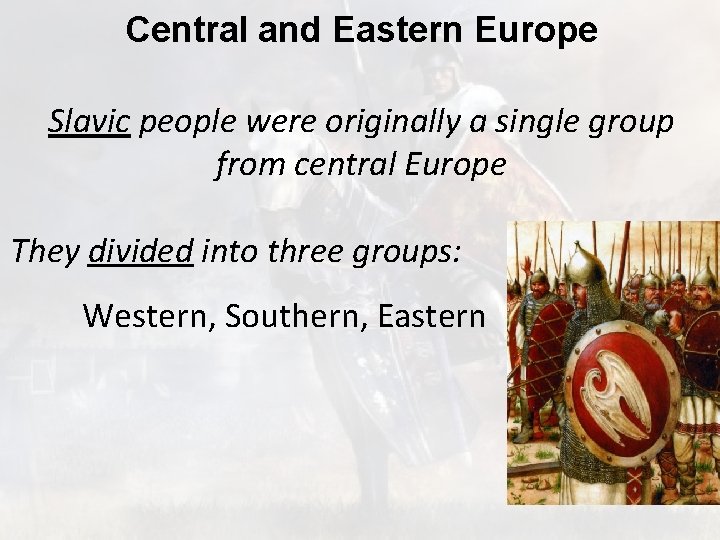
Central and Eastern Europe Slavic people were originally a single group from central Europe They divided into three groups: Western, Southern, Eastern
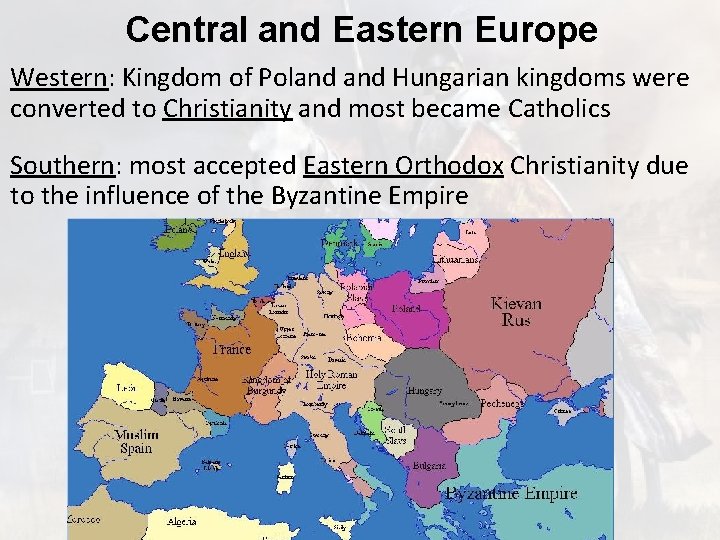
Central and Eastern Europe Western: Kingdom of Poland Hungarian kingdoms were converted to Christianity and most became Catholics Southern: most accepted Eastern Orthodox Christianity due to the influence of the Byzantine Empire
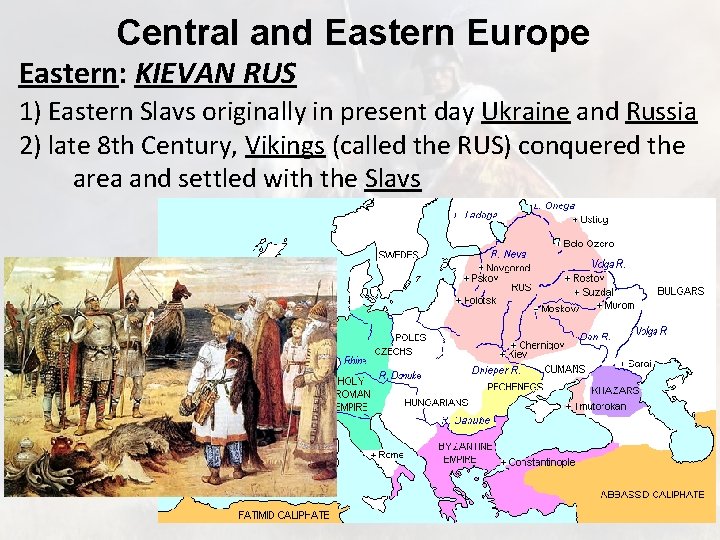
Central and Eastern Europe Eastern: KIEVAN RUS 1) Eastern Slavs originally in present day Ukraine and Russia 2) late 8 th Century, Vikings (called the RUS) conquered the area and settled with the Slavs
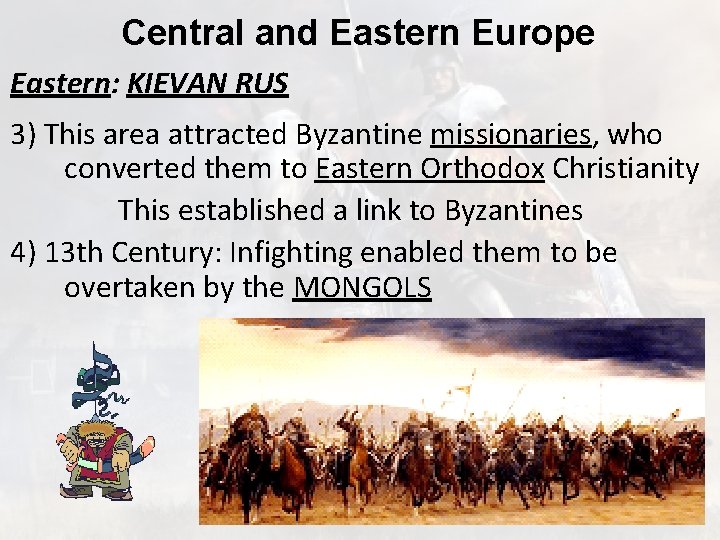
Central and Eastern Europe Eastern: KIEVAN RUS 3) This area attracted Byzantine missionaries, who converted them to Eastern Orthodox Christianity This established a link to Byzantines 4) 13 th Century: Infighting enabled them to be overtaken by the MONGOLS
Central and Eastern Europe Eastern: KIEVAN RUS 5) One benefit of this was that the Russian state later unified to oust the Mongols some decades later