
Chapter 10 Mechanisms of Learning Defining Learning Learning

- Slides: 23
Chapter 10 Mechanisms of Learning
Defining Learning �Learning can be defined as a relatively permanent change in behaviour that occurs as a result of experience. �Learning can be intentional or unintentional. . . Active or passive
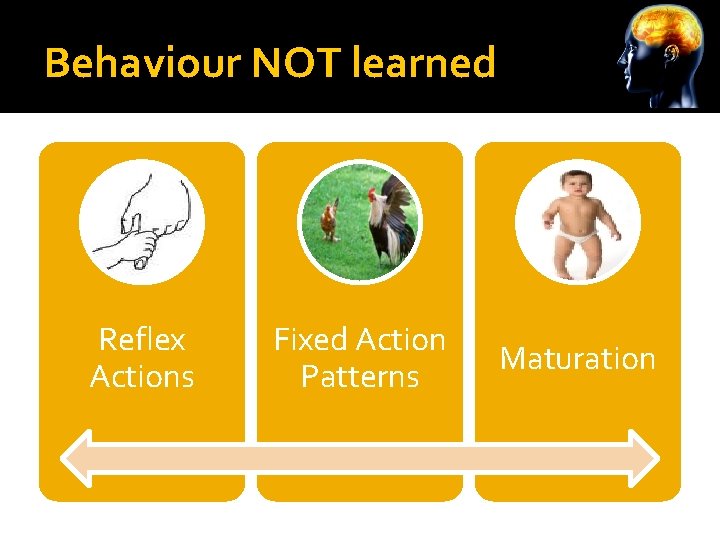
Behaviour NOT learned Reflex Actions Fixed Action Patterns Maturation
Reflex Actions �An automatic involuntary behaviour that does not require prior experience and occurs in the same way in each member of a species. �Important for survival Grasping reflex Sucking reflex Babinski reflex
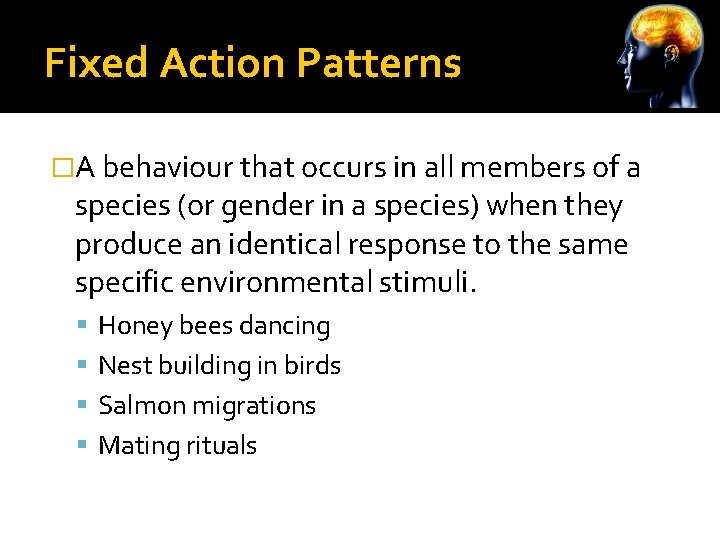
Fixed Action Patterns �A behaviour that occurs in all members of a species (or gender in a species) when they produce an identical response to the same specific environmental stimuli. Honey bees dancing Nest building in birds Salmon migrations Mating rituals
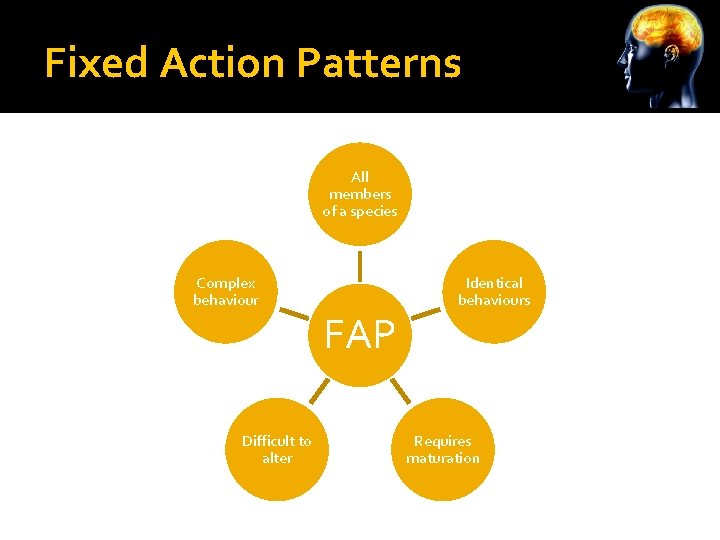
Fixed Action Patterns All members of a species Complex behaviour Difficult to alter FAP Identical behaviours Requires maturation
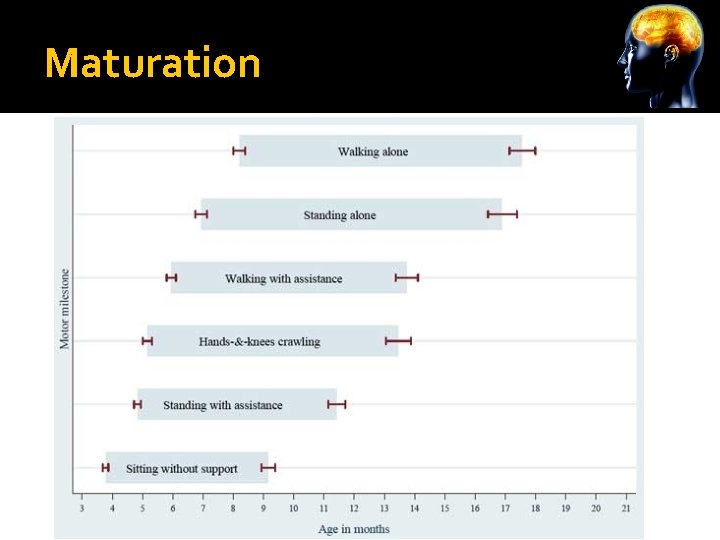
Behaviour dependent on maturation �Maturation is a developmental process leading towards maturity, based on the orderly sequence of changes that occur in the nervous system. �No amount of practice will hasten a skill’s onset �So do we learn to walk or does it depend on maturation?
Maturation
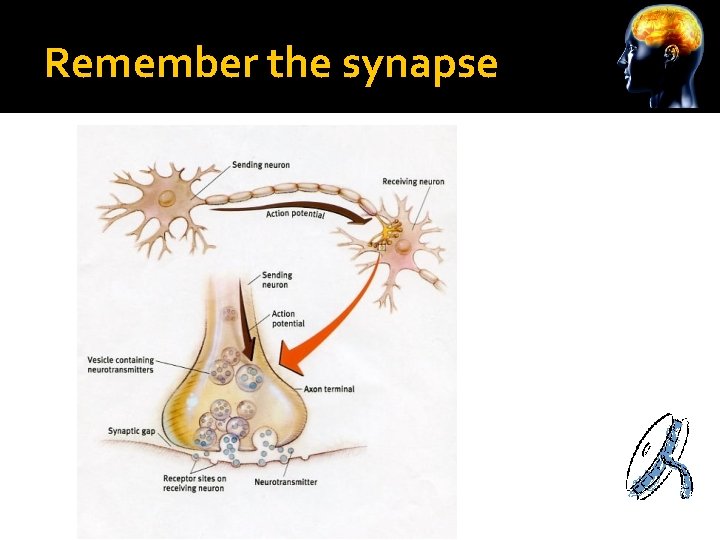
Remember the synapse
Neurotransmitters involved in learning � Glutamate plays a crucial role in learning. When released during learning, glutamate initiates activity in postsynaptic neurons. Its repeated release during learning is also believed to contribute to synaptic formation and thereby strengthens connections at the synapse during learning. � Dopamine also contributes to the strengthening of synaptic connections during learning. However, more known for its role in reward-based learning e. g. tasty food, addictive drugs, good win while gambling. The release of dopamine during these times provides a pleasurable experience. This positive consequence rewards the activity, in turn, motivating the individual to repeat it (learning) � – Dopamine Reward System Page 671.
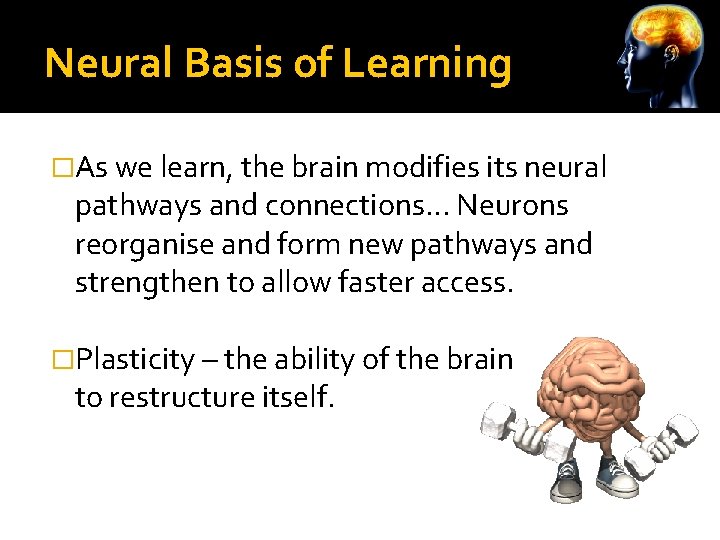
Neural Basis of Learning �As we learn, the brain modifies its neural pathways and connections. . . Neurons reorganise and form new pathways and strengthen to allow faster access. �Plasticity – the ability of the brain to restructure itself.
Learning and the brain �Learning can change a synapse – strengthening a connection �Learning can create new synapses �David Hebb proposed that learning results in the creation of cell assemblies interconnected groups of neurons that transmit within and between networks.
Learning and the brain. �Hebb said neurons that are repeatedly activated start to speed up and fire simultaneously. �Neurons that fire together, wire together �So how are the mechanisms for learning similar to the mechanisms for memory?
Learning and the brain �Long Term Potentiation – the long-lasting strengthening of a synapse resulting in enhanced functioning when they are activated. �LTP is vital for learning – we can think of learning as simply creating and strengthening neural pathways
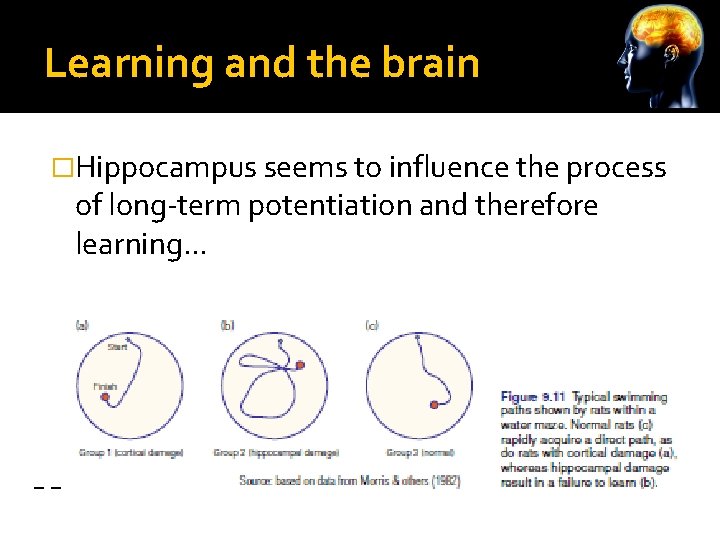
Learning and the brain �Hippocampus seems to influence the process of long-term potentiation and therefore learning. . .
Plasticity and learning �Plasticity is the ability of the brain’s neural structure or function to be changed by experience. �Clearly some areas of the brain have a fixed functionality (more cortex for example) others can change. �The brain has MORE plasticity in the young. . . making learning easier.
Developmental Plasticity �The plasticity of the brain as we develop – changing according to its maturational blueprint or plan �Synaptogenesis – process of forming new synpases. �Synaptic pruning – eliminating synaptic connections. Adult shave 40% less synapses than a 3 year old.
Developmental Plasticity �Sensitive/critical periods – a specific period of time in development when an organism is more responsive to certain environmental stimuli or experiences. �Language development
Adaptive Plasticity �Plasticity where the brain re-wires in order to recover from trauma due to brain injury. �Most effective in the very young. �At a neural level two processes can occur – rerouting (reconnecting to an undamaged neuron) and sprouting (growth of new bushier neurons) �Research findings
Timing of Experiences Sensitive Periods � As children and adolescents grow, their brains become less plastic and their neural pathways become more consolidated. � Certain periods in development are particularly suited to learning certain things. � A specific period of time in development when an organism is more responsive to certain environmental stimuli or experiences. � For example, at birth it seems we are ready to learn the language of whichever culture into which we happen to be born.
Timing of Experiences Critical Periods � In developmental neuroscience, the term critical period refers to a very narrow period of time in an animal’s development in which the animal is preprogrammed for learning to occur. � For example, young birds imprint to the first moving object they see after they hatch from an egg. � In humans, there are very few critical periods for brain development. Instead, these periods tend to be referred to as sensitive periods because the time in which they can occur is more flexible and broad than critical periods for animals.
Review � Read ALL of Chapter 10 � Complete the following learning activities: � 10. 1 � 10. 2 � 10. 4 � 10. 6 � Complete Chapter 10 T/F Test. � Complete Chapter 10 Test
�Brain Teaser #14 ‘All behaviours are learned. ’ True or False? Discuss with reference to research/evidence and examples. �Brain Teaser #15 ‘Glutamate and Dopamine are crucial to both learning and memory’. Discuss this statement with reference to the role of the neuron in forming new memories and learning new information.