
Chapter 10 Mechanical Integration Presentation Power Point Chapter

- Slides: 32
Chapter 10 — Mechanical Integration
® Presentation Power. Point Chapter 10 — Mechanical Integration Chapter 10 Mechanical Integration Mechanical Considerations • Array Mounting Systems • Mechanical Integration
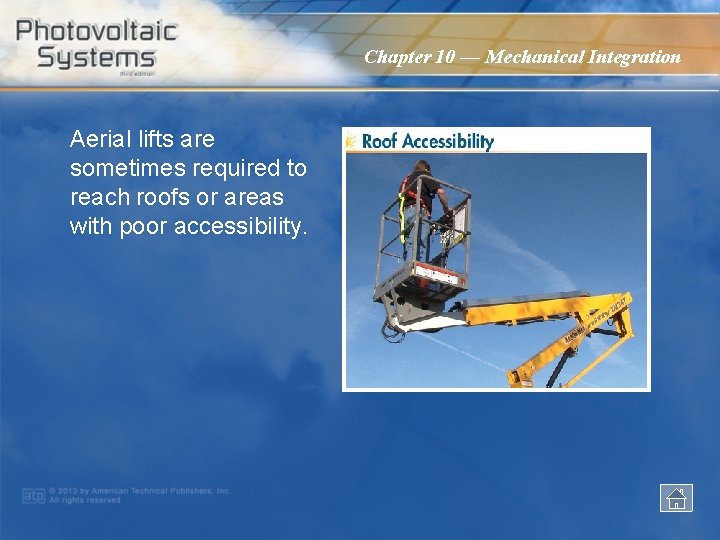
Chapter 10 — Mechanical Integration Aerial lifts are sometimes required to reach roofs or areas with poor accessibility.
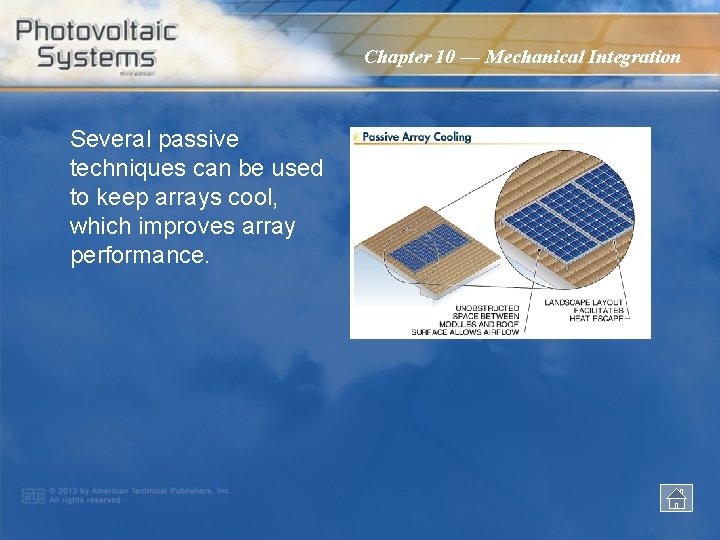
Chapter 10 — Mechanical Integration Several passive techniques can be used to keep arrays cool, which improves array performance.
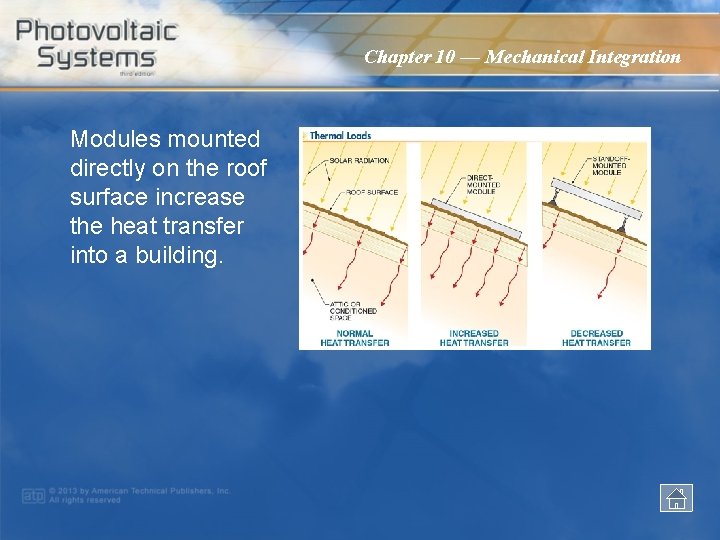
Chapter 10 — Mechanical Integration Modules mounted directly on the roof surface increase the heat transfer into a building.
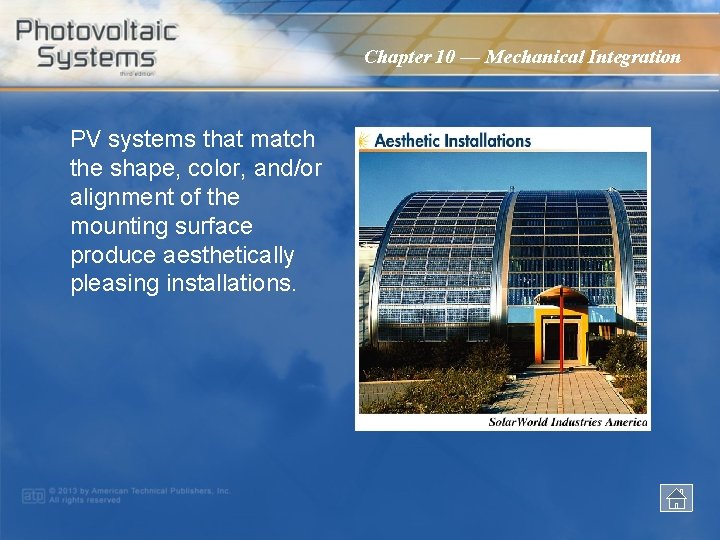
Chapter 10 — Mechanical Integration PV systems that match the shape, color, and/or alignment of the mounting surface produce aesthetically pleasing installations.
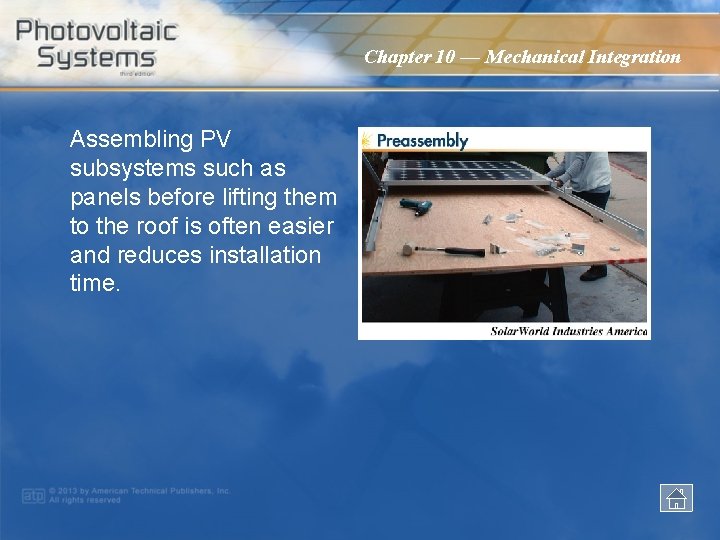
Chapter 10 — Mechanical Integration Assembling PV subsystems such as panels before lifting them to the roof is often easier and reduces installation time.
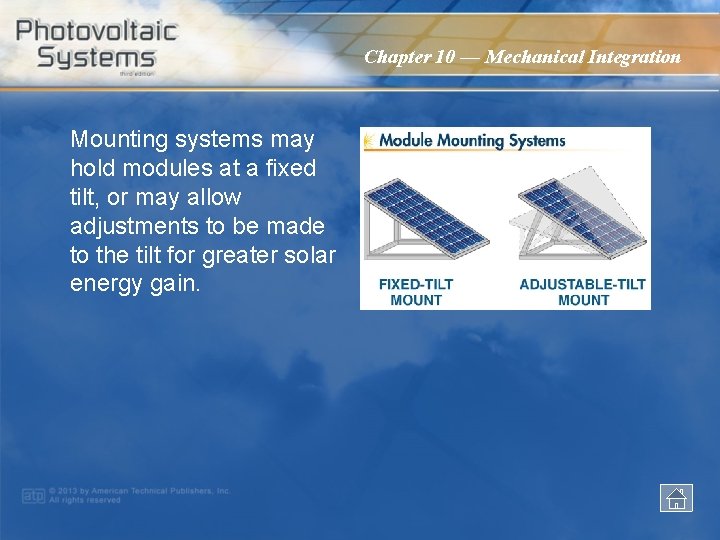
Chapter 10 — Mechanical Integration Mounting systems may hold modules at a fixed tilt, or may allow adjustments to be made to the tilt for greater solar energy gain.
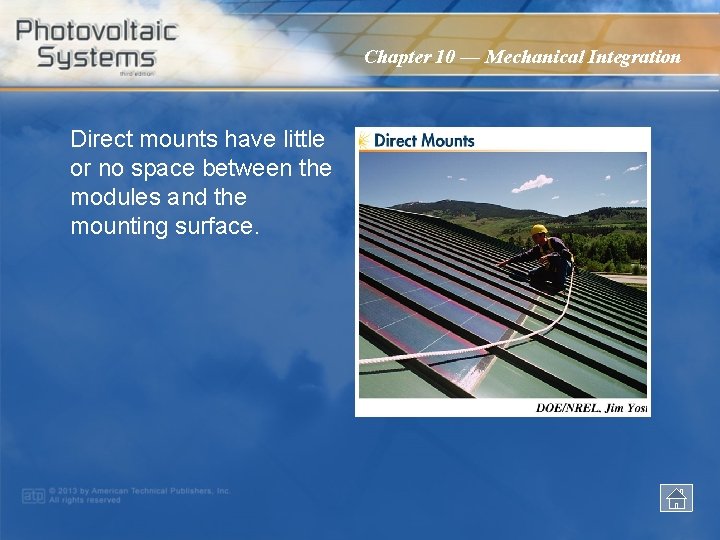
Chapter 10 — Mechanical Integration Direct mounts have little or no space between the modules and the mounting surface.
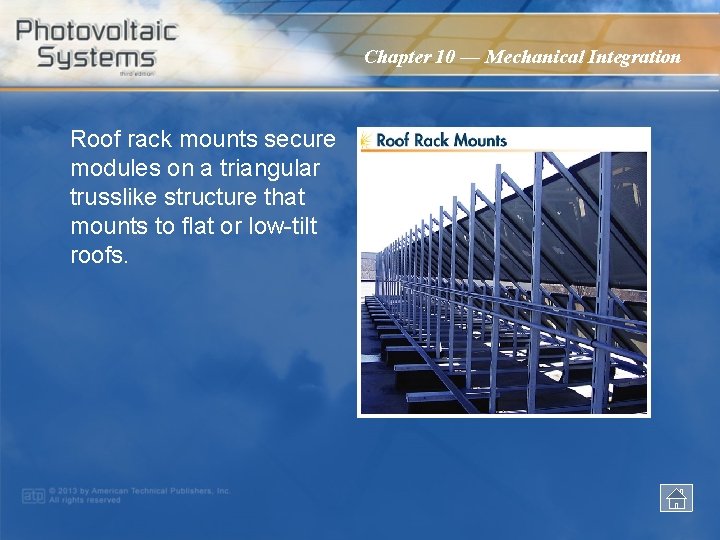
Chapter 10 — Mechanical Integration Roof rack mounts secure modules on a triangular trusslike structure that mounts to flat or low-tilt roofs.
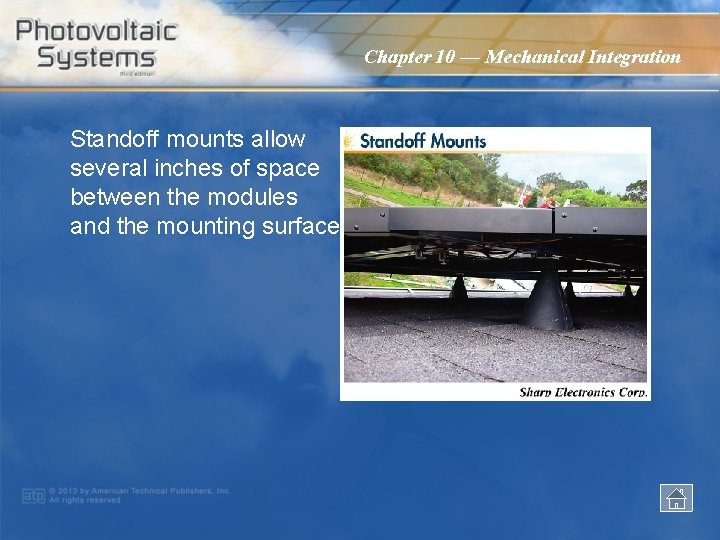
Chapter 10 — Mechanical Integration Standoff mounts allow several inches of space between the modules and the mounting surface.
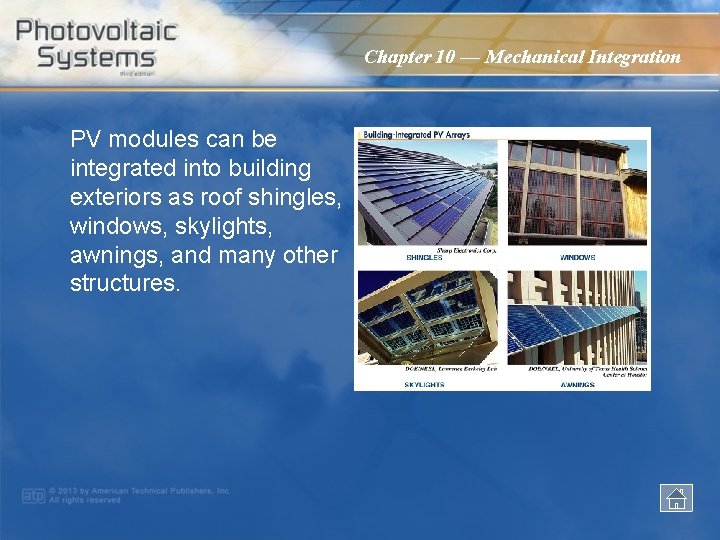
Chapter 10 — Mechanical Integration PV modules can be integrated into building exteriors as roof shingles, windows, skylights, awnings, and many other structures.
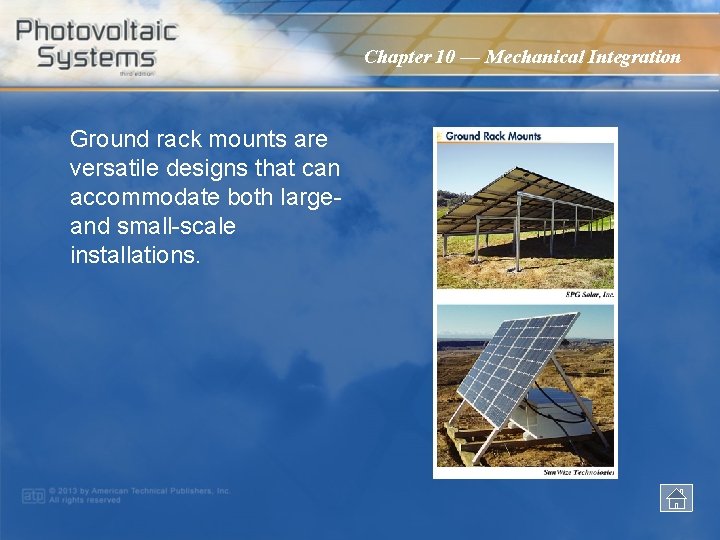
Chapter 10 — Mechanical Integration Ground rack mounts are versatile designs that can accommodate both largeand small-scale installations.
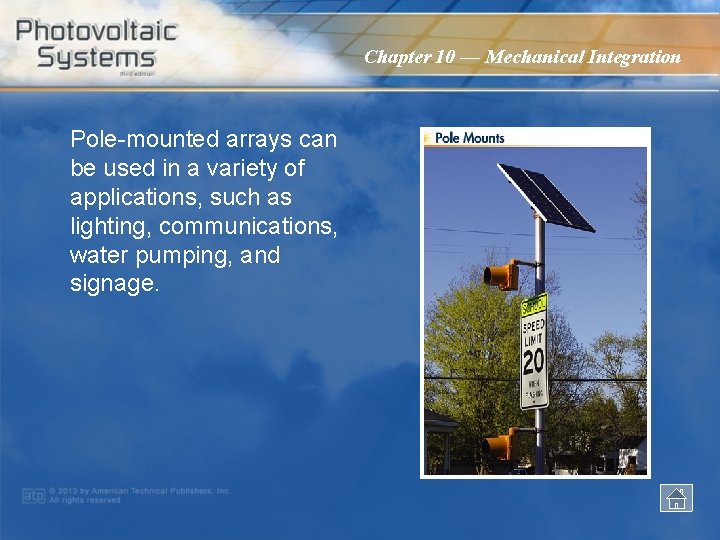
Chapter 10 — Mechanical Integration Pole-mounted arrays can be used in a variety of applications, such as lighting, communications, water pumping, and signage.
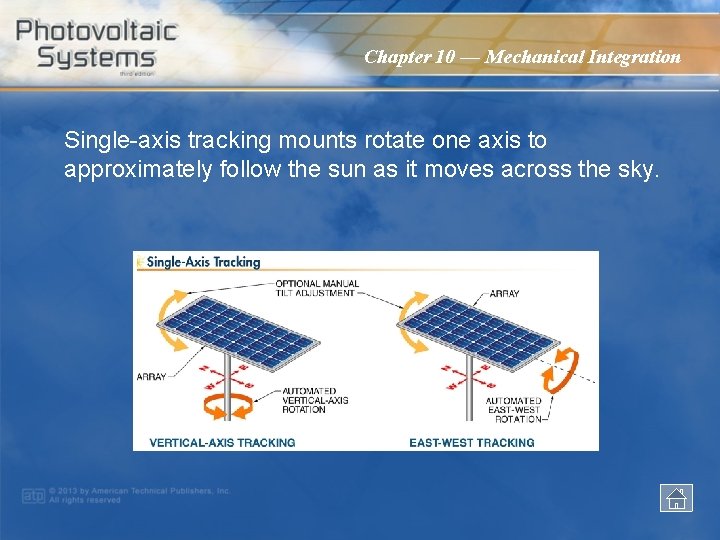
Chapter 10 — Mechanical Integration Single-axis tracking mounts rotate one axis to approximately follow the sun as it moves across the sky.
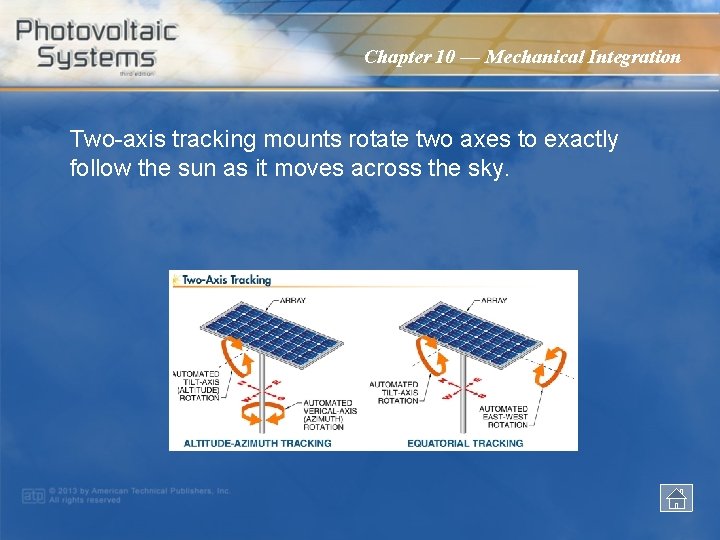
Chapter 10 — Mechanical Integration Two-axis tracking mounts rotate two axes to exactly follow the sun as it moves across the sky.
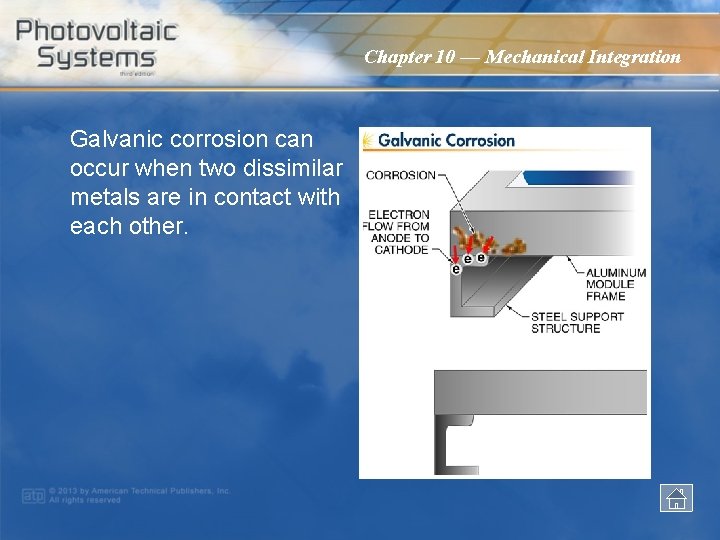
Chapter 10 — Mechanical Integration Galvanic corrosion can occur when two dissimilar metals are in contact with each other.
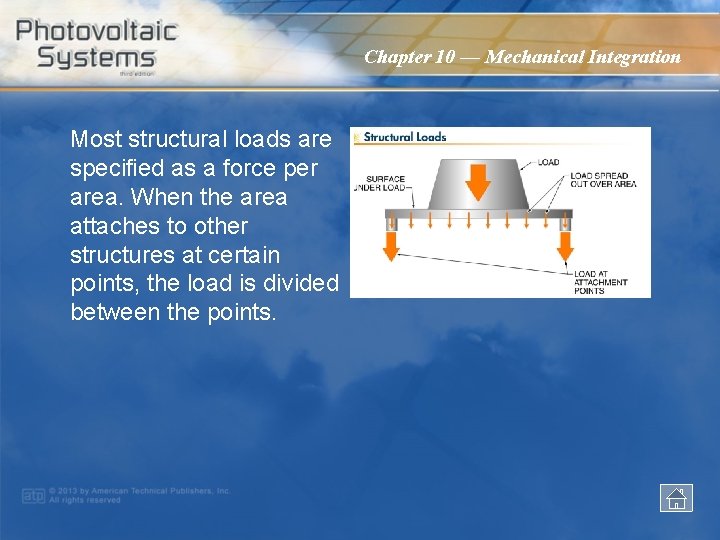
Chapter 10 — Mechanical Integration Most structural loads are specified as a force per area. When the area attaches to other structures at certain points, the load is divided between the points.
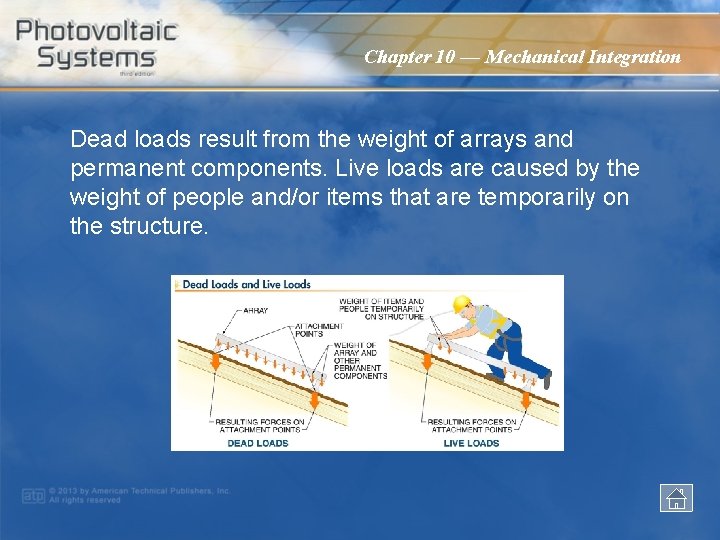
Chapter 10 — Mechanical Integration Dead loads result from the weight of arrays and permanent components. Live loads are caused by the weight of people and/or items that are temporarily on the structure.
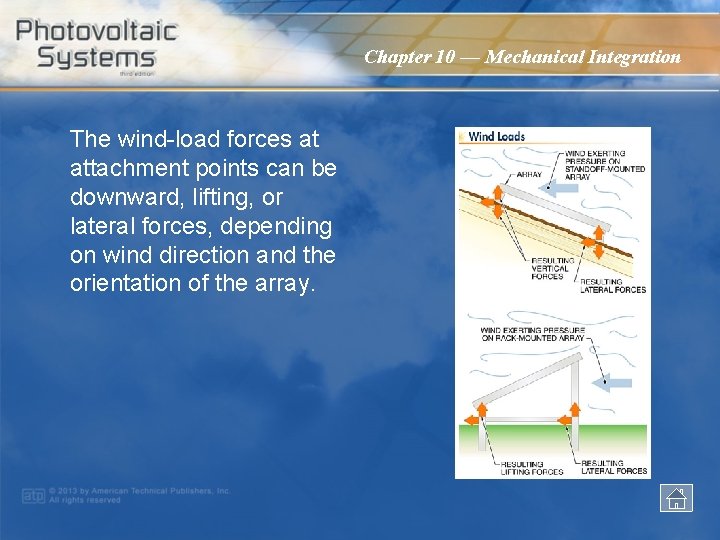
Chapter 10 — Mechanical Integration The wind-load forces at attachment points can be downward, lifting, or lateral forces, depending on wind direction and the orientation of the array.
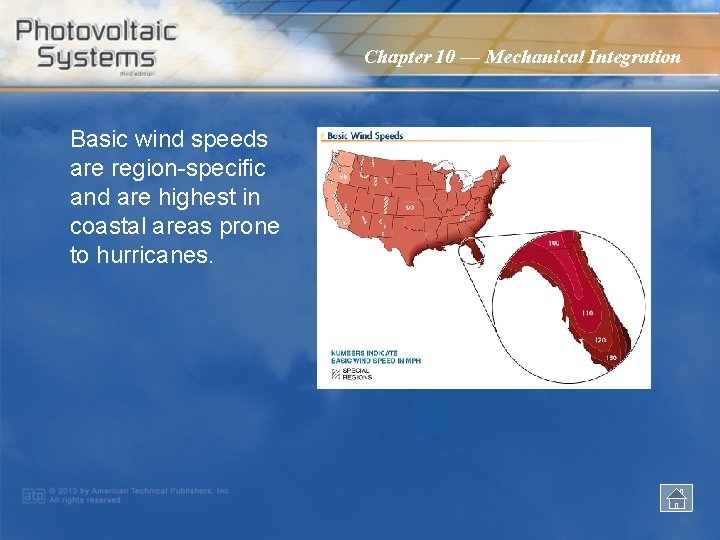
Chapter 10 — Mechanical Integration Basic wind speeds are region-specific and are highest in coastal areas prone to hurricanes.
Chapter 10 — Mechanical Integration Snow loads cause forces similar to dead loads, but the potential magnitude of a snow load varies greatly among geographic regions.
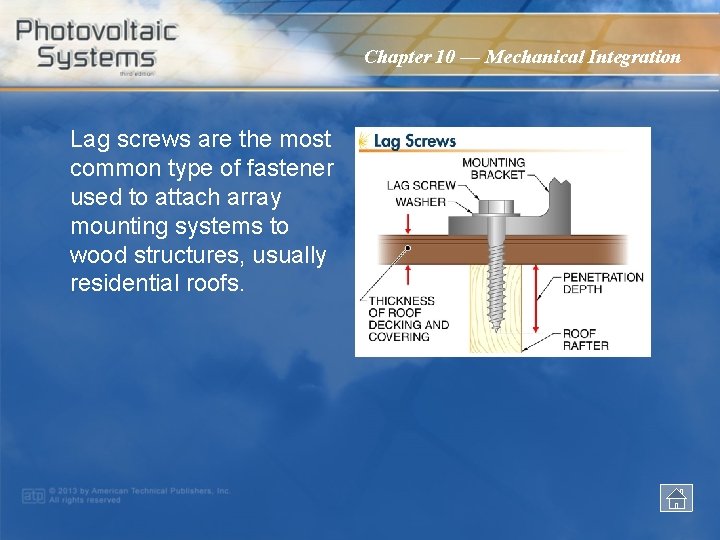
Chapter 10 — Mechanical Integration Lag screws are the most common type of fastener used to attach array mounting systems to wood structures, usually residential roofs.
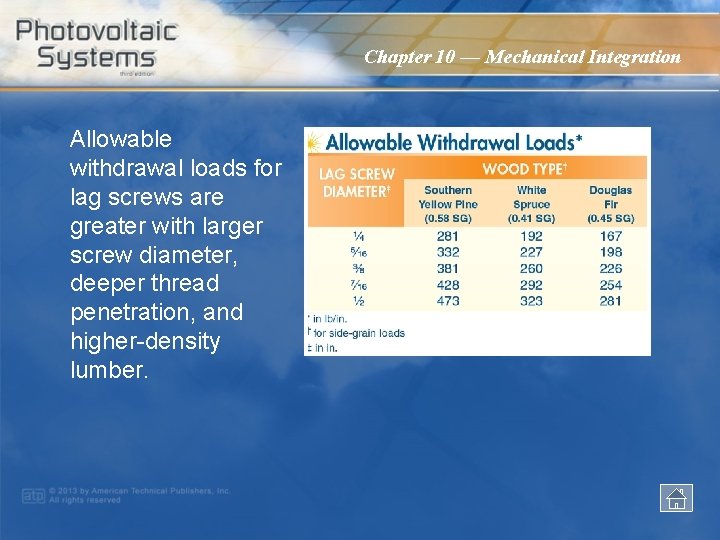
Chapter 10 — Mechanical Integration Allowable withdrawal loads for lag screws are greater with larger screw diameter, deeper thread penetration, and higher-density lumber.
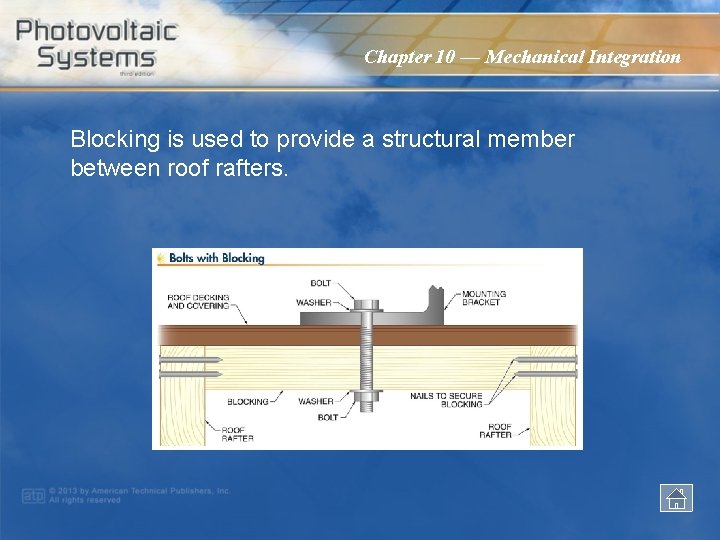
Chapter 10 — Mechanical Integration Blocking is used to provide a structural member between roof rafters.
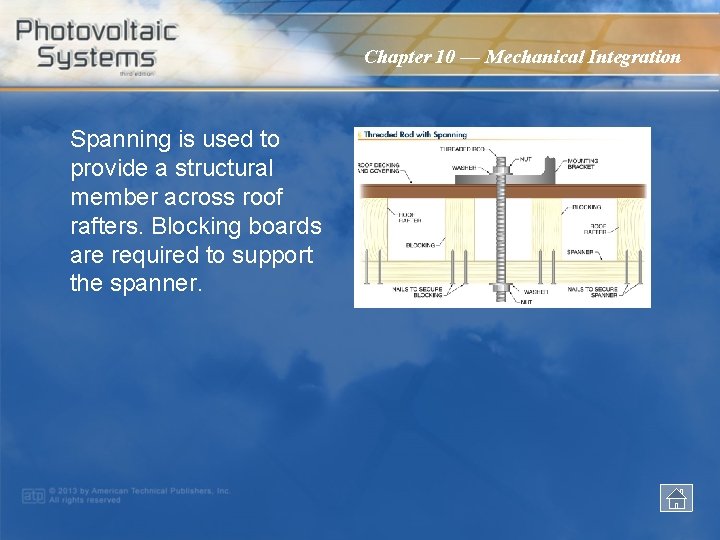
Chapter 10 — Mechanical Integration Spanning is used to provide a structural member across roof rafters. Blocking boards are required to support the spanner.
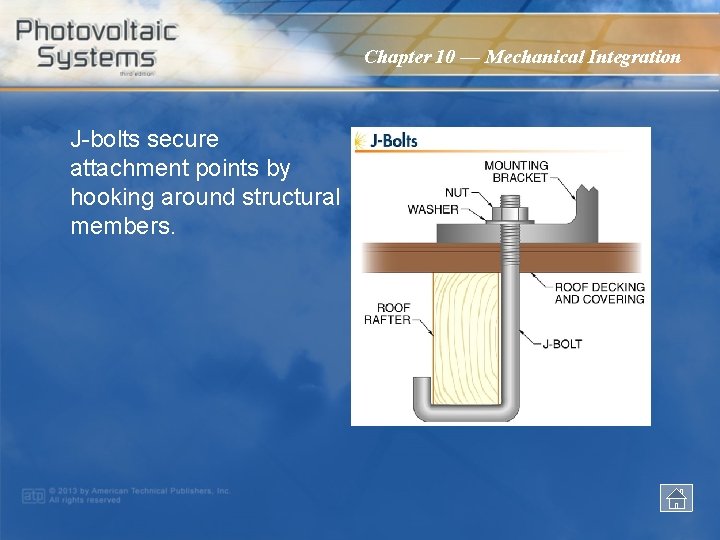
Chapter 10 — Mechanical Integration J-bolts secure attachment points by hooking around structural members.
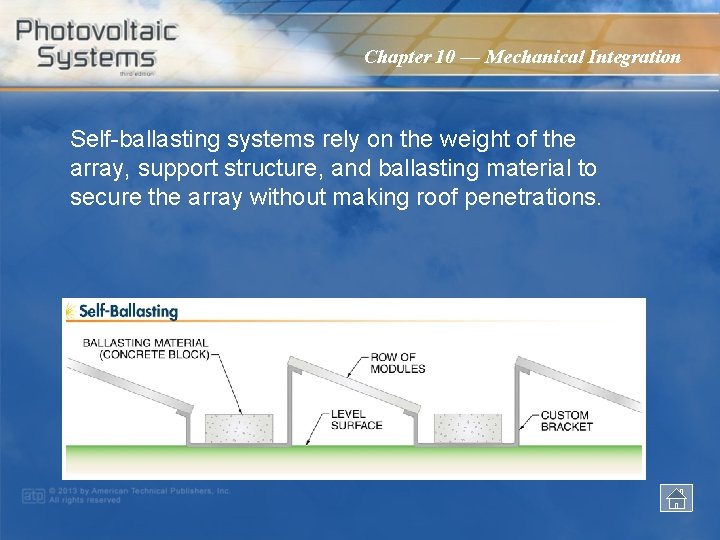
Chapter 10 — Mechanical Integration Self-ballasting systems rely on the weight of the array, support structure, and ballasting material to secure the array without making roof penetrations.
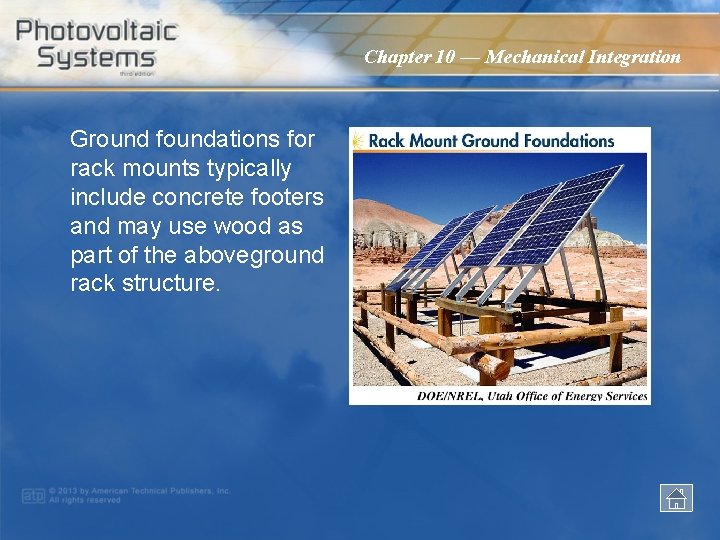
Chapter 10 — Mechanical Integration Ground foundations for rack mounts typically include concrete footers and may use wood as part of the aboveground rack structure.
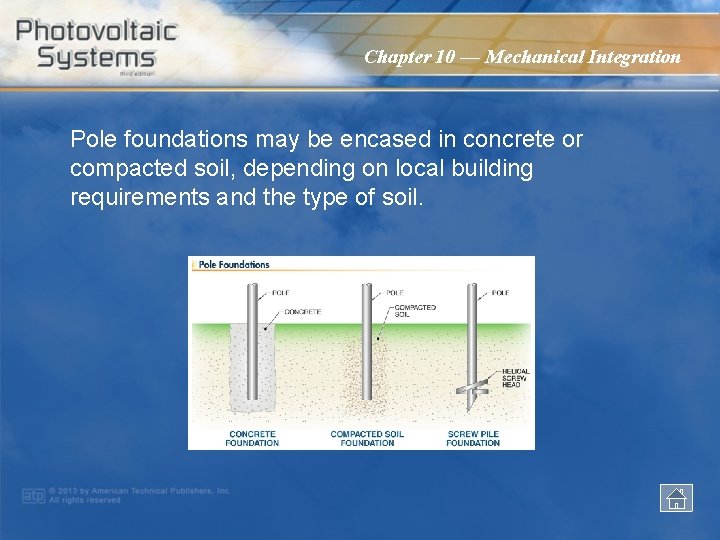
Chapter 10 — Mechanical Integration Pole foundations may be encased in concrete or compacted soil, depending on local building requirements and the type of soil.
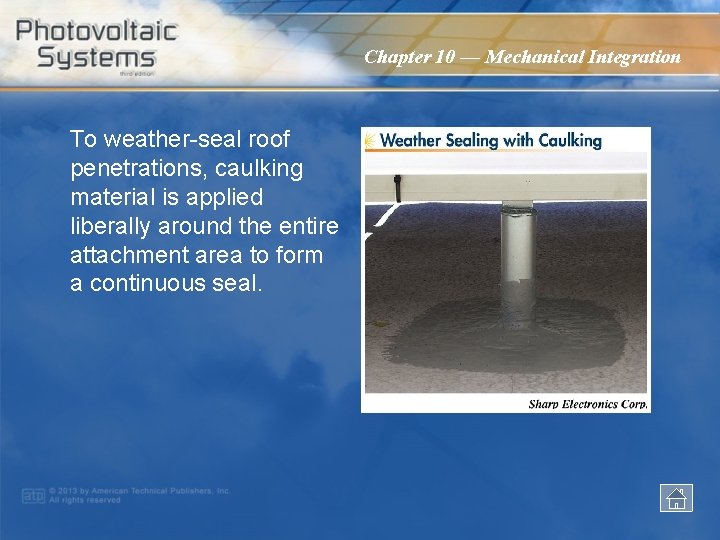
Chapter 10 — Mechanical Integration To weather-seal roof penetrations, caulking material is applied liberally around the entire attachment area to form a continuous seal.
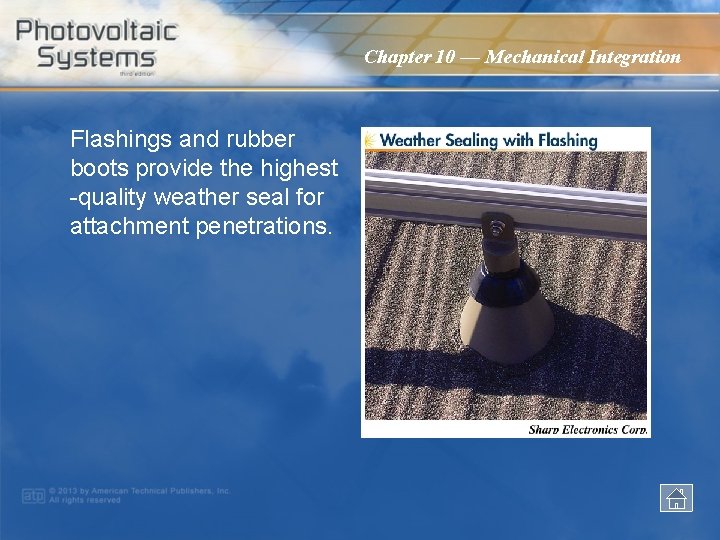
Chapter 10 — Mechanical Integration Flashings and rubber boots provide the highest -quality weather seal for attachment penetrations.