
CHAPTER 10 MEASURING OUTCOMES OF BRAND EQUITY CAPTURING

CHAPTER: 10 MEASURING OUTCOMES OF BRAND EQUITY: CAPTURING MARKET PERFORMANCE Copyright © 2013 Pearson Education, Inc. Publishing as Prentice Hall.
Learning Objectives Recognize the multidimensionality of brand equity and the importance of multiple methods to measure it Contrast different comparative methods to assess brand equity Explain the basics of how conjoint analysis works Review different holistic methods for valuing brand equity Describe the relationship between branding and finance Copyright © 2013 Pearson Education, Inc. Publishing as Prentice Hall.
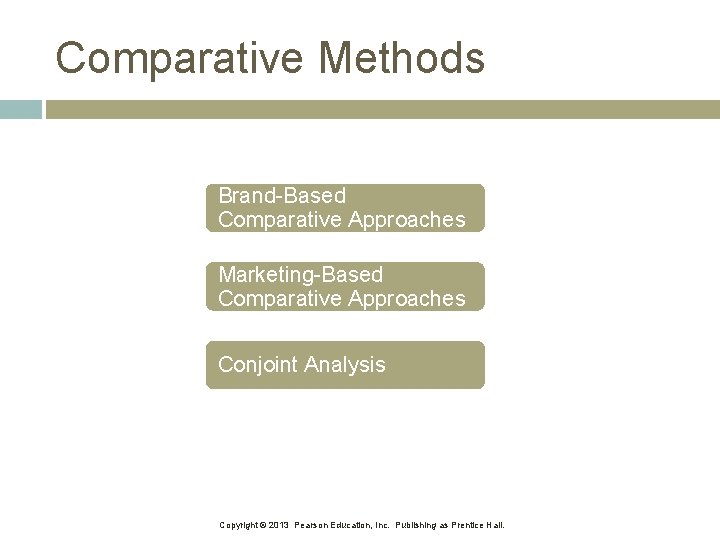
Comparative Methods Brand-Based Comparative Approaches Marketing-Based Comparative Approaches Conjoint Analysis Copyright © 2013 Pearson Education, Inc. Publishing as Prentice Hall.

Brand-Based Comparative Approaches Competitive brands used as benchmarks by consumers Exemplar: Category leader or some other brand that consumers feel is representative of the category, like their most preferred brand Applications Critique Copyright © 2013 Pearson Education, Inc. Publishing as Prentice Hall.
Marketing-Based Comparative Approaches Hold the brand fixed and examine consumer response based on changes in the marketing program Applications Critique Copyright © 2013 Pearson Education, Inc. Publishing as Prentice Hall.
Conjoint Analysis Survey-based multivariate technique that enables marketers to profile the consumer decision process with respect to products and brands Part worth: The value consumers attach to each attribute level, as statistically derived by the conjoint formula Applications Critique Copyright © 2013 Pearson Education, Inc. Publishing as Prentice Hall.
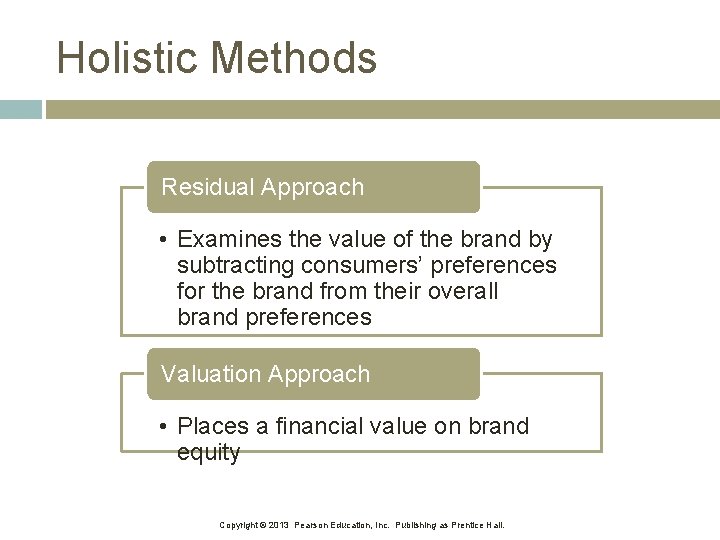
Holistic Methods Residual Approach • Examines the value of the brand by subtracting consumers’ preferences for the brand from their overall brand preferences Valuation Approach • Places a financial value on brand equity Copyright © 2013 Pearson Education, Inc. Publishing as Prentice Hall.
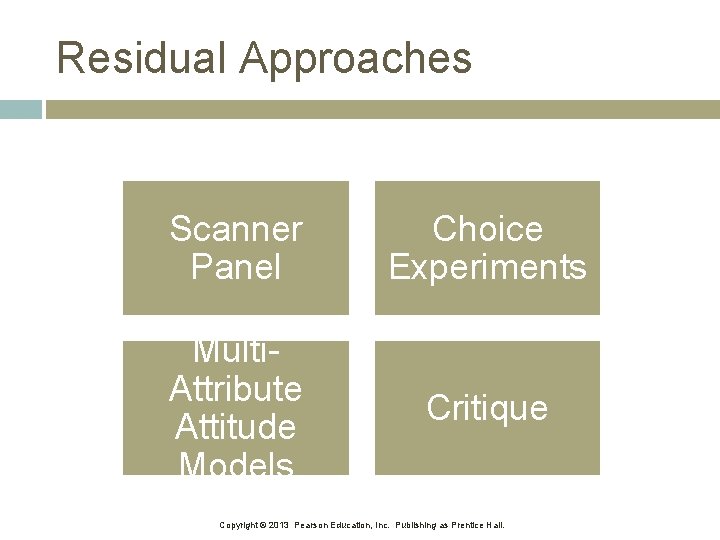
Residual Approaches Scanner Panel Choice Experiments Multi. Attribute Attitude Models Critique Copyright © 2013 Pearson Education, Inc. Publishing as Prentice Hall.

Valuation Approaches Accounting Background Historical Perspectives General Approaches Simon and Sullivan’s Brand Equity Value Interbrand’s Brand Valuation Methodology Copyright © 2013 Pearson Education, Inc. Publishing as Prentice Hall.
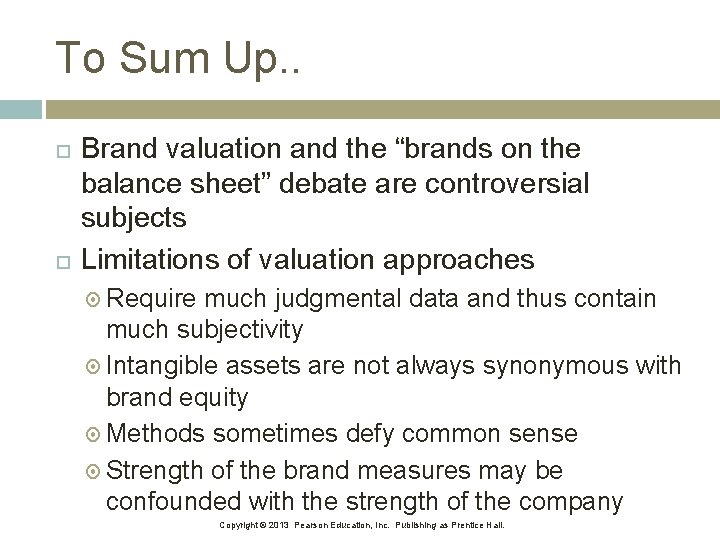
To Sum Up. . Brand valuation and the “brands on the balance sheet” debate are controversial subjects Limitations of valuation approaches Require much judgmental data and thus contain much subjectivity Intangible assets are not always synonymous with brand equity Methods sometimes defy common sense Strength of the brand measures may be confounded with the strength of the company Copyright © 2013 Pearson Education, Inc. Publishing as Prentice Hall.

Figure 10. 2 - Product Profiles for Conjoint Analysis Application Copyright © 2013 Pearson Education, Inc. Publishing as Prentice Hall.
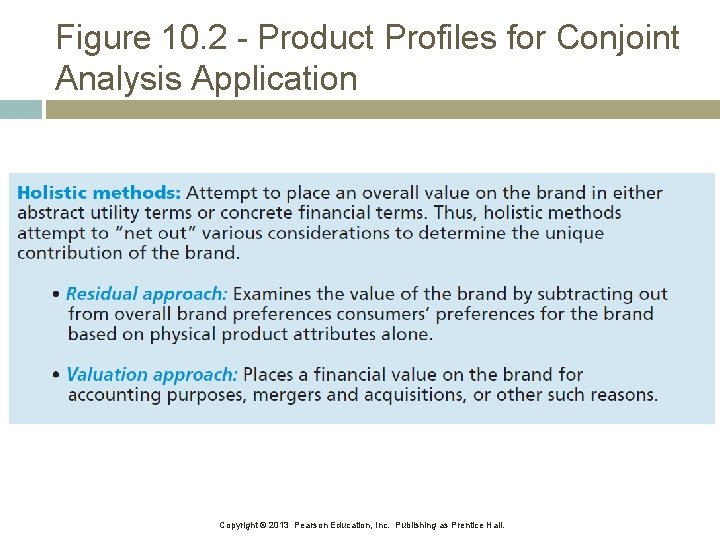
Figure 10. 2 - Product Profiles for Conjoint Analysis Application Copyright © 2013 Pearson Education, Inc. Publishing as Prentice Hall.
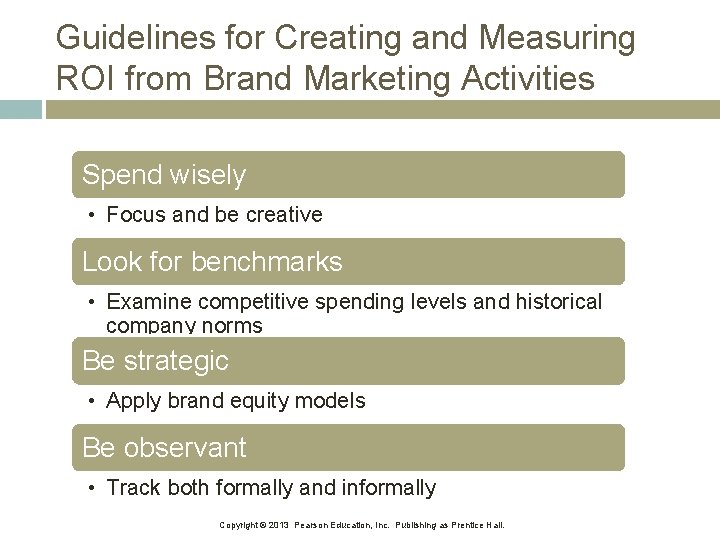
Guidelines for Creating and Measuring ROI from Brand Marketing Activities Spend wisely • Focus and be creative Look for benchmarks • Examine competitive spending levels and historical company norms Be strategic • Apply brand equity models Be observant • Track both formally and informally Copyright © 2013 Pearson Education, Inc. Publishing as Prentice Hall.
To Sum Up. . Single measures of brand equity provide at best a one- or two-dimensional view of a brand No single number or measure fully captures brand equity There are many different sources of, and outcomes from, brand equity, depending on the marketers’ skill and ingenuity Copyright © 2013 Pearson Education, Inc. Publishing as Prentice Hall.
- Slides: 14