
Chapter 10 Lesson 3 Matter and Energy in
- Slides: 6
Chapter 10 Lesson 3 Matter and Energy in Ecosystems Ms. Amanda and Ms. Diana
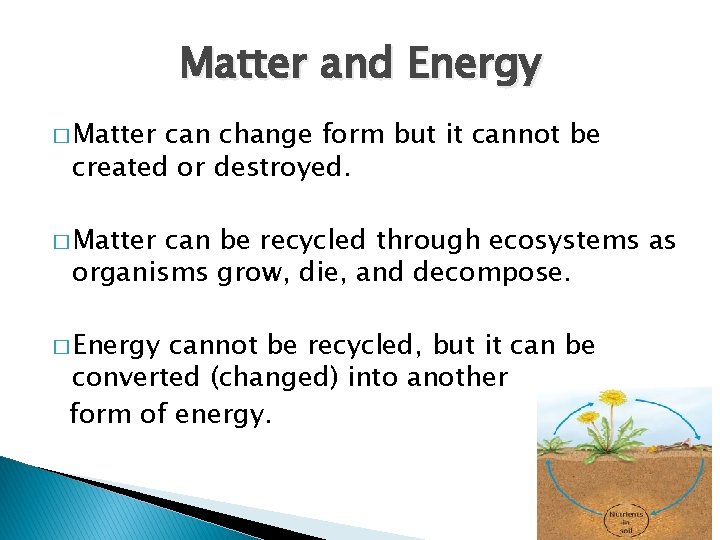
Matter and Energy � Matter can change form but it cannot be created or destroyed. � Matter can be recycled through ecosystems as organisms grow, die, and decompose. � Energy cannot be recycled, but it can be converted (changed) into another form of energy.
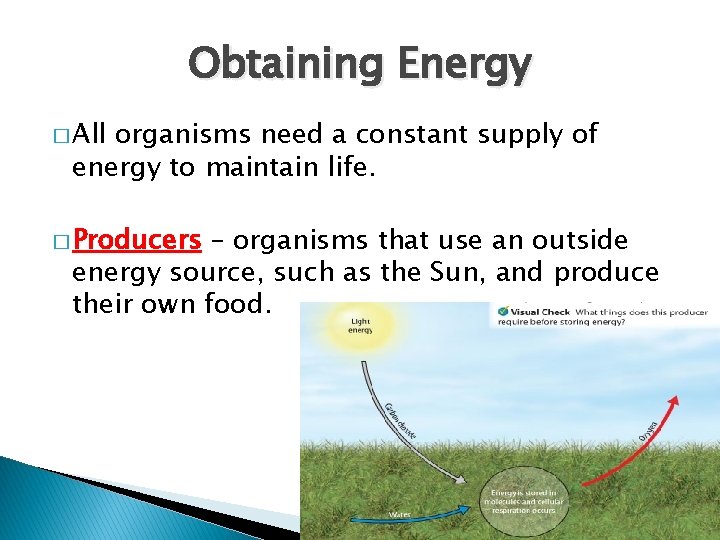
Obtaining Energy � All organisms need a constant supply of energy to maintain life. � Producers – organisms that use an outside energy source, such as the Sun, and produce their own food.
Consumers � Consumers – organisms that cannot make their own food. They obtain food by eating producers or other consumers. � Types of Consumers: ◦ Herbivores – eat only plants and other producers. �Snails, rabbits, deer, bees ◦ Carnivores – eat herbivores and other consumers. �Cats, snakes, spiders, frogs, hawks ◦ Omnivores – eat producers and consumers. �Bears, rats, humans, birds ◦ Decomposers – break down dead organisms �Bacteria, worms, fungi
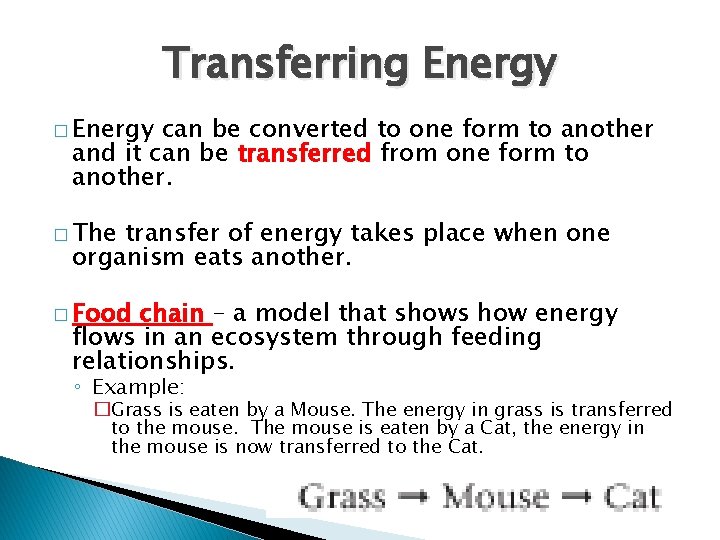
Transferring Energy � Energy can be converted to one form to another and it can be transferred from one form to another. � The transfer of energy takes place when one organism eats another. � Food chain – a model that shows how energy flows in an ecosystem through feeding relationships. ◦ Example: �Grass is eaten by a Mouse. The energy in grass is transferred to the mouse. The mouse is eaten by a Cat, the energy in the mouse is now transferred to the Cat.
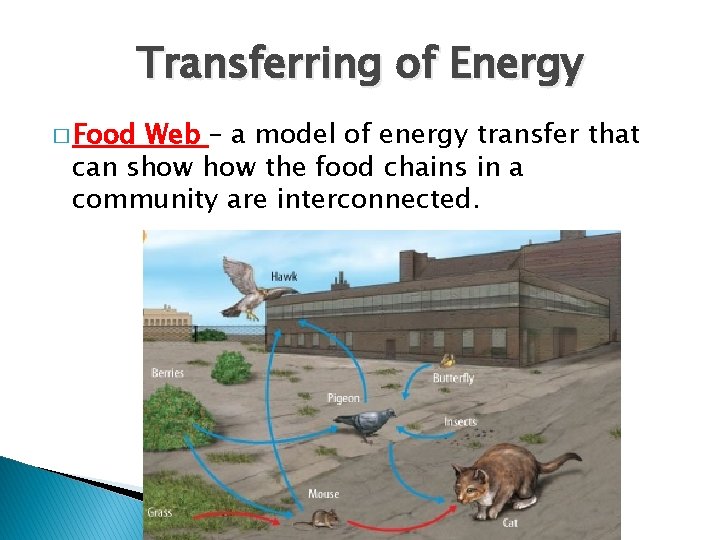
Transferring of Energy � Food Web – a model of energy transfer that can show the food chains in a community are interconnected.