
Chapter 10 IS Implementation Risk Risk Components Magnitude

- Slides: 24
Chapter 10 IS Implementation Risk
Risk Components • Magnitude of loss • Likelihood of loss • Exposure to loss
Management of Risk • Control • Information • Time
IT Project Risk • What is loss with respect to IT projects? – Failure to gain anticipated benefits because of implementation difficulties – Higher than expected implementation costs – Longer than expected implementation time – Technical performance below expectation – System incompatibility
Project Dimensions Influencing Risk • Project size • Experience with technology • Project structure
Mythical Man Month • IBM 360 Operating System – Brooks • Adding people to a late project only makes it later – partitionable tasks – communication and coordination costs
Low Structure/Information Requirements • The problem of communicating requirements • Exponentially greater cost of fixing errors that occur early in the system life cycle
Contingency Approach to Project Management • • External integration Internal integration Formal planning Formal control
External Integration Techniques Aimed at resolving requirements uncertainty • User project manager • User steering committee • User approval process • Joint Application Design (JAD) • Prototyping for requirements determination
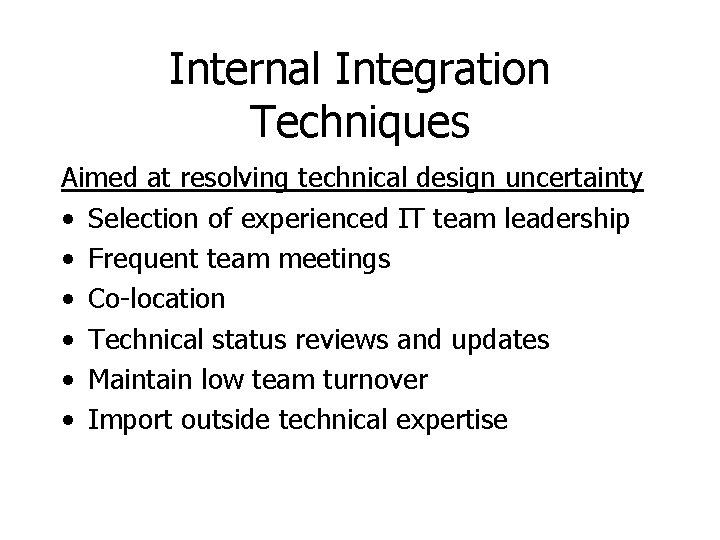
Internal Integration Techniques Aimed at resolving technical design uncertainty • Selection of experienced IT team leadership • Frequent team meetings • Co-location • Technical status reviews and updates • Maintain low team turnover • Import outside technical expertise
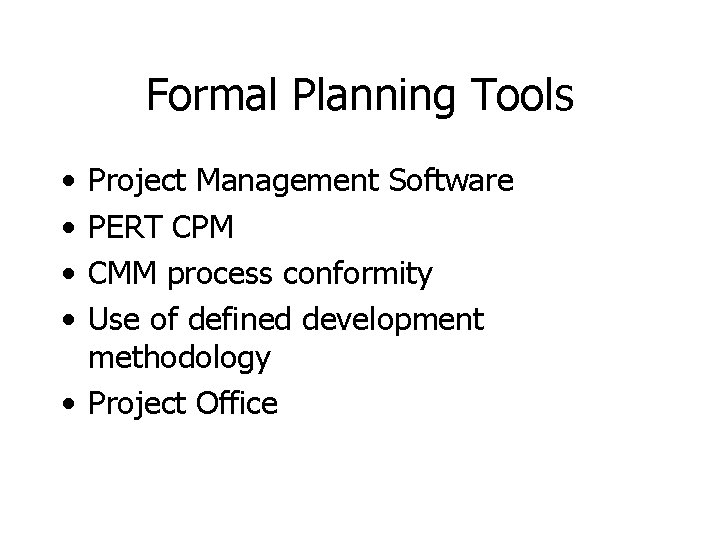
Formal Planning Tools • • Project Management Software PERT CPM CMM process conformity Use of defined development methodology • Project Office
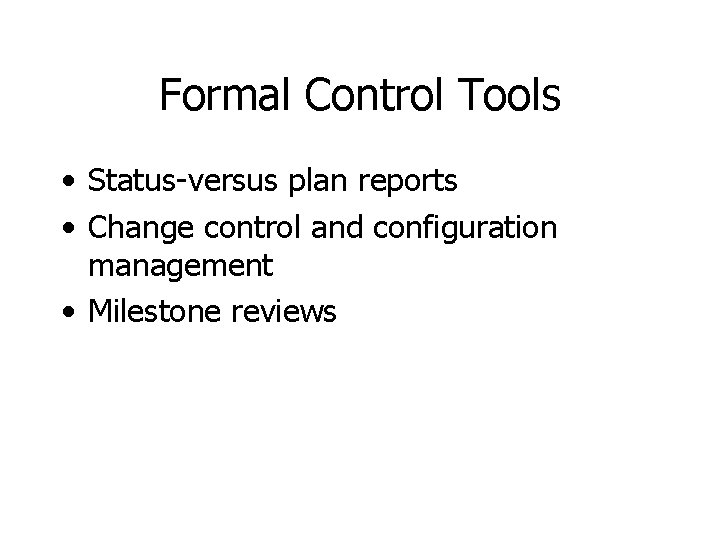
Formal Control Tools • Status-versus plan reports • Change control and configuration management • Milestone reviews
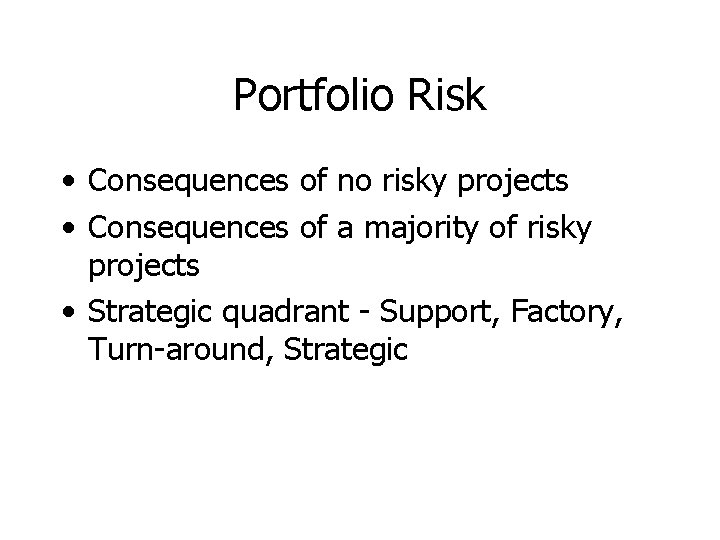
Portfolio Risk • Consequences of no risky projects • Consequences of a majority of risky projects • Strategic quadrant - Support, Factory, Turn-around, Strategic
New IS Effects • How do new Information Systems change work? – – – New tasks, new processes New communication patterns New political relationships New technology to learn New skills valued Others? • People in an organization may resist the implementation of a new IS
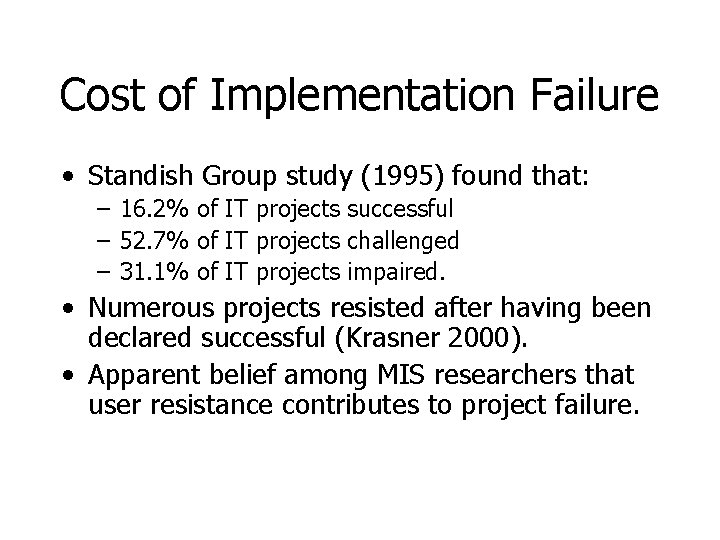
Cost of Implementation Failure • Standish Group study (1995) found that: – 16. 2% of IT projects successful – 52. 7% of IT projects challenged – 31. 1% of IT projects impaired. • Numerous projects resisted after having been declared successful (Krasner 2000). • Apparent belief among MIS researchers that user resistance contributes to project failure.
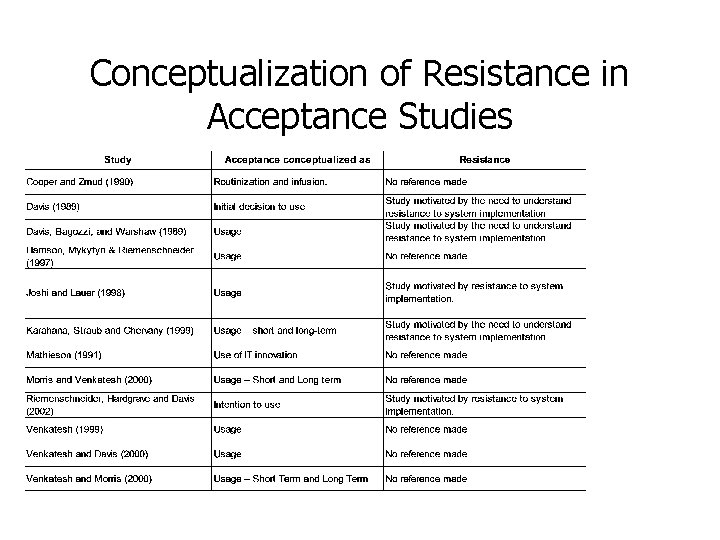
Conceptualization of Resistance in Acceptance Studies
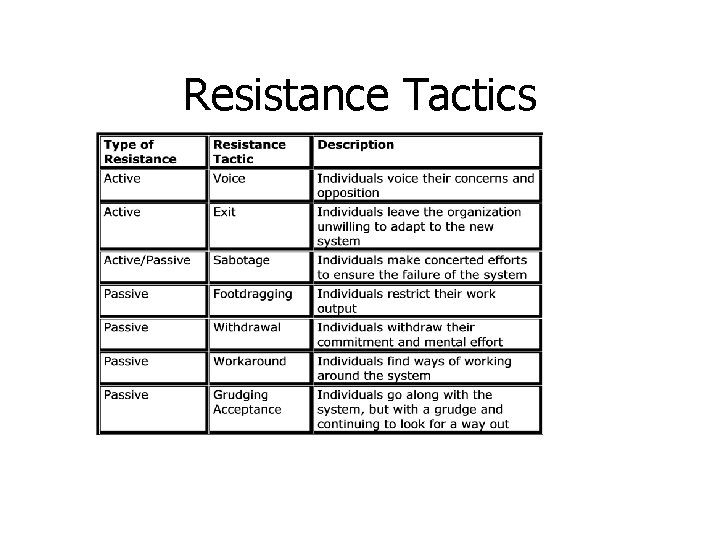
Definitions of Acceptance and Resistance • Acceptance – the act of receiving IT use willingly (Saga and Zmud 1994). • Resistance – action or intentional inaction that opposes or sidesteps the implementation of new information technology.
Resistance Tactics
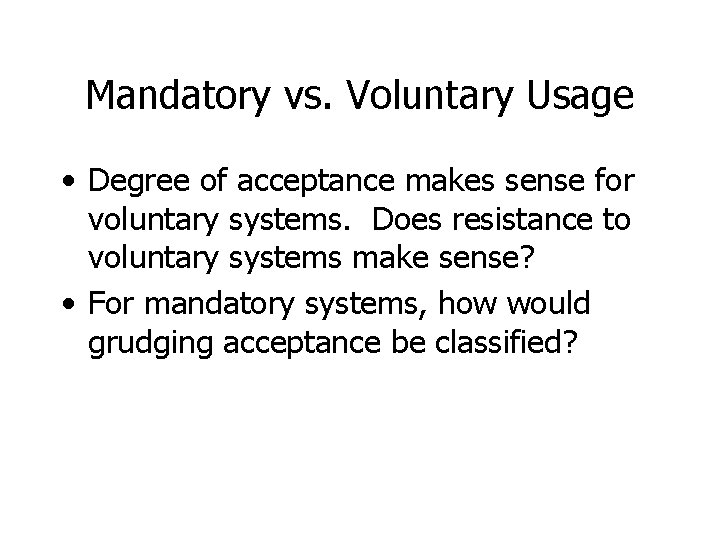
Mandatory vs. Voluntary Usage • Degree of acceptance makes sense for voluntary systems. Does resistance to voluntary systems make sense? • For mandatory systems, how would grudging acceptance be classified?
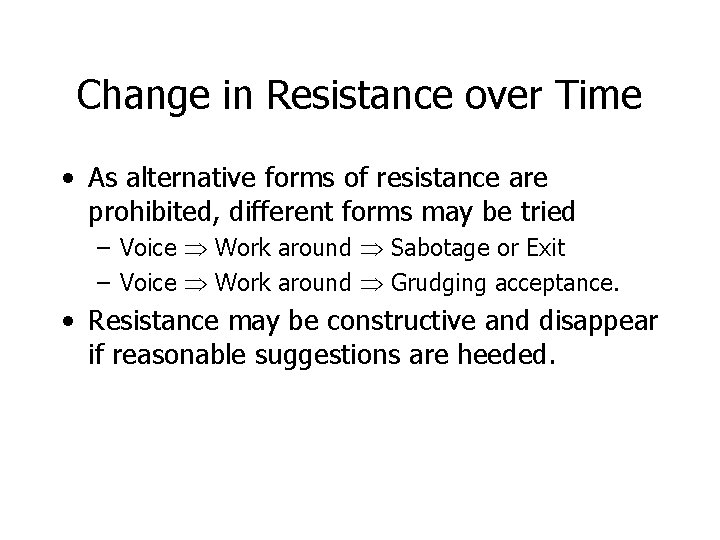
Change in Resistance over Time • As alternative forms of resistance are prohibited, different forms may be tried – Voice Work around Sabotage or Exit – Voice Work around Grudging acceptance. • Resistance may be constructive and disappear if reasonable suggestions are heeded.
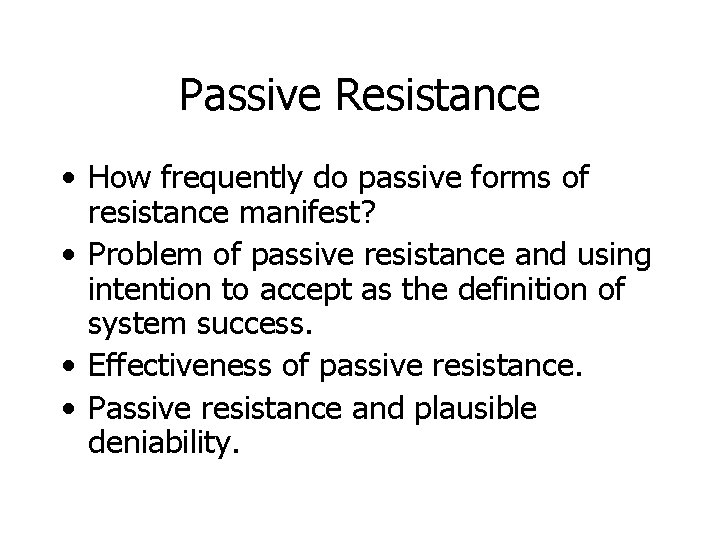
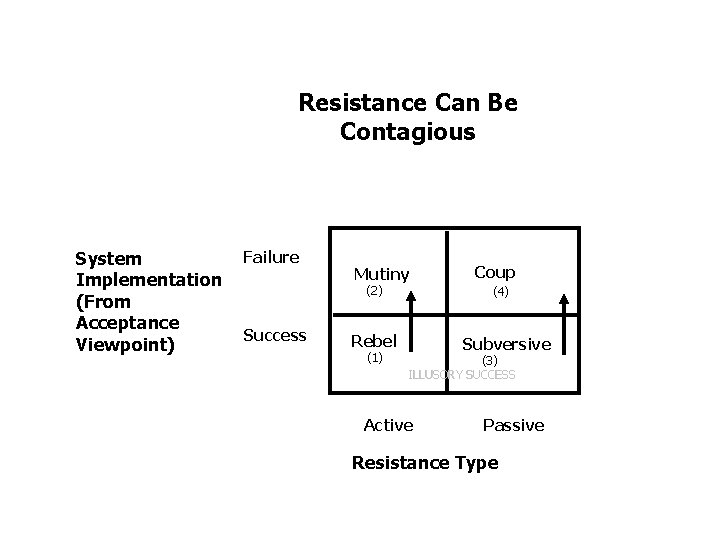
Passive Resistance • How frequently do passive forms of resistance manifest? • Problem of passive resistance and using intention to accept as the definition of system success. • Effectiveness of passive resistance. • Passive resistance and plausible deniability.
Resistance Can Be Contagious System Implementation (From Acceptance Viewpoint) Failure Mutiny (2) Success (4) Rebel (1) Coup Subversive (3) ILLUSORY SUCCESS Active Passive Resistance Type
Definitions of Acceptance and Resistance • Acceptance – the act of receiving IT use willingly (Saga and Zmud 1994). • Resistance – action or intentional inaction that opposes or sidesteps the implementation of new information technology.
Some Interpretations of Resistance • Resistance is pathological. • Resistance as an impediment to legitimate management initiatives. • Resistance is a risky activity for the resistor. • Resistance is a means to preserve personal integrity and self-esteem.