
Chapter 10 Interest Groups Do Interest Groups Help

- Slides: 40
Chapter 10: Interest Groups Do Interest Groups Help or Hinder American Democracy?
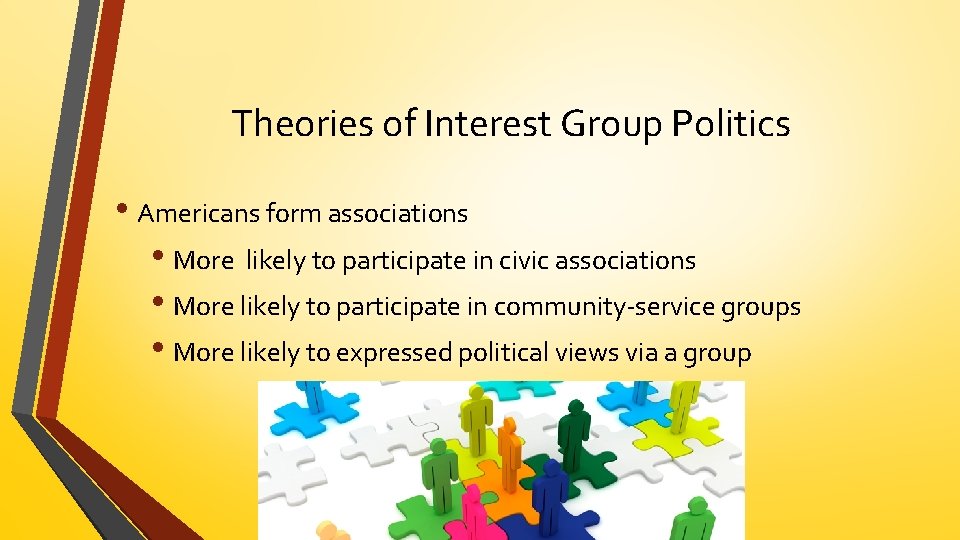
Theories of Interest Group Politics • Americans form associations • More likely to participate in civic associations • More likely to participate in community-service groups • More likely to expressed political views via a group
Theories of Interest Group Politics • Role of Interest Groups in Politics • Organizing to promote an interest • Essential part of a democracy • Framed in the First Amendment • Definition – an organization of people with a similar policy goal or goals who enter the political process at one or more points
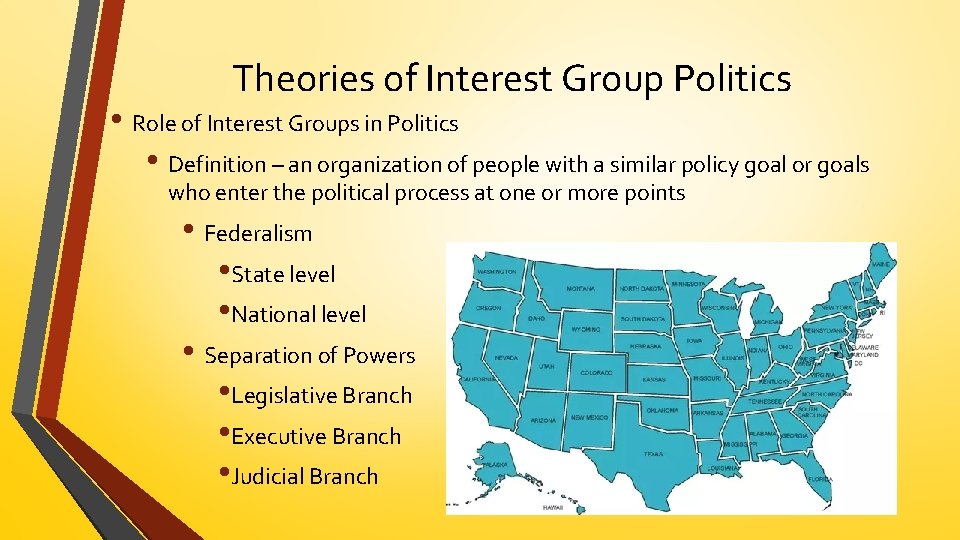
Theories of Interest Group Politics • Role of Interest Groups in Politics • Definition – an organization of people with a similar policy goal or goals who enter the political process at one or more points • Federalism • State level • National level • Separation of Powers • Legislative Branch • Executive Branch • Judicial Branch
Theories of Interest Group Politics • Political Party vs. Interest Group • Parties • Attempt to control policy by getting elected to office • Generalists • Must get most votes • Must appeal to more people • Must address many topics
Theories of Interest Group Politics • Political Party vs. Interest Group • Interest Groups • Attempt to control policy by influencing • Those in office • The voters • Specialists • Only interested in one topic • Must appeal only to one group
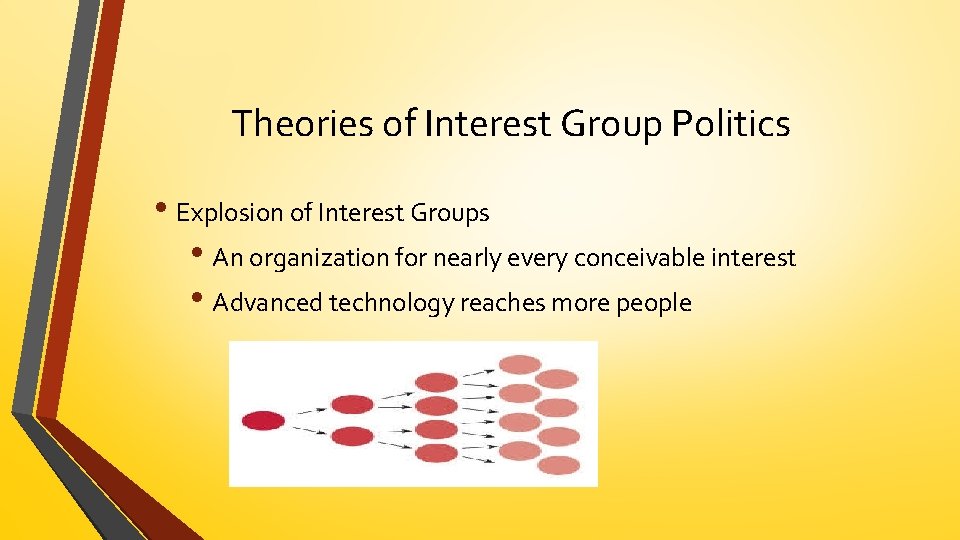
Theories of Interest Group Politics • Explosion of Interest Groups • An organization for nearly every conceivable interest • Advanced technology reaches more people
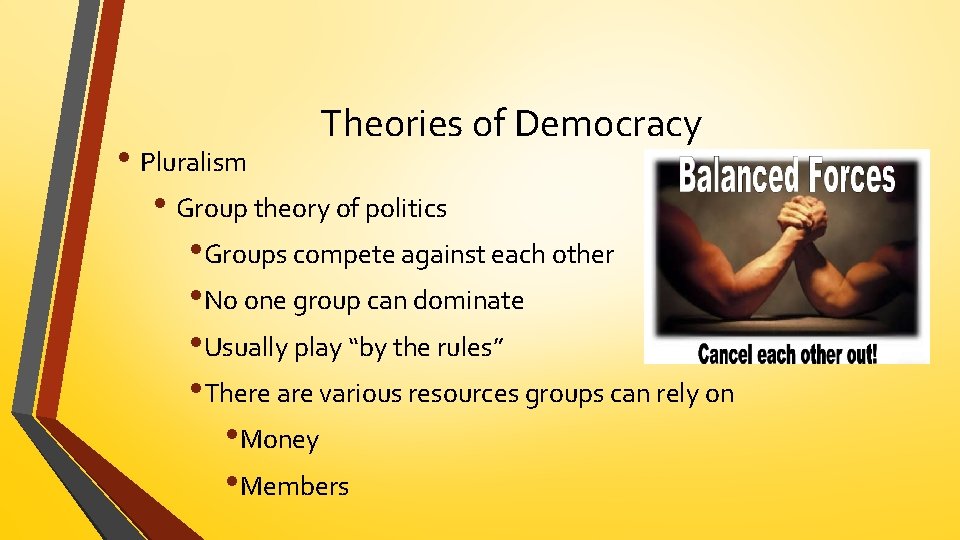
Theories of Democracy • Pluralism • Many centers of power • Each fighting for its own cause • Group theory of politics • IG s provide a key link between people and government • Groups compete against each other
Theories of Democracy • Pluralism • Group theory of politics • Groups compete against each other • No one group can dominate • Usually play “by the rules” • There are various resources groups can rely on • Money • Members
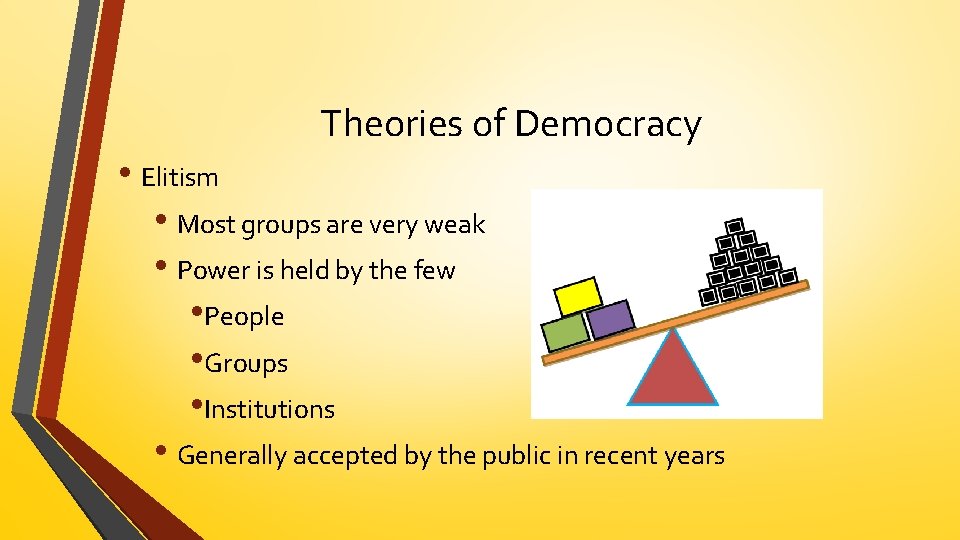
Theories of Democracy • Elitism • Most groups are very weak • Power is held by the few • People • Groups • Institutions • Generally accepted by the public in recent years
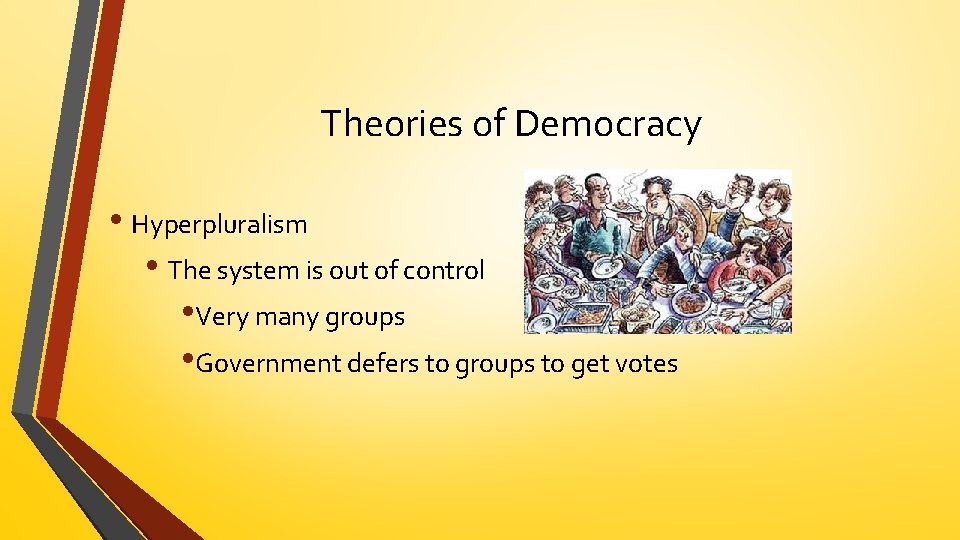
Theories of Democracy • Hyperpluralism • The system is out of control • Very many groups • Government defers to groups to get votes
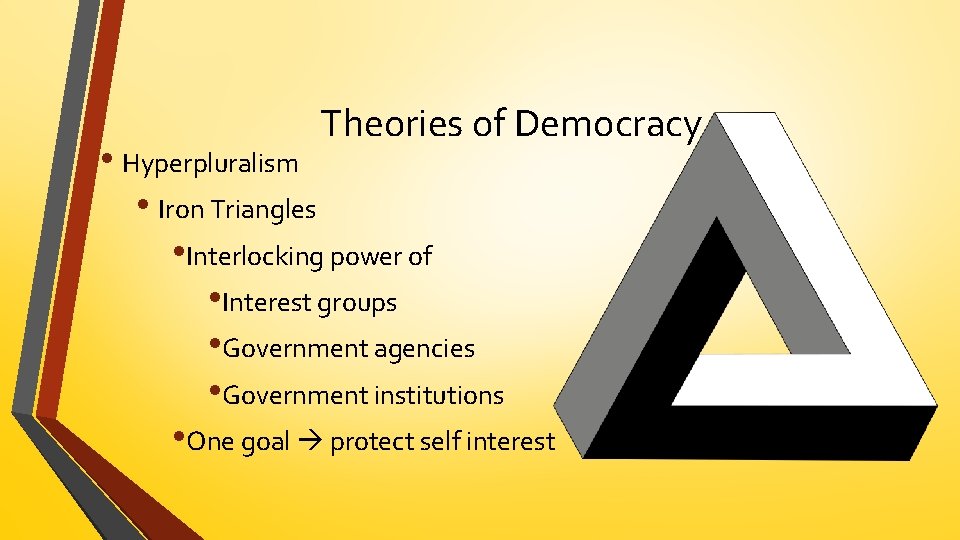
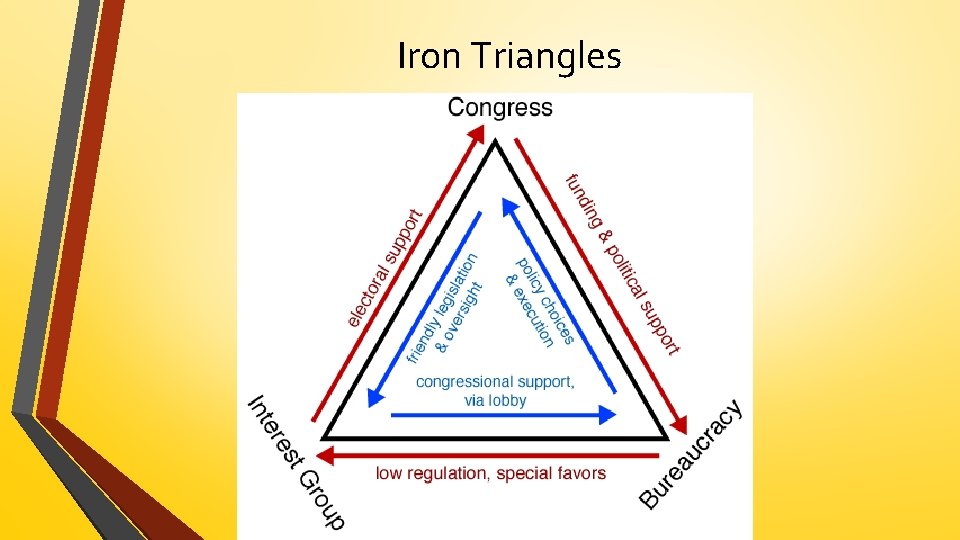
Theories of Democracy • Hyperpluralism • Iron Triangles • Interlocking power of • Interest groups • Government agencies • Government institutions • One goal protect self interest
Iron Triangles
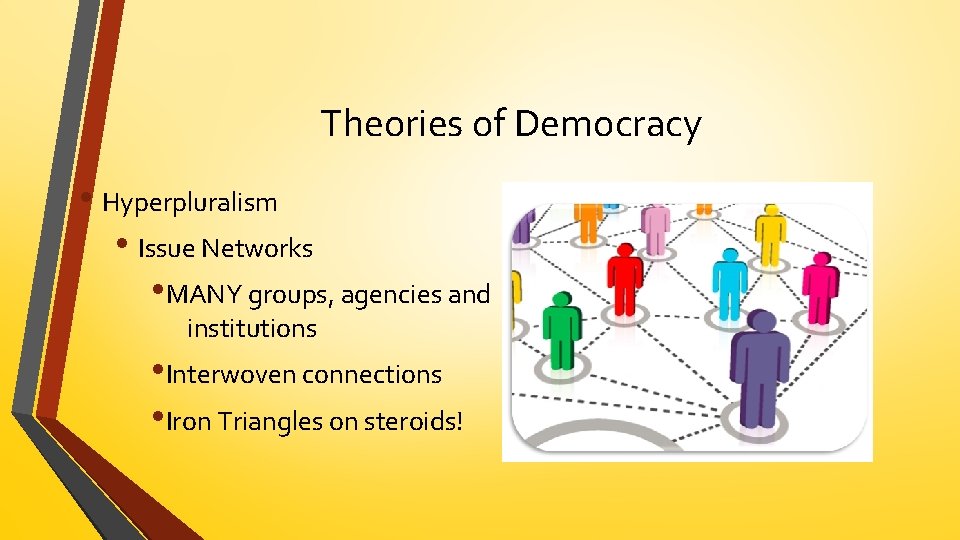
Theories of Democracy • Hyperpluralism • Issue Networks • MANY groups, agencies and institutions • Interwoven connections • Iron Triangles on steroids!
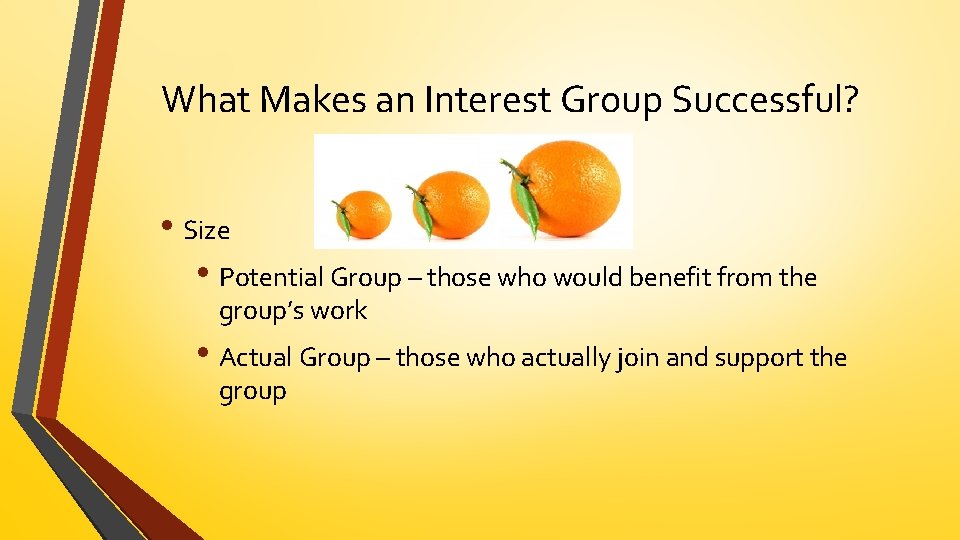
What Makes an Interest Group Successful? • Size • Potential Group – those who would benefit from the group’s work • Actual Group – those who actually join and support the group
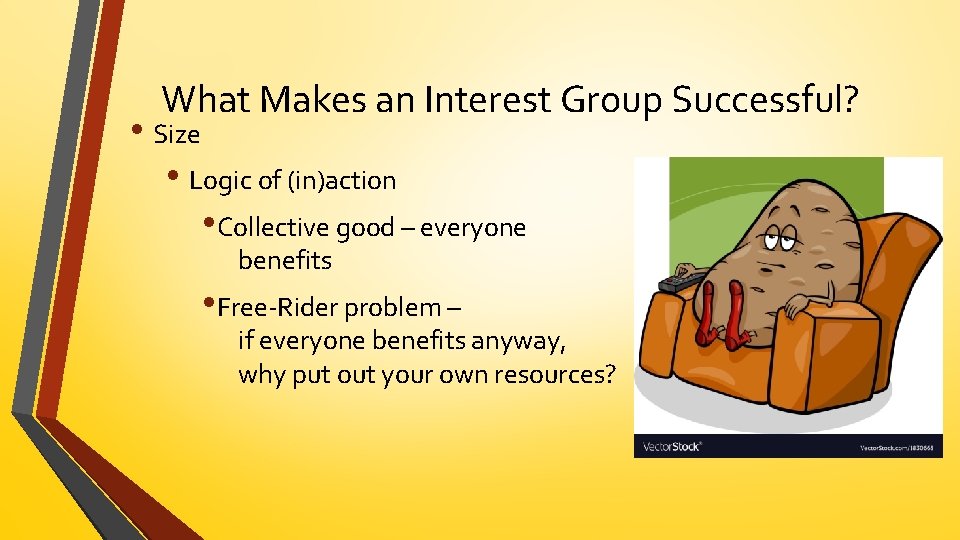
What Makes an Interest Group Successful? • Size • Logic of (in)action • Collective good – everyone benefits • Free-Rider problem – if everyone benefits anyway, why put out your own resources?
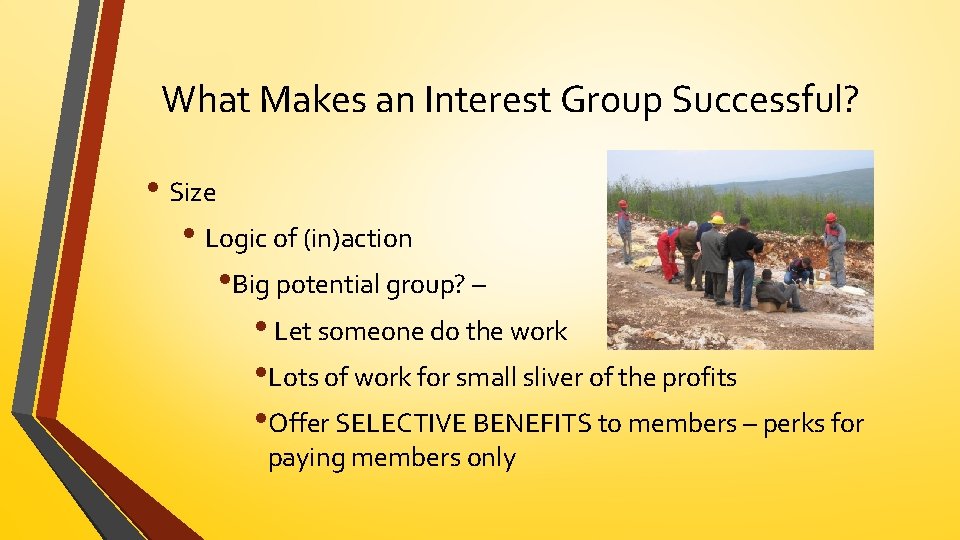
What Makes an Interest Group Successful? • Size • Logic of (in)action • Big potential group? – • Let someone do the work • Lots of work for small sliver of the profits • Offer SELECTIVE BENEFITS to members – perks for paying members only
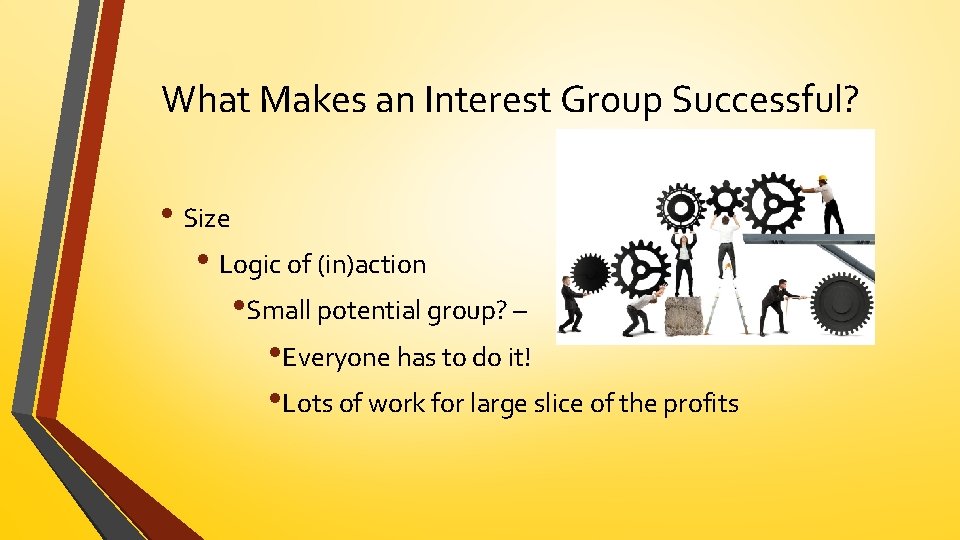
What Makes an Interest Group Successful? • Size • Logic of (in)action • Small potential group? – • Everyone has to do it! • Lots of work for large slice of the profits
What Makes an Interest Group Successful? • Intensity • Psychological advantage when networking • Passionate membership • Single-issue group • Narrow interest • Less likely to compromise • Tenacious to get goals realized
What Makes an Interest Group Successful? • Financial Resources • Biased to the wealthy? • Big interest doesn’t always get what it wants • No observable effect on policy outcomes • Other resources (size or intensity) can be just as effective • Competition between big interest groups • Often times coalitions of richer and poorer groups blur conclusions
How Groups Try to Shape Policy – Strategies • Lobbying • Communication • Between a person and a government official • Not acting on his own behalf • Hoping to influence policy
How Groups Try to Shape Policy – Strategies • Lobbying • Types • Permanent • Hired by an interest group • Represent the group’s interest • Temporary • Hired by a low-budget group • For a specified (short) period
How Groups Try to Shape Policy – Strategies • Lobbying • Regulations on lobbyists • Must register with the Senate • File report how much they were paid for lobbying • Reports are made public
How Groups Try to Shape Policy – Strategies • Lobbying • Helping officials • Source of information • Plan strategy • To get legislation passed • To get reelected • Source of new ideas and innovations
How Groups Try to Shape Policy – Strategies • Electioneering • Helping candidates • Contributions • Rallying membership support
How Groups Try to Shape Policy – Strategies • Electioneering • PACs (political action committees) • An association (group) • Business association • Labor union • Civic groups
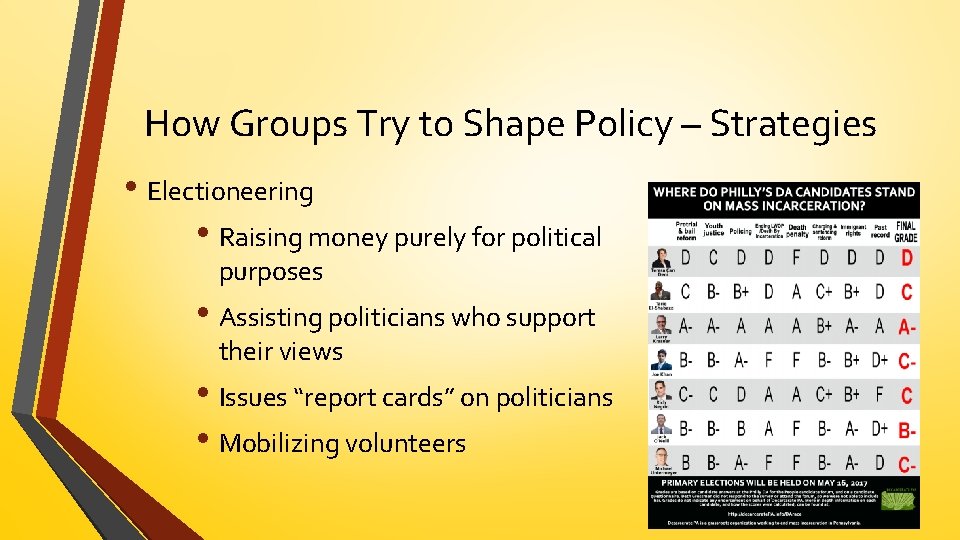
How Groups Try to Shape Policy – Strategies • Electioneering • Raising money purely for political purposes • Assisting politicians who support their views • Issues “report cards” on politicians • Mobilizing volunteers
How Groups Try to Shape Policy – Strategies • Litigating • Go to court to get specific rulings • Often used when cause is controversial • Majorities in legislatures may not endorse the change • Courts uphold the rights of the minorities • Used extensively in Civil Rights Movement
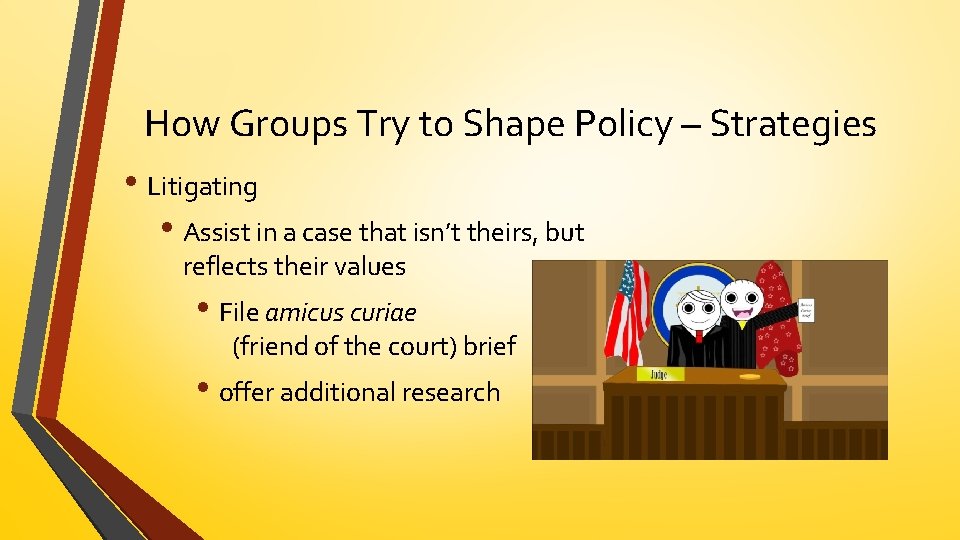
How Groups Try to Shape Policy – Strategies • Litigating • Assist in a case that isn’t theirs, but reflects their values • File amicus curiae (friend of the court) brief • offer additional research
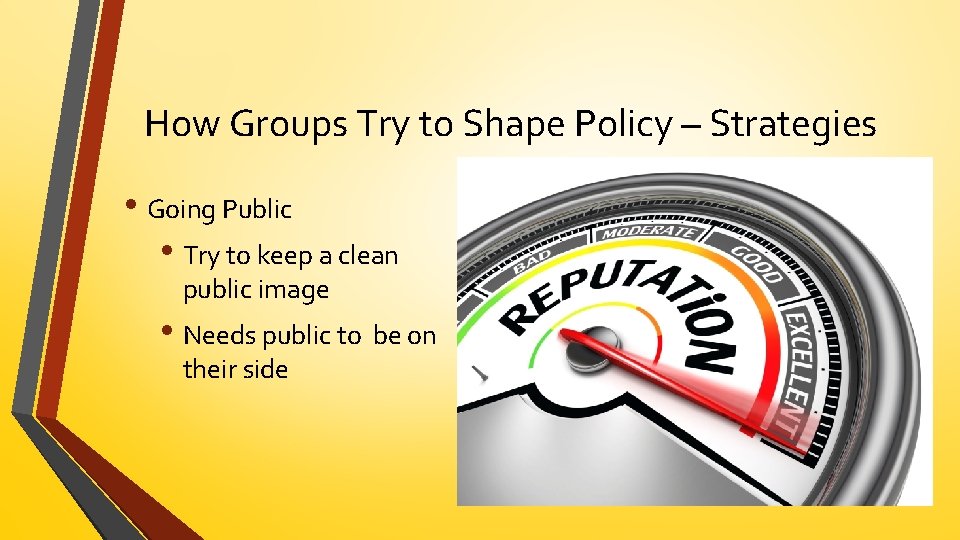
How Groups Try to Shape Policy – Strategies • Going Public • Try to keep a clean public image • Needs public to be on their side
Types of Interest Groups • Economic Interests • Influence government policies in business and industry • Regulations • Subsidies • Tax policy
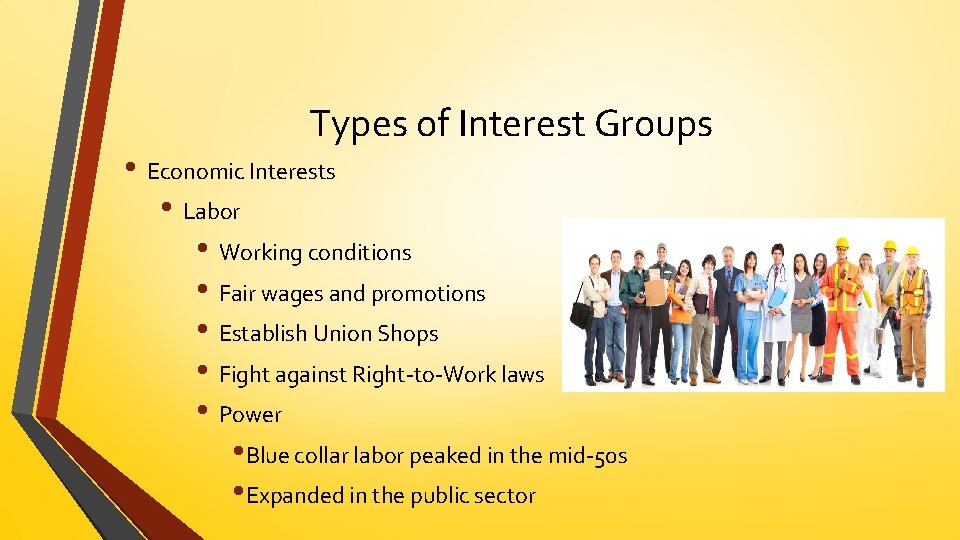
Types of Interest Groups • Economic Interests • Labor • Working conditions • Fair wages and promotions • Establish Union Shops • Fight against Right-to-Work laws • Power • Blue collar labor peaked in the mid-50 s • Expanded in the public sector
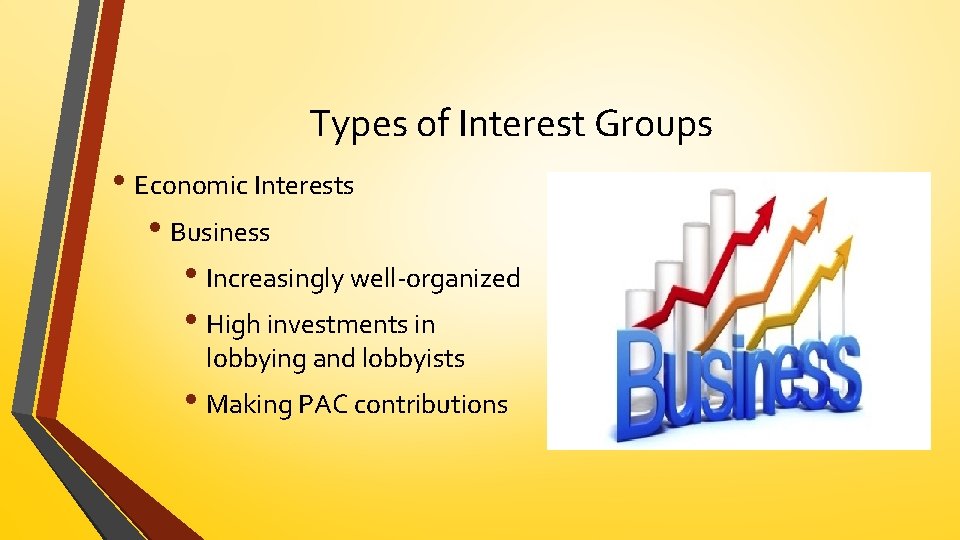
Types of Interest Groups • Economic Interests • Business • Increasingly well-organized • High investments in lobbying and lobbyists • Making PAC contributions
Types of Interest Groups • Environmental Interests • Try to influence policy on nature • Did I really need to explain it?
Types of Interest Groups • Equality Interests • Equal protection under the law • Equality • Voting • Housing • Employment • Education
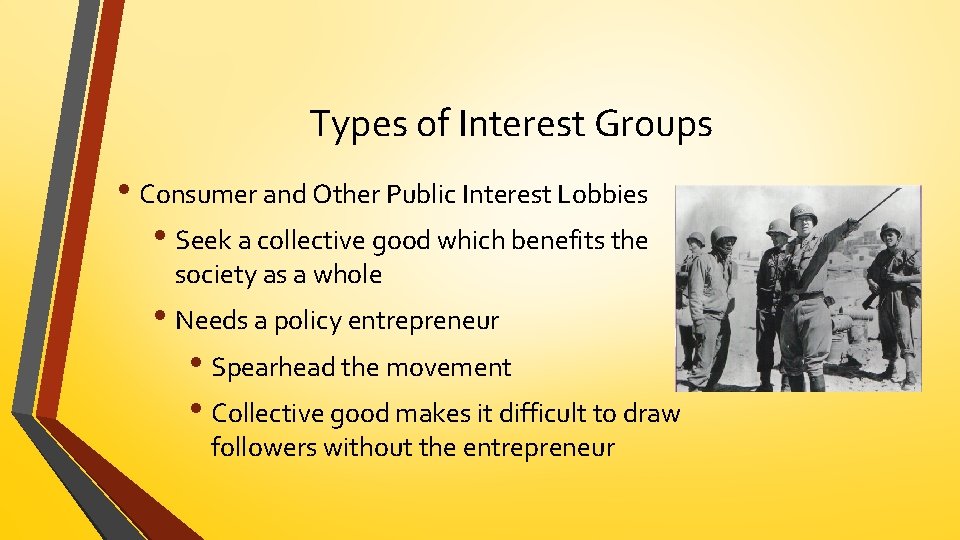
Types of Interest Groups • Consumer and Other Public Interest Lobbies • Seek a collective good which benefits the society as a whole • Needs a policy entrepreneur • Spearhead the movement • Collective good makes it difficult to draw followers without the entrepreneur
Incentive to join • Solidary Incentive • Sense of pleasure • Status • Companionship • Usually a coalition of local chapters
Incentive to join • Material Incentive • Money or valued services offered • Lure people to join by offering special deals
Incentive to join • Purposive Incentive • The appeal of goals to get people to join • Ideological IG – Based on personal principles • Public-interest lobby – based on the belief that benefits will spread out to all in public, not just members
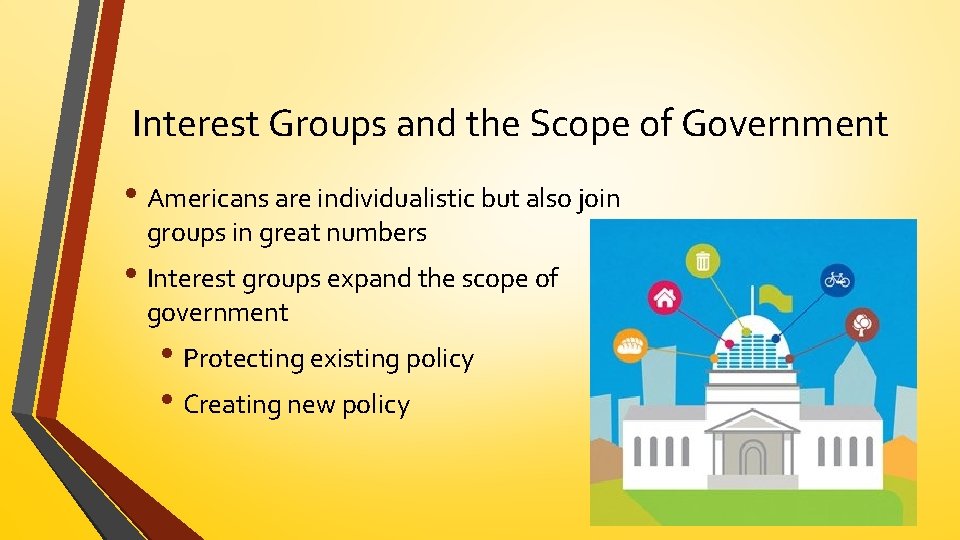
Interest Groups and the Scope of Government • Americans are individualistic but also join groups in great numbers • Interest groups expand the scope of government • Protecting existing policy • Creating new policy